Connect with us

Technology

Addressing Urgent Global Calls for Ethical AI Practices, Info-Tech Research Group Publishes Blueprint for Navigating AI Regulations

Published

on

A new resource from Info-Tech Research Group details a comprehensive roadmap for organizations seeking to align with the intricate web of AI regulations while upholding ethical imperatives. The firm offers detailed strategies and practical recommendations to guide organizations through evolving regulatory frameworks while ensuring commitment to ethical AI practices. By consolidating insights from global regulatory trends, this blueprint equips IT leaders with the knowledge and tools necessary to navigate the complex terrain of AI governance with integrity and foresight.

TORONTO, Aug. 12, 2024 /CNW/ – As artificial intelligence (AI) rapidly transforms industries and reshapes operational landscapes, organizations are facing significant challenges in navigating the complex and evolving regulatory environment. In response to these pressing challenges, Info-Tech Research Group has published research findings and guidance in a new blueprint, Prepare for AI Regulation. The resource addresses the urgent need for organizations to stay ahead of impending regulations, providing in-depth analysis and actionable strategies for IT leaders to ensure compliance while maximizing the ethical and effective use of AI.

In the new resource, the firm highlights the growing responsibility of organizations to safeguard users against potential risks associated with AI, including misinformation, unfair bias, malicious uses, and cybersecurity threats. However, many existing risk and governance programs within organizations have not been designed to anticipate the introduction of AI applications and their subsequent impact.

“Generative AI is changing the world we live in. It represents the most disruptive and transformative technology of our lifetime. It will revolutionize how we interact with technology and how we work,” says Bill Wong, research fellow at Info-Tech Research Group. “However, along with the benefits of AI, this technology introduces new risks. Generative AI has demonstrated the ease of creating misinformation and deepfakes, and it can be misused to threaten the integrity of elections.”

Info-Tech recommends that organizations enhance their data and AI governance programs to align with forthcoming voluntary or legislated AI regulations.

“Organizations around the world are seeking guidance, and some are requesting governments to regulate AI to provide safeguards for the use of this technology,” states Wong. “As a result, AI legislation is emerging around the world. A key challenge with any legislation is to find the balance between the need for regulation to protect the public vs. the need to provide an environment that fosters innovation.”

Info-Tech’s blueprint explains that establishing and operationalizing responsible AI principles to govern AI development and deployment will be crucial for organizations. This involves creating a robust framework that includes ethical guidelines, transparency, accountability, and fairness in AI applications. The firm’s research insights further emphasize the importance of IT leaders integrating AI governance with the organization’s enterprise-wide governance programs, ensuring a cohesive and comprehensive approach to managing AI risks and opportunities.

“Some governments and regions, such as the US and UK, take a context- and market-driven approach, often relying on self-regulation and introducing minimal new legislation,” adds Wong. “In contrast, the EU has implemented comprehensive legislation to govern the use of AI technology in order to safeguard the public from potential harm. Looking ahead, effective regulation of AI on a global scale is likely to necessitate international cooperation across governments and regions.”

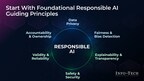
In Prepare for AI Regulation, Info-Tech details six responsible AI guiding principles and corresponding actions for IT leaders to plan and address AI risk and comply with regulation initiatives.

1. Data Privacy

Understand which governing privacy laws and frameworks apply to an organization: Conduct thorough assessments to ensure compliance with local and international data privacy regulations.Create a map of all personal data as it flows through the organization’s business processes: Develop detailed data flow diagrams to identify and document how personal data is collected, stored, processed, and shared.Minimize data collection and storage: Implement data minimization strategies to reduce the amount of personal data collected and stored, ensuring only necessary data is retained.

2. Fairness and Bias Detection

Identify possible sources of bias in the data and algorithms: Conduct regular audits and assessments of data sets and algorithms to detect and mitigate biases.Comply with laws regarding accessibility and inclusiveness: Ensure AI systems are designed and deployed in compliance with relevant accessibility and inclusivity laws, promoting equal access for all users.Ensure diversity in training data: Utilize diverse and representative data sets for training AI models to avoid bias and enhance fairness.

3. Explainability and Transparency

Design in a manner that informs users and key stakeholders of how decisions were made: Develop user-friendly explanations and documentation that clarifies how AI systems arrive at decisions.Disclose training data and methodologies: Maintain transparency by openly sharing the sources and methodologies used to train AI models.Enforce data labeling: Implement rigorous data labeling practices to ensure clarity and accuracy in AI training data.

4. Safety and Security

Adopt responsible design, development, and deployment best practices: Follow established best practices to ensure the safe and secure development and deployment of AI systems.Provide clear information to deployers on the responsible use of the system: Offer comprehensive guidelines and documentation to end-users and deployers on the responsible and ethical use of AI technologies.Promote cybersecurity measures: Implement robust cybersecurity protocols to protect AI systems from potential threats and vulnerabilities.

5. Validity and Reliability

Continuously monitor, evaluate, and validate performance: Regularly assess and validate AI system performance to ensure accuracy and reliability.Provide provenance tracking: Maintain detailed records of the origins and history of data used in AI models to ensure traceability and accountability.Assess training data and collected data for quality and possible errors: Conduct ongoing quality assessments of training and operational data to identify and rectify errors.

6. Accountability

Implement human oversight and review: Establish processes for regular human oversight and review of AI systems to ensure ethical and responsible use.Assign risk management accountabilities and responsibilities to key stakeholders: Designate clear roles and responsibilities for managing AI-related risks within the organization.Integrate with your risk management system: Ensure AI governance is seamlessly integrated with the organization’s overall risk management framework.

The firm’s comprehensive blueprint offers practical guidance for organizations striving to navigate the complexities of AI governance. By following the detailed strategies outlined in Info-Tech’s latest resource, organizations can achieve regulatory compliance while harnessing the transformative power of AI in a responsible and ethical manner.

For exclusive and timely commentary from Bill Wong, an expert in AI and data analytics, and access to the complete Prepare for AI Regulation blueprint, please contact pr@infotech.com.

Info-Tech LIVE 2024
Registration is now open for Info-Tech Research Group’s annual IT conference, Info-Tech LIVE 2024, taking place September 17 to 19, 2024, at the iconic Bellagio in Las Vegas. This premier event offers journalists, podcasters, and media influencers access to exclusive content, the latest IT research and trends, and the opportunity to interview industry experts, analysts, and speakers. To apply for media passes to attend the event or gain access to research and expert insights on trending topics, please contact pr@infotech.com.

About Info-Tech Research Group
Info-Tech Research Group is one of the world’s leading research and advisory firms, proudly serving over 30,000 IT and HR professionals. The company produces unbiased, highly relevant research and provides advisory services to help leaders make strategic, timely, and well-informed decisions. For nearly 30 years, Info-Tech has partnered closely with teams to provide them with everything they need, from actionable tools to analyst guidance, ensuring they deliver measurable results for their organizations.

To learn more about Info-Tech’s divisions, visit McLean & Company for HR research and advisory services and SoftwareReviews for software buying insights.

Media professionals can register for unrestricted access to research across IT, HR, and software and hundreds of industry analysts through the firm’s Media Insiders program. To gain access, contact pr@infotech.com.

For information about Info-Tech Research Group or to access the latest research, visit infotech.com and connect via LinkedIn and X.

View original content to download multimedia:https://www.prnewswire.com/news-releases/addressing-urgent-global-calls-for-ethical-ai-practices-info-tech-research-group-publishes-blueprint-for-navigating-ai-regulations-302220009.html

SOURCE Info-Tech Research Group

Continue Reading
Click to comment

Leave a Reply

Your email address will not be published. Required fields are marked *

Technology

Insurance Modernization at Risk as Workforce Strategies Fall Behind, Says Info-Tech Research Group

Published

on

By

Insurers are under pressure to modernize core systems while competing for scarce cloud, data, AI, and cybersecurity talent. Info-Tech Research Group’s new blueprint, Rebuild Your Talent Engine: Attract and Retain IT Talent in Insurance, outlines a practical framework to help insurance IT and HR leaders assess readiness, strengthen their employee value proposition, and retain the critical roles needed to accelerate transformation.

ARLINGTON, Va., May 8, 2026 /PRNewswire/ – Insurance modernization is increasingly being constrained by the people and capabilities required to deliver it, according to Info-Tech Research Group. The global research and advisory firm’s newly published blueprint, Rebuild Your Talent Engine: Attract and Retain IT Talent in Insurance, provides a structured approach to help insurers attract, retain, and mobilize the IT talent required to support digital transformation.

The firm’s research indicates that many insurers are trying to advance core system modernization while facing shortages in cloud, data, AI, and cybersecurity roles. At the same time, experienced legacy system experts are retiring, creating knowledge gaps that can slow delivery, increase operational risk, and deepen dependence on external partners.

“Insurance modernization cannot succeed if the workforce strategy behind it remains outdated,” says Vidhi Trivedi, senior research analyst at Info-Tech Research Group. “Insurers need an employee value proposition that reflects what both digital and legacy talent value today: flexibility, growth, purpose, and belonging. When organizations connect those expectations to the technology roadmap, they are better positioned to retain institutional knowledge, attract new capabilities, and move transformation forward with confidence.”

Key Workforce Risks Slowing Insurance Modernization

Info-Tech’s blueprint identifies several talent challenges that are limiting insurers’ ability to modernize effectively:

Critical digital skills remain difficult to attract and retain. Cloud engineers, data architects, cybersecurity specialists, and AI-capable technologists are essential to future-state systems, integration, and automation.Legacy expertise is leaving faster than it can be replaced. Core system knowledge remains vital to operations, compliance, and transition planning, yet many long-tenured experts are approaching retirement or feel disconnected from future-state roles.Rigid work models reduce access to high-demand talent. Digital professionals increasingly expect hybrid options, autonomy, modern delivery practices, and environments that support productivity and wellbeing.Growth pathways are not clearly connected to transformation needs. Without structured upskilling, internal mobility, and role progression, insurers risk losing employees to industries perceived as more innovative or career-accelerating.Employer branding often undersells insurance’s purpose and impact. The industry plays a critical role in protecting people, businesses, and communities, but that purpose is not always translated into a compelling technology career story.

Info-Tech’s Three-Phase Framework for Rebuilding the Insurance IT Talent Engine

To help insurers address these challenges, the Rebuild Your Talent Engine: Attract and Retain IT Talent in Insurance blueprint outlines a three-phase methodology:

Assess Talent Readiness for Modernization Success
Insurance IT and HR leaders identify modernization-critical roles, evaluate workforce pressure, assess EVP fit across key roles, and prioritize the roles that pose the greatest risk to transformation timelines.Build and Embed a Modern Employee Value Proposition
Organizations define a clear employer-employee value exchange, establish proof points across the four EVP pillars of flexibility, growth, purpose, and belonging, and activate targeted initiatives for priority roles.Develop and Present the EVP Impact Report
Leaders synthesize workforce insights, visualize progress, and present a measurable view of how EVP activation is improving retention, engagement, internal mobility, and readiness.

The resource also includes supporting tools, such as the EVP Diagnostic Tool, EVP Activation & Implementation Tool, and EVP Impact Report Template, that help insurers move from talent planning to measurable action.

“Too often, insurers view IT talent challenges as a capacity issue, when they are really a transformation risk,” explains Trivedi. ” “The insurers that move fastest will be those that know where critical capabilities are under strain, protect the expertise that increases operational resilience, and create clear pathways for employees to help shape the future of insurance from within.”

By applying Info-Tech’s framework outlined in the Rebuild Your Talent Engine: Attract and Retain IT Talent in Insurance blueprint, insurance leaders can better understand where people-related risks are highest, strengthen retention in critical roles, reduce long-term reliance on external partners, and build a more resilient technology organization. The firm’s research emphasizes that a modern EVP is not only an HR initiative but a strategic enabler of modernization success.

For exclusive and timely commentary from Info-Tech’s experts, including Vidhi Trivedi, and access to the complete Rebuild Your Talent Engine: Attract and Retain IT Talent in Insurance blueprint, please contact pr@infotech.com.

About Info-Tech Research Group

Info-Tech Research Group is the “get things done” partner for over 30,000 IT, HR, and marketing leaders worldwide. The fastest growing research and advisory firm, Info-Tech enables leaders to make well-informed decisions and transform their organizations through AI, strategic foresight, step-by-step methodologies, practical tools, industry-leading advisory, and training programs. For nearly 30 years, tens of thousands of private and public organizations have trusted Info-Tech to lead their most important initiatives through periods of change and deliver outcomes that truly matter.

To learn more about Info-Tech’s HR research and advisory services, visit McLean & Company, and for data-driven software buying insights and vendor evaluations, visit the firm’s SoftwareReviews platform.

Media professionals can register for unrestricted access to research across IT, HR, and software, and hundreds of industry analysts through the firm’s Media Insiders program. To gain access, contact pr@infotech.com.

For information about Info-Tech Research Group or to access the latest research, visit infotech.com and connect via LinkedIn and X.

View original content to download multimedia:https://www.prnewswire.com/news-releases/insurance-modernization-at-risk-as-workforce-strategies-fall-behind-says-info-tech-research-group-302767354.html

SOURCE Info-Tech Research Group
Continue Reading

Technology

Caris Life Sciences Submits Application to New York State Department of Health for Caris Assure Blood‑Based Testing Authorization

Published

on

By

IRVING, Texas, May 8, 2026 /PRNewswire/ — Caris Life Sciences® (NASDAQ: CAI), a leading patient-centric next-generation AI TechBio company and precision medicine pioneer, today announced that it has submitted an application to the New York State Department of Health (NYSDOH) Clinical Laboratory Evaluation Program (CLEP), administered through the Wadsworth Center, seeking authorization to perform Caris Assure®, its blood‑based molecular profiling test, on specimens originating from New York State.

Caris Assure is a blood‑based molecular profiling test designed to support comprehensive biomarker analysis using a minimally invasive blood sample. Caris Assure uses circulating nucleic acids sequencing (cNAS) to analyze the whole exome (DNA) and whole transcriptome (RNA) of 22,000 genes. This comprehensive test identifies tumor alterations, clonal hematopoiesis (CH) and inherited variants, pharmacogenomic alterations, microsatellite instability (MSI) and tumor mutational burden (TMB).

The submission initiates the formal review process required by New York State for clinical laboratories seeking to perform testing on specimens collected from New York patients. Through the Wadsworth Center, CLEP conducts comprehensive reviews of laboratory permits and laboratory-developed tests to evaluate analytical validation, quality systems, personnel qualifications and compliance with applicable state regulations.

“Caris is committed to meeting the highest standards for laboratory quality, validation and regulatory compliance,” said David Spetzler, MS, PhD, MBA, President of Caris Life Sciences. “This submission of Caris Assure for review through the New York State Department of Health’s Wadsworth Center reflects our disciplined approach to expanding access to our technologies in a manner that demonstrates the rigor, responsibility and focus on the patient that define Caris Life Sciences and guide our work in the markets we serve.”

At this time, no determination has been made by NYSDOH, and Caris Assure is not authorized for use on blood-based specimens originating from New York State unless and until CLEP authorization is granted.

Caris operates a CAP-accredited, CLIA‑certified clinical laboratory and performs testing in jurisdictions where it is authorized to do so, in accordance with all applicable federal, state, and local regulations. Any future availability of Caris Assure in New York State will be contingent upon completion of the CLEP review process administered by the Wadsworth Center and receipt of the appropriate authorization.

About Caris Life Sciences
Caris Life Sciences® (Caris) is a leading, patient-centric, next-generation AI TechBio company and precision medicine pioneer actively developing and commercializing innovative solutions to transform healthcare. Through comprehensive molecular profiling (Whole Genome, Whole Exome and Whole Transcriptome Sequencing), advanced AI and machine learning, Caris has created the large-scale, multimodal clinico-genomic database and computing capability needed to analyze and further unravel the molecular complexity of disease. This convergence of next-generation sequencing, AI and machine learning technologies and high-performance computing provides a differentiated platform for developing the latest generation of advanced precision medicine diagnostic solutions for early detection, diagnosis, monitoring, therapy selection and drug development.

Caris was founded with a vision to realize the potential of precision medicine to improve the human condition. Headquartered in Irving, Texas, Caris has offices in Phoenix, New York, Cambridge (MA), Tokyo, Japan and Basel, Switzerland. Caris or its distributor partners provide services in the U.S. and other international markets.

Forward Looking Statements

This press release contains forward-looking statements, within the meaning of the Private Securities Litigation Reform Act of 1995 and other federal securities laws. All statements other than statements of historical facts contained in this press release are forward-looking statements, including statements regarding our business, solutions, plans, objectives, goals, industry trends, financial outlook and guidance. In some cases forward-looking statements can be identified by words such as “may,” “will,” “should,” “would,” “expect,” “plan,” “anticipate,” “could,” “intend,” “target,” “project,” “potential,” “contemplate,” “believe,” “estimate,” “predict,” or “continue” or similar expressions.

You should not rely upon forward-looking statements as predictions of future events. Although we believe that the expectations reflected in these forward-looking statements are reasonable based on information currently available to us, we cannot guarantee that the future results, discoveries, levels of activity, performance or events and circumstances reflected in forward-looking statements will be achieved or occur. Forward-looking statements involve known and unknown risks and uncertainties, some of which are beyond our control. Risks and uncertainties that could cause our actual results to differ materially from those indicated or implied by the forward-looking statements in this press release include, among other things: our future financial performance, results of operations or other operational results or metrics; development, analytical and clinical validation, timing and performance of future solutions by us and our competitors; commercial market acceptance for our solutions, including acceptance of preventive as well as diagnostic testing paradigms, and our ability to meet resulting demand; the rapidly evolving competitive environment in which we operate; third-party payer reimbursement and coverage decisions related to our solutions; risks related to data management, storage, and processing capabilities and our ability to integrate and deploy artificial intelligence and advanced data analytics technologies; our ability to protect and enhance our intellectual property; regulatory requirements, decisions or approvals (including the timing and conditions thereof) related to our solutions, including our application for New York State Department of Health approval for Caris Assure; reliance on third-party suppliers; risks related to data security, patient privacy, and compliance with healthcare data protection regulations as well as potential cybersecurity threats to our data platforms; our compliance with laws and regulations; the outcome of government investigations and litigation; risks related to our indebtedness; and our ability to hire and retain key personnel as well as risks, uncertainties; and other factors described in the section titled “Risk Factors” and elsewhere in our Annual Report on Form 10-K filed on March 3, 2026, and in our other filings we make with the SEC from time to time. We undertake no obligation to update any forward-looking statements to reflect changes in events, circumstances or our beliefs after the date of this press release, except as required by law.

Caris Life Sciences Media:
Corporate Communications
CorpComm@CarisLS.com
214.294.5606 

View original content to download multimedia:https://www.prnewswire.com/news-releases/caris-life-sciences-submits-application-to-new-york-state-department-of-health-for-caris-assure-bloodbased-testing-authorization-302767104.html

SOURCE Caris Life Sciences

Continue Reading

Technology

Dover Declares Regular Quarterly Cash Dividend

Published

on

By

DOWNERS GROVE, Ill., May 8, 2026 /PRNewswire/ — The Board of Directors of Dover Corporation (NYSE: DOV) today declared a regular quarterly cash dividend of $0.52 (fifty-two cents) per share, payable on June 15, 2026, to shareholders of record as of May 29, 2026.

About Dover:

Dover is a diversified global manufacturer and solutions provider with annual revenue of over $8 billion. We deliver innovative equipment and components, consumable supplies, aftermarket parts, software and digital solutions, and support services through five operating segments: Engineered Products, Clean Energy & Fueling, Imaging & Identification, Pumps & Process Solutions and Climate & Sustainability Technologies. Dover combines global scale with operational agility to lead the markets we serve. Recognized for our entrepreneurial approach for over 70 years, our team of approximately 24,000 employees takes an ownership mindset, collaborating with customers to redefine what’s possible. Headquartered in Downers Grove, Illinois, Dover trades on the New York Stock Exchange under “DOV.” Additional information is available at dovercorporation.com.

Investor Contact:

Media Contact:

Jack Dickens
Vice President – Investor Relations
(630) 743-2566
jdickens@dovercorp.com

Adrian Sakowicz
Vice President – Communications
(630) 743-5039
asakowicz@dovercorp.com

View original content to download multimedia:https://www.prnewswire.com/news-releases/dover-declares-regular-quarterly-cash-dividend-302767309.html

SOURCE Dover

Continue Reading

Trending