Connect with us

Technology

Cylindrical Lithium-Ion Battery Market size is set to grow by USD 11.61 billion from 2024-2028, Shift in the automotive industry to EVs to boost the market growth, Technavio

Published

on

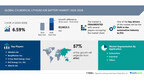
NEW YORK, Aug. 12, 2024 /PRNewswire/ — The global cylindrical lithium-ion battery market  size is estimated to grow by USD 11.61 billion from 2024-2028, according to Technavio. The market is estimated to grow at a CAGR of  6.59% during the forecast period.  Shift in the automotive industry to evs is driving market growth, with a trend towards revisions in lithium-ion battery safety standards. However, safety concerns in lithium-ion batteries  poses a challenge. Key market players include Altertek Ltd., BorgWarner Inc., E One Moli Energy Corp., EVE Energy Co. Ltd., Hitachi Ltd., LG Corp., Lithion Power Group Ltd., Lithium Werks, Murata Manufacturing Co. Ltd., Nanograf Corp., Northvolt AB, OptimumNano Energy Co. Ltd., Panasonic Holdings Corp., PowerTech Systems, Samsung Electronics Co. Ltd., Sony Group Corp., Tesla Inc., The Duracell Co., TotalEnergies SE, and VARTA AG.

Get a detailed analysis on regions, market segments, customer landscape, and companies – Click for the snapshot of this report

Forecast period

2024-2028

Base Year

2023

Historic Data

2018 – 2022

Segment Covered

Application (Automotive, Industrial, and Others), Type (Lithium nickel manganese cobalt, Lithium titanate, Lithium iron phosphate, and Lithium cobalt oxide), and Geography (APAC, North America, Europe, South America, and Middle East and Africa)

Region Covered

APAC, North America, Europe, South America, and Middle East and Africa

Key companies profiled

Altertek Ltd., BorgWarner Inc., E One Moli Energy Corp., EVE Energy Co. Ltd., Hitachi Ltd., LG Corp., Lithion Power Group Ltd., Lithium Werks, Murata Manufacturing Co. Ltd., Nanograf Corp., Northvolt AB, OptimumNano Energy Co. Ltd., Panasonic Holdings Corp., PowerTech Systems, Samsung Electronics Co. Ltd., Sony Group Corp., Tesla Inc., The Duracell Co., TotalEnergies SE, and VARTA AG

Key Market Trends Fueling Growth

The International Electrotechnical Commission (IEC), established in 1906, sets the global standard for batteries, including lithium-ion batteries. With the increasing focus on lithium-ion batteries due to their unique characteristics, the IEC has revised the battery safety standards. The IEC 62133 standard, which covers testing instructions for nickel- and lithium-based batteries, has been updated. Mechanical testing now requires specific shock and vibration testing, previously covered by UN38.3 testing. Overcharging testing involves charging batteries at 1.4 times the maximum charging voltage for 1S battery packs, compared to the previous maximum voltage charging. Labeling requirements now include IEC 61960 details: battery type, manufacturing date, rated capacity, manufacturer name, nominal voltage, and polarity markings. These revisions aim to enhance safety and reduce risks associated with cylindrical lithium-ion batteries, contributing to the growth of the global market for these batteries. 

The Cylindrical Lithium-Ion Battery market is experiencing significant growth due to increasing demand from various industries. Digital cameras, battery-operated material-handling equipment, automation, and smart devices are major consumers. The renewable energy sector also drives growth, as Li-ion batteries provide efficient energy storage. Lithium ions, the key component, move between the negative electrode (carbon anode) and positive electrode (cobalt oxide cathode), releasing chemical energy and converting it into electrical energy. Li-ion batteries offer high energy density, long charge and discharge cycles, and low carbon footprint. LiCoO2 and LiMn2O4 batteries are popular types. The market’s future looks bright, with advancements in automotive, medical devices, and grid energy storage applications. 

Discover 360° analysis of this market. For complete information, schedule your consultation- Book Here!

Market Challenges

Lithium-ion batteries are a popular choice in the automotive industry and consumer electronics due to their high energy density and superior electrochemical performance. However, these batteries have safety concerns as they use a flammable electrolyte and are susceptible to leakage and drying out, which can lead to explosions or short-circuits. The International Air Transportation Association (IATA) has regulations limiting the shipment of Lithium-ion batteries to a 2.5-kg package due to safety concerns. Separators are a crucial component in these batteries, acting as a fuse by shutting down pores during overheating. Uneven separators can cause battery failure due to poor conductivity in dry areas, posing a risk of disastrous incidents, albeit with a low probability. These safety concerns may hinder the growth of the global cylindrical lithium-ion battery market during the forecast period.The Cylindrical Lithium-Ion Battery market is experiencing significant growth due to increasing demand from various industries and applications. Automobiles and industrial operations are major consumers, with automotive applications including electric vehicles, e-bikes, and automated guided vehicles. In electronics, laptops, mobile phones, power tools, and portable products drive demand. However, challenges exist. Government policies and GHG emissions concerns are pushing for green energy solutions. Commercial charging stations and energy storage systems are essential for electric vehicles. Lithium-ion batteries, with their high-power capacity, are key. Cylindrical batteries, with their cylindrical cell design, metal casing, and various electrode materials like Lithium Iron Phosphate, Lithium Cobalt Oxide, Lithium Titanate Oxide, and Lithium Manganese Oxide, cater to diverse sectors like Aerospace, Marine, Medical, Industrial, Power, Telecommunication, and consumer electronics. The automotive segment, including cars and buses, is a significant market. Despite these opportunities, challenges remain. Carbon discharges during production and disposal pose environmental concerns. Regulatory pressures and consumer expectations call for more sustainable, cost-effective, and efficient solutions. Innovations in battery technology, recycling, and circular economy models will be crucial.

For more insights on driver and challenges – Download a Sample Report

Segment Overview 

This cylindrical lithium-ion battery market report extensively covers market segmentation by

Application 1.1 Automotive1.2 Industrial1.3 OthersType 2.1 Lithium nickel manganese cobalt2.2 Lithium titanate2.3 Lithium iron phosphate2.4 Lithium cobalt oxideGeography 3.1 APAC3.2 North America3.3 Europe3.4 South America3.5 Middle East and Africa

1.1 Automotive- The automotive segment of the Cylindrical Lithium-Ion Battery market is experiencing significant growth, driven primarily by the increasing adoption of Electric Vehicles (EVs) and e-bikes. Lithium-ion batteries, including cylindrical types, offer advantages over traditional lead-acid batteries, such as higher energy density, better performance, longer cycle life, production automation, and improved security. Cylindrical lithium-ion batteries are more cost-effective due to their higher energy density, faster charging times, and longer lifespan, making them a preferred choice for leading EV manufacturers like Tesla. Government support for EVs due to environmental concerns and the deployment of subsidies and incentives are further fueling market growth. For instance, France and the UK have announced plans to ban the sale of diesel vehicles by 2040. In the e-bike segment, cylindrical lithium-ion batteries are increasingly popular due to their longer running times and faster charging rates. Technological advancements and declining battery prices are also contributing factors. The market is shifting towards 20700 and 21700 rechargeable cylindrical lithium-ion batteries, offering increased capacity and improved performance. The growth of the EV industry in the coming years is expected to continue driving the market during the forecast period.

For more information on market segmentation with geographical analysis including forecast (2024-2028) and historic data (2018 – 2022)  – Download a Sample Report

Research Analysis

The Cylindrical Lithium-Ion Battery Market refers to the global industry dedicated to producing and supplying cylindrical shaped Lithium-Ion Batteries. These batteries are widely used in various applications due to their high energy density, long cycle life, and excellent power output. They store chemical energy and convert it into electrical energy, making them ideal for consumer electronics and energy storage systems. Operating at different voltage levels, these batteries are finding increasing demand in portable electronics and automotive verticals, including electric vehicles, e-bikes, automated guided vehicles, and battery-driven vehicles. Cylindrical Lithium-Ion Batteries consist of a Negative Electrode, Positive Electrode, Intercalated Lithium Compound, and an Electrolyte. Lithium ions move between the electrodes during charging and discharging. The batteries are rechargeable, making them a preferred choice for applications requiring high-power capacity and off-grid electrification. Despite their benefits, the production and disposal of Lithium-Ion Batteries have a carbon footprint, which is a concern for the environment and is being addressed through research and innovation in the industry.

Market Research Overview

Cylindrical Lithium-Ion Batteries: A Game Changer in Energy Storage Cylindrical Lithium-Ion Batteries are a type of rechargeable battery known for their high energy density, long cycle life, and excellent performance. These batteries store chemical energy and convert it into electrical energy when required. They are widely used in various applications, including consumer electronics, medical devices, automobiles, industrial operations, and automation.

Table of Contents:

1 Executive Summary
2 Market Landscape
3 Market Sizing
4 Historic Market Size
5 Five Forces Analysis
6 Market Segmentation

ApplicationAutomotiveIndustrialOthersTypeLithium Nickel Manganese CobaltLithium TitanateLithium Iron PhosphateLithium Cobalt OxideGeographyAPACNorth AmericaEuropeSouth AmericaMiddle East And Africa

7 Customer Landscape
8 Geographic Landscape
9 Drivers, Challenges, and Trends
10 Company Landscape
11 Company Analysis
12 Appendix

About Technavio

Technavio is a leading global technology research and advisory company. Their research and analysis focuses on emerging market trends and provides actionable insights to help businesses identify market opportunities and develop effective strategies to optimize their market positions.

With over 500 specialized analysts, Technavio’s report library consists of more than 17,000 reports and counting, covering 800 technologies, spanning across 50 countries. Their client base consists of enterprises of all sizes, including more than 100 Fortune 500 companies. This growing client base relies on Technavio’s comprehensive coverage, extensive research, and actionable market insights to identify opportunities in existing and potential markets and assess their competitive positions within changing market scenarios.

Contacts

Technavio Research
Jesse Maida
Media & Marketing Executive
US: +1 844 364 1100
UK: +44 203 893 3200
Email: media@technavio.com
Website: www.technavio.com/

View original content to download multimedia:https://www.prnewswire.com/news-releases/cylindrical-lithium-ion-battery-market-size-is-set-to-grow-by-usd-11-61-billion-from-2024-2028–shift-in-the-automotive-industry-to-evs-to-boost-the-market-growth-technavio-302219427.html

SOURCE Technavio

Continue Reading
Click to comment

Leave a Reply

Your email address will not be published. Required fields are marked *

Technology

Huawei Cloud Launches Agentic Infrastructure and CodeArts Agent OBT in Thailand, Accelerating Enterprise AI Innovation

Published

on

By

BANGKOK, July 24, 2026 /PRNewswire/ — Huawei Cloud hosted Huawei Cloud Summit Thailand 2026, bringing together leaders from government, business, industry partners, and the technology community to exchange views on how cloud and AI can support Thailand’s digital economy. During the event, Huawei Cloud announced “Huawei Cloud Agentic Infrastructure: Now Available for Thailand” and officially launched Huawei Cloud CodeArts Agent Open Beta Testing (OBT) in the country.

Mr. Sunny Shang, President of Huawei Cloud APAC, outlined the company’s commitment to working with customers and partners to build an AI-driven digital future for Thailand. Regarding the government’s direction, the Ministry of Digital Economy and Society emphasized the acceleration of digital transformation through national AI policies, public-sector adoption, and stronger public-private collaboration.

The public-sector highlighted how AI can improve government operations and make public services faster and more convenient. NECTEC also presented a Government AI case study covering the development of AI infrastructure and platforms, as well as AI chatbots and intelligent assistants designed to support government officials and improve services for citizens.

Building the Foundation for the Agentic AI Era

Mr. Surasak Wanichwatphibun, CTO of Huawei Cloud Thailand said Huawei Cloud will continue to strengthen its technological capabilities and build a robust computing infrastructure to drive AI innovation across enterprises.

At the center of the announcement is Agentic Infra, a new infrastructure designed specifically for developing and deploying AI agents. It supports efficient token generation, unified scheduling of general-purpose and AI computing resources, continuous learning, and secure and autonomous agent operations.

Mr. Surasak introduced four new features under Agentic Infra:

UnifiedBus-based AI Cluster Service (AICS), which supports highly efficient token generationAgentic Memory Storage Service (AMS), which delivers PB-scale memory storage to address a key bottleneck in agent memory, enabling long-horizon tasks and facilitating continuous learning.AgentSphere, which offers a secure and autonomous runtime environment for AI agentsCCE VolcanoNext, which enables unified scheduling of general-purpose and AI computing resources

CodeArts Agent OBT Launches in Thailand

Another major highlight was the launch of Huawei Cloud CodeArts Agent OBT in Thailand, giving local developers and enterprises an opportunity to experience Huawei Cloud’s coding agent and provide feedback before its wider release.

CodeArts Agent combines IDE functionality, autonomous development capabilities, and coding models. It supports project-level code generation, code completion, R&D knowledge Q&A, and unit test case generation.

The platform also applies Specification-Driven Development (SDD) to help development teams maintain code quality from the requirements stage through to final delivery.

It is worth mentioning that this release also introduces the Agent Team mode, which can automatically form a development team, enabling multiple agents to collaborate concurrently and execute tasks simultaneously.

By reducing repetitive tasks, CodeArts Agent can help developers work more efficiently and allow organizations to bring digital products and services to market faster.

The OBT launch forms part of Huawei Cloud’s efforts to support Thailand’s developer community and make AI-assisted software development more accessible to organizations of different sizes.

Strengthening Security for Enterprise AI

Mr. Surasak also emphasized security, stability, and quality as key priorities for enterprise AI adoption. As cyberattacks become increasingly automated and AI-driven, Huawei Cloud has upgraded its security services in two areas: protecting AI systems and using AI to strengthen cyber defense.

Its model lifecycle security solution covers AI infrastructure, training data, model inference, and agent applications.

For enterprises concerned about data sovereignty and privacy, Huawei Cloud provides dedicated security zones that allow customers to independently manage their encryption keys while preventing platform administrators from accessing customer data. Software-hardware integration and hardware acceleration are also used to maintain encryption performance without compromising service efficiency. Huawei Cloud has also introduced Data Capsule technology, which ensures that data can only be used within authorized environments and automatically becomes invalid if moved outside a designated security zone.

Showcasing AI Use Cases Across Industries

Huawei Cloud Summit Thailand 2026 also featured AI and cloud use cases from organizations in Thailand. These included the development of AI platforms and intelligent assistants for the public sector, the use of AI coding and large language models in banking, and AI-powered learning and skills development platforms for the HR sector.

Huawei Cloud and its partners also shared how ecosystem collaboration can help solve industry challenges and accelerate AI adoption among enterprises.

About Huawei Cloud Thailand

Huawei Cloud Thailand is a leading cloud service provider committed to accelerating Thailand’s digital transformation under the mission of “In Thailand, For Thailand.” According to the latest report from Gartner, Huawei Cloud is ranked No.3 by revenue in Thailand’s Infrastructure as a Service (IaaS) market, solidifying its position as one of the most trusted and fastest-growing international cloud providers in the country.

As the first international public cloud vendor to establish local data centers in Thailand, Huawei Cloud now operates three Availability Zones, ensuring high reliability and low-latency connectivity for local users. Leveraging Huawei’s 30-plus years of expertise in ICT infrastructure, it integrates cutting-edge Artificial Intelligence (AI), Cloud-Native 2.0, and Big Data technologies to empower over 40 government agencies and thousands of enterprises across the Kingdom. By building a robust digital ecosystem and fostering local talent, Huawei Cloud aims to drive Thailand’s “Digital Economy” forward, bringing cloud and intelligence to every corner of the country for a fully connected, intelligent future.

For more information, please visit Huawei Cloud Thailand online at

https://www.huaweicloud.com/intl/th-th/ or follow us on:

https://www.facebook.com/HuaweiCloudTH

https://www.youtube.com/@HuaweiCloudAPAC


View original content to download multimedia:https://www.prnewswire.com/apac/news-releases/huawei-cloud-launches-agentic-infrastructure-and-codearts-agent-obt-in-thailand-accelerating-enterprise-ai-innovation-302833957.html

SOURCE Huawei Cloud Thailand

Continue Reading

Technology

Huawei Cloud Launches Agentic Infrastructure and CodeArts Agent OBT in Thailand, Accelerating Enterprise AI Innovation

Published

on

By

BANGKOK, July 24, 2026 /PRNewswire/ — Huawei Cloud hosted Huawei Cloud Summit Thailand 2026, bringing together leaders from government, business, industry partners, and the technology community to exchange views on how cloud and AI can support Thailand’s digital economy. During the event, Huawei Cloud announced “Huawei Cloud Agentic Infrastructure: Now Available for Thailand” and officially launched Huawei Cloud CodeArts Agent Open Beta Testing (OBT) in the country.

Mr. Sunny Shang, President of Huawei Cloud APAC, outlined the company’s commitment to working with customers and partners to build an AI-driven digital future for Thailand. Regarding the government’s direction, the Ministry of Digital Economy and Society emphasized the acceleration of digital transformation through national AI policies, public-sector adoption, and stronger public-private collaboration.

The public-sector highlighted how AI can improve government operations and make public services faster and more convenient. NECTEC also presented a Government AI case study covering the development of AI infrastructure and platforms, as well as AI chatbots and intelligent assistants designed to support government officials and improve services for citizens.

Building the Foundation for the Agentic AI Era

Mr. Surasak Wanichwatphibun, CTO of Huawei Cloud Thailand said Huawei Cloud will continue to strengthen its technological capabilities and build a robust computing infrastructure to drive AI innovation across enterprises.

At the center of the announcement is Agentic Infra, a new infrastructure designed specifically for developing and deploying AI agents. It supports efficient token generation, unified scheduling of general-purpose and AI computing resources, continuous learning, and secure and autonomous agent operations.

Mr. Surasak introduced four new features under Agentic Infra:

UnifiedBus-based AI Cluster Service (AICS), which supports highly efficient token generationAgentic Memory Storage Service (AMS), which delivers PB-scale memory storage to address a key bottleneck in agent memory, enabling long-horizon tasks and facilitating continuous learning.AgentSphere, which offers a secure and autonomous runtime environment for AI agentsCCE VolcanoNext, which enables unified scheduling of general-purpose and AI computing resources

CodeArts Agent OBT Launches in Thailand

Another major highlight was the launch of Huawei Cloud CodeArts Agent OBT in Thailand, giving local developers and enterprises an opportunity to experience Huawei Cloud’s coding agent and provide feedback before its wider release.

CodeArts Agent combines IDE functionality, autonomous development capabilities, and coding models. It supports project-level code generation, code completion, R&D knowledge Q&A, and unit test case generation.

The platform also applies Specification-Driven Development (SDD) to help development teams maintain code quality from the requirements stage through to final delivery.

It is worth mentioning that this release also introduces the Agent Team mode, which can automatically form a development team, enabling multiple agents to collaborate concurrently and execute tasks simultaneously.

By reducing repetitive tasks, CodeArts Agent can help developers work more efficiently and allow organizations to bring digital products and services to market faster.

The OBT launch forms part of Huawei Cloud’s efforts to support Thailand’s developer community and make AI-assisted software development more accessible to organizations of different sizes.

Strengthening Security for Enterprise AI

Mr. Surasak also emphasized security, stability, and quality as key priorities for enterprise AI adoption. As cyberattacks become increasingly automated and AI-driven, Huawei Cloud has upgraded its security services in two areas: protecting AI systems and using AI to strengthen cyber defense.

Its model lifecycle security solution covers AI infrastructure, training data, model inference, and agent applications.

For enterprises concerned about data sovereignty and privacy, Huawei Cloud provides dedicated security zones that allow customers to independently manage their encryption keys while preventing platform administrators from accessing customer data. Software-hardware integration and hardware acceleration are also used to maintain encryption performance without compromising service efficiency. Huawei Cloud has also introduced Data Capsule technology, which ensures that data can only be used within authorized environments and automatically becomes invalid if moved outside a designated security zone.

Showcasing AI Use Cases Across Industries

Huawei Cloud Summit Thailand 2026 also featured AI and cloud use cases from organizations in Thailand. These included the development of AI platforms and intelligent assistants for the public sector, the use of AI coding and large language models in banking, and AI-powered learning and skills development platforms for the HR sector.

Huawei Cloud and its partners also shared how ecosystem collaboration can help solve industry challenges and accelerate AI adoption among enterprises.

About Huawei Cloud Thailand

Huawei Cloud Thailand is a leading cloud service provider committed to accelerating Thailand’s digital transformation under the mission of “In Thailand, For Thailand.” According to the latest report from Gartner, Huawei Cloud is ranked No.3 by revenue in Thailand’s Infrastructure as a Service (IaaS) market, solidifying its position as one of the most trusted and fastest-growing international cloud providers in the country.

As the first international public cloud vendor to establish local data centers in Thailand, Huawei Cloud now operates three Availability Zones, ensuring high reliability and low-latency connectivity for local users. Leveraging Huawei’s 30-plus years of expertise in ICT infrastructure, it integrates cutting-edge Artificial Intelligence (AI), Cloud-Native 2.0, and Big Data technologies to empower over 40 government agencies and thousands of enterprises across the Kingdom. By building a robust digital ecosystem and fostering local talent, Huawei Cloud aims to drive Thailand’s “Digital Economy” forward, bringing cloud and intelligence to every corner of the country for a fully connected, intelligent future.

For more information, please visit Huawei Cloud Thailand online at

https://www.huaweicloud.com/intl/th-th/ or follow us on:

https://www.facebook.com/HuaweiCloudTH

https://www.youtube.com/@HuaweiCloudAPAC


View original content to download multimedia:https://www.prnewswire.com/apac/news-releases/huawei-cloud-launches-agentic-infrastructure-and-codearts-agent-obt-in-thailand-accelerating-enterprise-ai-innovation-302833957.html

SOURCE Huawei Cloud Thailand

Continue Reading

Technology

Loomis Interim Report January – June 2026

Published

on

By

STOCKHOLM, July 24, 2026 /PRNewswire/ —

Continued strong growth and record operating margin (EBITA %)

President and CEO Aritz Larrea comments:

“We delivered another very strong quarter reflecting the continued execution of our strategy and the strength of our diversified model. Revenue reached SEK 7.9 billion with a currency-adjusted growth of 9.1 percent. Both segment USA and segment Europe and Latin America contributed to the performance driven by continued strength in our International and Automated Solutions business lines. Operating income (EBITA) exceeded 1 billion SEK and we increased our EBITA margin by more than 1 percentage point year–over–year to 14.0 percent.

Our financial position remains strong. Supported by robust cash flow generation and a solid balance sheet, we continue to invest in long-term growth opportunities, pursue value-creating acquisitions, and maintain our commitment to delivering attractive returns to shareholders.”

Quarter 2, April – June 2026

Revenue for the quarter was SEK 7,891 million (7,407). The currency-adjusted growth was 9.1 percent (4.8), of which organic growth was 6.7 percent (3.8) and acquisitions contributed 2.5 percent (1.0). Including the exchange rate effect, the total growth was 6.5 percent (-3.0).Operating income (EBITA) 1) for the quarter was SEK 1,102 million (944) and the operating margin (EBITA) increased to 14.0 percent (12.7).Operating income (EBIT) before items affecting comparability for the quarter was SEK 1,062 million (882) and operating margin (EBIT) before items affecting comparability was 13.5 percent (11.9).Income before taxes for the quarter was SEK 869 million (664) and profit for the period was SEK 608 million (478).Basic earnings per share for the quarter were SEK 9.09 (7.01) and diluted earnings per share were SEK 9.06 (6.99).Cash flow from operating activities 2) was SEK 683 million (550) in the quarter. The cash flow from operating activities for the rolling twelve months was 95 percent (105) of operating income (EBITA).Net debt in relation to EBITDA was 1.60 times (1.75) in the quarter.Loomis expanded its presence in Latin America through the acquisition of Transportadora del Interior in Argentina and the announced acquisition of Hermes Transportes Blindados in Peru.

1)  Earnings Before Interest, Taxes, Amortization of acquisition-related intangible fixed assets, Acquisition-related costs and revenue and items affecting comparability.
2)  Cash flow from operating activities is exclusive of impact from IFRS 16.

Report presentation today at 10.30 a.m. (CEST)

The report will be presented in a webcast conference today at 10.30 am (CEST) by President and CEO Aritz Larrea and CFO Johan Wilsby.

To follow the webcast, please follow this link.

The presentation materials and a recorded version of the conference will be available on https://www.loomis.com/en/investors/reports-and-presentations/ following the presentation.

For more information, please contact:

Jenny Boström
Head of Sustainability and IR
ir@loomis.com
+46 79 006 45 92

Fredrik Hammarbäck
Media and External Communications Manager
media@loomis.com
+46 76 311 56 29

This information was brought to you by Cision http://news.cision.com

https://news.cision.com/loomis-ab/r/loomis-interim-report-january—june-2026,c4377246

The following files are available for download:

https://mb.cision.com/Main/51/4377246/4201809.pdf

Loomis Interim Report January – June 2026

https://mb.cision.com/Public/51/4377246/940bbe0a24c483c8.pdf

Loomis Interim Report January – June 2026 – press release


View original content:https://www.prnewswire.com/news-releases/loomis-interim-report-january–june-2026-302833961.html

SOURCE Loomis AB

Continue Reading

Trending