Connect with us

Technology

Crop Harvesting Robots Market size is set to grow by USD 5.04 billion from 2024-2028, Increasing focus on farm mechanization to boost the market growth, Technavio

Published

on

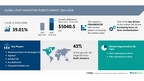
NEW YORK, Aug. 13, 2024 /PRNewswire/ — The global crop harvesting robots market  size is estimated to grow by USD 5.04 billion from 2024-2028, according to Technavio. The market is estimated to grow at a CAGR of over 39.01%  during the forecast period. Increasing focus on farm mechanization is driving market growth, with a trend towards expansion of greenhouse farms. However, high maintenance cost  poses a challenge. Key market players include Advanced Farms Technologies Inc., Agrobot, Antobot Ltd., AvL Motion BV, Clearpath Robotics Inc., Deere and Co., Dogtooth Technologies Ltd., FFRobotics, Harvest Automation, Harvest CROO Robotics LLC, MetoMotion, Muddy Machines Ltd., Ondas Holdings Inc., Rowbot Systems LLC, Small Robot Co., SwarmFarm Robotics, Teradyne Inc., Tevel Aerobotics Technologies, Torguga Agricultural Technologies Inc., and Vision Robotics Corp..

Get a detailed analysis on regions, market segments, customer landscape, and companies – Click for the snapshot of this report

Forecast period

2024-2028

Base Year

2023

Historic Data

2018 – 2022

Segment Covered

Type (Semi-autonomous robots and Fully-autonomous robots), Product (Fruit and vegetable harvesting robots and Grain harvesting robots), and Geography (North America, Europe, APAC, South America, and Middle East and Africa)

Region Covered

North America, Europe, APAC, South America, and Middle East and Africa

Key companies profiled

Advanced Farms Technologies Inc., Agrobot, Antobot Ltd., AvL Motion BV, Clearpath Robotics Inc., Deere and Co., Dogtooth Technologies Ltd., FFRobotics, Harvest Automation, Harvest CROO Robotics LLC, MetoMotion, Muddy Machines Ltd., Ondas Holdings Inc., Rowbot Systems LLC, Small Robot Co., SwarmFarm Robotics, Teradyne Inc., Tevel Aerobotics Technologies, Torguga Agricultural Technologies Inc., and Vision Robotics Corp.

Key Market Trends Fueling Growth

The global crop harvesting robots market is experiencing growth due to the increasing number of greenhouse farms. Greenhouses protect crops from harsh climatic conditions, making them essential for agriculture in countries with extreme climates like Russia and France. The lack of skilled laborers for greenhouse tasks and government subsidies, such as India’s National Horticulture Mission, encourage the expansion of these farms. For instance, Revolution Farms and BrightFarms have announced plans to expand their greenhouse facilities, which may increase the demand for crop harvesting robots and fuel market growth. 

The Crop Harvesting Robots market is witnessing significant growth due to increasing trends in automation and labor shortages in agriculture. Companies like Deveron and Veritas Farm Management are leading the way with their innovative solutions for fruit and grain harvesting. Yamaha’s crop-specific harvesting robots are making waves in field crops, while PrecisionHawk focuses on orchards and vineyards. Fully automated harvesting using robotic arms and computer vision technology is becoming the norm. AgriTech firms, such as Elbow Beach, are raising funds through Seedrs rounds to develop new robots with artificial intelligence and large language models. EPFL is at the forefront of robot design, while hardware and service providers support the industry’s efficiency, productivity, and consistency. Unmanned Ground Vehicles are also playing a crucial role in crop monitoring and environment agriculture. Overall, these advancements aim to improve quality and reduce the cost of labor. 

Discover 360° analysis of this market. For complete information, schedule your consultation- Book Here!

Market Challenges

The crop harvesting process with robots includes detection, removal, placement, and vehicle motion to the next plant. Long harvesting hours for fruits and vegetables necessitate multiple machines, increasing user expenses. Advanced technology integration in robots leads to high equipment costs. Continuous use requires maintenance, repairs, and battery recharges, adding to operational costs. In developing countries, these costs hinder market growth due to affordability concerns. (Exact word count: 50)The Crop Harvesting Robots market is experiencing significant growth due to the increasing demand for automation and labor cost savings in the Agricultural sector. Companies like AgJunction, Agrobot, Harvest CROO, Tertill, Harvest Automation, and Bowery Farming are leading the way with Unmanned Ground Vehicles (UGVs) and Unmanned Aerial Vehicles (UAVs) for Fruit, Vegetable, and Grain Harvesting. Challenges include GPS guidance, steering systems, and machine learning for precision agriculture. Harvesting robots from companies like Harvest Automation, Traptic, and HV100 are addressing these challenges. Financial assistance through subsidies and incentives, farm infrastructure, and technological innovation are crucial for the adoption of these robots. Precision agriculture, sustainable agriculture, and addressing food demand due to population growth are key drivers. Companies like John Deere, Blue River Technology, and CNH Industrial are also investing in Agricultural Robots to improve crop yields, especially for Organic and Specialty crops. However, concerns regarding soil quality, environment, pesticides, and herbicides need to be addressed. Technology advancements in this field will continue to shape the future of farming.

For more insights on driver and challenges – Download a Sample Report

Segment Overview 

This crop harvesting robots market report extensively covers market segmentation by

Type 1.1 Semi-autonomous robots1.2 Fully-autonomous robotsProduct 2.1 Fruit and vegetable harvesting robots2.2 Grain harvesting robotsGeography 3.1 North America3.2 Europe3.3 APAC3.4 South America3.5 Middle East and Africa

1.1 Semi-autonomous robots-  Semi-autonomous robots have revolutionized agriculture, particularly in crop harvesting. These robots offer numerous benefits, including increased efficiency and reduced labor requirements. In the field of harvesting, robots work continuously without breaks and can operate in challenging conditions, such as slopes or extreme temperatures. They utilize precision technology to identify ripe produce and pick it with care, minimizing damage. In planting, robots ensure optimal growing conditions by accurately placing seeds at specific depths and spacings. Semi-autonomous tractors perform tasks like tilling, plowing, and fertilizing using GPS navigation and programmable functions. The global market for crop harvesting robots is poised for growth due to these advantages.

For more information on market segmentation with geographical analysis including forecast (2024-2028) and historic data (2018 – 2022)  – Download a Sample Report

Learn and explore more about Technavio’s in-depth research reports

The Global Autonomous Mobile Robots Market is witnessing rapid growth, driven by advancements in AI and robotics technology. These robots are increasingly used in industries like manufacturing, logistics, and healthcare for tasks such as material handling and transportation. Meanwhile, the Global Agriculture Market is also evolving, with autonomous mobile robots playing a key role in precision farming, crop monitoring, and automated harvesting. These innovations are enhancing efficiency, reducing labor costs, and driving the overall growth of both markets globally.

Research Analysis

The Crop Harvesting Robots market is experiencing significant growth due to labor shortages and increasing cost of labor in the Agricultural sector. AgriTech innovations, such as agriculture robots, are revolutionizing farming with the use of artificial intelligence, computer vision, and robotics. These advanced technologies enable robots to identify ripe fruits and vegetables, navigate through fields, and use robotic arms for harvesting. Research institutions like EPFL are leading the way in robot design and hardware development. Financial assistance through Seedrs rounds, subsidies, and incentives are also driving the adoption of these robots in large-scale farming, as well as in niche markets for organic crops and specialty crops. Machine learning and automation are further enhancing crop yields and reducing reliance on human labor. Overall, the future of crop harvesting is looking automated and efficient.

Market Research Overview

The Crop Harvesting Robots market is experiencing significant growth due to labor shortages and increasing cost of labor in the agricultural sector. AgTech innovations, such as agriculture robots, artificial intelligence, computer vision, and robotic arms, are revolutionizing harvesting processes. Elaborate robot designs, including Unmanned Ground Vehicles (UGVs) and Unmanned Aerial Vehicles (UAVs), are being developed for Fruit, Vegetable Harvesting, Grain Harvesting Robots, and more. Companies are turning to financial assistance, such as Seedrs rounds, subsidies, and incentives, to invest in farm infrastructure and technological innovation. Precision agriculture and sustainable agriculture are key drivers, with a focus on improving crop yields, especially for organic and specialty crops in niche markets.

Machine learning and GPS guidance systems are essential components of these advanced robotic systems. John Deere, Blue River Technology, CNH Industrial, AgJunction, Agrobot, Harvest CROO, Tertill, Harvest Automation, HV100 robots, Bowery Farming, Traptic, and many others are leading the charge in this sector. The agricultural sector faces challenges like pesticides, herbicides, soil quality, and environmental concerns.

Robotics and automation offer solutions to these issues while increasing efficiency, productivity, quality, consistency, and crop monitoring. Food demand and population growth necessitate technological advancements in the agricultural sector, with UGVs and UAVs playing a crucial role in meeting these demands while minimizing labor costs.

Field crops, orchards, vineyards, and greenhouses are all benefiting from these advancements, with fully automated harvesting systems being developed for various cropspecific applications. Manual harvesting is being phased out in favor of these advanced, labor-saving technologies. The future of agriculture lies in the integration of robotics, artificial intelligence, and precision farming techniques to create a more efficient, productive, and sustainable agricultural sector.

Table of Contents:

1 Executive Summary
2 Market Landscape
3 Market Sizing
4 Historic Market Size
5 Five Forces Analysis
6 Market Segmentation

TypeSemi-autonomous RobotsFully-autonomous RobotsProductFruit And Vegetable Harvesting RobotsGrain Harvesting RobotsGeographyNorth AmericaEuropeAPACSouth AmericaMiddle East And Africa

7 Customer Landscape
8 Geographic Landscape
9 Drivers, Challenges, and Trends
10 Company Landscape
11 Company Analysis
12 Appendix

About Technavio

Technavio is a leading global technology research and advisory company. Their research and analysis focuses on emerging market trends and provides actionable insights to help businesses identify market opportunities and develop effective strategies to optimize their market positions.

With over 500 specialized analysts, Technavio’s report library consists of more than 17,000 reports and counting, covering 800 technologies, spanning across 50 countries. Their client base consists of enterprises of all sizes, including more than 100 Fortune 500 companies. This growing client base relies on Technavio’s comprehensive coverage, extensive research, and actionable market insights to identify opportunities in existing and potential markets and assess their competitive positions within changing market scenarios.

Contacts

Technavio Research
Jesse Maida
Media & Marketing Executive
US: +1 844 364 1100
UK: +44 203 893 3200
Email: media@technavio.com
Website: www.technavio.com/

View original content to download multimedia:https://www.prnewswire.com/news-releases/crop-harvesting-robots-market-size-is-set-to-grow-by-usd-5-04-billion-from-2024-2028–increasing-focus-on-farm-mechanization-to-boost-the-market-growth-technavio-302219792.html

SOURCE Technavio

Continue Reading
Click to comment

Leave a Reply

Your email address will not be published. Required fields are marked *

Technology

Driving Certainty Through Uncertainty: eclicktech’s Engineering Approach to Agentic AI

Published

on

By

XI’AN, China, May 9, 2026 /PRNewswire/ — As generative AI moves from experimentation to enterprise deployment, the industry focus is shifting from model capability to operational reliability. The challenge is no longer simply building smarter AI, but ensuring AI systems can operate safely and consistently inside complex production environments.

eclicktech recently shared its internal engineering practices around Agentic AI, highlighting how the company is applying context engineering, multi-cloud infrastructure, and layered security frameworks to support enterprise-scale AI deployment.

To support global operations across more than 230 countries and regions, eclicktech built its Cycor platform around a multi-cloud architecture integrating AWS, Google Cloud, Alibaba Cloud, Tencent Cloud, Huawei Cloud, and other providers. According to the company, this approach improves infrastructure flexibility, reduces vendor lock-in risk, and enables more efficient orchestration of large-scale Kubernetes clusters and AI workloads.

eclicktech stated that one of the key lessons from early Agent development was that prompt engineering alone was insufficient for enterprise deployment. The company therefore shifted toward context engineering — an approach focused on delivering the right information, at the right time, while optimizing limited token resources.

Its engineering framework includes six layers of context management covering active sessions, short-term memory, long-term semantic storage, knowledge graphs, operational experience, and reusable organizational skills. The system also supports proactive context injection, allowing relevant operational history and risk information to be surfaced automatically before sensitive actions are executed.

To improve inference efficiency, eclicktech introduced layered token governance and progressive tool-loading mechanisms, dynamically loading tools and information only when required. The company said this approach helped improve tool selection accuracy and reduce unnecessary token consumption during complex operational workflows.

Security remains a core requirement throughout the architecture. eclicktech’s governance framework includes namespace isolation, dry-run verification, human approval workflows, rule-based validation, and rollback mechanisms designed to reduce operational risks associated with AI-driven automation.

According to eclicktech, the next stage of enterprise AI competition will depend not only on model capability, but also on engineering reliability, infrastructure orchestration, context management, and organizational knowledge systems.

Note: Certain technical information referenced in this article is derived from eclicktech’s internal engineering practices and is provided for industry reference purposes only.

View original content:https://www.prnewswire.com/apac/news-releases/driving-certainty-through-uncertainty-eclicktechs-engineering-approach-to-agentic-ai-302767441.html

SOURCE eclicktech

Continue Reading

Technology

How a Unified Monetization Solution Is Driving eCPM and Revenue Growth for Casual Games Worldwide

Published

on

By

SINGAPORE, May 8, 2026 /PRNewswire/ — Casual, hyper-casual, and hybrid-casual games have become dominant categories in the global mobile market, making in-app advertising (IAA) a key driver of monetization success. However, many developers continue to face major challenges, including unstable fill rates, fluctuating eCPMs, difficulties balancing multiple regional markets, and the ongoing tradeoff between user experience and revenue growth.

To address these issues, zMaticoo has compiled a series of monetization case studies from leading game publishers and studios across China, Vietnam, Europe, and North America. These teams span hyper-casual, puzzle, board, card, and light-casual game categories, with DAUs ranging from millions to tens of millions. By adopting the same monetization framework, they achieved simultaneous growth in fill rate, eCPM, and ad revenue while maintaining stable user experience.

A common challenge among these teams was the shrinking monetization margin across global markets, creating an urgent need for sustainable revenue growth. At the same time, developers were cautious about over-monetization negatively impacting retention and player engagement.

To solve these challenges, zMaticoo introduced an AI-driven monetization system with full-funnel optimization capabilities. The platform connects developers directly to premium global advertiser budgets across both performance and brand advertising. AI models identify high-value traffic in real time based on region, audience, and usage scenarios, prioritizing high-eCPM demand sources. Separate bidding strategies are applied for mature and emerging markets to avoid revenue loss caused by one-size-fits-all pricing models.

The platform also provides refined ad format optimization:

Banner Ads: optimized display share and loading timing to improve SOV and stabilize eCPM;Interstitial Ads: precisely triggered during high-value moments such as level completion or pause screens, with especially strong premiums in emerging markets;Rewarded Video: deeply integrated into gameplay loops, delivering high user acceptance and conversion performance.

On the technical side, zMaticoo optimized SDK infrastructure to improve fill stability under weak network conditions. Ad loading time was reduced from five seconds to under two seconds through a rebuilt loading architecture. Progressive asset loading further minimized timeout-related drop-offs. AI-powered ad templates dynamically generated personalized creatives, improving both CTR and conversion performance.

The zMaticoo team also provides one-stop operational and analytics support. Developers can monitor fill rate, impressions, eCPM, and revenue through a unified dashboard, while dedicated optimization specialists provide 7×12 support for A/B testing, strategy iteration, and scaling guidance. The platform is deeply integrated with major mediation solutions, enabling one-time integration and multi-scenario deployment while reducing development and maintenance costs.

According to zMaticoo platform data:

In mature markets including the United States, Germany, Japan, and South Korea, banner eCPMs increased by 5%–10%, while interstitial premiums improved by over 5%;In emerging markets such as Brazil, Mexico, and Southeast Asia, interstitial eCPMs increased by more than 10%.

The monetization framework has demonstrated effectiveness across hyper-casual, puzzle, board/card, and utility app categories, supporting both rapid scale-up and long-term monetization stability.

Partner feedback includes:

“We are highly satisfied with the revenue uplift after integration. Our core products’ banner performance now ranks among the top tier.””Revenue recovered significantly after A/B testing, and we are expanding testing across more products.””One solution now supports multiple global markets without requiring separate monetization strategies for each region.””Interstitial monetization performance has been especially strong, with SOV reaching 10%–20% for several partners.”

zMaticoo believes successful monetization today is not about stacking more ad platforms, but about leveraging AI, technology, and refined operations to unlock long-term traffic value. Whether for hyper-casual publishers, puzzle game studios, or global mobile app companies, this AI-powered monetization framework is designed to deliver sustainable revenue growth while preserving user experience.

View original content:https://www.prnewswire.com/news-releases/how-a-unified-monetization-solution-is-driving-ecpm-and-revenue-growth-for-casual-games-worldwide-302767432.html

SOURCE zMaticoo

Continue Reading

Technology

Fox ESS Celebrates Strong Momentum with Integrated Solar Storage & Charging Solutions at Smart Energy 2026

Published

on

By

SYDNEY, May 9, 2026 /PRNewswire/ — Fox ESS, a global leader in renewable energy solutions, attended Smart Energy 2026 during 6-7 May as a platinum sponsor. At the event, Fox ESS showcased its next-generation approach to solar storage and EV charging solution, delivering a seamless, future-ready energy experience for homeowners and installers across Australia.

Integrated Solutions Tailored for Aussie Homes

At Smart Energy 2026, Fox ESS highlighted its storage-to-charging solution, designed to make everyday energy use more convenient for local residents. With performance-led products and proven market traction, Fox ESS is set to play its part in building a more resilient energy future for Australia.

Battery Systems

Fox ESS continues to build momentum in the battery market. Sunwiz, an Australian solar consultancy, recently reported that Fox ESS ranked No.1 in March for installation capacity. And the company also revealed it has installed more than 25,000 systems in April. During the exhibition, Sunwiz presented Fox ESS with an award, recognising the company as Top Solar Company for Fastest Growing Battery.

CQ7 V6+ High Voltage Battery (42kWh and above)
Building on Fox ESS’ proven strengths, compact design and high capacity, CQ7 V6+ is well suited to medium-sized households and ensure the free use of electricity and maximize the self-consumption.EQ4800 High Voltage Battery (28kWh)
A reliable choice for smaller households, designed for efficient day-to-day energy storage.

Alongside its battery range, Fox ESS showcased all-in-one systems, including Stackable AIO and EVO, designed to simplify installation while maintaining a high standard of design and presentation.

Inverters

Fox ESS offers a range of inverters to suit local requirements, supported by up to 200% PV oversizing and a 10-year product warranty.

Single-phase: H1‑G2 (3–6kW); KH series (7–10.5kW)Three-phase: H3 Smart (5–15kW); H3 Pro (15–29.9kW); H3 Plus (50–125kW)

EV Chargers

With EV adoption accelerating, Fox ESS also offers EV charging solutions with solar linkage, designed to work across its inverter portfolio. The chargers provide robust, smart energy management, including dynamic load balancing to help protect home circuits.

A Series (7.3kW / 11kW / 22kW): IP65 and IK08 protection, OCPP-compliant.L Series (7.3kW / 11kW): straightforward installation with multiple colour options.

Big Battery Still Takes Centre Stage

As the Cheaper Home Battery Program moves into a new phase under an updated rebate policy, interest in larger battery systems continues to grow, particularly as more households consider EV upgrades amid rising fuel costs. More EVs typically mean households need greater energy availability, making higher-capacity storage an increasingly attractive option.

Looking ahead, from 1 July 2026, the Australian Government’s Solar Sharer Offer (SSO) will provide eligible households with three hours of free daily electricity to align with peak solar generation. Households with larger batteries will be well placed to make the most of this opportunity.

Fox ESS is also working with local VPP partners, including Amber Electric and Origin Loop VPP, helping homeowners unlock maximum value while supporting greater grid stability.

Maimai Comes Alive at the Exhibition

Visitors to the Fox ESS stand experienced a full programme of brand activations across the event. Following the online announcement, Sydney served as Maimai’s first physical stop, bringing the community together for face-to-face engagement. Attendees queued to take photos with the brand’s friendly and recognisable mascot.

Long-Term Commitment to Australia

Fox ESS has opened two local offices in Melbourne and Sydney, with more than 30 dedicated specialists supporting local customer needs. The company is also looking to play a wider role in Australia’s energy transition.

Notably, Ian Thorpe made his first in-person appearance at Fox Night, where he presented partners with awards. At the event party, Fox ESS also hosted a battery installation challenge, featuring eight rounds of competition, with the final winners receiving a range of prizes.

“We’re delighted to see such a strong result following the rollout of local policy. With nearly 400,000 Australian households now installing batteries, Fox ESS has played a key role, but this is only the beginning. We’re committed to keeping momentum and helping make a smarter, more reliable energy future a reality for more homes.” said Brooks Richard Geng, APAC & Middle East Managing Director, Fox ESS.

View original content to download multimedia:https://www.prnewswire.com/apac/news-releases/fox-ess-celebrates-strong-momentum-with-integrated-solar-storage–charging-solutions-at-smart-energy-2026-302767429.html

SOURCE Fox ESS

Continue Reading

Trending