Connect with us

Technology

2025 Tech Trends Report: Info-Tech Research Group Unveils New Insights on the Future of AI, Quantum Computing, and Cybersecurity

Published

on

Info-Tech’s newly released Tech Trends 2025 report outlines six critical trends that will shape the future of IT, from the rise of AI avatars to the urgent need for post-quantum cryptography. The annual report is the most anticipated industry resource as it provides IT leaders with the insights needed to drive innovation and safeguard their organisations over the coming year in a rapidly evolving technological landscape.

SYDNEY, Sept. 18, 2024 /PRNewswire/ — Info-Tech Research Group’s newly released Tech Trends 2025 report highlights six pivotal trends poised to transform the IT landscape in the coming year. As the pace of technological innovation accelerates and organisations are facing unprecedented challenges and opportunities, the firm’s report provides insights on how IT leaders can harness technologies like artificial intelligence (AI), quantum computing, and cybersecurity while mitigating the risks they introduce.

Historically, chief information officers (CIOs) have been tasked with preserving the integrity of an organisation’s past through meticulous recordkeeping. However, in 2025, the global IT research and advisory firm reports that the role of the CIO will evolve as the focus shifts from maintaining the past to forecasting the future. With the rise of generative AI and the impending era of quantum computing, Info-Tech explains that CIOs will need to increasingly adopt forward-thinking strategies to anticipate and simulate future business scenarios.

Australia’s vast and diverse landscape, coupled with its drive for innovation, positions the nation uniquely in the global tech landscape. While Australia is often an early adopter and sometimes an innovator, it also follows global trends. Advancements in AI and quantum technologies are rapidly reshaping key industries such as agriculture, mining, and the public sector. These sectors are leveraging AI to address challenges unique to Australia, from optimising resource management to enhancing public services and infrastructure,’ says George Khreish, managing partner at Info-Tech Research Group, APAC. ‘Australia’s proactive approach to quantum computing, marked by investments in cutting-edge research and cybersecurity, is paving the way for the APAC region to harness these technologies. As we move towards a future defined by quantum advantage, it’s critical for Australian organisations to prepare now, ensuring that they can capitalise on these opportunities while securing vital infrastructures.’

The Tech Trends 2025 report is informed by Info-Tech’s Future of IT 2025 survey. The survey gathered responses from nearly 1,000 IT decision-makers globally between March and July 2024, with contributions from key regions such as APAC, the United States, Canada, and the United Kingdom, and representation from 17 industries, including financial services, healthcare, government, and manufacturing. In addition, expert interviews conducted with representatives from organisations such as the Blockchain Research Institute, Nubinary, Kyield, SAS, Xprize Quantum, IBM Quantum Industry & Technical Services, HP Inc., Voices.com, SWEAR, and the University of British Columbia offer in-depth case studies and real-world examples of how organisations are navigating these trends.

‘At the intersection of digital transformation and exponential AI growth, IT leaders are entering a new era where forecasting probable futures will be just as critical as reporting on the past,’ says Brian Jackson, principal research director and lead author of the report. ‘Our 2025 Tech Trends report provides a roadmap for organisations to harness AI, quantum computing, and cybersecurity solutions to stay ahead of the curve.’

The six key tech trends identified by Info-Tech Research Group for 2025 are:

AI Avatars and Chatbots:
Generative AI is making it increasingly difficult to distinguish between human- and AI-generated interactions. AI avatars and chatbots, now integrated into many enterprise systems, are transforming user experiences and the way organisations handle customer service, software development, and marketing. However, the rise of deepfakes presents new security threats, raising the need for robust AI detection and defence mechanisms. According to Info-Tech’s Future of IT 2025 survey, 70% of respondents are already using generative AI chatbots, with Microsoft Copilot leading adoption at 78.84%.

Deepfake Defence:
With the increasing sophistication of AI-generated digital humans, deepfakes are becoming a powerful tool for fraud and misinformation. IT leaders are prioritising AI-powered detection tools and content authentication methods, such as blockchain, to combat the rising threat of AI-powered cyberattacks and ensure the integrity of their data. AI ranks as the second-most disruptive force to business operations, just behind talent shortages, with a disruption risk score of 3.55 out of 5, according to Info-Tech’s findings.

Quantum Advantage:
Quantum computing has moved beyond theoretical exploration and is now accessible through cloud platforms, enabling real-world business experiments. As organisations begin leveraging quantum hardware to solve complex problems, industries such as media, government, and financial services are leading the charge in quantum investments. Thirty-three percent of organisations in the media, telecom, and technology sectors are investing in quantum computing, followed by 27% in the public sector and 20% in financial services.

Post-Quantum Cryptography:
With the threat of quantum computers breaking current encryption methods looming on the horizon, organisations must prepare for ‘Q-day’. The adoption of post-quantum cryptography is now a critical priority, particularly for industries handling sensitive data, such as finance, healthcare, and government. Info-Tech reports that 31% of advanced IT departments plan to invest in post-quantum cryptography before the end of 2025, compared to 16% of average IT departments. This preparedness is critical as organisations face increasing risks from ‘Harvest Now, Decrypt Later’ cyberattacks.

Expert Models:
As AI matures, organisations are increasingly developing custom AI models tailored to their specific industries. These expert models improve the accuracy and relevance of AI outputs, enabling businesses to derive exponential value from AI investments. Info-Tech reports that 80% of high-maturity IT departments, or “Transformers,” have already invested in AI or plan to do so by the end of 2025, compared to 72% of average IT departments. Higher maturity firms are also twice as likely to expect exponential value from AI by 2025.

AI Sovereignty:
While AI offers significant opportunities, it also poses risks to industries such as music, news, and customer service. The firm explains in the report that organisations are focusing on balancing AI adoption with governance and control to protect sensitive data, reduce costs, and ensure AI performance. By 2026, more companies will run localised AI models to improve cost-effectiveness and maintain control over their AI initiatives. Privacy and security concerns top the list of factors influencing AI investment decisions, with 65% of respondents citing it as a key consideration.

‘Our survey data and expert interviews show a clear path forwards for organisations to not only adopt these emerging technologies but also navigate the challenges they bring,’ says Jackson. ‘By understanding the risks and opportunities associated with AI, quantum computing, and cybersecurity, IT leaders can make informed decisions that will drive both innovation and security.’

As organisations prepare for the future of IT, Info-Tech’s Tech Trends 2025 report provides the strategic guidance needed to stay competitive and secure. From leveraging AI avatars and quantum computing to safeguarding data with post-quantum cryptography, the firm advises that IT leaders must act now to future-proof their operations in the coming months.

Download and read the full Tech Trends 2025 report for more insights for the year ahead.

For media inquiries or interview requests with Info-Tech’s subject matter experts, including Brian Jackson, please contact pr@infotech.com

About Info-Tech Research Group

Info-Tech Research Group is one of the world’s leading research and advisory firms, proudly serving over 30,000 IT and HR professionals. The company produces unbiased, highly relevant research and provides advisory services to help leaders make strategic, timely, and well-informed decisions. For nearly 30 years, Info-Tech has partnered closely with teams to provide them with everything they need, from actionable tools to analyst guidance, ensuring they deliver measurable results for their organisations.

To learn more about Info-Tech’s divisions, visit McLean & Company for HR research and advisory services and SoftwareReviews for software-buying insights. 

Media professionals can register for unrestricted access to research across IT, HR, and software and hundreds of industry analysts through the firm’s Media Insiders program. To gain access, contact pr@infotech.com.

For information about Info-Tech Research Group or to access the latest research, visit infotech.com and connect via LinkedIn and X.

Info-Tech’s newly released Tech Trends 2025 report outlines six critical trends that will shape the future of IT, from the rise of AI avatars to the urgent need for post-quantum cryptography. 


Video – https://mma.prnewswire.com/media/2508267/Info_Tech_Research_Group_2025_Tech_Trends_Report__Info_Tech_Rese.mp4
Photo – https://mma.prnewswire.com/media/2508266/Info_Tech_Research_Group_2025_Tech_Trends_Report__Info_Tech_Rese.jpg
Logo – https://mma.prnewswire.com/media/2508265/Info_Tech_Research_Group_2025_Tech_Trends_Report__Info_Tech_Rese.jpg

Media Contact: Sufyan Al-Hassan, Senior PR Manager, Info-Tech Research Group, salhassan@infotech.com | +1 (888) 670-8889 x2418

View original content:https://www.prnewswire.com/apac/news-releases/2025-tech-trends-report-info-tech-research-group-unveils-new-insights-on-the-future-of-ai-quantum-computing-and-cybersecurity-302251160.html

SOURCE Info-Tech Research Group

Continue Reading
Click to comment

Leave a Reply

Your email address will not be published. Required fields are marked *

Technology

As ADA Anniversary Approaches, University of Phoenix Survey Highlights AI’s Potential to Advance Accessibility in Work and Learning

Published

on

By

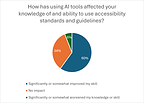
Survey conducted by The Harris Poll on behalf of University of Phoenix finds among those already using AI in the workplace, 60% say AI has improved their knowledge of and ability to use accessibility standards and guidelines.

PHOENIX, July 24, 2026 /PRNewswire/ — As artificial intelligence becomes part of how people work, learn and solve problems, a new University of Phoenix survey conducted by The Harris Poll finds that recent working learners see meaningful opportunities for AI to support accessibility. The survey was designed to understand the impact of AI in the workplace and learning environments on accessibility, defined as ensuring digital content, tools and resources, including AI tools and output, are usable by people with different abilities through inclusive design, use of assistive technology or conformance with accessibility standards, such as the Web Content Accessibility Guidelines (WCAG). The findings are being released ahead of the 36th anniversary of the Americans with Disabilities Act (ADA) on July 26.

The survey, conducted among 1,019 U.S. employed adults who completed a professionally presented training or school course in the past 12 months (“recent working learners”), found that, among workers already using AI in the workplace, 3 in 5 (60%) say AI has improved their knowledge of and ability to use accessibility standards and guidelines, including nearly 1 in 5 (19%) who report significant improvement. 

While the findings point to optimism about AI’s accessibility potential, they also reveal an opportunity for clearer organizational guidance: 45% of respondents say accessibility is absent from, unclear in, or they are uncertain whether it is covered by their workplace AI policies.

“The reality is that accessibility benefits everyone,” shares Kelly Hermann, Vice President of Accessibility and Student Affairs at University of Phoenix. “If accessibility is built in from the beginning, organizations are more likely to create AI-enabled environments that are universally usable. Clearer content, better summaries, accurate captions, and multiple formats can help workers and learners with disabilities, but they also help busy adults, multilingual learners, mobile users, and anyone trying to absorb information quickly.”

Key findings from the survey include:

Workers see AI’s accessibility potential: 89% of recent working learners identify workflows that could benefit from AI and accessibility tools, especially creating accessible documents, presentations, websites or learning materials (38%), presenting information in different formats such as plain language, audio, summaries or translations (33%), and training employees or learners on accessibility practices (30%).AI may help build accessibility awareness: Among those already using AI in the workplace, 60% say AI has improved their knowledge of and ability to use accessibility standards and guidelines.Accessibility is not always clear in workplace AI policies: 45% of recent working learners say accessibility is absent from, unclear in, or they are uncertain whether it is covered by their workplace AI policies.AI tools may not yet fully support different access needs: Among those who use workplace AI tools, only about a quarter of survey respondents (27%) say AI tools available through their workplace or professional learning environment support people with disabilities very well.Human oversight remains important: 36% of recent working learners say human review for important decisions or high-impact work should be part of responsible AI use at work or school.Workers also recognize how AI and accessibility can have an impact on their own career journey: 90% of recent working learners identify AI and accessibility skills that would be valuable in their current or desired career field, including 45% who see value in understanding when AI-generated content needs human review.

Why accessibility is essential to responsible AI adoption

As AI tools are used to draft documents, summarize information, generate captions and transcripts, create image descriptions, support learning and assist with workplace tasks, accessibility becomes central to responsible use. Poorly implemented AI can also create or amplify barriers, including inaccessible content, inaccurate summaries, biased outputs and tools that do not work effectively with assistive technologies.

“Responsible AI is not only about productivity,” Hermann said. “It is about whether the technology works for the people who need to use it. AI can help create more accessible materials and more flexible ways to engage with information, but it still requires clear policies, practical training and human judgment to make sure the outputs are accurate, applicable and usable.”

What the findings mean for employers and educators

The survey suggests that organizations have an opportunity to align AI adoption with supportive design, accessibility practices and workforce training. Employers and educators can take immediate steps by:

Naming accessibility directly in AI policies and guidance.Choosing AI tools with accessibility and assistive technology compatibility in mind.Training workers and learners to create, check and improve accessible AI-generated content.Making support pathways clear for people who experience barriers using AI tools.Keeping human review in place for important decisions, high-impact work and accessibility-sensitive outputs.

The survey also found workers want practical AI training. The most helpful resources identified by recent working learners include real-world examples from their field or industry (36%), hands-on practice using realistic workplace scenarios (34%) and step-by-step demonstrations of common tasks (33%).

Accessibility insights from University of Phoenix

Hermann shared the survey findings ahead of the ADA anniversary in recent media interviews. Hermann oversees the University’s accessibility initiative, including evaluation and remediation of curricular resources, the Center for Access, Resources, Engagement and Support Services (CARES), and the Office of Collaborative Learning and Educational Engagement. Her work focuses on fostering accessible and welcoming educational environments for students, faculty and staff.

Hermann’s office at University of Phoenix also convenes accessibility conversations through initiatives such as Access Amplified™, a free, annual virtual event focused on advancing digital accessibility in web development. The event brings together engineers, developers, designers, content authors and digital strategists for practical strategies and human-centered conversations that address the gap between coding practices and how users with assistive technology experience the web.

About the survey

The survey was conducted online within the United States by The Harris Poll on behalf of University of Phoenix from June 22–29, 2026, among 1,019 employed adults ages 18 and older who have taken a professionally presented training or a school course in the past 12 months, referred to as “recent working learners.” Data were weighted where necessary by age, gender, race/ethnicity, region, education, employment, marital status, household size, household income and smoking status to bring them in line with their actual proportions in the population.

Respondents for this survey were selected from among those who have agreed to participate in surveys. The sampling precision of Harris online polls is measured by using a Bayesian credible interval. For this study, the sample data is accurate to within +/- 3.8 percentage points using a 95% confidence level. This credible interval will be wider among subsets of the surveyed population of interest.

Review the complete survey at phoenix.edu/aiaccessibility.

About University of Phoenix

University of Phoenix is Built for Real Life. 50 Years Strong. The University innovates to help working adults enhance their careers and develop skills in a rapidly changing world through flexible online learning, relevant courses, academic AI pillars, and skills-mapped curriculum for associate, bachelor’s and master’s degree programs. Active students and alumni have access to Career Services for Life® resources including career guidance and tools. For more information, visit phoenix.edu. 

View original content to download multimedia:https://www.prnewswire.com/news-releases/as-ada-anniversary-approaches-university-of-phoenix-survey-highlights-ais-potential-to-advance-accessibility-in-work-and-learning-302834448.html

SOURCE University of Phoenix

Continue Reading

Technology

Mastech Digital to Announce Second Quarter 2026 Financial Results; Participate in Upcoming Investor Conference

Published

on

By

PITTSBURGH, July 24, 2026 /PRNewswire/ — Mastech Digital, Inc. (NYSE American: MHH) (“Mastech Digital”), a leading provider of Digital Transformation IT Services, today announced the date for the release of its financial results for the second quarter ended June 30, 2026, and its participation in an upcoming investor conference.

Second Quarter 2026 Earnings:

Mastech Digital will report its financial results for the second quarter 2026 before the market opens on Thursday, August 6, 2026. Management will host a live conference call and webcast at 9:00 a.m. Eastern Time on that day to discuss the Company’s financial performance and operating results.  The conference call will be hosted by Nirav Patel, President and CEO, and Kannan Sugantharaman, Chief Financial and Operations Officer.

Those wishing to participate via webcast should access the call through Mastech Digital’s Investor Relations website at https://investors.mastechdigital.com. Those wishing to participate via telephone may dial in at 1-800-715-9871 (USA) or 1-646-307-1963 (International) with the passcode 7506988. The replay will be available via webcast through Mastech Digital’s Investor Relations website.

Upcoming Investor Conference:

Mr. Sugantharaman will host a fireside chat at the Sidoti Micro-Cap Investor Conference on Wednesday, August 19, 2026, at 9:15 a.m. Eastern Time.

Mastech Digital management is scheduled to host virtual one-on-one and small group meetings with investors during the conference on August 19-20, 2026. Investors interested in arranging a meeting should contact their Sidoti representative or reach out to the Mastech Digital investor relations team at investors@mastechdigital.com.

About Mastech Digital, Inc.

Mastech Digital (NYSE American: MHH) is a leading provider of Digital Transformation IT Services. The Company offers Data Management, Analytics & AI Solutions, and IT Staffing Services with a digital-first approach. A minority-owned enterprise, Mastech Digital is headquartered in Pittsburgh, PA, with offices across the U.S., Canada, Europe, and India. Visit us at www.mastechdigital.com.

Investor Relations Contact:
investors@mastechdigital.com 


View original content to download multimedia:https://www.prnewswire.com/news-releases/mastech-digital-to-announce-second-quarter-2026-financial-results-participate-in-upcoming-investor-conference-302834421.html

SOURCE Mastech Digital, Inc.

Continue Reading

Technology

SOLAI Limited Announces Extraordinary General Meeting

Published

on

By

AKRON, Ohio, July 24, 2026 /PRNewswire/ — SOLAI Limited (NYSE: SLAI) (“SOLAI” or the “Company”) (previously known as “BIT Mining Limited”), a technology-driven personal AI and digital infrastructure provider, today announced that it will hold its extraordinary general meeting of shareholders at 428 South Seiberling Street, Akron, Ohio, US on August 14, 2026 at 10:00 a.m., New York time.

Holders of record of ordinary shares and preference shares of the Company at the close of business on July 20, 2026, New York time (the “Record Date”) are entitled to receive notice of, and to attend and vote at, the extraordinary general meeting or any adjournment thereof. Holders of the Company’s American Depositary Shares (“ADSs”) who wish to exercise their voting rights for the underlying ordinary shares must act through the depositary of the Company’s ADS program, Deutsche Bank Trust Company Americas.

The notice of the extraordinary general meeting, which sets forth the resolutions to be submitted to shareholder approval at the extraordinary general meeting is available on the Investor Relations section of the Company’s website at https://ir.solai.com

About SOLAI Limited

SOLAI Limited (previously known as “BIT Mining Limited”) (NYSE: SLAI) (previously traded under “BTCM”) is a technology-driven personal AI and digital infrastructure provider. Building upon its historical legacy in digital asset mining and blockchain network operations, the Company is leveraging extensive experience in large-scale hardware deployment, data center operations, and high-performance computing to build the foundational infrastructure for personal AI computing and digital asset ecosystems globally.

For more information:

SOLAI Limited
ir@solai.com
ir.solai.com
www.solai.com 

Christensen Advisory
Jason Ng
Tel: +852-2117-0861
Email: solai@christensencomms.com 


View original content:https://www.prnewswire.com/news-releases/solai-limited-announces-extraordinary-general-meeting-302834034.html

SOURCE SOLAI Limited

Continue Reading

Trending