Connect with us

Technology

AI is Redefining the Online On-Demand Food Delivery Market, Set to Grow by USD 559.2 Billion (2024-2028) Due to Restaurant-Aggregator Partnerships – Technavio Report

Published

on

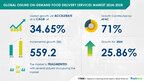
NEW YORK, Sept. 18, 2024 /PRNewswire/ — Report with market evolution powered by AI- The global online on-demand food delivery services market size is estimated to grow by USD 559.2 billion from 2024-2028, according to Technavio. The market is estimated to grow at a CAGR of 34.65% during the forecast period. Increasing partnerships between restaurants and online food delivery aggregators is driving market growth, with a trend towards growing prominence of technology and iot devices. However, growing threat from direct delivery services offered by restaurants poses a challenge. Key market players include Alibaba Group Holding Ltd., Bundl Technologies Pvt. Ltd., Curefoods India Pvt. Ltd., Delivery Hero SE, Dominos Pizza Inc., DoorDash Inc., Dunzo Digital Pvt. Ltd., EatSure, Glovoapp23 SL, Grab Holdings Ltd., Grubhub Inc., HelloFood, HungryPanda Ltd., Just Eat Takeaway.com, Meituan Dianping, Movile, Rappi Inc., Talabat, Uber Technologies Inc., and Zomato Media Pvt. Ltd..

Key insights into market evolution with AI-powered analysis. Explore trends, segmentation, and growth drivers- View the snapshot of this report

Online On-Demand Food Delivery Services Market Scope

Report Coverage

Details

Base year

2023

Historic period

2018 – 2022

Forecast period

2024-2028

Growth momentum & CAGR

Accelerate at a CAGR of 34.65%

Market growth 2024-2028

USD 559.2 billion

Market structure

Fragmented

YoY growth 2022-2023 (%)

25.86

Regional analysis

APAC, North America, Europe, Middle East and Africa, and South America

Performing market contribution

APAC at 71%

Key countries

US, China, UK, Japan, and South Korea

Key companies profiled

Alibaba Group Holding Ltd., Bundl Technologies Pvt. Ltd., Curefoods India Pvt. Ltd., Delivery Hero SE, Dominos Pizza Inc., DoorDash Inc., Dunzo Digital Pvt. Ltd., EatSure, Glovoapp23 SL, Grab Holdings Ltd., Grubhub Inc., HelloFood, HungryPanda Ltd., Just Eat Takeaway.com, Meituan Dianping, Movile, Rappi Inc., Talabat, Uber Technologies Inc., and Zomato Media Pvt. Ltd.


Market Driver

Vendors in the global online on-demand food delivery services market are enhancing their businesses through technology investments. This includes expanding customer bases, developing infrastructure, and training personnel. Notably, restaurants and food delivery services are prioritizing cross-platform ordering capabilities for customer convenience. In the US, Dominos Anyware showcases this trend, enabling orders through IoT devices like smart TVs, smartwatches, and connected cars. Technology, particularly IoT, is poised to significantly impact the market during the forecast period. 

The Online On-Demand Food Delivery Services market is experiencing significant growth due to increased smartphone penetration and internet connectivity. AI-driven recommendations, order tracking, and personalized options are trending features. Healthier, sustainable meal options, plant-based foods, organic foods, pet food, grocery, alcohol, and meal delivery are expanding categories. Dark kitchens and virtual kitchens are emerging business models. Uber Eats Japan, Cartken, Mitsubishi Electric, DoorDash, and shipping services are major players. Volume of orders is high in urban markets, driven by millennials and tech giants. Competitive prices, discounts, and customer loyalty programs are key strategies. Venture capital and strategic maneuvers are shaping consolidation. Historic period shows continued growth from 2010s to present, with payment methods evolving from cardboard boxes to online portals. Ready-to-eat food and restaurant-to-customer models are also gaining traction. 

Request Sample of our comprehensive report now to stay ahead in the AI-driven market evolution!

 Market Challenges

Several restaurants are taking control of their online food delivery operations to manage branding, quality, safety, and hygiene directly. This shift allows for a more engaged customer relationship and potential cost savings from avoiding third-party delivery service commissions. Additionally, direct orders can lead to shorter delivery times and streamlined payment processes, enhancing brand loyalty. However, this trend may challenge the growth of the global online on-demand food delivery services market, as restaurants handle increasing order volumes themselves.In the historic period of the 21st century, online on-demand food delivery services have revolutionized the way we order and consume ready-to-eat food. The platform connects restaurants to customers through an online portal, enabling seamless ordering and payment methods. Internet penetration and smartphone usage have fueled this growth, with tech giants like Amazon, Uber, and Grubhub leading the charge. Challenges in this market include last-mile connectivity, meal delivery times, and restaurant review. Shipping services must ensure timely delivery using ecommerce delivery solutions and optimizing last-mile connectivity. Virtual kitchens, cloud kitchens, and ghost kitchens have emerged to cater to the increasing demand for online food sales. Millennials, with their preference for convenience and innovation, have driven the market. Servicing personnel, instore merchandising, and order processing systems have become essential components of the business model. Packaged food services, POS systems, and digital menu boards have also become crucial. Food preferences, sales trends, and order processing times are essential factors for restaurants to consider. DemandSage and other aggregators help restaurants manage their online sales and customer preferences. Robot food delivery and cardboard boxes are the latest innovations in the industry, addressing the need for contactless delivery and sustainable packaging. Insurance, furnishing, and meal delivery volumes are other areas of focus for businesses in this sector.

Discover how AI is revolutionizing market trends- Get your access now!

Segment Overview 

This online on-demand food delivery services market report extensively covers market segmentation by

Business Segment1.1 Order-focused food delivery services1.2 Logistics-focused food delivery servicesType 2.1 Restaurant-to-consumer2.2 Platform-to-consumerGeography 3.1 APAC3.2 North America3.3 Europe3.4 Middle East and Africa3.5 South America

1.1 Order-focused food delivery services- Online on-demand food delivery services have become increasingly popular, offering customers the convenience of ordering meals from their preferred restaurants and having them delivered right to their doorstep. These services use advanced technology to facilitate seamless ordering, real-time tracking, and contactless delivery, making them a reliable solution for busy individuals and families. The market for online food delivery is growing rapidly, with companies investing in expanding their offerings, improving logistics, and enhancing the customer experience. By providing a convenient and efficient solution for meal preparation and delivery, these services have become an essential part of modern life.

Download a Sample of our comprehensive report today to discover how AI-driven innovations are reshaping competitive dynamics

Research Analysis

The Online On-Demand Food Delivery Services Market is a rapidly growing industry that caters to the increasing demand for convenience and flexibility in meal consumption. Virtual kitchens and cloud kitchens have emerged as key players in this market, focusing solely on preparing meals for delivery orders. Millennials, with their preference for technology and convenience, are a significant consumer base. The market utilizes cardboard boxes and insulated bags for delivery, ensuring the food stays fresh during transit. Aggregators and ecommerce delivery platforms facilitate online sales, with last-mile connectivity ensuring timely delivery. Smartphones and mobile devices have become essential tools for order processing and digital menu boards. Robot food delivery and meal delivery times are innovations that aim to further streamline the process. Customer preferences and sales trends shape the menu offerings, while order processing systems and restaurant reviews help maintain quality. Insurance, servicing personnel, and furnishing are other important considerations for players in this market. Food preferences and delivery volumes continue to shape the industry, with virtual restaurants and ghost kitchens gaining popularity in urban markets.

Market Research Overview

The Online On-Demand Food Delivery Services market has seen significant growth in the historic period, driven by the increasing penetration of the internet and smartphone usage. This platform-to-customer model allows ready-to-eat food to be ordered online from restaurants or virtual kitchens and delivered to customers’ doors. Payment methods have evolved, with tech giants integrating e-wallets and other digital payment systems. Urban markets, particularly in developed countries, have seen high demand for food delivery services, with aggregators and e-commerce delivery companies servicing millions of orders per day. Last-mile connectivity and the rise of dark and cloud kitchens have enabled efficient delivery and cost savings. Millennials, with their preference for convenience and technology, have fueled the growth of this market. Meal delivery times, personalized orders, and AI-driven recommendations have become essential features for customer satisfaction. Healthier meal options, sustainable meal options, plant-based foods, and organic foods are also gaining popularity. The market is witnessing consolidation, with strategic maneuvers and venture capital investments shaping the competitive landscape. Companies like Uber Eats Japan, Cartken, and Mitsubishi Electric are making significant strides in the market. The future of food delivery services looks promising, with innovations like robot food delivery and meal aggregators offering restaurant options and competitive prices.

Table of Contents:

1 Executive Summary
2 Market Landscape
3 Market Sizing
4 Historic Market Size
5 Five Forces Analysis
6 Market Segmentation

Business SegmentOrder-focused Food Delivery ServicesLogistics-focused Food Delivery ServicesTypeRestaurant-to-consumerPlatform-to-consumerGeographyAPACNorth AmericaEuropeMiddle East And AfricaSouth America

7 Customer Landscape
8 Geographic Landscape
9 Drivers, Challenges, and Trends
10 Company Landscape
11 Company Analysis
12 Appendix

About Technavio

Technavio is a leading global technology research and advisory company. Their research and analysis focuses on emerging market trends and provides actionable insights to help businesses identify market opportunities and develop effective strategies to optimize their market positions.

With over 500 specialized analysts, Technavio’s report library consists of more than 17,000 reports and counting, covering 800 technologies, spanning across 50 countries. Their client base consists of enterprises of all sizes, including more than 100 Fortune 500 companies. This growing client base relies on Technavio’s comprehensive coverage, extensive research, and actionable market insights to identify opportunities in existing and potential markets and assess their competitive positions within changing market scenarios.

Contacts

Technavio Research
Jesse Maida
Media & Marketing Executive
US: +1 844 364 1100
UK: +44 203 893 3200
Email: media@technavio.com
Website: www.technavio.com/

View original content to download multimedia:https://www.prnewswire.com/news-releases/ai-is-redefining-the-online-on-demand-food-delivery-market-set-to-grow-by-usd-559-2-billion-2024-2028-due-to-restaurant-aggregator-partnerships–technavio-report-302252084.html

SOURCE Technavio

Continue Reading
Click to comment

Leave a Reply

Your email address will not be published. Required fields are marked *

Technology

Solid Joins Snowflake and Industry Leaders to Advance Open Standards for AI-Ready Semantic Context

Published

on

By

The Open Semantic Interchange (OSI) creates a universal semantic framework that enables AI agents, analytics platforms, and data systems to share trusted business context across the modern data ecosystem.

NEW YORK, July 13, 2026 /PRNewswire/ — Solid today announced it is joining the Open Semantic Interchange (OSI), an open source initiative that creates a universal specification for all companies to standardize their fragmented data definitions with an open, vendor-neutral semantic model specification. OSI aims to enhance interoperability across various tools and platforms, offering enterprises a vendor-neutral specification that provides consistent metrics and definitions across dashboards, notebooks, and machine learning models.

OSI is an open source initiative led by Snowflake, the AI Data Cloud company, and ecosystem partners across multiple domains and industries including business intelligence (BI), data governance, data engineering, AI, financial services, and manufacturing. Its goal is to create a common, vendor-agnostic specification that defines semantic metadata in a standard, open format. By facilitating seamless semantic metadata exchange, the initiative will accelerate the adoption of AI and BI tools to streamline operations and reduce complexity. This in turn allows organizations to unify their data definitions, leading to more comprehensive and accurate data analysis and data product sharing to fuel AI innovation.

By joining the Open Semantic Interchange, Solid is committed to the creation of a universal standard that simplifies data operations and accelerates innovation for the broader ecosystem,” said Yoni Leitersdorf, CEO & Co-Founder, Solid. “Our participation ensures that semantic context can automatically move seamlessly across AI agents, data warehouses, BI tools, and analytics platforms – enabling organizations to build reliable AI systems on top of a shared, interoperable understanding of their business, without vendor lock-in.”

As a member of OSI, Solid is helping to build a transparent and community-driven standard for semantic model sharing, ensuring that business metrics and definitions remain consistent and interoperable.

“Unlocking the full potential of data and AI requires a common foundation, and the Open Semantic Interchange is the critical step in building that bedrock,” said Josh Klahr, Director of Analytics Product Management at Snowflake. “Our collaboration with partners like Solid establishes a unified, vendor-neutral standard for semantic data, ensuring clarity and consistency across the entire ecosystem. This initiative is essential for simplifying data operations, fostering innovation, and preparing organizations to build the next generation of AI applications.”

OSI is poised to revolutionize interoperability within the data and AI ecosystem by providing a transparent, community-driven standard. This collaborative effort simplifies data operations, unlocks new possibilities for innovation, and gives organizations the flexibility and efficiency they need to build a future-ready data infrastructure.

To learn more about the Open Semantic Interchange visit Snowflake’s blog here.

About Solid

Solid is the AI-native context layer for enterprise AI, automatically creating, evaluating, and maintaining the semantic context AI agents need to understand and act on business data reliably. Unlike legacy semantic layers built for dashboards and manual modeling, Solid continuously benchmarks accuracy, detects data changes, and keeps AI systems aligned as the business evolves. The result is faster deployment of trusted AI agents, workflows, and analytics across any data warehouse or AI platform.

To learn more about Solid, visit getsolid.ai

Media Contact: Blair Bader, blairb@getsolid.ai

View original content to download multimedia:https://www.prnewswire.com/news-releases/solid-joins-snowflake-and-industry-leaders-to-advance-open-standards-for-ai-ready-semantic-context-302834217.html

SOURCE Solid Data, Inc

Continue Reading

Technology

Orbis Marks 30 Years of Advancing Eye Health in Vietnam Through Long-Term Partnership and Training

Published

on

By

Flying Eye Hospital project in Da Nang, supported by FedEx, advances locally led eye care and expands access across Central Vietnam and the Central Highlands.

DA NANG, Vietnam, July 24, 2026 /PRNewswire/ — Global eye care nonprofit Orbis International is marking three decades of collaboration with Vietnam’s eye health community, a long-term partnership that has helped build local expertise, strengthen institutions, expand access to care, and support Vietnam’s growing leadership in eye health across the Asia-Pacific region.

The arrival of the Orbis Flying Eye Hospital in Da Nang represents the next chapter in that partnership. At the invitation of Da Nang Eye Hospital and with approval from the People’s Committee of Da Nang City, and support from Da Nang Department of Health, and other relevant departments and local authorities, the project will serve as a platform for hands-on training, innovation, and knowledge exchange. Through clinical training and mentorship across key specialties, the project will help approximately 230 eye care professionals build skills that will benefit communities for years to come, while supporting access to specialized services for nearly 9 million people in Central Vietnam and the Central Highlands.

Cybersight, Orbis’s telemedicine and e-learning platform, is an integral part of every Flying Eye Hospital project—connecting in-person training with continuous learning before and after the aircraft is on site. Through Cybersight, participants can prepare in advance, consult with global experts, access ongoing education, and continue building skills long after the project concludes, extending the impact of the Flying Eye Hospital far beyond the aircraft itself.

“This project is not a standalone intervention; it is the latest chapter in a long-term partnership to advance Vietnam’s eye health system,” said Ngoc Pham, Orbis Vietnam Country Director. “The most important outcome is not what Orbis has done in Vietnam, but what Vietnamese institutions and eye care professionals now lead themselves. Our role at Orbis is increasingly to support, convene, innovate, and accelerate that local leadership so progress continues long after the Flying Eye Hospital departs.”

“Around the world, Orbis is focused on creating lasting change by investing in people, institutions, technology, and local leadership,” said Kathleen Sherwin, President and CEO of Orbis International. “The Flying Eye Hospital is one part of that larger model—bringing intensive, hands-on training together with tools like Cybersight, artificial intelligence (AI), and research so local teams can continue improving care long after a project ends. Vietnam shows what is possible when long-term partnership helps proven solutions take root and scale.”

Building on decades of progress, Vietnam is emerging as a regional leader in eye health, with particular strengths in pediatric care, diabetic retinopathy, retinopathy of prematurity, workforce development, and technology-enabled care. Its growing experience in AI-supported screening, implementation, research, and evidence generation can help inform eye health progress across the Asia-Pacific region.

FedEx, a long-time supporter of Orbis, and a title sponsor for this Flying Eye Hospital project in Vietnam, donated the MD-10 aircraft that serves as the Flying Eye Hospital and continues to provide essential logistical, financial, and operational support. Volunteer pilots from FedEx fly the aircraft to its destinations around the globe. FedEx is represented on the Orbis International Board of Directors.

“At FedEx, we believe that connecting people goes beyond delivering packages – it is about creating opportunities and helping communities thrive,” said Ee-Hui Tan, managing director of FedEx Vietnam and Cambodia. “We are proud to support the return of the Orbis Flying Eye Hospital to Vietnam. Together with Orbis, we are investing in the knowledge and skills of healthcare professionals, helping strengthen Vietnam’s eye care system so more patients can access quality care closer to home.”

Underscoring Orbis’s commitment to high-quality training and patient care, QUAD A, a nonprofit accreditation organization, works with Orbis to ensure that the Flying Eye Hospital meets rigorous standards that prioritize patient safety.

Over the past 30 years, Orbis has supported the training of more than 40,000 eye care professionals and helped expand access to care for millions of people across Vietnam. Today, Vietnamese institutions and professionals are increasingly leading innovation and delivering high-quality care independently, demonstrating the impact of sustained investment in local capacity, technology, and systems change.

Looking ahead, Orbis will continue working with partners across Vietnam to scale proven solutions through workforce development, technology, Cybersight, AI-supported screening, research, and stronger health systems—so that more people can receive quality eye care closer to home.

Orbis in Vietnam

Since beginning work in Vietnam in 1996, Orbis has worked alongside government partners, hospitals, and training institutions to expand access to quality eye care and build sustainable local capacity. Cumulative impact includes:

More than 40,000 eye care professionals trained.More than 5.2 million people reached with eye care services.More than 139,000 sight-saving surgeries supported.17 retinopathy of prematurity centers supported.12 vision centers strengthened to bring care closer to communities.National clinical guidelines supported across priority eye health areas.Cybersight and AI-supported screening deployed to expand training, consultation, and early detection.

This work has supported national clinical guidelines, stronger referral pathways, improved treatment outcomes, and new models of care in areas including retinopathy of prematurity, pediatric eye care, school eye health, cataract, diabetic retinopathy, and glaucoma.

As the partnership continues, Orbis and its partners are focused on scaling proven solutions through workforce development, technology, Cybersight, AI, research, and stronger health systems—so that everyone can access quality eye care closer to home.

About Orbis International

Orbis International works around the world to prevent blindness and restore sight for children and adults in places where eye care is out of reach—so vision problems don’t make it harder to learn, earn a living, or enjoy life. Around 1.1 billion people live with vision loss, but with the right care, 90% of it is completely avoidable. That is why Orbis trains doctors, nurses, and other eye care professionals to provide care in their own communities—and works to make sure people of all ages can access the eye exams, glasses, medicine, and surgeries they need to protect and restore their sight. Orbis began this work more than 40 years ago with the Flying Eye Hospital, a teaching hospital on a plane that brings expert training and care where they’re needed most. Today, we also work with local hospitals and clinics across Africa, Asia, and Latin America to make eye care available to more people, and we use and develop technology—like our award-winning Cybersight e-learning and telehealth platform, artificial intelligence screening, and virtual reality training—to help eye care teams treat patients more effectively. Orbis ranks in the top 3% of U.S. charities, having earned top marks for transparency and accountability from Charity Navigator, GuideStar, and the Better Business Bureau. To learn more, please visit orbis.org

About FedEx Corp.

FedEx Corp. provides customers and businesses worldwide with a broad portfolio of transportation, e-commerce, and business services. With annual revenue of $92 billion, the company offers integrated business solutions utilizing its flexible, efficient, and intelligent global network. Consistently ranked among the world’s most admired and trusted employers, FedEx inspires its more than 500,000 employees to remain focused on safety, the highest ethical and professional standards, and the needs of their customers and communities. FedEx is committed to connecting people and possibilities around the world responsibly and resourcefully, with a goal to achieve carbon-neutral operations by 2040. To learn more, please visit fedex.com/about.

Media Contacts

Orbis Vietnam
Nhung Nguyen
Communications Officer
Nhung.nguyen@orbis.org
+84 0904562983

Orbis International
Jenna Montgomery
Interim Lead, Global Communications and Marketing
Jenna.montgomery@orbis.org

FedEx
Heather Harshbarger
Communications Advisor
+1 901-690-9869


View original content to download multimedia:https://www.prnewswire.com/news-releases/orbis-marks-30-years-of-advancing-eye-health-in-vietnam-through-long-term-partnership-and-training-302834196.html

SOURCE Orbis International

Continue Reading

Technology

In HelloNation, Property Management Expert Karen Nolan Explains What Property Managers Do for Landlords

Published

on

By

The article outlines how property management services support landlords through tenant screening, maintenance, and lease enforcement.

MENIFEE, Calif., July 24, 2026 /PRNewswire/ — What do property managers actually do for landlords in Menifee, CA? HelloNation has published an article that provides clear answers and practical insight into the full scope of property management services.


The HelloNation article explains that a property manager handles far more than rent collection. Property management services begin with marketing vacancies and attracting qualified renters in Menifee, CA. The article explains how tenant screening plays a central role in protecting landlords by carefully evaluating applicants and reducing the risk of future issues.

According to the article, tenant screening helps ensure that each tenant meets financial and behavioral expectations. This step supports stable occupancy and reduces turnover, which is critical for any landlord managing property in Menifee, CA. Property Management Experts note that consistent tenant screening also helps maintain the long-term value of rental properties.

Once tenants are placed, the article outlines how a property manager becomes the main point of contact. Property management services include responding to tenant concerns, handling communication, and enforcing leases. By managing these responsibilities, the property manager allows the landlord to avoid direct disputes and maintain professional distance.

The article emphasizes that lease enforcement is essential to protecting both the property and the agreement. Property managers monitor compliance with lease terms and address violations when necessary. This structured approach helps landlords in Menifee, CA, maintain order and consistency across their rental properties.

Maintenance is another major focus of property management services. The article explains that property managers coordinate maintenance and oversee property repairs to keep homes safe and functional. While they may not perform repairs themselves, they manage vendors, schedule work, and respond to urgent issues quickly.

The article notes that timely maintenance and property repairs prevent small issues from becoming larger and more expensive problems. This proactive approach supports tenant satisfaction while preserving the property’s condition. Property Management Experts highlight that consistent maintenance planning is a key benefit for any landlord.

Beyond daily operations, the HelloNation article describes the administrative side of property management services. A property manager prepares leases, maintains records, and ensures compliance with local and state regulations in Menifee, CA. This includes staying informed about legal requirements that affect landlords and rental properties.

Financial oversight is also part of the role. The article explains that property managers handle rent collection, manage deposits, and provide regular financial reporting. These services give landlords a clear understanding of property performance without requiring constant involvement.

For landlords who own multiple properties or live outside Menifee, CA, the article highlights the value of professional property management services. A property manager helps streamline operations, coordinate maintenance, and ensure that lease enforcement and tenant screening are handled consistently. This reduces stress while improving efficiency.

The article concludes that understanding the full role of a property manager helps landlords make informed decisions about their level of involvement. With responsibilities that include tenant screening, maintenance, lease enforcement, and property repairs, property management services offer a comprehensive solution for effectively managing rental properties.

What Do Property Managers Actually Do for Landlords in Menifee features insights from Karen Nolan, Property Management Experts of Menifee, California, in HelloNation.

About HelloNation
HelloNation is a premier media platform that connects readers with trusted professionals and businesses across various industries. Through its innovative “edvertising” approach that blends educational content with storytelling, HelloNation delivers expert-driven, good-news articles that inform, inspire, and empower. Covering topics from home improvement and health to business strategy and lifestyle, HelloNation highlights leaders making a meaningful impact in their communities.

View original content to download multimedia:https://www.prnewswire.com/news-releases/in-hellonation-property-management-expert-karen-nolan-explains-what-property-managers-do-for-landlords-302753105.html

SOURCE HelloNation

Continue Reading

Trending