Connect with us

Technology

Logistics Automation Market to Reach $55 Billion by 2030, Driven by E-Commerce and Supply Chain Transformation – LogisticsIQ

Published

on

NEW DELHI, Sept. 19, 2024 /PRNewswire/ — According to LogisticsIQ‘s latest report (5th edition), Logistics Automation Market is expected to grow to $55 Billion by 2030, at a CAGR of 15% between 2024 and 2030. The drivers of growth are the growth in the e-commerce industry, multichannel distribution channels, digital services, increasing e-grocery penetration and dark stores, globalization of supply chain networks, emergence of autonomous mobile robots (AMRs) and increasing demand for same day / same hour delivery.

Market Trends and Key Drivers

E-Commerce Boom and Its Impact on Logistics
The exponential growth of the e-commerce industry has significantly transformed the $5 trillion global logistics industry. Online retail requires more complex logistical processes, including individual picking, packing, and shipping, which contrasts with the bulk transportation model of brick-and-mortar retail. This surge in online retail, coupled with the increasing need for faster delivery times, is putting immense pressure on logistics providers to automate.Challenges and Market Conditions (2021-2025)
In 2021, logistics automation companies had a huge order intake, however, revenue growth was constrained by supply chain disruptions. Thus, the industry entered in 2022 with a backlog of orders, which was eventually reduced by 2023 due to macroeconomic uncertainties. In 2024, order volumes began to rise again, but cautious capital expenditure from retailers slowed down investments due to inflation, low consumer spending, and geopolitical tensions. We expect order volumes expected to rebound in 2025 as retailers aim to meet increasing consumer demand.Emerging Technologies and Market Players
The past few years have seen the emergence of cutting-edge technologies like automated picking systems, mobile manipulators, and automated cold storage solutions. Significant investments in companies like Symbotic, Geek+, Fabric, and Exotec Solutions reflect this growth. At the same time, established players such as Dematic, Honeywell Intelligrated, SSI Schafer, and Toyota Advanced Logistics continue to innovate. Additionally, major retailers including Walmart, Kroger, Amazon, Ocado, and Carrefour are actively adopting these technologies to enhance their supply chain capabilities.Apart this, piece picking players such as Righthand Robotics, Nimble, Fizyr, Kindred, Covariant, OSARO, Plus One Robotics, Berkshire Grey, and AWL have established a new attractive capability for order picking in ecommerce fulfillment as picking is least automated process in existing warehouses.

Download a Free Sample of our report on the Logistics Automation Market

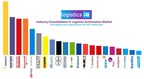
Industry Consolidation in Logistics Automation Market

Over the last decade, the logistics automation market has experienced significant consolidation. Traditional industry players are acquiring innovative technology leaders to stay competitive and address evolving market demands. Notable examples include:

Rockwell Automation’s acquisition of Clearpath Robotics and OTTO MotorsZebra’s acquisition of Fetch RoboticsToyota’s acquisition of Vanderlande, Bastian Solutions and ViaStoreHoneywell’s acquisition of Intelligrated and TransnormJungheinrich acquired Magazino and ArculusSSI Schafer acquired DS AutomotionABB acquired ASTI Mobile Robotics and SevensenseKPI Solutions acquired Kuecker Logistics Group, Pulse Integration, QC SoftwareKörber acquired Cohesio Group, Siemens Logistics, HighJumpTeradyne acquired MiR, Energid, AutoGuide Mobile Robots

These mergers and acquisitions reflect the ongoing shift towards automation and the integration of cutting-edge technologies across the supply chain.

Read full report on the Logistics Automation Market Size, Growth, Share, Trends, and Forecast

Key Markets and Growth Opportunities

Top Markets: The United States, China, and Germany account for more than 50% of the demand for logistics automation, with strong market penetration in Europe, particularly in Germany, Italy, France, and the Netherlands. Western Europe represents around 30% of the global market. Emerging markets in APAC, particularly in India and Southeast Asia, are also showing strong growth potential, as are regions like the Middle East and Latin America.Emerging opportunities: Latin America is still under-penetrated with regards to automation; however, things are set to change and market is set to observe a high growth in Brazil and Mexico. Within Europe, Central and Eastern Europe is a fast-growing region, with Poland and Czech Republic emerging as logistics hub and showing good growth prospects.Grocery Industry: The grocery sector is a key area for logistics automation, driven by the need for high-frequency deliveries and the growing demand for online grocery services. Grocery distributors ship high cubic volumes of merchandise to retail stores with frequent deliveries to ensure product freshness.  Grocery distribution center operations are amongst the most labour intensive of any industry. Grocery automation market is expected to reach over $7 billion by 2030.AGV and AMR Market Growth: The market for Automated Guided Vehicles (AGVs) and Autonomous Mobile Robots (AMRs) is projected to experience rapid growth, with a CAGR of over 20% by 2030. AMRs, which can operate without external guidance systems like optical tape or sensors, are becoming increasingly popular due to their ease of deployment in existing warehouse infrastructures.We expect AGVs/AMRs to have more than 20% market share by 2030 in this market led by players such as Seegrid, Balyo, Hai Robotics, Geek+, GreyOrange, HikRobot, Quicktron, Locus Robotics, Fetch Robotics (Zebra), 6 River Systems (Ocado), Teradyne (MiR, AutoGuide Mobile Robots), Rocla, JBT, ek-robotics, Omron, Rockwell Automation (Clearpath Robotics, OTTO Motors). We further see more consolidation and M&A in the mobile robots space as larger System integrators look to complete their product portfolios.

Order Picking and Automation Trends

Manual vs. Automated Picking: The order picking process remains one of the most labor-intensive tasks in the warehouse, especially in e-commerce fulfillment. While manual picking is still preferred for operations with a large variety of SKUs, automated picking systems and robotic solutions are gaining traction. Technologies such as RFID, pick-to-light, and pick-to-voice systems help improve efficiency even in semi-automated environments.Piece Picking Robots: Companies such as Righthand Robotics, Berkshire Grey, Osaro, and Covariant are leading the charge in developing piece picking robots that are ideal for e-commerce fulfillment. These robots significantly reduce labor costs and increase throughput, offering a high return on investment for businesses.

Purchase the full report on the Logistics Automation Market By Technology (AGV/AMR, ASRS, Conveyors, Sortation, Order Picking, Automatic Identification and Data Capture, Palletizing & Depalletizing, Overhead Systems, MRO Services and WMS/WES/WCS), By Industry (E-commerce, General Merchandise, Grocery, Apparel, Food & Beverage, Pharma, 3PL), By Geography – Global Forecast to 2030

What will you get in this report?

500+ Pages, 290+ Exhibits and 350+ Market tables for7 major Industry Verticals (eCommerce, Grocery, General Merchandise, Apparel, Food & Beverage, 3PL, Wholesale)10 Technologies (Mobile Robots, AS/RS, Conveyors, Sortation, Order Picking, Automatic Identification and Data Capture (AIDC), Palletizing and Depalletizing Robots, Overhead systems, Software (Warehouse Management, Warehouse Execution, and Warehouse Control), and MRO services.6 regions and 28 countries (United States, Canada, United Kingdom, Germany, France, Italy, Spain, Netherlands, Nordics, China, Japan, India, Australia, Thailand, Vietnam, Singapore, Indonesia, South Korea, Malaysia, Philippines, Taiwan, Saudi Arabia, UAE, Turkey, South Africa, Argentina, Brazil, Mexico)Pivot-friendly Excel file with 350+ market tables including forecast till 2030In-depth analysis of 700 companies in the ecosystem with more than 140+ company profilesFocus Group Discussion with 100+ key industry stakeholders across the value chain to collect the first-hand information to validate our analysis2 Analyst Sessions to brainstorm furtherInvestment details with 150+ M&A and 750+ funding dealsLogisticsIQ™ Exclusive Market Map (~700 Players across 15+ categories)

About LogisticsIQ

LogisticsIQ is a dedicated market research and advisory firm in Logistics & Supply Chain sector, empowering decision makers from top fortune 1000 companies, financial and research institutions, private equity and high potential start-ups with market insights to make better decisions. We enable this by analysing the right mix of the best data, the best research methodologies, and the best industry panel to deliver value to our clients.

Media Contact
Name: Sunny M.
Email: sunny@thelogisticsiq.com
Phone: +91-952-918-4938

Photo: https://mma.prnewswire.com/media/2509503/Logistics_Automation_Market.jpg
Logo: https://mma.prnewswire.com/media/2320412/LogisticsIQ_Logo.jpg


View original content:https://www.prnewswire.co.uk/news-releases/logistics-automation-market-to-reach-55-billion-by-2030-driven-by-e-commerce-and-supply-chain-transformation—logisticsiq-302252917.html

Continue Reading
Click to comment

Leave a Reply

Your email address will not be published. Required fields are marked *

Technology

BitradeX BXC First Two Subscription Rounds Sell Out, Total Subscriptions Exceed 14M USDT

Published

on

By

LONDON, May 9, 2026 /PRNewswire/ — BitradeX Capital’s ecosystem equity token, BXC, has completed its first and second subscription rounds, selling a total of 50 million BXC with subscriptions exceeding 14 million USDT. The first round sold out in 90 seconds, while the second closed within 48 hours.

While the fundraising size is not unusually large by crypto standards, the structure of the sale has attracted market attention. The first two rounds were not open to the public, but limited to high-tier BitradeX users. The first round was available only to V5 users and above, while the second round expanded access to V3 users and above.

According to BitradeX’s tier system, V3+ users typically have higher recurring investment activity through AiBot, longer platform usage history, and stronger ecosystem participation. This means the early BXC allocation was absorbed mainly by the platform’s internal high-value user base, rather than short-term speculative participants.

This approach differs from many token fundraising campaigns that prioritize broad public participation and market hype. BitradeX instead adopted a more selective, staged model, gradually lowering the participation threshold while keeping the sale within its active ecosystem community.

BXC is positioned as more than a standard platform token. Its value framework is linked to BitradeX Capital’s broader ecosystem, including its exchange business, AiBot quantitative strategies, BTX Card payments, and Labs incubation platform. Public information indicates that BXC holders may receive staking rewards, benefit from ecosystem buybacks and burns, and gain priority access to Launchpad projects and governance participation.

The third subscription round is launched on April 30 at $0.35 USDT per BXC, with a total supply of 100 million BXC. It is now open to users participating in AiBot recurring investment. The fourth round price is expected to rise to $0.45 USDT.

The long-term value of BXC will ultimately depend on the growth of BitradeX’s underlying businesses, including exchange profitability, AiBot user expansion, and BTX Card adoption. However, the rapid sellout of the first two rounds suggests that BitradeX’s core user base has already shown strong confidence in the ecosystem’s future.

View original content:https://www.prnewswire.com/news-releases/bitradex-bxc-first-two-subscription-rounds-sell-out-total-subscriptions-exceed-14m-usdt-302767467.html

SOURCE BitradeX Capital

Continue Reading

Technology

South and East Asia identified as hotspots of global warming related impacts on male fertility

Published

on

By

BEIJING, May 9, 2026 /PRNewswire/ — A major new study has shown that South and East Asia dominate patterns of global warming related decline in male fertility with the strongest and most consistent evidence coming from India, Pakistan and the southern parts of China.

The effects of increased environmental temperatures on male reproductive health include declining sperm concentration and motility and increased sperm DNA fragmentation, or genetic damage that can hinder fertilisation and embryo development.

Male related factors account for around 50 per cent of infertility cases around the world and the impact of rising ambient heat on semen parameters raises serious implications across wide areas of Asia where total fertility rates are in serious decline.

Outcomes of the study undertaken by the Taiwan IVF Group and Ton Yen General Hospital, Taiwan (China) in collaboration with Stanford University (USA) are being presented at the 2026 Congress of the Asia Pacific Initiative on Reproduction (ASPIRE) in Beijing.

Research principal and Adjunct Clinical Assistant Professor at Stanford University, Dr Jack Yu Jen Huang, MD, PhD, FACOG said: “Given the temperature sensitivity of spermatogenesis, even modest increases in ambient temperature could have cumulative, population-level effects over time.

“As global warming accelerates, male reproductive health may represent an emerging climate sensitive public health concern.”

The testes function optimally at temperatures lower than the internal body heat level, and previous studies have shown elevated scrotal or ambient temperatures can impair sperm production.

The latest research explored global patterns to reveal comparative data across regions. It is based on a systematic review of international studies on temperature exposure and semen parameter trends between 2000 and 2024. Artificial intelligence algorithms and machine learning tools were applied to extract key variables including geographic regions and semen outcomes.

Dr Huang said studies examining occupational heat exposure alone were excluded from the analysis as they reflected localised, job-specific conditions rather than broader climatic trends.

“Our findings therefore represent population level climate associated temperature effects including consistent seasonal variations showing poor semen quality parameters in warmer periods.”

The global patterns on temperature associated lower sperm concentration and motility show South and East Asia as major hot spots of concern followed by the Middle East, Europe and North America.

“South and East Asia are likely more affected due to a combination of factors including higher baseline ambient temperatures and rapid urbanisation that contribute to greater cumulative heat stress on spermatogenesis,” Dr Huang explained.

“With ongoing global warming, chronic heat exposure may increasingly impact male reproductive health.”

Dr Huang said potential approaches to address the issue include:

increasing public awareness of heat exposure and reproductive health;encouraging protective behaviours;expanding research integrating climate and reproductive health data; andexploring clinical and lifestyle interventions to mitigate heat-related effects.

The research team was assisted by research intern Jeffrey Zi Kang Huang from Taipei American School, particularly in the application of artificial intelligence in biomedical research including AI-assisted data analysis and pattern recognition across global datasets.

“Further longitudinal and mechanistic studies will be important to better define causality and guide interventions,” he added.

The ASPIRE Congress is being held at the China National Convention Centre in Beijing. More than 3,000 scientists, clinicians, nurses and counsellors in assisted reproduction from around the world are attending the Congress.

For further information, go to https://www.aspire2026.com


View original content to download multimedia:https://www.prnewswire.com/apac/news-releases/south-and-east-asia-identified-as-hotspots-of-global-warming-related-impacts-on-male-fertility-302767469.html

SOURCE ASPIRE

Continue Reading

Technology

eclicktech Attends Amazon Ads unBoxed 2026, Highlighting Four Key Trends Shaping AI-Driven Global Marketing

Published

on

By

SHENZHEN, China, May 9, 2026 /PRNewswire/ — Amazon Ads recently hosted its annual flagship event, Amazon Ads unBoxed 2026, in Shenzhen, bringing together advertisers, agencies, and technology partners to explore the next phase of AI-powered marketing innovation. This year’s event focused on how AI is reshaping the advertising ecosystem through advancements in audience targeting, creative production, campaign management, and measurement capabilities.

Yeahmobi, the global marketing brand under eclicktech and an Amazon DSP validated partner, attended the event alongside industry leaders and ecosystem partners to discuss emerging opportunities for international brand growth in an increasingly AI-driven media environment.

During the conference, Amazon Ads introduced a series of product and solution updates across four major areas:

Advanced audience targeting powered by Amazon’s first-party data infrastructure to help brands reach high-intent consumers more effectively;AI-assisted creative production designed to improve content efficiency and support personalized advertising at scale;Intelligent campaign management tools aimed at simplifying cross-channel advertising workflows;Enhanced measurement and attribution capabilities to provide advertisers with clearer visibility into campaign performance and return on investment.

According to Yeahmobi, Amazon DSP is evolving beyond a standalone programmatic buying platform into a broader marketing infrastructure supporting the full customer journey, from brand awareness to conversion.

Since becoming an Amazon Ads partner, Yeahmobi has developed integrated advertising solutions spanning awareness, audience engagement, and conversion optimization. The company stated that it has supported brands across sectors including cross-border e-commerce, consumer electronics, AI applications, and financial services in scaling their global advertising efforts through Amazon DSP.

At the event, Yeahmobi also showcased its proprietary advertising management platform, Yeahgrowth, which integrates campaign management, data analytics, and performance optimization capabilities to support centralized multi-platform operations and improved campaign visibility.

“AI is fundamentally reshaping how brands approach global growth,” said William Liu, General Manager of Yeahmobi. “We see Amazon Ads as a strategically important part of the global marketing ecosystem. Our focus is not only on media execution, but also on building scalable growth infrastructure through deeper API integration, AI-driven optimization, and data collaboration.”

Yeahmobi stated that it will continue expanding its collaboration with Amazon Ads to support brands navigating increasingly complex global media environments.

About Yeahmobi
Yeahmobi is a global marketing brand focused on helping businesses achieve international growth through digital advertising, data-driven operations, and AI-powered marketing solutions.

Forward-Looking Statements
This press release contains forward-looking statements. Actual results may differ materially due to various risks and uncertainties. The company undertakes no obligation to update any forward-looking statements.


View original content:https://www.prnewswire.com/news-releases/eclicktech-attends-amazon-ads-unboxed-2026-highlighting-four-key-trends-shaping-ai-driven-global-marketing-302767470.html

SOURCE Yeahmobi

Continue Reading

Trending