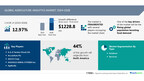
NEW YORK, Oct. 23, 2024 /PRNewswire/ — Report with market evolution powered by AI – The Global Agriculture Analytics Market size is estimated to grow by USD 1.23 billion from 2024-2028, according to Technavio. The market is estimated to grow at a CAGR of 12.97% during the forecast period. Rising global population boosting food demand is driving market growth, with a trend towards growing mergers and acquisitions in global agriculture analytics industry. However, high cost of implementing analytics in agriculture poses a challenge – Key market players include A.A.A Taranis Visual Ltd., Accenture Plc, AGCO Corp., AGEAGLE AERIAL SYSTEMS Inc., Agribotix, Bayer AG, Conservis Corp., Corteva Inc., Cropin Technology Solutions Pvt. Ltd., Deere and Co., Farmers Edge Inc., International Business Machines Corp., Iteris Inc., Microsoft Corp., Oracle Corp., PrecisionHawk Inc., SAP SE, Trimble Inc., Vistex, Inc., Wipro Ltd., and Xylem Inc..
Key insights into market evolution with AI-powered analysis. Explore trends, segmentation, and growth drivers- View the snapshot of this report
Agriculture Analytics Market Scope
Report Coverage
Details
Base year
2023
Historic period
2018 – 2022
Forecast period
2024-2028
Growth momentum & CAGR
Accelerate at a CAGR of 12.97%
Market growth 2024-2028
USD 1228.8 million
Market structure
Fragmented
YoY growth 2022-2023 (%)
12.61
Regional analysis
North America, Europe, APAC, South America, and Middle East and Africa
Performing market contribution
North America at 44%
Key countries
US, China, UK, Canada, and Japan
Key companies profiled
A.A.A Taranis Visual Ltd., Accenture Plc, AGCO Corp., AGEAGLE AERIAL SYSTEMS Inc., Agribotix, Bayer AG, Conservis Corp., Corteva Inc., Cropin Technology Solutions Pvt. Ltd., Deere and Co., Farmers Edge Inc., International Business Machines Corp., Iteris Inc., Microsoft Corp., Oracle Corp., PrecisionHawk Inc., SAP SE, Trimble Inc., Vistex, Inc., Wipro Ltd., and Xylem Inc.
Market Driver
The agriculture analytics market is witnessing an increase in mergers and acquisitions as companies aim to expand their capabilities and reach. Bayer AG launched a pilot program for a generative AI-powered virtual assistant to assist farmers with crop management, developed in collaboration with Ernst & Young and Microsoft. IBM partnered with The Climate Corporation to create an advanced agriculture analytics solution using IBM’s Watson IoT platform. Deere and Co. Partnered with Nutrien Ag Solutions to optimize logistics and streamline operations. SAP SE collaborated with DeHaat, an agricultural services provider in India, to offer end-to-end services using SAP’s cloud-based ERP solution. These collaborations will drive the growth of the global agriculture analytics market, integrating advanced technologies such as AI, machine learning, and IoT to improve farming outcomes.
Agriculture analytics is a growing market trend that leverages technology to improve farming efficiency and sustainability. Companies like Farmers Edge lead the way with innovative solutions for crop yield optimization, farm operations, and environmental factors analysis. Sustainability and food security are key drivers, with farmers utilizing weather data analytics for crop growth monitoring and irrigation management. Precision farming techniques, such as positioning systems, navigation satellite systems, drones, and artificial intelligence, are transforming large and medium-size farms. Infrastructure advancements like 5G mobile networks, satellite capabilities, and cloud computing enable real-time data access. Farmers are embracing smart farming practices, including field planning, livestock farming, and sustainable practices. The market is also witnessing the integration of IoT, AI, and vertical farming for crop management. Farm size, cloud deployment, on-premises deployment, data security, and digital agriculture are strategic activities shaping the future of agriculture analytics.
Request Sample of our comprehensive report now to stay ahead in the AI-driven market evolution!
Market Challenges
The global agriculture analytics market faces a significant challenge due to the high implementation cost. Advanced analytics integration requires substantial investments in technology and infrastructure, which is a barrier for many farmers and agribusinesses in developing regions. The cost breakdown for various types of smart farming apps is as follows: A simple farm management app, which includes record-keeping, basic analytics, and weather forecasts, costs between USD25,000 and USD65,000. A precision agriculture app with basic sensors, offering real-time data monitoring, basic sensor integration, and basic recommendations, has an estimated cost of USD10,000 to USD17,000. An advanced smart farming app with AI and automation, featuring AI-powered decision-making, automated irrigation, and advanced sensor integration, costs between USD20,000 and USD28,000. Maintenance and updates, which are essential for functionality, security, and user satisfaction, range from USD500 to USD2,000 per month or USD50 to USD100 per hour for developer support. Marketing and promotion, which are crucial for reaching the target audience and maximizing app visibility, require a budget for app store optimization, social media marketing, and targeted advertising. The high cost of implementing analytics in agriculture sectors will likely hinder the growth of the global agriculture analytics market during the forecast period.Agriculture analytics is a growing market that uses data and technology to improve farming efficiency and sustainability. Companies like Farmers Edge provide farmers with real-time insights on crop yield, weather data analytics, and crop growth monitoring. However, challenges exist, such as environmental factors, soil degradation, and climatic conditions. Precision farming techniques, including positioning systems, navigation satellite systems, and drones, help address these challenges. Farm size, infrastructure, and mobility demand also impact the adoption of agriculture analytics. Technologies like artificial intelligence, smart farming, and 5G mobile networks are driving innovation in agriculture analytics. Large and medium-size farms are increasingly adopting these solutions for field planning, irrigation management, and sustainable practices. Livestock farming and vertical farming are also benefiting from these advancements. Cloud computing, internet of things, and data security are essential considerations for agriculture analytics. Strategic activities like crop management, food demand, and infrastructure development are key drivers of growth in this market. Overall, agriculture analytics is transforming farming operations to increase farm output and ensure food security.
Discover how AI is revolutionizing market trends- Get your access now!
Segment Overview
This agriculture analytics market report extensively covers market segmentation by
Type 1.1 Solutions1.2 ServicesApplication 2.1 Precision farming2.2 Livestock monitoring2.3 Aquaculture farming2.4 Vertical farming2.5 OthersGeography 3.1 North America3.2 Europe3.3 APAC3.4 South America3.5 Middle East and Africa
1.1 Solutions- The Agriculture Analytics Market is a significant sector that utilizes data and technology to enhance farming practices. It provides farmers with valuable insights into crop yields, weather patterns, soil health, and market trends. By implementing these analytics, farmers can make informed decisions, increase productivity, and reduce costs. The market is expected to grow due to the increasing adoption of precision farming techniques and the availability of affordable data analysis tools.
Download a Sample of our comprehensive report today to discover how AI-driven innovations are reshaping competitive dynamics
Research Analysis
The Agriculture Analytics Market is experiencing significant growth due to the integration of advanced technologies such as 5G mobile networks, satellite capabilities, and the Internet of Things (IoT). These technologies enable real-time data collection and analysis for various agricultural applications, including crop management, livestock farming, and aquaculture. The demand for mobility and food demand is driving the market, with artificial intelligence (AI) and cloud computing playing crucial roles in processing and analyzing large data sets. Vertical farming, precision farming, and land preparation are key areas of focus, with predictive models and positioning systems used to optimize farm operations and improve farm output. Weather data analytics and climatic conditions monitoring help farmers make informed decisions regarding crop growth and land preparation. Satellite capabilities and drones enable real-time monitoring of farm size and soil degradation, while cloud deployment and on-premises deployment offer flexibility in data storage and access. Data security is a critical concern, with digital agriculture solutions implementing advanced security measures to protect sensitive agricultural data. Navigation satellite systems and AI are used in livestock farming to optimize feeding, health monitoring, and breeding, while predictive models help farmers anticipate market trends and adjust production accordingly. Overall, the Agriculture Analytics Market is transforming the agricultural industry by providing farmers with valuable insights to increase efficiency, productivity, and profitability.
Market Research Overview
The Agriculture Analytics Market is experiencing significant growth due to various factors. The adoption of 5G mobile networks and satellite capabilities is enabling real-time data collection and analysis, meeting the mobility demands of farmers. Artificial Intelligence (AI), Cloud Computing, and the Internet of Things (IoT) are transforming agriculture by providing insights for crop management, farm size optimization, and farm output enhancement. Food demand continues to increase, driving the need for digital agriculture and sustainable practices. Vertical farming, precision farming, and livestock farming are gaining popularity, requiring advanced analytics for crop management, land preparation, and farm operations. Farmers Edge, focusing on digital agriculture, is a strategic activity to improve crop yield and efficiency. Sustainability and food security are essential factors, with AI-driven weather data analytics and crop growth monitoring essential for climate-smart farming. Cloud Deployment and On-Premises Deployment are options for data management, with data security a critical concern. Infrastructure development, including positioning systems, navigation satellite systems, drones, and infrastructure, is crucial for smart farming. Environmental factors, such as climatic conditions and soil degradation, are monitored for sustainable practices. Overall, the Agriculture Analytics Market is revolutionizing farming through advanced techniques and technologies.
Table of Contents:
1 Executive Summary
2 Market Landscape
3 Market Sizing
4 Historic Market Size
5 Five Forces Analysis
6 Market Segmentation
TypeSolutionsServicesApplicationPrecision FarmingLivestock MonitoringAquaculture FarmingVertical FarmingOthersGeographyNorth AmericaEuropeAPACSouth AmericaMiddle East And Africa
7 Customer Landscape
8 Geographic Landscape
9 Drivers, Challenges, and Trends
10 Company Landscape
11 Company Analysis
12 Appendix
About Technavio
Technavio is a leading global technology research and advisory company. Their research and analysis focuses on emerging market trends and provides actionable insights to help businesses identify market opportunities and develop effective strategies to optimize their market positions.
With over 500 specialized analysts, Technavio’s report library consists of more than 17,000 reports and counting, covering 800 technologies, spanning across 50 countries. Their client base consists of enterprises of all sizes, including more than 100 Fortune 500 companies. This growing client base relies on Technavio’s comprehensive coverage, extensive research, and actionable market insights to identify opportunities in existing and potential markets and assess their competitive positions within changing market scenarios.
Contacts
Technavio Research
Jesse Maida
Media & Marketing Executive
US: +1 844 364 1100
UK: +44 203 893 3200
Email: media@technavio.com
Website: www.technavio.com/
View original content to download multimedia:https://www.prnewswire.com/news-releases/agriculture-analytics-market-is-projected-to-grow-by-usd-1-23-billion-from-2024-2028–driven-by-ai-and-the-rising-global-populations-food-demand-redefining-the-market-landscape–technavio-302284204.html
SOURCE Technavio










 Technology4 days ago
 Coin Market5 days ago
 Coin Market4 days ago
 Technology4 days ago
 Technology4 days ago
 Technology4 days ago