Connect with us

Technology

AI Adoption in 2024: 74% of Companies Struggle to Achieve and Scale Value

Published

on

New BCG Research on AI Adoption Identifies Fintech, Software, and Banking as the Sectors with the Highest Concentration of AI Leaders

BOSTON, Oct. 24, 2024 /PRNewswire/ — After years of investing, hiring talent, and launching pilots in artificial intelligence (AI), CEOs are now seeking tangible returns from the technology. But realizing its full value remains difficult. Even with the widespread implementation of AI programs across industries, only 26% of companies have developed the necessary set of capabilities to move beyond proofs of concept and generate tangible value, according to new research by Boston Consulting Group (BCG). 

The report, titled Where’s the Value in AI?, is based on a comprehensive survey of 1,000 CxOs and senior executives from over 20 sectors, spanning 59 countries in Asia, Europe, and North America, and covering ten major industries. Participants were asked to assess their companies’ AI maturity in 30 key enterprise capabilities.

While just 4% of companies have developed cutting-edge AI capabilities across functions and consistently generate significant value, an additional 22% have implemented an AI strategy, built advanced capabilities, and are beginning to realize substantial gains. The report designates these companies as leaders. Seventy-four percent of companies have yet to show tangible value from their use of AI.

“AI leaders are raising the bar with more ambitious goals,” said Nicolas de Bellefonds, a BCG senior partner, managing director, and coauthor of the report. “They target meaningful outcomes on cost and topline and prioritize core function transformation over diffuse productivity gains.”

Leaders Far Outperform the Rest

Over the past three years, AI leaders have achieved 1.5 times higher revenue growth, 1.6 times greater shareholder returns, and 1.4 times higher returns on invested capital. They also excel in non-financial areas like patents filed and employee satisfaction.

According to the report, leaders have six differentiating characteristics:

They focus on the core business processes as well as support functions. In fact, AI’s greatest value lies in core business processes where leaders are generating 62% of the value. Leveraging AI in both core business and support functions gives these companies a competitive advantage. They are more ambitious. Leaders look beyond pure productivity plays and back their ambitions with investment in AI and workforce enablement, making twice the investment in digital, double the people allocation, and twice as many AI solutions scaled. Leaders expect 60% higher AI-driven revenue growth and nearly 50% greater cost reductions by 2027 compared with others.They integrate AI in both cost and revenue generation efforts. Almost 45% of leaders integrate AI in their cost transformation efforts across functions (compared with only 10% of others). More than a third of leaders focus on revenue-generation from AI, compared with only a quarter of other companies. They invest strategically in a few high-priority opportunities to scale and maximize AI’s value. Data on AI adoption shows that leaders pursue, on average, only about half as many opportunities as their less advanced peers. Leaders focus on the most promising initiatives, and they expect more than twice the ROI in 2024 that other companies do. In addition, leaders successfully scale more than twice as many AI products and services across their organizations.They focus their efforts on people and processes over technology and algorithms. Leaders follow the rule of putting 10% of their resources into algorithms, 20% into technology and data, and 70% in people and processes.They have moved quickly to focus on GenAI. Leaders use both predictive AI and GenAI, and they are faster in adopting GenAI, which opens opportunities in content creation, qualitative reasoning, and orchestration of other systems.

Sectors with the highest concentration of AI leaders are typically those that experienced digital disruption early, around a decade and a half ago, giving them a head start in developing robust digital capabilities. These include fintech (49% are leaders), software (46%), and banking (35%).

More than Half of AI Value Is Derived from Core Business Functions

“Contrary to popular belief, the true potential of AI goes well beyond support functions,” said Michael Grebe, BCG senior partner, managing director, and coauthor of the report. “In fact, 62% of AI’s value lies in core business functions, enabling leaders to harness both for a significant competitive advantage.”

The companies surveyed derive more than half of AI and generative AI value from core business functions such as operations (23%), sales and marketing (20%), and R&D (13%). Support functions contribute 38% of the value, with customer service (12%), IT (7%), and procurement (7%) being the top contributors.

Companies stand to gain by pinpointing where AI can drive the most value, with the research revealing significant variations across industries:

Sales and marketing are rapidly becoming a key source of AI value in sectors including software (31% of AI value generated), travel and tourism (31%), media (26%), and telecommunications (25%).AI is making a significant impact in R&D in research-intensive sectors such as biopharma (27% of value created), medtech (19%), and automotive (29%).Customer service is a considerable source of AI-generated value so far in insurance (24%) and banking (18%).Consumer products and retail companies are making big gains with AI-driven personalization (19% and 22%).

Leaning Into the 70-20-10 Principle

The survey reveals that companies face numerous challenges when implementing AI initiatives, with around 70% stemming from people- and process-related issues, 20% attributed to technology problems, and only 10% involving AI algorithms—despite the latter often consuming a disproportionate amount of organizational time and resources. Too many lagging companies make the mistake of prioritizing the technical issues over the human ones.

An analysis of AI leaders’ capabilities, compared with other companies, shows that the key factors for scaling AI are largely people- and process-related, including change management, product development, workflow optimization, AI talent, and governance. Critical technology capabilities include data quality and management, while AI model quality and performance stand out as the top algorithm priority.

“Three-quarters of companies have yet to unlock value from AI,” said Amanda Luther, a BCG partner, managing director, and coauthor of the report. “Without decisive action, they risk falling significantly behind. This research reaffirms our long-held belief that when companies undertake digital or AI transformations, they need to focus two-thirds of their effort and resources on people-related capabilities, and the other third or so split between technology and algorithms.”

Download the publication here.

Media Contact:
Eric Gregoire:
+1 617 850 3783
gregoire.eric@bcg.com 

About Boston Consulting Group
Boston Consulting Group partners with leaders in business and society to tackle their most important challenges and capture their greatest opportunities. BCG was the pioneer in business strategy when it was founded in 1963. Today, we work closely with clients to embrace a transformational approach aimed at benefiting all stakeholders—empowering organizations to grow, build sustainable competitive advantage, and drive positive societal impact.

Our diverse, global teams bring deep industry and functional expertise and a range of perspectives that question the status quo and spark change. BCG delivers solutions through leading-edge management consulting, technology and design, and corporate and digital ventures. We work in a uniquely collaborative model across the firm and throughout all levels of the client organization, fueled by the goal of helping our clients thrive and enabling them to make the world a better place.

View original content to download multimedia:https://www.prnewswire.com/news-releases/ai-adoption-in-2024-74-of-companies-struggle-to-achieve-and-scale-value-302285294.html

SOURCE Boston Consulting Group (BCG)

Continue Reading

Technology

Acuity Analytics appoints Jon O’Donnell as Chief Executive to lead next phase of AI-enabled expansion

Published

on

By

Former IBM Managing Partner succeeds Rob King as the group builds further AI native capabilities for its financial services clients

LONDON, Nov. 4, 2026 /PRNewswire/ — Acuity Analytics has appointed Jon O’Donnell as Chief Executive Officer, effective immediately, as the Permira-backed financial services specialist expands its AI, Data and Digital capabilities through acquisitions and organic investment.

O’Donnell, formerly Chief Operating Officer, succeeds Rob King, who will become Chairman at the end of the year. King will succeed Philip Gore-Randall, who retires on 31 December after seven years as Chairman. The appointments form part of the group’s succession planning and have the full support of the Board and Permira.

The leadership changes come as Acuity Analytics broadens its insights and analytics business to help clients redesign how they operate, combining financial services expertise with AI, data and digital transformation.

O’Donnell joined Acuity Analytics as Chief Operating Officer in 2024 after more than 20 years at IBM. His roles there included leading Business and Technology Consulting divisions in Europe, the Middle East and Africa with up to 15,000 people and $3 billion in annual revenue. He was also a member of IBM Consulting’s global leadership team.

At Acuity Analytics, he has worked with the executive team on strategy, the rapid growth of its’ AI, Data and Digital Services business, technology and AI innovation, helping develop the capabilities that will underpin the group’s next stage of growth.

Jon O’Donnell said:

“Our clients are making significant decisions about where to invest in AI and how to change the way their businesses work. They need partners who understand their workflows and can turn technology investment into sustainable advantage.

“Acuity Analytics brings together people who understand financial services in depth with growing expertise in data and AI. My priority is to make that combination count: helping clients re-design their workflows, optimising operations through the best combination of AI and talent and achieve more from their investment.

“Rob has built a strong business with trusted client relationships and talented colleagues. I look forward to building on that work and continuing to benefit from his experience as he transitions to the role of chairman.”

Acuity Analytics’ investment programme includes the acquisition of US data consultancy Continuus in October 2026, adding specialists in data strategy, governance and data platforms. This followed the acquisition of data and AI specialist Ascent in 2025 and PPA Group in 2024, a technology led managed services provider to the Lending industry.

Rob King said:

“Jon brings substantial experience of leading technology businesses and helping organisations change how they operate. Since joining Acuity Analytics, he has combined that experience with a clear understanding of our clients, our people and the opportunities ahead.

“We have invested significantly in AI, digital and data, building on the industry expertise that has always distinguished Acuity Analytics. Jon is the right person to lead the business through its next stage of growth.

“I would also like to thank Philip Gore-Randall for his contribution as chairman over the past seven years. His judgement, counsel and support have been invaluable to me and have helped guide Acuity Analytics through a period of significant growth and change.”

King led Acuity Analytics through its separation from Moody’s in 2019 and its subsequent expansion. As chairman, he will lead the board and support O’Donnell and the executive team, while remaining involved in selected investor and client relationships.

About Acuity Analytics

Acuity Analytics is the trading name of Acuity Analytics Knowledge Partners, a global provider of research, data management, analytics and AI-enabled solutions to financial institutions and corporates.

With more than 7,800 analysts, data specialists and technologists across 28 locations, the firm combines financial services expertise with data and AI capabilities. Acuity Analytics supports more than 850 organisations.

Acuity Analytics was established as a separate business from Moody’s Corporation in 2019 following its acquisition by Equistone Partners Europe. In January 2023, funds advised by Permira acquired a majority stake, with Equistone remaining invested as a minority shareholder.

For more information, visit Acuity Analyticsanalytics.com.

Media enquiries
Gill Galassi
Director of Brand and Communications
Gill.Galassi@Acuity Analyticsanalytics.com
+44 (0)7961 244215


View original content to download multimedia:https://www.prnewswire.co.uk/news-releases/acuity-analytics-appoints-jon-odonnell-as-chief-executive-to-lead-next-phase-of-ai-enabled-expansion-302928876.html

Continue Reading

Technology

FinChain Partners with Plume to Launch Yield Enhancement Strategy, Introducing an Innovative Leveraged Yield Solution for RWA Assets

Published

on

By

HONG KONG, Nov. 4, 2026 /PRNewswire/ — FinChain, a compliant blockchain-based financial infrastructure platform, today officially announced the launch of FLEX & FINO, an innovative on-chain Yield Enhancement Strategy jointly introduced with Plume, the Open Finance platform for institutional assets.

This is a leveraged looping yield product for the interest-bearing RWA asset FUSD. It marks FUSD’s evolution from a simple yield-bearing holding into structured strategy applications. It also provides a reusable practical template for institutional RWA assets in on-chain DeFi scenarios, laying a solid foundation for FinChain’s pipeline of further structured RWA products.

FUSD (FinChain Dollar), FinChain’s core interest-bearing RWA asset, is fully backed by tokenized U.S. short-term Treasuries and compliant money market funds. Its reserve assets are maintained at a minimum 100% collateralization ratio and held by designated custodians; the yield generated by these reserve assets constitutes the native yield source of FUSD. FLEX & FINO is built on a FUSD/USDC looping leverage strategy, operating on FUSD’s compliant yield-bearing underlying assets. Users use FUSD as collateral to earn FUSD’s native yield, borrow USDC against that collateral, and deploy the borrowed USDC into liquidity pools to earn additional APY (Annual percentage yield). The product applies a 90% utilization cap to manage leverage risk; under baseline assumptions, the strategy’s expected annualized APY can reach up to 7.2%. The redemption settlement cycle is T+2, while the interest settlement cycle ranges from T+14 to T+30. By completing the full “collateralize — borrow — deploy into pool” loop, the product is more than a technical innovation: it is a significant expansion of RWA use cases, bringing the yield logic of traditional asset management into the Web3 environment and offering institutional investors a new on-chain yield option. Under the partnership framework agreed by both parties, the TVL (Total Value Locked) associated with FLEX & FINO will be displayed under Partner Protocol and Nest Protocol after launch.

Plume is an open financial platform for institutional assets. It brings institutional assets out of closed financial systems into open, programmable, globally accessible markets.

“Our partnership with Plume is not merely technical synergy,” said Zhao Chen, CEO of FinChain. “It is a meaningful step forward in the evolution of RWA financial infrastructure. As a modular blockchain ecosystem focused on the RWA sector, Plume will greatly expand the application boundaries of FUSD. Underpinned by high-credit-quality real-world assets, FUSD brings the yield-generating power of traditional finance into on-chain DeFi. As an RWA infrastructure provider, FinChain will continue to uphold the principles of compliance and prudence, advance the deep integration of real-world assets and blockchain, build a secure and efficient on-chain RWA financial system, and work with our ecosystem partners to consolidate our leading position in the institutional RWA sector.”

“The key to the growth of RWA lies in moving from asset issuance to genuinely usable financial applications,” said Chris Yin, CEO of Plume. “FUSD is backed by solid real-world asset reserves, and the launch of FLEX & FINO proves that a modular RWA blockchain can carry sophisticated institutional-grade financial strategies. We look forward to continuing to explore RWA DeFi use cases together with FinChain and to attracting more traditional institutions into the on-chain RWA ecosystem.”

The launch of FLEX & FINO is the first deliverable of the strategic partnership between FinChain and Plume. Ahead of it, the two teams conducted multiple rounds of technical discussion and solution refinement covering on-chain adaptation of RWA assets, strategy modeling and risk control. FinChain has also completed its integration with KuCoin, enabling FUSD to access KuCoin’s RCMS staking mirror solution and expanding FUSD’s institutional collateral use cases.

FinChain is continuously strengthening its full-stack RWA capabilities, advancing on multiple fronts including RWA asset issuance, custodial staking mapping and structured strategy products, while expanding collaboration with leading trading platforms at home and abroad as well as RWA blockchain ecosystem partners.

The launch of the FLEX & FINO Yield Enhancement Strategy fully demonstrates FinChain’s forward-looking positioning in RWA product innovation. FinChain will continue to work with global ecosystem partners to bring the capabilities of traditional financial products on-chain, combining the risk-management logic of traditional finance with Web3 innovation. Going forward, FinChain will stay open and innovative, joining hands with partners worldwide to unlock more possibilities for RWA and to deliver more diversified and professional digital financial solutions to institutional clients.

About FinChain

FinChain is an intelligent crypto-finance brand incubated by Fosun Wealth Holdings. Positioned as a Web3 brand for a global real-asset financial blockchain network — and as a financial infrastructure platform that enables the on-chain circulation of real-world assets — FinChain focuses on on-chain identity, RWA technology, asset issuance and on-chain liquidity management. It is committed to connecting traditional financial assets with digital asset use cases, and to continuously expanding FUSD’s institutional adoption and ecosystem partnerships. To learn more, visit: www.finchain.global 

About Plume

Plume is the Institutional Open Finance platform. It brings institutional assets out of closed financial systems into open, programmable, globally accessible markets. Plume Vaults, Plume’s flagship asset management protocol, opens institutional assets from Apollo, WisdomTree, Hamilton Lane, and other leading firms to global investors through compliant, non-custodial vaults. Backed by Apollo Global Management, Galaxy Digital, and Brevan Howard. It holds a SEC transfer-agent registration via Kimber Transfer Agency LLC and a licence from the Bermuda Monetary Authority.

For more information, visit: https://plume.org 


View original content:https://www.prnewswire.com/apac/news-releases/finchain-partners-with-plume-to-launch-yield-enhancement-strategy-introducing-an-innovative-leveraged-yield-solution-for-rwa-assets-302928878.html

SOURCE Finchain Holdings (Cayman) Limited

Continue Reading

Technology

Singapore leads region in race to next-generation AI

Published

on

By

AI is moving from experimentation to strategic deployment among Singaporean businessesAdvanced AI tools are gaining momentum across organisations Deeper integration, governance and resilience are now the priorities for local businesses

SINGAPORE, Nov. 4, 2026 /PRNewswire/ — Businesses are moving beyond basic AI, with Singapore recording the strongest demand for agentic AI among all markets surveyed in a new CPA Australia survey.

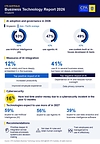
CPA Australia’s Business Technology Report 2026 found 56 per cent of organisations expect to increase their use of agentic AI over the next 12 months, the highest result among surveyed markets. AI adoption is also near universal, with 93 per cent of businesses using AI compared with the survey average of 89 per cent.

Nearly half of respondents reported using advanced AI applications such as custom-built AI solutions and agentic AI, signalling a shift from off-the-shelf tools to technologies tailored to specific business needs.

While adoption is high, the opportunity now lies in deeper integration. Forty-one per cent of respondents said AI is used across several areas of the business, while only 12 per cent reported AI is deeply embedded throughout their organisation.

The annual survey of 1,679 accounting and finance professionals across Australia, Hong Kong, Malaysia, Chinese Mainland and Singapore suggests the next challenge is embedding AI across business functions rather than simply adopting the technology.

CPA Australia’s Singapore Deputy Divisional President, Joshua Ong, said the findings indicate businesses are moving beyond AI experimentation and focusing on how the technology can drive productivity, performance and competitive advantage.

“AI adoption is already widespread. What sets leading organisations apart is how deeply they integrate AI into their operations,” Mr Ong said.

“Businesses are increasingly looking beyond generic AI tools and investing in more sophisticated technologies that can improve productivity, support decision-making and automate complex tasks.

“This direction aligns closely with Singapore’s updated National AI Strategy, which places greater emphasis on moving businesses towards meaningful AI adoption and deeper integration across sectors. Singapore’s strong interest in agentic AI suggests many businesses are already preparing for the next stage of digital transformation.”

“The opportunity now is for businesses to translate that enthusiasm into practical applications that deliver measurable value, while maintaining effective governance and human oversight.”

According to respondents, the leading benefits of AI are increased productivity, improved employee experience, and greater accuracy and efficiency in repetitive tasks.

Digital maturity remains a key strength. Ninety per cent of respondents use data analytics and business intelligence tools, while 84 per cent use cybersecurity software.

Cybersecurity remains a concern, however. Sixteen per cent reported losing time or money due to a cyber incident in the past year. While below the survey-wide figure of 19 per cent, the finding highlights the need for continued investment in cyber resilience as reliance on AI and data grows.

Respondents identified overreliance on AI, reduced human oversight, data privacy concerns and the pace of technological change as the biggest barriers to deeper AI adoption.

“Organisations that combine innovation with strong governance, cybersecurity and workforce capability will be best placed to realise the full value of AI,” Mr Ong said.

Key findings

93% use AI, compared with the survey average of 89%.Nearly half use advanced AI applications, including custom-built and agentic AI solutions.56% expect to increase their use of agentic AI in 2027, the highest result among surveyed markets and above the survey average of 45%.41% use AI across multiple business functions.12% have deeply embedded AI across their organisation.90% use data analytics and business intelligence tools.84% use cybersecurity software.16% reported losing time or money due to a cybersecurity incident in the past year, compared with 19% across all surveyed markets.

About CPA Australia

CPA Australia is Australia’s leading professional accounting body and one of the largest in the world. We have more than 176,000 members in over 100 countries and regions. Our core services include education, training, technical support and advocacy. CPA Australia provides thought leadership on local, national and international issues affecting the accounting profession and public interest. We engage with governments, regulators and industries to advocate policies that stimulate sustainable economic growth and have positive business and public outcomes. A CPA is a Certified Practising Accountant. More at cpaaustralia.com.au

View original content to download multimedia:https://www.prnewswire.com/apac/news-releases/singapore-leads-region-in-race-to-next-generation-ai-302928802.html

SOURCE CPA Australia

Continue Reading

Trending