Connect with us

Technology

Fuel Analyzer Market to Grow by USD 211 Million (2024-2028) as Alternative Fuel Demand Rises; AI-Redefined Market Landscape Report – Technavio

Published

on

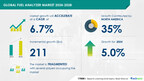
NEW YORK, Oct. 29, 2024 /PRNewswire/ — Report with market evolution powered by AI – The global fuel analyzer market size is estimated to grow by USD 211 million from 2024-2028, according to Technavio. The market is estimated to grow at a CAGR of  6.7%  during the forecast period. Increasing demand for alternative fuels is driving market growth, with a trend towards automation in fuel testing. However, complexities in designing fuel analyzers  poses a challenge.Key market players include AMETEK Inc., directindustry, Elementar Americas Inc., eralytics GmbH, HORIBA Ltd., Icon Analysers, IKM Instrutek AS, Imenco, Koehler Instrument Co Inc, Labindia Instruments Pvt. Ltd., Malvern Panalytical Ltd., PAC LP, Phase Analyzer Co. LTD, Real Time Analyzers Inc., Shimadzu Corp., Teledyne Analytical Instruments, Thermo Fisher Scientific Inc., and Zeltex LLC.

Key insights into market evolution with AI-powered analysis. Explore trends, segmentation, and growth drivers- View the snapshot of this report

Fuel Analyzer Market Scope

Report Coverage

Details

Base year

2023

Historic period

2018 – 2022

Forecast period

2024-2028

Growth momentum & CAGR

Accelerate at a CAGR of 6.7%

Market growth 2024-2028

USD 211 million

Market structure

Fragmented

YoY growth 2022-2023 (%)

5.0

Regional analysis

North America, Europe, APAC, South America, and Middle East and Africa

Performing market contribution

North America at 35%

Key countries

US, China, and Japan

Key companies profiled

AMETEK Inc., directindustry, Elementar Americas Inc., eralytics GmbH, HORIBA Ltd., Icon Analysers, IKM Instrutek AS, Imenco, Koehler Instrument Co Inc, Labindia Instruments Pvt. Ltd., Malvern Panalytical Ltd., PAC LP, Phase Analyzer Co. LTD, Real Time Analyzers Inc., Shimadzu Corp., Teledyne Analytical Instruments, Thermo Fisher Scientific Inc., and Zeltex LLC

Market Driver

The fuel analyzer market is experiencing a notable trend towards automation, driven by the demand for more efficient, accurate, and reliable fuel testing processes. One notable example of this automation is the fuel SCAN Analyzer by Imenco. This system performs daily, weekly, and monthly tests on transportable and static storage tanks, as well as filter vessels, without human intervention. Automation not only improves accuracy but also reduces the risk of fuel contamination and wastage. The fuel SCAN Analyzer offers advanced reporting capabilities, transmitting data to end-users’ quality management systems via WiFi, 5G, or network cabling. It also maintains fuel quality throughout storage life by polishing it. Automation in fuel testing is crucial for complying with international regulations, improving operational efficiency, and reducing costs. The fuel analyzer market’s growth is expected to continue as automation drives innovation and sets new fuel quality and safety standards. 

The Fuel Analyzer market is witnessing significant growth due to increasing demand for real-time measurements of gaseous compounds like Carbon Monoxide, Carbon Dioxide, Methane, Hydrocarbons, Hydrogen, Nitrogen Oxide, Sulfur Dioxide, Helium, Chlorine, Hydrogen Chloride, Non-Methane Organic Gas, and more. Portable Gas Analyzers are trending, offering emergency detection and remote monitoring capabilities. The petrochemical industry, agriculture, and waste management sectors are major consumers. New processing plants and tight oil explorations require advanced emission monitoring systems for Gas emission standards compliance. AI and automated solutions are being adopted for pollution monitoring. Methane gas leakage from shale gas and natural gas pipelines is a concern, leading to safety control regulations. Handheld devices and clinical assays are essential for safety in industries dealing with corrosive gas mixtures. Hydrogen and carbon footprint reduction are key drivers. GHG emissions from industries like agriculture and waste management are under scrutiny. Analytical devices for gaseous compounds are crucial for industries to maintain safety and regulatory compliance. 

Request Sample of our comprehensive report now to stay ahead in the AI-driven market evolution!

Market Challenges

Fuel analyzers play a crucial role in monitoring and ensuring compliance with evolving environmental regulations, particularly in the context of emission measurements. With growing concerns over climate change and ozone layer depletion, stringent legislative measures have been proposed globally, such as the ultra-low emission standards set by the US Environmental Protection Agency (EPA). To meet these requirements, fuel analyzers must be designed to accommodate various operational needs, including measuring multiple gas components, portability for environmental assessments, and continuous monitoring at facilities. Designers face challenges in creating compact, lightweight, and energy-efficient analyzers, with key features including larger orifice sizes, vacuum capabilities, inert materials, and compliance with CE directives and RoHS standards. Fluid control is a critical aspect of fuel analyzer design, requiring specialized knowledge. Partnering with experienced suppliers can help mitigate challenges and ensure regulatory compliance and operational efficiency. Innovation is essential to capitalize on the growing demand for gas analyzers, but the complexities involved in fluid control and precise measurements make this a formidable task. Overcoming these design challenges is crucial for meeting aggressive time-to-market goals and maintaining a competitive edge in the industry. Despite these challenges, the global fuel analyzer market is expected to grow due to increasing environmental regulations and the need for more efficient and accurate emission measurements.The Fuel Analyzer market encompasses a range of analytical devices used to measure the composition and quality of various gaseous compounds. These analyzers play a crucial role in industries such as agriculture, waste management, and energy, particularly in sectors like shale gas and tight oil explorations. Challenges in this market include ensuring safety, preventing corrosion, and controlling gas levels in natural gas pipelines. Compliance with safety control regulations is essential, especially when dealing with hazardous gases like hydrogen sulfide (H2S) and carbon dioxide (CO2). In agriculture, fuel analyzers help monitor methane emissions and optimize refining capacity. In waste management, they aid in environmental emission control and explosive detection. Handheld devices offer precision analysis for workplace-hazard monitoring and preventive actions. Advanced sensors, IoT integration, and technologies like Tunable Diode Laser (TDL) and Nondispersive Infrared (NDIR) contribute to accurate gas composition analysis. Gas Analyzers are essential for emission standards compliance in industries like construction and mining. Oxygen analyzers and Gas Chromatographs, Mass Spectrometers, and Infrared Analyzers are key tools for industries dealing with combustible gases. Addressing challenges in this market requires continuous innovation and improvement in analyzer technologies.

Discover how AI is revolutionizing market trends- Get your access now!

Segment Overview 

This fuel analyzer market report extensively covers market segmentation by  

Type 1.1 Portable fuel analyzer1.2 Fixed fuel analyzerEnd-user 2.1 Transportation2.2 Oil and gas2.3 Manufacturing2.4 Aerospace2.5 Power generationGeography 3.1 North America3.2 Europe3.3 APAC3.4 South America3.5 Middle East and Africa

1.1 Portable fuel analyzer-  The global fuel analyzer market is experiencing notable growth, particularly in the portable fuel analyzer segment. Portable fuel analyzers are in high demand due to their ability to provide quick and accurate fuel analysis in various settings, including plants, ports, and fields. One such product is the Koehler K24900 Portable Fuel Property Analyzer (PFPA), which offers rapid fuel analysis using a minimal 2 mL sample size and advanced multivariate analysis. Real-Time Analyzers, Inc.’s PFA is another notable product, engineered for use in demanding environments and featuring a user-friendly design for easy operation. It uses Raman spectroscopy to identify fuel type and properties within 30 seconds, without requiring technical training. These portable fuel analyzers offer significant advantages over traditional laboratory methods, including speed, accuracy, and convenience, and are poised for substantial growth due to increasing demand for efficient and reliable fuel analysis solutions across various industries.

Download a Sample of our comprehensive report today to discover how AI-driven innovations are reshaping competitive dynamics

Research Analysis

The Fuel Analyzer Market encompasses a range of analytical devices designed to measure and analyze various gaseous compounds in various industries. These analyzers play a crucial role in sectors such as agriculture, waste management, and energy production, particularly in monitoring gas levels, ensuring safety, and preventing corrosion and gas leakages in natural gas pipelines. The market includes Gas Analyzers, Gas Chromatographs, Mass Spectrometers, Infrared Analyzers, and Nondispersive Infrared (NDIR) analyzers, among others. Advanced sensors, IoT integration, and automated solutions are driving innovation in this market. Applications include shale gas and tight oil explorations, safety control regulations, emission standards in construction and mining, and handheld devices for on-site monitoring. Key applications include methane gas analysis in natural gas pipelines and gas composition analysis in various industries. The market is expected to grow significantly due to increasing demand for efficient and accurate fuel analysis solutions.

Market Research Overview

The Fuel Analyzer market encompasses a wide range of analytical devices designed to measure and analyze various gaseous compounds in various industries. These compounds include hydrocarbons, hydrogen sulfide (H2S), carbon dioxide (CO2), methane, and other combustible gases. The market caters to diverse sectors such as agriculture, waste management, shale gas, and tight oil explorations, among others. Safety is a significant concern, with applications in corrosion prevention, gas leakage detection, and workplace hazard monitoring. Regulations governing safety control and emission standards are driving market growth. Advanced technologies such as Tunable Diode Lasers (TDL) and Tunable Filter Spectroscopy are used for precision analysis. Applications include natural gas pipelines, refining capacity expansion, and environmental emission control. Portable gas analyzers offer real-time measurements and emergency detection capabilities. The market also includes solutions for explosive detection, air pollution control, and greenhouse gas emissions. IoT integration and advanced sensors enable remote monitoring and automated solutions. Applications span from hydrocarbon facilities to construction and mining industries, with a focus on reducing carbon footprint and GHG emissions.

Table of Contents:

1 Executive Summary
2 Market Landscape
3 Market Sizing
4 Historic Market Size
5 Five Forces Analysis
6 Market Segmentation

TypePortable Fuel AnalyzerFixed Fuel AnalyzerEnd-userTransportationOil And GasManufacturingAerospacePower GenerationGeographyNorth AmericaEuropeAPACSouth AmericaMiddle East And Africa

7 Customer Landscape
8 Geographic Landscape
9 Drivers, Challenges, and Trends
10 Company Landscape
11 Company Analysis
12 Appendix

About Technavio

Technavio is a leading global technology research and advisory company. Their research and analysis focuses on emerging market trends and provides actionable insights to help businesses identify market opportunities and develop effective strategies to optimize their market positions.

With over 500 specialized analysts, Technavio’s report library consists of more than 17,000 reports and counting, covering 800 technologies, spanning across 50 countries. Their client base consists of enterprises of all sizes, including more than 100 Fortune 500 companies. This growing client base relies on Technavio’s comprehensive coverage, extensive research, and actionable market insights to identify opportunities in existing and potential markets and assess their competitive positions within changing market scenarios.

Contacts

Technavio Research
Jesse Maida
Media & Marketing Executive
US: +1 844 364 1100
UK: +44 203 893 3200
Email: media@technavio.com
Website: www.technavio.com/

View original content to download multimedia:https://www.prnewswire.com/news-releases/fuel-analyzer-market-to-grow-by-usd-211-million-2024-2028-as-alternative-fuel-demand-rises-ai-redefined-market-landscape-report—technavio-302289653.html

SOURCE Technavio

Continue Reading
Click to comment

Leave a Reply

Your email address will not be published. Required fields are marked *

Technology

In HelloNation, Senior Living Experts Rusty and Kelly Ackerman Explain What Families Should Ask a Senior Living Community

Published

on

By

TRAVERSE CITY, Mich., April 30, 2026 /PRNewswire/ — The article outlines how thoughtful questions reveal care quality, communication practices, and daily life in senior living communities.

What should families focus on when evaluating a senior living community beyond first impressions? HelloNation has released an article that provides clear guidance on how to approach this decision with confidence and clarity.

The article features insights from Senior Living Experts Rusty and Kelly Ackerman of French Manor Assisted Living in Traverse City, Michigan, and highlights how asking the right questions during a senior living community tour can reveal how care and daily life truly function.

The HelloNation article explains that while appearance and atmosphere matter, the most meaningful insights come from asking the right questions. Families who take a thoughtful approach during a senior living community tour can better understand how care, communication, and daily routines operate behind the scenes.

One of the most important areas discussed is how personalized care plans are developed and maintained. The article describes how communities assess individual needs and adjust care over time. It notes that asking about evaluation frequency and how changes in health or mobility are handled gives families a clearer understanding of long-term support.

Communication is another central topic. The article emphasizes the importance of knowing who the main point of contact is and how updates are shared. Consistent communication helps families stay informed and builds trust between residents, staff, and loved ones.

Safety measures are addressed with a focus on specifics. The article encourages families to ask about emergency response times, monitoring systems, and protocols. These safety measures are essential for both urgent situations and everyday peace of mind.

Daily routines also provide valuable insight into community life. The article explains that families should ask what a typical day includes, from meals to activities and rest periods. Observing these routines during a senior living community tour helps determine whether the environment supports both structure and independence.

Staff training is another key factor highlighted in the article. It describes how onboarding and ongoing education prepare caregivers to meet a range of needs. Senior Living Experts note that well-trained staff contribute to consistent care and are better equipped to respond to changing situations.

The article also focuses on resident engagement. Asking about social opportunities, wellness programs, and group activities helps families understand how residents stay connected and active. Strong resident engagement supports emotional well-being and fosters meaningful relationships.

Transitions are another important consideration. The article explains that families should ask how communities support new residents and those with increasing care needs. Understanding this process helps ensure continuity and reduces stress during periods of change.

In addition, the article discusses how feedback is gathered and used. Communities that hold meetings, conduct surveys, or encourage open communication tend to be more responsive. This approach supports a stable and supportive environment for residents and families alike.

Overall, the HelloNation article emphasizes that choosing a senior living community involves more than evaluating physical space. By focusing on personalized care plans, communication, safety measures, staff training, and resident engagement, families can make more informed decisions.

For readers seeking practical guidance, the article provides a clear framework for evaluating options through meaningful questions rather than surface impressions.

What Families Should Ask a Senior Living Community features insights from Rusty and Kelly Ackerman, Senior Living Experts of Traverse City, Michigan, in HelloNation.

About HelloNation
HelloNation is a premier media platform that connects readers with trusted professionals and businesses across various industries. Through its innovative “edvertising” approach that blends educational content with storytelling, HelloNation delivers expert-driven, good-news articles that inform, inspire, and empower. Covering topics from home improvement and health to business strategy and lifestyle, HelloNation highlights leaders making a meaningful impact in their communities.

View original content to download multimedia:https://www.prnewswire.com/news-releases/in-hellonation-senior-living-experts-rusty-and-kelly-ackerman-explain-what-families-should-ask-a-senior-living-community-302759459.html

SOURCE HelloNation

Continue Reading

Technology

Suzano Selects Avondale Global Gateway as Gulf Coast Hub, Bringing Regular Wood Pulp Imports Back to Louisiana for First Time in More Than 30 Years

Published

on

By

Five-year agreement establishes Avondale Global Gateway as a key Gulf Coast terminal for Suzano’s growing North American operations

AVONDALE, La., April 30, 2026 /PRNewswire/ — Avondale Global Gateway (AGG) and Suzano today announced a five-year terminal services agreement that will bring regular wood pulp imports back to Louisiana for the first time in more than 30 years.

Under the agreement, AGG will serve as one of Suzano’s terminals in the Central Gulf Coast for their wood pulp shipments arriving from Brazil, to be distributed across North America by rail. The first vessel is scheduled to arrive at AGG in the first week of May this year.

The agreement marks a significant milestone for both Louisiana and Suzano, the world’s largest pulp supplier and one of Brazil’s biggest exporters which has been present in the American market for over 40 years. Suzano’s decision also aligns with its continued expansion in the region, including its 2024 acquisition of mills in Arkansas and North Carolina from Pactiv Evergreen. As part of its North American growth strategy, Suzano selected Avondale following a two-year evaluation process focused on logistics efficiency, infrastructure, and long-term scalability. The Avondale operation will support this strategy by creating a more centralized and efficient logistics footprint on the Gulf Coast.

“An efficient and resilient supply chain is essential to our business, and Avondale offers the combination of river access, rail connectivity, port infrastructure, and operational flexibility we were looking for,” said Juliana Vizintim, Operations Executive Manager at Suzano. “This partnership strengthens our Gulf Coast logistics platform and enhances supply assurance and efficiency for our customers across North America. At Suzano, we believe it is only good for us if it is good for the world, and we view this milestone as a foundation for long-term value creation—benefiting the local community, our business partners, and our customers. Suzano and Avondale share a common vision focused on collaboration, growth, and building a sustainable future together.”

To support the new operation, AGG has completed major upgrades to 245,000 square feet of warehouse space, including new concrete flooring, five additional loading doors, loading platforms, overhead awnings, and a laser fire detection and suppression system. These improvements were made specifically to meet Suzano’s operational requirements.

In parallel, a $13 million rail expansion is underway at Avondale, funded in part through Louisiana Economic Development’s FastSites program. Together with other site improvements, total investment tied to the Suzano operation is expected to exceed $20 million over time. The project is also expected to support 50 full-time jobs.

“Bringing wood pulp back to Louisiana is a major milestone,” said Adam Anderson, Chairman and CEO of T. Parker Host, parent company of Avondale Global Gateway. “This is new activity for the state, new jobs, and meaningful investment at Avondale. It reflects the kind of long-term industrial growth we believed this site could support and shows what’s possible when the right partner, infrastructure, and location come together.”

Rail service will play a central role in the operation, allowing cargo to move efficiently from vessel to warehouse to inland destinations across the United States. AGG worked closely with Union Pacific to align infrastructure and service capacity ahead of launch.

Since T. Parker Host acquired the former Avondale Shipyard in 2018, the 275-acre site has been steadily redeveloped into a multimodal logistics hub. Today, Avondale supports more than 600 workers across site operations, tenants, and active construction.

About Avondale Global Gateway

Avondale Global Gateway is a multimodal logistics and terminal facility located on the Mississippi River in Jefferson Parish, Louisiana. Operated by T. Parker Host, the site offers deepwater dock access, large-scale warehousing, and Class I rail connectivity, supporting bulk and breakbulk cargo flows across North America. Learn more at www.avondaleglobalgateway.com

About Suzano

Suzano is the world’s largest pulp supplier, a major paper and packaging producer in the Americas, and one of Brazil’s largest employers.

Driven by a deep commitment to sustainability and innovation, Suzano produces responsibly grown raw materials that are exported to more than 100 countries, meeting global demand for bio-based solutions. These materials are used in everyday products that reach more than two billion people, including tissue, packaging, printing and writing paper, personal hygiene products, and textiles.

Founded in Brazil more than 100 years ago, Suzano operates across Latin America, North America, Europe, and Asia. The company’s shares are listed on B3 in São Paulo (SUZB3) and the New York Stock Exchange (SUZ). Learn more at suzano.com.br/en.

View original content to download multimedia:https://www.prnewswire.com/news-releases/suzano-selects-avondale-global-gateway-as-gulf-coast-hub-bringing-regular-wood-pulp-imports-back-to-louisiana-for-first-time-in-more-than-30-years-302759457.html

SOURCE Avondale Global Gateway

Continue Reading

Technology

Dolby Laboratories Reports Second Quarter 2026 Financial Results

Published

on

By

SAN FRANCISCO, April 30, 2026 /PRNewswire/ — Dolby Laboratories, Inc. (NYSE: DLB) today announced the company’s financial results for the second quarter of fiscal 2026.

“We continue to strengthen our position and create growth opportunities across existing and new business areas,” said Kevin Yeaman, President and CEO, Dolby Laboratories. “This quarter, we continued to expand our reach especially in sports with events like the Super Bowl, Winter Olympics and T20 Cricket World Cup available in Dolby and automotive with automakers including BMW and Lexus integrating Dolby into their in-car experiences.”

Second Quarter Fiscal 2026 Financial Highlights

Total revenue was $396 million, compared to $370 million for the second quarter of fiscal 2025.GAAP net income was $95 million or $0.99 per diluted share, compared to GAAP net income of $92 million or $0.94 per diluted share for the second quarter of fiscal 2025. On a non-GAAP basis, second quarter net income was $131 million or $1.37 per diluted share, compared to $131 million or $1.34 per diluted share for the second quarter of fiscal 2025.Dolby repurchased approximately one million shares of its common stock for approximately $65 million, and ended the quarter with approximately $142 million of stock repurchase authorization available going forward.

A complete listing of Dolby’s non-GAAP measures are described and reconciled to the corresponding GAAP measures at the end of this release.

Recent Business Highlights

Various sporting events were shown in Dolby Atmos and/or Dolby Vision including the Super Bowl, the 2026 Olympic Winter Games, and the ICC Men’s T20 Cricket World Cup. Apple TV is streaming Formula One in Dolby Vision.At the 2026 Beijing International Automotive Exhibition (Auto China 2026), BMW and Dolby announced the launch of Dolby Atmos in the new BMW 7 Series and the new BMW iX3 Long Wheelbase.Douyin, the Chinese version of TikTok, is fully supporting content in Dolby Vision.Hisense, TCL and Philips have announced plans to release a wide range of Dolby Vision 2 enabled TVs globally by the end of the year, with Peacock and Canal+ committed to delivering content.Sharp and SK Planet joined the Video Distribution Program, bringing the licensor total to 40.

Dividend

Today, Dolby announced a cash dividend of $0.36 per share of Class A and Class B common stock, payable on May 20, 2026, to stockholders of record as of the close of business on May 12, 2026.

Financial Outlook

Dolby’s financial outlook relies, in part, on estimates of royalty-based revenue that take into consideration various factors that are subject to uncertainty, including consumer demand for electronic products. In addition, actual results could differ materially from the estimates Dolby is providing herein due in part to uncertainty resulting from the macroeconomic effect of certain conditions, including developments concerning trade restrictions and changes in trade or diplomatic relationships, supply chain constraints, international conflicts, geopolitical instability, and fluctuations in inflation and interest rates. The uncertainty resulting from these factors has greatly reduced visibility into Dolby’s future outlook. To the extent possible, the estimates Dolby is providing for future periods reflect certain assumptions about the potential impact of certain of these items, based upon a consideration of currently available external and internal data and information. These assumptions are subject to risks and uncertainties. For more information, see “Forward-Looking Statements” in this press release for a description of certain risks that Dolby faces, and the section captioned “Risk Factors” in its Quarterly Report on Form 10-Q for the second quarter of fiscal 2026, to be filed on or around the date hereof.

Dolby is providing the following estimates for its third quarter of fiscal 2026:

Total revenue is estimated to range from $295 million to $325 million.Licensing revenue is estimated to range from $270 million to $300 million. Gross margins are anticipated to be approximately 86% on a GAAP basis and approximately 88% on a non-GAAP basis.Operating expenses are anticipated to range from $235 million to $245 million on a GAAP basis and from $200 million to $210 million on a non-GAAP basis.Effective tax rate is anticipated to be around 23% on a GAAP basis and around 21% on a non-GAAP basis.Diluted earnings per share is anticipated to range from $0.19 to $0.34 on a GAAP basis and from $0.56 to $0.71 on a non-GAAP basis.

Dolby is providing the following estimates for the full year of fiscal 2026:

Total revenue is expected to range from $1.40 billion to $1.45 billion.Licensing revenue is estimated to range from $1.295 billion to $1.345 billion. Gross margins are anticipated to be approximately 88% on a GAAP basis and approximately 90% on a non-GAAP basis.Operating expenses are anticipated to range from $930 million to $950 million on a GAAP basis and from $780 million to $800 million on a non-GAAP basis.Dolby expects operating margins to be approximately 21% on a GAAP basis and to be approximately 34% on a non-GAAP basis.Effective tax rate is anticipated to be around 23% on a GAAP basis and around 20% on a non-GAAP basis.Diluted earnings per share is anticipated to range from $2.66 to $2.81 on a GAAP basis and from $4.30 to $4.45 on a non-GAAP basis.

Conference Call Information

Members of Dolby management will lead a conference call open to all interested parties to discuss second quarter fiscal 2026 financial results for Dolby Laboratories at 2:00 p.m. PT (5:00 p.m. ET) on Thursday, April 30, 2026.

The conference call can be accessed by registering online at Dolby Laboratories Q2 Fiscal Year 2026 Financial Results, at which time registrants will receive dial-in information as well as a conference ID.

A live audio webcast of the conference call will be available at http://investor.dolby.com where it will be archived for one year.

Non-GAAP Financial Information

To supplement Dolby’s financial statements presented on a GAAP basis, Dolby management uses, and Dolby provides to investors, certain non-GAAP financial measures as an additional tool to evaluate Dolby’s operating results in a manner that focuses on what Dolby’s management believes to be its ongoing business operations and performance. We believe these non-GAAP financial measures are also helpful to investors in enabling comparability of operating performance between periods and among peer companies. Additionally, Dolby’s management regularly uses our supplemental non-GAAP financial measures to make operating decisions, for planning and forecasting purposes and determining bonus payouts. Specifically, Dolby excludes the following as adjustments from one or more of its non-GAAP financial measures:

Stock-based compensation expense: Stock-based compensation, unlike cash-based compensation, utilizes subjective assumptions in the methodologies used to value the various stock-based award types that Dolby grants. These assumptions may differ from those used by other companies. To facilitate more meaningful comparisons between its underlying operating results and those of other companies, Dolby excludes stock-based compensation expense.

Amortization of acquisition-related intangibles: Dolby amortizes intangible assets acquired in connection with business combinations. These intangible assets consist of patents and technology, customer relationships, and other intangibles. Dolby records amortization charges relating to these intangible assets in its GAAP financial statements, and Dolby views these charges as items arising from pre-acquisition activities that are determined by the timing and valuation of its acquisitions. As these amortization charges do not directly correlate to its operations during any particular period, Dolby excludes these charges to facilitate an evaluation of its current operating performance and comparisons to its past operating results. In addition, while amortization expense of acquisition-related intangible assets is excluded from Non-GAAP Net Income, the revenue generated from those assets is not excluded.

Restructuring charges or credits: Restructuring charges are costs associated with restructuring plans and primarily relate to costs associated with exit or disposal activities, employee severance benefits, and asset impairments. Dolby excludes restructuring costs, including any adjustments to charges recorded in prior periods (which may be credits), as Dolby believes that these costs are not representative of its normal operating activities and therefore, excluding these amounts enables a more effective comparison of its past operating performance and to that of other companies.

Income tax adjustments: The income tax effects of the aforementioned non-GAAP adjustments do not directly correlate to its operating performance so Dolby believes that excluding such income tax effects provides a more meaningful view of its underlying operating results to management and investors.

Using the aforementioned adjustments, Dolby provides various non-GAAP financial measures including, but not limited to: non-GAAP net income, non-GAAP diluted earnings per share, non-GAAP gross margin, non-GAAP operating expenses, non-GAAP operating margin, and non-GAAP effective tax rate. Dolby’s management believes it is useful for itself and investors to review both GAAP and non-GAAP measures to assess the performance of Dolby’s business, including as a means to evaluate period-to-period comparisons. Dolby’s management does not itself, nor does it suggest that investors should, consider non-GAAP financial measures in isolation from, superior to, or as a substitute for, financial information prepared in accordance with GAAP. Whenever Dolby uses non-GAAP financial measures, it provides a reconciliation of the non-GAAP financial measures to the most closely applicable GAAP financial measures. Investors are encouraged to review the related GAAP financial measures and the reconciliation of these non-GAAP financial measures to their most directly comparable GAAP financial measures as detailed above and below. Investors are also encouraged to review Dolby’s GAAP financial statements as reported in its US Securities and Exchange Commission (SEC) filings. A reconciliation between GAAP and non-GAAP financial measures is provided at the end of this press release and on the Dolby investor relations website, http://investor.dolby.com

Forward-Looking Statements

Certain statements in this press release and in our earnings calls, including, but not limited to, expected financial results for the third quarter of fiscal 2026 and full year fiscal 2026, Dolby’s ability to expand existing business, navigate challenging periods, pursue its long-term growth opportunities, and advance its other long-term objectives are “forward-looking statements” that inherently involve substantial risks and uncertainties. These forward-looking statements are based on management’s current expectations, and as a result of certain risks and uncertainties, actual results may differ materially from those provided. The following important factors, without limitation, could cause actual results to differ materially from those in the forward-looking statements: the potential impacts of economic conditions on Dolby’s business operations, financial results, and financial position (including the impact to Dolby partners and disruption of the supply chain and delays in shipments of consumer products; the level at which Dolby technologies are incorporated into products and the consumer demand for such products; delays in the development and release of new products or services that contain Dolby technologies; delays in royalty reporting or delinquent payment by partners or licensees; lengthening sales cycles; the impact to the overall cinema market including adverse impact to Dolby’s revenue recognized on box-office sales and demand for cinema products and services; and macroeconomic conditions that affect discretionary spending and access to products that contain Dolby technologies); risks associated with geopolitical issues and international conflicts; risks associated with trends in the markets in which Dolby operates, including the broadcast, mobile, consumer electronics, PC, and other markets; the loss of, or reduction in sales by, a key customer, partner, or licensee; pricing pressures; risks relating to changing trends in the way that content is distributed and consumed; risks relating to conducting business internationally, including trade restrictions and changes in diplomatic or trade relationships; risks relating to maintaining patent coverage; the timing of Dolby’s receipt of royalty reports and payments from its licensees, including recoveries; changes in tax regulations; timing of revenue recognition under licensing agreements and other contractual arrangements; Dolby’s ability to develop, maintain, and strengthen relationships with industry participants; Dolby’s ability to develop and deliver innovative products and technologies in response to new and growing markets; competitive risks; risks associated with conducting business in countries that have historically limited recognition and enforcement of intellectual property and contractual rights; risks associated with the health of the motion picture and cinema industries generally; Dolby’s ability to increase its revenue streams and to expand its business generally, and to continue to expand its business beyond its current technology offerings; risks associated with acquiring and successfully integrating businesses or technologies; and other risks detailed in Dolby’s SEC filings and reports, including the risks identified under the section captioned “Risk Factors” in its Quarterly Report on Form 10-Q filed on or around the date hereof. Dolby may not actually achieve the plans, intentions, or expectations disclosed in its forward-looking statements. Forward-looking statements are based upon information available to us as of the date of such statements, and while Dolby believes such information forms a reasonable basis for such statements, such information may be limited or incomplete. These statements are inherently uncertain and investors are cautioned not to unduly rely upon these statements. Except as required by law, Dolby disclaims any obligation to update information contained in these forward-looking statements whether as a result of new information, future events, or otherwise.

About Dolby

Dolby Laboratories (NYSE: DLB) is a world leader in immersive entertainment. From movies and TV, to music, sports, gaming, and beyond, Dolby transforms the science of sight and sound into spectacular experiences for billions of people worldwide across all their favorite devices. We partner with artists, storytellers, and the brands you love to transform entertainment and digital experiences through groundbreaking innovations like Dolby Atmos, Dolby Vision, Dolby Cinema, and Dolby OptiView.

Dolby, Dolby Atmos, Dolby Vision, Dolby Cinema, Dolby OptiView, and the double-D symbol are among the registered and unregistered trademarks of Dolby Laboratories in the United States and/or other countries. Other trademarks remain the property of their respective owners.

DOLBY LABORATORIES, INC.

INTERIM CONDENSED CONSOLIDATED STATEMENTS OF OPERATIONS

(in thousands, except per share amounts; unaudited)

Fiscal Quarter Ended

Fiscal Year-To-Date Ended

March 27,
2026

March 28,
2025

March 27,
2026

March 28,
2025

Revenue:

  Licensing

$          372,245

$          346,006

$          692,016

$          676,485

  Products and services

23,385

23,555

50,320

50,075

Total revenue

395,630

369,561

742,336

726,560

Cost of revenue:

  Cost of licensing

24,043

19,685

44,805

40,795

  Cost of products and services

20,688

16,152

43,134

35,816

Total cost of revenue

44,731

35,837

87,939

76,611

Gross profit

350,899

333,724

654,397

649,949

Operating expenses:

  Research and development

63,651

61,707

132,728

128,345

  Sales and marketing

96,163

89,629

187,715

184,028

  General and administrative

75,955

70,415

146,198

140,507

  Restructuring charges

2,184

4,210

12,650

9,426

Total operating expenses

237,953

225,961

479,291

462,306

Operating income

112,946

107,763

175,106

187,643

Other income/(expense):

  Interest income/(expense), net

5,024

3,559

9,142

6,205

  Other income, net

1,729

8,928

7,053

12,453

Total other income

6,753

12,487

16,195

18,658

Income before income taxes

119,699

120,250

191,301

206,301

Provision for income taxes

(24,245)

(28,024)

(42,166)

(46,005)

Net income including noncontrolling interest

95,454

92,226

149,135

160,296

Less: net income attributable to noncontrolling interest

(539)

(433)

(893)

(681)

Net income attributable to Dolby Laboratories, Inc.

$           94,915

$           91,793

$          148,242

$          159,615

Net income per share:

Basic

$              1.00

$              0.95

$              1.55

$              1.66

Diluted

$              0.99

$              0.94

$              1.54

$              1.64

Weighted-average shares outstanding:

Basic

95,218

96,329

95,342

95,972

Diluted

95,515

97,471

96,273

97,581


DOLBY LABORATORIES, INC.

INTERIM CONDENSED CONSOLIDATED BALANCE SHEETS

(in thousands; unaudited)

March 27,
2026

September 26,
2025

ASSETS

Current assets:

Cash and cash equivalents

$          594,282

$          701,893

Restricted cash

79,523

91,468

Short-term investments

460

703

Accounts receivable, net

391,293

331,096

Contract assets, net

238,924

180,804

Inventories, net

31,929

30,424

Prepaid expenses and other current assets

78,298

51,873

Total current assets

1,414,709

1,388,261

Long-term investments

81,220

80,205

Property, plant, and equipment, net

461,841

470,608

Operating lease right-of-use assets

44,759

33,204

Goodwill and intangible assets, net

919,378

926,957

Deferred taxes

209,321

214,361

Other non-current assets

118,266

114,164

Total assets

$        3,249,494

$        3,227,760

LIABILITIES AND STOCKHOLDERS’ EQUITY

Current liabilities:

Accounts payable

$           20,688

$           17,840

Accrued liabilities

405,200

369,256

Income taxes payable

15

8,928

Contract liabilities

38,837

31,382

Operating lease liabilities

9,866

10,384

Total current liabilities

474,606

437,790

Non-current contract liabilities

24,084

29,687

Non-current operating lease liabilities

39,826

28,494

Other non-current liabilities

83,846

99,843

Total liabilities

622,362

595,814

Stockholders’ equity:

Class A common stock

53

54

Class B common stock

40

40

Retained earnings

2,630,175

2,634,980

Accumulated other comprehensive loss

(12,276)

(12,517)

Total stockholders’ equity – Dolby Laboratories, Inc.

2,617,992

2,622,557

Noncontrolling interest

9,140

9,389

Total stockholders’ equity

2,627,132

2,631,946

Total liabilities and stockholders’ equity

$        3,249,494

$        3,227,760


DOLBY LABORATORIES, INC.

INTERIM CONDENSED CONSOLIDATED STATEMENTS OF CASH FLOWS

(in thousands; unaudited)

Fiscal Year-To-Date Ended

March 27,
2026

March 28,
2025

Operating activities:

Net income including noncontrolling interest

$          149,135

$          160,296

Adjustments to reconcile net income to net cash provided by operating activities:

Depreciation and amortization

48,242

43,899

Stock-based compensation

67,919

66,734

Amortization of operating lease right-of-use assets

5,417

5,725

Provision for credit losses

3,691

1,967

Deferred income taxes

5,212

(3,741)

Share of net income of equity method investees, net of cash distributions

(1,933)

(1,325)

Other non-cash items affecting net income

(1,741)

(443)

Changes in operating assets and liabilities:

Accounts receivable, net

(104,083)

(420)

Contract assets, net

(60,474)

(32,864)

Inventories

3,853

(1,155)

Operating lease right-of-use assets

(17,177)

(1,608)

Prepaid expenses and other assets

(33,842)

26,577

Accounts payable and accrued liabilities

82,873

27,267

Income taxes, net

(6,067)

5,906

Contract liabilities

7,478

3,282

Operating lease liabilities

11,029

(5,682)

Other non-current liabilities

(12,227)

(12,739)

Net cash provided by operating activities

147,305

281,676

Investing activities:

Proceeds from sales of marketable securities

15,911

Proceeds from sale of assets held for sale

16,881

Proceeds from sale of intangible assets

6,623

Purchases of property, plant, and equipment

(13,690)

(13,676)

Business combinations, net of cash and restricted cash acquired, and other related payments

(1,362)

Purchases of intangible assets

(37,775)

Net cash provided by/(used in) investing activities

(44,842)

17,754

Financing activities:

Proceeds from issuance of common stock

15,293

26,124

Repurchase of common stock

(135,004)

(49,999)

Payment of excise tax on repurchase of common stock

(261)

Payment of cash dividend

(68,674)

(63,377)

Distributions to noncontrolling interest

(1,106)

(981)

Shares repurchased for tax withholdings on vesting of restricted stock

(32,222)

(33,950)

Net cash used in financing activities

(221,713)

(122,444)

Effect of foreign exchange rate changes on cash, cash equivalents, and restricted cash

(306)

(4,396)

Net increase/(decrease) in cash, cash equivalents, and restricted cash

(119,556)

172,590

Cash, cash equivalents, and restricted cash at beginning of period

793,361

577,752

Cash, cash equivalents, and restricted cash at end of period

$          673,805

$          750,342


Licensing Revenue by Market

(unaudited)

The following table presents the composition of our licensing revenue and percentage of total licensing revenue for all periods presented (in thousands, except percentage amounts):

Fiscal Quarter Ended

Fiscal Year-To-Date Ended

Market

March 27, 2026

March 28, 2025

March 27, 2026

March 28, 2025

Broadcast

$  119,199

32 %

$    94,249

27 %

$  219,462

32 %

$  210,011

31 %

Mobile

94,240

25 %

100,123

29 %

169,189

24 %

161,647

24 %

CE

40,949

11 %

38,140

11 %

86,551

13 %

87,597

13 %

PC

59,463

16 %

58,402

17 %

88,180

13 %

89,658

13 %

Other

58,394

16 %

55,092

16 %

128,634

18 %

127,572

19 %

Total licensing revenue

$  372,245

100 %

$  346,006

100 %

$  692,016

100 %

$  676,485

100 %


GAAP to Non-GAAP Reconciliations

(unaudited)

The following tables present Dolby’s GAAP financial measures reconciled to the non-GAAP financial measures included in this release for the
second quarters of fiscal 2026 and fiscal 2025:

Net income:

Fiscal Quarter Ended

(in thousands)

March 27,
2026

March 28,
2025

GAAP net income attributable to Dolby Laboratories, Inc.

$       94,915

$       91,793

Stock-based compensation (1)

30,708

30,664

Amortization of acquisition-related intangibles (2)

9,713

10,078

Restructuring charges

2,184

4,210

Income tax adjustments

(6,190)

(6,017)

Non-GAAP net income attributable to Dolby Laboratories, Inc.

$     131,330

$     130,728

(1) Stock-based compensation included in above line items:

Cost of products and services

$            424

$            414

Research and development

9,807

9,043

Sales and marketing

10,216

10,640

General and administrative

10,261

10,567

(2) Amortization of acquisition-related intangibles included in above line items:

Cost of licensing

$        6,589

$        6,720

Cost of products and services

772

728

Sales and marketing

356

317

General and administrative

1,555

1,872

Other income, net

441

441

Diluted earnings per share:

Fiscal Quarter Ended

March 27,
2026

March 28,
2025

GAAP diluted earnings per share

$         0.99

$         0.94

Stock-based compensation

0.32

0.32

Amortization of acquisition-related intangibles

0.10

0.10

Restructuring charges

0.02

0.04

Income tax adjustments

(0.06)

(0.06)

Non-GAAP diluted earnings per share

$         1.37

$         1.34

Weighted-average shares outstanding – diluted (in thousands)

95,515

97,471


The following tables present a reconciliation between GAAP and non-GAAP versions of the estimated financial measures for the third quarter of
fiscal 2026 and full year fiscal 2026 included in this release:

Gross margin:

Q3 2026

Fiscal 2026

GAAP gross margin

86.0 %

88.0 %

Stock-based compensation

0.1 %

0.1 %

Amortization of acquisition-related intangibles

1.9 %

1.9 %

Non-GAAP gross margin

88.0 %

90.0 %

Operating expenses (in millions):

Q3 2026

Fiscal 2026

GAAP operating expenses (low – high end of range)

$235 – $245

$930 – $950

Stock-based compensation

(32)

(128)

Amortization of acquisition-related intangibles

(3)

(9)

Restructuring charges

(13)

Non-GAAP operating expenses (low – high end of range)

$200 – $210

$780 – $800

Operating margin:

Fiscal 2026

GAAP operating margin

21% +/-

Stock-based compensation

9 %

Amortization of acquisition-related intangibles

3 %

Restructuring charges

1 %

Non-GAAP operating margin

34% +/-

Effective tax rate:

Q3 2026

Fiscal 2026

GAAP effective tax rate

23.0 %

23.0 %

Stock-based compensation (low – high end of range)

(2%) – 1%

(2%) – 0%

Amortization of acquisition-related intangibles (low – high end of range)

(1%) – 0%

(1%) – 0%

Non-GAAP effective tax rate

21.0 %

20.0 %

Diluted earnings per share:

Q3 2026

Fiscal 2026

Low

High

Low

High

GAAP diluted earnings per share (low – high end of range)

$           0.19

$         0.34

$           2.66

$         2.81

Stock-based compensation

0.34

0.34

1.34

1.34

Amortization of acquisition-related intangibles

0.11

0.11

0.43

0.43

Restructuring charges

0.13

0.13

Income tax adjustments

(0.08)

(0.08)

(0.26)

(0.26)

Non-GAAP diluted earnings per share (low – high end of range)

$           0.56

$         0.71

$           4.30

$         4.45

Weighted-average shares outstanding – diluted (in thousands)

95,000

95,000

95,700

95,700

Investor Contact:
Peter Goldmacher
415-254-7415
peter.goldmacher@dolby.com 

Media Contact:
media@dolby.com


View original content to download multimedia:https://www.prnewswire.com/news-releases/dolby-laboratories-reports-second-quarter-2026-financial-results-302759263.html

SOURCE Dolby Laboratories, Inc.

Continue Reading

Trending