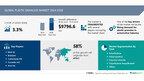
NEW YORK, Oct. 29, 2024 /PRNewswire/ — Report with market evolution powered by AI- The global plastic granules market size is estimated to grow by USD 9.79 billion from 2024-2028, according to Technavio. The market is estimated to grow at a CAGR of 3.3% during the forecast period. Rising demand for plastic granules in automotive industry is driving market growth, with a trend towards growing demand for biodegradable plastic granules. However, adverse effects of plastic granules on marine life poses a challenge. Key market players include BASF SE, Braskem, Carbokene FZE, Covestro AG, Dow Inc., DuPont de Nemours Inc., Eastman Chemical Co., Exxon Mobil Corp., Formosa Plastics Corp., Global Plastic Industries, LG Chem Ltd., Liaocheng Fengya Chemical Co., Ltd., LyondellBasell Industries N.V., Mitsubishi Chemical Group Corp., Navkar Industries, Pebo SpA, Reliance Industries Ltd., Saudi Basic Industries Corp., TotalEnergies SE, and Wiwat Plastic.
AI-Powered Market Evolution Insights. Our comprehensive market report ready with the latest trends, growth opportunities, and strategic analysis- View your snapshot now
Forecast period
2024-2028
Base Year
2023
Historic Data
2018 – 2022
Segment Covered
Type (Polyethylene, Polypropylene, Polyvinyl chloride, Polyethylene terephthalate, and Others), Form Factor (Granules and Recycled granules), and Geography (APAC, North America, Europe, Middle East and Africa, and South America)
Region Covered
APAC, North America, Europe, Middle East and Africa, and South America
Key companies profiled
BASF SE, Braskem, Carbokene FZE, Covestro AG, Dow Inc., DuPont de Nemours Inc., Eastman Chemical Co., Exxon Mobil Corp., Formosa Plastics Corp., Global Plastic Industries, LG Chem Ltd., Liaocheng Fengya Chemical Co., Ltd., LyondellBasell Industries N.V., Mitsubishi Chemical Group Corp., Navkar Industries, Pebo SpA, Reliance Industries Ltd., Saudi Basic Industries Corp., TotalEnergies SE, and Wiwat Plastic
Key Market Trends Fueling Growth
The global plastic granules market is experiencing a notable trend towards the use of eco-friendly biodegradable plastic granules. This shift is driven by rising environmental consciousness and the necessity to minimize plastic waste. Biodegradable plastic granules are sourced from renewable resources like corn starch, sugarcane, and other plant-based materials. These raw materials naturally decompose into water, carbon dioxide, and biomass when exposed to moisture and microorganisms. Biodegradable plastic granules are employed in the manufacture of various sustainable products, such as packaging materials, disposable cutlery, agricultural films, and compostable bags. These products serve as eco-friendly alternatives to conventional plastics, aligning with the expanding consumer and industrial preference for sustainable practices. The growth in demand for biodegradable plastic granules is fueled by several factors. Firstly, there is a heightened concern regarding environmental pollution and the adverse effects of plastic waste, prompting consumers and industries to opt for eco-friendly alternatives. Secondly, advancements in biopolymer research and production have significantly enhanced the performance, durability, and cost-effectiveness of biodegradable plastics, broadening their application scope. Moreover, government regulations and policies advocating the use of biodegradable materials are bolstering market growth. These regulations motivate manufacturers to adopt sustainable practices and minimize their environmental impact. Furthermore, the growing focus on corporate social responsibility and the demand for sustainable packaging solutions are fostering the adoption of biodegradable plastic granules. These factors are expected to drive the expansion of the global plastic granules market during the forecast period.
The Plastic Granules Market is witnessing significant trends in various sectors. PP, or Polypropylene, is a popular thermoplastic resin, with mechanical and chemical recycling gaining traction. Advanced Recycling Technologies are transforming post-consumer and post-industrial plastic waste into Recycled Plastic Granules. These granules are used to produce new Plastic Products, reducing reliance on Crude Oil. However, concerns over Volatile Organic Compounds (VOCs) from Plastic Waste and Plastic Pollution necessitate stricter regulations. Extended Producer Responsibility (EPR) schemes and Sustainable Packaging are driving the demand for Recycling Technologies, including Closed-loop Recycling and Bioplastics. Polyvinyl Chloride (PVC), Polyethylene Terephthalate (PET), High-Density Polyethylene (HDPE), Low-Density Polyethylene (LDPE), Polypropylene, and other Resin Types are key focus areas. Personal Protective Equipment (PPE) and Textiles are significant applications. The Recycling Rate is crucial for effective Plastic Waste Management. AI and Machine Learning are revolutionizing Plastic Recycling processes, making them more efficient and cost-effective. The market for Plastic Granules, including PP, PE, HDPE, LDPE, Polycarbonate, Polystyrene, and others, is expected to grow, driven by these trends.
Insights on how AI is driving innovation, efficiency, and market growth- Request Sample!
Market Challenges
The plastic waste issue is a significant concern for the environment, particularly in regions like West Africa, where countries such as Ghana and Nigeria experience heavy plastic pollution on their shores. Reports indicate that around 8 million tonnes of plastic waste enter the oceans yearly, with 90% of seabirds in the area found to have ingested plastic fragments. This pollution poses a severe threat to marine life, including coral reefs, which are essential for marine biodiversity and local fisheries. The plastic industry must take action to mitigate these environmental concerns while maintaining profitability. This involves investing in sustainable practices and technologies, such as improved waste management systems, promoting recycling, and developing biodegradable alternatives to traditional plastics. These initiatives will help reduce plastic waste and its detrimental impact on marine ecosystems, but may hinder the growth of the global plastic granules market during the forecast period.The Plastic Granules Market faces several challenges in the recycling sector. PP and other thermoplastic resins, like PVC, require specific recycling methods such as mechanical and chemical processes. Mechanical recycling, which includes sorting and shredding post-consumer and post-industrial plastic waste, can produce recycled plastic granules for use in new plastic products. However, chemical recycling and advanced recycling technologies like pyrolysis and gasification are needed for more complex resins. Crude oil prices impact the market, making recycling an economically viable alternative. Recycling rates for plastic waste management remain low due to challenges in collecting and sorting waste. Volatile Organic Compounds (VOCs) and other pollutants can be released during recycling, necessitating effective waste management and adherence to regulations. EPR (Extended Producer Responsibility) schemes and the use of Personal Protective Equipment (PPE) in textile and recycling industries are essential for safe and efficient plastic waste management. Sustainable packaging and closed-loop recycling are key trends driving the market, with an increasing focus on bioplastics and recycling technologies like Artificial Intelligence and Machine Learning. Resin types like PET, HDPE, LDPE, PP, and polystyrene require different recycling processes, and the market offers a range of PP, PE, HDPE, LDPE, polycarbonate, and polystyrene granules for various applications. The industry continues to innovate, with a focus on reducing plastic pollution and improving recycling rates.
Insights into how AI is reshaping industries and driving growth- Download a Sample Report
Segment Overview
This plastic granules market report extensively covers market segmentation by
Type 1.1 Polyethylene1.2 Polypropylene1.3 Polyvinyl chloride1.4 Polyethylene terephthalate1.5 OthersForm Factor2.1 Granules2.2 Recycled granulesGeography 3.1 APAC3.2 North America3.3 Europe3.4 Middle East and Africa3.5 South America
1.1 Polyethylene- The global plastic granules market is experiencing notable progress in the realm of polyethylene (PE), with Dow Inc. Being a key player. Dow’s innovative long-chain branched PE is gaining traction due to its enhanced asset flexibility and potential to decrease carbon emissions in large-scale PE production. Sustainability is a primary focus, as Dow aims to tackle global challenges like climate change and resource scarcity, while catering to customer needs. Low-density polyethylene (LDPE), which has been in use for 90 years, remains vital for incorporating long-chain branched PE. This PE type is indispensable for polymer processing, offering unique properties that distinguish it from other PE varieties. Innovative polymer microstructures, particularly long-chain branched PE, are a significant area of research due to their potential to provide differentiated properties. This PE variant boosts PE’s performance by improving processability and mechanical properties, making it an appealing choice for various applications such as packaging, construction, automotive, and consumer goods. Long-chain branched PE’s versatility enables its application in diverse industrial processes, leading to more efficient and sustainable production methods. By reducing carbon emissions and enhancing resource efficiency, this advanced material aligns with global sustainability objectives and regulatory requirements. The PE segment’s advancements will fuel the expansion of the global plastic granules market throughout the forecast period.
Download complimentary Sample Report to gain insights into AI’s impact on market dynamics, emerging trends, and future opportunities- including forecast (2024-2028) and historic data (2018 – 2022)
Research Analysis
Plastic granules are small pellets or beads made from melted plastic resins, used as raw materials in manufacturing various plastic products. Sustainable packaging is driving the demand for plastic granules derived from recycled sources. Recycling technologies, including closed-loop recycling, play a crucial role in producing recycled plastic granules. Bioplastics, an eco-friendly alternative to traditional plastics, are also gaining popularity, made from renewable resources. Advanced technologies like Artificial Intelligence and Machine Learning are being integrated into plastic recycling processes to optimize efficiency and reduce Volatile Organic Compounds (VOCs). Resin types such as Polyethylene Terephthalate (PET), High-Density Polyethylene (HDPE), Polyvinyl Chloride (PVC), and others, are commonly used to produce plastic granules. Crude oil prices significantly impact the cost of producing virgin plastic granules, making recycled plastic granules increasingly attractive. Plastic pollution is a pressing issue, and the production and use of plastic granules contribute to it. Efforts are being made to minimize plastic waste and promote the circular economy by using recycled plastic granules in various applications. Thermoplastic granules, including PP Granules, PE Granules, HDPE Granules, LDPE Granules, Polycarbonate Granules, and Polystyrene Granules, are essential building blocks for creating a wide range of plastic products.
Market Research Overview
Plastic granules are small pellets or beads made from melted plastic that are used as raw materials in the production of various plastic products. Sustainable packaging is a significant driver for the plastic granules market as businesses seek eco-friendly alternatives to traditional packaging. Recycling technologies, including closed-loop recycling, are gaining popularity to reduce plastic waste and produce recycled plastic granules. Bioplastics, derived from renewable sources, are another segment of the plastic granules market. Advanced technologies like Artificial Intelligence and Machine Learning are being used to optimize production processes and improve the quality of plastic granules. Resin types, such as Polyethylene Terephthalate (PET), High-Density Polyethylene (HDPE), Low-Density Polyethylene (LDPE), Polypropylene (PP), Polyvinyl Chloride (PVC), and others, are used to produce plastic granules. Mechanical and chemical recycling, as well as advanced recycling technologies, are used to convert plastic waste into recycled plastic granules. The plastic granules market is influenced by factors such as crude oil prices, plastic recycling rates, plastic waste management, and plastic pollution. Personal protective equipment (PPE) and textile industries are major consumers of plastic granules. Volatile Organic Compounds (VOCs) are a concern in plastic production and recycling, and efforts are being made to reduce their emissions. Plastic granules are thermoplastic, meaning they can be melted and reformed multiple times, making them a versatile raw material for various industries. The recycling rate for plastic waste is increasing, and managing plastic waste effectively is crucial for reducing plastic pollution. PP Granules, PE Granules, HDPE Granules, LDPE Granules, Polycarbonate Granules, and Polystyrene Granules are some of the types of plastic granules used in various industries. The plastic granules market is expected to grow as the demand for sustainable and eco-friendly plastic solutions increases.
Table of Contents:
1 Executive Summary
2 Market Landscape
3 Market Sizing
4 Historic Market Size
5 Five Forces Analysis
6 Market Segmentation
TypePolyethylenePolypropylenePolyvinyl ChloridePolyethylene TerephthalateOthersForm FactorGranulesRecycled GranulesGeographyAPACNorth AmericaEuropeMiddle East And AfricaSouth America
7 Customer Landscape
8 Geographic Landscape
9 Drivers, Challenges, and Trends
10 Company Landscape
11 Company Analysis
12 Appendix
About Technavio
Technavio is a leading global technology research and advisory company. Their research and analysis focuses on emerging market trends and provides actionable insights to help businesses identify market opportunities and develop effective strategies to optimize their market positions.
With over 500 specialized analysts, Technavio’s report library consists of more than 17,000 reports and counting, covering 800 technologies, spanning across 50 countries. Their client base consists of enterprises of all sizes, including more than 100 Fortune 500 companies. This growing client base relies on Technavio’s comprehensive coverage, extensive research, and actionable market insights to identify opportunities in existing and potential markets and assess their competitive positions within changing market scenarios.
Contacts
Technavio Research
Jesse Maida
Media & Marketing Executive
US: +1 844 364 1100
UK: +44 203 893 3200
Email: media@technavio.com
Website: www.technavio.com/
View original content to download multimedia:https://www.prnewswire.com/news-releases/plastic-granules-market-to-grow-by-usd-9-79-billion-2024-2028-driven-by-rising-demand-in-automotive-industry-ai-redefines-market-landscape—technavio-302288601.html
SOURCE Technavio









 Technology4 days ago
 Technology4 days ago
 Technology4 days ago
 Coin Market4 days ago

 Technology4 days ago
 Technology4 days ago
 Technology4 days ago