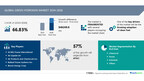
NEW YORK, Nov. 11, 2024 /PRNewswire/ — Report on how AI is redefining market landscape – The global green hydrogen market size is estimated to grow by USD 46.25 billion from 2024-2028, according to Technavio. The market is estimated to grow at a CAGR of 66.83% during the forecast period. Growing adoption of clean fuel is driving market growth, with a trend towards growing focus on using clean hydrogen in refineries. However, high initial cost poses a challenge.Key market players include ACWA Power International, Air Liquide SA, Air Products and Chemicals Inc., Ballard Power Systems Inc., Bloom Energy Corp., Ceres Power Holdings plc, Cummins Inc., ERGOSUP, Green Hydrogen Systems, Guangdong Nation Synergy Hydrogen Power Technologies Co Ltd., Indian Oil Corp. Ltd., Jindal Steel and Power Ltd., Larsen and Toubro Ltd., Linde Plc, Loop Energy Inc., Nel ASA, Nikola Corp., Plug Power Inc., Siemens Energy AG, and Solena Group.
Key insights into market evolution with AI-powered analysis. Explore trends, segmentation, and growth drivers- View Free Sample PDF
Green Hydrogen Market Scope
Report Coverage
Details
Base year
2023
Historic period
2018 – 2022
Forecast period
2024-2028
Growth momentum & CAGR
Accelerate at a CAGR of 66.83%
Market growth 2024-2028
USD 46249.8 million
Market structure
Fragmented
YoY growth 2022-2023 (%)
50.43
Regional analysis
APAC, Europe, North America, Middle East and Africa, and South America
Performing market contribution
APAC at 57%
Key countries
China, Germany, US, Japan, and France
Key companies profiled
ACWA Power International, Air Liquide SA, Air Products and Chemicals Inc., Ballard Power Systems Inc., Bloom Energy Corp., Ceres Power Holdings plc, Cummins Inc., ERGOSUP, Green Hydrogen Systems, Guangdong Nation Synergy Hydrogen Power Technologies Co Ltd., Indian Oil Corp. Ltd., Jindal Steel and Power Ltd., Larsen and Toubro Ltd., Linde Plc, Loop Energy Inc., Nel ASA, Nikola Corp., Plug Power Inc., Siemens Energy AG, and Solena Group
Market Driver
The Green Hydrogen market is surging as businesses and governments seek clean energy solutions for their energy needs. Renewable energy sources like wind and solar are driving the production of hydrogen through electrolysis. Electrolysis uses alkaline or Proton Exchange Membrane (PEM) electrolyzers to separate hydrogen from water. Major players like Air Liquide are investing in renewable liquid hydrogen, produced from excess renewable energy. Supportive policies in regions like California, with de-carbonization targets, are boosting demand. Hydrogen can be used as a fuel in fuel cells for transportation, power generation, and even in internal combustion engines. It’s also being explored for heating applications, aircraft fuel, and space applications. The International Energy Agency predicts a significant increase in hydrogen production as part of the energy transition to a carbon-free economy. Companies like Engie and Hydrogenics are leading strategic initiatives in hydrogen production and infrastructure development. The challenge lies in efficiency and environmental issues, but alternative energy sources like natural gas-hydrogen fuel mixtures offer a potential solution. Investment plans are on the rise as the world moves towards a low-carbon economy and combats climate change. Offshore wind is a promising source for hydrogen production at commercial scale. The future of the hydrogen economy looks bright, with opportunities in various sectors and applications.
The refining industry is a significant consumer of hydrogen, utilizing it for various purposes such as refining crude oil into refined fuels and removing impurities like sulfur. According to the US Energy Information Administration (US EIA), this demand is increasing due to stricter regulations on sulfur content in distillate fuel oil. One notable initiative promoting the use of clean hydrogen in refineries is the REFHYNE project, which commenced in January 2018 and concluded in December 2022. This European Union-funded project aimed to demonstrate the feasibility of using renewable hydrogen in refineries, contributing to the reduction of greenhouse gas emissions.
Request Sample of our comprehensive report now to stay ahead in the AI-driven market evolution!
Market Challenges
The Green Hydrogen market is gaining momentum as businesses and governments seek clean energy solutions for their energy needs. Renewable energy sources like wind and solar are key to producing hydrogen through electrolysis. However, challenges exist in scaling up production using alkaline electrolyzers and PEM electrolyzers with proton exchange membranes. Commercial-scale production and transportation via pipelines require significant investment. Fuel cells, used in transportation and power generation, offer efficiency and low carbon emissions. Hydrogen can also replace natural gas in internal combustion engines, power aircraft, and serve various domestic and space applications. Supportive policies in regions like California, driven by de-carbonization targets, are crucial. Companies like Air Liquide, Engie, and Hydrogenics are leading the way in renewable liquid hydrogen production. The International Energy Agency encourages the transition from fossil fuels to a hydrogen economy, addressing environmental issues and greenhouse gas emissions. Solid oxide electrolyzers and heating applications are also strategic initiatives. Offshore wind is a promising source for hydrogen production in a carbon-free economy.Green hydrogen, produced through water electrolysis using renewable energy, carries a higher initial cost compared to grey hydrogen derived from natural gas. The setup cost for a green hydrogen production plant is substantial. On average, green hydrogen costs around 2-3 times more than grey hydrogen. Fuel cells used for green hydrogen power are priced 1.5 to 2 times higher than their fossil fuel counterparts. As a synthetic fuel, green hydrogen’s cost is nearly 5-7 times more than fossil jet fuel. According to The Energy and Resources Institute (TERI), the production cost of green hydrogen is approximately USD5–USD6 per kg. This rate makes it economically unfeasible for industries such as steel, fertilizer, and long-range shipping to adopt green hydrogen as a fuel source.
Discover how AI is revolutionizing market trends- Get your access now!
Segment Overview
This green hydrogen market report extensively covers market segmentation by
End-user 1.1 Chemical1.2 Power1.3 Industrial1.4 OthersTechnology 2.1 Alkaline electrolyzer2.2 Polymer electrolyte membrane (PEM) electrolyzerGeography 3.1 APAC3.2 Europe3.3 North America3.4 Middle East and Africa3.5 South America
1.1 Chemical- Green hydrogen is a crucial supply in the chemical industry, primarily used for synthesizing methanol and ammonia. These chemicals are essential ingredients in manufacturing methanol, polymers, and ammonia, significantly contributing to the fertilizer sector. Green hydrogen also finds application in producing chemical compounds such as paints, synthetic fibers, nylon, polyurethane elastomers, and plasticizing plastics. The chemical industry’s rising demand for green feedstock or precursor molecules, like ammonia and methanol, produced using low-CO2 hydrogen and green hydrogen, is a significant growth driver. These green chemicals are further converted into high-value end-products for various sectors, including automotive, electronics, and pharmaceuticals. Additionally, methanol derived from green hydrogen is used as a direct fuel or blended fuel, such as gasoline, and in LPG streams, increasing its demand in the transportation sector. China is a notable consumer of methanol and its derivatives, blending it into gasoline pools or LPG streams as a cost-effective substitute. Consequently, the expanding demand for fertilizers, direct fuels, and domestic fuel products will propel the growth of the global green hydrogen market during the forecast period.
Download a Sample of our comprehensive report today to discover how AI-driven innovations are reshaping competitive dynamics
Research Analysis
The Green Hydrogen market is a rapidly growing sector in the renewable energy industry, focused on producing hydrogen through electrolysis using only renewable energy sources such as wind and solar. This process is key to the Hydrogen Economy, which aims to reduce carbon emissions by replacing fossil fuels with clean energy solutions. Electrolysis involves passing an electric current through water to split it into hydrogen and oxygen. Alkaline electrolyzers and Proton Exchange Membrane (PEM) electrolyzers are the two main types. Renewable liquid hydrogen produced at commercial scale is transported through pipelines for use in various sectors, including transportation via fuel cells in cars, buses, and trucks, as well as in power generation, aviation, and industrial processes. Supportive policies and advancements in technology are driving the growth of this market, as the world seeks to address energy needs while reducing greenhouse gas emissions and transitioning away from fossil fuels. The International Energy Agency projects that hydrogen could meet up to 24% of global energy demand by 2050. However, challenges remain, including efficiency concerns and environmental issues related to hydrogen production and transportation. Alternative energy sources, such as natural gas-hydrogen fuel mixtures, are also being explored to improve the economic viability and reduce the carbon footprint of hydrogen production.
Market Research Overview
The Green Hydrogen market is a rapidly growing sector in the renewable energy industry, focused on producing hydrogen through electrolysis using only renewable energy sources such as wind and solar. This clean energy solution is a key component of the hydrogen economy, which aims to reduce carbon emissions and transition to low-carbon sources for various energy needs. Electrolysis involves passing an electric current through water to split it into hydrogen and oxygen. There are two main types of electrolyzers: alkaline and Proton Exchange Membrane (PEM). At commercial scale, hydrogen can be used as a fuel for transportation, fuel cells, internal combustion engines, hydrogen-powered aircraft, and power generation. It also has applications in heating, domestic use, and even in space. Supportive policies and investment plans, especially in regions like California with de-carbonization targets, are driving the growth of the green hydrogen market. The International Energy Agency has identified hydrogen as a crucial alternative energy source in the fight against fossil fuels and greenhouse gas emissions. Companies are also exploring strategic initiatives, such as natural gas-hydrogen fuel mixtures, to make the transition more feasible. The hydrogen production process itself is undergoing innovation, with the development of solid oxide electrolyzers and offshore wind integration.
Table of Contents:
1 Executive Summary
2 Market Landscape
3 Market Sizing
4 Historic Market Size
5 Five Forces Analysis
6 Market Segmentation
End-userChemicalPowerIndustrialOthersTechnologyAlkaline ElectrolyzerPolymer Electrolyte Membrane (PEM) ElectrolyzerGeographyAPACEuropeNorth AmericaMiddle East And AfricaSouth America
7 Customer Landscape
8 Geographic Landscape
9 Drivers, Challenges, and Trends
10 Company Landscape
11 Company Analysis
12 Appendix
About Technavio
Technavio is a leading global technology research and advisory company. Their research and analysis focuses on emerging market trends and provides actionable insights to help businesses identify market opportunities and develop effective strategies to optimize their market positions.
With over 500 specialized analysts, Technavio’s report library consists of more than 17,000 reports and counting, covering 800 technologies, spanning across 50 countries. Their client base consists of enterprises of all sizes, including more than 100 Fortune 500 companies. This growing client base relies on Technavio’s comprehensive coverage, extensive research, and actionable market insights to identify opportunities in existing and potential markets and assess their competitive positions within changing market scenarios.
Contacts
Technavio Research
Jesse Maida
Media & Marketing Executive
US: +1 844 364 1100
UK: +44 203 893 3200
Email: media@technavio.com
Website: www.technavio.com/
View original content to download multimedia:https://www.prnewswire.com/news-releases/green-hydrogen-market-to-grow-by-usd-46-25-billion-from-2024-2028–adoption-of-clean-fuel-boosts-growth-report-on-the-ai-impact-on-market-trends—technavio-302300761.html
SOURCE Technavio









 Technology5 days ago

 Technology4 days ago

 Coin Market4 days ago

 Technology4 days ago

 Technology4 days ago

 Technology5 days ago

 Technology5 days ago

 Coin Market4 days ago