Connect with us

Technology

Robotic Process Automation (RPA) Market to Grow by USD 37.6 Billion from 2024-2028, Cost Savings Driving Growth, with AI Impact on Market Trends – Technavio

Published

on

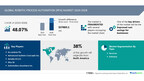
NEW YORK, Nov. 11, 2024 /PRNewswire/ — Report on how AI is redefining market landscape – The global robotic process automation (RPA) market size is estimated to grow by USD 37.6 billion from 2024-2028, according to Technavio. The market is estimated to grow at a CAGR of over 48.07%  during the forecast period. Improved cost savings for businesses is driving market growth, with a trend towards emerging trends in business process transformation. However, subscription cost of rpa software  poses a challenge.Key market players include Accenture Plc, Advanced Systems Concepts Inc., Amelia US LLC, Atos SE, Automation Anywhere Inc., Cognizant Technology Solutions Corp., Deloitte Touche Tohmatsu Ltd., Genpact Ltd., Infosys Ltd., International Business Machines Corp., Kofax Inc., Microsoft Corp., NICE Ltd., Nintex Ltd., Nippon Telegraph and Telephone Corp., OnviSource Inc., Pegasystems Inc., SS and C Technologies Holdings Inc., UiPath Inc., and WorkFusion Inc..

Key insights into market evolution with AI-powered analysis. Explore trends, segmentation, and growth drivers- View Free Sample PDF

Robotic Process Automation (Rpa) Market Scope

Report Coverage

Details

Base year

2023

Historic period

2018 – 2022

Forecast period

2024-2028

Growth momentum & CAGR

Accelerate at a CAGR of 48.07%

Market growth 2024-2028

USD 37603.1 million

Market structure

Fragmented

YoY growth 2022-2023 (%)

37.47

Regional analysis

North America, Europe, APAC, South America,
and Middle East and Africa

Performing market contribution

North America at 38%

Key countries

US, UK, China, Germany, and Japan

Key companies profiled

Accenture Plc, Advanced Systems Concepts
Inc., Amelia US LLC, Atos SE, Automation
Anywhere Inc., Cognizant Technology Solutions
Corp., Deloitte Touche Tohmatsu Ltd., Genpact
Ltd., Infosys Ltd., International Business
Machines Corp., Kofax Inc., Microsoft Corp.,
NICE Ltd., Nintex Global Ltd., Nippon Telegraph
and Telephone Corp., OnviSource Inc.,
Pegasystems Inc., SS and C Technologies
Holdings Inc., UiPath Inc., and WorkFusion Inc.

Market Driver

In today’s digital transformation era, Robotic Process Automation (RPA) is a trending business solution that utilizes software robots to automate repetitive tasks. IQ bots and intelligent bots are the latest RPA innovations, offering bot insights for improved digital workplace efficiency. Robotic operating models, such as Blue Prism Cloud, enable machine learning and cognitive technologies for rule-based and knowledge-based automation. Industries like healthcare providers, contact centers, vaccine manufacturers, and the pharmaceutical sector are adopting RPA for pharmacovigilance, data manipulation, and administration and reporting. The services segment, including RPA Labs and RPA Engage, provides dependable infrastructure and skilled staff for RPA solutions. RPA is transforming IT and telecom, healthcare, hospitality, and various end-user industries. Cognitive robotic process automation, artificial intelligence, and cloud computing are driving automation lifecycle management, workload management, and SLA-based automation. SMEs and SMBs are also embracing cloud-based solutions like PaaS services for customer relationship management, data security, and regulatory compliance. The automotive OEMs, insurance industry, and government organizations are also using RPA for data APIs, network connectivity, and communication. RPA adoption offers significant Return on Investment (ROI) through increased productivity, improved accuracy, and reduced operational costs. In the current business environment, RPA is essential for managing temporary, seasonal workers and handling regulatory spikes in various industries. RPA is revolutionizing industries like finance, accounting and finance, and ERP management, while consumer behavior analysis is transforming the retail sector. Emerging industries like ecommerce and the Census Bureau are also benefiting from RPA solutions. Pioneering companies like Zebra Technologies and Vistage are leading the way in RPA innovation, with conversational RPA chatbots and automation for social distancing norms. Regulated authorities and private companies are using RPA for data security and compliance. RPA is transforming the business landscape, with automotive OEMs, Association for Advancing Automation, and other industry leaders driving the trend. The future of RPA is bright, with continued innovation and growth in this exciting field. 

Businesses today prioritize client-centric processes over mere productivity and profit generation. To minimize human errors, which often stem from judgment-based decisions, industries are turning to Robotic Process Automation (RPA) solutions. RPA enhances business operations by increasing their depth and quality. It streamlines interconnected processes within and outside organizations, reducing the likelihood of errors. This focus on quality is a significant trend in modern business practices. By automating repetitive tasks, RPA allows employees to focus on more complex and creative tasks, ultimately improving overall business efficiency. 

Request Sample of our comprehensive report now to stay ahead in the AI-driven market evolution!

 Market Challenges

In today’s digital transformation era, Robotic Process Automation (RPA) is revolutionizing business operations by automating repetitive tasks. However, implementing RPA comes with challenges. IQ bots require bot insights for optimal performance, and digital workplaces need robotic operating models for seamless integration. Cloud solutions like Blue Prism Cloud and machine learning offer dependable infrastructure and skilled staff. Healthcare providers, contact centers, and vaccine manufacturers in the pharmaceutical sector are major adopters, automating tasks in pharmacovigilance and data manipulation. RPA solutions cater to various industries, including IT and telecom, healthcare, hospitality, and the cognitive robotic process automation market. Challenges include rule-based and knowledge-based automation, capture extraction, administration and reporting, customer support, and communication. Industries like finance, insurance, and the energy sector require SLAs and credential management. Cloud-based solutions offer workload management, automation lifecycle management, and data APIs for SMEs and SMBs. RPA adoption offers significant Return on Investment (ROI) through increased productivity. However, regulatory spikes and temporary or seasonal worker needs may require conversational RPA chatbots and network connectivity. RPA innovators and pioneers include Vistage, Citrix automation, and Zebra Technologies. Regulated authorities, government organizations, and private companies are embracing robot use in automotive OEMs, ecommerce industry, and even the Census Bureau. The RPA market continues to grow, with emerging industries like retail automation and warehouses adopting this technology.Businesses are adopting Robotic Process Automation (RPA) software to streamline operations, reduce manual errors, and optimize costs. The cost of implementing RPA involves a quote from third-party vendors, which includes software updates and maintenance. Pricing models vary based on employee hiring and revenue generation strategies. Regulatory terms and conditions between the end-user and software provider can impact the subscription cost or design and development expenses. It is essential to carefully consider these factors before entering into a contract.

Discover how AI is revolutionizing market trends- Get your access now!

Segment Overview 

This robotic process automation (rpa) market report extensively covers market segmentation by  

Type 1.1 Services1.2 SoftwareEnd-user 2.1 BFSI2.2 IT/ITES2.3 Telecom2.4 Logistics2.5 OthersGeography 3.1 North America3.2 Europe3.3 APAC3.4 South America3.5 Middle East and Africa

1.1 Services-  The global Robotic Process Automation (RPA) market’s services segment includes consulting, implementing, and training offerings. Intense competition among RPA providers necessitates enhancing consulting, training, and advisory services. Scalable automation solutions that minimize costs have fueled RPA’s demand. RPA-as-a-Service enables businesses to identify automation opportunities, create business cases, and select vendors for pilot projects. For instance, NITCO Inc. Offers RPA-managed services, including IT workload support and maintenance. These factors are expected to drive the services segment’s growth in the global RPA market during the forecast period.

Download a Sample of our comprehensive report today to discover how AI-driven innovations are reshaping competitive dynamics

Research Analysis

Robotic Process Automation (RPA) is a technology that allows businesses to automate repetitive and rule-based tasks using software robots or ‘IQ bots’. These bots mimic human actions in a digital workplace, executing tasks with high accuracy and efficiency. RPA is revolutionizing industries such as Healthcare, Hospitality, and the Pharmaceutical sector, where it’s being used to automate tasks in healthcare providers, contact centers, vaccine manufacturing, and pharmacovigilance. RPA is a key driver of digital transformation in the era of Artificial Intelligence and Machine Learning. It’s being adopted in various industries, including the Energy sector, Aerospace market, Insurance industry, and even Smartphone manufacturing, to enhance productivity and streamline operations. RPA solutions offer cloud models to cater to industry-specific needs, enabling data manipulation and ensuring data security. With the rise of intelligent bots, RPA is set to redefine business processes and create new opportunities.

Market Research Overview

In the digital transformation era, Robotic Process Automation (RPA) is revolutionizing business operations by automating repetitive tasks using software robots. IQ bots and intelligent bots are transforming the digital workplace, enabling organizations to adopt robotic operating models. RPA solutions are being implemented across various sectors, including healthcare providers, contact centers, vaccine manufacturers, and the pharmaceutical sector, for tasks like pharmacovigilance and data manipulation. Machine learning and cognitive technologies are being integrated to make RPA more efficient and intelligent. The services segment, including RPA Labs and RPA Engage, is providing dependable infrastructure and skilled staff to help businesses implement RPA. Rule-based and knowledge-based automation are being used for various processes, from Administration and reporting to Customer support in IT and telecom, Healthcare, Hospitality, and more. RPA adoption is driving productivity and Return on Investment in industries like the Energy sector, Aerospace market, Insurance industry, and Data security. Cloud models and cloud-based solutions are becoming increasingly popular for RPA, with PaaS services and SMEs, SMBs, and end-user industries benefiting from the flexibility and cost savings. RPA is also being used to manage workload, automate communication, and provide SLA-based automation for various applications. Credential management, Citrix automation, data APIs, and network connectivity are essential components of RPA solutions. RPA is being used in various industries to automate processes, including financial applications, ecommerce industry, and regulatory spikes in Returns processing and workflow management. Automated process optimization is helping businesses cope with social distancing norms, human resource crunch, and temporary, seasonal workers. Emerging industries like the automotive OEMs and the Association for Advancing RPA are pioneering new uses for RPA, including conversational RPA chatbots and robotic use in regulated authorities and government organizations. RPA is transforming business operations, providing a competitive edge, and enabling organizations to focus on core business functions. With the increasing use of RPA, the future looks bright for this innovative technology.

Table of Contents:

1 Executive Summary
2 Market Landscape
3 Market Sizing
4 Historic Market Size
5 Five Forces Analysis
6 Market Segmentation

TypeServicesSoftwareEnd-userBFSIIT/ITESTelecomLogisticsOthersGeographyNorth AmericaEuropeAPACSouth AmericaMiddle East And Africa

7 Customer Landscape
8 Geographic Landscape
9 Drivers, Challenges, and Trends
10 Company Landscape
11 Company Analysis
12 Appendix

About Technavio

Technavio is a leading global technology research and advisory company. Their research and analysis focuses on emerging market trends and provides actionable insights to help businesses identify market opportunities and develop effective strategies to optimize their market positions.

With over 500 specialized analysts, Technavio’s report library consists of more than 17,000 reports and counting, covering 800 technologies, spanning across 50 countries. Their client base consists of enterprises of all sizes, including more than 100 Fortune 500 companies. This growing client base relies on Technavio’s comprehensive coverage, extensive research, and actionable market insights to identify opportunities in existing and potential markets and assess their competitive positions within changing market scenarios.

Contacts

Technavio Research
Jesse Maida
Media & Marketing Executive
US: +1 844 364 1100
UK: +44 203 893 3200
Email: media@technavio.com
Website: www.technavio.com/

View original content to download multimedia:https://www.prnewswire.com/news-releases/robotic-process-automation-rpa-market-to-grow-by-usd-37-6-billion-from-2024-2028–cost-savings-driving-growth-with-ai-impact-on-market-trends—technavio-302300783.html

SOURCE Technavio

Continue Reading

Technology

Karma Automotive Announces Eximius, the Bespoke Vehicle Program for Elite Clients Seeking Singular Expressions of Extreme Performance and Bold Craftsmanship

Published

on

By

The First Eximius Creation, “Eximius 1,” is a Menacing Four-Seater Built for the Track which Makes its World Premiere at the 2026 Concours at Wynn Las Vegas

LAS VEGAS, Oct. 31, 2026 /PRNewswire/ — Karma Automotive builds vehicles in the hundreds rather than the thousands, attracting a highly individualistic clientele seeking a unique statement. For those who wish to go further still, and explore new possibilities beyond the extensive options for personalization available through the Studio program, Karma has created the Eximius bespoke vehicle program. Eximius clients may modify the vehicle’s body, performance and powertrain, collaborating with Karma’s design and engineering teams to build a One-of-One statement which will never be repeated.

Karma Eximius clients may modify the vehicle’s body, performance and powertrain to build a One-of-One statement

The first vehicle from Karma Eximius debuts today at the 2026 Concours at Wynn Las Vegas. A menacing four-seater purpose-built for the track, “Eximius 1” is in ongoing development with its commissioning client, who is not revealed at this time. Upon delivery in 2027, “Eximius 1” will be fitted with an extreme-performance Plug-in Series Hybrid utilizing a 6.2 Liter V8 producing nearly 1200hp (550hp ICE, 645hp battery), delivering acceleration from 0-60mph in 2.7 seconds and a top speed in excess of 200mph (estimated). As these parameters would demand, “Eximius 1” will be equipped with carbon-ceramic brakes and two-piece slotted brake rotors, and Ohlins semi-active suspension.

“‘Eximius 1’ began as a conversation with an elite client who loves their Karma Revero, but wanted something more extreme and unexpected, which was music to our ears,” says Marques McCammon, President and Chief Executive, Karma Automotive. “The Eximius program effectively deletes the word ‘no’ from conversations about what’s possible,” he continues, “and as a four-seat track weapon packing what’ll be the most powerful Plug-in Series Hybrid powertrain and vehicle ever developed, ‘Eximius 1’ shatters expectations and further establishes Karma as a manufacturer of exotic, uniquely American vehicles.” 

Exterior Design
“Eximius 1” is an imposing vehicle to behold, exhibiting the muscularity and eyepopping strength of a superhero. Every panel – excluding the body surface outer – is constructed of pre-impregnated carbon fiber, and the vehicle is 50mm wider due to its wheel arch extensions. The front doors and hood have a unique technical fade from glossy, exposed regular carbon fiber to signature Borealis Blue paint.

The front carbon splitter sets an aggressive tone and is flanked by massive side air intakes incorporating Karma’s Target Acquisition Lighting, rotated 45º to create a distinctive ‘><‘ DRL graphic identity. On the hood, the dramatic arc of the Comet Line – which is inspired by Halley’s Comet is it streaks across the evening sky – widens from its apex towards the base of the windshield; vents above the front fenders release air pressure from the wheel housings and add further visual intrigue. Moving to the side of the vehicle, the front fenders aft of the wheels feature Karma’s signature “Backslash” bearing the number “5,” which is of particular significance to the commissioning client. 21″ Magnesium wheels with center-locks reduce rotating and unsprung mass, and are finished in satin black. Aft of the driver’s side front wheel, twin exhaust tips announce the fearsome new powertrain.

The full-width rear GT wing maximizes stability and downforce at high speeds, and continues the distinctive ‘><‘ DRL graphic identity established at the front of “Eximius 1.” The rear fascia also boasts large side air intakes which are connected by a dominant diffuser to manage underbody airflow.

Interior Design
An aura of intensity continues to the interior of “Eximius 1.” In concert with the exterior, blue-tinted carbon-fiber adorns the seats, flat-bottom steering wheel and doors; for aesthetics and weight-savings, all four doors are manufactured in exposed carbon fiber with one purposeful arm pad on each door. The seats, which are Recaro carbon fiber buckets up front, are trimmed with blue Alcantara and blue Italian leather with Moondust Alcantara upper sections, creating an articulated, form-fitted feel. To support high-speed driving and intense braking force, the accelerator, brake pedal and dead pedal are billet machined aluminum.

The instrument panel is reimagined in glossy carbon fiber and incorporates anodized billet aluminum HVAC vents. The carbon fiber center console is simplified to include the essentials only: the PRND gear selector, window switches, key fob holder, and Emergency kill switch. This console extends through to the rear compartment, to which the client’s custom-fitted carbon fiber racing helmet is held in place by a center-latched strap matching the blue seat belts.

About Karma Automotive
Karma Automotive is America’s only full-line ultra-luxury vehicle manufacturer, and a pioneer of Plug-in Series Hybrid vehicles which it manufactures at its Karma Innovation and Customization Center (KICC) in Moreno Valley, CA. Its Executive, Product Development, and Design headquarters are located in nearby Irvine, CA. The Karma portfolio embodies California’s spirit of innovation and entrepreneurial boldness, reflected by the signature Comet Line which is the central hallmark of Karma’s new design language. The Gyesera Grand Coupe, a Plug-in Series Hybrid four-seater, arrives at dealerships in December 2026; and the Amaris GT 2-Door Plug-in Series Hybrid arrives in Q4 2027. The Karma Kaveya Super Coupe, with over 1,000HP and butterfly-doors, will arrive in Q1 2028, to be followed by the Karma Ivara GT-UV: both EVs will incorporate SDVA (Software-Defined Vehicle Architecture) developed with leading technology partners. For more information, visit www.karmaautomotive.com) 

Media Contact:

Joe Richardson, (917) 716-6617
Joe@BeautifulNoisePR.com 

View original content to download multimedia:https://www.prnewswire.com/news-releases/karma-automotive-announces-eximius-the-bespoke-vehicle-program-for-elite-clients-seeking-singular-expressions-of-extreme-performance-and-bold-craftsmanship-302925523.html

SOURCE Karma Automotive

Continue Reading

Technology

ModelBest and OpenBMB Open-Source MiniCPM-OCR Series, Delivering High-Performance Document Parsing and AI-Powered Quality Control

Published

on

By

BEIJING, Oct. 31, 2026 /PRNewswire/ — ModelBest and OpenBMB jointly announced the release and open-source availability of the MiniCPM-OCR series, a family of models for efficient document parsing and parsing-quality assessment. The launch includes two models: MiniCPM-OCR 1.0 (1.3B) and MiniCPM-OCR Jev (2B).

As the first OCR-focused model in the MiniCPM family, MiniCPM-OCR 1.0 brings top-tier parsing accuracy to a compact 1.3-billion-parameter architecture optimized for edge deployment, pushing forward the balance between efficiency and performance for open-source OCR models. Built for real-world conditions, it accurately parses scanned, photographed, curved, tilted and screen-captured documents without cumbersome image pre-correction, lowering the barrier to large-scale document digitization.

The model handles dense bilingual Chinese-English content, complex mathematical formulas, and multi-level or borderless tables, consistently performing at a leading level across a broad range of mainstream industry evaluations. Beyond full-page reconstruction, it supports key information extraction (KIE), pulling specified fields from invoices, IDs and financial statements according to business instructions.

Powered by DSpark decoding acceleration, MiniCPM-OCR 1.0 significantly increases end-to-end throughput while lowering per-page latency. For enterprises processing millions of pages—such as financial contract archives, academic libraries and government records—this means processing far more documents with the same hardware and time budget, at a substantially lower computing cost.

To address the long-standing need for page-by-page manual review, ModelBest and OpenBMB also introduced MiniCPM-OCR Jev, the first OCR result decision model that acts as an “AI quality inspector.” Rather than performing OCR itself, Jev compares the source image with OCR output and rapidly assigns confidence scores to text, LaTeX formulas and tables, detecting missing characters, errors and formatting misalignments. Despite its compact 2B-parameter size, Jev delivers judgment accuracy typically associated with far larger models.

Jev supports cross-model deployment and can be integrated into existing OCR workflows without replacing the underlying OCR engine. It can automatically identify reliable results for direct processing, flag potentially inaccurate outputs for human review and select the best result from multiple OCR systems. This enables enterprises to move from full manual inspection toward risk-based, automated quality control.

The MiniCPM-OCR series is available on GitHub, Hugging Face and ModelScope, and supports vLLM, SGLang, llama.cpp and Ollama, along with SDKs, APIs, Agent Skill plugins and open-source fine-tuning code. Day-0 hardware adaptation covers AMD, Arm, Houmo AI, Intel and NVIDIA. Through the FlagOS software stack, it also has Day-0 support for AI and edge chips from CIX Technology, Huawei Ascend, Hygon, Iluvatar CoreX, Kunlunxin, MetaX, Moore Threads, Sunrise, T-Head, TsingMicro, NVIDIA and Apple Mac (Arm).

View original content:https://www.prnewswire.com/news-releases/modelbest-and-openbmb-open-source-minicpm-ocr-series-delivering-high-performance-document-parsing-and-ai-powered-quality-control-302925594.html

SOURCE ModelBest

Continue Reading

Technology

Wulcea Elevates Consumer Trust in Heated Apparel Through Multi-National Safety Certifications and Rigorous Technical Testing

Published

on

By

NEW YORK, Oct. 31, 2026 /PRNewswire/ — As smart heated clothing gains broader adoption, consumers are paying closer attention to the safety and reliability of the technology behind these products. Wulcea, a brand specializing in graphene-powered heated apparel, combines its flexible GrapheneNano™ heating technology with documented safety compliance and durability testing for its heating components and battery systems.

“Trust in smart heated apparel goes beyond warmth—it comes down to confidence in battery safety and heating element reliability,” said John C, Founder of Wulcea. “Our goal is to give users peace of mind through certified technical standards.”

Advanced Graphene Heating Elements Supported by Global Standards

At the core of Wulcea’s thermal architecture is its GrapheneNano™ heating technology. Engineered to eliminate garment stiffness, Wulcea integrates flexible graphene elements that deliver balanced warmth across key upper-body zones while preserving natural garment drape and full freedom of movement.

Wulcea supports its heating components with applicable compliance documentation for major markets. These include CE and FCC compliance documentation addressing relevant electrical and electromagnetic compatibility requirements, as well as PSE compliance for applicable products in Japan. RoHS compliance further addresses restrictions on specified hazardous substances in applicable electrical and electronic components.

Multi-Certified Battery System for Dependable Power

To power its heating elements, Wulcea pairs its heated apparel with rechargeable battery systems designed for convenient everyday use. Featuring a compact design and housed in dedicated interior pockets, the batteries provide portable power while maintaining a streamlined garment profile and comfortable fit.

Wulcea backs its battery options with comprehensive third-party accreditations. UL certification demonstrates that the battery system has been evaluated against recognized power bank safety requirements, covering key areas such as overcharge protection, short-circuit protection, and thermal safety. The battery systems are also supported by applicable CE and FCC compliance documentation, addressing relevant regulatory requirements for electrical and electromagnetic compatibility.

For daily handling and travel, RoHS compliance validates that the battery system meets stringent global standards for material safety. The battery models have also undergone applicable UN 38.3 testing, supporting compliance with international requirements for lithium battery transportation.

Real-World Durability and Practical Usability

Component compliance forms Wulcea’s foundation, but reliability is defined by real-world performance. Built for high-flex endurance, Wulcea’s flexible graphene heating elements are tested through 10,000 active flexing cycles to maintain steady thermal output through repeated bending and everyday body movement.

Everyday convenience is equally essential. Built for hassle-free care, Wulcea’s heating elements withstand 100 machine-wash cycles under standard care guidelines, maintaining internal conductivity and structural stability under repeated laundering.

Integrated NTC temperature sensors provide thermal monitoring and are designed to stop heating if temperatures exceed 131°F (55°C). Combined with runtime of up to 10 hours on the low setting and a discreet interior control button, these features support practical everyday use in cold-weather conditions.

Aligning Technical Standards with Everyday Warmth

By combining graphene-based heating technology with documented battery safety compliance and durability testing, Wulcea continues to focus on the technical foundations of dependable heated apparel. This approach reflects the brand’s emphasis on bringing together safety considerations, practical functionality, and everyday comfort for cold-weather use.

View original content to download multimedia:https://www.prnewswire.com/news-releases/wulcea-elevates-consumer-trust-in-heated-apparel-through-multi-national-safety-certifications-and-rigorous-technical-testing-302925554.html

SOURCE Wulcea

Continue Reading

Trending