Connect with us

Technology

Mobility-as-a-Service Market to Grow by USD 639.92 Billion (2024-2028) as AI Drives Market Transformation, Smart Device Usage Boosts Revenue – Technavio

Published

on

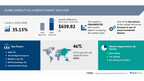
NEW YORK, Nov. 20, 2024 /PRNewswire/ — Report with the AI impact on market trends – The global mobility-as-a-service market size is estimated to grow by USD 639.92 billion from 2024-2028, according to Technavio. The market is estimated to grow at a CAGR of almost 35.15%  during the forecast period. Increase in use of smart connected devices is driving market growth, with a trend towards ride-sharing platforms and automotive companies exhibiting interest in MAAS. However, poor connectivity of devices  poses a challenge.Key market players include Aptiv Plc, Avis Budget Group Inc., Beeline.com Ltd., Bolt Technology OU, Communauto Group, EAN Services LLC, Europcar Mobility Group SA, GoEuro Corp., Greenlines Technology Inc., GT Gettaxi UK Ltd., Hertz Systems Ltd. Sp. Z.o.o, Lyft Inc., MaaS Oy, Mercedes Benz Group AG, MOBIKO GmbH, Mobius Mobility LLC, movmi Shared Transportation Services Inc., Sway Mobility Inc., Tranzer BV, and Uber Technologies Inc..

AI-Powered Market Evolution Insights. Our comprehensive market report ready with the latest trends, growth opportunities, and strategic analysis- View Free Sample Report PDF

Forecast period

2024-2028

Base Year

2023

Historic Data

2018 – 2022

Segment Covered

Service (Ride hailing, Car sharing, and Bus sharing and others), Vehicle Type (Cars, Buses, and Two-wheelers), and Geography (APAC, Europe, North America, Middle East and Africa, and South America)

Region Covered

APAC, Europe, North America, Middle East and Africa, and South America

Key companies profiled

Aptiv Plc, Avis Budget Group Inc., Beeline.com Ltd., Bolt Technology OU, Communauto Group, EAN Services LLC, Europcar Mobility Group SA, GoEuro Corp., Greenlines Technology Inc., GT Gettaxi UK Ltd., Hertz Systems Ltd. Sp. Z.o.o, Lyft Inc., MaaS Global Oy, Mercedes Benz Group AG, MOBIKO GmbH, Mobius Mobility LLC, movmi Shared Transportation Services Inc., Sway Mobility Inc., Tranzer BV, and Uber Technologies Inc.

Key Market Trends Fueling Growth

The Mobility-as-a-Service (MaaS) market is experiencing significant growth due to increasing transportation needs in population-dense areas. Technology plays a crucial role, with ride-sharing, car-sharing, bike commuting, and public transport becoming more popular. Smart cities prioritize carbon dioxide reduction and consumer trust by providing wireless connection and internet connectivity through smartphones. Traffic jams and parking management are addressed with real-time journey planning and payments. Electric vehicles and charging stations are essential infrastructure for green cities. Businesses develop innovative solutions, such as the RMVgo app for ticket purchasing and CitySwift in Ireland for traffic congestion management. Government support for 5G and 4G LTE networks, along with telecom providers, enhances connectivity. The health crisis highlights the need for energy-efficient and cost-efficient transportation modes. Commercial and personal vehicles adapt to these trends, with funding uncertainty for public transport operators. Overall, MaaS offers a sustainable, efficient, and convenient solution for various transportation modes in traffic-congested areas. 

Several major companies in the transportation industry are expanding their offerings to include Mobility-as-a-Service (MaaS) solutions. Uber Technologies Inc. Acquired JUMP Bikes in April 2018 to develop their mobile app into a multimodal platform, offering seamless access to car-hailing/sharing, bike-sharing, and public transit networks. Daimler AG and BMW AG are also investing in MaaS platforms through their subsidiaries, such as Daimler’s Moovel Group GmBH, founded in 2015. These companies aim to provide integrated and convenient mobility solutions for consumers. 

Insights on how AI is driving innovation, efficiency, and market growth- Request Sample!

Market Challenges

The Mobility-as-a-Service (MaaS) market is experiencing significant growth, with transportation, technology, population growth, and consumer preferences driving demand. Challenges include ride sharing, car sharing, bike commuting, public transport, trains, and smart cities, all requiring seamless integration. Carbon dioxide reduction is a priority, with trust and consumer convenience key factors. Wireless connection and internet connectivity via smart phones are essential for real-time journey planning and payments. Traffic jams, parking management, and accidents are major issues, requiring government support and infrastructure development. Electric vehicles and charging stations, 5G and 4G LTE, and telecom partnerships are important for energy-efficient and cost-efficient transportation modes. Public transport operators face funding uncertainty and must adapt to changing travel patterns. The RMVgo app simplifies ticket purchasing, while taxis, car-sharing, scooters, and bike-sharing offer alternatives in traffic-congested areas. Health crises add complexity, requiring innovative solutions.In the Mobility-as-a-Service (MaaS) market, connected transportation devices pose unique challenges. These devices consume significant power and Internet bandwidth. Ensuring seamless connectivity for multiple devices simultaneously requires high-bandwidth connections. Transportation devices, such as vehicles equipped with sensors, necessitate expensive Internet plans with high bandwidth. Vendors must implement MaaS solutions that minimize bandwidth usage through network traffic management systems. Retrieving data from cloud-based systems necessitates increased bandwidth for efficient data transfer.

Insights into how AI is reshaping industries and driving growth- Download a Sample Report

Segment Overview 

This mobility-as-a-service market report extensively covers market segmentation by

Service 1.1 Ride hailing1.2 Car sharing1.3 Bus sharing and othersVehicle Type2.1 Cars2.2 Buses2.3 Two-wheelersGeography 3.1 APAC3.2 Europe3.3 North America3.4 Middle East and Africa3.5 South America

1.1 Ride hailing-  Ride-hailing services, such as Uber and Lyft, offer consumers flexible and affordable transportation solutions through their mobile apps. The increasing cost of owning a private car and limited parking space have led to an increase in the number of people opting for ride-hailing services. Major operators invest heavily in advertising to boost brand awareness, reducing waiting times and offering real-time location updates through global positioning systems. Innovative pricing algorithms, improved customer service, and user-friendly apps have made ride-hailing popular among Millennials. Urbanization and rising disposable income have also contributed to the growth of this market segment, driving the expansion of the global mobility-as-a-service market.

Download complimentary Sample Report to gain insights into AI’s impact on market dynamics, emerging trends, and future opportunities- including forecast (2024-2028) and historic data (2018 – 2022) 

Research Analysis

Mobility-as-a-Service (MaaS) is revolutionizing the way we move in cities around the world. This innovative transportation model integrates various modes of transportation, including ride sharing, car sharing, bike commuting, public transport, trains, and electric vehicles, into a single digital platform. The population’s growing demand for sustainable and efficient transportation solutions is driving the market’s growth. Technology plays a crucial role in MaaS, with 5G and 4G LTE networks enabling real-time journey planning, payments, and infrastructure utilization. Smart cities are also investing in Wi-Fi and other telecom infrastructure to support MaaS. However, consumer trust is essential for the success of MaaS. Providing a seamless and safe journey experience is key. The lack of consumer awareness and knowledge about MaaS is a challenge that must be addressed through targeted marketing and education. Infrastructure development is another critical factor. Governments and private companies must invest in the necessary infrastructure to support MaaS, including charging stations for electric vehicles and bike lanes. MaaS also offers the potential for significant reductions in carbon dioxide emissions, making it an attractive option for consumers and governments alike. The future of transportation is green, and MaaS is leading the way.

Market Research Overview

The Mobility-as-a-Service (MaaS) market is revolutionizing transportation by integrating various modes of travel into a single, seamless experience. This technology-driven approach caters to the needs of a growing population, offering alternatives to traditional personal vehicles. Ride sharing, car sharing, bike commuting, and public transport are key components, with trains and smart cities also playing a significant role. Carbon dioxide reduction is a major focus, as consumers increasingly value trust, time efficiency, and wireless connectivity. Smart phones and internet connectivity are essential tools for journey planning, ticket purchasing, and real-time traffic updates. Infrastructure development, including charging stations for electric vehicles and parking management systems, is crucial. Government support, 5G and 4G LTE networks, and green city initiatives are also driving the market forward. The MaaS market is energy and cost efficient, addressing the challenges of traffic jams, accidents, and funding uncertainty in commercial and private vehicles. The market encompasses various transportation modes, including commercial vehicles, scooters, and bike-sharing, and aims to provide a more utilitarian, personalized, and energy-efficient transportation experience. The health crisis has further emphasized the importance of MaaS in reducing the need for public transport and minimizing exposure to crowded areas. Public transport operators are collaborating with tech companies to provide more efficient and convenient services, with apps like RMVgo leading the way in ticket purchasing and journey planning. The market’s potential is vast, with the promise of a more connected, efficient, and sustainable transportation future.

Table of Contents:

1 Executive Summary
2 Market Landscape
3 Market Sizing
4 Historic Market Size
5 Five Forces Analysis
6 Market Segmentation

ServiceRide HailingCar SharingBus Sharing And OthersVehicle TypeCarsBusesTwo-wheelersGeographyAPACEuropeNorth AmericaMiddle East And AfricaSouth America

7 Customer Landscape
8 Geographic Landscape
9 Drivers, Challenges, and Trends
10 Company Landscape
11 Company Analysis
12 Appendix

About Technavio

Technavio is a leading global technology research and advisory company. Their research and analysis focuses on emerging market trends and provides actionable insights to help businesses identify market opportunities and develop effective strategies to optimize their market positions.

With over 500 specialized analysts, Technavio’s report library consists of more than 17,000 reports and counting, covering 800 technologies, spanning across 50 countries. Their client base consists of enterprises of all sizes, including more than 100 Fortune 500 companies. This growing client base relies on Technavio’s comprehensive coverage, extensive research, and actionable market insights to identify opportunities in existing and potential markets and assess their competitive positions within changing market scenarios.

Contacts

Technavio Research
Jesse Maida
Media & Marketing Executive
US: +1 844 364 1100
UK: +44 203 893 3200
Email: media@technavio.com
Website: www.technavio.com/

View original content to download multimedia:https://www.prnewswire.com/news-releases/mobility-as-a-service-market-to-grow-by-usd-639-92-billion-2024-2028-as-ai-drives-market-transformation-smart-device-usage-boosts-revenue—technavio-302311072.html

SOURCE Technavio

Continue Reading
Click to comment

Leave a Reply

Your email address will not be published. Required fields are marked *

Technology

VibeBeats Launches AI-Powered Music Streaming Service for Businesses globally

Published

on

By

Vibebeats AI gives cafés, gyms, retailers, bars and hotels fully licensed, AI-curated streaming music for business from any phone, tablet or browser — no hardware, no lock-in contracts, no licensing paperwork — from A$29 a month with a 7-day free trial.

BRISBANE, Australia, July 24, 2026 /PRNewswire-PRWeb/ — VibeBeats Launches AI-Powered Music Streaming Service for Businesses globally

VibeBeats gives venues fully licensed, AI-curated Music at a fraction of the cost — one app, one licence, one platform.

Vibebeats AI gives cafés, gyms, retailers, bars and hotels fully licensed, AI-curated streaming music for business from any phone, tablet or browser — no hardware, no lock-in contracts, no licensing paperwork — from A$29 a month with a 7-day free trial.

Most venues playing music through consumer apps are doing it on the wrong licence. VibeBeats, an Australian-built, AI-powered streaming music for business platform, has launched across Australia and worldwide to fix that — turning any phone, tablet or browser into a fully licensed venue sound system in under five minutes. One agreement covers commercial performance rights across OneMusic and APRA AMCOS in Australia, and ASCAP, BMI, PRS and other rights bodies internationally — the same platform serving a café in Melbourne or a gym in London.

The “Spotify for business” that actually exists

Every month, thousands of venue owners worldwide search for “Spotify for business” — a product that doesn’t exist. Consumer streaming accounts are licensed for personal use only, leaving businesses that play them exposed under copyright law in Australia and virtually every other market. VibeBeats fills that gap: a business music streaming service where the commercial music rights are handled under one agreement — no separate music licence for business paperwork to manage.

“The number one thing we see is venue owners assuming it’s fine to play their personal Spotify account in the café — most don’t realise a licence fee even applies,” said Damien King, founder of VibeBeats. “It’s not bad intent. Licensing is complex, and when you’re running a small business there are a hundred competing priorities. VibeBeats solves it with one app, one licence, one platform.”

What VibeBeats delivers

Fully Licensed for Commercial Use — one agreement covers the rights that would otherwise involve OneMusic, APRA AMCOS, ASCAP, BMI, PRS and more.No Hardware Required — any phone, tablet or browser becomes the venue sound system — set up in under five minutes.AI-Curated Background Music for Business — stations matched to venue type and time of day, from morning coffee trade to peak gym floor to late-night bar.Smart Scheduling — playlists by daypart, with music that keeps running through connection drops.Multi-Venue Dashboard — manage every location from a single account.Simple Pricing — from A$29 per month per venue with a 7-day free trial — no lock-in contracts.

Pricing and availability

VibeBeats is available now from $29AUD/$20US per month per venue, and globally, with a 7-day free trial at vibebeats.ai. Purpose-built stations are available for cafés, gyms, retail and in-store environments, bars and hotels.

About VibeBeats

VibeBeats is an AI-powered commercial music streaming platform for businesses, offering direct-licensed music for cafés, restaurants, bars, retail stores, gyms and hotels. One agreement covers commercial performance rights that would otherwise involve PROs, OneMusic, APRA AMCOS, ASCAP, BMI, PRS and more. Australian-built and available globally, VibeBeats AI streams to any device with no proprietary hardware required. Learn more at vibebeats.ai.

VibeBeats is not affiliated with Spotify.

Media Contact

Damien King, Vibebeats AI, 61 0408009067, hello@vibebeats.ai, https://vibebeats.ai

View original content:https://www.prweb.com/releases/vibebeats-launches-ai-powered-music-streaming-service-for-businesses-globally-302832010.html

SOURCE Vibebeats AI

Continue Reading

Technology

Inside information: Valmet initiates a strategic review to evaluate a potential separation of its two segments

Published

on

By

Valmet Oyj’s stock exchange release (inside information) on July 24, 2026 at 9.01a.m. EEST 

ESPOO, Finland, July 24, 2026 /PRNewswire/ — The Board of Directors of Valmet Oyj (“Valmet” or the “Company”) has decided to initiate a strategic review to evaluate a potential separation of its two core businesses, Biomaterial Solutions and Services, and Process Performance Solutions, into two standalone publicly listed companies. The review will focus on assessing whether a separation of the two businesses and their operation as separately listed companies on Nasdaq Helsinki would create additional value for shareholders compared with the current combined structure.

Both Valmet’s core businesses report as separate segments and they have grown into large, mostly independent profitable businesses, each with strong market positions and scale that allow them to succeed independently. With the recent completion of the Severn acquisition taking Process Performance Solutions to approximately EUR 1.7 billion in annual net sales and the renewed operating model now firmly in place, the Board believes this is the right time to assess whether a separation would unlock shareholder value by enabling each business to better realise its full potential.

The Board also notes that the two core businesses operate relatively independently as they serve mainly different customer industries, exhibit distinct business drivers, and have different capital allocation profiles. Biomaterial Solutions and Services is a global technology and lifecycle services business focused on the pulp, board, paper, tissue and energy industries, where its competitive advantage is anchored in a vast installed base, advanced technology, global presence, strong customer references and global services penetration. Process Performance Solutions is a mission-critical automation and flow control business serving a diversified set of industries. Over the past decade, it has evolved from a business primarily focused on pulp and paper into a diversified industrial platform, with close to 70 percent of net sales generated from other industries today.

Based on the Board’s initial assessment, a separation would allow each business to pursue sustainable profitable growth opportunities more independently and efficiently, with the potential for sharper management focus, greater agility, more tailored capital allocation, and more flexible access to external capital to support both organic and inorganic growth. The Board will also assess whether, if implemented, a separation would improve transparency, simplify governance, and allow capital markets to better recognize the full value of both businesses.

Pekka Vauramo, Chair of the Board, said:
“The Board continuously evaluates how to create the greatest long-term value for Valmet’s shareholders. Today, Valmet consists of two strong businesses with distinct markets, growth opportunities and capital allocation needs. Through this review, we will assess whether they can create more value as independent companies than they can together. We will only proceed with a separation if we conclude after detailed analysis that separation is clearly in the best interests of our shareholders.” 

Thomas Hinnerskov, President and CEO of Valmet, said:
“Both of our businesses are well positioned, with strong customer relationships and market positions, as well as talented employees. The review reflects the strength and maturity of both businesses, which we have built through strong execution, organic growth and strategic investments into sizeable and successful operations with the scale, capabilities and opportunities to create further value both together and, potentially, as independent companies. This review does not change our commitment to our customers or our strategy. It is a priority for us to preserve the strength of our full offering and the value our customers gain from services, automation and technology working together. Throughout the process, our focus remains on serving our customers and delivering value for their success.”

Although the strategic review has been initiated, there is no guarantee that the review will result in any transaction, including a separation. The Board will only execute or recommend changes to the Group’s structure if clear evidence of enhanced shareholder value creation can be attained. Valmet will provide an update on the review latest in connection with the publication of its full-year 2026 results.

Further information, please contact:

For investors: Pekka Rouhiainen, VP, Investor Relations, Valmet, tel. +358 10 672 0020

For media: Valmet Communications, media@valmet.com

VALMET

Katri Hokkanen
CFO

Pekka Rouhiainen
VP, Investor Relations

DISTRIBUTION:
Nasdaq Helsinki
Major media
www.valmet.com

Valmet is a global technology leader in serving process industries. We work with our customers throughout the lifecycle, delivering cutting-edge technologies and services, as well as mission-critical automation and flow control solutions. Backed by more than 225 years of industrial experience and a global team of 18,500 professionals close to customers, we are uniquely positioned to transform industries toward a regenerative tomorrow.

In 2025, Valmet’s net sales totaled approximately EUR 5.2 billion. Our head office is in Espoo, Finland, and we have experts in approximately 40 countries around the world. Valmet’s shares are listed on Nasdaq Helsinki.

Follow us on valmet.com | X | LinkedIn | Facebook | YouTube | Instagram |

Processing of personal data 

This information was brought to you by Cision http://news.cision.com

https://news.cision.com/valmet-oyj/r/inside-information–valmet-initiates-a-strategic-review-to-evaluate-a-potential-separation-of-its-tw,c4377335


View original content:https://www.prnewswire.co.uk/news-releases/inside-information-valmet-initiates-a-strategic-review-to-evaluate-a-potential-separation-of-its-two-segments-302833985.html

Continue Reading

Technology

Securitas AB Interim Report Q2 2026 | January-June

Published

on

By

STOCKHOLM, July 24, 2026 /PRNewswire/ — 

APRIL–JUNE 2026

Total sales MSEK 37 843 (38 564)Organic sales growth 0 percent (5)Adjusted organic sales growth, 3 percent*Real sales growth within technology and solutions 5 percent (4)Operating income before amortization MSEK 2 824 (2 798)Operating margin 7.5 percent (7.3)Adjusted operating margin, 7.6 percent (7.5)*Items affecting comparability (IAC) MSEK –46 (–166) Earnings per share, SEK 2.88 (2.56)Earnings per share before IAC, SEK 2.94 (2.79)Cash flow from operating activities 87 percent (106)

JANUARY–JUNE 2026

Total sales MSEK 74 054 (78 170)Organic sales growth 0 percent (4)Adjusted organic sales growth, 2 ­percent*Real sales growth within technology and solutions 4 percent (5)Operating income before amortization MSEK 5 283 (5 323)Operating margin 7.1 percent (6.8)Adjusted operating margin, 7.3 ­percent (7.1)*Items affecting comparability (IAC) MSEK 138 (–243) whereof MSEK 213 (–5) related to divestitures Earnings per share, SEK 5.68 (4.86)Earnings per share before IAC, SEK 5.40 (5.15)Cash flow from operating activities 65 percent (56)Net debt/EBITDA ratio 2.2 (2.4) 

*A new key ratio, operating margin adjusted for the government business within SCIS in the process of being closed down, was added as of the second quarter 2025. A new key ratio, organic sales growth adjusted for the same business, was added as of the third quarter 2025. Refer to note 5 for further information.

Comments from the President and CEO

“Continued profitability improvement”

Organic sales growth in the second quarter, adjusted for the close-down of the SCIS government business, was 3 percent. Organic sales growth in North America was supported by both the Guarding and Technology business units, while active portfolio management had a hampering effect on organic sales growth in Europe. 

Real sales growth in technology and solutions reached 5 percent in the second quarter, supported by good performance in Technology in North America. Commercial activity remained healthy in the global technology business with strong growth in installation order intake and backlog.

We execute on our strategy with the share of technology and solutions increasing across all segments but we are not fully satisfied with the overall growth. We have built a strong and differentiated technology-led offering and we are intensifying our efforts to commercialize the capabilities we have built.

We delivered an improved adjusted operating margin in the second quarter, reaching 7.6 percent (7.5), driven by both the technology and solutions and the security services business lines. Operating income increased 3 percent and earnings per share 7 percent. For the first six months earnings per share increased 11 percent.

Cash generation was good, cor­re­spond­ing to 87 percent (106) of oper­at­ing income in the quarter, and 65 per­cent (56) for the first six months of the year. The net debt to EBITDA ratio was 2.2 (2.4).

THE TRUSTED PARTNER IN INTELLIGENCE-LED SECURITY

Our recently announced 2030 strategy positions Securitas as the trusted partner in intelligence-led security, combining global presence and deep security expertise with advanced data, analytics and technology. By leveraging actionable risk intelligence and a more consultative approach, we aim to move further up the value chain, delivering proactive, insight-driven security and strengthening our role as a strategic advisor to clients. In an increasingly complex risk environment, growing demand for professional security ­ser­vices supports our continued growth and competitive position.

The close-down of the SCIS govern­ment business is progressing accord­ing to plan and is expected to be concluded by year-end. As no further activities remain, the strategic as­sess­­­ment program was concluded in the second quarter of 2026.

The shift toward technology and solutions continues to drive prof­itabil­ity improvements. We are also strength­en­ing the performance of our security services business and, as of the second quarter of 2026, have completed portfolio management actions related to underperforming contracts in Europe. Going forward, portfolio optimization will continue as part of normal business operations, with a sustained focus on contract profitability.

CREATING LONG-TERM SHAREHOLDER VALUE

In conjunction with the launch of our strategy, we have updated the Group’s financial targets for the period through 2030. The revised targets include a new headline target of achieving 10 percent average annual earnings per share growth over a business cycle, alongside targets for cash flow, leverage and dividend policy. With a strong focus on quality and innovation, we are accelerating our transformation and remain confident in our ability to deliver sustainable earnings growth and create long-term shareholder value.

Magnus Ahlqvist
President and CEO

PRESENTATION OF THE INTERIM REPORT

Analysts and media are invited to participate in a telephone ­conference on July 24, 2026, at 9.30 a.m. (CEST) where President and CEO Magnus Ahlqvist and CFO Matteo Dall’Ora will present the report and answer questions. The ­telephone conference will also be audio cast live via Securitas’ website www.securitas.com

To follow the audio cast of the telephone conference via the web, please follow the link
www.securitas.com/en/investors/financial-reports-and-presentations/

A recorded version of the audio cast will be available at www.securitas.com/en/investors/financial-reports-and-presentations/
after the ­telephone conference.

For further information, please contact:
Micaela Sjökvist, Vice President, Investor Relations +46 76 116 7443

ABOUT SECURITAS

Securitas is a world-leading safety and security solutions partner that helps make your world a safer place. Nine decades of deep experience means we see what others miss. By leveraging technology in partnership with our clients, ­combined with an innovative, holistic approach, we’re transforming the security ­industry. With approximately 322 000 employees in 44 markets, we see a ­different world and ­create sustainable value for our clients by protecting what matters most – their people and assets.

Group financial targets

Securitas has the following financial targets:

Average annual earnings per share growth of 10 percent over a business cycle, excluding items affecting comparability and adjusted for changes in exchange rates, with a >10 percent operating margin ambition long-termOperating cash flow of 80–90 percent of operating income before amortizationNet debt to EBITDA below 2.5xDividend policy of 50–60 percent of annual net income over a business cycle, with excess capital returned to shareholders once stra-tegic growth priorities are met

Securitas AB (publ.)
P.O. Box 12307, SE-102 28 Stockholm, Sweden
Visiting address:
Lindhagensplan 70
Telephone: +46 10 470 30 00
Corporate registration number: 556302-7241

www.securitas.com

This is information that Securitas AB is obliged to make public pursuant to the EU Market Abuse Regulation.
The information was submitted for publication, through the agency of the contact person set out above,
at 8.00 a.m. (CEST) on Friday, July 24, 2026.

This information was brought to you by Cision http://news.cision.com

https://news.cision.com/securitas/r/securitas-ab-interim-report-q2-2026—january-june,c4377189

The following files are available for download:


View original content:https://www.prnewswire.co.uk/news-releases/securitas-ab-interim-report-q2-2026–januaryjune-302833993.html

Continue Reading

Trending