Connect with us

Technology

Seventy Percent of Economies Are Underprepared for AI Disruption

Published

on

BCG’s AI Maturity Matrix Assesses the AI Maturity and Resilience of 73 Global EconomiesOut of the 73 Economies Assessed, Only Five—Canada, Mainland China, Singapore, UK, and US—Are Categorized as AI PioneersEconomies with a High Share of Sectors That Are Most Exposed to AI— Such as Luxembourg, Hong Kong, and Singapore—Are Among the World’s Most Vulnerable to AI DisruptionMost Economies in the Study Score Low in R&D and InvestmentThe US and Singapore Stand Out with Robust AI Talent Pools, While Mainland China Leads the R&D Race

BOSTON, Nov. 20, 2024 /PRNewswire/ — AI is already transforming industries and starting to reshape economies and is poised to profoundly shape the future of economic development over the next few years. The expansive scale of this growth makes AI an economic priority in every region around the globe. However, new Boston Consulting Group (BCG) research has established that most economies are underprepared for AI-driven disruption. The study, released today, shows that over 70% of the economies studied score below average in critical areas such as ecosystem participation, skills, and research and development.

BCG’s AI Maturity Matrix offers a comprehensive overview of the AI landscape across 73 economies by focusing on two pivotal aspects. First, it assesses each economy’s vulnerability to AI-driven shifts, such as job displacement and industrywide productivity gains. Second, it evaluates the preparedness of each economy to navigate the risks associated with AI, while leveraging its potential to stimulate economic growth. 

The report then offers recommendations tailored to the different groups to guide policymakers, and provides an interactive dashboard for a more detailed exploration of the analysis.

“This first-of-its-kind study offers a broad view of global adoption, revealing that while most economies are gradually embracing AI, a small influential group of pioneers is emerging as global leaders,” said Christian Schwaerzler, a BCG managing director, partner, chair of BCG’s Center for Public Economics, and coauthor of the report. “This handful of leading markets stand to gain significant economic advantages and are uniquely positioned to shape how humanity will engage with this transformative technology.”

Six Sectors Are Most Exposed to AI-Driven Changes

According to the report, there are six sectors that are most exposed to AI-driven change: information and communication, high-tech goods, retail, financial services, public services, and motor vehicle manufacturing. Economies with a high share of sectors that are most exposed to AI are among the world’s most exposed to disruption. These include Luxembourg (with financial services making up almost 30% of GDP), Hong Kong (22% financial services and 22% business services), and Singapore (18% business services, 16% retail, 14% financial services).

Economies with industry sectors that are less susceptible to AI disruption are less exposed. Such sectors include construction, agriculture, and furniture manufacturing; countries include Indonesia (13% agriculture and 11% construction of GDP), India (17% agriculture and 8% construction), and Ethiopia (36% agriculture).

Measuring AI Readiness Using the ASPIRE Index

“Readiness” for AI refers to an economy’s ability to effectively implement and integrate AI. The study measures readiness across the six dimensions that make up BCG’s ASPIRE index: Ambition, Skills, Policy and regulation, Investment, Research and innovation, and Ecosystem.

Of the 73 economies assessed, only five—categorized as AI pioneers—have achieved a high level of readiness. Pioneers are also out in front in skills, R&D (research and development), ecosystems, and investments. In skills, the US and Singapore stand out with robust AI talent pools, crucial for driving innovation. The US leads in investing, driven by its sophisticated capital markets and the abundance of AI unicorns. In the R&D race, Mainland China is leading in patents and AI academic papers.

Six Distinct Archetypes of AI Adoption

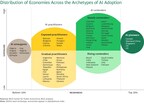
The combined analysis of AI exposure and readiness reveals six distinct adoption groups:

AI Pioneers: These are the vanguards of AI adoption, building on strong infrastructure and engaging the technology in diverse sectors. All pioneers invest liberally in R&D and job sectors, and education systems are full of highly skilled talent. AI will make up progressively larger shares of the pioneers’ GDPs over the next several years, as these actors supply more and more AI technologies, services, skills, and investment to the world.Steady Contenders: These economies have higher shares of highly exposed service sectors, however their exposure is balanced by high readiness. This group is mainly dominated by high-income European economies like Germany, which has high exposure due to its large information and communication technology (ICT) and advanced manufacturing sectors. Malaysia stands out as a non-European leader, with its government’s strong focus on AI through the National AI Roadmap, tech hubs, and university training. This illustrates how public sector leadership can drive tech maturity and competitiveness in emerging economies.Rising Contenders: These are mainly economies with lower AI exposure due to a relatively higher share of industrial and/or resource-based mix of sectors. This lower level of exposure is the main difference between rising contenders and steady contenders, but governments in this subgroup push for AI adoption with the same commitment as steady contenders. India, Saudi Arabia, and Indonesia are notable examples in this group.Gradual Practitioners: These are typically upper middle- and lower middle-income countries that are adopting AI at a moderate pace. Their economies include low-tech sectors such as tourism, textiles, wood manufacturing, and agriculture, where adopting AI is not yet imperative for companies.Exposed Practitioners. This group includes developing and developed economies vulnerable to AI disruption due to more high-exposure sectors and low readiness. Actors here will need to accelerate AI adoption and mitigate potential risks. While these countries may currently have a gap between their AI exposure and readiness, they are well positioned to gain ground quickly with investments in infrastructure and education. Notable economies in this group include Malta, Cyprus, Bahrain, Kuwait, Greece, and Bulgaria.AI Emergents: These economies are at the early stages of AI adoption. They need to build foundational strategies and infrastructure to reach the basic levels of AI integration and competitiveness. These countries lack a national AI strategy or similar holistic approaches to AI. Skilled workers and investment are often scarce, as is activity related to research papers, patents, and startups.

Positioning Governments for Success in the AI-Driven Future

The report proposes a set of initiatives for each archetype across three themes:

Enabling AI: establishing the foundational elements for AI emergentsAccelerating AI: customizing the ASPIRE levers for AI contenders and AI practitionersAmplifying AI: driving the global AI agenda for AI pioneers

These recommendations offer an economywide approach to AI readiness that economic managers can apply to drive sectoral transformation.

“Policymakers need to act decisively to prepare for an AI-driven world by enhancing resilience, productivity, job creation, modernization, and competitiveness,” said Aparna Bharadwaj, a BCG managing director, partner, global leader for the firm’s Global Advantage practice, and coauthor of the report. “Our research provides a practical framework to guide them through the rapidly evolving AI landscape, empowering economies to leverage AI’s transformative potential for sustainable growth and societal wellbeing.”

Download the publication here:
https://www.bcg.com/publications/2024/which-economies-are-ready-for-ai

Access the interactive dashboard here to easily view AI engagement and explore factors like sector deployment, exposure, investment, regulation, and readiness for disruption across the economies studied.

Media Contact:
Eric Gregoire
+1 617 850 3783
gregoire.eric@bcg.com 

About Boston Consulting Group

Boston Consulting Group partners with leaders in business and society to tackle their most important challenges and capture their greatest opportunities. BCG was the pioneer in business strategy when it was founded in 1963. Today, we work closely with clients to embrace a transformational approach aimed at benefiting all stakeholders—empowering organizations to grow, build sustainable competitive advantage, and drive positive societal impact.

Our diverse, global teams bring deep industry and functional expertise and a range of perspectives that question the status quo and spark change. BCG delivers solutions through leading-edge management consulting, technology and design, and corporate and digital ventures. We work in a uniquely collaborative model across the firm and throughout all levels of the client organization, fueled by the goal of helping our clients thrive and enabling them to make the world a better place.

View original content to download multimedia:https://www.prnewswire.com/news-releases/seventy-percent-of-economies-are-underprepared-for-ai-disruption-302310674.html

SOURCE Boston Consulting Group (BCG)

Continue Reading
Click to comment

Leave a Reply

Your email address will not be published. Required fields are marked *

Technology

TELUS transforms legacy telecommunications site into 195 new homes for Nanaimo

Published

on

By

Across Canada, demand for rental housing continues to outpace supply. TELUS Living is helping address this challenge by transforming existing TELUS properties into smart, sustainable homes in communities where new housing is needed most.

NANAIMO, BC, July 23, 2026 /CNW/ — TELUS Living today opened a new 195-home purpose-built rental community in downtown Nanaimo, transforming a former telecommunications property into smart, sustainable housing that helps address one of Canada’s most pressing challenges: increasing rental supply in growing communities. Located at 235 Wallace St, the multi-storey, mixed-use build features 195 purpose-built rental units, providing much-needed housing supply to downtown Nanaimo, while thoughtfully honouring the city’s unique coastal identity and heritage.

The Nanaimo development is part of TELUS’ long-term strategy to repurpose legacy telecommunications infrastructure into purpose-built rental housing as the company modernizes its network and completes the transition from copper to PureFibre technology. The Nanaimo community joins TELUS Living’s growing portfolio of developments that are transforming underutilized TELUS properties into housing across Canada.

“The Nanaimo development represents exactly what TELUS Living stands for by providing purpose-built rental housing tailored to the specific needs of the community it serves. We’ve designed 235 Wallace St with Nanaimo’s unique character in mind, offering a curated lifestyle that blends a climate-conscious, Zero Carbon Design approach with top-tier wellness and smart-tech amenities,” said Manasweeta Bhatia, Vice President of Corporate Real Estate at TELUS. “We shape every TELUS Living project by listening to the community, understanding its unique identity and design needs, and building accordingly. Its central downtown location and proximity to both Vancouver Island University and Nanaimo Regional General Hospital also position it as an ideal home for students, educators, and healthcare workers seeking modern, connected living.”

“More housing and good jobs are a win-win for downtown Nanaimo,” said Sheila Malcolmson, MLA for Nanaimo-Gabriola Island. “Adding to the approximately 1,500 affordable homes our B.C. government has completed and underway in Nanaimo, it’s great to see TELUS stepping up with 195 new units. It’s been great to see hundreds of construction and indirect jobs in town, and I can’t wait to see folks move into their new homes.”

“I’m thrilled to see a new rental option in downtown Nanaimo, and especially excited that this conversion was made with sustainability and active transportation in mind,” said George Anderson, MLA for Nanaimo-Lantzville. “Ensuring everyone can find homes they can afford in the communities they love requires creative approaches, and I hope to see more creativity like this in the future.”

“I’m delighted to celebrate the opening of TELUS Living Nanaimo, a landmark project that strengthens our downtown as a vibrant, inclusive place to live,” said Leonard Krog, Mayor of Nanaimo. “This partnership between the City of Nanaimo, our community, and TELUS demonstrates what’s possible when we work together toward shared goals. The addition of nearly 200 diverse housing options is exactly what our city needs, and we’re excited about the positive impact this will have on our community. TELUS’ commitment to our city and investment in our future will contribute to Nanaimo’s economic and social vitality.”

Situated within walking distance of downtown’s vibrant cafes, eclectic Old City Quarter, the iconic Harbourfront Walkway, and a short transit ride from Vancouver Island University and Nanaimo Regional General Hospital, the development is architecturally designed to blend classic and contemporary exterior elements. Curated for modern living, the community offers an expansive suite of indoor and outdoor social amenities alongside street-level retail and public art contributions.

Project Highlights:

Smart-Enabled Living: Powered by the TELUS PureFibre network, the custom TELUS Living App provides keyless entry, smart climate control, leak detection, parcel notifications, visitor management, and amenity bookings.Social & Wellness Amenities: Features a rooftop deck with an outdoor kitchen, BBQs, and panoramic views, alongside a state-of-the-art fitness centre and resident lounge.Pet & Active Lifestyle Ready: Equipped with a dedicated children’s outdoor play area, outdoor bark park and pet care station, secure underground parking, bike storage and maintenance facilities.Premium Functional Interiors: Studio to three-bedroom layouts include private balconies, individual A/C with Energy Recovery Ventilators (ERVs) for optimal air quality, Samsung SmartThings appliances, and in-suite laundry.Gold-Standard Sustainability: Sets a Vancouver Island benchmark aligned with Zero Carbon Design standards and Salmon-Safe development guidelines that actively protects local ecosystems.

This opening marks a significant milestone in TELUS Living’s mission to transform existing real estate holdings into purpose-built rentals that bridge the housing gap with smart, sustainable, and community-focused developments. As TELUS completes its transition from legacy copper to advanced fibre networks, the company is transforming its historic central offices–which once served as the backbone of B.C.’s phone system–into vibrant, smart, purpose-built rental communities. TELUS Living is breathing new life into these properties to help address Canada’s housing crisis. For more details on TELUS Living Nanaimo or to view available floor plans, please visit telusliving.com/nanaimo.

About TELUS

TELUS (TSX: T, NYSE: TU) is a world-leading communications technology company operating in more than 45 countries and generating over $20 billion in annual revenue with more than 17 million customer connections through our advanced suite of broadband services for consumers, businesses and the public sector. We are committed to leveraging our technology to enable remarkable human outcomes. TELUS is passionate about putting our customers and communities first, leading the way globally in client service excellence and social capitalism. TELUS Health is enhancing approximately 170 million lives across 200 countries and territories through innovative preventive medicine and well-being technologies. TELUS Agriculture & Consumer Goods utilizes digital technologies and data insights to optimize the connection between producers and consumers. TELUS Digital specializes in digital customer experiences and future-focused digital transformations that deliver value for their global clients. Guided by our enduring ‘give where we live’ philosophy, TELUS continues to invest in initiatives that support education, health and community well-being. In 2023, we launched the TELUS Student Bursary, which strives to ensure that every young person in Canada who wants a postsecondary education has the opportunity to pursue one. To date, the program has distributed over $6 million in bursaries to 2,000 students and counting. Since 2000, TELUS, our team members and retirees have contributed $1.85 billion in cash, in-kind contributions, time and programs, including 2.5 million days of service–earning TELUS the distinction of the world’s most giving company.

For more information, visit telus.com.

For more information, please contact:
Brandi Rees
TELUS Public Relations
brandi.rees@telus.com 

SOURCE TELUS Communications Inc.

Continue Reading

Technology

Award-Winning Author Euran Daniels to Deliver Opening Keynote at International Nevus Outreach Conference, Unveiling New $100,000 Global Initiative to Advance CMN Research and Awareness

Published

on

By

ORLANDO, Fla., July 24, 2026 /PRNewswire/ — Award-winning author, entrepreneur, and Congenital Melanocytic Nevus (CMN) advocate Euran S. Daniels will deliver the opening keynote address at the 2026 Nevus Outreach International Conference on Sunday, July 26, 2026, at 1:00 p.m. at the Renaissance Orlando at SeaWorld®.

Launching the conference under this year’s theme, “Amplify,” Daniels will share his personal journey of living with CMN for more than 50 years and challenge attendees to transform awareness into meaningful action through hope, advocacy, and research.

During his keynote, Daniels will unveil a new global initiative aimed at expanding awareness and inspiring greater support for CMN research. The initiative will encourage individuals, healthcare organizations, corporations, and philanthropists to join a collaborative effort to improve the lives of those affected by this rare skin condition.

“For more than fifty years, I’ve lived with a visible mark that became my purpose,” said Daniels. “My hope is that every person leaves this conference believing they can make a difference by amplifying hope, supporting research, and leaving a positive impact on the lives of others.”

CMN is a rare skin condition present at birth that, in its larger forms, affects approximately 1 in every 20,000 births. Individuals living with CMN may face complex medical challenges, including an increased risk of melanoma, multiple surgeries, and the emotional impact of living with a visible difference.

Daniels’ keynote will focus on three powerful messages: You’re Not Alone. Live Your Life. Leave Your Mark.Through his story of resilience and leadership, he hopes to inspire families, advocates, researchers, and community leaders to work together to create greater awareness and opportunity for those living with CMN.

Media are invited to attend the keynote address to learn more about this initiative. 

For more information, visit www.EuranDaniels.com or to support CMN research, visit www.nevus.org/joineuran.

Media Contact:
Media Relations – Fanisha Love (910) 262-3439
Email: info@danielscompany.com
Website: www.EuranDaniels.com

View original content to download multimedia:https://www.prnewswire.com/news-releases/award-winning-author-euran-daniels-to-deliver-opening-keynote-at-international-nevus-outreach-conference-unveiling-new-100-000-global-initiative-to-advance-cmn-research-and-awareness-302834295.html

SOURCE Daniels Company

Continue Reading

Technology

Immigration Desk Shares Guidance for Entrepreneurs and Foreign Businesses Planning US Expansion in 2026

Published

on

By

NEWTON, Mass., July 24, 2026 /PRNewswire/ — Immigration Desk is highlighting key immigration considerations for entrepreneurs, investors, and foreign-owned companies looking to establish or expand a presence in the United States, as interest in cross-border growth continues alongside evolving visa procedures and compliance expectations. The firm noted that many business owners plan with a general goal of opening a US office,  only to be met by a system that favors careful planning and documentation. 

Immigration planning often intersects with business planning, with company structure, ownership percentage, funding sources, job roles, and operational timelines influencing the pathways available and evidence required. A viable business plan alone often isn’t enough, and applicants must also meet specific legal definitions tied to visa categories. Those definitions, however, can differ significantly depending on the route pursued.

“Business immigration is not a single form or a single standard,” said Anu Gupta, attorney at Immigration Desk. “Entrepreneurs and foreign businesses often come to the process thinking in terms of growth goals like opening a location, hiring, and launching a product. However, the immigration system asks for detailed proof of role, eligibility, and structure. Planning early helps align those two realities and avoids last-minute surprises.”

Immigration Desk notes that entrepreneurs and foreign businesses typically evaluate options based on the nature of the US activity and the individual’s role. For some, the relevant question is whether a company can transfer an executive, manager, or specialized employee to a US office under an intracompany framework, particularly when the business can document a qualifying relationship between entities.

For others, the analysis may focus on investment-based categories where the applicant is actively directing and developing a US enterprise. In still other cases, founders may explore categories that emphasize extraordinary ability, research-based work, or employer sponsorship, depending on the individual’s background and the company’s needs.

L-1 and E-2 Visas: Pathways for Multinational Companies and Investors

For companies evaluating intracompany transfers, the L-1 visa provides a structured pathway for multinational businesses to bring executives, managers, or employees with specialized knowledge to a U.S. office — including newly established entities. Immigration Desk notes that L-1 cases require careful documentation of the qualifying relationship between the foreign and U.S. companies, as well as a clear demonstration of the applicant’s role and seniority. For new U.S. offices in particular, USCIS applies additional scrutiny to whether the operation is sufficiently established to support the position being petitioned.

The E-2 treaty investor visa offers a separate route for entrepreneurs from qualifying treaty countries who are making a substantial investment in and actively directing a U.S. enterprise. While the E-2 does not require a minimum investment threshold, Immigration Desk emphasizes that the investment must be proportional to the nature of the business and at risk in a commercial sense — factors that require careful structuring and documentation from the outset. Unlike some other business visa categories, the E-2 does not provide a direct path to permanent residency, which means founders relying on it should also plan for long-term status options early in the process.

The firm also points to a recurring challenge for growth-stage companies: staffing. Employer-sponsored visas can involve strict timing, evolving agency practices, and in some categories, annual numerical limits. In recent years, many employers have sought clarity on how to plan around the H-1B cap and lottery cycle, particularly when hiring needs don’t align neatly with government filing windows.

While the H-1B category remains widely used for specialized professional roles, Immigration Desk emphasizes that businesses should treat it as one part of a broader hiring and compliance plan rather than a single solution, especially when role definitions, worksite compliance, and documentation requirements are central to adjudication.

“People often focus on the name of a visa category, but the practical work is in the documentation and the operational reality behind the petition,” Gupta added. “For businesses, that means understanding what the government expects in terms of job duties, business activity, and the evidence that supports eligibility. For entrepreneurs, it can mean clarifying ownership, funding, and what day-to-day leadership looks like in a way that is consistent and well documented.”

Immigration Desk also notes that immigration planning frequently involves risk management. Businesses may need to consider how quickly a US operation must become functional, what happens if timelines shift, and how to maintain continuity if a petition is delayed or requires additional review. For founders, the concerns often include whether a pathway supports both business operations and personal stability, including travel, family planning, and long-term status options.

The firm cautions that immigration outcomes depend on individualized facts and that what works for one company may not apply to another. However, the most consistent problems, like incomplete timelines, inconsistent documentation, unclear roles, and last-minute filings, are completely avoidable. In response to those issues, Immigration Desk encourages business owners to approach US immigration as a phased process that begins with strategy and thorough preparation, with an operational plan for compliance after arrival.

For more information, please refer to the company’s website.

Immigration Desk
704 Walnut Street Newton, MA 02459
1-800-688-7892
https://immigrationdesk.com/
clients@ImmigrationDesk.com 

At Immigration Desk, attorney Anu Gupta and her team have helped thousands of entrepreneurs, investors, and multinational companies navigate complex immigration matters. With more than 40 years of combined experience and over 10,000 immigration cases handled, the firm has developed a reputation for careful preparation and strategic case planning. Whether you are a startup founder, a multinational executive, or an investor seeking to establish a presence in the United States, Immigration Desk can help you determine the most effective immigration strategy for your situation.

View original content to download multimedia:https://www.prnewswire.com/news-releases/immigration-desk-shares-guidance-for-entrepreneurs-and-foreign-businesses-planning-us-expansion-in-2026-302834299.html

SOURCE Immigration Desk

Continue Reading

Trending