Connect with us

Technology

China’s inclusive approach recognized

Published

on

BEIJING, Nov. 22, 2024 /PRNewswire/ — A news report from chinadaily.com.cn:

Analysts highlight Beijing’s efforts to support developing countries in global economic order.

In a fragmented world that needs to fix deficits in peace, development and governance, China’s visions, proposed by President Xi Jinping at the 19th G20 Summit, of building a just world of common development and promoting a fair and equitable global governance system are of great relevance to making the world a better place, according to analysts.

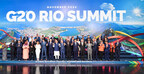
The G20 Summit, hosted by Brazil in Rio de Janeiro on Monday and Tuesday, took place amid shifting geopolitical dynamics and economic uncertainty, providing an opportunity for world leaders to get together to discuss solutions to address urgent global challenges, including economic stagnation, trade disruptions, food security, reform of multilateral institutions and climate governance.

As leader of the second-largest economy and the largest developing country in the world, Xi’s attendance and his interactions with other leaders at the summit were in the spotlight.

Addressing the summit, he outlined China’s eight actions to support global development, including pursuing high-quality Belt and Road cooperation, implementing the Global Development Initiative, supporting international cooperation on poverty reduction and food security, and supporting the G20 in carrying out practical cooperation for the benefit of the Global South.

He called for improving global economic, financial, trade, digital and ecological governance to build a world economy characterized by cooperation, stability, openness, innovation and eco-friendliness.

Evandro Menezes de Carvalho, a professor of international law at Fluminense Federal University in Brazil, said that taking a systemic view of global governance, Xi highlighted key actions in each of the main areas of global governance in his speech.

China has already given concrete demonstrations of being a country committed to the development of a more inclusive international order. In addition, it has been very active in promoting green development with significant investment in technology and environmental protection,” he said.

The professor noted that global economic development depends on a balanced, stable financial and trade system that takes into account the needs of developing countries in order to promote a more inclusive international order, highlighting the importance of Xi’s remarks on improving global digital and ecological governance with the Global South and developing countries involved.

“Global digital governance and ecological governance, which are increasingly linked to each other, if well directed towards the common good, could contribute to opening new paths for the future for humanity as they increasingly exert influence in today’s world.”

Under the Brazilian presidency, the Rio G20 Summit adopted the motto “Building a Just World and a Sustainable Planet”, focusing on three priority themes: energy transition, fair sustainable development (with an emphasis on combating hunger, poverty and inequality), and reform of multilateral institutions.

China, standing at the forefront of the Global South, has been advocating for greater representation of developing countries in global governance to promote an international order that is truly democratic, inclusive and multilateral.

From advocating the Five Principles of Peaceful Coexistence to proposing the construction of a new type of international relations featuring win-win cooperation, and building a community with a shared future for mankind, China’s consistent goal has been to build a more equal and just world, ensuring that developing countries have a greater voice in global affairs, observers said.

At the Rio G20 Summit, Xi urged the World Bank to carry out a shareholding review and the International Monetary Fund to carry out quota share realignment in line with the agreed time frame and road map in order to increase the voice and representation of developing countries.

He said that China, alongside Brazil, South Africa and the African Union, is proposing an Initiative on International Cooperation in Open Science to help the Global South gain better access to global advances in science, technology and innovation.

Anthony Moretti, an associate professor in the Communication and Organizational Leadership Department at Robert Morris University in the United States, said that Xi is spot on when he suggests that isolationism is not what the global community needs right now. This is especially true for the developing world, Moretti added.

Mehmood Ul Hassan Khan, executive director of the Center for South Asia and International Studies in Islamabad, Pakistan, said that Xi has made proposals for an open, inclusive and non-discriminatory environment for international economic cooperation through a universally beneficial and inclusive economic globalization.

His proposals support developing countries in better integrating into digital, smart and green development to bridge the North-South gap, and they constitute a holistic and comprehensive policy badly needed for economic recovery, poverty reduction and job creation, Khan said, adding they reflect the global need for complete transformation from isolation to integration, from Cold War mentality to international cooperation.

As the Ukraine crisis and Palestine-Israel conflict remain protracted, Xi highlighted at the Rio G20 Summit that “global security governance is part and parcel of global governance”. The G20 should support the UN and its Security Council in playing a greater role, and support all efforts conducive to the peaceful settlement of crises, he said.

China and Brazil, together with some other Global South countries, have launched a group of “friends for peace” on the Ukraine crisis, with the goal of bringing together more voices for peace.

Khan said that the proposal of the group of “friends for peace” is innovative and well-timed, which must be listened to and implemented for achieving peace in Ukraine and Palestine.

Marcos Cordeiro Pires, a professor of international political economy at Sao Paulo State University, said that the China-proposed Global Development Initiative, Global Security Initiative, Global Civilization Initiative and Belt and Road Initiative are becoming international public goods that offer a path to building actions that help overcome the immense challenges faced by humanity.

These initiatives are a counterpoint to selfishness and unilateralism by pointing out that development is essential to overcoming hunger and poverty, that no country can guarantee its security at the expense of others, that peaceful coexistence between civilizations presupposes respect for the uniqueness of each culture, and, above all, that building infrastructure is one of the best ways to guarantee progress and address inequalities, Pires said.

The Chinese president also urged G20 countries to “see each other’s development as opportunities rather than challenges and view each other as partners rather than rivals”, highlighting the need to observe the basic norms of international relations underpinned by the purposes and principles of the United Nations Charter and defend the international order based on international law.

Xu Feibiao, a senior researcher and the director of the Center for BRICS and G20 Studies of China Institutes of Contemporary International Relations, said that China remains committed to safeguarding a multilateral system with the UN at its core, following the path of peaceful development, and advocating for the building of a community with a shared future for mankind.

It calls for a new type of international relations and upholds the principles of “extensive consultation, joint contribution and shared benefits” in global governance, Xu said, adding these efforts and principles are gaining broader recognition and respect from countries all over the world, offering hope for the G20 to regain its relevance in global governance.

The Rio G20 Summit adopted a leaders’ declaration, with the G20 leaders reaffirming their strong commitment to multilateralism and pledging to reform the global governance system.

The leaders pledged to work for a reinvigorated and strengthened multilateral system, rooted in the purposes and principles of the UN Charter and international law, with renewed institutions and a reformed governance that is more representative and effective, according to the declaration.

They also pledged to reform the UN Security Council to align it with the realities and demands of the 21st century and make it more representative, inclusive and effective, the declaration said.

Rena Li in Los Angeles, Yifan Xu in Washington and Xu Weiwei in Hong Kong contributed to the story.

View original content to download multimedia:https://www.prnewswire.com/news-releases/chinas-inclusive-approach-recognized-302314169.html

SOURCE chinadaily.com.cn

Continue Reading
Click to comment

Leave a Reply

Your email address will not be published. Required fields are marked *

Technology

Manufacturing Category at 139th Canton Fair Presents Smarter, Lighter and More Connected Solutions

Published

on

By

GUANGZHOU, China, April 24, 2026 /PRNewswire/ — At the 139th Canton Fair, Manufacturing category presented a clear view of how industrial equipment is evolving to address efficiency, labor shortages, and sustainability goals. Across power equipment, machinery, automation systems, and industrial robots, exhibitors pointed to a common direction: smarter operation, stronger engineering performance, and deeper integration with digital manufacturing systems.

Industrial equipment is advancing towards intelligence with products emphasizing built-in sensing and automatic adjustment to enhance reliability and efficiency. Silent inverter generators, for example, can detect operating conditions and ambient temperature to regulate cooling for better fuel use and stability. Pumps and cleaning equipment with variable-frequency drives and integrated protection systems follow the same approach, prioritizing smooth operation, longer service life, and consistent output.

Lightweight, high-performance design has also become a priority across categories. Advances in materials and structural engineering are enabling major weight reductions without compromising power or durability. Aluminum-extrusion housings in three-phase asynchronous motors cut weight by up to 40% while improving heat dissipation and installation efficiency. Lightweight permanent-magnet submersible pumps delivered stronger flow stability despite smaller size and reduced weight.

AI-based visual inspection and quality control are also becoming essential. AI-powered optical inspection stations demonstrated full-process, high-speed inspection without relying on manual sampling. By turning experience-based judgment into standardized, repeatable rules, these systems help manufacturers improve scalability and consistency.

Industrial robots are taking on more active roles as well. Security patrol robot dogs and inspection robots are moving beyond monitoring to direct intervention, such as carrying fire-suppression modules for emergency response. This shift marks a broader move from passive observation to active execution in high-risk or labor-intensive environments.

Finally, more industrial devices are being designed as system nodes rather than standalone machines. Intelligent industrial gateways that combine data collection, protocol conversion, edge computing, and secure transmission show how equipment value increasingly depends on its ability to connect with enterprise-level digital systems.

The 139th Canton Fair vividly showcased the accelerated shift of industrial equipment toward intelligent and system-level development.

For pre-registration, please click: https://buyer.cantonfair.org.cn/register/buyer/email?source_type=16


View original content to download multimedia:https://www.prnewswire.com/news-releases/manufacturing-category-at-139th-canton-fair-presents-smarter-lighter-and-more-connected-solutions-302752629.html

SOURCE Canton Fair

Continue Reading

Technology

Zhejiang unicorn ranks grow to 58 as Hangzhou tightens lead, top ranking shows

Published

on

By

Province adds three unicorns, expands high-growth pipeline
Hangzhou accounts for 83% as new entrants and startups scale up

HANGZHOU, China, April 24, 2026 /PRNewswire/ — Zhejiang’s roster of unicorn companies has expanded to 58 as of April 2026, highlighting the province’s growing role as a hub for emerging technologies and industrial upgrading.

The latest rankings, released at the 10th All Blossom Conference in Hangzhou on April 23, show companies spread across seven cities, including Hangzhou, Ningbo, Jiaxing, Jinhua, Shaoxing, Taizhou and Wenzhou.

While Hangzhou, Ningbo and Jiaxing remain the top three hubs, the broader distribution points to a more geographically balanced innovation landscape. The province’s unicorn count rose by three from a year earlier.

Hangzhou continues to dominate the landscape, home to 48 of Zhejiang’s unicorns, up from 44 last year—when it already accounted for roughly four out of every five such startups.

The annual rankings also include tiered lists of “future unicorns,” valued between $100 million and $1 billion, and early-stage “seed unicorns” worth $10 million to $100 million.

Together, they map a full pipeline of high-growth companies across sectors such as artificial intelligence, embodied intelligence, life sciences, new energy, semiconductors, advanced manufacturing and aerospace, and have become a key barometer of Zhejiang’s startup ecosystem.

Among the top 100 future unicorns, integrated circuits lead with 22 companies, followed by artificial intelligence and life sciences with 19 each. Advanced manufacturing accounts for 16 firms, new energy and materials 15, and next-generation information technology nine.

In the seed unicorn category, new energy and life sciences each count 22 companies, ahead of advanced manufacturing with 19, while AI, next-generation IT and semiconductors each have 11 firms, and aerospace-related companies total four.

Against that provincial backdrop, Hangzhou remains the clear center of gravity—continuing to generate both the largest share of unicorns and the deepest pipeline of emerging startups.

The city added eight companies to its unicorn ranks on April 23, bringing the total to 48, according to the same conference ranking.

The new entrants—Hailiang Technology Services, Geener Microelectronics, Spirit AI, Geespace, Sunrise, Seepin, DEEP Robotics and Simplexity Robotics—span sectors from semiconductors and robotics to commercial aerospace.

As of April, Hangzhou accounted for 83% of Zhejiang’s unicorns, up from 80% a year earlier, underscoring its outsized role in the province’s innovation economy.

The conference also released a list of 413 quasi-unicorns—companies typically valued between $100 million and $1 billion—including 50 new additions.

Several firms, such as Diagens Biotechnology, Manycore Tech, Mirxes, Promisemed, Saint Bella, Tide Pharmaceutical, Tongshifu and ISV, exited the list after scaling into unicorn status or completing initial public offerings.

Quasi-unicorns are concentrated in sectors aligned with Hangzhou’s broader “296X” industrial strategy. Life sciences lead with 118 firms, followed by next-generation information technology with 78 and AI and embodied intelligence with 50—together accounting for about 60% of the total.

The “296X” is an industrial cluster blueprint the city introduced in October 2025 in an effort to speed up the integration of technological and industrial innovation.

More than half of both unicorns and quasi-unicorns—255 companies—are classified as nationally recognized “specialized and refined” enterprises, including 20 unicorns and 235 quasi-unicorns, reflecting a structured pipeline of high-growth firms.

Since 2018, Hangzhou’s unicorn count has risen from 26 to 48, while quasi-unicorns have expanded from 105 to 413, underscoring sustained growth in its innovation-driven economy.

View original content to download multimedia:https://www.prnewswire.com/apac/news-releases/zhejiang-unicorn-ranks-grow-to-58-as-hangzhou-tightens-lead-top-ranking-shows-302752640.html

SOURCE All Blossom Conference

Continue Reading

Technology

KUN Unveils AI Intelligent Strategy at Money20/20 Asia: Reconstructing Global Commercial Efficiency with “1-1-4-6” Layout

Published

on

By

BANGKOK, April 24, 2026 /PRNewswire/ — At the prestigious Money20/20 Asia held at QSNCC, KUN showcased its upgraded brand identity and launched the “1-1-4-6” Intelligent Strategic Blueprint. This milestone marks KUN’s comprehensive transition toward a globalized, full-stack, and intelligent ecosystem.

Dr. Louis Liu, Founder & Group CEO of KUN, stated at the launch: “While the convergence of Web2 and Web3 defines the current era, we believe the embedded ecosystem synergy of AI and Web3 is the inevitable future of commerce. Our evolution is an intelligent reconstruction of commercial efficiency. By leveraging decades of vertical payment expertise, we provide enterprise clients with full-stack, end-to-end payment and financial solutions. Through digital orchestration and operations, we deliver secure, compliant, and high-velocity transaction safeguards to empower global business growth.”

Money20/20 Roundtable: Compliance as the “Scaling Layer” for Institutional Adoption

At the “Bridging TradFi and DeFi” roundtable, Dr. Liu shared three key insights on the future of cross-border finance:

Asia as the Hub for Real-World Stablecoin Settlement: Asia has emerged as a critical hub for cross-border trade flows and stablecoin settlement, connecting high-growth emerging markets. Currently, 60% of the world’s on-chain stablecoin trade volume is centered in Asia, making it a primary corridor for capital flows between Asia, LATAM, Africa, and the Middle East.

Compliance as the “Scaling Layer”: The bottleneck for scaling digital payments is not technology or licensing, but the ability to embed jurisdictional compliance frameworks into business logic. Integrating AML and risk controls directly into the payment flow is the prerequisite for the explosion of global institutional applications.

Accelerating AI and Web3 Ecosystem Convergence: As AI agents increasingly enter commercial decision-making, payments are shifting from human-controlled to autonomous. Blockchain and stablecoins will serve as the default infrastructure for Agent-to-Agent (A2A) transactions.

Exhibition Interaction: From Platform Governance to Vertical Efficiency

At the main exhibition area, KUN demonstrated its dual-brand synergy through a new visual identity:

KUN: Positioned as the Trusted Vertical Digital Payments Platform for Real Economy, providing one-stop digital payments and scenario-based on-chain financial solutions.

YeeZ: A KUN Group brand specializing in 2B2C Global Corporate Card Issuance for global enterprises.

The “1-1-4-6” Strategic Blueprint: Driving Global Growth

KUN decoded its “1-1-4-6” strategy—an AI-powered blueprint designed for seamless asset mobility. The ecosystem integrates KUN Space™ (the digital payments & financial services platform) with KUN Nexus™ (the AI-orchestrated liquidity network). Driven by four core engines—KUN | Pay, KUN | Cards, KUN | Money, and KUN | Agent—the strategy empowers liquidity for six vertical sectors: Bulk Commodity, General Trade, B2B Cross-border E-Commerce, Service Trade, Web3 Ecosystems, and AI Applications.

Future Vision: The Era of “Driverless” Intelligent Payments

The launch highlighted KUN | Agent as the pioneer of the “driverless” era of intelligent global payments.

KUNClaw.AI: Orchestrates autonomous financial workflows to drive intelligent cost reduction and efficiency.

AI Agent Wallet: Features programmable KYC and authorization fences to ensure secure, compliant execution where “decision is payment”.

Seamless Network, Borderless Payments.

KUN remains dedicated to serving as the engine for the real economy, providing secure, compliant, and efficient one-stop cross-border payment solutions in an uncertain global environment.

About KUN

KUN is an innovative financial infrastructure company centered on digital payments and embedded finance. Built on a globally distributed licensing framework and a robust compliance and risk-management system, KUN connects Asia with high-growth emerging markets across Africa, Latin America, and the Middle East.

Positioned as a trusted vertical digital payments platform for real economies, the company operates across four core pillars—Cross-Border Digital Payments, On-Chain Finance, Card Issuing, and AI Agentic Payments. By integrating artificial intelligence and blockchain technologies, KUN delivers secure, compliant, and efficient one-stop payment and transaction services for enterprise clients across industries including commodity trade, B2B cross-border e-commerce, service trade, Web3 ecosystems, and AI applications.

Through this integrated infrastructure, KUN serves as a growth engine enabling enterprises to expand globally with speed, trust, and financial connectivity.

Learn more about KUN → www.kun.global

Contact: KUN: brandmkt@kun.global  

View original content:https://www.prnewswire.com/apac/news-releases/kun-unveils-ai-intelligent-strategy-at-money2020-asia-reconstructing-global-commercial-efficiency-with-1-1-4-6-layout-302752641.html

SOURCE KUN

Continue Reading

Trending