Connect with us

Technology

Semiconductor Market in Military & Aerospace to Grow by USD 3.02 Billion (2024-2028), Aircraft Modernization Driving Growth, AI Transforming Market Trends – Technavio

Published

on

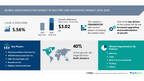
NEW YORK, Nov. 25, 2024 /PRNewswire/ — Report with the AI impact on market trends – The global semiconductor market in military and aerospace industry size is estimated to grow by USD 3.02 billion  from 2024-2028, according to Technavio. The market is estimated to grow at a CAGR of  5.56%  during the forecast period. Increased upgrading and modernization of aircraft is driving market growth, with a trend towards growing use of UAVS. However, high cost associated with manufacturing  poses a challenge.Key market players include Advanced Micro Devices Inc., AKHAN Semiconductor Inc., AMS Technologies AG, Broadcom Inc., Digitron Semiconductors, Foundaries Inc., Infineon Technologies AG, Intel Corp., Microchip Technology Inc., Micron Technology Inc., Micross Inc., Northrop Grumman Corp., ON Semiconductor Corp., Qualcomm Inc., Raytheon Technologies Corp., Samsung Electronics Co. Ltd., SEMICOA, Semtech Corp., Skyworks Solutions Inc., Taiwan Semiconductor Manufacturing Co. Ltd., Teledyne Technologies Inc., Texas Instruments Inc., Toshiba Corp., and Vishay Intertechnology Inc..

Key insights into market evolution with AI-powered analysis. Explore trends, segmentation, and growth drivers- View Free Sample PDF

Semiconductor Market In Military And Aerospace Industry Scope

Report Coverage

Details

Base year

2023

Historic period

2018 – 2022

Forecast period

2024-2028

Growth momentum & CAGR

Accelerate at a CAGR of 5.56%

Market growth 2024-2028

USD 3.02 billion

Market structure

Fragmented

YoY growth 2022-2023 (%)

5.36

Regional analysis

North America, APAC, Europe, Middle East and Africa, and South America

Performing market contribution

North America at 40%

Key countries

US, China, India, Germany, and France

Key companies profiled

Advanced Micro Devices Inc., AKHAN Semiconductor Inc., AMS Technologies AG, Broadcom Inc., Digitron Semiconductors, GlobalFoundaries Inc., Infineon Technologies AG, Intel Corp., Microchip Technology Inc., Micron Technology Inc., Micross Inc., Northrop Grumman Corp., ON Semiconductor Corp., Qualcomm Inc., Raytheon Technologies Corp., Samsung Electronics Co. Ltd., SEMICOA, Semtech Corp., Skyworks Solutions Inc., Taiwan Semiconductor Manufacturing Co. Ltd., Teledyne Technologies Inc., Texas Instruments Inc., Toshiba Corp., and Vishay Intertechnology Inc.

Market Driver

The semiconductor market in the military and aerospace industry is witnessing significant growth due to increasing defense expenditure and modernization. Microchips and integrated circuits (ICs) made of silicon, germanium, compounds, and gallium arsenide are in high demand for defense applications. N-type and P-type semiconductors are used in various systems, including border security solutions, UAVs (drones), and the Rafale fleet. Government sector spending on defense and space activities is driving the market. Radiation-tolerant components are essential for space-hardened microprocessors to withstand the harsh space environment and its effects, such as particle and electromagnetic radiation, electronic noise, and signal spikes. The communications sector, consumer automotive sector, and electronic devices sector are also contributing to the semiconductor market’s growth. CAES (Command, Control, Communications, Computers, Intelligence, Surveillance, and Reconnaissance) systems require advanced semiconductor technology. Military and aerospace applications, such as satellite launches and space activities, require semiconductors with short lead times and reasonable acquisition costs. The semiconductor market’s future growth will depend on the development of radiation-tolerant components and the integration of semiconductors into various systems, including pilots, Boeing 757s, 767s, display screens, and logistics and aid packages. Global security, information security, and the increasing use of connected devices and electronic devices also present opportunities for the semiconductor market. However, challenges such as hacking incidents and the need for secure systems remain. 

The military and aerospace industry is witnessing significant growth in the adoption of Unmanned Aerial Vehicles (UAVs), also known as drones. These remotely controlled aircraft are increasingly used for various applications beyond military use, such as logistics and disaster relief. For instance, the United Arab Emirates is testing drones for firefighting and drug delivery. India is investing heavily in UAVs for military border security surveillance, with plans to purchase hi-tech drones like the MQ-9B from the US. UAVs offer cost-effective, efficient, and flexible solutions for various applications in the military and aerospace sectors. 

Request Sample of our comprehensive report now to stay ahead in the AI-driven market evolution!

Market Challenges

The semiconductor market in the military and aerospace industry faces unique challenges due to the specific requirements of these sectors. Microchips and integrated circuits (ICs) must be able to withstand extreme conditions, such as those found in the space environment. Pure elements like silicon, germanium, compounds, and gallium arsenide are used to create N-type and P-type semiconductors for defense applications. Government sector spending on military expenditure, defense modernization, and CAES drives demand for semiconductors in this industry. Semiconductors are essential for various sectors, including communications, electronic devices, and the military. Challenges include radiation effects from particle and electromagnetic radiation, electronic noise, and signal spikes. Space-hardened microprocessors are crucial for border security, terrorism prevention, and UAV solutions, such as those used in the Rafale fleet and F4 standard missiles. Semiconductor manufacturers must produce radiation-tolerant components to meet these demands. Lead time and acquisition cost are critical factors in the semiconductor market. Semiconductors are used in various applications, from Boeing 757s and 767s to display screens, UAVs, logistics, aid packages, museums, and global and information security. Semiconductors also play a role in satellite launches and space activities. Hacking incidents and connected devices add to the need for semiconductor solutions.The semiconductor market in the military and aerospace industry is capital-intensive, similar to the automotive sector. Establishing new semiconductor factories entails a substantial investment, with facility costs being a significant expense. The price of the building is a crucial factor. Manufacturing equipment is another substantial expenditure. Early semiconductor companies, like Motorola, would manufacture their equipment and produce chips. However, as technology advanced, this practice became less common. The high cost of both facilities and equipment necessitates ongoing investment to remain competitive in these industries.

Discover how AI is revolutionizing market trends- Get your access now!

Segment Overview 

This semiconductor market in military and aerospace industry report extensively covers market segmentation by  

Product 1.1 Memory1.2 Logic1.3 MOS microcomponents1.4 Analog1.5 OthersApplication 2.1 Defense2.2 AerospaceGeography 3.1 North America3.2 APAC3.3 Europe3.4 Middle East and Africa3.5 South America

1.1 Memory-  Semiconductor memory plays a crucial role in the military and aerospace industry due to the increasing use of processors in various devices. Random Access Memory (RAM) and Read-Only Memory (ROM) are the primary types of semiconductor memory. RAM is a volatile memory that provides temporary storage for program codes and data, while ROM is a non-volatile memory that saves data permanently. The introduction of advanced technologies, such as programmable read-only memory (PROM) and dynamic random-access memory (DRAM), has expanded the memory options. The military and aerospace industries are witnessing significant technological advancements, with global semiconductor manufacturers launching new processors for high-reliability applications. For instance, Teledyne e2v HiRel Electronics’ partnership with Integra Technologies Inc. To introduce 100V GaN/SiC RF power technology for aerospace and defense applications will further increase the demand for memory semiconductors. Additionally, the integration of technology in military weapons, such as Intelligun’s fingerprint-locking system, and the growing use of the Internet of Things (IoT) in the aviation and military sectors will propel the demand for memory chips in the industry.

Download a Sample of our comprehensive report today to discover how AI-driven innovations are reshaping competitive dynamics

Research Analysis

The semiconductor market in the military and aerospace industry is driven by the demand for advanced electronic systems in defense modernization and space exploration. Microchips and integrated circuits (ICs) made from pure elements like Silicon, Germanium, and compounds such as Gallium arsenide are essential for creating N-type and P-type semiconductors. The government sector is a significant consumer, with military expenditure fueling the demand for semiconductors in various applications. The communications sector, electronic devices sector, and consumer automotive sector also contribute to the market growth. The military and aerospace industry requires semiconductors that can withstand extreme conditions, such as those found in space. CAES (Computer Aided Engineering Systems) are used to design space-hardened microprocessors that can resist radiation effects and particle radiation in the space environment. Military applications include border security, terrorism detection, and UAV solutions, while defense budgets fund research and development of advanced technologies like Scalp missiles and the Rafale fleet’s F4 standard engines. The semiconductor industry continues to innovate to meet the unique demands of the military and aerospace sector.

Market Research Overview

The semiconductor market plays a crucial role in the military and aerospace industry, supplying microchips and integrated circuits (ICs) made of various elements such as silicon, germanium, compounds, gallium arsenide, and others. N-type and P-type semiconductors are essential for creating electronic systems for defense applications. The government sector, defense modernization, and military expenditure drive the demand for semiconductors in this industry. Military and aerospace applications require semiconductors that can withstand harsh environments, including space-hardened microprocessors for satellite launches and space activities. Radiation effects, including particle radiation, electromagnetic radiation, electronic noise, and signal spikes, are significant challenges for semiconductors in these applications. The military and aerospace industry’s semiconductor market caters to various sectors, including communications, electronic devices, border security, terrorism prevention, and UAV solutions. Semiconductors are used in defense systems, military aircraft like the Rafale fleet, and civilian aircraft such as Boeing 757s and 767s. They are also essential for display screens, logistics, aid packages, and museums. The semiconductor market for military and aerospace applications faces challenges such as long lead times and high acquisition costs. However, the growing need for global and information security, including protection against hacking incidents and connected devices, continues to drive demand for advanced semiconductor solutions.

Table of Contents:

1 Executive Summary
2 Market Landscape
3 Market Sizing
4 Historic Market Size
5 Five Forces Analysis
6 Market Segmentation

ProductMemoryLogicMOS MicrocomponentsAnalogOthersApplicationDefenseAerospaceGeographyNorth AmericaAPACEuropeMiddle East And AfricaSouth America

7 Customer Landscape
8 Geographic Landscape
9 Drivers, Challenges, and Trends
10 Company Landscape
11 Company Analysis
12 Appendix

About Technavio

Technavio is a leading global technology research and advisory company. Their research and analysis focuses on emerging market trends and provides actionable insights to help businesses identify market opportunities and develop effective strategies to optimize their market positions.

With over 500 specialized analysts, Technavio’s report library consists of more than 17,000 reports and counting, covering 800 technologies, spanning across 50 countries. Their client base consists of enterprises of all sizes, including more than 100 Fortune 500 companies. This growing client base relies on Technavio’s comprehensive coverage, extensive research, and actionable market insights to identify opportunities in existing and potential markets and assess their competitive positions within changing market scenarios.

Contacts

Technavio Research
Jesse Maida
Media & Marketing Executive
US: +1 844 364 1100
UK: +44 203 893 3200
Email: media@technavio.com
Website: www.technavio.com/

View original content to download multimedia:https://www.prnewswire.com/news-releases/semiconductor-market-in-military–aerospace-to-grow-by-usd-3-02-billion-2024-2028-aircraft-modernization-driving-growth-ai-transforming-market-trends—technavio-302314324.html

SOURCE Technavio

Continue Reading
Click to comment

Leave a Reply

Your email address will not be published. Required fields are marked *

Technology

American Binary Sets New Standard in Post-Quantum Cryptographic VPNs with Symbolic Proof and Attestation

Published

on

By

WASHINGTON, July 21, 2026 /PRNewswire/ — American Binary, a leader in deep-tech cybersecurity, today announced an independent attestation regarding the validity of all 120 security properties of MaxKyber, their network protocol at the heart of their Ambit Client enterprise VPN, now third-party verified to comply with all Commercial National Security Algorithm Suite 2.0 (CNSA 2.0) requirements. This landmark verification is the result of an exhaustive private peer-review of their symbolic proof (Tamarin + ProVerif) and engineering documentation conducted by industry luminaries Dr. Joe Kiniry, PhD and Dr. Tom Shrimpton, PhD, both with long careers in academia and industry, including time at Galois as Principal Scientists.

“No known VPN — post-quantum or classical, deployed or research — has been subjected to specification and formal verification of comparable depth.” – Dr. Joe Kiniry, PhD and Dr. Tom Shrimpton, PhD

In a landscape defined by emerging quantum threats and unproven solutions, this formal third-party verification differentiates MaxKyber from traditional or hybrid solutions by providing certainty in engineering and compliance with National Security requirements. MaxKyber provides the world with long-term full post-quantum security unlike shorter-term temporary solutions such as hybrids (which mix classical and post-quantum encryption). This breakthrough marks a transition from speculative security to a foundation of verified, provable resilience, establishing a new global benchmark for secure communications.

“While organizations today are increasingly recognizing the significance of PQC, American Binary has been preparing for a post-quantum world for seven years. The result is a resilient foundation for secure operations, today and in the post‑quantum future” – Oracle

Additionally, American Binary signed ACM Turing Award winner Whitfield Diffie, cryptographic pioneer and co-inventor of the Diffie-Hellman key exchange, as a key advisor. Whitfield joins the ranks of existing cryptographic advisors Bruce Schneier and Brian LaMacchia.

“Buy American Binary and you’ll be safe”

– Whitfield Diffie at Quantum.Tech World 2026

Key security pillars of the MaxKyber attestation include:

Protection against “Harvest Now, Decrypt Later” (HNDL): By utilizing purely CNSA 2.0 algorithms, including ML-KEM-1024 without any classical key exchange variants, MaxKyber secures today’s data against decryption by quantum adversaries.Comprehensive Symbolic Verification: The attestation covers 120 security properties across 11 critical categories, including secrecy, authentication, forward secrecy, identity hiding, and resistance to Replay, Denial of Service, Resource Exhaustion, and Key Compromise Impersonation.Architectural Stability: Beyond its post-quantum cryptographic core, MaxKyber’s protocol architecture is rooted in well-established, operationally proven design patterns, retaining their performance and simplicity.

This foundational security architecture provides the necessary reliability to enable significant performance breakthroughs in the field and the following four key impacts.

Impact I: Unambiguous Security and Mitigation of “Harvest Now, Decrypt Later”

MaxKyber achieves the end-state of post-quantum cryptographic purity by utilizing a pure CNSA 2.0 post-quantum key exchange, without using any classical cryptography, hybrid cryptography, or legacy key exchange variants. Instead, American Binary’s more modern key exchange utilizes ML-KEM-1024 operations to replace the Diffie-Hellman Key Exchange. This approach ensures that modern enterprises are not tethered to the vulnerabilities of legacy components or negative market reactions to hybrid solutions being partially broken. If the classical encryption in hybrid solutions is verifiably broken, markets likely will not wait for forensics to determine whether the rest of the solution remains intact; reputation damage and capital flight will occur immediately.

MaxKyber exclusively employs CNSA 2.0 approved algorithms, specifically ML-KEM-1024 (FIPS 203), AES-256-GCM, and SHA-512/256. This construction provides the highest level of security available today without any loss of existing security properties.

Impact II: Optimal Performance from Mobile and Lossy Environments to High-Performance Scenarios

Historically, high-security protocols have suffered from significant system latency, creating a bottleneck for edge computing and mobile workforces. MaxKyber eliminates these traditional performance trade-offs, enabling high-performance security at the network’s most vulnerable points. One partner benchmarked Ambit Client, powered by MaxKyber, to have 70% faster download speeds than a comparable classically encrypted enterprise VPN.

The MaxKyber protocol optimizes efficiency through an “Authenticated Key Exchange” (AKE) which achieves mutual authentication in a single round trip, dramatically reducing the data burden on the network.

Quantifiably, the AKE saves approximately 4,600 bytes per handshake compared to the next best option. This ultra-low overhead ensures that robust post-quantum security functions reliably on mobile devices and in lossy environments where traditional, bulkier PQC handshakes consistently fail. Reliability in the field is a prerequisite for everything from remote work to warfighting environments, and MaxKyber’s AKE directly facilitates such operational readiness.

Additionally, MaxKyber is well suited for high-performance scenarios such as AI workloads, work with 3D models, and more thanks to Vector Packet Processing and Data Plane Development Kit further reducing overheads to the technical minimums and enabling line-rate speeds for server-to-server use cases.

Impact III: Compliance Savings

As the cost of compliance and diligence cycles for critical infrastructure continues to escalate, proofs can be a shortcut for approval. For CISO and Legal departments, formal verification provides a transparent, “glass-box” view of security that goes beyond traditional testing.

For integration partners, this symbolic proof significantly reduces diligence cycles. By providing an exhaustively checked security profile, American Binary allows partners to shorten the lengthy, costly investigative phases usually required for new cryptographic implementations. Verified compliance is transformed from a hurdle into a catalyst for product development.

Impact IV: R&D Acceleration

For engineering teams looking to integrate this technology and/or customize it, American Binary’s documentation serves as a powerful force multiplier. By providing pre-verified, exhaustive, and high-quality documentation, American Binary provides an extraordinary shortcut to rapid integration.

The scale of the documentation and formal models provided to partners is unprecedented in the VPN industry. This rigorous approach allows integration partners to save months, if not years, of R&D effort.

MaxKyber provides more than just a secure tunnel; it delivers a fully documented, mathematically proven blueprint that accelerates the transition to a quantum-safe future. With MaxKyber, American Binary has rewritten the industry standard for post-quantum network security.

About American Binary

American Binary is a leader in deep-tech cybersecurity, specializing in the development of CNSA 2.0 post-quantum cryptographic solutions. Through advanced rigor and high-performance engineering, American Binary provides the provable foundations for secure, resilient communication in the quantum era.

Learn more at www.ambit.inc

CONTACT: sales@ambit.inc 

View original content to download multimedia:https://www.prnewswire.com/news-releases/american-binary-sets-new-standard-in-post-quantum-cryptographic-vpns-with-symbolic-proof-and-attestation-302831415.html

SOURCE American Binary

Continue Reading

Technology

MetaOptics to Deploy its Direct Laser Writer at the University of Arizona’s Center of Semiconductor Manufacturing to Advance its U.S. Expansion

Published

on

By

SINGAPORE, July 21, 2026 /PRNewswire/ — MetaOptics Ltd (Catalist: 9MT) (“MetaOptics” or the “Company,” and together with its subsidiaries, the “Group”), announced that it has entered into an agreement to deploy its key metalens Direct Laser Writer (“DLW”) system at the University of Arizona’s Center of Semiconductor Manufacturing (the “University”). The agreement marks a critical step in advancing its U.S. expansion strategy and its collaborative research with world-class semiconductor stakeholders in Arizona. Installation of the DLW is expected to commence in 2027.

The DLW is designed for a 4-inch wafer to enable quick prototyping and fabrication of metalens samples within weeks. It also supports small-volume production for pilot builds and customer demand evaluation, enabling partners to iterate faster and move from concept to product more efficiently. The deployment of the Company’s DLW will allow prospective customers in the U.S. to physically witness the system in action for their metalens prototyping needs. It will also support collaborative research and evaluation by the University’s researchers under the guidance of Dr. Krishna Muralidharan of the University of Arizona’s Department of Materials Science and Engineering. MetaOptics expects the deployment to generate user feedback and user demonstration opportunities, providing further technical validation of its metalens equipment and products, and serve as a launchpad to scale commercial production and collaboration in the U.S. market.

The deployment of its DLW serves as a key milestone for MetaOptics’ U.S. expansion strategy, prospective U.S. customer engagement, and commercialization roadmap. It also positions the Group to support emerging U.S. initiatives in silicon photonics, co-packaged optics, and integrated photonics, where its metalens technology is directly applicable. The DLW will anchor a “mini foundry” at the University for small-volume, quick turnaround prototyping. Beyond research, the installation serves a commercial purpose: a U.S. demonstration site where potential distributors, universities, and research institutions can physically witness the DLW in operation. It will also produce metalens samples for prospective customers’ evaluation. With Arizona’s fast-growing semiconductor ecosystem home to world-class manufacturers and suppliers, the Company aims to leverage its presence at the University and the wider ecosystem to deepen engagement with prospective industry partners and end customers.

MetaOptics Executive Chairman Thng Chong Kim commented: “By placing our Direct Laser Writer within a world-class semiconductor research environment in Arizona, we will be able to strengthen technical validation and gather valuable user feedback. It also supports our ongoing engagements with potential industry partners and end-customers while showcasing our metalens manufacturing equipment to prospective distributors and institutions across the United States. We believe this deployment reinforces our broader U.S. expansion efforts and deepens our engagement in Arizona’s world-class semiconductor ecosystem.”

About MetaOptics Ltd

MetaOptics Ltd (Catalist: 9MT) is a semiconductor optics company pioneering glass-based metalens solutions enhanced by AI-driven image processing. Using advanced optical design and a scalable 12-inch DUV lithography process, it powers next-generation applications in CPO, mobile, AR VR, automotive, and other emerging markets. Find out more at www.metaoptics.sg.

Forward-Looking Statement

This press release contains forward-looking statements which can be identified by words or phrases such as “may,” “will,” “expect,” “anticipate,” “aim,” “estimate,” “intend,” “plan,” “believe,” “likely to,” “potential,” “continue” or other similar expressions. Any statements that are not historical facts, including statements about the Company’s beliefs and expectations, are forward-looking statements. Forward-looking statements involve inherent risks and uncertainties. A number of factors could cause actual results to differ materially from those contained in any forward-looking statement, including but not limited to the following: the Company’s growth strategies, its future business development, results of operations and financial condition, its research and development efforts, its ability to attract and retain customers, and its ability to establish and maintain relationships with suppliers and business partners; and assumptions underlying or related to any of the foregoing. All information provided in this press release is as of the date of this press release, and the Company undertakes no obligation to update any forward-looking statement, except as required under applicable law.

Singapore (HQ)
Metaoptics Technologies Pte Ltd. 81 Ayer Rajah Crescent, #01-45 Singapore 139967

United States
Metaoptics Inc. (USA) 1 Ferry Building, Suite 201 San Francisco, CA 9411

View original content:https://www.prnewswire.com/news-releases/metaoptics-to-deploy-its-direct-laser-writer-at-the-university-of-arizonas-center-of-semiconductor-manufacturing-to-advance-its-us-expansion-302830614.html

SOURCE METAOPTICS LTD

Continue Reading

Technology

11:11 Systems Announces Strategic Partnership with Cato Networks to Deliver SASE Solution for Distributed Enterprises

Published

on

By

New Managed Secure Access Service Edge (SASE) solution combines SD-WAN, cloud-native networking and security capabilities with 11:11’s connectivity, cyber resilience and cloud expertise

SYDNEY, July 22, 2026 /PRNewswire/ — 11:11 Systems, a leading managed infrastructure solutions provider, today announced the global availability of its 11:11 Managed Secure Access Service Edge (SASE) solution and a new strategic partnership with Cato Networks.

11:11 Managed SASE is a fully managed secure connectivity solution leveraging Cato Networks AI-native network security platform. This solution brings together intelligent SD-WAN, cloud-delivered security and global connectivity into a single offering. It enables organisations to simplify and secure access across branch offices, data centres, users and cloud environments, reducing complexity without sacrificing performance or control.

Built on the Cato Networks cloud-native SASE platform, 11:11 Managed SASE combines zero trust network access (ZTNA), firewall as a service (FWaaS), secure web gateway (SWG), cloud access security broker (CASB), advanced threat protection and centralised visibility into a unified managed experience. 11:11 also delivers 24x7x365 monitoring and support, incident management integration and operational accountability to help customers limit vendor sprawl, increase agility and free internal teams to focus on higher-value priorities.

The offering is backed by 11:11’s broader networking, cloud and cyber resilience capabilities. Through its global backbone, carrier-agnostic connectivity options and integrated portfolio spanning cloud, backup, disaster recovery and security services, 11:11 gives customers a practical path to modernise network and security architecture while strengthening resilience across the business.

“Enterprises are under pressure to support users, applications and locations that are more distributed than ever, while limiting complexity and improving security,” said Justin Giardina, CTO, 11:11 Systems. “Our Managed SASE solution provides customers with a unified approach to modernising networking and security, along with the visibility, support and flexibility they need to thrive in a rapidly changing environment.”

According to Karl Soderlund, global channel chief, Cato Networks, “As enterprises move beyond fragmented legacy networking and security stacks, they need a simpler way to gain visibility, context and control across hybrid work environments and reduce the operational burden on IT. Through our partnership, we can address these challenges head on and deliver end-to-end visibility and protection in a single service built for the reality of modern work.”

The joint offering is well suited for distributed enterprises, multi-site organisations, hybrid workforce initiatives, SD-WAN refreshes, security modernisation efforts and businesses with limited IT resources. 11:11 meets customers where they are by supporting existing environments, simplifying multi-vendor operations and serving as a single provider accountable for network, security, cloud and data integration.

This partnership expands 11:11’s Network as a Service portfolio and follows Forrester’s inclusion of 11:11 Systems in its report, “The Secure Access Service Edge Services Landscape, Q1 2026.”

About 11:11 Systems

11:11 Systems is a managed infrastructure solutions provider that empowers customers to modernise, protect and manage mission-critical applications and data, leveraging 11:11’s resilient cloud platform. Learn more at www.1111Systems.com and follow 11:11 on LinkedIn.

View original content:https://www.prnewswire.com/apac/news-releases/1111-systems-announces-strategic-partnership-with-cato-networks-to-deliver-sase-solution-for-distributed-enterprises-302830322.html

SOURCE 11:11 Systems

Continue Reading

Trending