Connect with us

Technology

Ride Sharing Market to grow by USD 180.02 Billion (2024-2028), driven by rising vehicle ownership costs, with AI redefining the market landscape – Technavio

Published

on

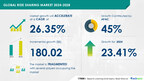
NEW YORK, Dec. 4, 2024 /PRNewswire/ — Report with market evolution powered by AI – The global ride sharing market size is estimated to grow by USD 180.02 billion from 2024-2028, according to Technavio. The market is estimated to grow at a CAGR of 26.35% during the forecast period. Increase in vehicle ownership cost is driving market growth, with a trend towards emergence of autonomous ride sharing. However, risks of theft and need for frequent maintenance poses a challenge. Key market players include ANI Technologies Pvt. Ltd., Avis Budget Group Inc., Bolt Technology OU, Cabify Espana SL, Comuto SA, Curb Mobility LLC, DENSO Corp., Enterprise Holdings Inc., Grab Holdings Ltd., GT Gettaxi UK Ltd., Hertz Holdings Inc., Ibibo Group Pvt. Ltd., iDisha Info Labs Pvt. Ltd., Lyft Inc., My Taxi Indi, PT GoTo Gojek Tokopedia Tbk, Share Now GmbH, TomTom NV, Uber Technologies Inc., and Via Transportation Inc..

Key insights into market evolution with AI-powered analysis. Explore trends, segmentation, and growth drivers- View Free Sample PDF

Ride Sharing Market Scope

Report Coverage

Details

Base year

2023

Historic period

2017 – 2021

Forecast period

2024-2028

Growth momentum & CAGR

Accelerate at a CAGR of 26.35%

Market growth 2024-2028

USD 180.02 billion

Market structure

Fragmented

YoY growth 2022-2023 (%)

23.41

Regional analysis

APAC, Europe, North America, South America, and Middle East and Africa

Performing market contribution

APAC at 45%

Key countries

China, US, Germany, UK, and Japan

Key companies profiled

ANI Technologies Pvt. Ltd., Avis Budget Group Inc., Bolt Technology OU, Cabify Espana SL, Comuto SA, Curb Mobility LLC, DENSO Corp., Enterprise Holdings Inc., Grab Holdings Ltd., GT Gettaxi UK Ltd., Hertz Global Holdings Inc., Ibibo Group Pvt. Ltd., iDisha Info Labs Pvt. Ltd., Lyft Inc., My Taxi Indi, PT GoTo Gojek Tokopedia Tbk, Share Now GmbH, TomTom NV, Uber Technologies Inc., and Via Transportation Inc.

Market Driver

The ride-sharing market is experiencing significant trends with the emergence of apps like Waze, Carma, eRideShare, CarpoolWorld, BlaBlaCar, Liftshare, and Commute with Enterprise. These platforms leverage GPS navigation and smartphone technology to help reduce greenhouse gas emissions by optimizing vehicle trips and minimizing traffic congestion. Millennials prefer ride-sharing over public transport for convenience and affordability, leading to increased demand. Mobility Service Providers (MSPs) like Gett, Didi, Go-Jek, Grab, and Ola are expanding their offerings beyond e-hailing to include food delivery, last-mile delivery, and even bikes and scooters. The car sharing market is evolving with various vehicle types, while the micromobility market focuses on the short distance segment. Business models are shifting towards profitability and sustainability, with data services, Intelligent Transportation Systems, and Automotive Vehicle-to-Everything becoming essential components. Vehicle ownership, maintenance, and component replacement costs are becoming less attractive, driving the trend towards shared mobility. Autonomous ridesharing is a growing trend, with OEMs investing heavily. However, trust and revenues remain key challenges. Passenger comfort and safety are paramount, and losses from vehicle trips can be substantial. The transportation sector is undergoing a digital transformation, with e-commerce and the sharing economy leading the way. 

Cab service providers utilize vehicles as their primary mode of transportation, generating substantial data for automakers on driving patterns, traffic conditions, and road situations. Autonomous vehicles, used as taxis and parcel delivery services, offer valuable insights through real-world testing. Major autonomous vehicle manufacturers have been focusing on developing self-driving cars for taxi and delivery services since 2017. For instance, Mercedes-Benz AG partnered with Uber Technologies to launch autonomous taxis by the end of 2021. These collaborations provide a foundation for autonomous vehicles to learn and adapt to diverse driving conditions. 

Request Sample of our comprehensive report now to stay ahead in the AI-driven market evolution!

Market Challenges

Ride-sharing market is witnessing significant growth with the emergence of players like Waze, Carma, eRideShare, CarpoolWorld, BlaBlaCar, Liftshare, Commute with Enterprise, Avolon-e, and more. These Mobility Service Providers (MSPs) leverage GPS navigation and smartphone technology to offer e-hailing services, reducing reliance on public transport and personal vehicle ownership. However, challenges such as traffic congestion, air pollution, and greenhouse gas emissions persist. MSPs face losses due to trust issues, vehicle maintenance, and component replacement costs. Business models vary from carpooling and e-hailing to autonomous ridesharing. The market includes offerings from OEMs like Didi, Go-Jek, Grab, and Ola, targeting both vehicle trips and the micromobility market (bikes and scooters). The data service segment, including Intelligent Transportation Systems and Automotive Vehicle-to-Everything, is crucial for improving passenger comfort and reducing losses. The market’s profitability and sustainability depend on addressing these challenges while adapting to evolving consumer preferences and technology trends.The global ride sharing market is experiencing a setback due to an escalating issue with bike theft. Despite implementing advanced security measures, vendors continue to grapple with this challenge. The scarcity of bicycles resulting from thefts has led to customer dissatisfaction, as shown in social media complaints. The deficit in available bicycles contrasts with the number displayed in the app. Additionally, frequent bike maintenance is required due to careless riding practices and falls, further straining market growth during the forecast period.

Discover how AI is revolutionizing market trends- Get your access now!

Segment Overview 

This ride sharing market report extensively covers market segmentation by

End-user 1.1 Individual1.2 BusinessType 2.1 Car2.2 OthersGeography 3.1 APAC3.2 Europe3.3 North America3.4 South America3.5 Middle East and Africa

1.1 Individual- The individual segment holds the largest share in the global ride sharing market due to its cost-effective and efficient business model. Unlike traditional taxi services, ride sharing allows individuals to plan their rides in advance. Drivers of privately-owned cars partner with ride sharing companies to offer rides to commuters. If a driver is heading towards a passenger’s destination, they can pick up additional riders en route, reducing costs for passengers and increasing efficiency for drivers. The preference of drivers for carrying only one or two passengers keeps this segment dominant in the forecast period.

Download a Sample of our comprehensive report today to discover how AI-driven innovations are reshaping competitive dynamics

Research Analysis

The ride-sharing market is revolutionizing the way people commute, offering cost-effective, convenient, and eco-friendly alternatives to traditional transportation methods. With the help of GPS navigation and smartphone technology, platforms like Waze, Carma, eRideShare, CarpoolWorld, BlaBlaCar, Liftshare, MaaS, Commute with Enterprise, Avolon-e, and others facilitate carpooling and ride-sharing, reducing vehicle trips and traffic congestion. These solutions not only help save money but also contribute to reducing greenhouse gas emissions and air pollution. Millennials, in particular, are embracing ride-sharing as an alternative to public transport, making it an increasingly popular choice for urban commuters. V2V communication and e-hailing services from companies like Bolt Technology OU and Gett further enhance the convenience and safety of ride-sharing, making it an attractive option for those seeking to minimize their carbon footprint while navigating the challenges of modern transportation.

Market Research Overview

The ride-sharing market is a dynamic and innovative sector that leverages GPS navigation, smartphone technology, and Internet connectivity to provide on-demand transportation solutions. This market includes various service types such as carpooling, e-hailing, and bike rental. Millennials are a key demographic, preferring ride-sharing over public transport to save time and reduce air pollution. Mobility Service Providers (MSPs) offer car sharing, eCommerce, food delivery, and last-mile delivery services, utilizing vehicle trips to optimize traffic flow and reduce congestion. Business models vary from peer-to-peer to fleet-based, with offerings ranging from autonomous ridesharing to vehicle types like cars, bikes, and scooters. V2V communication, Intelligent Transportation Systems, and Automotive Vehicle-to-Everything technologies are driving smart transportation, while losses from ride-sharing are a concern due to passenger comfort, trust, and revenue generation. The market faces challenges like emissions, maintenance, and component replacement costs, but the potential for profitability and sustainability remains high. The transport network continues to expand, with players like Didi, Go-Jek, Grab, and Ola leading the way in the car sharing and micro-mobility market.

Table of Contents:

1 Executive Summary
2 Market Landscape
3 Market Sizing
4 Historic Market Size
5 Five Forces Analysis
6 Market Segmentation

End-userIndividualBusinessTypeCarOthersGeographyAPACEuropeNorth AmericaSouth AmericaMiddle East And Africa

7 Customer Landscape
8 Geographic Landscape
9 Drivers, Challenges, and Trends
10 Company Landscape
11 Company Analysis
12 Appendix

About Technavio

Technavio is a leading global technology research and advisory company. Their research and analysis focuses on emerging market trends and provides actionable insights to help businesses identify market opportunities and develop effective strategies to optimize their market positions.

With over 500 specialized analysts, Technavio’s report library consists of more than 17,000 reports and counting, covering 800 technologies, spanning across 50 countries. Their client base consists of enterprises of all sizes, including more than 100 Fortune 500 companies. This growing client base relies on Technavio’s comprehensive coverage, extensive research, and actionable market insights to identify opportunities in existing and potential markets and assess their competitive positions within changing market scenarios.

Contacts
Technavio Research
Jesse Maida
Media & Marketing Executive
US: +1 844 364 1100
UK: +44 203 893 3200
Email: media@technavio.com
Website: www.technavio.com/

View original content to download multimedia:https://www.prnewswire.com/news-releases/ride-sharing-market-to-grow-by-usd-180-02-billion-2024-2028-driven-by-rising-vehicle-ownership-costs-with-ai-redefining-the-market-landscape—technavio-302321179.html

SOURCE Technavio

Continue Reading

Technology

Seatrium and Karpowership Sign Contract for a Series of Whale Class Powership Conversion and Integration Projects

Published

on

By

SINGAPORE, Oct. 23, 2026 /PRNewswire/ — Seatrium Limited and its strategic partner, floating power leader Karpowership, have strengthened their longstanding collaboration with the award of a contract for the development, major conversion and integration of Karpowership’s third-generation hydrogen-ready Whale Class Powerships, reinforcing both companies’ commitment to delivering reliable, flexible and sustainable energy solutions to meet growing global electricity demand.

Under the contract, Seatrium will undertake the major conversion work and integration of five Whale Class Powerships. Seatrium’s scope of work encompasses equipment integration, mechanical completion and pre-commissioning works. Engineering activities are currently underway – both parties are working closely to advance the project’s execution phase progressively, with the first vessel in the series targeted for arrival in Seatrium Tuas Boulevard Yard in December 2027.

Powerships are floating power plants equipped with hydrogen-ready multi-fuel generation systems and integrated onboard substations that connect directly to national electricity grids. Leveraging Karpowership’s plug-and-play design, they can begin generating electricity in as little as 30 days. The next-generation Whale Class offers Karpowership’s highest capacity, engineered to deploy up to 600 MW of immediate, grid-ready power using an ultra-efficient footprint optimised for seamless, continuous fuel supply.

By combining advanced power generation technologies with maritime engineering excellence, these vessels will enhance energy security while providing the flexibility to support diverse market requirements.

Mr Alvin Gan, Executive Vice President, Repairs and Upgrades, Seatrium, said, “This significant milestone marks Seatrium’s first major conversion work and integration of Karpowership’s Whale Class Powerships. We are proud to support Karpowership’s drive to pioneer innovative floating power solutions and the next phase of its fleet development, bringing our capabilities in complex vessel integration and offshore engineering to the project. We thank Karpowership for the continued trust and look forward to advancing cutting-edge floating solutions that bolster energy resilience worldwide.”

Building on a strategic relationship established in 2018, Seatrium and Karpowership share an ambition to deepen their partnership and shape the next generation of energy infrastructure, strengthening energy resilience in Singapore and worldwide.

Mr Gokhan Kocak, Chief Technical Operations Officer, Karpowership, said, “Karpowership has transformed global power generation with its innovative Powership model, delivering fast-track and dependable electricity solutions to millions worldwide. The next-generation Whale Class Powerships demonstrate our continued commitment to innovation, operational excellence and energy security. We are pleased to build on our strong partnership with Seatrium, whose proven expertise in complex vessel integration make them an ideal partner.”

The contract marks the next step following an earlier Letter of Intent (LOI) signed in August 2025, solidifying the long-term partnership between the two companies. The LOI had provided for three FSRU conversions and the potential integration of up to six new-generation Powerships. Since 2018, Seatrium has successfully delivered seven FSRU conversion projects to Karpowership, with the eighth and ninth FSRU conversion projects secured this year.

View original content to download multimedia:https://www.prnewswire.com/news-releases/seatrium-and-karpowership-sign-contract-for-a-series-of-whale-class-powership-conversion-and-integration-projects-302917514.html

SOURCE Karpowership

Continue Reading

Technology

Scage Future Announces Effective Date for ADS Ratio Change

Published

on

By

NANJING, China, Oct. 22, 2026 /PRNewswire/ — Scage Future (“Scage Future” or the “Company”) (Nasdaq: SCAG), a provider of new energy and zero-emission heavy-duty commercial vehicles and e-fuel solutions, today announced the effective date and new CUSIP number for the previously announced change in the ratio of its American Depositary Shares (“ADSs”) to its ordinary shares (the “ADS Ratio”), from the current ADS Ratio of one (1) ADS to one (1) ordinary share to a new ADS Ratio of one (1) ADS to fifteen (15) ordinary shares (the “ADS Ratio Change”). The ADS Ratio Change will be effective on October 27, 2026 (the “Effective Date”).

For Scage Future’s ADS holders, the change in the ADS Ratio will have the same effect as a one-for-fifteen reverse ADS split. On the Effective Date, holders of ADSs will be entitled to receive one (1) new ADS for every fifteen (15) existing ADSs then held, and the exchange will occur automatically, with the then-held ADSs being cancelled and new ADSs being issued by Citibank, N.A., as the depositary bank for the Company’s ADS program (the “Depositary Bank”). Holders of ADSs will not be required to take any action in connection with the ADS Ratio Change.

No fractional new ADSs will be issued in connection with the change in the ADS Ratio. Instead, fractional entitlements to new ADSs will be aggregated and sold by the Depositary Bank, and the net cash proceeds from the sale of the fractional ADS entitlements (after deduction of fees, taxes and expenses) will be distributed to the applicable ADS holders by the Depositary Bank.

The change in the ADS Ratio will have no impact on Scage Future’s underlying ordinary shares, and no ordinary shares will be issued or cancelled in connection with the change in the ADS Ratio. Scage Future’s ADSs will continue to be traded on the Nasdaq Global Market under the symbol “SCAG.” In connection with the ADS Ratio Change, the CUSIP number for the ADSs will change from 80590A105 to a new CUSIP number of 80590A204, effective as of the Effective Date.

As a result of the change in the ADS Ratio, the ADS trading price is expected to increase proportionally, although the Company can give no assurance that the ADS trading price after the change in the ADS Ratio will be equal to or greater than fifteen times the ADS trading price before the change.

About Scage Future

Scage Future is a leading zero-emission technology provider in China, dedicated to decarbonizing global commercial transportation through its portfolio of advanced heavy-duty NEV trucks and innovative e-fuel systems. Through strategic partnerships with top-tier vehicle manufacturers and a strong quality control framework, the Company delivers intelligent, high-performance NEVs addressing the transport needs across logistics, mining and port operations. The Company has a proven track record in the design, production, and testing of next-generation heavy-duty NEVs, including the Dragon II plug-in hybrid dump truck, Galaxy II plug-in hybrid truck, and autonomous tractor trailer.

Forward-Looking Statements

Certain statements in this announcement are forward-looking statements. These forward-looking statements include, but are not limited to, statements regarding the completion of the ADS Ratio Change on the Effective Date, the anticipated effects of the ADS Ratio Change on the trading price of the Company’s ADSs, and the Company’s expectations regarding the treatment of fractional ADS entitlements and the exchange of existing ADSs for new ADSs. These forward-looking statements involve known and unknown risks and uncertainties and are based on the Company’s current expectations and projections about future events that the Company believes may affect its financial condition, results of operations, business strategy and financial needs. Investors can identify these forward-looking statements by words or phrases such as “approximates,” “assesses,” “believes,” “hopes,” “expects,” “anticipates,” “estimates,” “projects,” “intends,” “plans,” “will,” “would,” “should,” “could,” “may” or similar expressions. The Company undertakes no obligation to update or revise publicly any forward-looking statements to reflect subsequently occurring events or circumstances, or changes in its expectations, except as may be required by law. Although the Company believes that the expectations expressed in these forward-looking statements are reasonable, it cannot assure you that such expectations will turn out to be correct, and the Company cautions investors that actual results may differ materially from the anticipated results and encourages investors to review other factors that may affect its future results in the Company’s registration statement and other filings with the U.S. Securities and Exchange Commission.

For more information, please contact:

Scage Future
Investor Relations
Emily Wang
Head of Investor Relations
Email: scageIR@scagefd.com


View original content to download multimedia:https://www.prnewswire.com/news-releases/scage-future-announces-effective-date-for-ads-ratio-change-302917128.html

SOURCE Scage Future

Continue Reading

Technology

Hanwha Power Receives ABS Approval in Principle for 1,700 TEU Battery-Powered Containership Design

Published

on

By

Fully electric propulsion design featuring approximately 151 MWh of energy storage strengthens capabilities in zero-carbon maritime transportIntegrated solution combines electric propulsion, and containerized battery energy storage systemsExpanded eco-friendly marine propulsion portfolio lays the groundwork for entry into the next-generation zero-carbon vessel market

SEOUL, South Korea, Oct. 23, 2026 /PRNewswire/ — Hanwha Power announced that it had received Approval in Principle (AiP) from the American Bureau of Shipping (ABS) for its design of a 1,700 TEU battery-powered containership.

The certificate presentation ceremony took place on October 22, local time, at the MHE (Maritime Hybrid, Electric & Hydrogen Fuel Cells) Conference & Exhibition 2026 in Bergen, Norway. Jong-kyu Hwang, Vice President, Technology Solutions at Hanwha Power, attended the ceremony alongside senior representatives from ABS. The event runs from October 21 to 23 at the Scandic Hotel Bergen City.

The newly approved design concept features a fully electric container vessel powered by a large-scale 151 MWh Energy Storage System (ESS). Electrical energy stored in containerized battery units serves as the vessel’s primary propulsion source, enabling operation without direct carbon emissions through the use of port charging infrastructure.

The use of containerized batteries, which can be handled and stowed like standard cargo containers, enhances space efficiency, maximizes cargo capacity, and optimizes overall vessel performance. This approach also supports flexible battery replacement and scalable operation, offering a practical pathway for the decarbonization of short-sea and regional container transport.

The AiP strengthens Hanwha Power’s capabilities in fully electric vessel design using large-scale battery energy storage and expands its portfolio of marine propulsion solutions. The company plans to build on this achievement to pursue opportunities in the next-generation zero-carbon maritime transport market.

Alongside the approval, Hanwha Power has also completed the basic design of a 1,000 TEU battery-powered container vessel. Building on its expertise in vessel design across multiple ship classes, the company aims to develop a comprehensive lineup of electric-propulsion vessels tailored to a wide range of operating conditions and customer needs.

“This AiP from ABS marks an important step in extending Hanwha Power’s marine technology capabilities to fully electric vessels powered by large-scale battery systems,” said Jong-kyu Hwang, Vice President, Technology Solutions at Hanwha Power. “We will address the needs of the next-generation zero-carbon maritime transport market with integrated solutions that combine electric propulsion and containerized battery system technologies.”

View original content to download multimedia:https://www.prnewswire.co.uk/news-releases/hanwha-power-receives-abs-approval-in-principle-for-1-700-teu-battery-powered-containership-design-302917556.html

Continue Reading

Trending