
Technology
Docusign Announces Third Quarter Fiscal 2025 Financial Results

Published
2 years agoon
By

SAN FRANCISCO , Dec. 5, 2024 /PRNewswire/ — Docusign, Inc. (NASDAQ: DOCU) today announced results for its fiscal quarter ended October 31, 2024. Prepared remarks and the news release with the financial results will be accessible on Docusign’s website at investor.docusign.com prior to its webcast.
“Docusign delivered powerful new innovation for customers highlighted by new capabilities to its Intelligent Agreement Management (“IAM”) platform,” said Allan Thygesen, CEO of Docusign. “In Q3, early IAM momentum outpaced expectations, and we continued to drive improvement in our core business with strong revenue growth and operating profit.”
Third Quarter Financial Highlights
Total revenue was $754.8 million, an 8% year-over-year increase. Subscription revenue was $734.7 million, an 8% year-over-year increase. Professional services and other revenue was $20.1 million, an 11% year-over-year increase.
Billings were $752.3 million, a 9% year-over-year increase.
GAAP gross margin was 79.3% compared to 79.6% in the same period last year. Non-GAAP gross margin was 82.5% compared to 83.0% in the same period last year.
GAAP net income per basic share was $0.31 on 204 million shares outstanding compared to $0.19 on 204 million shares outstanding in the same period last year.
GAAP net income per diluted share was $0.30 on 209 million shares outstanding compared to $0.19 on 208 million shares outstanding in the same period last year.
Non-GAAP net income per diluted share was $0.90 on 209 million shares outstanding compared to $0.79 on 208 million shares outstanding in the same period last year.
Net cash provided by operating activities was $234.3 million compared to $264.2 million in the same period last year.
Free cash flow was $210.7 million compared to $240.3 million in the same period last year.
Cash, cash equivalents, restricted cash and investments were $1.1 billion at the end of the quarter.
Repurchases of common stock were $172.7 million compared to $75.0 million in the same period last year.
A reconciliation of GAAP to non-GAAP financial measures has been provided in the tables included in this press release. An explanation of these measures is also included below under the heading “Non-GAAP Financial Measures and Other Key Metrics.”
Key Business Highlights:
IAM Product Releases and Highlights: Docusign announced new product capabilities to its IAM platform. Highlights from recent product releases include:
Docusign Navigator: Lexion’s AI capabilities were released to the IAM platform, including the ability to surface insights from a more extensive array of agreement types. Additionally, Navigator now includes the ability to import documents from third-party partners including Box, Dropbox, Google Drive, and Microsoft OneDrive. Also, Navigator now has an upgraded search experience that includes predictive type-ahead functionality, more filters, and the ability to export results.
Docusign IAM with Maestro and App Center Global Expansion: IAM with Docusign Maestro and IAM App Center availability expanded globally in the third fiscal quarter after the initial launch in the US, Canada, and Australia in May.
Contract Lifecycle Management (“CLM”) Product Releases and Highlights:
Docusign CLM Connector for SAP Ariba: Docusign Connector for SAP Ariba automates workflows to help businesses accelerate time to value and eliminate friction in source-to-pay agreement processes.
AI-assisted Contract Review for CLM: Incorporating Lexion’s AI technology, AI-assisted review was launched with availability for Microsoft Word allowing for AI-generated markups, language recommendations, and generative Q&A.
2024 Gartner Magic Quadrant Leader: For the fifth year in a row, Docusign was named a Leader in the 2024 Magic Quadrant for Contract Life Cycle Manager report by Gartner, Inc.
Developer Ecosystem:
Docusign Discover 2024: On November 20, Docusign held its first-ever agreement management ecosystem event, connecting customers, partners, and developers. Discover showcased Docusign IAM integrations with Microsoft, SAP, and Workday, and provided workshops and a virtual hackathon for developers to build across the entire agreement lifecycle. Docusign for Developers was also introduced as a suite of developer tools that partners will use to build apps powered by the IAM platform.
Copilot for Microsoft 365 Integration: Integration with Microsoft 365 allows agreements to be searchable by Copilot, the AI-powered chatbot available to Microsoft customers. Users across HR, Sales, Procurement, Legal, and more can use the Copilot for M365 integration to ask Copilot for outstanding agreements or agreement status using AI-powered chat experiences.
Guidance
The company currently expects the following guidance:
Quarter ending January 31, 2025 (in millions, except percentages):
Total revenue
$758
to
$762
Subscription revenue
$741
to
$745
Billings
$870
to
$880
Non-GAAP gross margin
81.0 %
to
82.0 %
Non-GAAP operating margin
27.5 %
to
28.5 %
Non-GAAP diluted weighted-average shares outstanding
209
to
214
Fiscal Year ending January 31, 2025 (in millions, except percentages):
Total revenue
$2,959
to
$2,963
Subscription revenue
$2,885
to
$2,889
Billings
$3,056
to
$3,066
Non-GAAP gross margin
81.9 %
to
82.1 %
Non-GAAP operating margin
29.5 %
to
29.7 %
Non-GAAP diluted weighted-average shares outstanding
210
to
212
A reconciliation of non-GAAP guidance measures to corresponding GAAP guidance measures is not available on a forward-looking basis without unreasonable effort due to the uncertainty regarding, and the potential variability of, expenses that may be incurred in the future. Stock-based compensation-related charges, including employer payroll tax-related items on employee stock transactions, are impacted by many factors, including the timing of employee stock transactions, the future fair market value of our common stock, and our future hiring and retention needs, all of which are difficult to predict and subject to constant change. We have provided a reconciliation of GAAP to non-GAAP financial measures in the financial statement tables for our historical non-GAAP financial results included in this release.
Webcast Conference Call Information
The company will host a conference call on December 5, 2024 at 2:00 p.m. PT (5:00 p.m. ET) to discuss its financial results. A live webcast of the event will be available on the Docusign Investor Relations website at investor.docusign.com. Prepared remarks and the news release with the financial results will also be accessible on Docusign’s website prior to the webcast. A live dial-in will be available domestically at 877-407-0784 or internationally at 201-689-8560. A replay will be available domestically at 844-512-2921 or internationally at 412-317-6671 until midnight (EST) December 19, 2024 using the passcode 13750095.
About Docusign
Docusign brings agreements to life. Over 1.6 million customers and more than a billion people in over 180 countries use Docusign solutions to accelerate the process of doing business and simplify people’s lives. With intelligent agreement management, Docusign unleashes business critical data that is trapped inside of documents. Until now, these were disconnected from business systems of record, costing businesses time, money, and opportunity. Using Docusign’s IAM platform, companies can create, commit, and manage agreements with solutions created by the #1 company in e-signature and CLM. Learn more at www.docusign.com.
Copyright 2024. Docusign, Inc. is the owner of DOCUSIGN® and all its other marks (www.docusign.com/IP).
Investor Relations:
Docusign Investor Relations
investors@docusign.com
Media Relations:
Docusign Corporate Communications
media@docusign.com
Forward-Looking Statements
This press release contains “forward-looking” statements within the meaning of Section 27A of the Securities Act of 1933, as amended, and Section 21E of the Securities Exchange Act of 1934, as amended, that are based on our management’s beliefs and assumptions and on information currently available to management, and which statements involve substantial risk and uncertainties. All statements contained in this press release other than statements of historical fact, including statements regarding our future operating results and financial position, our business strategy and plans, market growth and trends, objectives for future operations, and the impact of such assumptions on our financial condition and results of operations are forward-looking statements. Forward-looking statements in this press release also include, among other things, statements under “Guidance” above and any other statements about expected financial metrics, such as revenue, billings, non-GAAP gross margin, non-GAAP operating margin, non-GAAP diluted weighted-average shares outstanding, and non-financial metrics, as well as statements related to our expectations regarding the benefits, rollout and customer demand of the Docusign IAM platform. Forward-looking statements generally relate to future events or our future financial or operating performance. In some cases, you can identify forward-looking statements because they contain words such as “may,” “will,” “should,” “expects,” “plans,” “anticipates,” “could,” “intends,” “target,” “projects,” “contemplates,” “believes,” “estimates,” “predicts,” “potential,” or “continue” or the negative of these words or other similar terms or expressions that concern our expectations, strategy, plans or intentions.
Forward-looking statements contained in this press release include, but are not limited to, statements about: our expectations regarding global macro-economic conditions, including the effects of inflation, volatile interest rates, and market volatility on the global economy; our ability to estimate the size and growth of our total addressable market; our ability to compete effectively in an evolving and competitive market; the impact of any data breaches, cyberattacks or other malicious activity on our technology systems; our ability to effectively sustain and manage our growth and future expenses and maintain or increase future profitability; our ability to attract new customers and maintain and expand our existing customer base; our ability to effectively implement and execute our restructuring plans; our ability to scale and update our platform to respond to customers’ needs and rapid technological change, including our ability to successfully incorporate generative artificial intelligence into our existing and future products; our ability to successfully execute our technical developments, go-to-market and sales strategy for our IAM platform; our ability to expand use cases within existing customers and vertical solutions; our ability to expand our operations and increase adoption of our platform internationally; our ability to strengthen and foster our relationships with developers; our ability to retain our direct sales force, customer success team and strategic partnerships around the world; our ability to identify targets for and execute potential acquisitions and to successfully integrate and realize the anticipated benefits of such acquisitions; our ability to maintain, protect and enhance our brand; the sufficiency of our cash, cash equivalents and capital resources to satisfy our liquidity needs; limitations on us due to obligations we have under our credit facility or other indebtedness; our ability to realize the anticipated benefits of our stock repurchase program; our failure or the failure of our software to comply with applicable industry standards, laws and regulations; our ability to maintain, protect and enhance our intellectual property; our ability to successfully defend litigation against us; our ability to attract large organizations as users; our ability to maintain our corporate culture; our ability to offer high-quality customer support; our ability to hire, retain and motivate qualified personnel, including executive level management; our ability to successfully manage and integrate executive management transitions; uncertainties regarding the impact of general economic and market conditions, including as a result of regional and global conflicts; and our ability to maintain proper and effective internal controls.
Additional risks and uncertainties that could affect our financial results are included in the sections titled “Risk Factors” and “Management’s Discussion and Analysis of Financial Condition and Results of Operations” in our annual report on Form 10-K for the fiscal year ended January 31, 2024 filed on March 21, 2024, our quarterly report on Form 10-Q for the quarter ended October 31, 2024, which we expect to file on December 6, 2024 with the Securities and Exchange Commission (the “SEC”), and other filings that we make from time to time with the SEC. The forward-looking statements made in this press release relate only to events as of the date on which such statements are made. We undertake no obligation to update any forward-looking statements after the date of this press release or to conform such statements to actual results or revised expectations, except as required by law.
Non-GAAP Financial Measures and Other Key Metrics
To supplement our consolidated financial statements, which are prepared and presented in accordance with GAAP, we use certain non-GAAP financial measures, as described below, to understand and evaluate our core operating performance. These non-GAAP financial measures, which may be different than similarly-titled measures used by other companies, are presented to enhance investors’ overall understanding of our financial performance and should not be considered a substitute for, or superior to, the financial information prepared and presented in accordance with GAAP.
We believe that these non-GAAP financial measures provide useful information about our financial performance, enhance the overall understanding of our past performance and future prospects, and allow for greater transparency with respect to important metrics used by our management for financial and operational decision-making. We present these non-GAAP measures to assist investors in seeing our financial performance using a management view, and because we believe that these measures provide an additional tool for investors to use in comparing our core financial performance over multiple periods with other companies in our industry. However, these non-GAAP measures are not intended to be considered in isolation from, a substitute for, or superior to our GAAP results.
Non-GAAP gross profit, non-GAAP gross margin, non-GAAP operating expenses, non-GAAP income from operations, non-GAAP operating margin, non-GAAP net income and non-GAAP net income per share: We define these non-GAAP financial measures as the respective GAAP measures, excluding expenses related to stock-based compensation, employer payroll tax on employee stock transactions, amortization of acquisition-related intangibles, amortization of debt discount and issuance costs, fair value adjustments to strategic investments, acquisition-related expenses, lease-related impairment and lease-related charges, restructuring and other related charges, as these costs are not reflective of ongoing operations and, as applicable, other special items. The amount of employer payroll tax-related items on employee stock transactions is dependent on our stock price and other factors that are beyond our control and do not correlate to the operation of the business. When evaluating the performance of our business and making operating plans, we do not consider these items (for example, when considering the impact of equity award grants, we place a greater emphasis on overall stockholder dilution rather than the accounting charges associated with such grants). We believe it is useful to exclude these expenses in order to better understand the long-term performance of our core business and to facilitate comparison of our results to those of peer companies and over multiple periods. In addition to these exclusions, we subtract an assumed provision for income taxes to calculate non-GAAP net income. We utilize a fixed long-term projected tax rate in our computation of the non-GAAP income tax provision to provide better consistency across the reporting periods. For fiscal 2024 and fiscal 2025, we have determined the projected non-GAAP tax rate to be 20%.
Free cash flow: We define free cash flow as net cash provided by operating activities less purchases of property and equipment. We believe free cash flow is an important liquidity measure of the cash that is available (if any), after purchases of property and equipment, for operational expenses, investment in our business, and to make acquisitions. Free cash flow is useful to investors as a liquidity measure because it measures our ability to generate or use cash in excess of our capital investments in property and equipment. Once our business needs and obligations are met, cash can be used to maintain a strong balance sheet and invest in future growth.
Billings: We define billings as total revenues plus the change in our contract liabilities and refund liability less contract assets and unbilled accounts receivable in a given period. Billings reflects sales to new customers plus subscription renewals and additional sales to existing customers. Only amounts invoiced to a customer in a given period are included in billings. We believe billings can be used to measure our periodic performance, when taking into consideration the timing aspects of customer renewals, which represents a large component of our business. Given that most of our customers pay in annual installments one year in advance, but we typically recognize a majority of the related revenue ratably over time, we use billings to measure and monitor our ability to provide our business with the working capital generated by upfront payments from our customers.
For a reconciliation of these non-GAAP financial measures to the most directly comparable GAAP financial measure, please see “Reconciliation of GAAP to Non-GAAP Financial Measures” below.
CONDENSED CONSOLIDATED STATEMENTS OF OPERATIONS
(Unaudited)
Three Months Ended October 31,
Nine Months Ended October 31,
(in thousands, except per share data)
2024
2023
2024
2023
Revenue:
Subscription
$ 734,693
$ 682,352
$ 2,143,542
$ 1,991,026
Professional services and other
20,127
18,069
56,945
58,470
Total revenue
754,820
700,421
2,200,487
2,049,496
Cost of revenue:
Subscription
134,587
114,227
393,561
339,354
Professional services and other
21,950
28,418
67,887
85,360
Total cost of revenue
156,537
142,645
461,448
424,714
Gross profit
598,283
557,776
1,739,039
1,624,782
Operating expenses:
Sales and marketing
290,597
292,473
859,705
867,916
Research and development
151,101
136,640
432,992
387,964
General and administrative
97,555
108,215
277,162
316,910
Restructuring and other related charges
—
710
29,721
30,293
Total operating expenses
539,253
538,038
1,599,580
1,603,083
Income from operations
59,030
19,738
139,459
21,699
Interest expense
(462)
(1,577)
(1,150)
(5,135)
Interest income and other income, net
13,006
17,673
41,745
47,373
Income before provision for (benefit from) income taxes
71,574
35,834
180,054
63,937
Provision for (benefit from) income taxes
9,151
(2,971)
(804,340)
17,198
Net income
$ 62,423
$ 38,805
$ 984,394
$ 46,739
Net income per share attributable to common stockholders:
Basic
$ 0.31
$ 0.19
$ 4.81
$ 0.23
Diluted
$ 0.30
$ 0.19
$ 4.69
$ 0.23
Weighted-average shares used in computing net income per share:
Basic
203,567
204,456
204,674
203,609
Diluted
208,706
208,054
209,755
208,317
Stock-based compensation expense included in costs and expenses:
Cost of revenue—subscription
$ 14,862
$ 13,705
$ 44,636
$ 38,143
Cost of revenue—professional services and other
4,765
7,343
14,465
21,359
Sales and marketing
49,347
53,715
154,396
150,604
Research and development
53,184
48,310
150,816
129,458
General and administrative
31,070
36,337
91,239
111,271
Restructuring and other related charges
—
8
4,836
4,996
CONDENSED CONSOLIDATED BALANCE SHEETS
(Unaudited)
(in thousands)
October 31, 2024
January 31, 2024
Assets
Current assets
Cash and cash equivalents
$ 610,870
$ 797,060
Investments—current
331,506
248,402
Accounts receivable, net
300,444
439,299
Contract assets—current
13,645
15,922
Prepaid expenses and other current assets
75,412
66,984
Total current assets
1,331,877
1,567,667
Investments—noncurrent
112,805
121,977
Property and equipment, net
278,623
245,173
Operating lease right-of-use assets
113,365
123,188
Goodwill
455,678
353,138
Intangible assets, net
83,307
50,905
Deferred contract acquisition costs—noncurrent
445,987
409,627
Deferred tax assets—noncurrent
816,538
2,031
Other assets—noncurrent
132,028
97,584
Total assets
$ 3,770,208
$ 2,971,290
Liabilities and Equity
Current liabilities
Accounts payable
$ 18,144
$ 19,029
Accrued expenses and other current liabilities
94,591
104,037
Accrued compensation
158,779
195,266
Contract liabilities—current
1,307,749
1,320,059
Operating lease liabilities—current
19,507
22,230
Total current liabilities
1,598,770
1,660,621
Contract liabilities—noncurrent
22,931
21,980
Operating lease liabilities—noncurrent
111,132
120,823
Deferred tax liability—noncurrent
19,303
16,795
Other liabilities—noncurrent
28,695
21,332
Total liabilities
1,780,831
1,841,551
Stockholders’ equity
Common stock
20
21
Treasury stock
(2,871)
(2,164)
Additional paid-in capital
3,225,481
2,821,461
Accumulated other comprehensive loss
(23,682)
(19,360)
Accumulated deficit
(1,209,571)
(1,670,219)
Total stockholders’ equity
1,989,377
1,129,739
Total liabilities and equity
$ 3,770,208
$ 2,971,290
CONDENSED CONSOLIDATED STATEMENTS OF CASH FLOWS
(Unaudited)
Three Months Ended
October 31,
Nine Months Ended
October 31,
(in thousands)
2024
2023
2024
2023
Cash flows from operating activities:
Net income
$ 62,423
$ 38,805
$ 984,394
$ 46,739
Adjustments to reconcile net income to net cash provided by operating activities:
Depreciation and amortization
27,569
23,324
79,097
71,429
Amortization of deferred contract acquisition and fulfillment costs
61,264
49,399
172,731
147,781
Amortization of debt discount and transaction costs
138
1,227
415
3,722
Non-cash operating lease costs
4,601
4,768
14,463
16,499
Stock-based compensation expense
153,228
159,418
460,388
455,831
Deferred income taxes
6,675
3,845
(817,886)
7,265
Other
1,149
(571)
6,472
(1,353)
Changes in operating assets and liabilities:
Accounts receivable
7,120
53,099
130,691
152,902
Prepaid expenses and other current assets
8,767
6,463
(8,300)
(7,957)
Deferred contract acquisition and fulfillment costs
(83,293)
(63,154)
(214,548)
(176,510)
Other assets
(1,060)
(5,586)
(16,118)
(14,019)
Accounts payable
10,061
11,205
(1,514)
(9,089)
Accrued expenses and other liabilities
1,014
(7,792)
(7,146)
2,372
Accrued compensation
(21,226)
(1,056)
(41,128)
(4,368)
Contract liabilities
95
(3,582)
(16,431)
36,876
Operating lease liabilities
(4,199)
(5,635)
(16,220)
(19,292)
Net cash provided by operating activities
234,326
264,177
709,360
708,828
Cash flows from investing activities:
Cash paid for acquisition, net of acquired cash
—
—
(143,611)
—
Purchases of marketable securities
(110,296)
(28,974)
(333,537)
(203,346)
Maturities of marketable securities
90,211
87,500
265,834
251,517
Purchases of strategic and other investments
—
(400)
(625)
(520)
Purchases of property and equipment
(23,613)
(23,841)
(68,646)
(70,277)
Net cash provided by (used in) investing activities
(43,698)
34,285
(280,585)
(22,626)
Cash flows from financing activities:
Repayments of convertible senior notes
—
(37,083)
—
(37,083)
Repurchases of common stock
(172,665)
(75,035)
(521,803)
(145,515)
Settlement of capped calls, net of related costs
—
—
—
23,688
Payment of tax withholding obligation on net RSU settlement and ESPP purchase
(51,051)
(35,615)
(132,134)
(98,296)
Proceeds from exercise of stock options
10,257
12,375
11,346
13,207
Proceeds from employee stock purchase plan
15,124
14,604
35,314
32,994
Net cash used in financing activities
(198,335)
(120,754)
(607,277)
(211,005)
Effect of foreign exchange on cash, cash equivalents and restricted cash
438
(7,187)
(2,239)
(4,897)
Net increase (decrease) in cash, cash equivalents and restricted cash
(7,269)
170,521
(180,741)
470,300
Cash, cash equivalents and restricted cash at beginning of period (1)
628,027
1,022,980
801,499
723,201
Cash, cash equivalents and restricted cash at end of period (1)
$ 620,758
$ 1,193,501
$ 620,758
$ 1,193,501
(1) Cash, cash equivalents and restricted cash included restricted cash of $9.9 million and $4.4 million at October 31, 2024 and January 31, 2024.
RECONCILIATION OF GAAP TO NON-GAAP FINANCIAL MEASURES
(Unaudited)
Reconciliation of gross profit (loss) and gross margin:
Three Months Ended
October 31,
Nine Months Ended
October 31,
(in thousands)
2024
2023
2024
2023
GAAP gross profit
$ 598,283
$ 557,776
$ 1,739,039
$ 1,624,782
Add: Stock-based compensation
19,627
21,048
59,101
59,502
Add: Amortization of acquisition-related intangibles
3,566
2,070
8,703
6,787
Add: Employer payroll tax on employee stock transactions
894
537
2,733
1,925
Add: Lease-related impairment and lease-related charges
—
—
—
721
Non-GAAP gross profit
$ 622,370
$ 581,431
$ 1,809,576
$ 1,693,717
GAAP gross margin
79.3 %
79.6 %
79.0 %
79.3 %
Non-GAAP adjustments
3.2 %
3.4 %
3.2 %
3.3 %
Non-GAAP gross margin
82.5 %
83.0 %
82.2 %
82.6 %
GAAP subscription gross profit
$ 600,106
$ 568,125
$ 1,749,981
$ 1,651,672
Add: Stock-based compensation
14,862
13,705
44,636
38,143
Add: Amortization of acquisition-related intangibles
3,566
2,070
8,703
6,787
Add: Employer payroll tax on employee stock transactions
574
301
1,961
1,232
Add: Lease-related impairment and lease-related charges
—
—
—
505
Non-GAAP subscription gross profit
$ 619,108
$ 584,201
$ 1,805,281
$ 1,698,339
GAAP subscription gross margin
81.7 %
83.3 %
81.6 %
83.0 %
Non-GAAP adjustments
2.6 %
2.3 %
2.6 %
2.3 %
Non-GAAP subscription gross margin
84.3 %
85.6 %
84.2 %
85.3 %
GAAP professional services and other gross loss
$ (1,823)
$ (10,349)
$ (10,942)
$ (26,890)
Add: Stock-based compensation
4,765
7,343
14,465
21,359
Add: Employer payroll tax on employee stock transactions
320
236
772
693
Add: Lease-related impairment and lease-related charges
—
—
—
216
Non-GAAP professional services and other gross profit
$ 3,262
$ (2,770)
$ 4,295
$ (4,622)
GAAP professional services and other gross margin
(9.1) %
(57.3) %
(19.2) %
(46.0) %
Non-GAAP adjustments
25.3 %
42.0 %
26.7 %
38.1 %
Non-GAAP professional services and other gross margin
16.2 %
(15.3) %
7.5 %
(7.9) %
Reconciliation of operating expenses:
Three Months Ended
October 31,
Nine Months Ended
October 31,
(in thousands)
2024
2023
2024
2023
GAAP sales and marketing
$ 290,597
$ 292,473
$ 859,705
$ 867,916
Less: Stock-based compensation
(49,347)
(53,715)
(154,396)
(150,604)
Less: Amortization of acquisition-related intangibles
(3,354)
(2,629)
(9,096)
(7,888)
Less: Employer payroll tax on employee stock transactions
(1,618)
(875)
(5,351)
(3,945)
Less: Lease-related impairment and lease-related charges
—
—
—
(2,171)
Non-GAAP sales and marketing
$ 236,278
$ 235,254
$ 690,862
$ 703,308
GAAP sales and marketing as a percentage of revenue
38.4 %
41.8 %
39.1 %
42.3 %
Non-GAAP sales and marketing as a percentage of revenue
31.3 %
33.6 %
31.4 %
34.3 %
GAAP research and development
$ 151,101
$ 136,640
$ 432,992
$ 387,964
Less: Stock-based compensation
(53,184)
(48,310)
(150,816)
(129,458)
Less: Employer payroll tax on employee stock transactions
(1,273)
(876)
(5,592)
(3,671)
Less: Lease-related impairment and lease-related charges
—
—
—
(873)
Non-GAAP research and development
$ 96,644
$ 87,454
$ 276,584
$ 253,962
GAAP research and development as a percentage of revenue
20.0 %
19.5 %
19.7 %
18.9 %
Non-GAAP research and development as a percentage of revenue
12.8 %
12.4 %
12.6 %
12.4 %
GAAP general and administrative
$ 97,555
$ 108,215
$ 277,162
$ 316,910
Less: Stock-based compensation
(31,070)
(36,337)
(91,239)
(111,271)
Less: Employer payroll tax on employee stock transactions
(489)
(564)
(1,774)
(1,541)
Less: Acquisition-related expenses
376
—
(4,340)
—
Less: Lease-related impairment and lease-related charges
—
—
—
(695)
Non-GAAP general and administrative
$ 66,372
$ 71,314
$ 179,809
$ 203,403
GAAP general and administrative as a percentage of revenue
12.9 %
15.4 %
12.6 %
15.4 %
Non-GAAP general and administrative as a percentage of revenue
8.8 %
10.2 %
8.1 %
9.9 %
Reconciliation of income from operations and operating margin:
Three Months Ended
October 31,
Nine Months Ended
October 31,
(in thousands)
2024
2023
2024
2023
GAAP income from operations
$ 59,030
$ 19,738
$ 139,459
$ 21,699
Add: Stock-based compensation
153,228
159,410
455,552
450,835
Add: Amortization of acquisition-related intangibles
6,920
4,699
17,799
14,675
Add: Employer payroll tax on employee stock transactions
4,274
2,852
15,450
11,082
Add: Acquisition-related expenses
(376)
—
4,340
—
Add: Restructuring and other related charges
—
710
29,721
30,293
Add: Lease-related impairment and lease-related charges
—
—
—
4,460
Non-GAAP income from operations
$ 223,076
$ 187,409
$ 662,321
$ 533,044
GAAP operating margin
7.8 %
2.8 %
6.3 %
1.1 %
Non-GAAP adjustments
21.8 %
24.0 %
23.8 %
24.9 %
Non-GAAP operating margin
29.6 %
26.8 %
30.1 %
26.0 %
Reconciliation of net income and net income per share, basic and diluted:
Three Months Ended
October 31,
Nine Months Ended
October 31,
(in thousands, except per share data)
2024
2023
2024
2023
GAAP net income
$ 62,423
$ 38,805
$ 984,394
$ 46,739
Add: Stock-based compensation
153,228
159,410
455,552
450,835
Add: Amortization of acquisition-related intangibles
6,920
4,699
17,799
14,675
Add: Employer payroll tax on employee stock transactions
4,274
2,852
15,450
11,082
Add: Acquisition-related expenses
(376)
—
4,340
—
Add: Restructuring and other related charges
—
710
29,721
30,293
Add: Amortization of debt discount and issuance costs
—
1,250
—
4,149
Add: Fair value adjustments to strategic investments
—
—
—
119
Add: Lease-related impairment and lease-related charges
—
—
—
4,460
Add: Income tax and other tax adjustments
(37,973)
(43,922)
(944,923)
(98,712)
Non-GAAP net income
$ 188,496
$ 163,804
$ 562,333
$ 463,640
Numerator:
Non-GAAP net income
$ 188,496
$ 163,804
$ 562,333
$ 463,640
Add: Interest expense on convertible senior notes
—
22
—
425
Non-GAAP net income attributable to common stockholders, diluted
$ 188,496
$ 163,826
$ 562,333
$ 464,065
Denominator:
Weighted-average common shares outstanding, basic
203,567
204,456
204,674
203,609
Effect of dilutive securities
5,139
3,598
5,081
4,708
Non-GAAP weighted-average common shares outstanding, diluted
208,706
208,054
209,755
208,317
GAAP net income per share, basic
$ 0.31
$ 0.19
$ 4.81
$ 0.23
GAAP net income per share, diluted
$ 0.30
$ 0.19
$ 4.69
$ 0.23
Non-GAAP net income per share, basic
$ 0.93
$ 0.80
$ 2.75
$ 2.28
Non-GAAP net income per share, diluted
$ 0.90
$ 0.79
$ 2.68
$ 2.23
Computation of free cash flow:
Three Months Ended
October 31,
Nine Months Ended
October 31,
(in thousands)
2024
2023
2024
2023
Net cash provided by operating activities
$ 234,326
$ 264,177
$ 709,360
$ 708,828
Less: Purchases of property and equipment
(23,613)
(23,841)
(68,646)
(70,277)
Non-GAAP free cash flow
$ 210,713
$ 240,336
$ 640,714
$ 638,551
Net cash provided by (used in) investing activities
$ (43,698)
$ 34,285
$ (280,585)
$ (22,626)
Net cash used in financing activities
$ (198,335)
$ (120,754)
$ (607,277)
$ (211,005)
Computation of billings:
Three Months Ended
October 31,
Nine Months Ended
October 31,
(in thousands)
2024
2023
2024
2023
Revenue
$ 754,820
$ 700,421
$ 2,200,487
$ 2,049,496
Add: Contract liabilities and refund liability, end of period
1,332,828
1,228,174
1,332,828
1,228,174
Less: Contract liabilities and refund liability, beginning of period
(1,334,461)
(1,233,894)
(1,343,792)
(1,191,269)
Add: Contract assets and unbilled accounts receivable, beginning of period
17,461
22,358
20,189
16,615
Less: Contract assets and unbilled accounts receivable, end of period
(18,341)
(25,253)
(18,341)
(25,253)
Add: Contract assets and unbilled accounts receivable by acquisitions
—
—
53
—
Less: Contract liabilities and refund liability contributed by acquisitions
—
—
(5,071)
—
Non-GAAP billings
$ 752,307
$ 691,806
$ 2,186,353
$ 2,077,763
View original content:https://www.prnewswire.com/news-releases/docusign-announces-third-quarter-fiscal-2025-financial-results-302324214.html
SOURCE Docusign, Inc.

You may like
Technology
Unity: The Convergence of the Three Main Red Army Forces
Published
46 minutes agoon
October 21, 2026By

BEIJING, Oct. 21, 2026 /PRNewswire/ — An interview from China.org.cn with Wang Xiaohui and David Ferguson on the Long March:
Wang Xiaohui:
We have all been through something similar — a group of people disagreeing with one another, with each side holding sound reasons to believe their own judgment is correct.
In such moments, should they part ways, or find another path forward together?
David Ferguson:
The word “unity” is often understood as a strategy. People unite when they face a common enemy, and when that enemy disappears, the cooperation ends with it. But I’ve always wondered if there is a different kind of unity — one not forged by a common enemy, but by a common destination. A unity that isn’t temporary, that doesn’t fall apart the moment circumstances change. I wanted to find out.
Wang Xiaohui:
An arduous expedition like the Long March posed unparalleled trials for any military unit.
Bitter cold on snow-capped mountains, hidden mire across marshlands, and dangers lurking every step of the way; food and warm clothes were constantly scarce, while enemies and artillery fire were relentless. Even so, through the Long March, these poorly equipped and raggedly dressed Red Army troops remained tightly bonded as one.
This bond was not coerced by harsh military discipline, but arose spontaneously from every soldier’s heart. Before they even set off, shared ideals and conviction had already taken deep root within every soldier, steeling their resolve to follow the Communist Party of China without hesitation. Along the trail, officers and soldiers of the Red Army ate from the same pots and wore uniforms made from the same coarse cloth. High-ranking commanders like Zhu De and Peng Dehuai covered most of the journey on foot alongside their troops, leaving their horses to the ill and wounded, while splitting their last rations with soldiers. Amid food shortages, even when columns in the front discovered edible greens, they would never dig them all up; instead, they sent words to rear units so that all troops could share.
The Red Army’s unity took root in shared ideals, flourished under equal treatment for all, and was forged through countless moments of entrusting each other with their lives. It also became the unshakable foundation that carried them through every ordeal.
In the late autumn of 1936, the Loess Plateau in northwestern China witnessed two hopeful rendezvous, marking the Long March’s triumphant close. First in Huining, soldiers of the First and Fourth Front Armies embraced in a long-awaited reunion. Just over 10 days later, at Jiangtaibu, the waiting First Front Army finally greeted the travel-worn soldiers of the Second Front Army.
Many of these soldiers had never met before, yet they greeted one another like long-lost brothers, eyes brimming with tears as they clasped hands. Officers and soldiers of the First Front Army sent whatever supplies they had saved up to their brother troops. Three battle-hardened columns merged into a mighty iron stream across the plateau. Just one month later, they fought in coordinated formation to secure triumph in the battle of Shanchengbao, putting a glorious full stop to the Long March.
When scattered sparks merge, inherent unity surges into a mighty force, powerful enough to rewrite an army’s fate and shift the course of a nation’s history.
At the time, Japanese invaders advanced deeper into China, occupying more and more territory, yet the civil war persisted. The CPC clearly understood that brutal conflict among the Chinese would only play to the invaders’ hands, and only national unity could safeguard the motherland. The CPC publicly called for an end to the civil war and joint resistance against Japanese invaders, officially proposed to build the national united front against Japanese aggression, and even took the initiative to halt military operations and withdraw troops as a gesture of goodwill — when the survival of a nation hung by a thread, they chose to unite all Chinese people.
The two KMT officers, Zhang Xueliang and Yang Hucheng, who were stationed in the northwest, witnessed the nation’s peril and were touched by the CPC’s advocacy of a united resistance. Resolved to collaborate with the CPC to fend off Japanese aggression, Zhang and Yang repeatedly pleaded with Chiang Kai-shek to shift focus to national defense, but to no avail. Ultimately, they detained Chiang by force, which later became known as the Xi’an Incident.
When word spread of Chiang’s detention, many assumed the CPC would demand a public trial, given years of bitter partisan strife. Instead, Zhou Enlai personally traveled to Xi’an with the CPC delegation to mediate, laying out the stakes for all parties concerned: executing Chiang would only result in a much larger-scale civil war, handing the Japanese aggressors golden opportunities to advance further into China. The only path to a promising future for the Chinese nation lay in a peaceful settlement that would compel Chiang to join the resistance against Japanese aggression.
Setting aside partisan divisions and prioritizing the supreme interests of the nation — this was the answer delivered by the CPC. At last, the Xi’an Incident was settled in peace, bringing an end to a decade of war. Since then, the Chinese nation finally stood united in fighting back against foreign invasion.
Nearly a century has passed, yet the spirit of unity forged on the Long March has never faded.
In September 1949, the First Plenary Session of the Chinese People’s Political Consultative Conference (CPPCC) was convened, officially instituting the system of multiparty cooperation and political consultation under the leadership of the Communist Party of China. The spirit of solidarity tempered amid the Long March was thereafter embedded in the very fabric of China’s governance system, with unity becoming one of its enduring tenets.
From the early reconstruction years since the founding of the People’s Republic of China in 1949, through the era of reform and opening up since 1978, to today’s march toward China’s modernization, each successive trial has burnished this core spirit of unity. In the fight against absolute poverty, the whole nation pulled together as a single force: the more developed eastern regions lent robust support to underdeveloped western regions, officials devoted themselves to working at grassroots communities, and local residents worked hard and strove for self-improvement. Together, hundreds of millions of Chinese worked to eradicate absolute poverty nationwide. When earthquakes and floods struck, rescue teams rushed to disaster zones from every corner of the country, while relief supplies and charitable donations poured in ceaselessly.
From the helping hands extended between soldiers along the Long March to the nationwide solidarity repeatedly demonstrated today, the essence of unity has never changed. It was the key that carried the Red Army through seemingly impossible odds, and it endures as China’s bedrock strength that propels China forward to this day.
David Ferguson:
After hearing the stories of the reunion of the three main forces of the Red Army and the Xi’an Incident, I found my answer.
The Long March showed me that unity is a condition for survival — not in the sense of “I need you for now, so let’s work together.” Rather, it was “We believe in a common cause, so we must stand together.” That kind of unity does not dissolve when the danger is gone, because it is rooted not in fear, but in conviction.
Whether I look at stories of the Long March or at China’s development today, what strikes me is not simply unity itself. What gives unity its power is the shared ideal that enables people to stand together, and the common mission that at critical moments, enables them to rise above the interests of the individual, of groups, and even of political parties.
Wang Xiaohui:
From the arduous trails of the Long March to the contemporary journey of national rejuvenation, when a group of people or a whole nation stand united around common ideals, they will always arrive at the future they hoped for, no matter how lengthy and winding the road ahead is.
China Mosaic
http://www.china.org.cn/video/node_7230027.htm
Unity: The Convergence of the Three Main Red Army Forces
http://www.china.org.cn/2026-10/20/content_118741729.shtml
View original content to download multimedia:https://www.prnewswire.com/news-releases/unity-the-convergence-of-the-three-main-red-army-forces-302914999.html
SOURCE China.org.cn
Technology
KingClean Debuts at the 140th Canton Fair with One-Stop ODM Solutions for Global Brands
Published
46 minutes agoon
October 21, 2026By
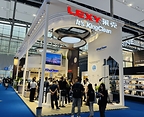
GUANGZHOU, China, Oct. 21, 2026 /PRNewswire/ — KingClean, a global leader in home appliances and cleaning solutions, showcased its latest smart home product line at the 140th Canton Fair, which includes cleaning appliances, kitchen and coffee equipment, drinking equipment, personal care and air comfort products. During the exhibition, KingClean held in-depth discussions with global channel partners at Booths E30–36 and F13–19, Hall 2.2, Zone A.
KingClean showcased over 40 innovative products. The cleaning appliances exhibition area covers cordless stick vacuum cleaners with docking stations, upright 3-in-1 wet-and-dry vacuum cleaner with steam, spot cleaner with steam, cordless mattress cleaners and canister. The kitchen appliance exhibition area showcases products such as cooking robot, commercial blenders, and fully automatic coffee machines. The water & beverage solutions area presents desktop intelligent water purifiers with functions of water purification, sparkling water, ice making, and tea brewing. In addition, KingClean balances personal care with environmental comfort, showcasing water-ion turbofan hair dryers, desktop air purifiers, and smart air circulation fans.
The collaboration between high-performance cleaning equipment and intelligent base stations is the key direction of this exhibition. The exhibits include cordless vacuum cleaners equipped with high-power motors, dust‑cup or dust‑bag docking stations, charging and automatic cleaning functions, as well as floor cleaning vacuum cleaners that integrate functions of steam cleaning, automatic water refilling, and hot air drying. Multiple reference models intuitively demonstrate how the same technology platform can flexibly adapt to different power levels, structural schemes, and accessory configurations.
KingClean also showcased a series of home fully automatic coffee machines, smoothies and ice-making equipment, as well as desktop intelligent beverage purifiers that supported flexible combinations of sparkling water, ice water, tea brewing, and coffee related modules in the beverage area. These exhibits could be further customized based on the customer’s beverage menus, usage frequency, and after-sales mode.
“We connect globally through innovative products, focusing on smart solutions that improve life and strengthen our leadership in the smart home industry” said Nate Yang, Senior Marketing Director at KingClean Electric Co., Ltd.
About KingClean
KingClean was founded in 1994 and is headquartered in Suzhou, China. The company specializes in high-end smart home appliances and mechatronic products, with motor as our core technology.
For more information, visit http://www.kingclean.com.
View original content to download multimedia:https://www.prnewswire.com/news-releases/kingclean-debuts-at-the-140th-canton-fair-with-one-stop-odm-solutions-for-global-brands-302914851.html
SOURCE KingClean
Technology
Husqvarna Group: INTERIM REPORT JANUARY – SEPTEMBER 2026
Published
46 minutes agoon
October 21, 2026By

STOCKHOLM, Oct. 21, 2026 /PRNewswire/ —
Consistent strategy execution in a continued challenging market
Third quarter 2026
Net sales decreased organically by 5%.Net sales decreased by 2% to SEK 9,012m (9,204), and included a positive impact of 3% from changes in exchange rates.Operating income amounted to SEK -334m (141) and the operating margin was -3.7% (1.5).Items affecting comparability (IAC) amounted to SEK -88m. These were primarily related to the execution of cost-saving initiatives.Excluding IAC, operating income amounted to SEK -246m (140), and the operating margin was -2.7% (1.5).Earnings per share (EPS) after dilution amounted to SEK -0.70 (-0.02) and EPS excluding IAC and after dilution amounted to SEK -0.58 (-0.02).Free operating cash flow was SEK 2,422m (2,423).Net debt was SEK 9.4bn (9.9).
January – September 2026
Net sales decreased organically by 2%.Net sales decreased by 5% to SEK 37,356m (39,184), and included an impact of -3% from changes in exchange rates.Operating income amounted to SEK 2,977m (3,735) and the operating margin was 8.0% (9.5).Items affecting comparability (IAC) amounted to SEK -445m. These were primarily related to the execution of cost-saving initiatives.Excluding IAC, operating income amounted to SEK 3,421m (3,742), and the operating margin was 9.2% (9.5).IEEPA-related tariff refunds of SEK 240m were recognized in COGS during the second quarter.Earnings per share (EPS) after dilution amounted to SEK 3.14 (4.43) and EPS excluding IAC and after dilution amounted to SEK 3.74 (4.44).Free operating cash flow was SEK 4,891m (4,743).
CEO Comment
We are making solid progress on our strategic priorities. Our cost savings program remains on track, recent product launches are receiving encouraging customer feedback, and we are broadening our presence across sales channels. Although these measures have not yet fully offset current market headwinds, they reinforce our confidence in the Group’s long-term competitiveness and prospects.
Financial performance summary
Net sales were SEK 9,012m (9,204), representing an organic decline of 5% in the quarter, primarily driven by continued weakness in Europe. Organic sales in the Husqvarna Forest & Garden Division declined by 10%, sales in the Husqvarna Construction Division were unchanged, while the Gardena Division delivered solid organic growth of 8%. Performance in the Husqvarna Forest & Garden Division was significantly affected by the widespread drought across large parts of Europe and continued weak consumer demand in key markets, including Germany and France. In contrast, strong growth in the Gardena Division’s Watering business highlighted the resilience of our diversified portfolio, gaining market shares in key markets, and the Husqvarna Construction Division has continued good momentum in its aftermarket business. I am also encouraged by continued growth across all three divisions in North America.
Operating income excluding IAC was SEK -246m (140), corresponding to a margin of -2.7% (1.5). The result reflected lower volumes in the Husqvarna Forest & Garden Division, an unfavorable product mix, inventory reductions and cost increases on raw materials and logistics costs. Free operating cash flow was stable at SEK 2,422m (2,423), as lower operating income was offset by changes in working capital, primarily driven by reduced inventories. We further strengthened the balance sheet, reducing net debt to SEK 9.4bn (9.9).
Executing on cost savings while navigating cost headwinds
Our transformative cost savings program remains on track to deliver SEK 3bn in gross savings by the end of 2028. Year-to-date savings reached approximately SEK 935m, including around SEK 305m in the third quarter, driven mainly by sourcing activities and personnel reductions. However, lower volumes, inventory reductions and cost headwinds continue to weigh on profitability. We are responding with targeted price increases, supply chain actions and product cost optimization, which will partly offset these pressures, although near-term headwinds are expected to remain.
We are advancing our asset-light strategy through further outsourcing initiatives. We will transfer production of selected Husqvarna-branded battery handheld products from Europe to Asia, using both our own facilities and external partners to enhance efficiency and competitiveness.
In addition, the ongoing discontinuation of the stone diamond tool business in the Construction Division, the phase-out of our Brastad component factory in the Husqvarna Forest & Garden Division and relocation of selected activities within Gardena’s European manufacturing network are progressing according to plan.
Unlocking the next phase of robotics growth
Our robotic lawn mowing business faced a difficult quarter, with adverse weather, competitive headwinds, and elevated channel partner inventories in Europe constraining demand for Husqvarna- and Gardena-branded products. Although recent performance has fallen short of expectations, we remain the clear market leader and we are confident in our strategy and longer-term development.
The strategic review of the Powered Garden BPU in the Gardena Division is ongoing and we aim to provide an update in the beginning of next year. Our priorities in the Husqvarna Forest & Garden Residential Robotics BPU include expanding our retail footprint and product range across price points and channels, strengthening the robotics organization and development model.
During the quarter, the US became the largest market in terms of sales for our Professional Robotics BPU, driven mainly by continued growth in the golf segment. Upcoming product launches and broader US distribution are expected to further strengthen our competitive position next season. We are also encouraged to be the first robotics company to receive conditional approval from the Federal Communications Commission (FCC) for foreign-produced advanced robotic devices in the US market.
Building a stronger, more competitive Husqvarna Group
We are accelerating change across the Group to create a leaner, more agile and asset-light organization. By challenging established ways of working, simplifying operations and acting decisively, we are strengthening competitiveness and profitability in the longer-term. Significant work remains, but I am confident we are moving in the right direction.
When consumer sentiment recovers, particularly in Europe, we will be well positioned to capture growth and improve earnings.
Glen Instone, CEO
Webcast presentation and telephone conference
A webcast presentation of the Q3 report hosted by Glen Instone, CEO and Patrik Johnson, CFO will be held at 9:00 CEST on Oct 21, 2026.
To view the presentation, please use this link.
The dial-in to the telephone conference (to ask questions):
+46 (0) 8 505 100 31 (Sweden) or +44 203 059 58 63 (UK)
Contact
Emelie Alm, Vice President, Investor Relations
+46 70 514 64 14
Husqvarna AB (publ), P.O. Box 7454, SE-103 92 Stockholm
Hälsingegatan 49, +46 8 738 90 00, www.husqvarnagroup.com
Reg. Nr: 556000-5331
(NASDAQ STOCKHOLM: HUSQ-A) (NASDAQ STOCKHOLM: HUSQ-B)
This report contains insider information that Husqvarna AB is required to disclose under the EU Market Abuse Regulation. The information was submitted for publication, through the contact person set out above, at 07:00 CEST on Oct 21, 2026.
Factors affecting forward-looking statements
This report contains some forward-looking statements. These statements are subject to risks and uncertainties that may give rise to major deviations in the result due to several aspects. These aspects include, among other things: consumer demand and market conditions in the geographical areas and lines of business in which Husqvarna operates, the effects of currency fluctuations, downward pressure on prices due to competition, success in developing new products, outcome of product responsibility litigation and progress in terms of reaching the goals set for productivity and efficient use of capital.
This information was brought to you by Cision http://news.cision.com
https://news.cision.com/husqvarna-group/r/interim-report-january—september-2026,c4412543
The following files are available for download:
https://mb.cision.com/Main/996/4412543/4328797.pdf
Interim report Q3 2026 Husqvarna Group
View original content:https://www.prnewswire.com/news-releases/husqvarna-group-interim-report-january–september-2026-302915009.html
SOURCE Husqvarna Group

Unity: The Convergence of the Three Main Red Army Forces

KingClean Debuts at the 140th Canton Fair with One-Stop ODM Solutions for Global Brands
Husqvarna Group: INTERIM REPORT JANUARY – SEPTEMBER 2026

Send Rakhi to UK swiftly with UK Gifts Portal

Whiteboard Series with NEAR | Ep: 45 Joel Thorstensson from ceramic.network

Nullmax and Renesas Forge Strategic Partnership to Deliver Competitive ADAS Solutions for the Global Market

Why You Should Build on #NEAR – Co-founder Illia Polosukhin at CV Labs
Whiteboard Series with NEAR | Ep: 45 Joel Thorstensson from ceramic.network

NEAR End of Year Town Hall 2021: The Open Web World, MetaBUILD 2 Hackathon and 2021 recap
Trending
-

 Technology4 days ago
Highland and Bath Counties, Virginia Go Live on a Shared Caliber Hosted CAD Environment
-
 Technology4 days ago
JinkoSolar Unveils Tiger Neo 5.0 All-Black Residential Solar Module with 25.52% Efficiency
-

 Coin Market5 days ago
Bitcoin price steadies around $82K after Fed’s Warsh avoids rate-hike hints
-

 Near Videos4 days ago
What if you could build a skyscraper with one prompt?
-
Technology5 days ago
/R E P E A T — Media Advisory – Minister Hodgson to deliver remarks and participate in fireside chat/
-
 Technology5 days ago
Frost & Sullivan: Netradyne Receives the 2026 Global Commercial Vehicle Video Telematics Product Leadership Recognition for Excellence in AI-Driven Fleet Safety and Operational Intelligence
-

 Technology5 days ago
FIRST LOOK: NINTENDO’S FIRST-EVER STORE-WITHIN-A-STORE EXPERIENCE IN NORTH AMERICA ARRIVES IN TORONTO
-

 Technology3 days ago
Bioethanol from human hair – Indian start-up’s solution to rising prices of grains and sugar