Technology
Last Mile Delivery Market to Grow by USD 60.82 Billion (2024-2028), Driven by Global E-Commerce and AI-Redefined Market Landscape – Technavio
Published
1 year agoon
By
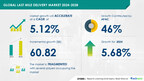
NEW YORK, Dec. 10, 2024 /PRNewswire/ — Report with market evolution powered by AI – The global last mile delivery market size is estimated to grow by USD 60.82 billion from 2024-2028, according to Technavio. The market is estimated to grow at a CAGR of 5.12% during the forecast period. Growing global e-commerce industry is driving market growth, with a trend towards strong focus on technological advances. However, operational challenges for last mile delivery companies poses a challenge. Key market players include Accenture Plc, CMA CGM SA Group, Deutsche Bahn AG, Deutsche Post AG, DSV AS, FarEye Technologies Inc., FedEx Corp., FM LOGISTIC CORP, Honeywell International Inc., Infosys Ltd., J B Hunt Transport Services Inc., Kuehne Nagel Management AG, Mara Labs Inc., Nippon Express Holdings Inc., Royal Mail Plc, Schneider Electric SE, SNCF Group, United Parcel Service Inc., Werner Enterprises Inc., and XPO Inc..
Key insights into market evolution with AI-powered analysis. Explore trends, segmentation, and growth drivers- View Free Sample PDF
Last Mile Delivery Market Scope
Report Coverage
Details
Base year
2023
Historic period
2018 – 2022
Forecast period
2024-2028
Growth momentum & CAGR
Accelerate at a CAGR of 5.12%
Market growth 2024-2028
USD 60.82 billion
Market structure
Fragmented
YoY growth 2022-2023 (%)
5.68
Regional analysis
APAC, North America, Europe, Middle East and Africa, and South America
Performing market contribution
APAC at 46%
Key countries
US, China, India, Germany, and UK
Key companies profiled
Accenture Plc, CMA CGM SA Group, Deutsche Bahn AG, Deutsche Post AG, DSV AS, FarEye Technologies Inc., FedEx Corp., FM LOGISTIC CORP, Honeywell International Inc., Infosys Ltd., J B Hunt Transport Services Inc., Kuehne Nagel Management AG, Mara Labs Inc., Nippon Express Holdings Inc., Royal Mail Plc, Schneider Electric SE, SNCF Group, United Parcel Service Inc., Werner Enterprises Inc., and XPO Inc.
Market Driver
The Last Mile Delivery market is experiencing significant trends as consumer expectations shift towards real-time tracking, on-demand services, and better customer experience. Urban congestion and sustainability considerations are driving the need for logistics process improvements, including route optimization, technology insights, and the use of autonomous vehicles and drones. E-commerce growth and the rise of peer-to-peer marketplaces are increasing the demand for efficient last mile logistics, from distribution centers to the customer’s doorstep. Brick-and-mortar retailers are also embracing omnichannel retailing and cloud kitchens, requiring seamless product delivery services. Companies are exploring various delivery options, from ground delivery vehicles and delivery robots like Scout, to shipping cost and shipping option considerations. The logistics market is evolving, with freight transportation companies and supply chain activities integrating warehousing, distribution, and fulfillment services to meet the needs of customers and retailers. Skilled workers, IT standards, and system integration are crucial for managing the complexities of last mile delivery, including the postal address system and expected delivery times. Transport costs, inventories, and financial costs are key areas of focus for companies looking to optimize their last mile delivery operations. Poor infrastructure and logistics costs remain challenges, but advancements in autonomous technology and non-autonomous technology are helping to address these issues. Overall, the last mile delivery market is a dynamic and evolving landscape, driven by consumer behavior, technology, and the ongoing growth of the e-commerce industry.
The last mile delivery market is witnessing a significant shift with the increasing use of advanced technology for real-time tracking and package management. Consumers can now easily modify their retail deliveries through user-friendly online tools, ensuring greater transparency and control. However, handling large or high-value packages poses a challenge as they cannot be delivered outside homes. To address this issue, delivery providers offer web and mobile applications for managing the delivery schedules of such packages, enabling customers to collect them at their convenience.
Request Sample of our comprehensive report now to stay ahead in the AI-driven market evolution!
• Last Mile Delivery: Overcoming Challenges in E-commerce and Retail Last mile delivery refers to the final leg of a product’s journey from a distribution center or retail store to the customer’s doorstep. This critical phase presents several challenges for businesses, especially in the context of evolving consumer expectations and emerging technologies. Consumer expectations for real-time tracking, on-demand services, and quick delivery are on the rise. Urban congestion and sustainability considerations add complexity to last mile logistics. Companies must balance the use of autonomous vehicles, drones, and non-autonomous technology to optimize costs and improve customer experience. Brick-and-mortar retailers and e-commerce businesses face similar challenges in last mile delivery. Omnichannel retailing, cloud kitchens, and food delivery platforms require efficient route optimization and skilled workers to meet consumer demands. Technology insights, such as mobile applications, transportation hubs, and warehousing, play a crucial role in overcoming these challenges. However, poor infrastructure, logistics costs, and the postal address system can hinder progress. E-commerce industry growth, overseas market expansion, and trading activities add to the complexity of last mile delivery. Freight transportation companies and supply chain activities must adapt to meet the evolving needs of retailers and consumers. In conclusion, mastering last mile delivery is essential for businesses to remain competitive in today’s market. By addressing challenges related to consumer behavior, technology, logistics costs, and infrastructure, companies can provide better delivery services and enhance the overall customer experience.
• Last mile delivery operations present unique challenges for businesses, requiring transparency, efficiency, and profitability. While long-distance transportation costs are lower due to economies of scale, last mile delivery involves numerous individual deliveries within a region, leading to increased logistics costs. Major expenses include labor and fuel costs. Intense competition in the market is driven by pricing and delivery time, making cost reduction a priority for customers. Effective last mile delivery strategies focus on optimizing routes, leveraging technology, and collaborating with multiple delivery providers to minimize expenses and enhance customer satisfaction.
Discover how AI is revolutionizing market trends- Get your access now!
This last mile delivery market report extensively covers market segmentation by
Service 1.1 B2C1.2 B2BApplication 2.1 FMCG2.2 E-commerce2.3 Retails2.4 OthersGeography 3.1 APAC3.2 North America3.3 Europe3.4 Middle East and Africa3.5 South America
1.1 B2C- The last mile delivery market refers to the transportation of parcels and goods from transportation hubs to consumers’ homes in a B2C context. This segment primarily deals with small and lightweight products, distinguishing it from B2B last mile delivery. With the in e-commerce sales, the significance of last mile delivery has escalated. For instance, US e-commerce sales as a percentage of total retail sales grew by 10% year-over-year from 2012 to 2021. However, the B2C last mile delivery sector poses challenges for operators due to the lack of large-volume deliveries and low-priced products, resulting in potentially low margins per delivery. Additionally, returns of goods may incur extra transportation costs. Despite these challenges, the global last mile delivery market has experienced growth in recent years, with the B2C segment leading the way. To cater to residential customers, last mile delivery services have introduced next-day, same-day delivery, and parcel return options. Real-time shipment tracking and package delivery status updates are also available to consumers. Major players in the market focus on improving the consumer experience through faster deliveries, easy returns, and data-driven strategies. DHL, for example, utilizes big data and real-time traffic information to optimize delivery routes for quicker deliveries, while others leverage historical consumer purchase data to dispatch forward inventory. These strategies enable lower fuel consumption and more efficient delivery routes, driving the growth of the B2C segment and the global last mile delivery market.
Download a Sample of our comprehensive report today to discover how AI-driven innovations are reshaping competitive dynamics
Last Mile Delivery Market: Bridging the Gap between Retailers and Customers Last Mile Delivery (LMD) refers to the final leg of the supply chain, delivering goods from a transportation hub or distribution center to the customer’s doorstep. This critical phase of the logistics process faces unique challenges, including urban congestion, consumer expectations, and sustainability considerations. Consumer expectations for real-time tracking, on-demand services, and seamless experiences are shaping the LMD landscape. E-commerce and on-demand services are driving growth, with companies exploring various technologies such as autonomous vehicles, drones, and mobile applications to optimize routes and reduce costs. Urban congestion poses a significant challenge, with companies implementing route optimization and transportation hub strategies to mitigate delays. Sustainability considerations are also crucial, with companies focusing on reducing carbon emissions and adopting green logistics practices. Brick-and-mortar retailers and omnichannel retailers are leveraging cloud kitchens and food delivery platforms to streamline operations and meet customer demands. Peer-to-peer marketplaces and technology insights are disrupting traditional LMD models, while non-autonomous and autonomous technologies coexist to address various market needs. Company costs and shipping costs are critical factors influencing the LMD market, with companies constantly seeking innovative solutions to improve efficiency and reduce expenses. The LMD landscape is evolving rapidly, with a focus on enhancing the customer experience and ensuring timely, cost-effective, and sustainable delivery solutions.
The Last Mile Delivery Market refers to the final leg of the supply chain, where products are transported from a distribution center or transportation hub to the customer’s doorstep or retail store. Consumers expect fast, reliable, and cost-effective delivery, leading to the growth of on-demand services and real-time tracking. Urban congestion and sustainability considerations are driving the adoption of autonomous vehicles, drones, and non-autonomous technology like Scout delivery robots. The logistics process involves distribution centers, warehouses, and delivery vehicles, with route optimization and mobile applications streamlining the last mile delivery experience. E-commerce, food delivery platforms, and brick-and-mortar retailers are leveraging omnichannel retailing and cloud kitchens to meet customer demands. Technology insights, such as autonomous technology and IT standard system integration, are crucial for efficient last mile logistics. Company costs, shipping costs, and transport infrastructure are key factors influencing the market, with poor infrastructure and logistics costs posing challenges. The e-commerce industry’s growth, expected delivery times, and shipping options are shaping consumer behavior and trading activities, both domestically and overseas. Freight transportation companies and supply chain activities play a vital role in the last mile delivery market, with fulfillment services and skilled workers ensuring seamless product delivery services.
1 Executive Summary
2 Market Landscape
3 Market Sizing
4 Historic Market Size
5 Five Forces Analysis
6 Market Segmentation
ServiceB2CB2BApplicationFMCGE-commerceRetailsOthersGeographyAPACNorth AmericaEuropeMiddle East And AfricaSouth America
7 Customer Landscape
8 Geographic Landscape
9 Drivers, Challenges, and Trends
10 Company Landscape
11 Company Analysis
12 Appendix
Technavio is a leading global technology research and advisory company. Their research and analysis focuses on emerging market trends and provides actionable insights to help businesses identify market opportunities and develop effective strategies to optimize their market positions.
With over 500 specialized analysts, Technavio’s report library consists of more than 17,000 reports and counting, covering 800 technologies, spanning across 50 countries. Their client base consists of enterprises of all sizes, including more than 100 Fortune 500 companies. This growing client base relies on Technavio’s comprehensive coverage, extensive research, and actionable market insights to identify opportunities in existing and potential markets and assess their competitive positions within changing market scenarios.
Technavio Research
Jesse Maida
Media & Marketing Executive
US: +1 844 364 1100
UK: +44 203 893 3200
Email: media@technavio.com
Website: www.technavio.com/
View original content to download multimedia:https://www.prnewswire.com/news-releases/last-mile-delivery-market-to-grow-by-usd-60-82-billion-2024-2028-driven-by-global-e-commerce-and-ai-redefined-market-landscape—technavio-302326236.html
SOURCE Technavio
You may like
Technology
DEFSEC Ships New BLISS (“Battlespace Laser Identification Sensor System”) To U.S. Army Yuma Test Center
Published
40 minutes agoon
April 29, 2026By
OTTAWA, ON, April 29, 2026 /PRNewswire/ – DEFSEC Technologies Inc. (TSXV: DFSC) (TSXV: DFSC.WT.U) (NASDAQ: DFSC) (NASDAQ: DFSCW) (“DEFSEC” or the “Company”) today confirmed that it has now shipped two new networked BLISSTM systems to the United States Army Yuma Test Center (US Army YTC) for test and evaluation.
The BLISSTM shipment today to the US Army YTC follows delivery of an earlier version, called BLDS (Battlefield Laser Detection System) to the U.S. Army last year for testing and trial activity. BLISSTM is an enhanced, networked version of BLDS as the next step in the evolution of the Company’s technology roadmap for battlespace laser detection and intelligence.
The patent-pending BLISSTM system alerts operators to laser activity across the battlespace, providing critical early warning and valuable seconds to assess, evade, defend, and deploy countermeasures. Miniaturized BLISSTM sensors can be mounted on vehicles and fixed infrastructure, or worn on personnel, to affordably blanket a battlespace with sensors for enhanced survivability and situational awareness and battlespace intelligence in contested environments. It transforms laser warning into shared, actionable battlespace information.
Beyond real-time detection, BLISSTM incorporates enhanced laser pulse signature capture and analysis to help identify the source, intent, and affiliation of detected emissions. By enabling users to distinguish among known signatures, the system supports faster, more informed tactical decisions.
“The BLISSTM system shipped today to Yuma for US Army testing represents a major step forward in tactical-edge force protection and actionable battlespace intelligence for commanders,” said Sean Homuth, President and CEO. “This capability will provide operators with critical time, better information, and a meaningful operational advantage against laser-enabled threats, including those seen in current Middle East conflicts.”
DEFSEC expects to brief domestic and foreign delegations on its BLISS product at Canada’s upcoming annual defence and security show, “CANSEC”, May 27 and 28, 2026, in Ottawa.
About DEFSEC
DEFSEC (TSXV: DFSC) (TSXV: DFSC.WT.U) (NASDAQ: DFSC) (NASDAQ: DFSCSW) (FSE: 62UA) develops and commercializes breakthrough next-generation tactical systems for military and security forces. The company’s current portfolio of offerings includes digitization of tactical forces for real-time shared situational awareness and targeting information from any source (including drones) streamed directly to users’ smart devices and weapons. Other DEFSEC products include countermeasures against threats such as electronic detection, lasers and drones. These systems can operate stand-alone or integrate seamlessly with OEM products and battlefield management systems, and all come integrated with TAK. The company also has a new proprietary less-lethal product line branded PARA SHOTTM with applications across all segments of the non-lethal market, including law enforcement. The Company is headquartered in Ottawa, Canada.
For more information, please visit https://www.defsectec.com
Forward-Looking Statements
This news release contains “forward-looking statements” and “forward-looking information” within the meaning of Canadian and United States securities laws (collectively, “forward-looking statements”), which may be identified by the use of terms and phrases such as “may”, “would”, “should”, “could”, “expect”, “intend”, “estimate”, “anticipate”, “plan”, “foresee”, “have sight of”, “believe”, or “continue”, the description of “optimism”, ” momentum” or “interest”, the negative of these terms and similar terminology, including references to assumptions, although not all forward-looking statements contain these terms and phrases. Forward-looking statements are provided for the purpose of assisting the reader in understanding us, our business, operations, prospects and risks at a point in time in the context of historical and possible future developments and therefore the reader is cautioned that such information may not be appropriate for other purposes. Such forward-looking statements are based on the current expectations of DEFSEC’s management and are based on assumptions and subject to risks and uncertainties that are documented in detail in the Company’s public filings. Forward-looking statements included in this include, but are not limited to: management’s belief of sufficiency of available financial resources to support forecasted activities in 2026 based on cash on hand, anticipated revenue streams and planned expenditures in the fiscal year, subject to execution of the Company’s operating plan and other risks and factors described in its public filings; interest in DEFSEC LightningTM, BLISSTM or other products and services as well as timing of full implementation or commercial release thereof; the Company’s estimates of increases to annualized gross margin on a go-forward basis and extent thereof, if any; the stage of scaled production for the PARA SHOTTM technology into new training cartridges and timing of release thereof; and management’s belief that its extensive customer base of law enforcement agencies for ARWEN throughout North America is a ready market for its new products like PARA SHOTTM as well as DEFSEC LightningTM.
Although DEFSEC’s management believes that the assumptions underlying such forward-looking statements are reasonable, they may prove to be incorrect. The forward-looking statements discussed in this news release may not occur by certain specified dates or at all and could differ materially as a result of known and unknown risk factors and uncertainties affecting DEFSEC, including DEFSEC’s inability to execute on its current operating plan and/or fiscal 2026 forecasted activities, DEFSEC’s inability to secure contracts and subcontracts (on the timelines, size and scale expected or at all), statements of work and orders for its products in fiscal 2026 and onwards for reasons beyond its control, the renewal or extension of agreements beyond their original term, the granting of patents applied for by DEFSEC, inability to finance the scale up to full commercial production levels for its physical products, inability to secure key partnership agreements to facilitate the outsourcing and logistics for its ARWEN® and PARA SHOTTM products, inability to commercialize DEFSEC’s Battlespace Laser Identification Sensor System (BLISS), inability to secure or complete the execution of government contracts, inability to drive growth in DEFSEC’s ARWEN® product line, inability to advance the commercialization of DEFSEC’s PARA SHOTTM products, delay or inability to launch DEFSEC’s Lightning SaaS offering, lower than expected or delayed demand for DEFSEC’s BLISS, overall interest in DEFSEC’s products being lower than anticipated or expected; general economic and stock market conditions; a stagnation or decrease in North American defense and public safety spending, adverse industry events; future legislative and regulatory developments in Canada, the United States and elsewhere; the inability of DEFSEC to implement and execute its business strategies; risks and uncertainties detailed from time to time in DEFSEC’s filings with the Canadian Security Administrators and the United States Securities and Exchange Commission, and many other factors beyond the control of DEFSEC. Although DEFSEC has attempted to identify important factors that could cause actual actions, events or results to differ materially from those described in forward-looking statements, there may be other factors that cause actions, events or results to differ from those anticipated, estimated or intended. Except as required by applicable securities laws, forward-looking statements speak only as of the date on which they are made and DEFSEC undertakes no obligation to publicly update or revise any forward-looking statements, whether as a result of new information, future events or otherwise.
Neither the TSX Venture Exchange nor its respective Regulation Services Provider (as that term is defined in the policies of the TSX Venture Exchange) accepts responsibility for the adequacy or accuracy of this news release.
View original content to download multimedia:https://www.prnewswire.com/news-releases/defsec-ships-new-bliss-battlespace-laser-identification-sensor-system-to-us-army-yuma-test-center-302758001.html
SOURCE DEFSEC Technologies Inc
Technology
SPX Cooling Tech Unveils the Marley® OlympusMAX™ Fluid Cooler
Published
40 minutes agoon
April 29, 2026By
Maximum Capacity. Trusted Performance.
OVERLAND PARK, Kan., April 29, 2026 /PRNewswire/ — SPX Cooling Tech, LLC announced the launch of the Marley® OlympusMAX™ Fluid Cooler, engineered to deliver unmatched performance, efficiency and design flexibility for mission-critical facilities. Designed to meet the evolving demands of data centers, industrial plants and high-density cooling applications, the OlympusMAX Fluid Cooler sets a new benchmark in dry and adiabatic cooling technology.
Built on a century of heat rejection expertise, the OlympusMAX Fluid Cooler brings a new level of performance in dry and adiabatic cooling. It is available in both adiabatic and dry configurations. The bolt-on adiabatic module can be factory or field installed—or even installed after the equipment is operational in order to provide maximum flexibility in response to changing conditions and site demands.
As global data center density continues to expand, operators are increasingly seeking cooling solutions that balance performance, energy use, water use and operational flexibility. “OlympusMAX reflects our commitment to advancing cooling technology to support the evolving demands of mission-critical facilities,” said Dustan Atkinson, Director of Product Management for SPX Cooling Tech. “By offering scalable dry and adiabatic performance, engineered flexibility and streamlined installation, we’re helping facilities meet increasingly challenging demands while maintaining efficiency and long-term reliability.”
At the heart of the OlympusMAX adiabatic module is a patent-pending recirculating adiabatic design that significantly reduces blowdown, minimizing unnecessary water discharge while improving system efficiency. Unlike traditional once-through or spray systems, the unit’s recirculation technology delivers more uniform water flow across the pad – improving saturation efficiency, extending pad life and reducing mineral accumulation on critical components. The result is more predictable energy and water consumption – a critical advantage for performance-sensitive environments such as hyperscale data centers.
Engineered for uptime, the OlympusMAX features high-efficiency Marley Geareducer® gear drives, robust construction materials and integrated component redundancy, including mission-critical fan and VFD systems. With unit options ranging from 120 to 240 horsepower, the design maximizes cooling capacity per square foot, delivering industry-leading heat rejection density.
Installation and serviceability were key priorities in the system’s development. Each unit ships with a factory-assembled electrical access platform, single-point wiring connection, VFDs and PLC controls pre-installed, and full-size access doors with internal walkways. These features streamline installation while enabling safer operation and easier maintenance.
The launch underscores SPX Cooling Tech’s mission to provide flexible, high-efficiency heat rejection solutions across its full portfolio including dry coolers, adiabatic coolers, evaporative coolers, and cooling towers, ensuring customers have a single-supplier solution tailored to their operational strategy.
About SPX Cooling Tech, LLC
SPX Cooling Tech is a leading global manufacturer of cooling towers, fluid coolers, adiabatic and dry cooling systems, evaporative condensers, industrial evaporators and OEM aftermarket parts from brands that include Marley®, Recold® and SGS Refrigeration. Since 1922, our brands’ cooling systems, components and technical services have supported applications in heating, ventilation and air conditioning (HVAC), refrigeration, and industrial process cooling. SPX Cooling Tech and its product brands are part of SPX Technologies, Inc. For more information see www.spxcooling.com.
About SPX Corporation
SPX Technologies is a supplier of highly engineered products and technologies, holding leadership positions in the HVAC and detection and measurement markets. Based in Charlotte, North Carolina, SPX Technologies has approximately 4,700 employees in 16 countries and is listed on the New York Stock Exchange under the ticker symbol “SPXC.” For more information, please visit www.spx.com.
View original content to download multimedia:https://www.prnewswire.com/news-releases/spx-cooling-tech-unveils-the-marley-olympusmax-fluid-cooler-302758020.html
SOURCE SPX Cooling Technologies
Technology
AMTD’s TGE Reports Full Year Results with 27.7% Increase in Revenue, with 25.5% Increase in Total Assets and 9.1% Increase in Net Assets
Published
2 hours agoon
April 29, 2026By
PARIS and LONDON and NEW YORK, April 29, 2026 /PRNewswire/ — The Generation Essentials Group (“TGE” or the “Company”) (NYSE: TGE, LSE; TGE), a NYSE and LSE dual-listed company and a subsidiary of AMTD Group Inc., today announced the filing of its annual report on Form 20-F for the fiscal year ended December 31, 2025 with the Securities and Exchange Commission, with summary highlights below:
Total Revenue increased by 27.7% from US$77.0 million to US$98.3 millionTotal non-GAAP Net Income increased by 3.2% from US$44.7 million to US$46.2 million Total Assets amounted to US$1,464.1 million (US$30.2/share)Net asset value amounted to US$839.1 million (US$17.3/share)
The annual report is available on the Company’s investor relations website at http://thegenerationalessentials.com. The Company will provide a hard copy of its annual report containing the audited consolidated financial statements, free of charge, to its shareholders upon request. Requests should be directed to Investor Relations Office at ir@tge.media.
About The Generation Essentials Group
The Generation Essentials Group (NYSE: TGE; LSE: TGE), jointly established by AMTD Group, AMTD IDEA Group (NYSE: AMTD; SGX: HKB) and AMTD Digital Inc. (NYSE: HKD), is headquartered in France and focuses on global strategies and developments in multi-media, entertainment, and cultural affairs worldwide as well as hospitality and VIP services. TGE comprises L’Officiel, The Art Newspaper, movie and entertainment projects. Collectively, TGE is a diversified portfolio of media and entertainment businesses, and a global portfolio of premium properties. Also, TGE is a special purpose acquisition company (SPAC) sponsor manager, with its first SPAC successfully raised and priced on December 18, 2025.
For The Generation Essentials Group:
IR Office
The Generation Essentials Group
EMAIL: ir@tge.media
View original content:https://www.prnewswire.com/news-releases/amtds-tge-reports-full-year-results-with-27-7-increase-in-revenue-with-25-5-increase-in-total-assets-and-9-1-increase-in-net-assets-302757926.html
SOURCE The Generation Essentials Group
DEFSEC Ships New BLISS (“Battlespace Laser Identification Sensor System”) To U.S. Army Yuma Test Center
SPX Cooling Tech Unveils the Marley® OlympusMAX™ Fluid Cooler
RealOpen and TRON verify $9.4M in USDT for crypto-enabled real estate purchases
Send Rakhi to UK swiftly with UK Gifts Portal
Whiteboard Series with NEAR | Ep: 45 Joel Thorstensson from ceramic.network
New Gooseneck Omni Antennas Offer Enhanced Signals in a Durable Package
Why You Should Build on #NEAR – Co-founder Illia Polosukhin at CV Labs
Whiteboard Series with NEAR | Ep: 45 Joel Thorstensson from ceramic.network
NEAR End of Year Town Hall 2021: The Open Web World, MetaBUILD 2 Hackathon and 2021 recap
Trending
-
Coin Market4 days agoBitcoin traders eye $73K next as weekly trend line holds price hostage
-
Coin Market4 days ago
Bitcoiners cast doubt on the US military’s understanding of the network
-
Coin Market4 days ago
US DOJ sentences man to 70 months in prison for role in $263M scam group
-
Coin Market5 days ago
US authorities freeze $344M in crypto linked to Iran
-
Coin Market4 days ago
Kalshi, Polymarket among 27 prediction platforms banned in Brazil
-
Technology4 days agoDJI Launches Beginner-Friendly Camera Drone Series with Lito X1 and Lito 1
-
Coin Market4 days ago
CFTC sues New York over bid to apply gambling laws to prediction markets
-
Technology4 days agoPony.ai Announces New Generation Autonomous Driving Compute Platform Built on NVIDIA DRIVE Hyperion