Connect with us

Technology

Last Mile Delivery Market to Grow by USD 60.82 Billion (2024-2028), Driven by Global E-Commerce and AI-Redefined Market Landscape – Technavio

Published

on

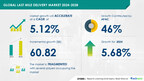
NEW YORK, Dec. 10, 2024 /PRNewswire/ — Report with market evolution powered by AI – The global last mile delivery market size is estimated to grow by USD 60.82 billion from 2024-2028, according to Technavio. The market is estimated to grow at a CAGR of  5.12%  during the forecast period. Growing global e-commerce industry is driving market growth, with a trend towards strong focus on technological advances. However, operational challenges for last mile delivery companies  poses a challenge. Key market players include Accenture Plc, CMA CGM SA Group, Deutsche Bahn AG, Deutsche Post AG, DSV AS, FarEye Technologies Inc., FedEx Corp., FM LOGISTIC CORP, Honeywell International Inc., Infosys Ltd., J B Hunt Transport Services Inc., Kuehne Nagel Management AG, Mara Labs Inc., Nippon Express Holdings Inc., Royal Mail Plc, Schneider Electric SE, SNCF Group, United Parcel Service Inc., Werner Enterprises Inc., and XPO Inc..

Key insights into market evolution with AI-powered analysis. Explore trends, segmentation, and growth drivers- View Free Sample PDF

Last Mile Delivery Market Scope

Report Coverage

Details

Base year

2023

Historic period

2018 – 2022

Forecast period

2024-2028

Growth momentum & CAGR

Accelerate at a CAGR of 5.12%

Market growth 2024-2028

USD 60.82 billion

Market structure

Fragmented

YoY growth 2022-2023 (%)

5.68

Regional analysis

APAC, North America, Europe, Middle East and Africa, and South America

Performing market contribution

APAC at 46%

Key countries

US, China, India, Germany, and UK

Key companies profiled

Accenture Plc, CMA CGM SA Group, Deutsche Bahn AG, Deutsche Post AG, DSV AS, FarEye Technologies Inc., FedEx Corp., FM LOGISTIC CORP, Honeywell International Inc., Infosys Ltd., J B Hunt Transport Services Inc., Kuehne Nagel Management AG, Mara Labs Inc., Nippon Express Holdings Inc., Royal Mail Plc, Schneider Electric SE, SNCF Group, United Parcel Service Inc., Werner Enterprises Inc., and XPO Inc.

Market Driver

The Last Mile Delivery market is experiencing significant trends as consumer expectations shift towards real-time tracking, on-demand services, and better customer experience. Urban congestion and sustainability considerations are driving the need for logistics process improvements, including route optimization, technology insights, and the use of autonomous vehicles and drones. E-commerce growth and the rise of peer-to-peer marketplaces are increasing the demand for efficient last mile logistics, from distribution centers to the customer’s doorstep. Brick-and-mortar retailers are also embracing omnichannel retailing and cloud kitchens, requiring seamless product delivery services. Companies are exploring various delivery options, from ground delivery vehicles and delivery robots like Scout, to shipping cost and shipping option considerations. The logistics market is evolving, with freight transportation companies and supply chain activities integrating warehousing, distribution, and fulfillment services to meet the needs of customers and retailers. Skilled workers, IT standards, and system integration are crucial for managing the complexities of last mile delivery, including the postal address system and expected delivery times. Transport costs, inventories, and financial costs are key areas of focus for companies looking to optimize their last mile delivery operations. Poor infrastructure and logistics costs remain challenges, but advancements in autonomous technology and non-autonomous technology are helping to address these issues. Overall, the last mile delivery market is a dynamic and evolving landscape, driven by consumer behavior, technology, and the ongoing growth of the e-commerce industry. 

The last mile delivery market is witnessing a significant shift with the increasing use of advanced technology for real-time tracking and package management. Consumers can now easily modify their retail deliveries through user-friendly online tools, ensuring greater transparency and control. However, handling large or high-value packages poses a challenge as they cannot be delivered outside homes. To address this issue, delivery providers offer web and mobile applications for managing the delivery schedules of such packages, enabling customers to collect them at their convenience. 

Request Sample of our comprehensive report now to stay ahead in the AI-driven market evolution!

 Market Challenges

•         Last Mile Delivery: Overcoming Challenges in E-commerce and Retail Last mile delivery refers to the final leg of a product’s journey from a distribution center or retail store to the customer’s doorstep. This critical phase presents several challenges for businesses, especially in the context of evolving consumer expectations and emerging technologies. Consumer expectations for real-time tracking, on-demand services, and quick delivery are on the rise. Urban congestion and sustainability considerations add complexity to last mile logistics. Companies must balance the use of autonomous vehicles, drones, and non-autonomous technology to optimize costs and improve customer experience. Brick-and-mortar retailers and e-commerce businesses face similar challenges in last mile delivery. Omnichannel retailing, cloud kitchens, and food delivery platforms require efficient route optimization and skilled workers to meet consumer demands. Technology insights, such as mobile applications, transportation hubs, and warehousing, play a crucial role in overcoming these challenges. However, poor infrastructure, logistics costs, and the postal address system can hinder progress. E-commerce industry growth, overseas market expansion, and trading activities add to the complexity of last mile delivery. Freight transportation companies and supply chain activities must adapt to meet the evolving needs of retailers and consumers. In conclusion, mastering last mile delivery is essential for businesses to remain competitive in today’s market. By addressing challenges related to consumer behavior, technology, logistics costs, and infrastructure, companies can provide better delivery services and enhance the overall customer experience.

•         Last mile delivery operations present unique challenges for businesses, requiring transparency, efficiency, and profitability. While long-distance transportation costs are lower due to economies of scale, last mile delivery involves numerous individual deliveries within a region, leading to increased logistics costs. Major expenses include labor and fuel costs. Intense competition in the market is driven by pricing and delivery time, making cost reduction a priority for customers. Effective last mile delivery strategies focus on optimizing routes, leveraging technology, and collaborating with multiple delivery providers to minimize expenses and enhance customer satisfaction.

Discover how AI is revolutionizing market trends- Get your access now!

Segment Overview 

This last mile delivery market report extensively covers market segmentation by  

Service 1.1 B2C1.2 B2BApplication 2.1 FMCG2.2 E-commerce2.3 Retails2.4 OthersGeography 3.1 APAC3.2 North America3.3 Europe3.4 Middle East and Africa3.5 South America

1.1 B2C-  The last mile delivery market refers to the transportation of parcels and goods from transportation hubs to consumers’ homes in a B2C context. This segment primarily deals with small and lightweight products, distinguishing it from B2B last mile delivery. With the in e-commerce sales, the significance of last mile delivery has escalated. For instance, US e-commerce sales as a percentage of total retail sales grew by 10% year-over-year from 2012 to 2021. However, the B2C last mile delivery sector poses challenges for operators due to the lack of large-volume deliveries and low-priced products, resulting in potentially low margins per delivery. Additionally, returns of goods may incur extra transportation costs. Despite these challenges, the global last mile delivery market has experienced growth in recent years, with the B2C segment leading the way. To cater to residential customers, last mile delivery services have introduced next-day, same-day delivery, and parcel return options. Real-time shipment tracking and package delivery status updates are also available to consumers. Major players in the market focus on improving the consumer experience through faster deliveries, easy returns, and data-driven strategies. DHL, for example, utilizes big data and real-time traffic information to optimize delivery routes for quicker deliveries, while others leverage historical consumer purchase data to dispatch forward inventory. These strategies enable lower fuel consumption and more efficient delivery routes, driving the growth of the B2C segment and the global last mile delivery market.

Download a Sample of our comprehensive report today to discover how AI-driven innovations are reshaping competitive dynamics

Research Analysis

Last Mile Delivery Market: Bridging the Gap between Retailers and Customers Last Mile Delivery (LMD) refers to the final leg of the supply chain, delivering goods from a transportation hub or distribution center to the customer’s doorstep. This critical phase of the logistics process faces unique challenges, including urban congestion, consumer expectations, and sustainability considerations. Consumer expectations for real-time tracking, on-demand services, and seamless experiences are shaping the LMD landscape. E-commerce and on-demand services are driving growth, with companies exploring various technologies such as autonomous vehicles, drones, and mobile applications to optimize routes and reduce costs. Urban congestion poses a significant challenge, with companies implementing route optimization and transportation hub strategies to mitigate delays. Sustainability considerations are also crucial, with companies focusing on reducing carbon emissions and adopting green logistics practices. Brick-and-mortar retailers and omnichannel retailers are leveraging cloud kitchens and food delivery platforms to streamline operations and meet customer demands. Peer-to-peer marketplaces and technology insights are disrupting traditional LMD models, while non-autonomous and autonomous technologies coexist to address various market needs. Company costs and shipping costs are critical factors influencing the LMD market, with companies constantly seeking innovative solutions to improve efficiency and reduce expenses. The LMD landscape is evolving rapidly, with a focus on enhancing the customer experience and ensuring timely, cost-effective, and sustainable delivery solutions.

Market Research Overview

The Last Mile Delivery Market refers to the final leg of the supply chain, where products are transported from a distribution center or transportation hub to the customer’s doorstep or retail store. Consumers expect fast, reliable, and cost-effective delivery, leading to the growth of on-demand services and real-time tracking. Urban congestion and sustainability considerations are driving the adoption of autonomous vehicles, drones, and non-autonomous technology like Scout delivery robots. The logistics process involves distribution centers, warehouses, and delivery vehicles, with route optimization and mobile applications streamlining the last mile delivery experience. E-commerce, food delivery platforms, and brick-and-mortar retailers are leveraging omnichannel retailing and cloud kitchens to meet customer demands. Technology insights, such as autonomous technology and IT standard system integration, are crucial for efficient last mile logistics. Company costs, shipping costs, and transport infrastructure are key factors influencing the market, with poor infrastructure and logistics costs posing challenges. The e-commerce industry’s growth, expected delivery times, and shipping options are shaping consumer behavior and trading activities, both domestically and overseas. Freight transportation companies and supply chain activities play a vital role in the last mile delivery market, with fulfillment services and skilled workers ensuring seamless product delivery services.

Table of Contents:

1 Executive Summary
2 Market Landscape
3 Market Sizing
4 Historic Market Size
5 Five Forces Analysis
6 Market Segmentation

ServiceB2CB2BApplicationFMCGE-commerceRetailsOthersGeographyAPACNorth AmericaEuropeMiddle East And AfricaSouth America

7 Customer Landscape
8 Geographic Landscape
9 Drivers, Challenges, and Trends
10 Company Landscape
11 Company Analysis
12 Appendix

About Technavio

Technavio is a leading global technology research and advisory company. Their research and analysis focuses on emerging market trends and provides actionable insights to help businesses identify market opportunities and develop effective strategies to optimize their market positions.

With over 500 specialized analysts, Technavio’s report library consists of more than 17,000 reports and counting, covering 800 technologies, spanning across 50 countries. Their client base consists of enterprises of all sizes, including more than 100 Fortune 500 companies. This growing client base relies on Technavio’s comprehensive coverage, extensive research, and actionable market insights to identify opportunities in existing and potential markets and assess their competitive positions within changing market scenarios.

Contacts

Technavio Research
Jesse Maida
Media & Marketing Executive
US: +1 844 364 1100
UK: +44 203 893 3200
Email: media@technavio.com
Website: www.technavio.com/

View original content to download multimedia:https://www.prnewswire.com/news-releases/last-mile-delivery-market-to-grow-by-usd-60-82-billion-2024-2028-driven-by-global-e-commerce-and-ai-redefined-market-landscape—technavio-302326236.html

SOURCE Technavio

Continue Reading
Click to comment

Leave a Reply

Your email address will not be published. Required fields are marked *

Technology

Hexagon releases new targets at its Capital Markets Day 2026

Published

on

By

Hexagon is the global leader in precision measurement, positioning and autonomous solutions with a serviceable addressable market of ~€38bn by 2030.Hexagon’s €3.7bn in revenue and ~17,000 employees are across three Business Areas – Manufacturing Intelligence, Infrastructure & Especial and Autonomous Solutions plus a Robotics Division currently in an investment phase.Recent portfolio actions, including the upcoming separation of Octave, the sale of the Design & Engineering business and the announced acquisition of Agate Technologies, have focused Hexagon on its strong core business in precision measurement & positioning technologies.Hexagon’s organic growth will be driven by strong end market potential and structural tailwinds, new product introductions and an operating model focused on accountability and closeness to customers.Hexagon launches new financial targets for the 2026 – 2030 period of average organic revenue growth of 4-6%, an EBITDA margin of 24-26%[1] and an EBITDA cash conversion of 90-100%. It also targets reducing Scope 1 & 2 emissions by 70% by 2030, from a 2022 baseline.

[1] EBITAC is defined as adjusted EBIT1 excluding capitalised and amortised R&D. See pages the appendix for further information

STOCKHOLM, April 30, 2026 /PRNewswire/ — Hexagon AB is hosting its Capital Markets Day today in London. At the event, President and CEO Anders Svensson, CFO Enrique Patrickson and the Presidents of Hexagon’s Business Areas will set out Hexagon’s ambitious growth strategy and its new 2026–2030 financial targets.

“Hexagon enters this new phase as a focused global leader in precision measurement and positioning, with a solutions portfolio essential to enabling industrial autonomy,” said Anders Svensson, President and CEO of Hexagon. “Our new targets reflect both the quality of our portfolio and the discipline of The Hexagon Way. With a strong leadership team and the financial flexibility to invest behind our growth priorities both organically and through synergistic acquisitions, we are well placed to deliver value creation for shareholders.”

“Today we are taking transparency to the next level — enhancing our disclosures, introducing EBITAC as our key profitability metric and providing clarity around our capital allocation priorities,” said Enrique Patrickson, CFO of Hexagon. “EBITAC is the right metric for Hexagon, a technology company with a significant R&D spend, funding market-leading product launches that drive our growth. With additional transparency comes additional accountability. We commit to drive capital allocation around R&D, M&A and Dividends with discipline and rigor.”

New sustainability targets

70% reduction in Scope 1 & 2 emissions by 2030 (from 2022 baseline)Net-zero by 2050

New 2026–2030 financial targets

Average annual organic revenue growth of 4-6%EBITAC margin in the range of 24-26%Annual cash conversion (of EBITAC) of 90-100%

A focused group focused on enabling industrial autonomy

Hexagon has undertaken significant portfolio changes, namely the upcoming spin-off of Octave and the sale of the Design & Engineering business. The resulting business is a focused global leader in precision measurement and positioning with proforma 2025 revenue of €3.7bn, EBITAC of €826m (22% EBITAC margin) and ~17,000 employees.

Hexagon is organised into three business areas – Manufacturing Intelligence, Infrastructure & Geospatial (formerly Geosystems) and Autonomous Solutions – alongside the Robotics Division, currently in an investment phase.

The overarching growth opportunity that underpins Hexagon’s long-term strategy is enabling customers to move towards true autonomy in their industrial operations.

President and CEO Anders Svensson will outline how Hexagon’s precision measurement and positioning technologies, digital twins and spatial intelligence capabilities are essential to enabling this true industrial autonomy. Hexagon holds market leadership positions across its serviceable addressable market, which is estimated to grow to ~€38bn by 2030.

Anders will also outline the key changes to Hexagon’s operating model. The Hexagon Way is an accountability-driven, decentralised model built around three strategic enablers: innovation and AI; portfolio management and M&A; and people & culture.

Central to this model is a clear accountability structure: the group’s three Business Areas are divided into 17 Divisions, each with full ownership of its financial performance and a defined strategic mandate covering three value creation priorities – Stability, Profitability and Growth.

The group-wide enablers allow Divisions to identify and execute on strategies targeted specifically to their markets and customers while drawing on the scale and resources of the broader Hexagon organisation. This balance of focused execution at the Division level and shared capability at the group level is designed to unlock each Division’s full potential and drive overall performance and shareholder value.

Hexagon’s new mid-term financial targets for 2026 to 2030 will be outlined by CFO Enrique Patrickson alongside a new financial framework including revised metric definitions designed to improve transparency, capital allocation and shareholder value creation.

The new 2026-30 through the cycle targets are:

Average annual organic revenue growth of 4–6% (CAGR 2026–2030)EBITAC margin in the range of 24–26%Annual cash conversion (of EBITAC) of 90–100%

In 2025, Hexagon achieved organic growth of 2.6%, an EBITAC margin of 22% and cash conversion (of EBITAC) of 109%.

Capital allocation

Hexagon’s capital allocation priorities are, in order: reinvestment in organic growth, value-accretive bolt-on M&A, a progressive dividend, and selective larger strategic moves where they enhance long-term shareholder value. The Group’s strong cash conversion and balance sheet provide the flexibility to pursue these priorities through the cycle.

Business Area presentations

Senior leadership from Hexagon’s Business Areas will provide additional context on strategy, markets and Business Area targets. The presenters will be:

Andreas Renulf, President, Manufacturing Intelligence Business AreaHenning Sandfort, President, Infrastructure & Geospatial Business AreaGordon Dale, President, Autonomous Solutions Business AreaArnaud Robert, President, Robotics Division

EBITAC – EBIT1 excluding capitalisation & amortisation of R&D

Hexagon is introducing EBITAC as its primary profitability measure. By immediately reflecting the full cost of R&D investments on the P&L, it will provide a tool to focus management firmly on the return on investment of R&D, go-to-market and capital investments and support performance management and capital allocation. The top end of the target EBITAC margin range (26%) was last achieved in 2021 and corresponds to the highest EBIT1 margin achieved by Hexagon in the last 5-years.

It is defined as adjusted EBIT1 excluding capitalised and amortised R&D.

Hexagon will continue to report EBIT1 (adjusted operating profit) for full transparency. A bridge between reported EBIT, EBIT1 and EBITAC and the EBITAC performance between 2024 and 2025 can be found in the appendix to this announcement.

Profitability metric bridge, 2025

Item

€M

Reported EBIT

575

Add: in year adjustments (impairments, restructuring, LTIP, PPA)

+372

EBIT1

947

Subtract: R&D capitalisation

-340

Add: R&D amortisation

+195

EBITAC

802

Subtract: in year robotics costs

+24

EBITAC (target definition)

826

Robotics – AEON, a potential global market leader in humanoid Robotics

Investment in Robotics to double from €24m in 2025 to €50m in 2026.Pilots with BMW, Schaeffler, Pilatus & Fill underway.Robotics is an exciting opportunity for significant value creation.

Due to its rapidly evolving structure Hexagon has decided to exclude Robotics from the 2026-30 financial targets and the calculation of EBITAC. This gives better visibility on the core group performance.

The financial performance of Robotics will be disclosed on a quarterly basis.

New sustainability targets

Hexagon is committed to operating responsibly for the good of the environment. It has set challenging new targets for emission reductions. Hexagon targets a 70% reduction in Scope 1 & 2 emissions by 2030 (from a 2022 baseline) and net-zero in Scope 1, 2 & 3 by 2050.

In 2025 Hexagon saw a 33% reduction in Scope 1 & 2 emissions from its 2022 baseline.

Joining instructions

The webcast will be streamed here: https://edge.media-server.com/mmc/p/d2han2qw/

FOR MORE INFORMATION, CONTACT:  
Tom Hull, Head of Investor Relations, Hexagon AB, +44 7442 678 437, ir@hexagon.com
Anton Heikenström, Investor Relations Manager, Hexagon AB, +46 8 601 26 26, ir@hexagon.com

This is information that Hexagon AB is obliged to make public pursuant to the EU Market Abuse Regulation. The information was submitted for publication, through the agency of the contact person set out above, at 08:00 CET on 30 April 2026.

Appendix – Reconciling EBIT1 & EBITAC performance, 2025 quarterly

Metric

Q1 2025

Q2 2025

Q3 2025

Q4 2025

FY 2025

Revenue €m

961.5

1,010.5

976.0

1,053.1

4,001.2

EBIT1 €m

248.7

260.0

264.7

299.1

1,072.4

Subtract: capitalisation of R&D €m

-94.6

-94.7

-91.1

-84.1

-364.5

Add: amortisation of R&D €m

54.6

54.3

59.2

50.4

218.5

EBITAC €m

208.7

219.6

232.8

265.3

926.4

In year robotics cost €mEBIT

-4.7

-5.9

-5.6

-7.6

-23.7

EBITAC (excluding robotics costs)

213.4

225.5

238.3

272.9

950.1

EBIT1 margin %

25.9 %

25.7 %

27.1 %

28.4 %

26.8 %

EBITAC margin %

21.7 %

21.7 %

23.8 %

25.2 %

23.2 %

EBITAC margin % (excluding robotics costs)

22.2 %

22.3 %

24.4 %

25.9 %

23.7 %

Appendix – Reconciling EBIT1 & EBITAC performance, 2025 quarterly, excluding Design & Engineering

Metric

Q1 2025

Q2 2025

Q3 2025

Q4 2025

FY 2025

Revenue €m

888.2

939.4

907.1

980.3

3,715.0

EBIT1 €m

225.0

231.1

235.5

255.4

947.0

Subtract: capitalisation of R&D €m

-88.6

-88.0

-84.8

-78.3

-339.6

Add: amortisation of R&D €m

48.2

48.0

53.3

45.8

195.3

EBITAC €m

184.6

191.1

204.0

223.0

802.7

In year robotics cost €m

-4.7

-5.9

-5.6

-7.6

-23.7

EBITAC (excluding robotics costs)

189.3

196.9

209.6

230.5

826.4

EBIT1 margin %

25.3 %

24.6 %

26.0 %

26.1 %

25.5 %

EBITAC margin %

20.8 %

20.3 %

22.5 %

22.7 %

21.6 %

EBITAC margin % (excluding robotics costs)

21.3 %

21.0 %

23.1 %

23.5 %

22.2 %

This information was brought to you by Cision http://news.cision.com

https://news.cision.com/hexagon/r/hexagon-releases-new-targets-at-its-capital-markets-day-2026,c4342580

The following files are available for download:

https://mb.cision.com/Main/387/4342580/4069574.pdf

Hexagon releases new targets at its Capital Markets Day 2026


View original content:https://www.prnewswire.com/news-releases/hexagon-releases-new-targets-at-its-capital-markets-day-2026-302758483.html

SOURCE Hexagon

Continue Reading

Technology

Accountants Streamline Cash Flow with ezACH Direct Deposit Software

Published

on

By

Eliminate payment delays, reduce manual errors, and gain full control with a low-cost and high-quality ACH solution built for modern accounting workflows.

REDMOND, Wash., April 30, 2026 /PRNewswire/ — Halfpricesoft.com developers understand that businesses demand faster payments and greater financial control, and now accountants are rethinking how they manage transactions. ezACH direct deposit software will simplify payment processing, accelerate cash flow, and reduce costly errors.

Clients are encouraged to download and test ezACH today to purchase to confirm compatibility.

ezACH empowers accountants to securely process electronic payments for clients, vendors, payroll, and tax obligations, all from one streamlined platform. By generating ACH files that can be uploaded directly to a bank, the software removes the need for manual payment handling and outdated processes.

“Speed and accuracy are critical in today’s financial environment,” said Dr. Ge, Founder of Halfpricesoft.com. “ezACH gives accountants the ability to process multiple payments quickly and securely, without added complexity or cost.”

Designed with flexibility in mind, ezACH allows users to manage unlimited transactions for unlimited companies at a one-time flat rate of $199.00, making it a cost-effective alternative to subscription-based payment platforms. Try it today!

Why Accountants Are Making the Switch:

Process ACH payments for vendors, clients, payroll, and tax agenciesEliminate manual entry and reduce costly errorsImport data easily from CSV files or other Halfpricesoft applicationsHandle unlimited companies and transactions with no recurring feesMaintain full control over payment timing and processingClients can upload transactions for up to $4.99 to test compatibility

Halfpricesoft.com offers a variety of applications that will seamlessly integrate with ezACH software:

ezPaycheck: A new version of ezACH has just been released to support import CSV with ezPaycheck importing. ezCheckprinting: Business check writer for vendors, miscellaneous and draft checks. https://www.halfpricesoft.com/product_ezCheck.aspezAccounting: DIY in-house bookkeeping and payroll solution for one flat rate. https://www.halfpricesoft.com/accounting/accounting-software.asp

With a one-time cost of $199 per installation, ezACH offers long-term savings compared to subscription-based services. There are no hidden fees, and users can process unlimited ACH transactions. (Note: Banks may apply their own ACH processing fees. We recommend contacting your bank for compatibility prior to purchase).

Simplify the business operations and boost efficiency with the powerful, all-in-one solutions fromHalfpricesoft.com. To save both time and money, get started today at HalfPriceSoft.com for no cost or obligation

About Halfpricesoft.com

Halfpricesoft.com has been delivering affordable, reliable business software solutions for over 20 years. Its suite of products, including payroll, accounting, check printing, tax filing, and ACH deposit software, helps small businesses, accountants, and nonprofits streamline operations and reduce costs. Trusted by thousands nationwide, Halfpricesoft.com remains committed to simplifying financial management with powerful, budget-friendly tools.

View original content to download multimedia:https://www.prnewswire.com/news-releases/accountants-streamline-cash-flow-with-ezach-direct-deposit-software-302739456.html

SOURCE Halfpricesoft.com

Continue Reading

Technology

Neusoft Smart Go and Tencent Cloud Forge Strategic Partnership to Build a New AI-Powered Intelligent Cockpit Ecosystem

Published

on

By

BEIJING, April 30, 2026 /PRNewswire/ — At Auto China 2026, Neusoft Smart Go, a subsidiary of Neusoft Corporation (SSE:600718), officially announced its strategic upgrade. The company now aims to become a global leading provider in full-domain upper-body electronics solutions for intelligent vehicles. At the same time, Neusoft Smart Go and Tencent Cloud announced a strategic partnership. Aligning with “AI-defined vehicles” trend, the two parties will focus on key areas such as intelligent cockpits, on-device AI large model applications, ecosystem content integration, in-vehicle cybersecurity, and cloud services. By integrating their technologies and resources, they will engage in in-depth collaboration to develop AI-powered intelligent cockpit products and solutions that offer enhanced interactivity and emotional experiences, accelerating the intelligent transformation of entire vehicles.

The integration of AI large models and ecosystems into vehicles is essentially a full-chain systematic project covering hardware-software architecture adaptation, data processing, compliance assurance, and real-time response. Currently, automakers face challenges such as high in-house R&D expenses, ecosystem integration hurdles, and a lack of differentiated user experiences. They urgently require full-domain solutions that seamlessly integrate hardware and software, offer comprehensive ecosystem coverage, and enable rapid mass production to meet users’ core demands for multi-modal interaction, full-scenario services, and continuous OTA updates.

As a leading cloud service provider in China, Tencent Cloud has core strengths in on-device large models, in-vehicle ecosystems and applications, cloud services, and data compliance assurance. It also offers a full-chain app ecosystem spanning social media, music, maps, and more. In this partnership, the two parties will take Neusoft Smart Go’s next-gen intelligent cockpit system as the core platform, deeply integrating Tencent Cloud’s on-device large models to jointly develop a benchmark AI-powered intelligent cockpit featuring natural conversations, proactive interactions, and highly emotional, smooth experiences. Furthermore, they will fully integrate a wide range of ecosystem apps, enabling seamless transitions between mobile phones and in-vehicle systems across all scenarios.

At present, Neusoft Smart Go has established a product matrix covering a full range of in-vehicle electronics solutions, including central computing platforms, cockpit-driving-parking integration, intelligent cockpits, intelligent communications, intelligent audio systems, and zonal control units. Through a dual-track strategy of high-end cutting-edge solutions and mature standardized products, it can flexibly meet the mass production needs of vehicle models across different regions and price segments worldwide. Leveraging Tencent’s intelligent driving cloud, data compliance, OTA technical support, and AI platform services, the two parties will provide stable, secure, and intelligent hardware-software integrated solutions tailored to the diverse needs of global automakers, comprehensively assisting them in achieving intelligent and AI-driven upgrades for entire vehicles.

Jian Guodong, Senior Vice President of Neusoft and CEO of Neusoft Smart Go, said, “The integration of AI large models and full-scenario ecosystems represents an inevitable trend and a shared vision for both Neusoft Smart Go and Tencent Intelligent Mobility. Leveraging Neusoft Smart Go’s technical expertise in the full domain of upper-body electronics and Tencent’s leading solutions in AI large models and full-chain ecosystems, the two parties will collaborate to provide global automakers with truly mass-producible and evolvable AI-powered intelligent cockpit solutions.”

Zhong Xuedan, Vice President and Head of Tencent Intelligent Mobility, said, “We share complementary strengths and similar philosophies with Neusoft Smart Go, laying a solid foundation for cooperation. Both parties will further deepen cooperation in AI-powered intelligent cockpits, jointly exploring proactive interactions and emotional services powered by large models, transforming the cockpit into a smarter companion that better understands users.”

The deep integration of on-device AI large models and full-scenario ecosystems is reshaping the value boundaries and user experiences of intelligent cockpits. The automotive industry needs to accelerate innovation and mass production, achieving a balance between advanced technologies and cost-effectiveness. Neusoft Smart Go will focus on enhancing its systematic integration, software-hardware synergy, and global delivery capabilities. Through collaboration with more ecosystem partners, it will provide sustained momentum for the intelligent transformation of the automotive industry.

View original content:https://www.prnewswire.com/news-releases/neusoft-smart-go-and-tencent-cloud-forge-strategic-partnership-to-build-a-new-ai-powered-intelligent-cockpit-ecosystem-302758495.html

SOURCE Neusoft Corporation

Continue Reading

Trending