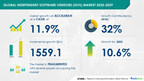
NEW YORK, Jan. 13, 2025 /PRNewswire/ — Report on how AI is driving market transformation – The global independent software vendors (ISVS) market size is estimated to grow by USD 1.56 billion from 2025-2029, according to Technavio. The market is estimated to grow at a CAGR of 11.9% during the forecast period. Rise in volume of enterprise data is driving market growth, with a trend towards increasing adoption of cloud computing by end-users. However, high costs of licensing and support poses a challenge. Key market players include Adobe Inc., Alphabet Inc., Autodesk Inc., Avgi Solutions Inc., Cisco Systems Inc., Dell Technologies Inc., HP Inc., International Business Machines Corp., Intuit Inc., Magic Software Enterprises Ltd., Microsoft Corp, Mocana Corp., Nutanix Inc., Open Text Corp., Oracle Corp, Salesforce Inc., SAP SE, ServiceNow Inc., Virtusa Corp., and VMware Inc..
AI-Powered Market Evolution Insights. Our comprehensive market report ready with the latest trends, growth opportunities, and strategic analysis- View Free Sample Report PDF
Forecast period
2025-2029
Base Year
2024
Historic Data
2019 – 2023
Segment Covered
Deployment (On-premises and Cloud based), Component (Software and Services), and Geography (North America, Europe, APAC, South America, and Middle East and Africa)
Region Covered
North America, Europe, APAC, South America, and Middle East and Africa
Key companies profiled
Adobe Inc., Alphabet Inc., Autodesk Inc., Avgi Solutions Inc., Cisco Systems Inc., Dell Technologies Inc., HP Inc., International Business Machines Corp., Intuit Inc., Magic Software Enterprises Ltd., Microsoft Corp, Mocana Corp., Nutanix Inc., Open Text Corp., Oracle Corp, Salesforce Inc., SAP SE, ServiceNow Inc., Virtusa Corp., and VMware Inc.
Key Market Trends Fueling Growth
Cloud-based software solutions have gained significant traction among agencies, corporations, and governments due to their flexibility and scalability. These solutions are utilized for various applications, including authentication processes, video management, biometric information storage, and big data computing. The proliferation of IoT-connected devices has led to an enormous data generation. Industries such as manufacturing, utilities, retail, automotive, and social media leverage IoT for increased data transfer. The growing number of IoT-enabled devices necessitates the adoption of cloud-based solutions. Moreover, the commercial deployment of 5G is anticipated to fuel the expansion of the global Independent Software Vendors (ISVs) market by the end of the forecast period.
Independent Software Vendors (ISVs) continue to play a significant role in the business world, particularly in creating innovative software solutions for various industries. IoT applications and AI integration are current trends, with ISVs developing new tools for industries like retail & e-commerce, logistics, finance, education, healthcare, and IT & telecom. Data security and privacy concerns remain top priorities, with ISVs providing solutions for businesses using Cloud Technologies like IaaS, PaaS, and SaaS. Salesforce Industries and large technology companies are major players, while startups and multinational corporations also rely on ISVs for software products, standalone applications, web-based services, and productivity tools. Latest technologies such as mobile apps, artificial intelligence, data analytics, and user experience are key areas of focus. Hardware manufacturers also partner with ISVs for software solutions, and enterprise applications, industry-specific software, and integration and interoperability are essential for businesses. Technical support, training, and business continuity are crucial services offered by ISVs. Overall, ISVs help businesses address specific business problems and leverage the latest technologies to stay competitive.
Insights on how AI is driving innovation, efficiency, and market growth- Request Sample!
Market Challenges
Independent Software Vendors (ISVs) have evolved from service providers to a product-focused industry, now transitioning into a hybrid of both. Traditional licensing models like single-user and concurrent-user have given way to usage-based and perpetual licensing. While perpetual licensing remains popular, usage-based licensing is on the rise. This shift brings both opportunities and challenges. Usage-based licensing can offer more flexibility for customers, but it also means fewer upfront revenues for ISVs. Perpetual licensing, with its high upfront costs, may deter some buyers. The ISV market is expected to face increased pressure on pricing due to these changes.Independent Software Vendors (ISVs) face various challenges in today’s market. IoT applications require specialized knowledge and resources, making development and integration complex. AI integration is crucial for staying competitive, but ensuring data security and privacy is a major concern. Salesforce Industries and other large technology companies offer lucrative opportunities, but ISVs must adapt to cloud technologies like IaaS, PaaS, and SaaS. E-commerce, logistics, retail & e-commerce, IT & telecom, automotive, finance, education, and other industries demand software solutions for specific business problems. ISVs must support various programming languages and platforms, providing technical support and training for businesses. On-premises software is giving way to cloud computing, with mobile apps and latest technologies like AI, data analytics, and UX leading the way. Hardware manufacturers and multinational corporations seek software solutions for enterprise applications and industry-specific software. Startups and small businesses also present opportunities, but competition is fierce. ISVs must navigate integration and interoperability challenges, ensuring their solutions work seamlessly with other technologies and platforms. Overall, the ISV market is dynamic and demanding, requiring agility, innovation, and a deep understanding of business needs.
Insights into how AI is reshaping industries and driving growth- Download a Sample Report
Segment Overview
This independent software vendors (isvs) market report extensively covers market segmentation by
Deployment 1.1 On-premises1.2 Cloud basedComponent 2.1 Software2.2 ServicesGeography 3.1 North America3.2 Europe3.3 APAC3.4 South America3.5 Middle East and Africa
1.1 On-premises- Independent Software Vendors (ISVs) often choose to deploy their software through the on-premises model. On-premises software refers to locally hosted solutions within organizations, utilizing their computer systems. ISVs charge a one-time license fee for this software, providing organizations with data security and local ownership. Additionally, on-premises software offers the advantage of customizable open-source features, allowing organizations to tailor the program to their unique requirements. Despite the high hardware costs and maintenance needs, large organizations with sensitive data continue to prefer on-premises software due to enhanced security concerns. This preference is projected to fuel the expansion of the on-premises segment within the global ISVs market throughout the forecast period.
Download complimentary Sample Report to gain insights into AI’s impact on market dynamics, emerging trends, and future opportunities- including forecast (2025-2029) and historic data (2019 – 2023)
Research Analysis
The Independent Software Vendors (ISV) market encompasses a vast array of businesses developing and selling software solutions to address specific business problems across various industries. These solutions range from enterprise applications and industry-specific software to productivity tools and web-based services. ISVs cater to businesses of all sizes, from startups to multinational corporations, providing them with innovative software solutions to enhance their operations and productivity. Technologies and platforms, such as cloud computing, Artificial Intelligence (AI), IaaS, PaaS, and SaaS, are driving the growth of the ISV market. Cloud Technologies, in particular, are enabling ISVs to offer flexible and scalable software solutions to businesses, while AI is enabling the development of intelligent applications for industries like finance, education, retail & e-commerce, IT & telecom, automotive, and logistics. ISVs offer technical support, training, and consulting services to help businesses effectively implement and utilize their software solutions. Programming languages and platforms are essential tools for ISVs to develop and build software solutions, while e-commerce and software-as-a-service models provide new revenue streams and business opportunities. In summary, the ISV market is a dynamic and innovative space, offering businesses software solutions to address their unique challenges and drive growth and productivity. From enterprise applications to productivity tools, ISVs are leveraging the latest technologies and platforms to deliver cutting-edge software solutions to businesses across industries.
Market Research Overview
The Independent Software Vendors (ISV) market encompasses a vast array of businesses that develop and distribute software solutions to address specific business problems across various industries. These solutions range from enterprise applications and industry-specific software to productivity tools and mobile applications. ISVs leverage the latest technologies and platforms, such as cloud computing, artificial intelligence (AI), data analytics, and the Internet of Things (IoT), to create innovative and efficient software products. ISVs cater to businesses of all sizes, from startups to multinational corporations, and offer a diverse range of software solutions. These include standalone applications, web-based services, and Software-as-a-Service (SaaS) offerings. ISVs in the healthcare sector focus on improving patient care and outcomes, while those in finance aim to streamline financial operations. Education ISVs provide tools to enhance learning experiences, and those in IT & telecom offer solutions to optimize network performance. ISVs face challenges such as integration and interoperability, data security, and privacy concerns. They also need to stay updated with the latest technologies and trends to remain competitive. Technical support and training are essential for ISVs to ensure customer satisfaction and retention. Overall, the ISV market is a dynamic and innovative space that continues to evolve with the needs of businesses and consumers.
Table of Contents:
1 Executive Summary
2 Market Landscape
3 Market Sizing
4 Historic Market Size
5 Five Forces Analysis
6 Market Segmentation
DeploymentOn-premisesCloud BasedComponentSoftwareServicesGeographyNorth AmericaEuropeAPACSouth AmericaMiddle East And Africa
7 Customer Landscape
8 Geographic Landscape
9 Drivers, Challenges, and Trends
10 Company Landscape
11 Company Analysis
12 Appendix
About Technavio
Technavio is a leading global technology research and advisory company. Their research and analysis focuses on emerging market trends and provides actionable insights to help businesses identify market opportunities and develop effective strategies to optimize their market positions.
With over 500 specialized analysts, Technavio’s report library consists of more than 17,000 reports and counting, covering 800 technologies, spanning across 50 countries. Their client base consists of enterprises of all sizes, including more than 100 Fortune 500 companies. This growing client base relies on Technavio’s comprehensive coverage, extensive research, and actionable market insights to identify opportunities in existing and potential markets and assess their competitive positions within changing market scenarios.
Contacts
Technavio Research
Jesse Maida
Media & Marketing Executive
US: +1 844 364 1100
UK: +44 203 893 3200
Email: media@technavio.com
Website: www.technavio.com/
View original content to download multimedia:https://www.prnewswire.com/news-releases/independent-software-vendors-isvs-market-to-grow-by-usd-1-56-billion-from-2025-2029–driven-by-rising-enterprise-data-and-ai-powered-market-evolution—technavio-302347898.html
SOURCE Technavio










 Technology4 days ago
 Coin Market5 days ago
 Coin Market4 days ago
 Technology4 days ago
 Technology4 days ago
 Technology4 days ago