Connect with us

Technology

DuPont Provides Update on Separation Plans, Reaffirms Financial Guidance

Published

on

Accelerates the tax-free spin-off of its Electronics business, now targeting November 1, 2025DuPont to retain the Water business within its portfolioReaffirms fourth quarter and full year 2024 net sales, operating EBITDA and adjusted EPS financial guidance ahead of its February 11th earnings call

WILMINGTON, Del., Jan. 15, 2025 /PRNewswire/ — DuPont (NYSE:DD) today announced the acceleration of the separation of its Electronics business and is now targeting November 1, 2025 to complete the transaction. This decision recognizes the size and importance of Electronics to the overall shareholder value creation opportunity and DuPont’s desire to complete the separation as quickly as possible.

Additionally, DuPont no longer intends to separate its Water business. The company evaluated all strategic alternatives and concluded the best path to generate value is for the Water business to remain in the DuPont portfolio. This also enhances DuPont’s ability to continue optimizing its portfolio following the Electronics separation.

“We remain confident in the opportunity to create significant shareholder value through the separation of the Electronics business,” said Ed Breen, DuPont Executive Chairman. “Achieving an independent Electronics company as soon as possible is the right decision for our shareholders.”

“We remain excited about the value creation opportunity for DuPont following the Electronics separation,” added Lori Koch, DuPont Chief Executive Officer. “The decision for Water to remain with DuPont provides the new organization with greater strategic flexibility over time and another high growth business alongside Healthcare. We continue to have conviction in the attractive outlook for Water and expect 2025 to be a strong year for the business.” 

Reaffirms Fourth Quarter and Full Year 2024 Financial Outlook

DuPont reaffirms its fourth quarter and full year 2024 financial guidance for net sales, operating EBITDA and adjusted EPS as provided on November 5, 2024 as part of its third quarter earnings release, including the expected continued improved performance in Water.

About DuPont
DuPont (NYSE: DD) is a global innovation leader with technology-based materials and solutions that help transform industries and everyday life. Our employees apply diverse science and expertise to help customers advance their best ideas and deliver essential innovations in key markets including electronics, transportation, construction, water, healthcare and worker safety. More information about the company, its businesses and solutions can be found at www.dupont.com. Investors can access information included on the Investor Relations section of the website at investors.dupont.com.

DuPont™ and all products, unless otherwise noted, denoted with ™, SM or ® are trademarks, service marks or registered trademarks of affiliates of DuPont de Nemours, Inc.

Overview
On May 22, 2024, DuPont announced a plan to separate each of its Electronics and Water businesses in a tax-free manner to its shareholders. On January 15, 2025, DuPont announced it is targeting November 1, 2025, for the completion of the intended separation of the Electronics business (the “Intended Electronics Separation”). DuPont also announced that it would retain the Water business.

The Intended Electronics Separation will not require a shareholder vote and is subject to satisfaction of customary conditions, including final approval by DuPont’s Board of Directors, receipt of tax opinion from counsel, the filing and effectiveness of a Form 10 registration statement with the U.S. Securities and Exchange Commission, applicable regulatory approvals and satisfactory completion of financing. 

Cautionary Statement Regarding Forward Looking Statements
This communication contains “forward-looking statements” within the meaning of the federal securities laws, including Section 27A of the Securities Act of 1933, as amended, and Section 21E of the Securities Exchange Act of 1934, as amended. In this context, forward-looking statements often address expected future business and financial performance and financial condition, and often contain words such as “expect,” “anticipate,” “intend,” “plan,” “believe,” “seek,” “see,” “will,” “would,” “target, “outlook,” “stabilization,” “confident,” “preliminary,” “initial,” and similar expressions and variations or negatives of these words. All statements, other than statements of historical fact, are forward-looking statements, including statements regarding outlook, expectations and guidance. Forward-looking statements address matters that are, to varying degrees, uncertain and subject to risks, uncertainties, and assumptions, many of which that are beyond DuPont’s control, that could cause actual results to differ materially from those expressed in any forward-looking statements.

Forward-looking statements are not guarantees of future results. Some of the important factors that could cause DuPont’s actual results to differ materially from those projected in any such forward-looking statements include, but are not limited to: (i) the ability of DuPont to effect the Intended Electronics Separation and to meet the conditions related thereto; (ii) the possibility that the Intended Electronics Separation will not be completed within the anticipated time period or at all; (iii) the possibility that the Intended Electronics Separation will not achieve its intended benefits; (iv) the impact of Intended Electronics Separation on DuPont’s businesses and the risk that the separation may be more difficult, time-consuming or costly than expected, including the impact on DuPont’s resources, systems, procedures and controls, diversion of management’s attention and the impact and possible disruption of existing relationships with customers, suppliers, employees and other business counterparties; (v) the possibility of disruption, including disputes, litigation or unanticipated costs, in connection with the Intended Electronics Separation; (vi) the uncertainty of the expected financial performance of DuPont or the separated company following completion of the Intended Electronics Separation; (vii) negative effects of the announcement or pendency of the Intended Electronics Separation on the market price of DuPont’s securities and/or on the financial performance of DuPont; (viii) the ability to achieve anticipated capital structures in connection with Intended Electronics Separation, including the future availability of credit and factors that may affect such availability; (ix) the ability to achieve anticipated credit ratings in connection with the Intended Electronics Separation; (x) the ability to achieve anticipated tax treatments in connection with the Intended Electronics Separation and completed and future, if any, divestitures, mergers, acquisitions and other portfolio changes and the impact of changes in relevant tax and other laws; (xi) risks and uncertainties related to the settlement agreement concerning PFAS liabilities reached June 2023 with plaintiff water utilities by Chemours, Corteva, EIDP and DuPont; (xii) risks and costs related to each of the parties respective performance under and the impact of the arrangement to share future eligible PFAS costs by and among DuPont, Corteva and Chemours, including the outcome of any pending or future litigation related to PFAS or PFOA, including personal injury claims and natural resource damages claims; the extent and cost of ongoing remediation obligations and potential future remediation obligations; and changes in laws and regulations applicable to PFAS chemicals; (xiii) indemnification of certain legacy liabilities; (xiv) the failure to realize expected benefits and effectively manage and achieve anticipated synergies and operational efficiencies in connection with the Intended Electronics Separation and completed and future, if any, divestitures, mergers, acquisitions, and other portfolio management, productivity and infrastructure actions; (xv) the risks and uncertainties, including increased costs and the ability to obtain raw materials and meet customer needs from, among other events, pandemics and responsive actions; (xvi) timing and recovery from demand declines in consumer-facing markets, including in China; (xvii) adverse changes in worldwide economic, political, regulatory, international trade, geopolitical, capital markets and other external conditions; and other factors beyond DuPont’s control, including inflation, recession, military conflicts, natural and other disasters or weather-related events, that impact the operations of DuPont, its customers and/or its suppliers; (xviii) the ability to offset increases in cost of inputs, including raw materials, energy and logistics; (xix) the risks associated with demand and market conditions in the semiconductor industry and associated end markets, including from continuing or expanding trade disputes or restrictions, including on exports to China of U.S.-regulated products and technology; (xx) the risks, including ability to achieve, and costs associated with DuPont’s sustainability strategy, including the actual conduct of DuPont’s activities and results thereof, and the development, implementation, achievement or continuation of any goal, program, policy or initiative discussed or expected; (xxi) other risks to DuPont’s business and operations, including the risk of impairment; (xxii) the possibility that DuPont may fail to realize the anticipated benefits of the $1 billion share repurchase program announced on February 6, 2024 and that the program may be suspended, discontinued or not completed prior to its termination on June 30, 2025; (xxiii) the risks associated with the termination of the previously announced plan to separate DuPont’s Water business; and (xxiv) other risk factors discussed in DuPont’s most recent annual report and subsequent current and periodic reports filed with the U.S. Securities and Exchange Commission. Unlisted factors may present significant additional obstacles to the realization of forward-looking statements. Consequences of material differences in results as compared with those anticipated in the forward-looking statements could include, among other things, business or supply chain disruption, operational problems, financial loss, legal liability to third parties and similar risks, any of which could have a material adverse effect on DuPont’s consolidated financial condition, results of operations, credit rating or liquidity. You should not place undue reliance on forward-looking statements, which speak only as of the date they are made. DuPont assumes no obligation to publicly provide revisions or updates to any forward-looking statements whether as a result of new information, future developments or otherwise, should circumstances change, except as otherwise required by securities and other applicable laws.

Non-GAAP Financial Measures
Operating EBITDA and adjusted EPS are considered non-GAAP financial measures. DuPont’s management believes these non-GAAP financial measures are useful to investors because they provide additional information related to the ongoing performance of DuPont to offer a more meaningful comparison related to future results of operations. For more information on how DuPont defines and uses these measures, please see “Non-GAAP Financial Measures” in the Investor Overview presentation available in the Investors section of  www.dupont.com.

View original content to download multimedia:https://www.prnewswire.com/news-releases/dupont-provides-update-on-separation-plans-reaffirms-financial-guidance-302352122.html

SOURCE DuPont

Continue Reading
Click to comment

Leave a Reply

Your email address will not be published. Required fields are marked *

Technology

As ADA Anniversary Approaches, University of Phoenix Survey Highlights AI’s Potential to Advance Accessibility in Work and Learning

Published

on

By

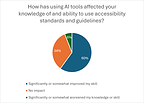
Survey conducted by The Harris Poll on behalf of University of Phoenix finds among those already using AI in the workplace, 60% say AI has improved their knowledge of and ability to use accessibility standards and guidelines.

PHOENIX, July 24, 2026 /PRNewswire/ — As artificial intelligence becomes part of how people work, learn and solve problems, a new University of Phoenix survey conducted by The Harris Poll finds that recent working learners see meaningful opportunities for AI to support accessibility. The survey was designed to understand the impact of AI in the workplace and learning environments on accessibility, defined as ensuring digital content, tools and resources, including AI tools and output, are usable by people with different abilities through inclusive design, use of assistive technology or conformance with accessibility standards, such as the Web Content Accessibility Guidelines (WCAG). The findings are being released ahead of the 36th anniversary of the Americans with Disabilities Act (ADA) on July 26.

The survey, conducted among 1,019 U.S. employed adults who completed a professionally presented training or school course in the past 12 months (“recent working learners”), found that, among workers already using AI in the workplace, 3 in 5 (60%) say AI has improved their knowledge of and ability to use accessibility standards and guidelines, including nearly 1 in 5 (19%) who report significant improvement. 

While the findings point to optimism about AI’s accessibility potential, they also reveal an opportunity for clearer organizational guidance: 45% of respondents say accessibility is absent from, unclear in, or they are uncertain whether it is covered by their workplace AI policies.

“The reality is that accessibility benefits everyone,” shares Kelly Hermann, Vice President of Accessibility and Student Affairs at University of Phoenix. “If accessibility is built in from the beginning, organizations are more likely to create AI-enabled environments that are universally usable. Clearer content, better summaries, accurate captions, and multiple formats can help workers and learners with disabilities, but they also help busy adults, multilingual learners, mobile users, and anyone trying to absorb information quickly.”

Key findings from the survey include:

Workers see AI’s accessibility potential: 89% of recent working learners identify workflows that could benefit from AI and accessibility tools, especially creating accessible documents, presentations, websites or learning materials (38%), presenting information in different formats such as plain language, audio, summaries or translations (33%), and training employees or learners on accessibility practices (30%).AI may help build accessibility awareness: Among those already using AI in the workplace, 60% say AI has improved their knowledge of and ability to use accessibility standards and guidelines.Accessibility is not always clear in workplace AI policies: 45% of recent working learners say accessibility is absent from, unclear in, or they are uncertain whether it is covered by their workplace AI policies.AI tools may not yet fully support different access needs: Among those who use workplace AI tools, only about a quarter of survey respondents (27%) say AI tools available through their workplace or professional learning environment support people with disabilities very well.Human oversight remains important: 36% of recent working learners say human review for important decisions or high-impact work should be part of responsible AI use at work or school.Workers also recognize how AI and accessibility can have an impact on their own career journey: 90% of recent working learners identify AI and accessibility skills that would be valuable in their current or desired career field, including 45% who see value in understanding when AI-generated content needs human review.

Why accessibility is essential to responsible AI adoption

As AI tools are used to draft documents, summarize information, generate captions and transcripts, create image descriptions, support learning and assist with workplace tasks, accessibility becomes central to responsible use. Poorly implemented AI can also create or amplify barriers, including inaccessible content, inaccurate summaries, biased outputs and tools that do not work effectively with assistive technologies.

“Responsible AI is not only about productivity,” Hermann said. “It is about whether the technology works for the people who need to use it. AI can help create more accessible materials and more flexible ways to engage with information, but it still requires clear policies, practical training and human judgment to make sure the outputs are accurate, applicable and usable.”

What the findings mean for employers and educators

The survey suggests that organizations have an opportunity to align AI adoption with supportive design, accessibility practices and workforce training. Employers and educators can take immediate steps by:

Naming accessibility directly in AI policies and guidance.Choosing AI tools with accessibility and assistive technology compatibility in mind.Training workers and learners to create, check and improve accessible AI-generated content.Making support pathways clear for people who experience barriers using AI tools.Keeping human review in place for important decisions, high-impact work and accessibility-sensitive outputs.

The survey also found workers want practical AI training. The most helpful resources identified by recent working learners include real-world examples from their field or industry (36%), hands-on practice using realistic workplace scenarios (34%) and step-by-step demonstrations of common tasks (33%).

Accessibility insights from University of Phoenix

Hermann shared the survey findings ahead of the ADA anniversary in recent media interviews. Hermann oversees the University’s accessibility initiative, including evaluation and remediation of curricular resources, the Center for Access, Resources, Engagement and Support Services (CARES), and the Office of Collaborative Learning and Educational Engagement. Her work focuses on fostering accessible and welcoming educational environments for students, faculty and staff.

Hermann’s office at University of Phoenix also convenes accessibility conversations through initiatives such as Access Amplified™, a free, annual virtual event focused on advancing digital accessibility in web development. The event brings together engineers, developers, designers, content authors and digital strategists for practical strategies and human-centered conversations that address the gap between coding practices and how users with assistive technology experience the web.

About the survey

The survey was conducted online within the United States by The Harris Poll on behalf of University of Phoenix from June 22–29, 2026, among 1,019 employed adults ages 18 and older who have taken a professionally presented training or a school course in the past 12 months, referred to as “recent working learners.” Data were weighted where necessary by age, gender, race/ethnicity, region, education, employment, marital status, household size, household income and smoking status to bring them in line with their actual proportions in the population.

Respondents for this survey were selected from among those who have agreed to participate in surveys. The sampling precision of Harris online polls is measured by using a Bayesian credible interval. For this study, the sample data is accurate to within +/- 3.8 percentage points using a 95% confidence level. This credible interval will be wider among subsets of the surveyed population of interest.

Review the complete survey at phoenix.edu/aiaccessibility.

About University of Phoenix

University of Phoenix is Built for Real Life. 50 Years Strong. The University innovates to help working adults enhance their careers and develop skills in a rapidly changing world through flexible online learning, relevant courses, academic AI pillars, and skills-mapped curriculum for associate, bachelor’s and master’s degree programs. Active students and alumni have access to Career Services for Life® resources including career guidance and tools. For more information, visit phoenix.edu. 

View original content to download multimedia:https://www.prnewswire.com/news-releases/as-ada-anniversary-approaches-university-of-phoenix-survey-highlights-ais-potential-to-advance-accessibility-in-work-and-learning-302834448.html

SOURCE University of Phoenix

Continue Reading

Technology

Mastech Digital to Announce Second Quarter 2026 Financial Results; Participate in Upcoming Investor Conference

Published

on

By

PITTSBURGH, July 24, 2026 /PRNewswire/ — Mastech Digital, Inc. (NYSE American: MHH) (“Mastech Digital”), a leading provider of Digital Transformation IT Services, today announced the date for the release of its financial results for the second quarter ended June 30, 2026, and its participation in an upcoming investor conference.

Second Quarter 2026 Earnings:

Mastech Digital will report its financial results for the second quarter 2026 before the market opens on Thursday, August 6, 2026. Management will host a live conference call and webcast at 9:00 a.m. Eastern Time on that day to discuss the Company’s financial performance and operating results.  The conference call will be hosted by Nirav Patel, President and CEO, and Kannan Sugantharaman, Chief Financial and Operations Officer.

Those wishing to participate via webcast should access the call through Mastech Digital’s Investor Relations website at https://investors.mastechdigital.com. Those wishing to participate via telephone may dial in at 1-800-715-9871 (USA) or 1-646-307-1963 (International) with the passcode 7506988. The replay will be available via webcast through Mastech Digital’s Investor Relations website.

Upcoming Investor Conference:

Mr. Sugantharaman will host a fireside chat at the Sidoti Micro-Cap Investor Conference on Wednesday, August 19, 2026, at 9:15 a.m. Eastern Time.

Mastech Digital management is scheduled to host virtual one-on-one and small group meetings with investors during the conference on August 19-20, 2026. Investors interested in arranging a meeting should contact their Sidoti representative or reach out to the Mastech Digital investor relations team at investors@mastechdigital.com.

About Mastech Digital, Inc.

Mastech Digital (NYSE American: MHH) is a leading provider of Digital Transformation IT Services. The Company offers Data Management, Analytics & AI Solutions, and IT Staffing Services with a digital-first approach. A minority-owned enterprise, Mastech Digital is headquartered in Pittsburgh, PA, with offices across the U.S., Canada, Europe, and India. Visit us at www.mastechdigital.com.

Investor Relations Contact:
investors@mastechdigital.com 


View original content to download multimedia:https://www.prnewswire.com/news-releases/mastech-digital-to-announce-second-quarter-2026-financial-results-participate-in-upcoming-investor-conference-302834421.html

SOURCE Mastech Digital, Inc.

Continue Reading

Technology

SOLAI Limited Announces Extraordinary General Meeting

Published

on

By

AKRON, Ohio, July 24, 2026 /PRNewswire/ — SOLAI Limited (NYSE: SLAI) (“SOLAI” or the “Company”) (previously known as “BIT Mining Limited”), a technology-driven personal AI and digital infrastructure provider, today announced that it will hold its extraordinary general meeting of shareholders at 428 South Seiberling Street, Akron, Ohio, US on August 14, 2026 at 10:00 a.m., New York time.

Holders of record of ordinary shares and preference shares of the Company at the close of business on July 20, 2026, New York time (the “Record Date”) are entitled to receive notice of, and to attend and vote at, the extraordinary general meeting or any adjournment thereof. Holders of the Company’s American Depositary Shares (“ADSs”) who wish to exercise their voting rights for the underlying ordinary shares must act through the depositary of the Company’s ADS program, Deutsche Bank Trust Company Americas.

The notice of the extraordinary general meeting, which sets forth the resolutions to be submitted to shareholder approval at the extraordinary general meeting is available on the Investor Relations section of the Company’s website at https://ir.solai.com

About SOLAI Limited

SOLAI Limited (previously known as “BIT Mining Limited”) (NYSE: SLAI) (previously traded under “BTCM”) is a technology-driven personal AI and digital infrastructure provider. Building upon its historical legacy in digital asset mining and blockchain network operations, the Company is leveraging extensive experience in large-scale hardware deployment, data center operations, and high-performance computing to build the foundational infrastructure for personal AI computing and digital asset ecosystems globally.

For more information:

SOLAI Limited
ir@solai.com
ir.solai.com
www.solai.com 

Christensen Advisory
Jason Ng
Tel: +852-2117-0861
Email: solai@christensencomms.com 


View original content:https://www.prnewswire.com/news-releases/solai-limited-announces-extraordinary-general-meeting-302834034.html

SOURCE SOLAI Limited

Continue Reading

Trending