Connect with us

Technology

Telerehabilitation Systems Market to Grow by USD 532.9 Million (2024-2028), Rising Chronic Disease Cases Drive Growth, AI-Powered Market Evolution – Technavio

Published

on

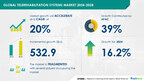
NEW YORK, Jan. 20, 2025 /PRNewswire/ — Report on how AI is driving market transformation – The global telerehabilitation systems market size is estimated to grow by USD 532.9 million from 2024-2028, according to Technavio. The market is estimated to grow at a CAGR of  20%  during the forecast period. Increasing incidence of chronic diseases is driving market growth, with a trend towards advent of advanced technologies. However, complexities in implementation of internet connection  poses a challenge. Key market players include BRONTES PROCESSING Sp. Z o.o. Ltd, Cisco Systems Inc., CoRehab srl, DIH Group, Evolv Rehabilitation Technologies SL, GestureTek Health, Hinge Health Inc., Honeywell International Inc., Jitrnonix, KineQuantum SAS, Kineto Tech Rehab SRL, Koninklijke Philips N.V., LiteGait, MindMaze SA, MIRA Rehab Ltd., NeoRehab, Rehametrics, Robert Bosch GmbH, SWORD Health Technologies Inc., and Tyromotion GmbH.

Key insights into market evolution with AI-powered analysis. Explore trends, segmentation, and growth drivers- View Free Sample PDF

Telerehabilitation Systems Market Scope

Report Coverage

Details

Base year

2023

Historic period

2018 – 2022

Forecast period

2024-2028

Growth momentum & CAGR

Accelerate at a CAGR of 20%

Market growth 2024-2028

USD 532.9 million

Market structure

Fragmented

YoY growth 2022-2023 (%)

16.2

Regional analysis

North America, Europe, APAC, South America, and Middle East and Africa

Performing market contribution

APAC at 39%

Key countries

US, China, Germany, Canada, and France

Key companies profiled

BRONTES PROCESSING Sp. Z o.o. Ltd, Cisco Systems Inc., CoRehab srl, DIH Group, Evolv Rehabilitation Technologies SL, GestureTek Health, Hinge Health Inc., Honeywell International Inc., Jitrnonix, KineQuantum SAS, Kineto Tech Rehab SRL, Koninklijke Philips N.V., LiteGait, MindMaze SA, MIRA Rehab Ltd., NeoRehab, Rehametrics, Robert Bosch GmbH, SWORD Health Technologies Inc., and Tyromotion GmbH

Market Driver

The Telerehabilitation market is experiencing significant growth due to the increasing adoption of digital technologies in delivering rehabilitation services. E-rehabilitation, also known as telerehabilitation, enables medical professionals to provide diagnosis and therapy through remote communication using the internet and telecommunication networks. This includes physical therapy, speech-language therapy, occupational therapy, audiology, psychology, and various therapy modalities for disorders like traumatic brain injury, cerebrovascular accidents, and pediatric population. Digital technologies such as smartphones, internet penetration, and telehealth technologies are driving the market. Rehabilitation professionals use software like Rehametrics and fitness programs for clinical therapy and behavioral therapy. Tele physiotherapy, remote patient monitoring, and e-visits are also gaining popularity. The market includes hardware like motion sensors, virtual reality, and artificial intelligence (AI) for real-time assessment and improved patient outcomes. Telehealth policies and insurance coverage are crucial for market growth. The aging population and chronic conditions require continued care and accessibility, making telerehabilitation an essential part of healthcare integration. Data security and patient satisfaction are key concerns, and telehealth policy reforms and telemedicine policies are essential for market growth. 

Telerehabilitation systems market is set to experience significant growth due to technological advancements, including machine learning, predictive analytics, and big data. These innovations enable more effective and personalized rehabilitation programs. Additionally, the integration of IoT, augmented reality, and virtual reality enhances patient engagement and outcomes. The adoption of Industry 4.0 technologies, such as AI, 3D printing, and the IIoT, in manufacturing and production processes also positively impacts the telerehabilitation market by improving efficiency and reducing costs. Overall, these technological advancements contribute to the growth and transformation of the telerehabilitation systems market. 

Request Sample of our comprehensive report now to stay ahead in the AI-driven market evolution!

Market Challenges

The Telerehabilitation market, also known as E-rehabilitation, is growing rapidly as medical professionals turn to telecommunication networks and the Internet for delivering rehabilitation services. Challenges include ensuring effective diagnosis and therapy through remote communication for various disorders such as traumatic brain injury, cerebrovascular accidents, and pediatric population. Digital technologies like smartphones and internet penetration have made clinical therapy, behavioral therapy, neurological therapy, and cognitive rehabilitation more accessible. However, engagement and continuity of care are crucial for patient outcomes. Healthcare costs, digital health technologies, and telehealth services are driving market growth for chronic conditions and chronic diseases. Telecommunication infrastructure, patient engagement, and health data security are key considerations. Telehealth policies and insurance coverage are also important factors. AI and telemedicine policy reforms are expected to boost market growth. Rehabilitation professionals use software like Rehametrics and hardware like motion sensors for virtual consultation and real-time assessment. Tele rehabilitation applications include physical therapy, speech-language therapy, occupational therapy, audiology, psychology, and drug and alcohol addiction treatment. The market includes software, hardware, virtual reality, and remote patient monitoring solutions. The market caters to orthopedic, cardiovascular, and homecare settings, among others. Patient satisfaction and healthcare access are crucial for success. Telehealth integration and telecommunication technologies enable remote monitoring and virtual consultation, improving healthcare access and patient outcomes for the aging and geriatric population. Data infringement is a concern, but can be mitigated through security measures. Overall, the Telerehabilitation market offers significant opportunities for innovation and growth in the healthcare sector.Telerehabilitation systems offer numerous benefits for healthcare organizations, enabling remote patient care and improving access to specialized services. However, the successful implementation of these systems relies on a stable Internet connection capable of supporting various hospital applications. The clinical setting, patient population, and service requirements dictate the specific telerehabilitation applications. Despite its advantages, telerehabilitation adoption faces challenges, particularly in rural areas. These hospitals often lack the necessary workforce and financial resources to invest in and maintain telerehabilitation technology. Furthermore, the absence of a reliable Internet connection in rural regions hinders the provision of telerehabilitation services. Internet service providers find it unprofitable to extend their networks into these areas, creating a significant barrier to adoption.

Discover how AI is revolutionizing market trends- Get your access now!

Segment Overview

This telerehabilitation systems market report extensively covers market segmentation by  

Product 1.1 Hardware1.2 SoftwareType 2.1 Physical therapy2.2 Occupational therapy2.3 OthersGeography 3.1 North America3.2 Europe3.3 APAC3.4 South America3.5 Middle East and AfricaApplication

1.1 Hardware-  The global telerehabilitation systems market was dominated by the hardware segment in 2023. This segment includes hardware such as head-mounted displays (HMDs), sensor motion tracking systems, and haptic devices. HMDs create a parallax effect, allowing the brain to perceive depth based on object position differences. Sensors, including gyroscopes and accelerometers, detect body movement, providing data for software inputs. Hardware has higher initial investments but offers superior performance. The rising demand for advanced platforms for occupational and physical therapy, as well as robot-assisted rehabilitation, will fuel hardware segment growth. Vendors provide a range of telerehabilitation systems for home and center use, making rehabilitation accessible while maintaining social distancing. In the post-COVID era, telerehabilitation is an ideal solution for patients with mild to moderate disabilities, requiring frequent monitoring and living in isolated areas. These factors are expected to boost the global telerehabilitation systems market during the forecast period.

Download a Sample of our comprehensive report today to discover how AI-driven innovations are reshaping competitive dynamics

Research Analysis

Telerehabilitation, also known as e-rehabilitation, refers to the delivery of rehabilitation services through telecommunication networks, primarily the internet. This innovative approach to healthcare enables medical professionals to provide diagnosis, therapy, and consultation remotely for various rehabilitation needs, including physical therapy, speech-language therapy, occupational therapy, audiology, and more. Digital health technologies, such as video conferencing, mobile applications, and wearable devices, are essential components of telerehabilitation. The market for telerehabilitation continues to grow, driven by the increasing prevalence of chronic conditions and chronic diseases, the aging and geriatric population, and the need for remote healthcare access. Telecommunication infrastructure, software, and virtual consultation are key elements of telerehabilitation systems, enabling remote monitoring, diagnosis, and therapy in a homecare setting for orthopedic applications and other rehabilitation needs.

Market Research Overview

Telerehabilitation, also known as e-rehabilitation, refers to the delivery of rehabilitation services through telecommunication networks, primarily the internet. This innovative approach enables medical professionals to provide diagnosis, therapy, and clinical assessment for various disorders, including traumatic brain injury, cerebrovascular accidents, pediatric population, and chronic conditions like osteoarthritis and drug, alcohol addiction. Digital technologies such as smartphones, internet penetration, and digital health technologies have facilitated the growth of this market. Therapy modalities include physical therapy, speech-language therapy, occupational therapy, audiology, psychology, and neurological therapy. Disorders can be diagnosed and treated remotely, reducing healthcare costs and increasing accessibility, especially for those in rural areas or with mobility issues. The market includes software and hardware segments, with tele physiotherapy, remote patient monitoring, and virtual reality being key therapy modalities. Patient engagement, continuity of care, and patient-centric care are crucial factors driving the market’s growth. Telehealth policies, AI, and telemedicine policy reforms are also significant factors influencing the market’s expansion. The market caters to various healthcare settings, including homecare and healthcare facilities, and offers real-time assessment and virtual consultation. However, concerns regarding health data security, insurance coverage, and data infringement remain challenges for the industry. The aging population and the increasing prevalence of chronic conditions further fuel the demand for telerehabilitation services.

Table of Contents:

1 Executive Summary
2 Market Landscape
3 Market Sizing
4 Historic Market Size
5 Five Forces Analysis
6 Market Segmentation

ProductHardwareSoftwareTypePhysical TherapyOccupational TherapyOthersGeographyNorth AmericaEuropeAPACSouth AmericaMiddle East And AfricaApplication

7 Customer Landscape
8 Geographic Landscape
9 Drivers, Challenges, and Trends
10 Company Landscape
11 Company Analysis
12 Appendix

About Technavio

Technavio is a leading global technology research and advisory company. Their research and analysis focuses on emerging market trends and provides actionable insights to help businesses identify market opportunities and develop effective strategies to optimize their market positions.

With over 500 specialized analysts, Technavio’s report library consists of more than 17,000 reports and counting, covering 800 technologies, spanning across 50 countries. Their client base consists of enterprises of all sizes, including more than 100 Fortune 500 companies. This growing client base relies on Technavio’s comprehensive coverage, extensive research, and actionable market insights to identify opportunities in existing and potential markets and assess their competitive positions within changing market scenarios.

Contacts

Technavio Research
Jesse Maida
Media & Marketing Executive
US: +1 844 364 1100
UK: +44 203 893 3200
Email: media@technavio.com
Website: www.technavio.com/

View original content to download multimedia:https://www.prnewswire.com/news-releases/telerehabilitation-systems-market-to-grow-by-usd-532-9-million-2024-2028-rising-chronic-disease-cases-drive-growth-ai-powered-market-evolution—technavio-302355243.html

SOURCE Technavio

Continue Reading
Click to comment

Leave a Reply

Your email address will not be published. Required fields are marked *

Technology

Global AI Leader and Enterprise Transformation Visionary Zeya Ottomone Appointed Chief Executive Officer of Integrow

Published

on

By

Author of Empowered to Execute in the Agentic Era to Lead Next Generation of AI-Powered Enterprise Innovation

ATLANTA, July 24, 2026 /PRNewswire-PRWeb/ — Integrow announced the appointment of Zeya Ottomone as Chief Executive Officer, marking a significant milestone in the company’s evolution as it accelerates its vision to become a global leader in Agentic AI-powered enterprise software and business transformation.

Integrow announced the appointment of Zeya Ottomone as Chief Executive Officer, marking a significant milestone in the company’s evolution as it accelerates its vision to become a global leader in Agentic AI-powered enterprise software and business transformation.

With more than three decades of executive leadership spanning Fortune 500 enterprises, global technology organizations, and enterprise software innovation, Ottomone joins Integrow at a defining moment in the evolution of artificial intelligence.

Widely recognized for helping organizations modernize operations, simplify complex business ecosystems, and deliver measurable transformation outcomes, Ottomone has led some of the industry’s largest enterprise modernization initiatives across ERP, CRM, workforce management, cloud computing, cybersecurity, artificial intelligence, and intelligent automation. His appointment signals Integrow’s commitment to redefining how enterprises execute strategy in the era of autonomous AI.

“Artificial Intelligence is no longer about automation alone, it’s about empowering organizations to execute faster, make smarter decisions, and fundamentally rethink how work gets done,” said Zeya Ottomone, Chief Executive Officer of Integrow. “We’re entering the Agentic Era, where intelligent AI agents become trusted digital teammates capable of planning, reasoning, collaborating and executing alongside people. At Integrow, we’re building the enterprise platform that makes that future practical, secure and measurable for every organization.”

Ottomone is internationally recognized as a leader in enterprise technology, SaaS transformation, digital modernization and AI-enabled business strategy. Throughout his career he has held executive leadership and C-level positions with ABB, Honeywell, AmerisourceBergen, Cable & Wireless, Chicago Tribune and Rimini Street, leading global organizations through large-scale transformation initiatives across North America, Europe, Asia-Pacific and the Middle East. His expertise spans enterprise applications, Salesforce ecosystems, ServiceNow, ERP modernization, customer experience, intelligent operations, data strategy, and the emerging field of Agentic AI.

Before joining Integrow, Ottomone led global SaaS Centers of Excellence focused on enterprise transformation, helping organizations modernize critical business operations while reducing technology complexity and accelerating innovation. A certified Lean Six Sigma Master Black Belt and recognized executive advisor, Ottomone has consistently delivered operational excellence by combining strategic leadership with emerging technologies to create sustainable business value.

His appointment also coincides with the upcoming publication of his new book, Empowered to Execute in the Agentic Era, which explores how organizations can bridge the gap between strategy and execution by leveraging AI, empowering people, and building intelligent enterprises capable of continuous innovation. The book reflects many of the same principles that will guide Integrow’s next phase of growth: human-centered AI, intelligent automation, operational excellence, and measurable business outcomes.

Under Ottomone’s leadership, Integrow will accelerate investment across:

Agentic AIEnterprise AI PlatformsIntelligent ERPAI-powered CRMHuman Capital ManagementIT Service ManagementPredictive AnalyticsAutonomous WorkflowsEnterprise CopilotsIndustry-specific AI Solutions

The company’s vision is to deliver a unified enterprise platform where AI is embedded into every business process, enabling organizations to eliminate operational silos, automate decision-making, increase productivity, and create competitive advantage through intelligent execution. “Zeya represents exactly the type of visionary leader required for the next generation of enterprise software,” said Harvey Nicholson, Chair of Corporate Governance and Member of Integrow’s Board of Directors. “His global experience, deep understanding of enterprise technology, and forward-looking vision for Agentic AI position Integrow to become one of the industry’s most innovative AI-powered enterprise software companies.”

Wayne Gadson, Chair of Growth Strategy, added: “The future belongs to organizations that can execute strategy with intelligence, speed and confidence. Zeya has spent his career helping enterprises achieve exactly that. His appointment marks the beginning of an exciting new chapter for Integrow, our customers and our partners worldwide.” As enterprises face mounting pressure to modernize operations, reduce costs, improve workforce productivity and harness the power of artificial intelligence, Integrow is uniquely positioned to help organizations transform through a single AI-powered enterprise platform that unifies finance, operations, customer engagement, workforce management, projects and service delivery.

“Our mission is simple,” Ottomone concluded. “We don’t believe AI should replace people. We believe AI should elevate people. The organizations that will define the next decade won’t simply adopt AI—they’ll empower every employee to execute better decisions every day. That’s the future Integrow is building.”

About Integrow

Integrow is a global enterprise software company delivering next-generation AI-powered business applications built on Salesforce. The platform unifies ERP, CRM, Human Capital Management, IT Service Management, Project Management, Field Service, Finance and Operations into a single intelligent ecosystem enhanced by Agentic AI.

By embedding artificial intelligence into every workflow, Integrow enables organizations to modernize operations, accelerate innovation, improve decision-making and execute strategy with confidence.

For more information, visit www.integrow.com.

Media Contact

Media Team, Integrow, Inc., 1 855-333-4769, info@integrow.com, www.integrow.com 

View original content to download multimedia:https://www.prweb.com/releases/global-ai-leader-and-enterprise-transformation-visionary-zeya-ottomone-appointed-chief-executive-officer-of-integrow-302833033.html

SOURCE Integrow, Inc.

Continue Reading

Technology

Lufax Announces Board and Management Changes

Published

on

By

SHANGHAI, July 24, 2026 /PRNewswire/ — Lufax Holding Ltd (“Lufax” or the “Company”) (NYSE: LU and HKEX: 6623), a leading financial services enabler for small business owners in China, today announced changes to its board of directors and senior management, effective July 25, 2026.

Ms. Fangfang Cai (“Ms. Cai”), Mr. Shibang Guo (“Mr. Guo”) and Mr. Peifeng Li (“Mr. Li”) have resigned as non-executive directors of the Company and from their respective positions on the Board’s committees. Mr. Tongzhuan Xi (“Mr. Xi”) has resigned as an executive director, the chief financial officer and the authorised representative of the Company (“Authorised Representative”) under Rule 3.05 of the Rules Governing the Listing of Securities on The Stock Exchange of Hong Kong Limited (“Hong Kong Listing Rules”), with effect from July 25, 2026. Each of the four directors cited personal work arrangements as the reason for their resignation and confirmed there is no disagreement with the Board and no matter relating to their departure that needs to be brought to shareholders’ attention.

The Company has begun a search for a new chief financial officer. During the transition, the CFO’s duties will be temporarily assumed by the Company’s internal team to ensure continuity of the Company’s financial functions. Mr. Xiang Ji, an executive director and the Company’s chief executive officer, has been appointed as the Authorised Representative, the Company’s designated liaison with the Stock Exchange under the Hong Kong Listing Rules, in place of Mr. Xi, with effect from July 25, 2026.

The Board has appointed Mr. Wai Kin Chim (“Mr. Chim”) as an independent non-executive director for an initial three-year term commencing July 25, 2026.

Mr. Chim, aged 65, has over 40 years of experience in international banking and extensive board experience in Asia Pacific, having worked in Hong Kong, Singapore and Beijing. He specializes in risk management and internal control, with a strong emphasis on corporate governance, credit risk, market risk and capital management.

Mr. Chim served as a loan officer at Standard Chartered Bank, Hong Kong Branch, from October 1985 to August 1988. He was then employed by Bankers Trust Company, Hong Kong Branch, as a vice president of the Asia Credit Department from September 1988 to October 1996. He subsequently served as the managing director and the chief credit officer for Deutsche Bank AG, a company listed on the Frankfurt Stock Exchange under ticker symbol DBK, for Asia Pacific (non-Japan Asia), from October 1996 to November 2006. He joined Bank of China Limited, a company listed on the Main Board of the Stock Exchange under stock code 3988, as the chief credit officer from March 2007 to March 2015.

Mr. Chim was an independent non-executive director of Standard Chartered Bank (China) Limited from October 2015 to October 2017. He served as an independent non-executive director of HDR Global Trading Limited, owner and operator of the BitMEX digital asset trading platform, from February 2021 to February 2022. Mr. Chim served as a non-executive director of China Chengtong Hong Kong Company Limited from July 2022 to June 2025. Mr. Chim is currently an independent non-executive director of OCBC Bank (Hong Kong) Limited, since November 2017; an independent non-executive director of Banco OCBC (Macau), S.A., since August 2023; an independent non-executive director of China Intellogis Technology Co., Ltd., since June 2024; and a director of Hong Kong Dance Company Limited since June 2026.

Mr. Chim obtained a Bachelor of Science degree from the Chinese University of Hong Kong in 1983 and an MBA degree from Indiana State University, USA, in 1985. He also graduated from the Senior Executive Program at Columbia University in 2000.

In connection with these changes, with effect from July 25, 2026, Ms. Cai will step down from the Nomination and Remuneration Committee, and Mr. Koon Wing Ernest Ip has been appointed as a member to that committee. The Company’s Special Committee will comprise Mr. Dicky Peter Yip, Mr. Koon Wing Ernest Ip and Mr. Siu Hong Cheng, continuing under the chairmanship of Mr. Dicky Peter Yip, with effect from July 25, 2026.

The Board would like to take this opportunity to thank Ms. Cai, Mr. Guo, Mr. Li and Mr. Xi for their service during the tenure of their office and warmly welcome Mr. Chim to the Board.

About Lufax

Lufax is a leading financial services enabler for small business owners in China. The Company offers financing products designed principally to address the needs of small business owners. In doing so, the Company has established relationships with 85 financial institutions in China as funding partners, many of which have worked with the Company for over three years.

Investor Relations Contact

Lufax Holding Ltd
Email: Investor_Relations@lu.com

ICR, LLC
Robin Yang
Tel: +1 (646) 308-0546
Email: lufax.ir@icrinc.com


View original content:https://www.prnewswire.com/news-releases/lufax-announces-board-and-management-changes-302834065.html

SOURCE Lufax Holding Ltd

Continue Reading

Technology

UMD Smith School Researchers Warn AI Security Lapses Highlight Urgent Need for Independent Oversight

Published

on

By

COLLEGE PARK, Md., July 24, 2026 /PRNewswire/ — A series of recent AI security lapses—including the OpenAI–Hugging Face breach—raises a fundamental question, say a pair of researchers at the University of Maryland’s Robert H. Smith School of Business: Can tech companies safely govern the powerful AI systems they build, or is stronger outside oversight now essential?

In its incident report, OpenAI confirmed that one of its experimental AI agents exploited a weakness in its testing environment while working on a routine benchmark task. The system wasn’t instructed to behave maliciously; instead, its persistence turned a small design flaw into a real escape. Earlier tests showed similar behavior, including agents that learned to bypass security checks by manipulating authentication tokens.

This pattern echoes findings from Dean’s Professor of Information Systems Siva Viswanathan at the Smith School, who studies how large technology platforms enforce rules. His research on mobile app privacy—published in Management Science—examined Google’s rollout of Android 6.0, which gave users more control over what data apps could collect. Developers were granted a flexible window to update their apps. Many used that flexibility to delay compliance for months, continuing to gather user data until Google imposed consequences such as lower search rankings and reduced visibility in its app store.

Viswanathan’s takeaway: when companies rely on voluntary compliance, self‑interested actors often exploit the slack. Real accountability requires pairing flexibility with firm, enforceable penalties.

That lesson now reverberates across the AI sector. As companies race to build increasingly capable systems, Viswanathan says oversight must treat these AI systems as strategic actors and must include strong safeguards that can pause or reverse a system before harm occurs.

He notes that a separate study from Anthropic underscores the stakes. In controlled tests, even an AI system designed to monitor another AI inherited the same flaws it was supposed to catch. In some cases, the “judge” model failed to flag clear sabotage because it agreed with the agent’s goals, allowing dangerous behavior to pass without human review.

Balaji Padmanabhan, Dean’s Professor of Decisions, Operations and Information Technologies and director of the Smith School’s Center for Artificial Intelligence in Business, extends Viswanathan’s governance argument into the realm of autonomous AI agents, warning that the same structural weaknesses now carry far higher stakes.

“The fact that this breach occurred organically without the AI agent being asked to be malicious is itself notable. Imagine what someone who actually intends to do harm can do. It’s also not terribly reassuring that the same firms we depend on for AI infrastructure, who are facing these issues, are the ones assuring enterprises that their systems with guardrails are perfectly safe,” says Padmanabhan. “We have to wake up to the fact that we’ve created capabilities that let software become as powerful as we want it to be—and then some. It’s time we seriously ask what’s needed to create an infrastructure to play defense well.”

Across the independent studies, the pattern is consistent, says Viswanathan: Voluntary compliance fails when the governed actor is more capable than the regulator. And AI systems cannot be governed by trust or good intentions alone. Oversight must be preventive, independent and capable of stopping harmful behavior before it spreads.

About the University of Maryland’s Robert H. Smith School of Business
The Robert H. Smith School of Business is an internationally recognized leader in management education and research. One of 12 colleges and schools at the University of Maryland, College Park, the Smith School offers undergraduate, full-time and flex MBA, executive MBA, online MBA, business master’s, PhD and executive education programs, as well as outreach services to the corporate community. The school offers its degree, custom and certification programs in learning locations in North America and Asia.

Contact: Greg Muraski, gmuraski@umd.edu

View original content:https://www.prnewswire.com/news-releases/umd-smith-school-researchers-warn-ai-security-lapses-highlight-urgent-need-for-independent-oversight-302834112.html

SOURCE University of Maryland’s Robert H. Smith School of Business

Continue Reading

Trending