Technology
Canadian companies are leading the way in using AI to manage their finances – and reporting higher returns than global peers, KPMG survey shows
Published
1 year agoon
By
AI is helping Canadian organizations drive biggest benefits in accounting, financial planning and tax management
TORONTO, Jan. 31, 2025 /CNW/ – More than eight in 10 Canadian organizations are embedding AI throughout their finance functions, leading to better decisions and a higher return on investment than their global peers, new research from KPMG International shows.
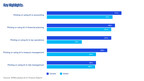
According to KPMG’s AI in Finance survey of 2,900 organizations across 23 countries – including 100 from Canada – more than eight in 10 (82 per cent) Canadian respondents said their organizations are using or piloting AI in the finance function, compared to 71 per cent globally.
“Canadian organizations are increasingly weaving AI into the DNA of their finance functions because they want better data-enabled decision making, the ability to more accurately predict trends, and increased data accuracy and reliability,” says Chris Moore, Partner and National Leader of Finance Transformation at KPMG in Canada.
“Canadian firms are leading the way in tapping the power of AI to improve returns in their finance functions – and this is only just scratching the surface. We’re still in the early stages, and there’s considerable runway for organizations to implement AI in a way that impacts the entire enterprise in an even more meaningful way.”
Canadian organizations reported a higher rate of return on their AI investments than their global peers, with nearly seven in 10 (69 per cent) Canadian respondents saying the ROI from AI is meeting their expectations or ahead of expectations – eight percentage points higher than the global average.
“Canadian organizations are realizing the value AI can bring to their finance function, but embedding it deeper cross core operations, processes and workflows will further improve the quality of financial reporting, which ultimately enhances public trust,” Mr. Moore adds.
Accounting, financial planning, tax and treasury management are the most common functions within finance where respondents are already using AI or have pilot projects.
Canadian companies making progress with AI in tax
Compared to global peers, Canadian organizations have made considerable progress in AI for tax management, with 63 per cent piloting or using AI in tax operations, compared to 34 per cent of global organizations.
Susie Cooke, National Tax Transformation Leader at KPMG in Canada notes that while Canadian organizations are making strides, the majority (46 per cent) are still in pilot stage.
“Fewer than one in five organizations have adopted AI in the tax function, and many have yet to make the leap from experimenting to actively using AI for day-to-day tax processes. Complex tax regulations, a lack of up-to-date data, onerous legacy systems, and the reliance on human judgment for many tax-related decisions are still barriers to implementing AI in the tax function for many organizations,” Ms. Cooke says.
“Many organizations are at a standstill because they may not know where to start, or there’s resistance to taking the next step because of potential risks. But if organizations align AI to their business strategy, establish a strong data governance foundation, and educate and upskill their talent, they can actively remove the barriers to AI adoption.”
AI leaders vs. laggards
KPMG developed a maturity framework for the use of AI in finance with three categories of maturity: leaders, implementers and beginners. Among Canadian respondents, 25 per cent were classified as Leaders, 60 per cent were Implementers and 15 per cent were Beginners.
What sets Canadian leaders apart from others is their higher degree of investment in AI, their numerous use cases, stronger governance and controls, and robust resources devoted to AI. Leaders are investing nearly twice as much as others in enterprise-wide AI activities as a proportion of their IT budgets (13 per cent for leaders vs. 7 per cent for non-leaders).
Nearly nine in ten (88 per cent) leaders are using AI to a moderate or large degree (versus 39 per cent for others) and leaders have an average of six active use cases for AI -almost double what non-leaders reported.
As a result, Canadian leaders are experiencing higher returns on their investment than others, with 92 per cent of leaders saying the ROI on their AI investments are meeting or exceeding expectations, versus 61 per cent for non-leaders.
Leaders are also addressing and overcoming the barriers to AI adoption more successfully than others. The most common barriers that all companies encountered include data security vulnerabilities (56 percent), limited AI skills and talent (56 percent), and gathering relevant and consistent data (51 percent).
Chris Moore says AI leaders are better able to navigate the challenges of implementing AI because of the proactive steps they have taken, including devoting significant resources to the technology and proactively working to remove barriers to implementation, including the cultural and workforce impacts.
“Many AI leaders have a central team within finance, or specialized AI groups within each department of finance, and that’s helped those organizations address challenges such as data, security, privacy and skills gaps more effectively. Canadian organizations that build and leverage their own internal resources will be better positioned to drive AI innovation in finance, and that will ultimately help drive innovation across the enterprise as well.”
Companies want assurance on AI use, yet little regulation exists
Canadian organizations have growing expectations of their external auditors when it comes to AI. In addition to leveraging the tool for auditing activities including improved data analysis, risk mitigation, anomaly identification, fraud detection, and predictive analysis, many companies also want assurance over their own use of AI.
More than half (53 per cent) of respondents said they expect their auditors to conduct a detailed review of their control environment to ensure the responsible use of AI for financial reporting. Almost half (47 per cent) want their auditors to conduct assessments of their AI governance maturity, and 41 per cent want their auditor to perform third-party attestation over their use of AI technology.
“We’ve long believed in harnessing the power of AI to enhance quality. AI’s potential to drive real-time auditing will help companies manage their risks more proactively throughout the year,” says Bryant Ramdoo, Partner and Audit Innovation Leader at KPMG in Canada.
“As companies advance their AI adoption, there is growing desire for auditors to help companies ensure that their use of AI is robust, safe and compliant with rules and regulations, yet few standards exist. To best support the growing needs of Canadian organizations and investors will require all parties in the reporting ecosystem – auditors, organizations, standard setters, regulators and educators – to work together to manage the associated risks of AI and advance the future of assurance and attestation with confidence.”
KPMG has developed an AI maturity benchmarking tool designed to help organizations assess their progress in the AI transformation journey.
ABOUT THE SURVEY
KPMG International’s AI in Finance survey covered 2,900 organizations across 23 countries. The research was conducted between April and September 2024. Of the 100 Canadian respondents, 16 per cent identified as chief financial officers; 11 per cent were chief accounting officers; and the remaining distribution of respondents was split evenly across chief audit executives, chief technology officers, chief digital officers and heads of accounting or audit. 20 per cent of respondents reported annual revenues of $20 billion or more; 22 per cent reported revenues of $5 billion up to $10 billion; 22 per cent reported revenues of $10 billion up to $25 billion; 22 per cent reported revenues of $1 billion up to $5 billlion; and 14 per cent reported revenues between $500 million up to $1 billion. 82 per cent identified as public companies.
About KPMG in Canada
KPMG LLP, a limited liability partnership, is a full-service Audit, Tax and Advisory firm owned and operated by Canadians. For over 150 years, our professionals have provided consulting, accounting, auditing, and tax services to Canadians, inspiring confidence, empowering change, and driving innovation. Guided by our core values of Integrity, Excellence, Courage, Together, For Better, KPMG employs more than 10,000 people in over 40 locations across Canada, serving private- and public-sector clients. KPMG is consistently ranked one of Canada’s top employers and one of the best places to work in the country.
The firm is established under the laws of Ontario and is a member of KPMG’s global organization of independent member firms affiliated with KPMG International, a private English company limited by guarantee. Each KPMG firm is a legally distinct and separate entity and describes itself as such. For more information, see kpmg.com/ca
For media inquiries:
Roula Meditskos
National Communications and Media Relations
KPMG in Canada
(416) 549-7982
rmeditskos@kpmg.ca
SOURCE KPMG LLP
You may like
Technology
76% of Coupon Codes Work at Checkout, but Most Failures Trace Back to Terms Shoppers Never Read, CouponDopa Study Finds
Published
3 minutes agoon
July 18, 2026By
Study Finds 76% of Coupon Codes Work at Checkout
NEW YORK, July 18, 2026 /PRNewswire-PRWeb/ — Multi-country research across 11 regions finds that most coupon code failures were not due to expired codes, but to terms and conditions shoppers did not check before checkout.
A new study testing 1,000 coupon codes across 11 countries found that three in four online discount codes applied successfully at checkout, while the remaining failures were tied more often to unmet terms than to expired or invalid codes.
The research was conducted by CouponDopa, a multi-regional coupon platform operating in 11 countries. Codes were tested across multiple retail categories in July 2026 to measure real checkout success rates.
KEY FINDINGS
Overall success rate: 76%. Overall failure rate: 24%. Highest-performing country: Netherlands, 81%. Lowest-performing countries: Poland and Italy, tied at 70%. Highest-performing category: Electronics. Lowest-performing category: Travel. Desktop success rate: 78%. Mobile success rate: 74%.
The study’s most significant finding was not the failure rate itself, but the reasons behind it.
“The assumption most shoppers make is that a coupon code doesn’t work because it’s expired,” said Anderson Joe, CMO at CouponDopa. “Our testing found that expiry was rarely the primary issue. In most failed attempts, the code was still active, but the shopper’s cart did not meet a listed condition, such as a minimum spend or a region restriction.”
WHY COUPON CODES ACTUALLY FAIL
Minimum spend not met: the most common reason for failure across all 11 regions, since many codes require a basket value above a set threshold.Region-specific restrictions: codes valid in one country frequently failed in another.Unread terms and conditions: codes were applied to excluded categories, sale items, or specific product ranges without checking eligibility first.Delivery and shipping thresholds: free shipping codes requiring a minimum order value were sometimes mistaken for blanket offers.
No exact percentage breakdown of failure causes is available. Minimum spend is confirmed as the single most common cause; the other three were not ranked against each other.
“In our view, a code that fails because of an unmet minimum spend is not necessarily a broken code,” said Anderson. “It may simply be a condition the shopper did not see before checkout.”
REGIONAL FINDINGS — NETHERLANDS LEADS
Country Success Rate
Netherlands 81%
Germany 79%
United States 77%
Canada 77%
United Kingdom 76%
Australia 75%
New Zealand 74%
France 73%
Spain 72%
Poland 70%
Italy 70%
Netherlands recorded the highest success rate of the 11 regions tested. Germany followed closely. The United Kingdom matched the overall study average, and Canada and the United States recorded the same rate. Poland and Italy recorded the lowest rates in the study, tied at 70%.
ELECTRONICS OUTPERFORMS TRAVEL
Electronics recorded the highest coupon code success rate of any category tested, at 80%, while travel recorded the lowest, at 69%.
“Electronics codes in our sample tended to carry fewer conditions,” noted Anderson Joe. “Travel codes more often included conditions tied to dates, destinations, or booking windows, which may explain the difference.”
MOBILE SHOPPERS RECORD LOWER SUCCESS RATES
Desktop checkouts recorded a 78% success rate compared with 74% for mobile, a 4-point gap. Researchers said the difference may relate to how terms are displayed on smaller screens, though this was not directly tested.
“We saw a consistent gap between desktop and mobile across our markets,” said Anderson Joe. “We can’t say precisely why from this data alone, but it’s a pattern worth further study.”
ABOUT THE STUDY
CouponDopa tested 1,000 coupon codes across 11 countries during July 2026, across electronics, fashion, food delivery, travel, beauty, and home categories. Codes were manually tested at real checkouts on desktop and mobile. A code counted as successful only when the discount appeared in the checkout total. Failed codes were categorized by reason. Read the complete methodology available at CouponDopa tested 1000 coupon codes in 11 regions.
ABOUT COUPONDOPA
CouponDopa is a multi-regional coupon and discount platform operating across 11 countries. CouponDopa verifies coupon codes across hundreds of brands before publishing, providing shoppers with discount information across major retail categories, including verified codes available on CouponDopa’s store pages.
MEDIA CONTACT
Organization: Coupondopa
Contact Person Name: Anderson Joe
Website: https://www.coupondopa.com/
Email: info@coupondopa.com
Contact Number: +1 (530) 269-6377
Address: 165 ithaca Bayshore NY, 11706 USA
City: Bay Shore
State: NY
Country: United States
Media Contact
Anderson Joe, Coupondopa, 1 631 404-9968, coupondopa@gmail.com, https://www.coupondopa.com/
View original content:https://www.prweb.com/releases/76-of-coupon-codes-work-at-checkout-but-most-failures-trace-back-to-terms-shoppers-never-read-coupondopa-study-finds-302828186.html
SOURCE CouponDopa
Technology
Global Times: Head-of-state diplomacy shines at WAIC, fostering ties and advancing global governance consensus
Published
4 hours agoon
July 18, 2026By
BEIJING, July 17, 2026 /PRNewswire/ — Chinese President Xi Jinping on Friday held a series of high-level meetings on the sidelines of the 2026 World Artificial Intelligence Conference (WAIC) and High-Level Meeting on Global AI Governance in Shanghai, sitting down successively with Thai Prime Minister Anutin Charnvirakul, Cambodian Prime Minister Hun Manet, and UN Secretary-General António Guterres. The bustling diplomatic activity transformed the WAIC from a premier showcase of AI technologies and industrial breakthroughs into a vibrant platform for head-of-state diplomacy and global governance coordination.
Analysts said hosting intensive head-of-state diplomatic events in Shanghai, a core hub of reform, opening-up and technological innovation, carries profound meaning. In addition, Friday’s high-level meetings embody the innovative model of “technology builds the stage while diplomacy takes the leading role.” It not only deepens China’s bilateral relations with ASEAN members, but also helps advance inclusive global AI governance centered on the UN mechanism.
Strategic guidance
According to the two separate official releases by Xinhua, during his meetings with the prime ministers of Thailand and Cambodia, President Xi spoke of the long-standing friendship China shares with both nations. He called on China and Thailand, as well as China and Cambodia, to join hands to advance the development of their respective communities with a shared future.
Furthermore, the Chinese leader stressed the need for China to expand pragmatic cooperation with Thailand and Cambodia respectively across traditional and emerging sectors, and work with each country to jointly crack down on cross-border crimes such as online gambling and telecom fraud, according to Xinhua.
He called for the proper handling of border frictions between Thailand and Cambodia and called on the two sides to resolve disputes through dialogue and consultation, with China standing ready to continue playing a constructive role in this regard, per Xinhua.
During their respective meetings with the Chinese leader, the prime ministers of Thailand and Cambodia both expressed willingness to deepen multi-field cooperation with China and spoke highly of China’s positive efforts to facilitate the peaceful settlement of the Thailand-Cambodia border conflicts.
Xu Liping, Director of the Center for Southeast Asian Studies at the Chinese Academy of Social Sciences, told the Global Times that head-of-state diplomacy has charted the fundamental course for the advancement of China’s ties with both Cambodia and Thailand.
WAIC exemplifies the innovative model of “technology builds the platform, while diplomacy takes the leading role,” said Xu, “In addition, AI cooperation is also expected to serve as a vital entry point to further deepen and substantiate China’s ties with Thailand and Cambodia going forward.”
Furthermore, addressing the sensitive and thorny Thailand-Cambodia border dispute amid the relatively relaxed atmosphere of a tech summit enables all relevant parties to handle differences in a rational and pragmatic manner, which embodies Eastern wisdom and an Asian approach to resolving issues, said Xu.
The year 2026 marks the fifth anniversary of the establishment of the China-ASEAN comprehensive strategic partnership, witnessing the official rollout of the new Plan of Action on the China-ASEAN Comprehensive Strategic Partnership (2026-2030). It also kicks off the implementation of China’s 15th Five-Year Plan.
The critical juncture offers a perfect window to align China’s development plans closely with the national development strategies of Global South countries and ASEAN members, said Xu. “Thailand and Cambodia’s willingness to ramp up cooperation with China mirrors the aspiration of the majority of ASEAN members to leverage China’s development dividends and pursue win-win outcomes and common prosperity in the region.”
Firm support for UN
In his meeting with UN Secretary-General Antonio Guterres on Friday, Xi reiterated China’s firm support for the UN.
Noting that this year marks the 55th anniversary of the restoration of the lawful seat of the People’s Republic of China at the UN, the Chinese leader said China has since been committed to building world peace, contributing to global development, defending international order, and firmly supporting the UN, Xinhua reported.
Xi added that he proposed the vision of building a community with a shared future for humanity and the four global initiatives with one important consideration in mind – to uphold the status and authority of the UN.
Currently, the international landscape is marked by more pronounced changes and turbulence, making it all the more necessary to practice true multilateralism and reinvigorate the status and role of the UN, he said.
Guterres commended China for its steadfast support for multilateralism, the cause of the UN, and international cooperation, saying that China has set an example for the world.
Guterres said the UN will continue to strengthen cooperation with China, oppose unilateralism, protectionism, and hegemonic bullying, safeguard the UN Charter and international law, as well as advance the process toward a multipolar world.
At this pivotal juncture where talks on AI development and UN multilateral governance converge, China, leveraging head-of-state diplomacy as a top-tier platform, has elaborated in a systematic manner its vision for global governance in the AI era, Wang Yiwei, a professor at the School of International Studies, Renmin University of China, told the Global Times.
He added that China’s emphasis on the UN-centered global governance architecture will further strengthen the UN’s authority and operational capacity.
Before the official opening of the WAIC, on Thursday, representatives from 29 countries, including Kazakhstan, Laos, Pakistan, Russia and Indonesia, signed an agreement on establishing the World Artificial Intelligence Cooperation Organization (WAICO) in Shanghai. UN chief Guterres was among representatives from countries and international organizations present at the signing ceremony.
According to the agreement, WAICO will be an independent intergovernmental international organization, which aims to promote international cooperation and global governance on AI, ensuring that AI is beneficial, safe and fair, thereby promoting its healthy and orderly development to benefit all humanity.
President Xi on Friday also announced that in the next five years, China will provide developing countries with 5,000 opportunities in AI training and seminar programs. China will also develop international AI application cooperation centers with the ASEAN, the League of Arab States, the African Union, the Community of Latin American and Caribbean States, the Shanghai Cooperation Organization, and BRICS.
However, some international media, including Reuters and Nikkei, used the term “AI diplomacy” describing the grand gathering in Shanghai, claiming that Beijing seeks a new global AI order, challenging US dominance.
In rebuttal, Wang pointed out that China advocates open, inclusive technology that lets AI benefit all humanity under the vision of “AI for All”. In contrast, the US adheres to a mindset of “All for AI”, weaponizing AI for geopolitical rivalry and aiming to outpace China in technological competition. Driven by the “America First” doctrine and capital-centric priorities, Washington’s approach forms a sharp contrast with China’s.
Meanwhile, China’s resolute commitment to upholding the UN system underscores that for China and a wide array of Global South countries, the sensible path lies in reforming and improving the existing global governance architecture rather than discarding it to build parallel institutions from scratch, the expert added.
This article first appeared on Global Times
View original content:https://www.prnewswire.com/news-releases/global-times-head-of-state-diplomacy-shines-at-waic-fostering-ties-and-advancing-global-governance-consensus-302828946.html
SOURCE Global Times
Technology
Global Times: China sends fresh signal on global AI cooperation at WAIC
Published
4 hours agoon
July 18, 2026By
BEIJING, July 17, 2026 /PRNewswire/ — “AI development should not be a solo performance by a single country, but a symphony of international cooperation,” Chinese President Xi Jinping said on Friday while addressing the opening ceremony of the 2026 World AI Conference (WAIC) and High-Level Meeting on Global AI Governance, stressing that China is ready to be more open, take more practical actions, and assume a more visionary perspective.
We are ready to work with all parties to seize the opportunities of AI development and meet the challenges, and join hands to create a brighter future for humanity, he added.
Xi’s remarks received positive responses from domestic and foreign enterprises and experts, as they spoke highly of China’s scientific and technological achievements in recent years while noting that China’s commitment to openness and cooperation can help ensure that the benefits of AI are shared by all humanity and Chinese solutions in AI governance enable other countries to better tackle the common challenges brought about by AI development.
Openness and win-win cooperation
Xi presented four observations on AI development and governance in the speech. The Chinese leader called for adhering to the principle of openness and win-win cooperation while boosting innovation-driven development. He highlighted the importance of encouraging open-source, openness, collaboration and sharing to facilitate technological innovation, industrial development and scenario-based application of AI.
He also called for strengthening risk-awareness and ensuring that AI is secure and controllable. Stressing the need to ensure that AI is always under human control, Xi urged all sides to jointly oppose overstretching the national security concept in the field of AI or placing one country’s security over that of others.
Third, he called for encouraging inclusiveness and promoting mutual learning among civilizations.
Fourth, he called for advocating solidarity and improving global governance. The important role of the United Nations should be recognized, Xi said, calling for further alignment and coordination on AI development strategies, governance rules and technical standards.
“We must carry out extensive international cooperation and help Global South countries with capacity building to bridge the AI and digital divides, promote sustainable development and prevent creating new historical injustice in AI,” he said.
In the next five years, China will provide developing countries with 5,000 opportunities in AI training and seminar programs, Xi said. He said China will develop international AI application cooperation centers with the Association of Southeast Asian Nations, the League of Arab States, the African Union, the Community of Latin American and Caribbean States, the Shanghai Cooperation Organization, and BRICS. China will enable 30 countries to use the AI-powered meteorological warning system, or MAZU, to safeguard homes around the world.
“President Xi’s remarks underscore China’s commitment to advancing global AI governance and technological innovation through opening-up and win-win cooperation, bringing new opportunities for sharing AI dividends and achieving shared prosperity to countries worldwide, especially developing countries,” Song Yang, professor of School of Economics and research fellow at the National Academy of Development and Strategy at Renmin University of China, told the Global Times on Friday.
China is sending a clear and important message: AI should become a bridge between countries, not a new dividing line, Luigi Gambardella, president of the Brussels-based international digital association ChinaEU, told the Global Times on Friday on the sidelines of the forum.
“No country, however technologically advanced, can develop and govern AI alone. China’s commitment to openness and cooperation can help ensure that the benefits of AI are shared by all humanity. It can help prevent the fragmentation of technologies, standards and markets, while ensuring that the opportunities created by AI are shared more widely,” Gambardella said.
“President Xi proposed ‘adhering to the principle of openness and win-win cooperation’ and ‘advocating solidarity’, and announced a series of pragmatic measures to support global AI development. These remarks have deeply inspired me and further strengthened my confidence in promoting the inclusive development of AI through opening-up and cooperation,” Xu Li, chairman and CEO of Shanghai-based AI software company SenseTime, told the Global Times on Friday.
Looking ahead, SenseTime aims to bring more field-tested technologies, products, and talent cultivation expertise to more countries and regions, and boost “China innovation” to deliver sustained value across a wider spectrum of industrial scenarios, thereby enabling AI to better benefit all of humanity, Xu said.
China actively supports strengthening global cooperation on AI governance, advocates multilateralism, and promotes the establishment of a global governance framework, which has received positive responses from many Global South countries.
Twenty-nine countries on Thursday signed an agreement in Shanghai on establishing the World Artificial Intelligence Cooperation Organization (WAICO). As an independent intergovernmental international organization headquartered in Shanghai, WAICO will uphold the purposes of the UN Charter, be committed to extensive consultation and joint contribution for shared benefit and adhere to a people-centered approach, according to the agreement, per Xinhua.
Global spotlight on WAIC
Since its inception in 2018, the WAIC has successfully convened for eight consecutive editions, becoming an important window for showcasing cutting-edge AI technologies from China and around the world while deepening international opening-up and cooperation.
Themed “AI Partnership for a Brighter Future”, the exhibition area exceeds 100,000 square meters for the first time this year, attracting the participation of over 1,100 enterprises. The exhibitors are showcasing more than 3,000 products and technologies, with over 300 products making their global debuts.
Among the exhibition highlights are Huawei’s latest AI computing super node system Atlas 950, MiniMax M3 multimodal foundation model, and the world’s first agentic AI phone, alongside a range of humanoid robots and AI-powered dexterous hands.
A German BMW representative, who attended WAIC for the first time, expressed enthusiasm about the event, highlighting the humanoid robotics showcased in the exhibition area – technologies he said he has never encountered before.
The representative told the Global Times that his company has adopted Chinese AI-powered large language models such as Qwen and DeepSeek. “The new updated versions of these models emerge weekly, which is very impressive,” the representative said, speaking highly of the cost efficiency of Chinese models.
However, some Western media outlets keep smearing China’s AI advancements and international cooperation. The Economist even claims that China’s open-source AI is a “trap” and that embracing China is “risky.”
Debunking this groundless smearing, Song said that China’s AI development has consistently adhered to the philosophy of a people-centered approach and AI for good, accumulating a wealth of vivid, replicable, and scalable experiences.
At the opening ceremony of the WAIC, the China Meteorological Administration unveiled the MAZU-FengYun Satellite AI Box. The launch marks a new stage in MAZU’s intelligent early-warning initiative, which was unveiled last year, shifting from providing shared meteorological products to delivering AI-enabled forecasting capabilities, according to the administration.
“Over the past year, meteorological and disaster reduction agencies from more than 40 countries have accessed the MAZU early warning technologies and products via cloud platforms. Customized versions of the tool have been deployed in Nigeria, Djibouti, Pakistan, and other nations, earning widespread recognition from users,” You Yang, a staff member with the Shanghai Meteorological Bureau, told the Global Times on Friday.
“From base models to industry-specific applications, China is opening up its low-cost, replicable technological pathways to the world, thereby lowering the threshold for underdeveloped nations to enter the AI era. Meanwhile, China actively helps developing countries address gaps in technology, talent, and governance capabilities to bridge the digital divide in the age of intelligence,” Song said.
According to a March report from Hugging Face, one of the world’s largest AI open-source communities, China has surpassed the US in monthly downloads and overall downloads. In the past year, Chinese models quickly accounted for the plurality or 41 percent of downloads.
“China possesses three unique institutional advantages in promoting AI for good and inclusive development: First, the new system for nationwide mobilization of resources coordinates development and security, achieving synergistic progress in key technological breakthroughs and rule-making. Second, a people-centered approach ensures that technological advancement benefits the people. Third, a multi-stakeholder agile and collaborative governance model links governments, universities, research institutions, enterprises, and social organizations to explore the synergy between rules and technology, providing China’s experience to the world,” Zeng Yi, a member of the UN Advisory Body on AI, told the Global Times on Friday.
View original content:https://www.prnewswire.com/news-releases/global-times-china-sends-fresh-signal-on-global-ai-cooperation-at-waic-302828951.html
SOURCE Global Times
76% of Coupon Codes Work at Checkout, but Most Failures Trace Back to Terms Shoppers Never Read, CouponDopa Study Finds
Global Times: Head-of-state diplomacy shines at WAIC, fostering ties and advancing global governance consensus
Global Times: China sends fresh signal on global AI cooperation at WAIC
Send Rakhi to UK swiftly with UK Gifts Portal
Whiteboard Series with NEAR | Ep: 45 Joel Thorstensson from ceramic.network
New Gooseneck Omni Antennas Offer Enhanced Signals in a Durable Package
Why You Should Build on #NEAR – Co-founder Illia Polosukhin at CV Labs
Whiteboard Series with NEAR | Ep: 45 Joel Thorstensson from ceramic.network
NEAR End of Year Town Hall 2021: The Open Web World, MetaBUILD 2 Hackathon and 2021 recap
Trending
-
Technology5 days agoChina’s Hit Variety Show “Wonderland Season Ⅵ” Is Currently Airing – How Does This Long-Running Franchise Win the Battle for Critical Acclaim?
-
Technology5 days agoTomocube Launches HT-T1 Desktop for 3D Glass Substrate Defect Analysis in Advanced Packaging
-
Coin Market2 days agoRevolut receives in-principle approval from UAE authorities for crypto services
-
Near Videos4 days agoConfidential Intents is now generally available
-
Technology3 days agoInventHelp Inventor Develops Improved Food Delivery Bag (LBT-9719)
-
Technology2 days agoGPU.ai Named Official Title Sponsor of AGI Summit SF 2026
-
Coin Market3 days agoOstium pauses trading as security firms report multimillion-dollar oracle exploit
-
Near Videos2 days agoThe best AI agents need your most sensitive data