
Technology
Charter Announces Fourth Quarter and Full Year 2024 Results

Published
2 years agoon
By

STAMFORD, Conn., Jan. 31, 2025 /PRNewswire/ — Charter Communications, Inc. (along with its subsidiaries, the “Company” or “Charter”), which operates the Spectrum brand, today reported financial and operating results for the three and twelve months ended December 31, 2024.
Fourth quarter total Internet customers decreased by 177,000. As of December 31, 2024, Charter served 30.1 million Internet customers.Fourth quarter total mobile lines increased by 529,000. As of December 31, 2024, Charter served 9.9 million mobile lines, with 2.1 million mobile lines added in 2024.As of December 31, 2024, Charter had a total of 31.5 million customer relationships, excluding mobile-only relationships.Fourth quarter revenue of $13.9 billion grew by 1.6% year-over-year, driven by residential mobile service revenue growth of 37.4%, advertising sales revenue growth of 26.4%, other revenue growth of 14.6% and residential Internet revenue growth of 0.9%.Net income attributable to Charter shareholders totaled $1.5 billion in the fourth quarter. For the year ended December 31, 2024, net income attributable to Charter shareholders totaled $5.1 billion.Fourth quarter Adjusted EBITDA1 of $5.8 billion grew by 3.4% year-over-year.For the year ended December 31, 2024, revenue of $55.1 billion grew by 0.9% year-over-year. Full year 2024 Adjusted EBITDA totaled $22.6 billion, 3.1% higher than in 2023.For the year ended December 31, 2024, capital expenditures totaled $11.3 billion and included $4.2 billion of line extensions.Full year 2024 net cash flows from operating activities totaled $14.4 billion, in-line with the prior year.Full year 2024 free cash flow1 of $4.3 billion increased from $3.5 billion in the prior year, primarily due to higher Adjusted EBITDA and a favorable change in working capital excluding mobile devices, partly offset by higher cash interest and a non-recurring item in the first quarter of 2024.For the year ended December 31, 2024, Charter purchased 4.3 million shares of Charter Class A common stock and Charter Holdings common units for approximately $1.3 billion.
“Our multi-year investments in network evolution, expansion and execution are delivering tangible results,” said Chris Winfrey, President and CEO of Charter. “By having the best network, the best products and delivering customers the most value with unmatched service, we are well-positioned for customer and profitability growth and have clear visibility to free cash flow growth following this unique one-time investment cycle.”
1.
Adjusted EBITDA and free cash flow are non-GAAP measures defined in the “Use of Adjusted EBITDA and Free Cash Flow Information” section and are reconciled to net income attributable to Charter shareholders and net cash flows from operating activities, respectively, in the addendum of this news release.
Key Operating Results
Approximate as of
December 31,
2024 (c)
December 31,
2023 (c)
Y/Y Change
Footprint
Estimated Passings (d)
56,861
55,322
2.8 %
Customer Relationships (e)
Residential
29,258
29,904
(2.2) %
Small and Medium Business (“SMB”)
2,215
2,222
(0.3) %
Total Customer Relationships
31,473
32,126
(2.0) %
Residential
(207)
(108)
(99)
SMB
(8)
(2)
(6)
Total Customer Relationships Quarterly Net Additions
(215)
(110)
(105)
Total Customer Relationship Penetration of Estimated Passings (f)
55.4 %
58.1 %
(2.7) ppts
Monthly Residential Revenue per Residential Customer (g)
$ 121.40
$ 119.41
1.7 %
Monthly SMB Revenue per SMB Customer (h)
$ 163.14
$ 162.38
0.5 %
Residential Customer Relationships Penetration
One Product Penetration (i)
47.6 %
46.7 %
0.9 ppts
Two Product Penetration (i)
33.9 %
33.1 %
0.8 ppts
Three or More Product Penetration (i)
18.5 %
20.2 %
(1.7) ppts
% Residential Non-Video Customer Relationships
57.9 %
54.8 %
3.1 ppts
Internet
Residential
28,034
28,544
(1.8) %
SMB
2,046
2,044
0.1 %
Total Internet Customers
30,080
30,588
(1.7) %
Residential
(171)
(62)
(109)
SMB
(6)
1
(7)
Total Internet Quarterly Net Additions
(177)
(61)
(116)
Video
Residential
12,327
13,503
(8.7) %
SMB
565
619
(8.7) %
Total Video Customers
12,892
14,122
(8.7) %
Residential
(110)
(248)
138
SMB
(13)
(9)
(4)
Total Video Quarterly Net Additions
(123)
(257)
134
Mobile Lines (j)
Residential
9,568
7,519
27.3 %
SMB
315
247
27.7 %
Total Mobile Lines
9,883
7,766
27.3 %
Residential
511
532
(21)
SMB
18
14
4
Total Mobile Lines Quarterly Net Additions
529
546
(17)
Voice
Residential
5,636
6,712
(16.0) %
SMB
1,248
1,293
(3.5) %
Total Voice Customers
6,884
8,005
(14.0) %
Residential
(259)
(248)
(11)
SMB
(15)
(3)
(12)
Total Voice Quarterly Net Additions
(274)
(251)
(23)
Enterprise (k)
Enterprise Primary Service Units (“PSUs”)
319
303
5.2 %
Enterprise Quarterly Net Additions
4
5
(1)
In thousands, except per customer and penetration data. See footnotes to unaudited summary of operating statistics on page 7 of the addendum of this news release. The footnotes contain important disclosures regarding the definitions used for these operating statistics. All percentages are calculated using whole numbers. Minor differences may exist due to rounding.
In September, Spectrum launched a new brand platform, Life Unlimited, which emphasizes the power of Spectrum’s advanced network and cutting-edge connectivity products and services to create opportunities and remove barriers to help customers live their best lives. As part of its new brand platform, Spectrum launched a new and simplified pricing and packaging strategy that better utilizes its seamless connectivity and entertainment products to offer lower promotional and persistent bundled pricing to drive growth. Additionally, Spectrum announced new customer commitments focused on reliable connectivity, transparency, exceptional service and a focus on always improving.
Fourth quarter total Internet customers decreased by 177,000, primarily driven by the end of the FCC’s Affordable Connectivity Program (“ACP”) in the second quarter and impacts of hurricanes in the fourth quarter, compared to a decline of 61,000 during the fourth quarter of 2023. Spectrum Internet® delivers the fastest Internet speeds1 in the nation. Spectrum is evolving its connectivity network to offer symmetrical and multi-gigabit Internet speeds across its entire footprint and has launched symmetrical Internet service in eight markets. In January 2025, Spectrum launched 2×1 Gbps service in two markets. Unlike competitors, Spectrum upgrades its network for all households and can do so at a much lower cost. Spectrum Advanced WiFi, a managed WiFi service that provides customers an optimized home network while providing greater control of connected devices with enhanced security and privacy, is available to all Spectrum Internet customers.
Total video customers decreased by 123,000 in the fourth quarter of 2024, compared to a decline of 257,000 in the fourth quarter of 2023, with the improvement driven by new and simplified pricing and packaging launched in September. As of December 31, 2024, Charter had 12.9 million total video customers. Spectrum TV Select video customers will soon receive up to approximately $80 per month of programmers’ streaming application retail value at no extra cost, including the ad-supported versions of Max, Disney+, Peacock, Paramount+, ESPN+, AMC+, Discovery+, BET+, ViX, and Tennis Channel Plus. This programmer streaming application inclusion is part of Charter’s broader video evolution strategy to provide flexible packages with enhanced value, whether through full packages with seamless entertainment, smaller video packages, or a suite of a-la-carte programmer application options for broadband-only customers.
During the fourth quarter of 2024, Charter added 529,000 total mobile lines, compared to growth of 546,000 during the fourth quarter of 2023. Spectrum Mobile™ is available to all new and existing Spectrum Internet customers and offers the fastest overall speeds,2 with plans that include 5G access, do not require contracts and include taxes and fees in the price. Spectrum Mobile is central to Charter’s converged network strategy to provide consumers a differentiated connectivity experience with highly competitive, simple data plans and pricing.
During the fourth quarter of 2024, total wireline voice customers declined by 274,000, compared to a decline of 251,000 in the fourth quarter of 2023. As of December 31, 2024, Charter had 6.9 million total wireline voice customers.
Charter continues to work with federal, state and local governments to bring Spectrum Internet to unserved and underserved communities. During the fourth quarter of 2024, Charter activated 117,000 subsidized rural passings and 393,000 in 2024. Within Charter’s subsidized rural footprint, total customer relationships increased by 41,000 in the fourth quarter of 2024.
1.
Based on Broadband Download Speed nationally in Opensignal USA: Fixed Broadband Experience Report – National View, May 2024. Based on Opensignal independent analysis of mean download speed. © 2025 Opensignal Limited.
2.
Based on Charter’s analysis of Ookla® Speedtest Intelligence® data for overall mobile WiFi and Cellular performance for 1Q24 in Charter’s footprint.
Fourth Quarter Financial Results
(in millions)
Three Months Ended December 31,
2024
2023
% Change
Revenues:
Internet
$ 5,856
$ 5,805
0.9 %
Video
3,616
3,905
(7.4) %
Mobile service
860
626
37.4 %
Voice
353
393
(10.4) %
Residential revenue
10,685
10,729
(0.4) %
Small and medium business
1,086
1,083
0.3 %
Enterprise
731
700
4.4 %
Commercial revenue
1,817
1,783
1.9 %
Advertising sales
540
428
26.4 %
Other
884
771
14.6 %
Total Revenues
$ 13,926
$ 13,711
1.6 %
Net income attributable to Charter shareholders
$ 1,466
$ 1,058
38.6 %
Net income attributable to Charter shareholders margin
10.5 %
7.7 %
Adjusted EBITDA1
$ 5,760
$ 5,573
3.4 %
Adjusted EBITDA margin
41.4 %
40.6 %
Capital Expenditures
$ 3,062
$ 2,856
7.2 %
Net cash flows from operating activities
$ 3,460
$ 3,855
(10.2) %
Free cash flow1
$ 984
$ 1,061
(7.3) %
All percentages are calculated using whole numbers. Minor differences may exist due to rounding.
1.
Adjusted EBITDA and free cash flow are non-GAAP measures defined in the “Use of Adjusted EBITDA and Free Cash Flow Information” section and are reconciled to net income attributable to Charter shareholders and net cash flows from operating activities, respectively, in the addendum of this news release.
Revenues
Fourth quarter revenue increased by 1.6% year-over-year to $13.9 billion, driven by growth in residential mobile service, advertising, other and residential Internet revenues, partly offset by lower residential video revenue and $37 million of total customer credits related to hurricanes Helene and Milton.
Residential revenue totaled $10.7 billion in the fourth quarter, a decrease of 0.4% year-over-year.
Fourth quarter 2024 monthly residential revenue per residential customer totaled $121.40, and increased by 1.7% compared to the prior year period. The growth was driven by promotional rate step-ups, rate adjustments and the growth of Spectrum Mobile, partly offset by a lower mix of video customer relationships, a higher mix of lower priced video packages within Charter’s video customer base, $37 million of costs which accounting principles require be allocated to programmer streaming applications and netted within video revenue and $34 million of residential customer credits related to hurricanes Helene and Milton.
Internet revenue grew by 0.9% year-over-year to $5.9 billion, driven by promotional rate step-ups and rate adjustments, partly offset a decline in Internet customers during the last year and customer credits related to hurricanes Helene and Milton.
Video revenue totaled $3.6 billion in the fourth quarter, a decrease of 7.4% compared to the prior year period, driven by a decline in video customers during the last year, a higher mix of lower priced video packages within Charter’s video customer base and $37 million of costs which accounting principles require be allocated to programmer streaming applications and netted within video revenue, partly offset by promotional rate step-ups and video rate adjustments that pass through programmer rate increases.
Fourth quarter mobile service revenue totaled $860 million, an increase of 37.4% year-over-year, driven by mobile line growth and mobile service revenue per line growth.
Voice revenue decreased by 10.4% year-over-year to $353 million, driven by a decline in wireline voice customers over the last twelve months, partly offset by voice rate adjustments.
Commercial revenue increased by 1.9% year-over-year to $1.8 billion, driven by enterprise and SMB revenue growth of 4.4% and 0.3% year-over-year, respectively. The year-over-year increase in fourth quarter 2024 SMB revenue was driven by higher monthly SMB revenue per SMB customer, primarily due to rate adjustments. Enterprise revenue excluding wholesale increased by 5.2% year-over-year, mostly reflecting PSU growth.
Fourth quarter advertising sales revenue of $540 million increased by 26.4% compared to the year-ago quarter, primarily driven by higher political revenue. Excluding political revenue in both periods, advertising sales revenue decreased by 8.2% year-over-year due to a more challenged local and national advertising market.
Other revenue totaled $884 million in the fourth quarter, an increase of 14.6% compared to the fourth quarter of 2023, primarily driven by higher mobile device sales.
Operating Costs and Expenses
Fourth quarter programming costs decreased by $229 million, or 9.1% as compared to the fourth quarter of 2023, reflecting fewer video customers, a higher mix of lower cost packages within Charter’s video customer base and $37 million of costs which accounting principles require be allocated to programmer streaming applications and netted within video revenue, partly offset by contractual programming rate increases and renewals.
Other costs of revenue increased by $244 million, or 16.2% year-over-year, primarily driven by higher mobile device sales and mobile service direct costs, and higher advertising sales expense related to political revenue.
Field and technology operations increased by $11 million, or 0.9% year-over-year.
Customer operations decreased by $21 million, or 2.6% year-over-year, primarily due to lower labor costs.
Sales and marketing expenses increased by $30 million, or 3.2% year-over-year, given Spectrum’s continued focus on driving growth and the launch of its new brand platform, Life Unlimited.
Other expenses decreased by $7 million, or 0.7% as compared to the fourth quarter of 2023.
Net Income Attributable to Charter Shareholders
Net income attributable to Charter shareholders totaled $1.5 billion in the fourth quarter of 2024, compared to $1.1 billion in the fourth quarter of 2023, due to a larger pension remeasurement loss in the prior year period and higher Adjusted EBITDA.
Net income per basic common share attributable to Charter shareholders totaled $10.32 in the fourth quarter of 2024 compared to $7.23 during the same period last year. The increase was primarily the result of the factors described above in addition to a 2.9% decrease in basic weighted average common shares outstanding versus the prior year period.
Adjusted EBITDA
Fourth quarter Adjusted EBITDA of $5.8 billion grew by 3.4% year-over-year, reflecting growth in revenue and operating expenses of 1.6% and 0.3%, respectively.
Capital Expenditures
Capital expenditures totaled $3.1 billion in the fourth quarter of 2024, an increase of $206 million compared to the fourth quarter of 2023, driven by higher spend on line extensions, CPE (timing of equipment purchases) and scalable infrastructure. Line extensions capital expenditures totaled $1.1 billion in the fourth quarter of 2024, driven by Charter’s subsidized rural construction initiative and continued network expansion across residential and commercial greenfield and market fill-in opportunities.
Charter currently expects full year 2025 capital expenditures to total approximately $12 billion, including line extensions capital expenditures of approximately $4.2 billion and network evolution spend of approximately $1.5 billion. The actual amount of capital expenditures in 2025 will depend on a number of factors including, but not limited to, the pace of Charter’s network evolution and expansion initiatives, supply chain timing and growth rates in Charter’s residential and commercial businesses.
Cash Flow and Free Cash Flow
During the fourth quarter of 2024, net cash flows from operating activities totaled $3.5 billion, a decrease from $3.9 billion in the prior year. The year-over-year decline was primarily driven by a more unfavorable change in working capital, higher cash taxes and cash interest, partly offset by higher Adjusted EBITDA.
Free cash flow in the fourth quarter of 2024 totaled $984 million, a decrease of $77 million compared to the fourth quarter of 2023. The year-over-year decline in free cash flow was primarily driven by lower net cash flows from operating activities and higher capital expenditures, partly offset by a more favorable change in accrued expenses related to capital expenditures.
Liquidity & Financing
As of December 31, 2024, total principal amount of debt was $93.8 billion and Charter’s credit facilities provided approximately $6.3 billion of additional liquidity in excess of Charter’s $459 million cash position.
On December 3, 2024, Charter announced that its subsidiary, Charter Communications Operating, LLC, had entered into an amendment to its existing Credit Agreement that extends the maturity date of a significant portion of debt due in 2027 to maturity dates in 2030 and 2031.
Share Repurchases
During the three months ended December 31, 2024, Charter purchased 292 thousand shares of Charter Class A common stock and Charter Holdings common units for $113 million.
Webcast
Charter will host a webcast on Friday, January 31, 2025 at 8:30 a.m. Eastern Time (ET) related to the contents of this release.
The webcast can be accessed live via the Company’s investor relations website at ir.charter.com. Participants should go to the webcast link no later than 10 minutes prior to the start time to register. The webcast will be archived at ir.charter.com two hours after completion of the webcast.
Additional Information Available on Website
The information in this press release should be read in conjunction with the financial statements and footnotes contained in the Company’s Annual Report on Form 10-K for the year ended December 31, 2024, which will be posted on the “Results & SEC Filings” section of the Company’s investor relations website at ir.charter.com, when it is filed with the Securities and Exchange Commission (the “SEC”). A slide presentation to accompany the conference call and a trending schedule containing historical customer and financial data will also be available in the “Results & SEC Filings” section.
Use of Adjusted EBITDA and Free Cash Flow Information
The Company uses certain measures that are not defined by U.S. generally accepted accounting principles (“GAAP”) to evaluate various aspects of its business. Adjusted EBITDA and free cash flow are non-GAAP financial measures and should be considered in addition to, not as a substitute for, net income attributable to Charter shareholders and net cash flows from operating activities reported in accordance with GAAP. These terms, as defined by Charter, may not be comparable to similarly titled measures used by other companies. Adjusted EBITDA and free cash flow are reconciled to net income attributable to Charter shareholders and net cash flows from operating activities, respectively, in the Addendum to this release.
Adjusted EBITDA is defined as net income attributable to Charter shareholders plus net income attributable to noncontrolling interest, net interest expense, income taxes, depreciation and amortization, stock compensation expense, other income (expenses), net and other operating (income) expenses, net, such as special charges and (gain) loss on sale or retirement of assets. As such, it eliminates the significant non-cash depreciation and amortization expense that results from the capital-intensive nature of the Company’s businesses as well as other non-cash or special items, and is unaffected by the Company’s capital structure or investment activities. However, this measure is limited in that it does not reflect the periodic costs of certain capitalized tangible and intangible assets used in generating revenues and the cash cost of financing. These costs are evaluated through other financial measures.
Free cash flow is defined as net cash flows from operating activities, less capital expenditures and changes in accrued expenses related to capital expenditures.
Management and Charter’s board of directors use Adjusted EBITDA and free cash flow to assess Charter’s performance and its ability to service its debt, fund operations and make additional investments with internally generated funds. In addition, Adjusted EBITDA generally correlates to the leverage ratio calculation under the Company’s credit facilities or outstanding notes to determine compliance with the covenants contained in the facilities and notes (all such documents have been previously filed with the SEC). For the purpose of calculating compliance with leverage covenants, the Company uses Adjusted EBITDA, as presented, excluding certain expenses paid by its operating subsidiaries to other Charter entities. The Company’s debt covenants refer to these expenses as management fees, which were $375 million and $378 million for the three months ended December 31, 2024 and 2023, respectively, and $1.5 billion and $1.4 billion for the years ended December 31, 2024 and 2023, respectively.
About Charter
Charter Communications, Inc. (NASDAQ:CHTR) is a leading broadband connectivity company and cable operator with services available to an estimated 57 million homes and businesses in 41 states through its Spectrum brand. Over an advanced communications network, the Company offers a full range of state-of-the-art residential and business services including Spectrum Internet®, TV, Mobile and Voice.
For small and medium-sized companies, Spectrum Business® delivers the same suite of broadband products and services coupled with special features and applications to enhance productivity, while for larger businesses and government entities, Spectrum Enterprise® provides highly customized, fiber-based solutions. Spectrum Reach® delivers tailored advertising and production for the modern media landscape. The Company also distributes award-winning news coverage and sports programming to its customers through Spectrum Networks. More information about Charter can be found at corporate.charter.com.
CAUTIONARY STATEMENT REGARDING FORWARD-LOOKING STATEMENTS
This communication includes forward-looking statements within the meaning of Section 27A of the Securities Act of 1933, as amended, and Section 21E of the Securities Exchange Act of 1934, as amended, regarding, among other things, our plans, strategies and prospects, both business and financial. Although we believe that our plans, intentions and expectations as reflected in or suggested by these forward-looking statements are reasonable, we cannot assure you that we will achieve or realize these plans, intentions or expectations. Forward-looking statements are inherently subject to risks, uncertainties and assumptions including, without limitation, the factors described under “Risk Factors” from time to time in our filings with the SEC. Many of the forward-looking statements contained in this communication may be identified by the use of forward-looking words such as “believe,” “expect,” “anticipate,” “should,” “planned,” “will,” “may,” “intend,” “estimated,” “aim,” “on track,” “target,” “opportunity,” “tentative,” “positioning,” “designed,” “create,” “predict,” “project,” “initiatives,” “seek,” “would,” “could,” “continue,” “ongoing,” “upside,” “increases,” “grow,” “focused on” and “potential,” among others. Important factors that could cause actual results to differ materially from the forward-looking statements we make in this communication are set forth in our annual report on Form 10-K, and in other reports or documents that we file from time to time with the SEC, and include, but are not limited to:
our ability to sustain and grow revenues and cash flow from operations by offering Internet, video, mobile, voice, advertising and other services to residential and commercial customers, to adequately meet the customer experience demands in our service areas and to maintain and grow our customer base, particularly in the face of increasingly aggressive competition, the need for innovation and the related capital expenditures;the impact of competition from other market participants, including but not limited to incumbent telephone companies, direct broadcast satellite (“DBS”) operators, wireless broadband and telephone providers, digital subscriber line (“DSL”) providers, fiber to the home providers and providers of video content over broadband Internet connections;general business conditions, unemployment levels and the level of activity in the housing sector and economic uncertainty or downturn;our ability to develop and deploy new products and technologies including consumer services and service platforms;any events that disrupt our networks, information systems or properties and impair our operating activities or our reputation;the effects of governmental regulation on our business including subsidies to consumers, subsidies and incentives for competitors, costs, disruptions and possible limitations on operating flexibility related to, and our ability to comply with, regulatory conditions applicable to us;our ability to procure necessary services and equipment from our vendors in a timely manner and at reasonable costs including in connection with our network evolution and rural construction initiatives;our ability to obtain programming at reasonable prices or to raise prices to offset, in whole or in part, the effects of higher programming costs (including retransmission consents and distribution requirements);the ability to hire and retain key personnel;the availability and access, in general, of funds to meet our debt obligations prior to or when they become due and to fund our operations and necessary capital expenditures, either through (i) cash on hand, (ii) free cash flow, or (iii) access to the capital or credit markets;our ability to comply with all covenants in our indentures and credit facilities, any violation of which, if not cured in a timely manner, could trigger a default of our other obligations under cross-default provisions;our ability to satisfy the conditions to consummate the Liberty Broadband combination and/or to consummate the Liberty Broadband combination in a timely manner or at all;the risks related to us being restricted in the operation of our business while the Liberty Broadband merger agreement is in effect; andother risks related to the Liberty Broadband combination as described in the definitive joint proxy statement/prospectus with respect to the combination, filed by Charter on January 22, 2025, including the sections entitled “Risk Factors” and “Where You Can Find More Information” included therein.
All forward-looking statements attributable to us or any person acting on our behalf are expressly qualified in their entirety by this cautionary statement. We are under no duty or obligation to update any of the forward-looking statements after the date of this communication.
CHARTER COMMUNICATIONS, INC. AND SUBSIDIARIES
UNAUDITED RECONCILIATION OF NON-GAAP MEASURES TO GAAP MEASURES
(dollars in millions)
Three Months Ended
December 31,
Year Ended December 31,
2024
2023
2024
2023
Net income attributable to Charter shareholders
$ 1,466
$ 1,058
$ 5,083
$ 4,557
Plus: Net income attributable to noncontrolling interest
210
171
770
704
Interest expense, net
1,274
1,319
5,229
5,188
Income tax expense
370
406
1,649
1,593
Depreciation and amortization
2,168
2,188
8,673
8,696
Stock compensation expense
138
152
651
692
Other, net
134
279
514
464
Adjusted EBITDA (a)
$ 5,760
$ 5,573
$ 22,569
$ 21,894
Net cash flows from operating activities
$ 3,460
$ 3,855
$ 14,430
$ 14,433
Less: Purchases of property, plant and equipment
(3,062)
(2,856)
(11,269)
(11,115)
Change in accrued expenses related to capital expenditures
586
62
1,096
172
Free cash flow (a)
$ 984
$ 1,061
$ 4,257
$ 3,490
The above schedule is presented in order to reconcile Adjusted EBITDA and free cash flow, non-GAAP measures, to the most directly comparable GAAP measures in accordance with Section 401(b) of the Sarbanes-Oxley Act.
UNAUDITED ALTERNATIVE PRESENTATION OF ADJUSTED EBITDA
(dollars in millions)
Three Months Ended December 31,
Year Ended December 31,
2024
2023
% Change
2024
2023
% Change
REVENUES:
Internet
$ 5,856
$ 5,805
0.9 %
$ 23,360
$ 23,032
1.4 %
Video
3,616
3,905
(7.4) %
15,126
16,351
(7.5) %
Mobile service
860
626
37.4 %
3,083
2,243
37.5 %
Voice
353
393
(10.4) %
1,437
1,510
(4.9) %
Residential revenue
10,685
10,729
(0.4) %
43,006
43,136
(0.3) %
Small and medium business
1,086
1,083
0.3 %
4,371
4,353
0.4 %
Enterprise
731
700
4.4 %
2,883
2,770
4.1 %
Commercial revenue
1,817
1,783
1.9 %
7,254
7,123
1.8 %
Advertising sales
540
428
26.4 %
1,780
1,551
14.8 %
Other
884
771
14.6 %
3,045
2,797
8.8 %
Total Revenues
13,926
13,711
1.6 %
55,085
54,607
0.9 %
COSTS AND EXPENSES:
Programming
2,275
2,504
(9.1) %
9,653
10,638
(9.3) %
Other costs of revenue
1,751
1,507
16.2 %
6,351
5,587
13.7 %
Field and technology operations (b)
1,302
1,291
0.9 %
5,083
5,113
(0.6) %
Customer operations (b)
797
818
(2.6) %
3,221
3,302
(2.4) %
Sales and marketing
930
900
3.2 %
3,714
3,653
1.7 %
Other expense (b)
1,111
1,118
(0.7) %
4,494
4,420
1.7 %
Total operating costs and expenses (b)
8,166
8,138
0.3 %
32,516
32,713
(0.6) %
Adjusted EBITDA (a)
$ 5,760
$ 5,573
3.4 %
$ 22,569
$ 21,894
3.1 %
All percentages are calculated using whole numbers. Minor differences may exist due to rounding.
See footnotes on page 7.
CHARTER COMMUNICATIONS, INC. AND SUBSIDIARIES
UNAUDITED CONSOLIDATED STATEMENTS OF OPERATIONS
(dollars in millions, except per share data)
Three Months Ended
December 31,
Year Ended December 31,
2024
2023
2024
2023
REVENUES
$ 13,926
$ 13,711
$ 55,085
$ 54,607
COSTS AND EXPENSES:
Operating costs and expenses (exclusive of items shown separately below)
8,304
8,290
33,167
33,405
Depreciation and amortization
2,168
2,188
8,673
8,696
Other operating (income) expenses, net
65
(34)
127
(53)
10,537
10,444
41,967
42,048
Income from operations
3,389
3,267
13,118
12,559
OTHER INCOME (EXPENSES):
Interest expense, net
(1,274)
(1,319)
(5,229)
(5,188)
Other expenses, net
(69)
(313)
(387)
(517)
(1,343)
(1,632)
(5,616)
(5,705)
Income before income taxes
2,046
1,635
7,502
6,854
Income tax expense
(370)
(406)
(1,649)
(1,593)
Consolidated net income
1,676
1,229
5,853
5,261
Less: Net income attributable to noncontrolling interests
(210)
(171)
(770)
(704)
Net income attributable to Charter shareholders
$ 1,466
$ 1,058
$ 5,083
$ 4,557
EARNINGS PER COMMON SHARE ATTRIBUTABLE TO CHARTER
SHAREHOLDERS:
Basic
$ 10.32
$ 7.23
$ 35.53
$ 30.54
Diluted
$ 10.10
$ 7.07
$ 34.97
$ 29.99
Weighted average common shares outstanding, basic
142,115,129
146,356,269
143,061,337
149,208,188
Weighted average common shares outstanding, diluted
145,269,468
149,651,479
145,363,771
151,966,313
CHARTER COMMUNICATIONS, INC. AND SUBSIDIARIES
CONDENSED CONSOLIDATED BALANCE SHEETS
(dollars in millions)
December 31,
2024
2023
ASSETS
CURRENT ASSETS:
Cash and cash equivalents
$ 459
$ 709
Accounts receivable, net
3,097
2,965
Prepaid expenses and other current assets
677
458
Total current assets
4,233
4,132
INVESTMENT IN CABLE PROPERTIES:
Property, plant and equipment, net
42,913
39,520
Customer relationships, net
975
1,745
Franchises
67,462
67,396
Goodwill
29,674
29,668
Total investment in cable properties, net
141,024
138,329
OTHER NONCURRENT ASSETS
4,763
4,732
Total assets
$ 150,020
$ 147,193
LIABILITIES AND SHAREHOLDERS’ EQUITY
CURRENT LIABILITIES:
Accounts payable, accrued and other current liabilities
$ 11,687
$ 11,214
Current portion of long-term debt
1,799
2,000
Total current liabilities
13,486
13,214
LONG-TERM DEBT
92,134
95,777
EQUIPMENT INSTALLMENT PLAN FINANCING FACILITY
1,072
—
DEFERRED INCOME TAXES
18,845
18,954
OTHER LONG-TERM LIABILITIES
4,776
4,530
SHAREHOLDERS’ EQUITY:
Controlling interest
15,587
11,086
Noncontrolling interests
4,120
3,632
Total shareholders’ equity
19,707
14,718
Total liabilities and shareholders’ equity
$ 150,020
$ 147,193
CHARTER COMMUNICATIONS, INC. AND SUBSIDIARIES
UNAUDITED CONSOLIDATED STATEMENTS OF CASH FLOWS
(dollars in millions)
Three Months Ended
December 31,
Year Ended December 31,
2024
2023
2024
2023
CASH FLOWS FROM OPERATING ACTIVITIES:
Consolidated net income
$ 1,676
$ 1,229
$ 5,853
$ 5,261
Adjustments to reconcile consolidated net income to net cash flows from
operating activities:
Depreciation and amortization
2,168
2,188
8,673
8,696
Stock compensation expense
138
152
651
692
Noncash interest, net
9
7
34
20
Deferred income taxes
(135)
(34)
(87)
(80)
Other, net
90
79
354
291
Changes in operating assets and liabilities, net of effects from acquisitions
and dispositions:
Accounts receivable
(30)
(33)
(129)
(44)
Prepaid expenses and other assets
(72)
(38)
(609)
(572)
Accounts payable, accrued liabilities and other
(384)
305
(310)
169
Net cash flows from operating activities
3,460
3,855
14,430
14,433
CASH FLOWS FROM INVESTING ACTIVITIES:
Purchases of property, plant and equipment
(3,062)
(2,856)
(11,269)
(11,115)
Change in accrued expenses related to capital expenditures
586
62
1,096
172
Other, net
(103)
150
(481)
(184)
Net cash flows from investing activities
(2,579)
(2,644)
(10,654)
(11,127)
CASH FLOWS FROM FINANCING ACTIVITIES:
Borrowings of long-term debt
8,505
7,471
25,893
22,062
Borrowings of equipment installment plan financing facility
74
—
1,074
—
Repayments of long-term debt
(9,761)
(7,553)
(29,660)
(21,938)
Payments for debt issuance costs
(29)
(14)
(56)
(32)
Purchase of treasury stock
(114)
(1,194)
(1,213)
(3,215)
Proceeds from exercise of stock options
3
1
32
22
Purchase of noncontrolling interest
(4)
(173)
(189)
(427)
Distributions to noncontrolling interest
(49)
(40)
(157)
(158)
Other, net
250
429
297
444
Net cash flows from financing activities
(1,125)
(1,073)
(3,979)
(3,242)
NET INCREASE (DECREASE) IN CASH, CASH EQUIVALENTS AND
RESTRICTED CASH
(244)
138
(203)
64
CASH, CASH EQUIVALENTS AND RESTRICTED CASH, beginning of period
750
571
709
645
CASH, CASH EQUIVALENTS AND RESTRICTED CASH, end of period
$ 506
$ 709
$ 506
$ 709
CASH PAID FOR INTEREST
$ 1,522
$ 1,354
$ 5,334
$ 5,020
CASH PAID FOR TAXES
$ 461
$ 321
$ 1,581
$ 1,470
As of December 31, 2024, cash, cash equivalents and restricted cash includes $47 million of restricted cash included in prepaid expenses and other current assets in the consolidated balance sheets.
CHARTER COMMUNICATIONS, INC. AND SUBSIDIARIES
UNAUDITED SUMMARY OF OPERATING STATISTICS
(in thousands, except per customer and penetration data)
Approximate as of
December 31,
2024(c)
September 30,
2024(c)
December 31,
2023 (c)
Footprint
Estimated Passings (d)
56,861
56,542
55,322
Customer Relationships (e)
Residential
29,258
29,465
29,904
SMB
2,215
2,223
2,222
Total Customer Relationships
31,473
31,688
32,126
Residential
(207)
(150)
(108)
SMB
(8)
1
(2)
Total Customer Relationships Quarterly Net Additions
(215)
(149)
(110)
Total Customer Relationship Penetration of Estimated Passings (f)
55.4 %
56.0 %
58.1 %
Monthly Residential Revenue per Residential Customer (g)
$ 121.40
$ 121.47
$ 119.41
Monthly SMB Revenue per SMB Customer (h)
$ 163.14
$ 164.38
$ 162.38
Residential Customer Relationships Penetration
One Product Penetration (i)
47.6 %
47.9 %
46.7 %
Two Product Penetration (i)
33.9 %
33.4 %
33.1 %
Three or More Product Penetration (i)
18.5 %
18.7 %
20.2 %
% Residential Non-Video Customer Relationships
57.9 %
57.8 %
54.8 %
Internet
Residential
28,034
28,205
28,544
SMB
2,046
2,052
2,044
Total Internet Customers
30,080
30,257
30,588
Residential
(171)
(113)
(62)
SMB
(6)
3
1
Total Internet Quarterly Net Additions
(177)
(110)
(61)
Video
Residential
12,327
12,437
13,503
SMB
565
578
619
Total Video Customers
12,892
13,015
14,122
Residential
(110)
(281)
(248)
SMB
(13)
(13)
(9)
Total Video Quarterly Net Additions
(123)
(294)
(257)
Mobile Lines (j)
Residential
9,568
9,057
7,519
SMB
315
297
247
Total Mobile Lines
9,883
9,354
7,766
Residential
511
526
532
SMB
18
19
14
Total Mobile Lines Quarterly Net Additions
529
545
546
Voice
Residential
5,636
5,895
6,712
SMB
1,248
1,263
1,293
Total Voice Customers
6,884
7,158
8,005
Residential
(259)
(275)
(248)
SMB
(15)
(13)
(3)
Total Voice Quarterly Net Additions
(274)
(288)
(251)
Enterprise (k)
Enterprise Primary Service Units (“PSUs”)
319
315
303
Enterprise Quarterly Net Additions
4
3
5
See footnotes on page 7.
CHARTER COMMUNICATIONS, INC. AND SUBSIDIARIES
UNAUDITED CAPITAL EXPENDITURES
(dollars in millions)
Three Months Ended
December 31,
Year Ended December 31,
2024
2023
2024
2023
Customer premise equipment (l)
$ 575
$ 514
$ 2,172
$ 2,286
Scalable infrastructure (m)
411
353
1,422
1,368
Upgrade/rebuild (n)
543
529
1,771
1,719
Support capital (o)
476
482
1,688
1,727
Capital expenditures, excluding line extensions
2,005
1,878
7,053
7,100
Subsidized rural construction line extensions
575
424
2,144
1,822
Other line extensions
482
554
2,072
2,193
Total line extensions (p)
1,057
978
4,216
4,015
Total capital expenditures
$ 3,062
$ 2,856
$ 11,269
$ 11,115
Capital expenditures included in total related to:
Commercial services
$ 334
$ 381
$ 1,437
$ 1,560
Subsidized rural construction initiative (q)
$ 577
$ 426
$ 2,152
$ 1,870
Mobile
$ 64
$ 79
$ 245
$ 314
See footnotes on page 7.
CHARTER COMMUNICATIONS, INC. AND SUBSIDIARIES
FOOTNOTES
(a)
Adjusted EBITDA is defined as net income attributable to Charter shareholders plus net income attributable to noncontrolling interest, net interest expense, income taxes, depreciation and amortization, stock compensation expense, other (income) expenses, net and other operating (income) expenses, net such as special charges and (gain) loss on sale or retirement of assets. As such, it eliminates the significant non-cash depreciation and amortization expense that results from the capital-intensive nature of our businesses as well as other non-cash or special items, and is unaffected by our capital structure or investment activities. Free cash flow is defined as net cash flows from operating activities, less capital expenditures and changes in accrued expenses related to capital expenditures.
(b)
The previously reported “Costs to Service Customers” expense category has been separated between “Field and Technology Operations” and “Customer Operations” for all periods presented with the adoption of FASB’s Accounting Standards Update No. 2023-07, Improvements to Reportable Segment Disclosures. The new presentation does not result in any changes to total operating expenses or Adjusted EBITDA for any period presented. Other expense excludes stock compensation expense. Total operating costs and expenses excludes stock compensation expense, depreciation and amortization and other operating (income) expenses, net.
(c)
We calculate the aging of customer accounts based on the monthly billing cycle for each account in accordance with our collection policies. On that basis, at December 31, 2024, September 30, 2024 and December 31, 2023, customers included approximately 102,500, 127,300 and 135,800 customers, respectively, whose accounts were over 60 days past due, approximately 12,100, 11,900 and 54,700 customers, respectively, whose accounts were over 90 days past due and approximately 13,600, 11,800 and 286,000 customers, respectively, whose accounts were over 120 days past due. The decrease in accounts past due is predominately due to revisions to customer account balances associated with the end of the Federal Communications Commission’s Affordable Connectivity Program, including balance write-offs and conversion to payment plans.
(d)
Passings represent our estimate of the number of units, such as single family homes, apartment and condominium units and SMB and enterprise sites passed by our cable distribution network in the areas where we offer the service indicated. These estimates are based upon the information available at this time and are updated for all periods presented when new information becomes available. In the fourth quarter of 2024, we completed a review of our passings which resulted in a net reduction of approximately 1.7 million passings for all periods presented.
(e)
Customer relationships include the number of customers that receive one or more levels of service, encompassing Internet, video, mobile and voice services, without regard to which service(s) such customers receive. Customers who reside in residential multiple dwelling units (“MDUs”) and that are billed under bulk contracts are counted based on the number of billed units within each bulk MDU. Total customer relationships exclude enterprise and mobile-only customer relationships.
(f)
Penetration represents residential and SMB customers as a percentage of estimated passings. Penetration excludes mobile-only customers.
(g)
Monthly residential revenue per residential customer is calculated as total residential quarterly revenue divided by three divided by average residential customer relationships during the respective quarter and excludes mobile-only customer relationships.
(h)
Monthly SMB revenue per SMB customer is calculated as total SMB quarterly revenue divided by three divided by average SMB customer relationships during the respective quarter and excludes mobile-only customer relationships.
(i)
One product, two product and three or more product penetration represents the number of residential customers that subscribe to one product, two products or three or more products, respectively, as a percentage of residential customer relationships, excluding mobile-only customers.
(j)
Mobile lines include phones and tablets which require one of our standard rate plans (e.g., “Unlimited” or “By the Gig”). Mobile lines exclude wearables and other devices that do not require standard phone rate plans.
(k)
Enterprise PSUs represents the aggregate number of fiber service offerings counting each separate service offering at each customer location as an individual PSU.
(l)
Customer premise equipment includes equipment and devices located at the customer’s premise used to deliver our Internet, video and voice services (e.g., modems, routers and set-top boxes), as well as installation costs.
(m)
Scalable infrastructure includes costs, not related to customer premise equipment or our network, to secure growth of new customers or provide service enhancements (e.g., headend equipment).
(n)
Upgrade/rebuild includes costs to modify or replace existing fiber/coaxial cable networks, including our network evolution initiative.
(o)
Support capital includes costs associated with the replacement or enhancement of non-network assets (e.g., back-office systems, non-network equipment, land and buildings, vehicles, tools and test equipment).
(p)
Line extensions include network costs associated with entering new service areas (e.g., fiber/coaxial cable, amplifiers, electronic equipment, make-ready and design engineering).
(q)
The subsidized rural construction initiative subcategory includes projects for which we are receiving subsidies from federal, state and local governments, excluding customer premise equipment and installation.
View original content to download multimedia:https://www.prnewswire.com/news-releases/charter-announces-fourth-quarter-and-full-year-2024-results-302365004.html
SOURCE Charter Communications, Inc.

You may like
Technology
LG Electronics Kicks Off UAE Winter Roadshow for the All-New LG OLED EVO W6 Wallpaper TV
Published
60 minutes agoon
October 17, 2026By

UAE residents can spot the ultra-thin 9 mm True Wireless OLED evo W6 at iconic destinations across the country, with interactive social contests and a chance to win the flagship television.
LG Electronics is launching a winter-long roadshow across premier UAE destinations to showcase the all-new flagship LG OLED evo W6, True Wireless Wallpaper TV.The tour officially kicks off at The Lotus Lounge, Anantara The Palm Dubai Resort, running from 16 to 19 October 2026.Secret upcoming locations will be teased on Instagram via @lg_gulf. Guests who visit one of the spot and post an Instagram Story tagging #LGW6spotted and @lg_gulf will enter a grand draw to win an LG OLED W6 TV.
DUBAI, UAE, Oct. 17, 2026 /PRNewswire/ — LG Electronics (LG) has announced the official launch of its nationwide UAE Winter Roadshow, showcasing the groundbreaking LG OLED evo W6, True Wireless Wallpaper TV. Commencing this weekend, the showcase will invite residents and visitors across the Emirates to experience the future of ultra-premium home entertainment firsthand in some of the country’s most scenic and luxurious lifestyle venues.
The roadshow marks the regional debut of the LG OLED evo W6, True Wireless Wallpaper TV, celebrating the much-anticipated return of LG’s iconic “Wallpaper” aesthetic. Measuring an ultra-slim 9.95mm in depth, the W6 mounts seamlessly flush against the wall with zero gaps, transforming the living space into a high-tech art gallery. Equipped with LG’s proprietary Zero Connect wireless transmission technology, the screen delivers lossless 4K video and audio from an untethered AV box placed up to 10 meters away, completely eliminating visible cable clutter.
First Stop: The Lotus Lounge, Anantara The Palm Dubai Resort
The LG OLED evo W6 winter journey kicks off with an exclusive opening pop-up at The Lotus Lounge at Anantara The Palm Dubai Resort, running from 16 to 19 October 2026. Guests visiting the venue will see the display blending seamlessly into an upscale seaside hospitality environment.
A Gamified Winter Tour: #LGW6spotted
Throughout the winter season, the LG OLED evo W6 will pop up at surprise footfall lifestyle destinations across UAE.
To engage consumers and tech enthusiasts, LG Gulf is introducing an interactive social campaign:
Ahead of every pop-up, upcoming secret locations will be teased on @lg_gulf on Instagram. Followers who correctly guess the venue can win exclusive on-the-spot giveaways.Visitors who embark on the city-wide trail and spot the installation at locations can enter a lucky draw to win their very own LG OLED evo W6, True Wireless Wallpaper TV at the conclusion of the campaign. To qualify, participants simply need to capture a photo of the TV, upload it to their Instagram Story, tag @lg_gulf, and use the hashtag # LGW6spotted.
Next-Generation Picture and AI Performance
Beneath its ultra-thin profile, the LG OLED evo W6 is driven by LG’s most sophisticated brain yet: the α11 (Alpha 11) AI Processor 4K Gen3. Engineered to analyze content frame-by-frame, the processor utilizes deep learning to upscale imagery with astonishing spatial depth, refine facial realism, and map multi-channel virtual surround sound tailored to room acoustics.
Complementing the processor is LG’s next-evolution Hyper Radiant Color technology alongside Brightness Booster Ultra, delivering luminous peak highlights that push conventional OLED boundaries while preserving the iconic inky, Perfect Blacks that define the medium. To suit the light-filled, open-plan spaces characteristic of modern homes in the region, the screen incorporates an advanced Reflection Free Premium coating that dramatically suppresses ambient glare without muting color vibrancy.
Setting an industry first, the LG OLED evo W6 also stands as the world’s first True Wireless TV capable of transmitting 4K visual clarity at an ultra-smooth 165Hz refresh rate. Complete with full support for Dolby Vision, Dolby Atmos, and leading gaming technologies, including Variable Refresh Rate (VRR), NVIDIA G-Sync, and AMD FreeSync Premium, the LG OLED evo W6 ensures uncompromising performance whether playing host to high-octane gaming or an intimate, theater-grade cinema evening.
For more information about the LG OLED evo W6, visit:
https://www.lg.com/ae/tvs-soundbars/lg-oled83w66la. To follow the roadshow schedule, decipher location clues, and enter the contest, follow @lg_gulf on Instagram.
About LG Electronics Media Entertainment Solution Company
The LG Media Entertainment Solution Company (MS) is a recognized innovator in televisions, audio, displays and smart TV platforms. The MS Company enhances the media entertainment experience with its OLED TVs, renowned for perfect black and perfect color, and premium LCD QNED TVs, all powered by the personalized webOS smart TV platform. The MS Company also offers Information Technology solutions (gaming monitors, business monitors, laptops, projectors, cloud devices and medical displays) as well as Signage solutions (Micro LED signage, digital signage, hospitality displays and signage software solutions) that are designed to maximize customers’ work efficiency and deliver strong value. For more news on LG, visit www.LGnewsroom.com.
View original content to download multimedia:https://www.prnewswire.com/news-releases/lg-electronics-kicks-off-uae-winter-roadshow-for-the-all-new-lg-oled-evo-w6-wallpaper-tv-302911823.html
SOURCE LG
Technology
JinkoSolar Unveils Tiger Neo 5.0 All-Black Residential Solar Module with 25.52% Efficiency
Published
4 hours agoon
October 17, 2026By

SHANGRAO, China, Oct. 17, 2026 /PRNewswire/ — JinkoSolar Holding Co., Ltd. (“JinkoSolar” or the “Company”) (NYSE: JKS), today unveiled Tiger Neo 5.0, an all-black residential solar module built on its all-new TAC technology. The first version to reach the market, an all-black 48-cell module, delivers a maximum power output of 510 W with a module efficiency of 25.52%. It was designed to redefine the upper limits of what a scenario-specific module can deliver in both appearance and efficiency for premium homes and other architecturally refined residences.
The module showcases a deeper, more uniform and more refined black appearance than conventional back-contact (BC) modules. Semiconductor-grade low- and high-temperature processes bring the power temperature coefficient down to -0.24%/℃, meaning stronger energy yield in high-temperature environments.
TAC technology combines the excellent carrier transport of TOPCon with the low-temperature processing and positive electrode passivation of HJT, pushing peak cell efficiency to 28%, approaching the theoretical limit of monocrystalline silicon cells. Together with a zero-gap cell layout and hidden-ribbon technology at module level, the module achieves an efficiency of 25.52%. Compared with conventional BC products, it delivers approximately 30 W more power, and a lower temperature coefficient. Its deeper, more premium black appearance blends seamlessly into residential rooftops— especially dark-colored ones — making it a standout in the residential module category for both power and aesthetics.
“Our vision for Tiger Neo 5.0 was to develop a panel tailored to premium residential rooftops. It pushes the boundaries of both performance and aesthetics with innovations in cell technology, passivation processes, structural design, module format and interconnections. With this launch, we aim to help move the industry toward solutions tailored to specific applications,” said Charlie Cao, CEO of Jinko Solar Co., Ltd.
About JinkoSolar Holding Co., Ltd.
JinkoSolar (NYSE: JKS) is a holding company combining clean energy industrial operations and strategic investment in emerging technologies. Its industrial foundation is a controlling interest in Jinko Solar Co., Ltd. (SSE: 688223), a global leader in clean energy technology. The Company makes disciplined strategic investments in renewable energy, advanced materials, artificial intelligence, commercial space and other frontier technologies, drawing on its industrial experience and its ability to identify emerging technologies and bring them to commercial scale.
Through Jinko Solar Co., Ltd., the Company distributes its solar products and sells its solutions and services to a diversified international utility, commercial and residential customer base in China, the United States, Japan, Germany, the United Kingdom, Chile, South Africa, India, Mexico, Brazil, the United Arab Emirates, Italy, Spain, France, Belgium, Netherlands, Poland, Austria, Switzerland, Greece and other countries and regions.
JinkoSolar has over 10 production facilities globally, over 20 overseas subsidiaries in Japan, South Korea, Vietnam, India, Turkey, Germany, Italy, Switzerland, the United States, Mexico, and other countries, and a global sales network with sales teams in China, the United States, Canada, Brazil, Chile, Mexico, Italy, Germany, Turkey, Spain, Japan, the United Arab Emirates, Netherlands, Vietnam and India, as of June 30, 2026.
To find out more, please see: www.jinkosolar.com
Safe Harbor Statement
This press release contains forward-looking statements. These statements constitute “forward-looking” statements within the meaning of Section 27A of the Securities Act of 1933, as amended, and Section 21E of the Securities Exchange Act of 1934, as amended, and as defined in the U.S. Private Securities Litigation Reform Act of 1995. These forward-looking statements can be identified by terminology such as “will,” “expects,” “anticipates,” “future,” “intends,” “plans,” “believes,” “estimates” and similar statements. Among other things, the quotations from management in this press release and the Company’s operations and business outlook, contain forward-looking statements. Such statements involve certain risks and uncertainties that could cause actual results to differ materially from those in the forward-looking statements. Further information regarding these and other risks is included in JinkoSolar’s filings with the U.S. Securities and Exchange Commission, including its annual report on Form 20-F. Except as required by law, the Company does not undertake any obligation to update any forward-looking statements, whether as a result of new information, future events or otherwise.
For investor and media inquiries, please contact:
Ms. Stella Wang
JinkoSolar Holding Co., Ltd.
Tel: +86 21-5180-8777 ext.7806
Email: pr@jinkosolar.com
View original content:https://www.prnewswire.com/news-releases/jinkosolar-unveils-tiger-neo-5-0-all-black-residential-solar-module-with-25-52-efficiency-302911814.html
SOURCE JinkoSolar Holding Co., Ltd.
Technology
AGFUND wins international award for excellence in inclusive banking and social impact
Published
5 hours agoon
October 17, 2026By

Prince Abdulaziz bin Talal credits the founders of AGFUND’s microfinance banks for laying the foundations of its development impact
BANGKOK, Oct. 17, 2026 /CNW/ — The Arab Gulf Programme for Development (AGFUND) won the “Excellence in Inclusive Banking and Social Impact” award at the 2026 Sustainable Development Goals Awards, organized by the World Savings and Retail Banking Institute (WSBI) in cooperation with the European Savings and Retail Banking Group (ESBG).
AGFUND CEO Hammam bin Nasser bin Juraid accepted the award in Bangkok, Thailand, alongside the Annual Meetings of the International Monetary Fund and World Bank Group.
HRH Prince Abdulaziz bin Talal bin Abdulaziz, President of AGFUND, said the recognition acknowledges AGFUND’s experience using financial services to empower underserved communities, strengthen livelihoods and promote economic independence.
He credited the founders of AGFUND’s microfinance banks, particularly the late Prince Talal bin Abdulaziz, for establishing institutions centered on empowering people.
He added that the award reflects over two decades of commitment, the dedication of financial inclusion banks and partners, and clients who transformed financing into businesses and family income. He emphasized expanding opportunities and measuring success through lasting improvements in people’s lives.
Prince Abdulaziz stressed that the recognition reflects the value of institutions reaching excluded populations and encourages broader access and economic opportunities for families.
AGFUND’s financial inclusion banking network has served more than 1.3 million clients and disbursed over US$1.37 billion in financing since inception. Women represent 59 per cent of borrowers, demonstrating its contribution to economic empowerment.
Presented by WSBI, established in 1924, together with ESBG, the award recognizes an approach linking financial services, social impact and sustainable development.
Following its first bank in Jordan in 2004, AGFUND expanded across nine countries: Jordan, Yemen, Bahrain, Syria, Lebanon, Palestine, Sudan, Mauritania and Sierra Leone, focusing on communities underserved by conventional financial institutions.
The network has issued more than 1.5 million loans, opened over 927,000 savings accounts, established 112 branches and employed more than 1,500 people. Its services finance micro and small enterprises and income-generating activities, improving livelihoods and economic independence.
AGFUND plans to strengthen development partnerships, advance digital solutions and innovative financial products, and integrate financing with training, capacity development, market access and risk protection.
It is also exploring geographic expansion, particularly in Africa, through institutional partnerships that adapt successful approaches to local needs and extend sustainable financial inclusion to more communities.
Website – https://agfund.org/
View original content to download multimedia:https://www.prnewswire.com/news-releases/agfund-wins-international-award-for-excellence-in-inclusive-banking-and-social-impact-302911811.html
SOURCE The Arab Gulf Programme for Development (AGFUND)


LG Electronics Kicks Off UAE Winter Roadshow for the All-New LG OLED EVO W6 Wallpaper TV

Solana shows resilience, but some areas need continued observation, Fidelity says
JinkoSolar Unveils Tiger Neo 5.0 All-Black Residential Solar Module with 25.52% Efficiency

Send Rakhi to UK swiftly with UK Gifts Portal

Whiteboard Series with NEAR | Ep: 45 Joel Thorstensson from ceramic.network

Nullmax and Renesas Forge Strategic Partnership to Deliver Competitive ADAS Solutions for the Global Market

Why You Should Build on #NEAR – Co-founder Illia Polosukhin at CV Labs
Whiteboard Series with NEAR | Ep: 45 Joel Thorstensson from ceramic.network

NEAR End of Year Town Hall 2021: The Open Web World, MetaBUILD 2 Hackathon and 2021 recap
Trending
-

 Technology4 days ago
Mesa School of Business raises ₹110 crore to expand its portfolio of programmes for the AI era
-

 Technology4 days ago
Cresta Launches Deputy Agent: an AI Agent That Keeps Working Long After the Customer Hangs Up
-

 Technology4 days ago
Intellistake Highlights NanoAi’s Collaboration With Global Defense Helmet Leader Gentex Corporation
-

 Technology5 days ago
Fraikin announces exclusive agreement with Asterion Industrial Partners to support its next phase of growth
-

 Technology5 days ago
Shutterstock To Report Third Quarter 2026 Earnings Results on November 5, 2026
-
 Technology4 days ago
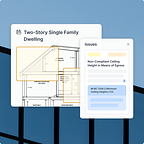
UpCodes’ AI Reviews 1,300+ Plan Sets, Identifying More Than 180,000 Potential Issues
-

 Technology4 days ago
Collective X Health Launches With a $3.2 Million Pre-Seed Round to Close the Women’s Health Data Gap
-

 Technology5 days ago
Reveal Technology Launches Farsight 2.0 With a Global World Model for the Tactical Edge