Technology
Digital Asset Management Market to grow by USD 22.51 Billion from 2025-2029, shift from on-premises to SaaS boosts the market, AI driving trends – Technavio
Published
1 year agoon
By
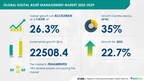
NEW YORK, Jan. 31, 2025 /PRNewswire/ — Report on how AI is redefining market landscape – The global digital asset management market size is estimated to grow by USD 22.51 billion from 2025-2029, according to Technavio. The market is estimated to grow at a CAGR of about 26.3% during the forecast period. Shift from on premises to saas is driving market growth, with a trend towards increased adoption of analytics to manage digital assets. However, data privacy and security concerns poses a challenge. Key market players include Acquia Inc., Adobe Inc., Aprimo, Bynder BV, Canto Inc., CELUM GmbH, Cloudinary Ltd., Cognizant Technology Solutions Corp., Danaher Corp., Frontify AG, Image Relay Inc., International Business Machines Corp., MediaValet Inc., Open Text Corp., Oracle Corp., PhotoShelter Inc., QBNK Co. AB, Smartsheet Inc., TIBCO Software Inc., and WoodWing Software B.V..
Key insights into market evolution with AI-powered analysis. Explore trends, segmentation, and growth drivers- View Free Sample PDF
Digital Asset Management Market Scope
Report Coverage
Details
Base year
2024
Historic period
2019 – 2023
Forecast period
2025-2029
Growth momentum & CAGR
Accelerate at a CAGR of 26.3%
Market growth 2025-2029
USD 22508.4 million
Market structure
Fragmented
YoY growth 2022-2023 (%)
22.7
Regional analysis
North America, Europe, APAC, South America, and Middle East and Africa
Performing market contribution
APAC at 35%
Key countries
US, UK, Germany, Canada, France, Brazil, China, Japan, The Netherlands, and India
Key companies profiled
Acquia Inc., Adobe Inc., Aprimo, Bynder BV, Canto Inc., CELUM GmbH, Cloudinary Ltd., Cognizant Technology Solutions Corp., Danaher Corp., Frontify AG, Image Relay Inc., International Business Machines Corp., MediaValet Inc., Open Text Corp., Oracle Corp., PhotoShelter Inc., QBNK Co. AB, Smartsheet Inc., TIBCO Software Inc., and WoodWing Software B.V.
Digital Asset Management (DAM) market is witnessing significant trends as businesses, both small and medium, as well as large enterprises, are embracing digitalization. DAM software helps manage digital assets such as media files, documents, animations, graphics, and marketing materials in a centralized place. This enables easier organization, retrieval, and distribution of assets for marketing and sales teams. Trends include content hubs, content lifecycle management, and user-friendly solutions for initial implementation. Non-hosted DAM and AI-embedded DAM are gaining popularity, offering advanced features like metadata tagging, describing assets using Natural Language Processing and Computer Vision, and intelligent tagging for cross-referencing assets. Enterprise DAM solutions cater to the needs of large organizations, providing scalable storage, improved collaboration, and real-time analysis through chatbots and emerging technologies. DAM solutions are also being used in industries like retail, entertainment, and healthcare to manage product images, videos, and marketing campaigns, reducing inventory shrinkage, margin compression, and improving brand presence. Cloud-based DAM solutions offer flexibility for work-from-home policies and support various deployment models. DAM software is also being used for document presentations, multimedia assets, and AI-driven content recommendations for competitive advantage. Overall, DAM solutions are streamlining asset management, optimizing rich media production, and unifying management across marketing and sales teams.
Digital Asset Management (DAM) solutions provide organizations with analytical tools to effectively manage their digital content. These tools allow for the analysis of digital content, such as text, images, and videos, to make informed business decisions. Cloud-based content analytics and asset tracking solutions are popular analytical tools, enabling the management of large data sets from mobile applications and smart devices. Content analytics services transform unstructured enterprise data into structured information, facilitating efficient digital content management. Predictive analytical solutions are increasingly adopted by organizations to enhance their content analytics capabilities.
Request Sample of our comprehensive report now to stay ahead in the AI-driven market evolution!
• Digital Asset Management (DAM) software has become essential for businesses looking to digitalize and manage their media and content effectively. However, implementing a DAM system comes with challenges. One of the main challenges is locating and organizing content across various departments and teams. A centralized hub for all digital assets is necessary for efficient content lifecycle management. Small and medium businesses face unique challenges such as initial implementation costs and user-friendliness. In contrast, large enterprises require enterprise-level DAM solutions with advanced features like AI algorithms, custom fields, and metadata tagging. Media assets, documents, animations, graphics, and marketing and sales files need to be streamlined and optimized for rich media production. DAM software should offer unified management, artificial intelligence, and machine learning capabilities for intelligent tagging and cross-referencing assets. Traditional marketing industries like retail face challenges such as inventory shrinkage, margin compression, and profit margin pressures. DAM can help retailers manage product images, videos, and catalogues, improving the instore experience and online order fulfillment process. Emerging technologies like cloud-based DAM, AI-embedded DAM, and chatbots offer capabilities for real-time analysis and improved collaboration. However, high upfront costs and deployment models can be a barrier for small and medium businesses. Enterprise DAM solutions offer scalable storage, smart search, and discovery features for large teams. Brands can leverage DAM for competitive advantage by intelligently tagging and making helpful recommendations based on real-time analysis. Regional requirements and content complexities add to the challenges of implementing a DAM system. Media providers, entertainment industries, healthcare, ecommerce and retail, travel and hospitality, and education sectors all have unique needs. In conclusion, DAM software offers significant benefits for businesses, but careful consideration of challenges like content location, hub, content lifecycle, and digitalization is necessary for successful implementation.
• Digital asset management in the cloud presents significant security challenges for businesses. Cloud-based IT infrastructure holds numerous digital files, making data privacy and security a major concern. The risk of unauthorized access and hacking is ever-present, particularly in public cloud environments due to their multi-tenant nature. Cloud systems are built on various open-source codes, increasing the likelihood of introducing vulnerabilities. Ensuring cloud security is a complex task for vendors, as they must address these risks and provide solutions to protect digital assets from potential breaches.
Discover how AI is revolutionizing market trends- Get your access now!
This digital asset management market report extensively covers market segmentation by
Deployment 1.1 On-Premise1.2 CloudEnd-user 2.1 Large enterprise2.2 Small and medium enterpriseGeography 3.1 North America3.2 Europe3.3 APAC3.4 South America3.5 Middle East and Africa
1.1 On-Premise- In an on-premises Digital Asset Management (DAM) deployment model, businesses purchase and install the software on their servers, managed by their IT teams. This approach offers features like workflow streamlining, budgeting, DAM, and reporting, making it suitable for large, complex marketing functions. The high cost and lack of scalability options are considerations. The software’s robustness and control over critical data are significant advantages, particularly for businesses with numerous business units, functions, or product lines. These factors are expected to boost the growth of the on-premises segment in the global market during the forecast period.
Download a Sample of our comprehensive report today to discover how AI-driven innovations are reshaping competitive dynamics
The Digital Asset Management (DAM) market is a rapidly growing segment in the business world, particularly for medium and small businesses, retailers, and departments seeking to optimize their content management processes. DAM software acts as a centralized digital hub for businesses to store, manage, and distribute their digital assets, including product images, videos, marketing campaigns, and print materials. With the increasing use of smartphones and digitalization, businesses face challenges such as inventory shrinkage and margin compression, making it crucial to streamline their content lifecycle. DAM solutions help businesses manage their product library efficiently, reducing redundant content, and enhancing the instore experience. Additionally, DAM software supports online orders and the fulfillment process, ensuring accurate stock replenishment and seamless integration with the supply chain. Overall, DAM software acts as a digital library, enabling businesses to effectively manage their content and enhance their marketing efforts.
Digital Asset Management (DAM) refers to the process of centrally locating, organizing, sharing, and collaborating on digital assets such as media files, documents, animations, graphics, and marketing materials. DAM software enables businesses, departments, and teams to digitalize their content and streamline asset management, optimizing rich media production, and unified management. The digitalization of content is crucial for businesses of all sizes, from medium to large enterprises, in various industries like retail, entertainment, and healthcare. DAM solutions offer user-friendly interfaces, enabling easy initial implementation and lifetime licenses. They provide advanced features like AI algorithms for asset discovery, custom fields, and metadata tagging, describing assets for intelligent tagging and cross-referencing. DAM systems offer scalable storage solutions, enabling businesses to manage their digital content effectively. They also provide advanced collaboration features, improving teamwork and reducing redundant content. DAM solutions are essential for businesses looking to optimize their marketing and sales efforts, manage brand presence, and gain a competitive advantage through intelligent content management. Emerging technologies like cloud-based DAM, AI-embedded DAM, and chatbots offer real-time analysis and forecasting content needs, making helpful recommendations, and providing smart search and discovery features. DAM solutions are essential for businesses looking to adapt to the behavioral shift towards digital consumption, including audio consumption, online video streaming, and social media campaigns.
1 Executive Summary
2 Market Landscape
3 Market Sizing
4 Historic Market Size
5 Five Forces Analysis
6 Market Segmentation
DeploymentOn-PremiseCloudEnd-userLarge EnterpriseSmall And Medium EnterpriseGeographyNorth AmericaEuropeAPACSouth AmericaMiddle East And Africa
7 Customer Landscape
8 Geographic Landscape
9 Drivers, Challenges, and Trends
10 Company Landscape
11 Company Analysis
12 Appendix
Technavio is a leading global technology research and advisory company. Their research and analysis focuses on emerging market trends and provides actionable insights to help businesses identify market opportunities and develop effective strategies to optimize their market positions.
With over 500 specialized analysts, Technavio’s report library consists of more than 17,000 reports and counting, covering 800 technologies, spanning across 50 countries. Their client base consists of enterprises of all sizes, including more than 100 Fortune 500 companies. This growing client base relies on Technavio’s comprehensive coverage, extensive research, and actionable market insights to identify opportunities in existing and potential markets and assess their competitive positions within changing market scenarios.
Technavio Research
Jesse Maida
Media & Marketing Executive
US: +1 844 364 1100
UK: +44 203 893 3200
Email: media@technavio.com
Website: www.technavio.com/
View original content to download multimedia:https://www.prnewswire.com/news-releases/digital-asset-management-market-to-grow-by-usd-22-51-billion-from-2025-2029–shift-from-on-premises-to-saas-boosts-the-market-ai-driving-trends—technavio-302364185.html
SOURCE Technavio
You may like
Technology
Black Lake Technologies Shortlisted as SAIL Award TOP30 Finalist and Selected as Global Industrial AI Flagship Case, Showcasing Latest Industrial Agent at WAIC 2026
Published
8 minutes agoon
July 18, 2026By
SHANGHAI, July 18, 2026 /PRNewswire/ — The 2026 World Artificial Intelligence Conference (WAIC) opened in Shanghai on July 17. Shanghai Blacklake Technologies Co., Ltd. (“Black Lake”), an industrial AI company, is showcasing a portfolio of industrial AI agents at the conference. The company has also been named to the Top 30 shortlist for the 2026 WAIC Super AI Leader (SAIL) Award and selected as a Trusted Partner under the Global Call for Trusted Partners for Industrial AI in the Global South.
The accreditations highlight Black Lake’s latest progress in bringing AI into critical manufacturing decision-making workflows and deploying industrial AI capabilities on the shop floor around the world.
This year’s conference attracted over 1,100 exhibiting companies and showcased more than 3,000 exhibits, setting a new record for exhibition scale. The conference delivered a clear signal: as artificial intelligence becomes a common priority across global industries, attention is moving beyond model capabilities toward practical applications in real-world operating environments.
Manufacturing provides a particularly demanding test for this transition. Factory operations are governed by multiple constraints, including process specifications, equipment capabilities, material availability, production capacity, delivery schedules and quality requirements. Therefore, AI has to do so much more than simply comprehend information input. It must make reliable judgments within clearly defined business rules and operational constraints.
Black Lake has focused on industrial digitalization and industrial AI for years, developing and deploying AI applications in a range of factory environments.
At WAIC 2026, the company is presenting industrial AI agents covering order splitting and process planning, quotation and pricing, procurement, production scheduling, quality inspection, and order tracking. These applications are designed to move AI beyond an auxiliary role and into critical manufacturing decision-making workflows.
Traditional industrial software is primarily responsible for data recording, digital workflows, and worker coordination. However, critical decisions such as how to split an order, determine pricing, schedule production, and assess quality risks still depend heavily on the experience of engineers and frontline workers.
Industrial AI agents are intended to convert fragmented industrial knowledge and production experience into decision-making capabilities that can be invoked, reused and continuously refined by software systems.
Order decomposition and process planning are representative examples. After receiving an engineering drawing, a factory typically relies on experienced engineers to identify components, materials and dimensions, define the required manufacturing processes and technical specifications, and establish a basis for subsequent quotation and quality inspection.
The process is highly dependent on individual expertise and represents one of the first critical decision points after an order is received.
Black Lake Technologies’ CAD-to-Process Agent can understand product drawings and, taking into account the factory’s equipment capabilities, process requirements, and production practices, rapidly generate process steps along with the corresponding technical requirements. Drawing analysis that once took hours can now be completed in approximately one minute, achieving an accuracy rate of over 95% in real deployment and providing engineers with stable, efficient decision support. Currently, the industrial agents developed by the company cover core processes including design, scheduling, production, and quality inspection, and have entered the stage of large-scale deployment.
Founded in 2016, Black Lake serves nearly 40,000 factories worldwide. Its customers span more than 30 industries, including food and beverage, automotive components and equipment manufacturing.
By working across factory order management, production and fulfillment workflows, Black Lake has accumulated the technical capabilities and industry knowledge required to support decision-making in complex industrial environments.
In April 2026, Black Lake completed a Series D funding round of nearly RMB 1 billion. The company said the proceeds would primarily be used to accelerate the deployment of its industrial AI products and support its international expansion.
AI-related products are becoming a new source of growth for the company. In a recent interview, Black Lake founder and CEO Zhou Yuxiang said that the company had recorded significant growth in AI-related revenue since the beginning of 2026. He also said that manufacturing customers were taking less time to make purchasing decisions for industrial AI agents.
Zhou expects AI adoption among Chinese factories to increase substantially over the next three to four years.
Unlike consumer-facing AI, which is primarily associated with content generation and personal productivity, industrial AI agents can directly affect production costs, capacity utilization, delivery performance, and product quality. Their commercial value therefore depends largely on whether they can perform specific tasks reliably in complex production environments.
During WAIC 2026, Black Lake was named to the Top 30 shortlist for the 2026 Super AI Leader (SAIL) Award. The SAIL Award is one of WAIC’s major awards and recognizes achievements in technological breakthroughs, application innovation, and industrial value.
Black Lake was also selected as a Trusted Partner under UNIDO’s Global Call for Trusted Partners for Industrial AI in the Global South.
The Global Call was launched under the guidance of the United Nations Industrial Development Organization (UNIDO), in partnership with the Shanghai Artificial Intelligence Research Institute, and in connection with the work of UNIDO AIM Global and its Shanghai-based Centre of Excellence.
The initiative aims to build a curated pool of leading partners to co-develop scalable industrial AI solutions and public goods for the Global South.
For Black Lake, the two accreditations underscore the growing importance of reliability, explainability, and scalability in the evaluation of industrial AI, in addition to the capabilities of AI models.
Global expansion will be a major priority in the company’s next phase of development. Black Lake is currently focusing on Southeast Asia, Latin America and Eastern Europe, adapting its industrial AI agents to the industrial structures, production processes and management requirements of different markets.
Although manufacturing operations vary across countries and regions, manufacturers share similar concerns about efficiency, quality, delivery reliability and production flexibility.
Black Lake is transforming industrial AI capabilities that have been validated in complex factory environments into configurable and deployable products. Through these products, the company aims to work with manufacturers worldwide to explore more efficient, flexible and intelligent approaches to production.
SOURCE Black Lake
Technology
76% of Coupon Codes Work at Checkout, but Most Failures Trace Back to Terms Shoppers Never Read, CouponDopa Study Finds
Published
1 hour agoon
July 18, 2026By
Study Finds 76% of Coupon Codes Work at Checkout
NEW YORK, July 18, 2026 /PRNewswire-PRWeb/ — Multi-country research across 11 regions finds that most coupon code failures were not due to expired codes, but to terms and conditions shoppers did not check before checkout.
A new study testing 1,000 coupon codes across 11 countries found that three in four online discount codes applied successfully at checkout, while the remaining failures were tied more often to unmet terms than to expired or invalid codes.
The research was conducted by CouponDopa, a multi-regional coupon platform operating in 11 countries. Codes were tested across multiple retail categories in July 2026 to measure real checkout success rates.
KEY FINDINGS
Overall success rate: 76%. Overall failure rate: 24%. Highest-performing country: Netherlands, 81%. Lowest-performing countries: Poland and Italy, tied at 70%. Highest-performing category: Electronics. Lowest-performing category: Travel. Desktop success rate: 78%. Mobile success rate: 74%.
The study’s most significant finding was not the failure rate itself, but the reasons behind it.
“The assumption most shoppers make is that a coupon code doesn’t work because it’s expired,” said Anderson Joe, CMO at CouponDopa. “Our testing found that expiry was rarely the primary issue. In most failed attempts, the code was still active, but the shopper’s cart did not meet a listed condition, such as a minimum spend or a region restriction.”
WHY COUPON CODES ACTUALLY FAIL
Minimum spend not met: the most common reason for failure across all 11 regions, since many codes require a basket value above a set threshold.Region-specific restrictions: codes valid in one country frequently failed in another.Unread terms and conditions: codes were applied to excluded categories, sale items, or specific product ranges without checking eligibility first.Delivery and shipping thresholds: free shipping codes requiring a minimum order value were sometimes mistaken for blanket offers.
No exact percentage breakdown of failure causes is available. Minimum spend is confirmed as the single most common cause; the other three were not ranked against each other.
“In our view, a code that fails because of an unmet minimum spend is not necessarily a broken code,” said Anderson. “It may simply be a condition the shopper did not see before checkout.”
REGIONAL FINDINGS — NETHERLANDS LEADS
Country Success Rate
Netherlands 81%
Germany 79%
United States 77%
Canada 77%
United Kingdom 76%
Australia 75%
New Zealand 74%
France 73%
Spain 72%
Poland 70%
Italy 70%
Netherlands recorded the highest success rate of the 11 regions tested. Germany followed closely. The United Kingdom matched the overall study average, and Canada and the United States recorded the same rate. Poland and Italy recorded the lowest rates in the study, tied at 70%.
ELECTRONICS OUTPERFORMS TRAVEL
Electronics recorded the highest coupon code success rate of any category tested, at 80%, while travel recorded the lowest, at 69%.
“Electronics codes in our sample tended to carry fewer conditions,” noted Anderson Joe. “Travel codes more often included conditions tied to dates, destinations, or booking windows, which may explain the difference.”
MOBILE SHOPPERS RECORD LOWER SUCCESS RATES
Desktop checkouts recorded a 78% success rate compared with 74% for mobile, a 4-point gap. Researchers said the difference may relate to how terms are displayed on smaller screens, though this was not directly tested.
“We saw a consistent gap between desktop and mobile across our markets,” said Anderson Joe. “We can’t say precisely why from this data alone, but it’s a pattern worth further study.”
ABOUT THE STUDY
CouponDopa tested 1,000 coupon codes across 11 countries during July 2026, across electronics, fashion, food delivery, travel, beauty, and home categories. Codes were manually tested at real checkouts on desktop and mobile. A code counted as successful only when the discount appeared in the checkout total. Failed codes were categorized by reason. Read the complete methodology available at CouponDopa tested 1000 coupon codes in 11 regions.
ABOUT COUPONDOPA
CouponDopa is a multi-regional coupon and discount platform operating across 11 countries. CouponDopa verifies coupon codes across hundreds of brands before publishing, providing shoppers with discount information across major retail categories, including verified codes available on CouponDopa’s store pages.
MEDIA CONTACT
Organization: Coupondopa
Contact Person Name: Anderson Joe
Website: https://www.coupondopa.com/
Email: info@coupondopa.com
Contact Number: +1 (530) 269-6377
Address: 165 ithaca Bayshore NY, 11706 USA
City: Bay Shore
State: NY
Country: United States
Media Contact
Anderson Joe, Coupondopa, 1 631 404-9968, coupondopa@gmail.com, https://www.coupondopa.com/
View original content:https://www.prweb.com/releases/76-of-coupon-codes-work-at-checkout-but-most-failures-trace-back-to-terms-shoppers-never-read-coupondopa-study-finds-302828186.html
SOURCE CouponDopa
Technology
Global Times: Head-of-state diplomacy shines at WAIC, fostering ties and advancing global governance consensus
Published
5 hours agoon
July 18, 2026By
BEIJING, July 17, 2026 /PRNewswire/ — Chinese President Xi Jinping on Friday held a series of high-level meetings on the sidelines of the 2026 World Artificial Intelligence Conference (WAIC) and High-Level Meeting on Global AI Governance in Shanghai, sitting down successively with Thai Prime Minister Anutin Charnvirakul, Cambodian Prime Minister Hun Manet, and UN Secretary-General António Guterres. The bustling diplomatic activity transformed the WAIC from a premier showcase of AI technologies and industrial breakthroughs into a vibrant platform for head-of-state diplomacy and global governance coordination.
Analysts said hosting intensive head-of-state diplomatic events in Shanghai, a core hub of reform, opening-up and technological innovation, carries profound meaning. In addition, Friday’s high-level meetings embody the innovative model of “technology builds the stage while diplomacy takes the leading role.” It not only deepens China’s bilateral relations with ASEAN members, but also helps advance inclusive global AI governance centered on the UN mechanism.
Strategic guidance
According to the two separate official releases by Xinhua, during his meetings with the prime ministers of Thailand and Cambodia, President Xi spoke of the long-standing friendship China shares with both nations. He called on China and Thailand, as well as China and Cambodia, to join hands to advance the development of their respective communities with a shared future.
Furthermore, the Chinese leader stressed the need for China to expand pragmatic cooperation with Thailand and Cambodia respectively across traditional and emerging sectors, and work with each country to jointly crack down on cross-border crimes such as online gambling and telecom fraud, according to Xinhua.
He called for the proper handling of border frictions between Thailand and Cambodia and called on the two sides to resolve disputes through dialogue and consultation, with China standing ready to continue playing a constructive role in this regard, per Xinhua.
During their respective meetings with the Chinese leader, the prime ministers of Thailand and Cambodia both expressed willingness to deepen multi-field cooperation with China and spoke highly of China’s positive efforts to facilitate the peaceful settlement of the Thailand-Cambodia border conflicts.
Xu Liping, Director of the Center for Southeast Asian Studies at the Chinese Academy of Social Sciences, told the Global Times that head-of-state diplomacy has charted the fundamental course for the advancement of China’s ties with both Cambodia and Thailand.
WAIC exemplifies the innovative model of “technology builds the platform, while diplomacy takes the leading role,” said Xu, “In addition, AI cooperation is also expected to serve as a vital entry point to further deepen and substantiate China’s ties with Thailand and Cambodia going forward.”
Furthermore, addressing the sensitive and thorny Thailand-Cambodia border dispute amid the relatively relaxed atmosphere of a tech summit enables all relevant parties to handle differences in a rational and pragmatic manner, which embodies Eastern wisdom and an Asian approach to resolving issues, said Xu.
The year 2026 marks the fifth anniversary of the establishment of the China-ASEAN comprehensive strategic partnership, witnessing the official rollout of the new Plan of Action on the China-ASEAN Comprehensive Strategic Partnership (2026-2030). It also kicks off the implementation of China’s 15th Five-Year Plan.
The critical juncture offers a perfect window to align China’s development plans closely with the national development strategies of Global South countries and ASEAN members, said Xu. “Thailand and Cambodia’s willingness to ramp up cooperation with China mirrors the aspiration of the majority of ASEAN members to leverage China’s development dividends and pursue win-win outcomes and common prosperity in the region.”
Firm support for UN
In his meeting with UN Secretary-General Antonio Guterres on Friday, Xi reiterated China’s firm support for the UN.
Noting that this year marks the 55th anniversary of the restoration of the lawful seat of the People’s Republic of China at the UN, the Chinese leader said China has since been committed to building world peace, contributing to global development, defending international order, and firmly supporting the UN, Xinhua reported.
Xi added that he proposed the vision of building a community with a shared future for humanity and the four global initiatives with one important consideration in mind – to uphold the status and authority of the UN.
Currently, the international landscape is marked by more pronounced changes and turbulence, making it all the more necessary to practice true multilateralism and reinvigorate the status and role of the UN, he said.
Guterres commended China for its steadfast support for multilateralism, the cause of the UN, and international cooperation, saying that China has set an example for the world.
Guterres said the UN will continue to strengthen cooperation with China, oppose unilateralism, protectionism, and hegemonic bullying, safeguard the UN Charter and international law, as well as advance the process toward a multipolar world.
At this pivotal juncture where talks on AI development and UN multilateral governance converge, China, leveraging head-of-state diplomacy as a top-tier platform, has elaborated in a systematic manner its vision for global governance in the AI era, Wang Yiwei, a professor at the School of International Studies, Renmin University of China, told the Global Times.
He added that China’s emphasis on the UN-centered global governance architecture will further strengthen the UN’s authority and operational capacity.
Before the official opening of the WAIC, on Thursday, representatives from 29 countries, including Kazakhstan, Laos, Pakistan, Russia and Indonesia, signed an agreement on establishing the World Artificial Intelligence Cooperation Organization (WAICO) in Shanghai. UN chief Guterres was among representatives from countries and international organizations present at the signing ceremony.
According to the agreement, WAICO will be an independent intergovernmental international organization, which aims to promote international cooperation and global governance on AI, ensuring that AI is beneficial, safe and fair, thereby promoting its healthy and orderly development to benefit all humanity.
President Xi on Friday also announced that in the next five years, China will provide developing countries with 5,000 opportunities in AI training and seminar programs. China will also develop international AI application cooperation centers with the ASEAN, the League of Arab States, the African Union, the Community of Latin American and Caribbean States, the Shanghai Cooperation Organization, and BRICS.
However, some international media, including Reuters and Nikkei, used the term “AI diplomacy” describing the grand gathering in Shanghai, claiming that Beijing seeks a new global AI order, challenging US dominance.
In rebuttal, Wang pointed out that China advocates open, inclusive technology that lets AI benefit all humanity under the vision of “AI for All”. In contrast, the US adheres to a mindset of “All for AI”, weaponizing AI for geopolitical rivalry and aiming to outpace China in technological competition. Driven by the “America First” doctrine and capital-centric priorities, Washington’s approach forms a sharp contrast with China’s.
Meanwhile, China’s resolute commitment to upholding the UN system underscores that for China and a wide array of Global South countries, the sensible path lies in reforming and improving the existing global governance architecture rather than discarding it to build parallel institutions from scratch, the expert added.
This article first appeared on Global Times
View original content:https://www.prnewswire.com/news-releases/global-times-head-of-state-diplomacy-shines-at-waic-fostering-ties-and-advancing-global-governance-consensus-302828946.html
SOURCE Global Times
Black Lake Technologies Shortlisted as SAIL Award TOP30 Finalist and Selected as Global Industrial AI Flagship Case, Showcasing Latest Industrial Agent at WAIC 2026
76% of Coupon Codes Work at Checkout, but Most Failures Trace Back to Terms Shoppers Never Read, CouponDopa Study Finds
Global Times: Head-of-state diplomacy shines at WAIC, fostering ties and advancing global governance consensus
Send Rakhi to UK swiftly with UK Gifts Portal
Whiteboard Series with NEAR | Ep: 45 Joel Thorstensson from ceramic.network
New Gooseneck Omni Antennas Offer Enhanced Signals in a Durable Package
Why You Should Build on #NEAR – Co-founder Illia Polosukhin at CV Labs
Whiteboard Series with NEAR | Ep: 45 Joel Thorstensson from ceramic.network
NEAR End of Year Town Hall 2021: The Open Web World, MetaBUILD 2 Hackathon and 2021 recap
Trending
-
Technology5 days agoChina’s Hit Variety Show “Wonderland Season Ⅵ” Is Currently Airing – How Does This Long-Running Franchise Win the Battle for Critical Acclaim?
-
Coin Market3 days agoRevolut receives in-principle approval from UAE authorities for crypto services
-
Near Videos4 days agoConfidential Intents is now generally available
-
Technology3 days agoInventHelp Inventor Develops Improved Food Delivery Bag (LBT-9719)
-
Technology2 days agoGPU.ai Named Official Title Sponsor of AGI Summit SF 2026
-
Coin Market3 days agoOstium pauses trading as security firms report multimillion-dollar oracle exploit
-
Coin Market3 days agoCrypto firms face AML risks during post-MiCA migration, says AMLA chair
-
Near Videos2 days agoThe best AI agents need your most sensitive data