Connect with us

Technology

Gas Turbine Market to Grow by USD 2.65 Billion (2024-2028), Enhanced Efficiency & Robustness Boosting the Market, with AI Driving Market Transformation – Technavio

Published

on

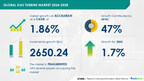
NEW YORK, Jan. 31, 2025 /PRNewswire/ — Report with the AI impact on market trends – The global gas turbine market size is estimated to grow by USD 2.65 billion from 2024-2028, according to Technavio. The market is estimated to grow at a CAGR of 1.86% during the forecast period. Enhanced efficiency and robustness of gas turbines is driving market growth, with a trend towards growing use of alternative types of fuel in aeroderivative gas turbines. However, inherent challenges in handling natural gas poses a challenge. Key market players include Ansaldo Energia Spa, Bharat Heavy Electricals Ltd., Capstone Green Energy Corp., Caterpillar Inc., Doosan Heavy Industries and Construction Co. Ltd., General Electric Co., Harbin Electric Corp., IHI Aerospace Co. Ltd., Kawasaki Heavy Industries Ltd., MAN Energy Solutions SE, MAPNA Group Co., Mitsubishi Heavy Industries Ltd., Motor Sich JSC, MTU Aero Engines AG, Rolls Royce Holdings Plc, Siemens Energy AG, Solar Turbines Inc., Wartsila Corp., Shanghai Electric Group Co. Ltd., and OPRA Turbines BV.

Key insights into market evolution with AI-powered analysis. Explore trends, segmentation, and growth drivers- View Free Sample PDF

Gas Turbine Market Scope

Report Coverage

Details

Base year

2023

Historic period

2018 – 2022

Forecast period

2024-2028

Growth momentum & CAGR

Accelerate at a CAGR of 1.86%

Market growth 2024-2028

USD 2650.24 million

Market structure

Fragmented

YoY growth 2022-2023 (%)

1.7

Regional analysis

APAC, North America, Europe, Middle East and Africa, and South America

Performing market contribution

APAC at 47%

Key countries

US, China, Japan, India, and Germany

Key companies profiled

Ansaldo Energia Spa, Bharat Heavy Electricals Ltd., Capstone Green Energy Corp., Caterpillar Inc., Doosan Heavy Industries and Construction Co. Ltd., General Electric Co., Harbin Electric Corp., IHI Aerospace Co. Ltd., Kawasaki Heavy Industries Ltd., MAN Energy Solutions SE, MAPNA Group Co., Mitsubishi Heavy Industries Ltd., Motor Sich JSC, MTU Aero Engines AG, Rolls Royce Holdings Plc, Siemens Energy AG, Solar Turbines Inc., Wartsila Corp., Shanghai Electric Group Co. Ltd., and OPRA Turbines BV

Market Driver

The gas turbine industry is experiencing significant growth in the power generation sector, with mechanical drive applications in jet engines and electricity production leading the way. Emission norms and concerns over carbon dioxide emissions are driving the shift towards natural gas reserves as a cleaner alternative to coal production. Renewable energy sources like solar and wind power are also increasing in capacity, leading to the retirement of fossil-fired power plants. New power plants, including combined cycle plants and gas-fired reciprocating engines, are being ordered to meet electricity demand driven by urbanization and economic growth. The International Energy Agency predicts GT capacity additions will continue, with combined cycle technology and open cycle technology seeing strong demand. Gas turbine OEMs like Solar Turbines, IHI Corporation, Wartsila, OPRA Turbines, Centrax Gas Turbines, Zorya-Mashproekt, and Cryostar are at the forefront of this trend. Design types, including aeroderivative gas turbines, are being optimized for efficiency and emissions reduction. The electric power sector is undergoing a transformation, with renewables, wind energy, and solar energy gaining ground. Electric utility peaking and ancillary systems are also important considerations for power plant technologies. Installation costs, project financing, and equipment pricing are key factors in the decision-making process. Gas turbines, as mechanical devices using the Brayton cycle, consist of a heater, compressor, turbine, and cooler to generate electricity. Climate change initiatives and regulations are driving the need for carbon emissions reduction and the exploration of hydrogen fuel blends. The power sector continues to evolve, with natural gas, nuclear energy, coal, and renewables all playing a role. 

The cost of fuel is a significant expense in gas turbine power generation, making up a substantial portion of the overall cost. In response, there is a growing trend towards using low-cost alternatives, particularly in the marine and industrial sectors. Fuel flexibility is a key driver for innovation in gas turbine technology. Aeroderivative gas turbines, for instance, have been developed to accommodate various fuel types for enhanced versatility. Traditionally, natural gas has been the primary fuel for these systems, but other fuels and gases, such as biofuel and synthetic gas, are gaining traction due to their affordability. However, the large-scale production of these alternative fuels is still in its infancy. 

Request Sample of our comprehensive report now to stay ahead in the AI-driven market evolution!

Market Challenges

The gas turbine industry faces several challenges in the power generation sector. Mechanical drive applications, including jet engines, require advanced gas turbine technology. Emission norms and carbon dioxide reduction targets pose significant hurdles for fossil-fired power plants, pushing the industry towards renewable energy sources like solar and wind power. Natural gas reserves and economic growth in urban areas increase electricity demand, leading to new power plants. Design types, such as combined cycle plants and gas-fired reciprocating engines, are in high demand. Rating capacity additions in the electric power sector require project financing and equipment pricing considerations. International Energy Agency reports show renewable capacity additions surpassing new gas turbine orders. Retiring coal-fired generation and hydrogen fuel blends add complexity. Carbon emissions, gas turbine designs, and ancillary systems are key areas of focus. Gas turbine OEMs like Solar Turbines, IHI Corporation, Wartsila, OPRA Turbines, Centrax Gas Turbines, Zorya-Mashproekt, and Cryostar innovate to meet power sector needs. Gas turbines, as mechanical devices, use the Brayton cycle, with a working fluid, heater, compressor, turbine, and cooler, to generate electricity. Climate change initiatives and regulations drive innovation in power plant technologies. MW demand, installation costs, and overhaul and repair are ongoing concerns. Gas turbines have applications in marine, aerospace, and process plants.Natural gas-fired power plants offer efficiency advantages over coal-fired alternatives. However, the environmental concern of methane leaks from natural gas storage is a significant challenge. Methane, a major component of natural gas, is odorless and has a global warming potential 82 times greater than carbon dioxide. Undetected leaks can contribute to environmental damage. Regulatory measures addressing gas storage safety are anticipated, which may restrict the expansion of the gas turbine market during the forecast period.

Discover how AI is revolutionizing market trends- Get your access now!

Segment Overview

This gas turbine market report extensively covers market segmentation by

Product 1.1 Heavy-duty gas turbine1.2 Aeroderivative gas turbineTechnology 2.1 CCGT2.2 OCGTGeography 3.1 APAC3.2 North America3.3 Europe3.4 Middle East and Africa3.5 South America

1.1 Heavy-duty gas turbine- The global heavy-duty gas turbine market is projected to experience robust growth due to the increasing demand for electric power as a result of rising power consumption worldwide. Developing nations are expected to drive significant power generation activities during the forecast period. Gas turbines are preferred over coal-based power generation due to environmental concerns, contributing to market growth. High-baseload plants requiring turbines over 300 MW will contribute significantly. Vendors, like General Electric Co., secure long-term agreements for constructing new heavy-duty gas turbines to expand market presence. For instance, in March 2022, GE received an order from Harbin Electric Co. Ltd for three GE 9HA.01 gas turbines. This trend of increasing orders for heavy-duty gas turbines is expected to accelerate market growth during the forecast period.

Download a Sample of our comprehensive report today to discover how AI-driven innovations are reshaping competitive dynamics

Research Analysis

The gas turbine industry is a critical segment of the power generation sector, focusing on the production of electricity using the Brayton cycle. A gas turbine is a mechanical device that converts the energy contained in a working fluid into mechanical power, which is then converted into electricity. The working fluid, typically natural gas, is heated in a heater, causing it to expand and drive a turbine. The expanding gas then passes through a cooler to condense and repeat the process. Gas turbines are used in various applications, including mechanical drive and jet engines. In the electric power sector, they are often used in combined cycle plants, which also incorporate steam turbine generators. The gas turbine market is driven by the increasing demand for electricity and the availability of natural gas reserves. However, emission norms and the shift towards renewable energy sources, such as solar and wind, are major challenges. Renewable capacity additions are expected to impact gas turbine orders, but gas-fired reciprocating engines may still play a role in the transition towards a low-carbon energy sector.

Market Research Overview

The gas turbine industry is a critical segment of the power generation sector, focusing on the production of electricity using the Brayton cycle. Gas turbines, mechanical devices that convert the energy of a working fluid into mechanical power, are used in various applications, including jet engines, mechanical drive, and electricity production. The increasing demand for electricity due to urbanization, economic growth, and electricity demand drives the market. Natural gas reserves and coal production are significant fuel sources for gas-fired power plants, which include combined cycle plants and gas-fired reciprocating engines. Renewable energy sources, such as solar power plants and wind power plants, are also increasingly integrated into the power sector, leading to renewable capacity additions. Emission norms and climate change initiatives have led to the development of carbon dioxide capture technologies and the use of hydrogen fuel blends. The power sector is undergoing a significant shift towards cleaner energy sources, with retiring coal-fired generation and the growth of nuclear energy, renewables, wind energy, and solar energy. The gas turbine market is influenced by various factors, including electricity demand, project financing, equipment pricing, and gas turbine OEMs such as Solar Turbines, IHI Corporation, Wartsila, OPRA Turbines, Centrax Gas Turbines, Zorya-Mashproekt, and Cryostar. The market also includes combined cycle technology, open cycle technology, and marine and aerospace applications. Gas turbine designs continue to evolve, with aeroderivative gas turbines and ancillary systems playing essential roles in the industry. Installation costs, overhaul and repair, and rating capacity are also significant factors influencing the market. The International Energy Agency forecasts continued growth in gas turbine capacity additions, driven by the electric power sector’s increasing reliance on gas-fired power plants.

Table of Contents:

1 Executive Summary
2 Market Landscape
3 Market Sizing
4 Historic Market Size
5 Five Forces Analysis
6 Market Segmentation

ProductHeavy-duty Gas TurbineAeroderivative Gas TurbineTechnologyCCGTOCGTGeographyAPACNorth AmericaEuropeMiddle East And AfricaSouth America

7 Customer Landscape
8 Geographic Landscape
9 Drivers, Challenges, and Trends
10 Company Landscape
11 Company Analysis
12 Appendix

About Technavio

Technavio is a leading global technology research and advisory company. Their research and analysis focuses on emerging market trends and provides actionable insights to help businesses identify market opportunities and develop effective strategies to optimize their market positions.

With over 500 specialized analysts, Technavio’s report library consists of more than 17,000 reports and counting, covering 800 technologies, spanning across 50 countries. Their client base consists of enterprises of all sizes, including more than 100 Fortune 500 companies. This growing client base relies on Technavio’s comprehensive coverage, extensive research, and actionable market insights to identify opportunities in existing and potential markets and assess their competitive positions within changing market scenarios.

Contacts

Technavio Research
Jesse Maida
Media & Marketing Executive
US: +1 844 364 1100
UK: +44 203 893 3200
Email: media@technavio.com
Website: www.technavio.com/

View original content to download multimedia:https://www.prnewswire.com/news-releases/gas-turbine-market-to-grow-by-usd-2-65-billion-2024-2028-enhanced-efficiency–robustness-boosting-the-market-with-ai-driving-market-transformation—technavio-302364748.html

SOURCE Technavio

Continue Reading

Technology

XCOTTON Joins the Conversation at IFA 2026: Why the Future of Commerce Goes Beyond Checkout

Published

on

By

LOS ANGELES and NEW YORK and LAS VEGAS, Sept. 4, 2026 /PRNewswire/ — As the global consumer technology industry gathers in Berlin for IFA 2026, thousands of brands are showcasing what comes next: smarter devices, connected experiences, artificial intelligence, robotics, and technologies designed to change how people live and shop. But behind every new product is another part of the consumer journey that deserves just as much attention: What happens after the customer buys?

The Xcotton team is in Berlin during the event to connect with consumer brands, retailers, technology companies, and potential business partners. The conversations are focused on a broader question for modern commerce: how can brands create a better experience after checkout while reducing the risks that come with delivering products to customers around the world?

The Customer Journey Doesn’t End at Checkout

For years, e-commerce innovation has focused heavily on the path to purchase. Brands optimize advertising to attract shoppers, product pages to increase conversion, checkout flows to reduce abandonment, and promotions to encourage customers to buy.

But the transaction is only one moment in the customer relationship. After payment, the order still needs to be fulfilled, shipped, delivered, and supported. A package can be delayed, lost, stolen, or damaged. A customer may need a replacement or refund. A support team may suddenly have to spend time resolving a problem that had nothing to do with the product itself.

For global e-commerce brands, these challenges become even more important as order volumes increase and businesses expand into new markets. A single delivery problem may affect more than the cost of replacing a product. It can also create customer-service workload, additional shipping costs, refunds, negative reviews, and lost opportunities for repeat purchases.

For the customer, however, the distinction does not always matter. The customer bought from the brand. The delivery experience becomes part of the brand experience. That is why post-purchase experience is becoming an increasingly important part of modern commerce. The opportunity is to think beyond the transaction and manage the entire customer journey:

Purchase → Delivery → Protection → Support → Resolution → Retention

When brands approach these stages as part of one connected experience, post-purchase operations become more than a back-office function. They can become a competitive advantage. A great product can win the first purchase. How a brand handles an unexpected problem can influence whether it earns the next one.

XCOTTON: Turning Post-Purchase Protection Into Business Value

This is where Xcotton comes in. Xcotton helps modern e-commerce brands protect every order after checkout. As a U.S.-based post-purchase protection platform, Xcotton enables merchants to offer shipping protection, product protection, and insurance-backed coverage solutions designed to reduce delivery risk, improve customer experience, and create new revenue opportunities.

Xcotton’s reach extends beyond the U.S. Through its licensed insurance intermediary in France, Xcotton is authorized to provide compliant insurance solutions to merchants and consumers across the European Union. This international capability supports brands as they expand into new markets while helping them offer protection solutions aligned with local regulatory requirements.

The company’s approach is built around a straightforward idea: post-purchase protection should not be viewed only as a way to manage losses. It can also be part of the customer experience. When something goes wrong with an order, customers want to know three things: What happened? What can I do? And how quickly can it be resolved?

A clear protection experience can help answer those questions while giving merchants a structured way to manage unexpected delivery issues. For Xcotton, the goal is simple: Help brands turn post-purchase protection into a better customer experience and a smarter business advantage.

Why Protection Matters for Global E-Commerce

For brands selling across borders, post-purchase protection becomes particularly important as order values, shipping distances, and fulfillment complexity increase.

International shipments can move through multiple carriers, fulfillment centers, customs processes, and last-mile networks before reaching the customer. For higher-value or larger products, a delivery issue can create significant costs for both merchants and shoppers.

Xcotton helps brands address these risks with protection solutions designed around different stages of the customer journey—from shipping protection to product protection and extended warranty coverage.

This gives merchants a more structured way to protect purchases while giving customers greater confidence in the products they are investing in.

Modern Brands Are Selling More Than Products

The same trend can be seen across categories far beyond consumer electronics. Brands increasingly build their businesses around distinctive products, direct relationships, personalization, and customer experience.

LINTICO is a women’s natural-fabric clothing brand known for its linen womenswear. With linen at the heart of its collections, LINTICO focuses on thoughtfully chosen fibers and versatile pieces designed for everyday life, work, travel, and special occasions. Its philosophy, “Linen That Loves You Back,” reflects a focus on comfort, natural materials, and lasting appeal.

Lordhair is a men’s hair system brand serving customers in more than 120 countries. The company designs and manufactures its hair systems in-house, from ready-to-wear pieces to fully customized bases. Localized websites, native-language support, and one-to-one consultations help customers navigate fitting and aftercare while creating a more personalized buying experience.

MICAS represents the growing market for elevated modern womenswear, where product design, brand identity, digital commerce, and customer experience are increasingly interconnected.

Popilush is a global shapewear fashion brand combining fashion and functionality through its signature built-in shapewear designs. Founded by Eve DeMartine, the company creates one-piece dresses and confidence-enhancing apparel for women worldwide, with a strong focus on functional design, inclusive fashion, and body confidence.

These brands illustrate a common reality of modern commerce: Customers are not simply buying a product. They are buying confidence in the brand behind it. That confidence can be influenced by what happens before the purchase—and just as importantly, what happens afterward.

From Cost Center to Business Opportunity

Post-purchase protection has traditionally been associated with risk management.

A shipment is lost. A merchant replaces it.

A package arrives damaged. A refund is issued.

A customer reports a problem. The support team resolves it.

But this reactive model can overlook the larger opportunity. What if protection could be designed as part of the customer journey from the beginning? What if customers knew before they completed their purchase that there was a clear solution if something went wrong?

And what if merchants could use protection not only to reduce the financial impact of delivery problems, but also to improve customer confidence and create additional business value?

This represents a broader shift in how brands can think about post-purchase protection. It is not simply about covering a loss. It is about creating confidence around the purchase. For e-commerce brands competing for repeat customers, that confidence can matter.

XCOTTON Connects With Brands at IFA 2026

IFA 2026 provides an ideal environment for these conversations. The event brings together companies across consumer technology, retail, home appliances, smart home, AI, robotics, and emerging categories. For businesses developing the next generation of consumer products, reaching the customer is only one part of the challenge. Delivering that product successfully—and creating a positive experience afterward—is equally important.

In Berlin, Xcotton connects with:

E-commerce and direct-to-consumer brandsConsumer technology companiesRetailers and distributorsSmart home and connected-device businessesFashion and lifestyle brandsTechnology and logistics partnersCompanies expanding into international markets

The goal is to understand the challenges these businesses face after checkout and explore opportunities to build stronger post-purchase experiences together. The complete journey: Discover. Purchase. Deliver. Protect. Support. Retain.

The Future of Commerce Goes Beyond Checkout

IFA 2026 is showcasing technologies designed to make consumer lives smarter, more connected, and more convenient.

For commerce brands, however, the next evolution may not be limited to smarter products. It may also be about creating smarter experiences around those products. The customer journey does not end when the payment is processed. It continues through fulfillment, delivery, support, returns, protection, and resolution. And when something goes wrong, the response can become one of the most important moments in the relationship between a customer and a brand.

Post-purchase protection is not simply about protecting a package. It is about protecting customer trust. During IFA 2026 in Berlin, Xcotton connects with brands that are looking to explore how better post-purchase experiences can help modern e-commerce businesses reduce delivery risk, strengthen customer relationships, and create lasting value. The future of commerce doesn’t end at checkout. It begins there.

Contact: merchantsupport@xcotton.ai


View original content to download multimedia:https://www.prnewswire.com/news-releases/xcotton-joins-the-conversation-at-ifa-2026-why-the-future-of-commerce-goes-beyond-checkout-302870296.html

SOURCE XCOTTON

Continue Reading

Technology

ToolDance Unveils X1 Smart Desktop CNC Mill at IFA 2026

Published

on

By

BERLIN, Sept. 4, 2026 /PRNewswire/ — ToolDance, a technology company focused on intelligent desktop CNC solutions, officially unveiled its flagship product ToolDance X1 Smart Desktop CNC Mill at IFA 2026 in Berlin, Germany.

On the first day of the exhibition, ToolDance attracted significant attention from professional users, makers, and industry audiences with live demonstrations showcasing the complete workflow from preparation to finished parts. Learn more about the X1 Smart Desktop CNC Mill.

“What has been especially encouraging at IFA is seeing people watch the X1 turn raw material into a finished part and immediately start thinking about how they could use it in their own work,” said Will Wang, Founder and CEO of ToolDance. “Our goal is to bring professional CNC capabilities to makers, engineers, and small businesses in a more accessible desktop format, while retaining the performance required for real manufacturing tasks.”

ToolDance’s participation in IFA 2026 reflects the company’s commitment to making industrial-grade manufacturing capabilities more accessible in personal workspaces.

The X1 features a 1,500W permanent magnet synchronous motor (PMSM) spindle that maintains strong torque at lower spindle speeds for demanding roughing operations and reaches speeds of up to 24,000rpm for precise finishing. It delivers positioning repeatability of ±0.01mm.

Its three-axis work envelope measures 400 × 265 × 180mm, providing room for functional parts such as fixtures, molds, machine plates, and housings, as well as multi-part production in a single setup. Support for tool shanks up to 10mm expands the range of cutters available for heavier material removal and larger tools.

The X1 supports both dry machining and flood-coolant machining across a range of metals, wood, and engineering plastics. Continuous coolant flow helps control heat, clear chips, and support stable cutting in demanding metal applications. Its cast aluminum-alloy frame is reinforced along critical load paths to increase rigidity and reduce vibration, supporting stable machining, consistent accuracy, and clean surface finishes.

On the software side, ToolDance Studio, developed in-house by ToolDance, is designed to lower the barrier to CNC machining through a streamlined three-step workflow from model to finished part.

Its Design for Manufacturability (DFM) analysis checks geometry, tool access, stock, and machining constraints to help users identify potential issues before cutting begins. The Workholding Guidance System recommends workholding setups for each operation based on part geometry and machining parameters, with step-by-step visual guidance. Its image-to-model feature can also generate editable geometry from photographs or reference images.

A nine-tool automatic tool changer (ATC) automates tool changes across operations ranging from roughing and drilling to finishing, chamfering, threading, and engraving, reducing the need for manual tool changes during multi-operation jobs.

The X1 is also designed as an expandable platform. With the optional simultaneous four or five-axis module, it can machine complex parts, curved surfaces, and fine details in a single setup, reducing re-clamping while maintaining alignment and accuracy.

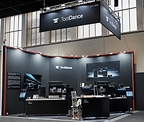
The ToolDance X1 will remain on display at Hall 17, Booth H17-205 at Messe Berlin from Sept. 4–8, 2026, with live machining demonstrations taking place throughout the event. The product is scheduled to launch on Kickstarter in October 2026.

For more information, visit: https://www.tooldance.ai

About ToolDance

ToolDance is a technology company focused on  smart desktop CNC solutions. With the vision of “Your Personal Factory,” ToolDance integrates hardware, software, and automation to make industrial-grade manufacturing capabilities more accessible, helping makers, engineers, professionals, and small businesses turn ideas into physical products more efficiently.

Note: Please translate the content first and provide a preview. The photos will be provided on Sept. 4.

Media Contact: info@tooldance.ai

View original content to download multimedia:https://www.prnewswire.com/news-releases/tooldance-unveils-x1-smart-desktop-cnc-mill-at-ifa-2026-302870568.html

SOURCE ToolDance

Continue Reading

Technology

Amwell Receives Frost & Sullivan’s 2026 United States Technology Innovation Leadership Recognition for Technology-Enabled Care Platforms

Published

on

By

Amwell® is transforming virtual care delivery through its unified Amwell Platform, combining interoperability, clinical integration, and intelligent orchestration to improve access, efficiency, and outcomes.

SAN ANTONIO, Sept. 5, 2026 /PRNewswire/ — As healthcare organizations move beyond fragmented telehealth solutions toward connected virtual care models, Amwell is helping redefine how digital care is delivered at scale. Frost & Sullivan is pleased to recognize Amwell with the 2026 United States Technology Innovation Leadership Recognition in the Technology-Enabled Care Platforms industry for its ability to address healthcare fragmentation through a unified platform that connects patients, health plan members, clinicians, and partner ecosystems across the care continuum.

Frost & Sullivan evaluates companies through a rigorous benchmarking process across two core dimensions: strategy effectiveness and strategy execution. Amwell excelled in both, demonstrating its ability to align strategic initiatives with evolving healthcare needs while executing with flexibility, scalability, and measurable customer impact. “The combination of reliability, flexibility, and clinically integrated workflows positions the Amwell Platform as a strategic enabler for organizations seeking to reduce fragmentation, improve member engagement with covered programs, expand access to care, and create more connected healthcare experiences,” said Sagar Mukhekar, Industry Analyst, Frost & Sullivan.

Guided by a strategy centered on connected care, interoperability, and continuous, digital innovation, Amwell has positioned the Amwell Platform as an operating layer for next-generation healthcare delivery. Rather than relying on disconnected point solutions, the platform integrates technology, services, and clinical intelligence to orchestrate personalized care experiences across virtual primary care, urgent care, behavioral health, chronic condition management, and specialized digital programs.

Backed by 20 years of technology-enabled care innovation, more than 90 million covered lives, and over 38.7 million virtual visits, Amwell continues to help health plans and healthcare organizations modernize digital care delivery at scale.

“As healthcare becomes more digital, it risks becoming more fragmented. Health plans need more than point solutions. They need enterprise infrastructure, clinical integration, and an open platform that brings partners and programs together. Our vision at Amwell is that technology creates value when it improves access, engagement, quality, and efficiency, and produces measurable clinical and business outcomes. We’re honored by this recognition from Frost & Sullivan,” said Dan Zamansky, Chief Product and Technology Officer at Amwell.

Amwell’s enterprise scale includes supporting the digital transformation of the Defense Health Agency’s Military Health System, serving approximately 9.6 million beneficiaries. The company’s commitment to measurable outcomes is also reflected in a landmark National Institute of Mental Health (NIMH)-funded study, published in Nature Human Behaviour and among the largest studies of its kind. The study found that students offered SilverCloud® by Amwell® engaged in mental healthcare at more than double the rate of traditional care, experienced lower rates of mental health disorders, and generated an estimated $1.18 million in avoided costs for the study population.

The company further differentiates its platform through intelligent orchestration and navigation, helping guide members to appropriate programs while giving clinicians visibility across care plans. Amwell also evaluates integrated third-party programs for clinical effectiveness, scalability, and enterprise readiness.

Frost & Sullivan commends Amwell for setting a high standard in competitive strategy, execution, and technological innovation. The company’s unified approach to digital care is helping reduce fragmentation, improve access, strengthen operational efficiency, and support more equitable and sustainable healthcare delivery.

Each year, Frost & Sullivan presents the Technology Innovation Leadership Recognition to a company that demonstrates outstanding strategy development and implementation, resulting in measurable improvements in market share, customer satisfaction, and competitive positioning. The recognition identifies forward-thinking organizations that are reshaping their industries through innovation and growth excellence.

Frost & Sullivan Best Practices Recognition

Frost & Sullivan’s Best Practices Recognitions honor companies across regional and global markets that exhibit exceptional achievement and consistent excellence in areas such as leadership, technological innovation, customer experience, and strategic product development. Each recognition is the result of a rigorous analytical process in which Frost & Sullivan industry experts benchmark performance through comprehensive interviews, deep-dive analysis, and extensive secondary research. The goal is to identify true best-in-class organizations that are driving transformative growth and setting new industry standards.
Contact us: Start the discussion.

Contact:
Ashley Shreve
E: ashley.weinkauf@frost.com 

SOURCE Frost & Sullivan

Continue Reading

Trending