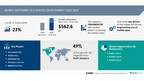
NEW YORK, Jan. 31, 2025 /PRNewswire/ — Report on how AI is redefining market landscape – The global software as a service (saas) market size is estimated to grow by USD 562.6 billion from 2025-2029, according to Technavio. The market is estimated to grow at a CAGR of 23% during the forecast period. Augmenting use of mobile apps is driving market growth, with a trend towards increasing use of vertical saas. However, issues associated with system integration poses a challenge. Key market players include Accenture PLC, Adobe Inc., Alphabet Inc., Amazon.com Inc., BetterCloud Inc., Box Inc., Cisco Systems Inc., Convedo Ltd., Fujitsu Ltd., Hewlett Packard Enterprise Co., Infosys Ltd., International Business Machines Corp., Intuit Inc., Microsoft Corp., Oracle Corp., Salesforce Inc., SAP SE, ServiceNow Inc., Shopify Inc., and Zendesk Inc..
Key insights into market evolution with AI-powered analysis. Explore trends, segmentation, and growth drivers- View Free Sample PDF
Software As A Service (SaaS) Market Scope
Report Coverage
Details
Base year
2024
Historic period
2019 – 2023
Forecast period
2025-2029
Growth momentum & CAGR
Accelerate at a CAGR of 23%
Market growth 2025-2029
USD 562.6 billion
Market structure
Fragmented
YoY growth 2022-2023 (%)
19.5
Regional analysis
North America, Europe, APAC, South America, and Middle East and Africa
Performing market contribution
North America at 49%
Key countries
US, Canada, UK, Germany, France, Japan, China, Italy, India, and Brazil
Key companies profiled
Accenture PLC, Adobe Inc., Alphabet Inc., Amazon.com Inc., BetterCloud Inc., Box Inc., Cisco Systems Inc., Convedo Ltd., Fujitsu Ltd., Hewlett Packard Enterprise Co., Infosys Ltd., International Business Machines Corp., Intuit Inc., Microsoft Corp., Oracle Corp., Salesforce Inc., SAP SE, ServiceNow Inc., Shopify Inc., and Zendesk Inc.
Market Driver
The SaaS market is experiencing significant growth with major players like Alphabet and Google Cloud Marketplace, Microsoft Cloud, IBM Cloud Integration, and IT companies dominating the scene. Remote work policies and Communication Service Providers are driving the demand for cloud computing technologies. SaaS products, including Human Resource Management, Enterprise Resource Planning, Customer Relationship Management, Artificial Intelligence, and Internet of Things, are leading the way. Trends like hybrid cloud, cloud security, and public/private cloud solutions are shaping the industry. Large enterprises in IT and telecom, healthcare, education, B2B and B2C sectors are major contributors. SaaS growth is fueled by flexibility, investment, and ongoing costs. Time and space are crucial as more employees use laptops, tablets, and mobile devices for work. Experts predict mobile SaaS growth, especially in SMEs, due to the subscription-based business model. However, challenges like downtime issues, competitive environment, and cybersecurity concerns persist. The Cloud Security Alliance reports data breaches and cyber-attacks as major concerns. Employee well-being and operational efficiency are also essential considerations. According to Statista, the market size is projected to grow, with flexibility being a significant factor. Deployment models, application areas, and ongoing costs vary, making it essential for businesses to choose the right SaaS products and partners.
Vertical Software as a Service (SaaS) refers to cloud computing solutions tailored for specific industries, such as retail, healthcare, or automotive manufacturing. These solutions offer customizable features to cater to the unique needs of each sector. Examples include retail analytics software, healthcare business intelligence tools, and logistics analytics. Enterprises seeking industry specialization find vertical SaaS cost-effective and beneficial. Vertical SaaS enables the generation of industry-specific customer data and intelligence, enhancing operational efficiency and decision-making capabilities.
Request Sample of our comprehensive report now to stay ahead in the AI-driven market evolution!
Market Challenges
The SaaS market is witnessing significant growth with major players like Alphabet, Google Cloud Marketplace, Google Workspace, Microsoft Cloud, IBM Cloud Integration, and IT companies offering various cloud software solutions. Remote work policies and communication service providers are driving the demand for cloud computing technologies. SaaS products, including Human Resource Management, Enterprise Resource Planning, Customer Relationship Management, Artificial Intelligence, and Internet of Things, are in high demand among large enterprises in IT and telecom, healthcare, education, B2B and B2C enterprises, and SMEs. Challenges include digitization level, VAT, quarterly earnings, and expert opinions. Public and private clouds, hybrid cloud, and deployment models like PaaS are relevant segments. Main drivers are flexibility, investment, ongoing costs, and time and space savings. Mobile SaaS growth is a major attributing factor, with mobile devices and 3D printing technologies leading the way. However, the competitive environment presents challenges like downtime issues, data security concerns, and employee well-being. Business models, digital transformation, and cybersecurity are ongoing concerns for SaaS providers. Cloud Security Alliance reports reveal data breaches and cyber-attacks as significant challenges. Companies must ensure compliance with current exchange rates and country-specific levels for optimal net returns. SaaS growth is a net positive for businesses, offering subscription-based access to information, applications, and team partnerships via the internet on laptops, tablets, and web browsers.Enterprises are increasingly turning to Software as a Service (SaaS) solutions due to their cost-effectiveness compared to traditional IT deployments. With SaaS, businesses avoid the need to purchase or construct their own IT infrastructures, install software, configure applications, and hire IT staff for maintenance. SaaS offers flexibility and adaptability, enabling enterprises to serve their customers more efficiently and enhance business processes. However, integrating new SaaS systems and IT infrastructure can present challenges. One such issue is connecting to monolithic systems, which combine UI and data access code into a single program from a single platform. Addressing these integration complexities is crucial for successful SaaS implementation.
Discover how AI is revolutionizing market trends- Get your access now!
Segment Overview
This software as a service (saas) market report extensively covers market segmentation by
Deployment 1.1 Public cloud1.2 Private cloud1.3 Hybrid cloudEnd-user 2.1 Large enterprises2.2 SMEsGeography 3.1 North America3.2 Europe3.3 APAC3.4 South America3.5 Middle East and Africa
1.1 Public cloud- The public cloud segment of the Software as a Service (SaaS) market is growing due to its elasticity and scalability, making it an ideal choice for IT-enabled services. Public cloud delivers IT services over the Internet, including software applications like email, sales management, CRM, financial management, HRM, billing, and collaboration. Vendors offer these services on a subscription-basis, providing multi-tenant capabilities, high availability, and reduced complexity. Enterprises benefit from no upfront investments, flexible pricing, and cost agility. Public SaaS solutions, such as Microsoft Office 365 and Slack, are widely adopted by SMEs for their simplicity and ease of implementation. Additionally, public cloud services offer access to advanced platform solutions like AI, big data, data analytics, and IoT. These advantages are driving the growth of the public cloud segment in the global SaaS market.
Download a Sample of our comprehensive report today to discover how AI-driven innovations are reshaping competitive dynamics
Research Analysis
The Software as a Service (SaaS) market is experiencing unprecedented growth due to the increasing shift towards remote work and digital transformation. SaaS products, including those for communication, collaboration, and productivity, have become essential for businesses of all sizes. The relevance of this segment is further amplified by the current global situation, which has accelerated the adoption of cloud-based solutions. Key drivers for the SaaS market include the level of digitization, time and cost savings, and the ability to access information, devices, and team partnerships from anywhere, at any time. Communication service providers and B2C enterprises are major consumers of SaaS solutions. The SaaS market is not limited to IT companies, with many other industries also adopting these services. Quarterly earnings reports and expert opinions provide insights into the financial health and future prospects of SaaS providers. The European Union’s Value-Added Tax (VAT) regulations also impact the SaaS market, adding complexity to pricing and billing structures. Main drivers of growth include the increasing use of laptops and tablets, as well as the integration of cloud consulting services and IBM Cloud Integration. Current exchange rates also play a role in the global SaaS market, with fluctuations impacting pricing and revenue for providers. The SaaS market is expected to continue its growth trajectory in the coming years, as more businesses embrace the benefits of cloud-based solutions.
Market Research Overview
The Software as a Service (SaaS) market is experiencing unprecedented growth, driven by the increasing digitization of businesses across various industries. SaaS products, delivered over the internet on a subscription basis, offer flexibility, cost savings, and ease of use for businesses of all sizes. SMEs and large enterprises in sectors like IT and telecom, healthcare, education, B2B and B2C, are adopting SaaS solutions for human capital management, operations management, communication, and more. Key drivers include the level of digitization, remote work policies, and the availability of cloud computing technologies. SaaS offerings span various application areas such as Enterprise Resource Planning, Customer Relationship Management, Artificial Intelligence, Internet of Things, and Robotic Process Automation. The market is competitive, with various solutions available for time, space, and information management. SaaS growth is majorly attributed to mobile SaaS, cloud-based software services, and team partnerships. However, businesses face challenges such as downtime issues, ongoing costs, data security concerns, and the need for employee well-being in the digital transformation era. SaaS solutions are available on public and private clouds, with hybrid cloud offerings gaining popularity. Main drivers of SaaS market growth include the flexibility of subscription models, ongoing investment, and the availability of various SaaS products. Statistics show that the market is expected to continue growing, with experts predicting significant expansion in the coming years. However, businesses must carefully consider the costs of hosting data, electricity, and employee fees when adopting SaaS solutions. Competitive environment and cybersecurity concerns are also major considerations. In conclusion, the SaaS market offers numerous benefits for businesses, but careful consideration is required when selecting a solution. Factors such as deployment, application area, and ongoing costs must be taken into account. With the right solution, businesses can streamline operations, improve efficiency, and stay competitive in today’s digital landscape.
Table of Contents:
1 Executive Summary
2 Market Landscape
3 Market Sizing
4 Historic Market Size
5 Five Forces Analysis
6 Market Segmentation
DeploymentPublic CloudPrivate CloudHybrid CloudEnd-userLarge EnterprisesSMEsGeographyNorth AmericaEuropeAPACSouth AmericaMiddle East And Africa
7 Customer Landscape
8 Geographic Landscape
9 Drivers, Challenges, and Trends
10 Company Landscape
11 Company Analysis
12 Appendix
About Technavio
Technavio is a leading global technology research and advisory company. Their research and analysis focuses on emerging market trends and provides actionable insights to help businesses identify market opportunities and develop effective strategies to optimize their market positions.
With over 500 specialized analysts, Technavio’s report library consists of more than 17,000 reports and counting, covering 800 technologies, spanning across 50 countries. Their client base consists of enterprises of all sizes, including more than 100 Fortune 500 companies. This growing client base relies on Technavio’s comprehensive coverage, extensive research, and actionable market insights to identify opportunities in existing and potential markets and assess their competitive positions within changing market scenarios.
Contacts
Technavio Research
Jesse Maida
Media & Marketing Executive
US: +1 844 364 1100
UK: +44 203 893 3200
Email: media@technavio.com
Website: www.technavio.com/
View original content to download multimedia:https://www.prnewswire.com/news-releases/software-as-a-service-saas-market-to-grow-by-usd-562-6-billion-2025-2029-driven-by-rising-mobile-app-usage-with-ai-impacting-market-trends—technavio-302364484.html
SOURCE Technavio







 Technology4 days ago
 Technology3 days ago
 Technology4 days ago
 Technology5 days ago
 Technology4 days ago
 Technology4 days ago
 Technology4 days ago