Technology
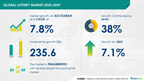
Lottery Market to grow by USD 235.6 Billion from 2025-2029, Driven by rising online lottery penetration, with a report on AI’s impact on market trends – Technavio
Published
2 years agoon
By
NEW YORK, Feb. 7, 2025 /PRNewswire/ — Report on how AI is redefining market landscape – The global lottery market size is estimated to grow by USD 235.6 billion from 2025-2029, according to Technavio. The market is estimated to grow at a CAGR of 7.8% during the forecast period. Increasing penetration of online lottery is driving market growth, with a trend towards adoption of advanced technologies by lottery operators. However, stringent regulations on lottery in various regions poses a challenge. Key market players include Agento N.V, Arizona Lottery, Camelot UK Lotteries Ltd., China LotSynergy Holdings Ltd., Colorado Lottery, Florida Lottery, Gaming China, Georgia Lottery Corp., International Game Technology plc, INTRALOT SA, Jumbo Interactive Ltd., Lotto NZ, Maruhan Co. Ltd., New York State Gaming Commission, Scientific Games LLC, STM LOTTERY SDN BHD, Tabcorp Holdings Ltd., The California State Lottery, and The Hong Kong Jockey Club.
Key insights into market evolution with AI-powered analysis. Explore trends, segmentation, and growth drivers- View Free Sample PDF
Lottery Market Scope
Report Coverage
Details
Base year
2024
Historic period
2019 – 2023
Forecast period
2025-2029
Growth momentum & CAGR
Accelerate at a CAGR of 7.8%
Market growth 2025-2029
USD 235.6 billion
Market structure
Fragmented
YoY growth 2022-2023 (%)
7.1
Regional analysis
North America, APAC, Europe, South America, and Middle East and Africa
Performing market contribution
APAC at 38%
Key countries
US, China, Canada, Italy, France, Japan, Spain, India, Brazil, and UAE
Key companies profiled
Agento N.V, Arizona Lottery, Camelot UK Lotteries Ltd., China LotSynergy Holdings Ltd., Colorado Lottery, Florida Lottery, Gaming China, Georgia Lottery Corp., International Game Technology plc, INTRALOT SA, Jumbo Interactive Ltd., Lotto NZ, Maruhan Co. Ltd., New York State Gaming Commission, Scientific Games LLC, STM LOTTERY SDN BHD, Tabcorp Holdings Ltd., The California State Lottery, and The Hong Kong Jockey Club
Market Driver
The global lottery market is predominantly regulated by governments and expanding the business can be challenging. To engage customers, vendors focus on incorporating technology to enhance the lottery experience. Online platforms offer new opportunities, with consumers shifting towards digital channels. Vendors aim to provide social experiences and interaction through group games, faster game speed, and improved graphics. Emerging technologies like Virtual Reality (VR) and Artificial Intelligence (AI) offer more realistic experiences and consumer insights. An omnichannel approach allows players to seamlessly shift channels, enhancing convenience. Big data and IoT devices provide valuable customer insights, enabling operators to predict trends, target customers, and personalize content. The adoption of digital currency and IoT devices in China’s lottery market presents new growth opportunities. For instance, China’s digital currency lottery and red packet distribution in Beijing demonstrate the potential of technology in the lottery industry. By leveraging technology in sales channels and other aspects, vendors can expand their customer base and maintain a competitive edge.
The lottery market is experiencing significant growth in the digital world, with more customers opting for online platforms for convenience and accessibility. Lottery operators are focusing on banking security and reliable betting processes to ensure customer trust. Cybercrime is a concern, leading to the implementation of online encryption and strict legal frameworks. Internet penetration and the number of internet users continue to rise, driving demand for online lottery games like Lotto and virtual games. Winning prizes through online gambling is becoming increasingly popular, with large rewards attracting a large number of footfalls. Social media and smartphones are key channels for marketing and reaching customers. Digital tools like touch displays, actuators, and blockchain technology are being used to enhance the gaming experience and ensure data security. Online vendors must prioritize reliability and security to build customer trust and stay competitive in this rapidly evolving market.
Request Sample of our comprehensive report now to stay ahead in the AI-driven market evolution!
Market Challenges
The lottery market is a regulated industry, closely tied to social responsibility. Governments, in many cases, operate or license lotteries to generate revenue. In Austria, Casinos Austria holds a monopoly until 2027. Most EU countries reserve lotteries for monopoly operators. China and Taiwan have sports lottery monopolies. Hong Kong Jockey Club has a monopoly in Japan. US states manage official lotteries for public benefit. Private companies, when granted licenses, face strict guidelines on advertising, prize awarding, and lottery frequency. Contracts are long-term, ranging from 5-10 years. Due to high risk and socio-economic impact, governments regulate lotteries, limiting market entry and growth.In the Lottery market, moving online presents several challenges. Ensuring online encryption for secure transactions is crucial in the digital world. Reliability and security are key concerns for online vendors offering virtual games of chance like lotteries. Social media platforms have made lotteries more accessible, increasing participation. Winning prizes in online lotteries involves a low-odds process, chosen at random. Trust and transparency are essential in this gaming sector. Online gambling and lotteries require databases and data structures to manage transactions efficiently. Blockchain technology offers a solution, eliminating middlemen and enhancing security. Actuators and touch displays on smartphones bring a more interactive experience. However, the large reward potential attracts potential fraudsters, making security a top priority. The lottery market continues to evolve, requiring digital tools and innovation to meet customer demands in the internet age.
Discover how AI is revolutionizing market trends- Get your access now!
Segment Overview
This lottery market report extensively covers market segmentation by
PlatformOfflineOnlineTypeTerminal-based GamesScratch-off GamesSports LotteriesGeographyNorth AmericaAPACEuropeSouth AmericaMiddle East And Africa
1.1 Offline- The offline lottery segment dominated the global lottery market in 2023, accounting for the largest share, due to its extensive reach and high consumer awareness. Most offline lotteries are government-run, providing safety from online fraud and scams, and catering to diverse demographics, including older adults and those with limited internet access. Offline platforms include casinos and designated outlets, which are expanding their reach through new sales strategies and retail partnerships. Governments also promote lotteries as a source of funding for good causes. However, the offline segment’s geographic limitations and the growing popularity of online lotteries for their convenience and flexibility will result in significant market share reduction during the forecast period.
Download a Sample of our comprehensive report today to discover how AI-driven innovations are reshaping competitive dynamics
Research Analysis
The Lottery market is a thriving industry that offers customers the excitement of winning big prizes through a game of chance. With the shift towards digital platforms, lotteries have transformed from traditional draw-based games sold through physical outlets to online gambling experiences. Banking security and technology play a crucial role in ensuring the reliability and integrity of the betting processes. Online encryption and user authentication are essential to protect customers from cybercrime. The graphical user interface of digital lottery platforms is designed to be user-friendly, making it easy for customers to purchase lottery tickets and check their winnings. The number of footfalls in lottery outlets and online platforms continues to grow as more people are drawn to the thrill of the draw. Winning prizes in lotteries, whether it’s Lotto or other low-odds processes, can bring life-changing fortune to individuals. However, the responsibility of ensuring fairness and transparency lies with the lottery organizers, making it essential to maintain the highest standards of security and trust.
Market Research Overview
The lottery market in the digital world is witnessing significant growth as more customers turn to online platforms for convenience and accessibility. With the increasing internet penetration and number of internet users, lottery operators are leveraging digital tools and touch displays to offer virtual games like Lotto and number games. The betting processes are secure with online encryption and reliable transaction systems, ensuring customers’ banking security. However, cybercrime remains a concern, necessitating stringent legal frameworks and compliance. Lottery tickets are sold by online vendors, and winning prizes are announced through digital drawing processes, chosen at random. The gaming sector is embracing blockchain technology for transparency and eliminating middlemen, offering a low-odds process for large rewards. Social media and smartphones are popular channels for promoting and playing online games. The future of lotteries lies in the digital realm, with the integration of actuators, database, and data structures for seamless transactions.
Table of Contents:
1 Executive Summary
2 Market Landscape
3 Market Sizing
4 Historic Market Size
5 Five Forces Analysis
6 Market Segmentation
PlatformOfflineOnlineTypeTerminal-based GamesScratch-off GamesSports LotteriesGeographyNorth AmericaAPACEuropeSouth AmericaMiddle East And Africa
7 Customer Landscape
8 Geographic Landscape
9 Drivers, Challenges, and Trends
10 Company Landscape
11 Company Analysis
12 Appendix
About Technavio
Technavio is a leading global technology research and advisory company. Their research and analysis focuses on emerging market trends and provides actionable insights to help businesses identify market opportunities and develop effective strategies to optimize their market positions.
With over 500 specialized analysts, Technavio’s report library consists of more than 17,000 reports and counting, covering 800 technologies, spanning across 50 countries. Their client base consists of enterprises of all sizes, including more than 100 Fortune 500 companies. This growing client base relies on Technavio’s comprehensive coverage, extensive research, and actionable market insights to identify opportunities in existing and potential markets and assess their competitive positions within changing market scenarios.
Contacts
Technavio Research
Jesse Maida
Media & Marketing Executive
US: +1 844 364 1100
UK: +44 203 893 3200
Email: media@technavio.com
Website: www.technavio.com/
View original content to download multimedia:https://www.prnewswire.com/news-releases/lottery-market-to-grow-by-usd-235-6-billion-from-2025-2029–driven-by-rising-online-lottery-penetration-with-a-report-on-ais-impact-on-market-trends—technavio-302371237.html
SOURCE Technavio
You may like
Technology
Payoneer India Cross-Border Excellence Awards 2026 closes with a blueprint for India’s next export leap
Published
49 minutes agoon
October 22, 2026By
Synopsis: India’s exports hit a record $863.1 billion in FY26, yet the businesses driving that growth rarely share the spotlight. On September 25 in New Delhi, the Payoneer India Cross-Border Excellence Awards 2026, in association with The Economic Times, closed its 2026 cycle with a summit on market access, growth corridors and outbound compliance, and 16 category winners that show what Indian global enterprise looks like today.
NEW DELHI, Oct. 22, 2026 /PRNewswire/ — India’s combined goods and services exports reached an all-time high of $863.1 billion in FY26, according to the Ministry of Commerce and Industry. Services did the heavy lifting: they rose 8.7% to a record $421.3 billion, up from $387.5 billion a year earlier, and now make up 48.8% of the country’s total export basket. Back in FY15, services exports stood at $158.1 billion.
But the road ahead demands even greater resilience, more rigorous execution and stricter regulatory compliance. The Centre’s target is $2 trillion in exports by 2030-31, split evenly at $1 trillion each for goods and services. That means more than doubling today’s record in five years, a point a Commerce Ministry official made in August, when he said the goal calls for structural transformation rather than incremental gains. E-commerce shows the scale of the climb: the government’s target of $200-300 billion in e-commerce exports by FY30 starts from an estimated $4-5 billion in FY23, according to a July 2024 EY-ASSOCHAM report. Ambitions of that scale raise a simple question: who, exactly, is going to deliver them?
That question sat at the heart of the Payoneer India Cross-Border Excellence Awards 2026, presented in association with The Economic Times. On the evening of September 25, in New Delhi, the programme answered it in two ways: first with a summit, then with an awards ceremony.
Before the trophies, the playbook
After a welcome address by Pranbihanga Borpuzari, Senior Editor, Economictimes.com, the evening moved through three conversations, each diving into a different stage of an Indian business’s journey abroad: getting access, finding the route, and building the structure to stay.
Nagesh Devata, Senior Vice President and Head of APAC, at Payoneer, delivered the inaugural address, India’s Next Export Leap: Turning Global Market Access into Growth. Earlier that summer, on July 15, the India-UK Comprehensive Economic and Trade Agreement entered into force, giving zero-duty access on about 99% of tariff lines, covering nearly all of India’s export value to Britain, and opening services commitments across 137 sub-sectors, according to the Ministry of Commerce and Industry. The India-EU free trade agreement, concluded in January, awaits ratification, and Oman’s agreement is in force, while the signed New Zealand agreement is set to expand access.
The panel that followed, India’s New Growth Corridors: Building Pathways to Global Markets, brought together Dr. Abhay Sinha, Director General of the Services Export Promotion Council (SEPC), Commodore Bunty Sethi, IN (Retd.), Director, Aerospace & Defence, UK India Business Council, and Dr. Sridevi Arunachalam, Founder, Indo – UAE Economic Chamber of Commerce, with Borpuzari moderating. Between them sat two of the most consequential corridors for Indian exporters today: services, now close to half of the country’s export earnings, and advanced manufacturing tied into global supply chains.
The third conversation entered the regulatory landscape. The fireside chat, Going Global: Navigating ODI Regulations & Compliance for Indian Businesses, featured MS Mani, Partner at Deloitte, and Pashupati Nath, Partner at Khaitan & Co, in discussion with Gaurav Shisodia, Vice President & Country Manager, Payoneer India. For a growing business, the step from exporting to a market to setting up an entity in it is where ambition meets paperwork, and where the rules on overseas direct investment decide how smoothly that step is taken.
The awards were presented in two acts, from 7:00 PM and again from 8:00 PM, with the compliance conversation placed squarely between them. Recognition and know-how were shared on one stage, and the dinner and networking that closed the night gave both room to carry on.
The problem: A growth story without its protagonists
The summit’s agenda mirrored the problem the programme was built to solve. India’s recognition landscape is crowded with startup and entrepreneurship honours, but very few platforms focus specifically on businesses that have built and scaled international revenue. Businesses earning international revenue have not always received recognition proportionate to their contribution.
That invisibility carries a real cost. A mid-sized exporter pitching a distributor in Dubai or a procurement team in Frankfurt has little independent, third-party validation to point to. Many businesses serving global customers also defy tidy labels, whether a bookkeeping firm running offshore finance teams, a regional OTT platform selling to the diaspora, or a steelmaker supplying renewable-energy projects abroad. Lumped into generic categories, they are either misjudged or missed altogether.
The programme’s mission spoke directly to that problem statement: to set a national benchmark for export excellence, backed by a transparent evaluation and an expert jury, so that recognition means something to global partners and not just to peers at home. Its vision was captured in the sentiment of honouring the visionaries building India’s $2-trillion export future.
The culmination of a recognition journey
The recognition carried weight because the programme was designed to look beyond headline growth. Its jury, evaluation framework and categories reflected the different ways Indian businesses build a presence abroad.
A jury that demonstrated credibility: Four jurors brought four vantage points: Dr. Abhay Sinha of SEPC on export policy and promotion; Dr. Abhilasha Gaur, CEO of SSC NASSCOM, on the talent pipeline behind India’s services exports; Dr. Sridevi Arunachalam, Founding Chairman and President of the Indo UAE Economic Chamber of Commerce, on bilateral trade and market access; and Sarita Raichura, Director at Blume Ventures, on what it takes to scale a company.
A transparent, weighted evaluation framework: Nominees were scored on a weighted framework, and the weights tell their own story. Growth and scale carried 40%, measured on revenue trajectory over two to three years, with billed foreign revenue as the yardstick for service exporters. Market reach and diversification carried 30%, a clear signal that dependence on a single overseas market is a risk rather than a strength. Innovation and differentiation (15%), employment and community impact (10%), and digital infrastructure and payments readiness (5%) completed the picture of a business built to last abroad.
Categories that exhibit how India actually exports: Instead of one catch-all trophy, sixteen categories across four tracks gave distinct business models a fair hearing: six for service exports, three for e-commerce product verticals, four independent categories spanning direct-to-consumer (D2C) brands, global employers, women-led export businesses and incorporation partners, and three regional honours covering North India, South India, and West & East India.
The top honours, an ecosystem celebrated
The awards ceremony ensured it represented a diverse cross-section of the new export economy. Technology and services were there in force: SalesCode.ai, an AI-native route-to-market platform for consumer goods companies, says it operates in 25 countries, while Nexdigm reports clients in more than 50. But so were businesses that rarely feature in conversations about India’s global rise. Anuradha Gupta, CEO of Amantya Technologies Pvt Ltd, took home the Women in Export Excellence title. Amantya is a global technology company working across telecom, cloud, AI, and digital engineering. CTA Apparels, the Global Employer winner, employs more than 6,000 people. The SaaS & B2B Solutions honour went to Xoxoday, a B2B SaaS company focused on rewards, incentives, loyalty and recognition. Ziegler Aerospace, which makes structures and seat components for aviation customers abroad, was named Regional Export Leader in the South India category. Careerera LLC received the Edtech award for its online platform focused on career advancement, upskilling and reskilling.
Category
Winner
Runner-up
Service exports
IT & Development
HIC Global Solutions
iTechnolabs
AI & ML
SalesCode.ai
CapitalNumbers Infotech
Limited
Accounting, Bookkeeping &
Micro GCC
Nexdigm
Enterslice
Digital Marketing Services
Speqto Technologies Pvt.
Ltd.
Infinite Locus
EdTech
Careerera LLC
MYCPE ONE Solutions
Private Limited
SaaS & B2B Solutions
Xoxoday
Increff
E-commerce
Fashion & Apparel
IBA Crafts Pvt. Ltd.
Mehta E-Retail India
Home & Kitchen
Eurospa TerryTowels Pvt.
Ltd.
Artociti Canvas Pvt. Ltd.
Personal Care, Health &
Wellness
Behal International
Isak Fragrances
Independent categories
Company Incorporation
Partner
USAIndiaCFO
10x Global
Women in Export
Excellence
Amantya Technologies Pvt.
Ltd. (Anuradha Gupta,
CEO)
House of Kraft (Neha
Khanna, CEO & Co-
Founder)
D2C Cross-Border Brand
Chaupal OTT
Yo Tours (Wanderung
Guides Private Limited)
Educational Media Centre
Global Employer
CTA Apparels Pvt. Ltd.
Trexo Global
Regional export leaders
North India
Integral Logistics Services
(ILS)
Dolfin Rubbers Limited
South India
Ziegler Aerospace
Recipharm Pharmaservices
Pvt. Ltd.
West & East India
Laxcon Steels Limited
Kalapi Engineering
Associates Pvt. Ltd.
The impact: A benchmark, a stage and a signal
Measured against the problem it set out to solve, the programme leaves behind three things.
The evaluation framework offers a practical picture of what the programme values in export-ready businesses. For businesses still building toward global scale, that is a practical checklist.
Winners gain visibility across The Economic Times and Payoneer platforms and their social channels, putting their stories in front of investors, partners and decision-makers. For a firm pitching a buyer overseas, a nationally benchmarked recognition is credibility it can carry into the room.
By pairing the ceremony with sessions on trade agreements, growth corridors and overseas investment rules, the programme treated recognition and capability as two halves of one job. The message to the sector was clear: the next phase of India’s export growth will be won as much on execution as on ambition.
India’s export story has long been told in aggregates, in billions and percentages and targets. On one evening in New Delhi, it was told in names, celebrating the businesses building what India will take to the world and signalling the road ahead.
About Payoneer
Payoneer is the financial platform for cross-border business and global payments. Payoneer empowers millions of businesses with the financial tools and services they need to grow and transact globally with confidence. Payoneer makes it easier for businesses, particularly in emerging markets, to connect to the global economy, pay and get paid across borders, manage their funds across multiple currencies, and grow their businesses.
About The Economic Times
The Economic Times is India’s leading financial daily and one of the world’s most widely read English-language business publications. Its digital and print platforms reach executives, policymakers, investors and business leaders across the world.
View original content to download multimedia:https://www.prnewswire.com/in/news-releases/payoneer-india-cross-border-excellence-awards-2026-closes-with-a-blueprint-for-indias-next-export-leap-302916713.html
Technology
NUS researchers thread the world’s first touchscreen into a garment
Published
50 minutes agoon
October 22, 2026By
SINGAPORE, Oct. 22, 2026 /PRNewswire/ — Researchers at the National University of Singapore’s College of Design and Engineering (CDE) have developed a fibre that functions as pixels and senses touch at the same time, integrating 54 of them into a sleeve to create the world’s first touchscreen built into a garment.
The sleeve displays images and video, responds to finger presses and connects wirelessly to other devices, yet stays as washable, breathable and flexible as ordinary clothing. The team’s invention enables the creation of garments that act as a direct interface to a wearer’s health data and their digital devices, with no rigid screen involved.
The screens that we are familiar with, such as those on phones and laptops, typically present graphical user interfaces (GUIs) on flat, rigid panels that display information and enable interaction. Textiles, woven from one-dimensional fibres, have never matched this capability. A full-colour, touch-sensitive display that can be threaded like yarn was, until now, out of reach.
“What made this possible was our ability to construct the GUI system from electronic building blocks in fibre form — similar to traditional yarn, but with the sophisticated electronic functionality built directly into the fibres,” said Asst Prof Khudiyev.
The team, led by Assistant Professor Tural Khudiyev from the Department of Materials Science and Engineering at CDE, published their findings in Nature on 21 October 2026.
Interconnecting thousands of chips along a thread
To build a fibre-enabled garment display, the NUS team developed a programmable method that creates connection points along tiny, insulated wires exactly where each microchip needs them. A laser exposes these locations, while controlled surface wetting guides molten solder to bond only at the programmed points. This enabled the team to integrate more than 5,000 chips through over 20,000 electrical connections.
The strip of interconnected digital LEDs was then integrated into a multilayer fibre using a thermal drawing approach, which allows precise formation of the touch-sensitive and pixel layers within a thread just a millimetre thick and 10 metres long. A layer beneath the LEDs senses touch — pressing the fibre completes a circuit, and the signal reveals exactly where your finger landed so the nearest pixel lights up.
“A fibre has a one-dimensional, axially symmetric geometry, which makes it difficult to build complex circuitry using approaches developed for conventional two-dimensional electronics,” added Asst Prof Khudiyev. “We overcame this limitation through a new interconnection architecture, which enables thousands of microelectronic devices to be integrated and interconnected along a fibre.”
Beyond the touchscreen: Wear your apps on your sleeve
In the team’s prototype, 54 pixel fibres, each carrying 96 LEDs, were threaded into the forearm of a sleeve to form a 96 by 54-pixel display measuring 168 mm by 105 mm, refreshing 30 frames per second with 8-bit colour depth. Each fibre has its own control channel, so a fault in one line leaves its neighbours working normally, and the system can register several touches at once. Alongside the pixel fibres, the team integrated peripheral fibres made the same way, carrying a microphone, a speaker and sensors that track movement, find magnetic north, measure temperature and gauge how bright the surroundings are.
Together, the fibres support the functions early generations of smartphones could perform: run a calculator, show a photo gallery, play a video at 30 frames per second (25 frames per second with synchronised audio), work as a compass, respond to voice commands, and receive images over Bluetooth. They can even rotate the screen and adjust brightness automatically. When positioned under the arm, the temperature-sensing fibre lets the sleeve read and display body temperature.
Importantly, the garment still behaves like fabric. Light output and touch response were nearly unchanged after 50 detergent washes in a typical washing machine, and after 1,000 bends around a 5 mm radius. In addition, the built display is as breathable as cotton, polyester and denim, and stays within established safety limits for skin contact.
Clothing as an interface
Smaller microchips and thinner fibres, both compatible with the team’s method, offer a route to sharper and larger displays. Furthermore, as the display and sensing elements sit along the length of the fibre, the thinner fibres can be knitted, weaved and embroidered using standard industrial machines. The same technology could one day perform other functions such as tracking health signs and delivering touch-based feedback.
“Healthcare is one particularly promising application,” said Asst Prof Khudiyev. “A garment could continuously collect physiological information through fibre-based sensors and allow the wearer to access and interact with that information directly through their clothing. Combined with artificial intelligence (AI), this could enable personalised health monitoring, feedback and assistance. Just as smartphones enabled applications that were difficult to imagine when they first appeared, garment GUIs could ultimately enable entirely new applications that do not yet exist.”
What’s next
The research team’s next step is to push the textile touchscreen further—towards higher resolution, integrated sensing and on-device AI, bringing display, touch, sensing and intelligence together within the same textile platform. This convergence could take the technology far beyond a wearable screen, towards clothing that understands both the wearer and their surroundings, providing information or interaction when and where needed.
The researchers are now developing a new interface between people and digital intelligence—one that extends beyond a device users carry to become a natural part of what they wear.
Read more at: https://news.nus.edu.sg/worlds-first-touchscreen-in-garment
View original content:https://www.prnewswire.com/news-releases/nus-researchers-thread-the-worlds-first-touchscreen-into-a-garment-302916717.html
SOURCE National University of Singapore
Technology
Coretelligent Appoints Vince DeLuca as Chief Executive Officer
Published
50 minutes agoon
October 22, 2026By
Accomplished technology services executive brings more than 30 years of leadership experience, a proven track record of scaling businesses, and a commitment to exceptional client experiences.
NEEDHAM, Mass., Oct. 22, 2026 /PRNewswire-PRWeb/ — Coretelligent, a leading provider of managed IT, cybersecurity, cloud, and technology solutions, today announced the appointment of Vince DeLuca as Chief Executive Officer. DeLuca brings more than 30 years of technology services leadership experience, including a successful track record of scaling businesses, leading organizational transformations, and creating enterprise value across the U.S. and UK markets.
DeLuca most recently served as CEO of Six Degrees, a UK-based managed cloud and technology services provider, where he led the company through its successful acquisition by Claranet in June 2026. Previously, he served as CEO of Sapphire Systems, an enterprise software and digital transformation services provider, guiding the company’s transformation and successful sale to NTT DATA Business Solutions in 2023. Earlier in his career, DeLuca spent a decade leading Logicalis US, where he drove significant growth and established the business as a leading technology solutions provider in the North American market.
DeLuca will lead Coretelligent’s next phase of development, with a focus on delivering exceptional client experiences, strengthening operational excellence, and driving sustainable, profitable growth. The company will continue building on its established managed IT and cybersecurity expertise while advancing capabilities in cloud, automation, and AI to help clients address evolving business and technology challenges.
“Coretelligent has a strong foundation, talented people, and an important role to play in helping our clients navigate an increasingly complex technology landscape,” said DeLuca. “Our opportunity is to build on those strengths by putting clients at the center of everything we do, raising the standard of service we provide, and bringing forward innovative solutions that create meaningful business value. I’m looking forward to working with our team to strengthen the fundamentals of our business, consistently deliver on our commitments to clients, and build a stronger Coretelligent for the future.”
“Vince brings an exceptional combination of industry expertise, operational discipline, and proven leadership in building and transforming technology services businesses,” said Adam Garcia Eveloff, Partner at Norwest Equity Partners and a member of Coretelligent’s board of directors. “His track record of developing high-performing organizations, strengthening client relationships, and driving sustainable growth makes him the right leader to guide Coretelligent through its next chapter. We are excited about the opportunities ahead under his leadership.”
About Coretelligent
Coretelligent is a provider of managed IT and technology solutions, specializing in IT strategy, cybersecurity, compliance, cloud services, data management, and emerging AI and automation capabilities. Founded in 2006 and headquartered in the Boston metropolitan area, Coretelligent serves clients nationwide and has been a Norwest Equity Partners portfolio company since 2021. For more information, visit www.coretelligent.com.
Media Contact
Jennifer Blazauskas, Coretelligent, 1 855-841-5888, marketing@core.tech, www.coretelligent.com
Twitter, LinkedIn
View original content:https://www.prweb.com/releases/coretelligent-appoints-vince-deluca-as-chief-executive-officer-302916493.html
SOURCE Coretelligent
Payoneer India Cross-Border Excellence Awards 2026 closes with a blueprint for India’s next export leap
NUS researchers thread the world’s first touchscreen into a garment
Coretelligent Appoints Vince DeLuca as Chief Executive Officer
Send Rakhi to UK swiftly with UK Gifts Portal
Whiteboard Series with NEAR | Ep: 45 Joel Thorstensson from ceramic.network
Nullmax and Renesas Forge Strategic Partnership to Deliver Competitive ADAS Solutions for the Global Market
Why You Should Build on #NEAR – Co-founder Illia Polosukhin at CV Labs
Whiteboard Series with NEAR | Ep: 45 Joel Thorstensson from ceramic.network
NEAR End of Year Town Hall 2021: The Open Web World, MetaBUILD 2 Hackathon and 2021 recap
Trending
-
Technology5 days agoHighland and Bath Counties, Virginia Go Live on a Shared Caliber Hosted CAD Environment
-
Technology5 days agoJinkoSolar Unveils Tiger Neo 5.0 All-Black Residential Solar Module with 25.52% Efficiency
-
Technology4 days agoBioethanol from human hair – Indian start-up’s solution to rising prices of grains and sugar
-
Technology3 days agoGMIF2026: AI Inference Powers the “Token Factory” and Drives System-Level Rethinking of Memory & Storage
-
Technology3 days agoInstaMall Launches Same-Day Fashion Delivery Experience, Bringing 80+ Brands to Shoppers’ Doors in Miami
-
Technology4 days agoLinktel Technologies Highlights Breakthrough 1.6T LPO Performance & Strong Market Pull at OCP 2026
-
Coin Market3 days agoWorld Liberty’s USD1 stablecoin sheds $400M in market cap in two weeks
-
Technology3 days agoTruecaller announces preliminary numbers for the third quarter 2026