Connect with us

Technology

Sharing Economy Market to Grow by USD 1.12 Trillion by 2029, Rising Online Ride-Hailing Services Boost Market, Report on How AI is Driving Transformation – Technavio

Published

on

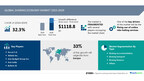
NEW YORK, Feb. 6, 2025 /PRNewswire/ — Report with the AI impact on market trends – The global sharing economy market size is estimated to grow by USD 1.12 trillion from 2025-2029, according to Technavio. The market is estimated to grow at a CAGR of  32.3%  during the forecast period. Rising use of online ride-hailing services is driving market growth, with a trend towards growing adoption of blockchain technology in sharing economy market. However, regulatory challenges associated with sharing economy apps and platforms  poses a challenge. Key market players include Accor S.A., Airbnb Inc., Avis Budget Group Inc., Avis India, Bollore SE, cambio Mobilitatsservice GmbH and Co. KG, Comuto SA, Couchsurfing International Inc, DiDi Inc., DoorDash Inc., Eatwith, Expedia Group Inc., HomeRoom Inc, Homestay Technologies Ltd., HubbleHQ, JustPark Parking Ltd, Lyft Inc., Microsoft Corp., Neutron Holdings Inc., Practo Technologies Pvt. Ltd., SPOTAHOME S.L.U, Stashbee Ltd, Uber Technologies Inc., and WeWork Inc.

Key insights into market evolution with AI-powered analysis. Explore trends, segmentation, and growth drivers- View Free Sample PDF

Sharing Economy Market Scope

Report Coverage

Details

Base year

2024

Historic period

2019 – 2023

Forecast period

2025-2029

Growth momentum & CAGR

Accelerate at a CAGR of 32.3%

Market growth 2025-2029

USD 1118.8 billion

Market structure

Fragmented

YoY growth 2022-2023 (%)

25.7

Regional analysis

APAC, Europe, North America, South America, and Middle East and Africa

Performing market contribution

Europe at 33%

Key countries

US, China, Germany, Japan, UK, South Korea, France, Canada, Brazil, and Saudi Arabia

Key companies profiled

Accor S.A., Airbnb Inc., Avis Budget Group Inc., Avis India, Bollore SE, cambio Mobilitatsservice GmbH and Co. KG, Comuto SA, Couchsurfing International Inc, DiDi Global Inc., DoorDash Inc., Eatwith, Expedia Group Inc., HomeRoom Inc, Homestay Technologies Ltd., HubbleHQ, JustPark Parking Ltd, Lyft Inc., Microsoft Corp., Neutron Holdings Inc., Practo Technologies Pvt. Ltd., SPOTAHOME S.L.U, Stashbee Ltd, Uber Technologies Inc., and WeWork Inc

Market Driver

The Sharing Economy, also known as the Peer Economy, is revolutionizing the way we buy and sell goods, services, and even assets. This trend, driven by digital platforms and online markets, enables peer-to-peer transactions through ride-sharing services, home-sharing services, and peer-to-peer financing channels. It’s changing the face of capitalism, offering alternatives to conventional ownership models for commuters, travelers, and entrepreneurs. The Sharing Economy includes ride-sharing, short-term lodging services, delivery, pet care, freelancing platforms, and more. It caters to budget-conscious people, addressing their financial burdens and offering affordable services. This multidimensional strategy focuses on consumer loyalty, entrepreneurial innovation, and environmental responsibility. However, challenges such as consumer data privacy, security breaches, safety standards, and information security are crucial concerns. Regulations and data protection laws are essential to protect consumers’ expectations and ensure data security measures. The Sharing Economy is not limited to ride-sharing and lodging; it’s expanding into various sectors like finance, workspaces, and even entertainment. It’s a global phenomenon, with smartphone applications, real-time tracking, and secure payment methods making transactions seamless. The future of the Sharing Economy is promising, with trends like electric bikes, scooters, autonomous cars, and carpooling shaping the mobility scene. It’s a flexible, affordable, and sustainable way to access goods and services, making it an attractive option for Generation Z, Millennials, Generation X, and Boomers alike. 

The incorporation of blockchain technology into the sharing economy market holds immense potential for addressing fundamental challenges and fueling growth. Blockchain, a decentralized and distributed digital ledger system, offers immutable transaction records and smart contracts, bolstering security, transparency, and trust within this sector. A key advantage is the enhancement of identity verification and reputation systems. Blockchain ensures secure and transparent user identity validation, minimizing fraudulent activities. Reputation scores, essential for peer-to-peer transactions, can be securely stored on the blockchain, providing a dependable measure of trustworthiness for both service providers and consumers. 

Request Sample of our comprehensive report now to stay ahead in the AI-driven market evolution!

Market Challenges

The Sharing Economy Market, also known as the Peer Economy, is revolutionizing the way we consume goods, services, and assets. This business model allows individuals to rent, share, or exchange resources through digital platforms, facilitating peer-to-peer transactions. Ride-sharing services, home-sharing services, peer-to-peer financing channels, co-working facilities, and freelancing platforms are some examples. However, this market faces challenges. Environmental responsibility, affordability, and consumer expectations call for sustainable, flexible, and affordable services. Traditional ownership models are being disrupted, with budget-conscious people turning to sharing economy alternatives. Security and privacy concerns arise from digital platforms and real-time tracking, requiring data security measures and compliance with data protection laws. Safety standards and information security are essential for consumer trust. Exploitation and fairness are also issues that need addressing. Technology adoption, including smartphone applications, artificial intelligence, and contactless payment systems, is crucial for scalability and user experience. The shared mobility industry, including ride-sharing, electric bikes, scooters, and autonomous cars, is a significant part of this market. The sharing economy impacts various demographics, including Generation Z, Millennials, Generation X, and Boomers, who use mobile apps for ride-sharing, short-term rental properties, peer-to-peer lending, and collaborative work environments. Entrepreneurial innovation and community-based online platforms are driving this multidimensional strategy, which also includes entertainment and telecommunication, transportation, hospitality, and information and knowledge sharing. The challenges for ride-sharing services businesses, short-term rental properties, and peer-to-peer lending include cancellations, cleanliness, safety, and vehicle cleaning requirements. The shared economy market is a dynamic and evolving landscape that requires a comprehensive, adaptive approach.The sharing economy market faces challenges due to ambiguous regulations and fragmented legal frameworks across different regions. This lack of clear and consistent regulations may discourage innovation and investment in new technologies or services, stifling creativity and limiting the market’s potential for transformative solutions. Inconsistent regulations can also lead to market fragmentation, making it difficult for platforms to operate across borders and scale up, ultimately hindering their ability to reach new customers. These regulatory hurdles can hinder the growth and development of the global sharing economy market.

Discover how AI is revolutionizing market trends- Get your access now!

Segment Overview 

This sharing economy market report extensively covers market segmentation by  

TypeSharing AccommodationSharing TransportSharing FinanceOthersEnd-userIndividualBusinessGeographyAPACEuropeNorth AmericaSouth AmericaMiddle East And Africa

1.1 Sharing accommodation-  The sharing accommodation segment of the global market is driven by individuals and travelers seeking cost-effective, flexible alternatives to traditional lodging. Silvernest, HomeRoom, and CouchSurfing are key vendors in this sector. Silvernest focuses on older adults seeking shared living arrangements, HomeRoom caters to the academic community, and CouchSurfing promotes cultural exchange through free home-stays. These platforms foster community building and provide unique, personalized travel experiences. Technological advancements facilitate secure transactions, and the rising demand for cost-effective and authentic experiences will drive growth in the sharing economy market through the sharing accommodation segment.

Download a Sample of our comprehensive report today to discover how AI-driven innovations are reshaping competitive dynamics

Research Analysis

The Sharing Economy, also known as the Peer Economy, is a market model that enables direct interactions between individuals to rent, share, and exchange goods, services, and assets through digital platforms. This economic system is transforming traditional capitalism by promoting community-based online platforms for peer-to-peer transactions. The Sharing Economy includes various sectors such as transportation (ride-sharing services), hospitality (home-sharing services), and even peer-to-peer financing channels. It offers flexible, affordable, and sustainable services in areas like co-working facilities, freelancing platforms, and information and knowledge exchange. These digital marketplaces facilitate the efficient use of resources, promote environment-friendly practices, and foster a culture of circularity. Mobile apps have made it easier than ever to participate in the Sharing Economy, making it an essential part of modern consumer behavior.

Market Research Overview

The Sharing Economy Market, also known as the Peer Economy, is a revolutionary capitalist model that enables the exchange and sharing of goods, services, and assets through online markets and digital platforms. This multidimensional strategy connects individuals and businesses for peer-to-peer transactions, including renting, sharing, and exchanging. Ride-sharing services, home-sharing services, peer-to-peer financing channels, co-working facilities, and freelancing platforms are just a few examples of this collaborative economy. Environmental responsibility is a key focus, with short-term lodging services, ride-sharing, and delivery services offering more affordable and eco-friendly alternatives to conventional ownership models. Consumer loyalty is fostered through budget-conscious offerings and entrepreneurial innovation. However, challenges include consumer data privacy, security breaches, safety standards, and information security. Regulations and data protection laws are essential to ensure consumer expectations are met and exploitation is prevented. The sharing economy encompasses various sectors such as transportation, hospitality, information and knowledge, and entertainment and telecommunication. It caters to different generations, including Generation Z, Millennials, Generation X, and Boomers, through mobile apps, websites, and real-time tracking. The shared mobility industry continues to evolve with the adoption of technology, including smartphone applications, electric bikes, scooters, autonomous cars, and contactless payment systems. Cleanliness, safety, and flexible services are essential to maintaining consumer trust. The future of the sharing economy includes the scalability of user-friendly platforms, the mobility scene, and the integration of artificial intelligence. This market offers opportunities for micro-entrepreneurs, gig workers, and underutilized resources, creating a circular and sustainable economy.

Table of Contents:

1 Executive Summary
2 Market Landscape
3 Market Sizing
4 Historic Market Size
5 Five Forces Analysis
6 Market Segmentation

TypeSharing AccommodationSharing TransportSharing FinanceOthersEnd-userIndividualBusinessGeographyAPACEuropeNorth AmericaSouth AmericaMiddle East And Africa

7 Customer Landscape
8 Geographic Landscape
9 Drivers, Challenges, and Trends
10 Company Landscape
11 Company Analysis
12 Appendix

About Technavio

Technavio is a leading global technology research and advisory company. Their research and analysis focuses on emerging market trends and provides actionable insights to help businesses identify market opportunities and develop effective strategies to optimize their market positions.

With over 500 specialized analysts, Technavio’s report library consists of more than 17,000 reports and counting, covering 800 technologies, spanning across 50 countries. Their client base consists of enterprises of all sizes, including more than 100 Fortune 500 companies. This growing client base relies on Technavio’s comprehensive coverage, extensive research, and actionable market insights to identify opportunities in existing and potential markets and assess their competitive positions within changing market scenarios.

Contacts

Technavio Research
Jesse Maida
Media & Marketing Executive
US: +1 844 364 1100
UK: +44 203 893 3200
Email: media@technavio.com
Website: www.technavio.com/

View original content to download multimedia:https://www.prnewswire.com/news-releases/sharing-economy-market-to-grow-by-usd-1-12-trillion-by-2029–rising-online-ride-hailing-services-boost-market-report-on-how-ai-is-driving-transformation—technavio-302368582.html

SOURCE Technavio

Continue Reading
Click to comment

Leave a Reply

Your email address will not be published. Required fields are marked *

Technology

SoftBank Corp. and TOPPAN Holdings Develop Lightweight, Durable Skin for Solar HAPS Aircraft Wings

Published

on

By

Skin’s compatibility with stratospheric conditions such as extreme UV rays and ultra-low temperatures makes longer HAPS operations possible

TOKYO, April 27, 2026 /PRNewswire/ — SoftBank Corp. (TYO: 9434) (President & CEO: Junichi Miyakawa, “SoftBank”) and TOPPAN Holdings Inc. (TYO: 7911) (President & COO: Satoshi Oya, “TOPPAN Holdings”) jointly developed a lightweight, durable skin for use on solar High-Altitude Platform Station (HAPS) aircraft wings and devised a testing method that replicates the stratosphere’s environment. Test production will go forward, and the aircraft wing skin is planned for use with HTA-type[1] HAPS, which SoftBank plans to deploy for commercial services from 2029 onwards.     

This jointly developed HAPS aircraft wing skin and test method that reproduces stratospheric conditions were made possible by combining SoftBank’s HAPS expertise and TOPPAN Holdings’ know-how accrued over years of creating advanced multi-layered film technology designed for packaging and construction materials. TOPPAN Holdings also leveraged its proprietary technology that evaluates weather resistance. This joint development mitigates film damage (degradation) caused by strong ultraviolet (UV) rays and ultra-low temperatures of almost -100°C. As a result, the aircraft can stay in the stratosphere for longer periods. 

Development Background
HAPS, also referred to as “base stations in the sky,” provide communication services from uncrewed aircraft that remain airborne in the stratosphere. Being able to keep an aircraft with a communications payload airborne for extended periods of time would make it possible to provide an alternative means of communications in the aftermath of large-scale natural disasters, as well as provide communication services to under-connected areas, such as mountainous regions and remote islands. As these platforms operate from the stratosphere at an altitude of approximately 20 km above, they offer wider-area coverage than base stations on the ground, while also providing high-quality, high-volume, low-latency communications superior to satellite-based communications. However, at this altitude in the stratosphere, UV ray and ozone exposure is far greater than at ground level, and with exposure to extremely cold temperatures that sometimes drop to almost -100℃, impaired efficacy due to these environmental factors had been a serious issue with conventional all-purpose skins. Responding to this challenge, SoftBank and TOPPAN Holdings jointly developed a new ultra-lightweight, high-durability skin for aircraft wings capable of withstanding the harsh conditions of the stratosphere, along with a specialized methodology for its evaluation.     

Wing Skin & Evaluation Method Characteristics
1. Use of impact-resistant advanced resin and proprietary structure to achieve both lightweighting and safety
Leveraging converting technology[2] developed for packaging by TOPPAN Holdings, an optimized skin structure was achieved by precisely layering original materials and impact-resistant advanced resin suitable for use at extremely low temperature conditions. The resulting skin weighs the same as or less than average conventional all-purpose skin, and even if damage to the skin were to occur, the break-resistant design keeps damage from spreading, allowing for both a safe and lighter HAPS airframe.    

2. Advanced durability to address harsh stratospheric conditions
SoftBank has contributed real-world data from its stratospheric HAPS flights, including actual temperature measurements and deep ultraviolet (UV-C) ray exposure conditions, and has also defined requirements such as weight reduction and other performance criteria. This has enabled TOPPAN Holdings to design a skin that addresses exposure to the harsh environmental conditions of the stratosphere by applying technology developed for construction materials. These conditions particular to the stratosphere include everything from extremely low temperatures (approximately -50℃ to -95℃) to extreme heat (approximately 100℃) from direct sunlight. The skin is also resistant to short wave UV-C and high-concentration ozone (10-20 ppm, parts per million) exposure that are far stronger than at ground level. This durability will allow for extended HAPS operation periods.      

3. Establishing a testing method that simulates stratospheric conditions to ensure reliability
TOPPAN Holdings leveraged its knowledge of packaging film testing and accelerated durability testing of construction materials, to construct a new test environment that assesses the skin under a simulation of the ultralow temperatures of the stratosphere, while also facilitating the testing of simultaneous exposure from short wave UV rays and the ozone. By using this test environment, it is possible to understand the detailed mechanisms of deterioration particular to the stratosphere and to use that knowledge for improved product design. This understanding and design adjustment makes it possible to carry out a more precise and more reliable evaluation compared to former testing methods.     

Roles of Both Companies
SoftBank
Provide expertise required to evaluate the suitability of the skin as well as expertise on HAPS operations
Supervision of advancing use with HAPS aircraft and transferring advances to practical application

TOPPAN Holdings
Develop and provide skin material suitable for HAPS aircraft
Proposal for evaluation method in stratospheric environment

Future Developments
SoftBank and TOPPAN Holdings will proceed with research to make the skin material developed within the scope of this project even lighter and stronger by fiscal 2027 (the year ending March 31, 2028). Additionally, while evaluating durability in the stratosphere, both companies will also attempt to establish mass production technology capable of ensuring sufficient supply and reliable quality by fiscal 2028. Also, based on testing outcomes, additional functions will be added, and the skin is expected to be used by SoftBank on HTA-type HAPS aircraft that provide commercial services, planned for launch from 2029 onwards. Both companies also plan to apply this skin to other fields that require a high level of durability.

[1] HTA (Heavier-Than-Air) refers to HAPS that remain airborne by generating aerodynamic lift, similar to conventional aircraft.

[2] Converting technology is the process of transforming materials like film into high-function final products through specialized processing such as printing and lamination. 

For more information:
https://www.holdings.toppan.com/en/news/04/newsrelease260427_1.html 

About SoftBank Corp.
Guided by the SoftBank Group’s corporate philosophy, “Information Revolution – Happiness for everyone,” SoftBank Corp. (TOKYO: 9434) operates telecommunications and IT businesses in Japan and globally. Building on its strong business foundation, SoftBank Corp. is expanding into non-telecom fields in line with its “Beyond Carrier” growth strategy while further growing its telecom business by harnessing the power of 5G/6G, IoT, Digital Twin and Non-Terrestrial Network (NTN) solutions, including High Altitude Platform Station (HAPS)-based stratospheric telecommunications. While constructing AI data centers and developing homegrown LLMs specialized for the Japanese language, SoftBank is integrating AI with radio access networks (AI-RAN), with the aim of becoming a provider of next-generation social infrastructure.
https://www.softbank.jp/en/corp/

About the TOPPAN Group
Established in Tokyo in 1900, the TOPPAN Group is a leading and diversified global provider committed to delivering sustainable, integrated solutions in fields including printing, communications, security, packaging, décor materials, electronics, and digital transformation. The TOPPAN Group’s global team of more than 50,000 employees offers optimal solutions enabled by industry-leading expertise and technologies to address the diverse challenges of every business sector and society and contribute to the achievement of shared sustainability goals.
https://www.holdings.toppan.com/en/
https://www.linkedin.com/company/toppan/


View original content:https://www.prnewswire.com/news-releases/softbank-corp-and-toppan-holdings-develop-lightweight-durable-skin-for-solar-haps-aircraft-wings-302753970.html

SOURCE TOPPAN Holdings

Continue Reading

Technology

TravelingWiki Foundation Launches SportsFanWiki.com, Providing Disabled Fans with Sports Venue Specific Information in Wiki Format

Published

on

By

The setup of SportsFanWiki.com mirrors the extremely successful format of TravelingWiki.com, which documents disability resources for all FAA Large Sized and FAA Medium Sized hub airports and leverages the launch of a GenAI platform to ensure access across society to expanded disability resources information.

LAS VEGAS, April 27, 2026 /PRNewswire-PRWeb/ — TravelingWiki Foundation announces the launch of SportsFanWiki.com, providing a comprehensive database of sports venue information for fans with Non Visible Disabilities. The setup of SportsFanWiki.com mirrors the extremely successful format of TravelingWiki.com, which documents disability resources for all FAA Large Sized and FAA Medium Sized hub airports.

Leadership of TravelingWiki Foundation is honored to expand to sports venue disability information, offered free to the public and funded via the the sale of cards from the extraordinary careers of Michael Jordan, Lebron James, Shohei Ohtani and Mickey Mantle.

The launch of SportsFanWiki occurs at the same time as the launch of ShoheiAutographs.com; MantleRookies.com; KobeRookies.com; and LebronRookies.com, offering market leading sports card inventory of Shohei Ohtani, Mickey Mantle, Kobe Bryant and Lebron James, respectively. The launch highlights TravelingWiki’s services offered including new Generative AI functionality via a GenAI platform currently in beta testing. The launch also spotlights TravelingWiki’s CardForACause.com platform for free disability resources offered to 20 million Americans for no cost as funded with sports cards sales nationwide via the most two recent White House administrations.

TravelingWiki CEO Jonathan Sutter notes, “Leadership of TravelingWiki Foundation is honored to expand to sports venue disability information, offered free to the public and funded via the the sale of cards from the extraordinary careers of Michael Jordan, Lebron James, Shohei Ohtani and Mickey Mantle, to highlight the critical resources offered via TravelingWiki for the Non Visible Disability community.”

More information about the non-profit work of TravelingWiki foundation is available via visiting http://www.Travelingwiki.com.

Media Contact

Jonathan Sutter, TravelingWiki Foundation, 1 4044033333, jonathan.sutter@travelingwiki.com, http://www.TravelingWiki.com

Jonathan Sutter, TravelingWiki Foundation, 1 4044033333, jonathan.sutter@travelingwiki.com, http://www.TravelingWiki.com

LinkedIn

View original content:https://www.prweb.com/releases/travelingwiki-foundation-launches-sportsfanwikicom-providing-disabled-fans-with-sports-venue-specific-information-in-wiki-format-302753876.html

SOURCE TravelingWiki Foundation

Continue Reading

Technology

AiPPT.com Expands Its Approach to Turning Information into Ready-to-Use Presentations in India

Published

on

By

NEW DELHI, April 27, 2026 /PRNewswire/ — AiPPT.com has refined its platform as demand continues to grow in India for faster ways to turn everyday information into structured presentations.

Across universities, coaching centers, startups, and corporate teams, presentation work often begins with scattered material from notes, documents, and online sources. The platform focuses on converting this workflow into a single process that produces usable slides from raw input. The aim is to reduce preparation time while keeping presentations clear and ready for use.

A Workflow Built Around Content

AiPPT.com allows users to start in familiar ways. A topic can be entered directly, or files such as Word and PDF documents can be uploaded. Web content can also be converted into slides via the URL-to-PPT feature, which turns online information into structured presentations.

The system analyzes the input and builds a presentation with clear sections and logical flow. Slides are generated with formatting applied automatically, reducing manual effort.

For users looking for inspiration, AiPPT.com also provides resources such as easy presentation topics to help them get started more quickly.

From Scattered Information to Clear Communication

In academic and workplace settings, information is often spread across multiple formats. Turning this into a structured presentation can take time.

AiPPT.com simplifies this process. A report can become a meeting deck. A research paper can be turned into a seminar presentation. Startups can quickly build investor materials using the AI pitch deck generator. Educators can create structured lessons with support from tools designed for teaching, such as AI for teachers.

A Flexible System for Editing and Conversion

AiPPT.com supports full editing after generation. Users can adjust text, change slide order, or refine structure. Presentations can also be edited directly through its online PPT editor.

Users can also choose from a range of presentation templates to match different use cases. This flexibility helps users adapt presentations for classrooms, meetings, and digital sharing without rebuilding them.

About AiPPT.com

AiPPT.com is an AI-powered PPT generator focused on turning information into structured presentations. The company builds tools that connect content creation, organization, and presentation in one workflow. Its goal is to support clearer communication by helping users transform ideas and materials into ready to use slides efficiently.

Contact Information
Company Name: PIXELBLOOM PTE. LTD.
Email: support@aippt.com

Website: https://www.aippt.com/

View original content:https://www.prnewswire.com/in/news-releases/aipptcom-expands-its-approach-to-turning-information-into-ready-to-use-presentations-in-india-302753879.html

Continue Reading

Trending