Connect with us

Technology

Smart Waste Management Market Set to Grow by USD 4.62 Billion from 2025-2029, Driven by Increasing Urbanization and Urban Waste Generation, Report on How AI is Redefining Market Landscape – Technavio

Published

on

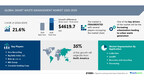
NEW YORK, Feb. 7, 2025 /PRNewswire/ — Report with market evolution powered by AI – The global smart waste management market size is estimated to grow by USD 4.62 billion from 2025-2029, according to Technavio. The market is estimated to grow at a CAGR of  21.6%  during the forecast period. Increasing urbanization leading to urban waste generation is driving market growth, with a trend towards rise in number of strategic partnerships for smart waste management solutions.  However, challenges associated with effective deployment of smart waste management solutions poses a challenge. Key market players include Aco Recycling, Big Belly Solar, LLC., Bine sp. Z o. O., BRE Group, Covanta Holding Corp., Ecube Labs, Enevo Inc., Evreka Yazilim Donanim Danismanlik Egitim Sanayi ve Ticaret A.S., Kantor Waste4Change, Mr. Fill B.V., Nordsense, Pepperl and Fuchs SE, Republic Services Inc., RTS Holding Inc., SENSONEO j. S. A., SUEZ SA, Veolia, Waste Harmonics LLC, Waste Management Inc., and Wellness TechGroup.

Key insights into market evolution with AI-powered analysis. Explore trends, segmentation, and growth drivers- View Free Sample PDF

Smart Waste Management Market Scope

Report Coverage

Details

Base year

2024

Historic period

2019 – 2023

Forecast period

2025-2029

Growth momentum & CAGR

Accelerate at a CAGR of 21.6%

Market growth 2025-2029

USD 4619.7 million

Market structure

Fragmented

YoY growth 2022-2023 (%)

16.1

Regional analysis

North America, Europe, APAC, South America, and
Middle East and Africa

Performing market contribution

North America at 35%

Key countries

US, Germany, China, France, Canada, UK, Japan,
India, Brazil, and UAE

Key companies profiled

Aco Recycling, Big Belly Solar, LLC., Bine sp. Z o.
O., BRE Group, Covanta Holding Corp., Ecube
Labs, Enevo Inc., Evreka Yazilim Donanim
Danismanlik Egitim Sanayi ve Ticaret A.S., Kantor
Waste4Change, Mr. Fill B.V., Nordsense, Pepperl
and Fuchs SE, Republic Services Inc., RTS
Holding Inc., SENSONEO j. S. A., SUEZ SA,
Veolia, Waste Harmonics LLC, Waste Management
Inc., and Wellness TechGroup

Market Driver

The Smart Waste Management Market is experiencing significant growth due to urbanization and smart city initiatives. Key players in the market include Covanta Holding Corporation, Suez Environmental Services, Veolia Environmental Services, Bigbelly Inc, Waste Management, Inc, Sensoneo, Enevo Oy, and others. Trends in the market include the use of advanced technology and innovative strategies for efficient waste collection and disposal. Concerned authorities are focusing on environmental sustainability and stricter environmental regulations. Operational costs are a market restraint, but the use of sensors in waste collection services, route optimization, and real-time monitoring help reduce expenses. Historical data analysis of fill patterns, driver routes, and schedules also contributes to efficiency. Companies are investing in IoT-based systems, such as smart bins and disposal tags, for residential buildings, commercial spaces, and public places. The market drivers are the interest of companies in renewable benefits, recycling of plastic and e-waste, and the municipal and industrial sectors’ need for sustainable waste management. Smart Collection, Smart Disposal, and Solid Waste segments are expected to dominate the market. The European Commission and the Government of Canada are also promoting smart waste management through environmental awareness and regulations. The waste management sector includes collecting, transportation, processing, and disposal of solid municipal waste, urban waste collection, waste material services, and more. The use of cameras, mobile computers, RFID, GPS, IoT sensors, and waste segregation technologies is increasing. The chemical manufacturing industry generates a large volume of waste, and companies are focusing on reducing carbon emissions through clean energy solutions and reusing resources like methane and CO2 gas. Innovative strategies include the use of sensors in waste collection vehicles for real-time tracking and optimization, and the implementation of cloud-based technologies for data analytics. The market is expected to grow despite higher operational costs due to the benefits of smart waste management for public health, environmental regulations, and the reduction of greenhouse gas emissions. 

Vendors in the smart waste management market are forming strategic partnerships with various entities, including government authorities and other vendors. These collaborations enable market expansion and revenue sharing. These partnerships offer real-time information tracking for end-users, enabling data-driven decision-making and real-time monitoring of trash levels. The rise in strategic alliances is boosting the implementation of smart waste management solutions, leading to the deployment of efficient systems worldwide. These solutions will be compatible with advanced technologies and components integrated into trash bins, providing real-time waste collection information. This trend will fuel the growth of the global smart waste management market throughout the forecast period. 

Request Sample of our comprehensive report now to stay ahead in the AI-driven market evolution!

 Market Challenges

The Smart Waste Management market is growing due to urbanization and smart city initiatives, but faces challenges such as operational costs and environmental regulations. Trash collectors deal with waste or garbage production, while concerned authorities focus on public health and environmental sustainability. Recycling and disposal are key areas of innovation, with companies like Covanta Holding Corporation, Suez Environmental Services, and Veolia Environmental Services leading the way. Advance technology and sensors play a major role, with IoT-based systems and route optimization providing efficiency gains. E-waste management is a significant market driver, with key players offering reprocessing waste services. However, higher operational costs can be a market restraint. Companies are investing in capital for smart waste management solutions for residential buildings, commercial spaces, and public places using sensor-based containers, vacuum containers, and disposal tags. Solid municipal waste and urban waste collection are major segments, with the European Commission and governments pushing for strict environmental regulations. The waste management sector is also exploring clean energy solutions and renewable resources to reduce carbon emissions.Smart waste management involves the collection, disposal, and recycling of trash. Private companies and municipalities use trucks to collect waste from sensors-equipped bins, which send signals to the trucks’ readers. Ineffective sensor deployment can lead to incorrect information, such as overfilled bins being reported as full or underfilled bins being overlooked. This can result in inefficient waste collection and recycling processes. To optimize these systems, it’s crucial to ensure accurate sensor deployment and regular maintenance. Smart waste management solutions aim to reduce operational costs, minimize environmental impact, and enhance overall efficiency.

Discover how AI is revolutionizing market trends- Get your access now!

Segment Overview 

This smart waste management market report extensively covers market segmentation by  

ApplicationCollectionLandfillRecovery And RecyclingProcessingTypeSolid WasteSpecial WasteE-wasteGeographyNorth AmericaEuropeAPACSouth AmericaMiddle East And Africa

1.1 Collection-  The collection segment of the global smart waste management market holds the largest share due to the traditional method of waste management facing challenges such as uneven management of domestic, industrial, and environmental wastes, leading to pollution and health hazards. Smart waste management systems address these issues by automating waste management through smart technology, minimizing human intervention, and reducing time and effort. These solutions enable efficient waste disposal by optimizing truck routes and analyzing trash levels in bins. With the increasing production of solid waste in municipalities, amounting to 2.01 billion tons per year, and projected to reach 3.40 billion tons by 2050, smart waste management is crucial for managing waste effectively. By connecting garbage collection and disposal infrastructure and devices across cities and communities, smart waste management plays a significant role in making cities more efficient and sustainable. Companies, hotels, and enterprises are partnering with smart waste management solution providers to integrate these solutions for managing and collecting waste.

Download a Sample of our comprehensive report today to discover how AI-driven innovations are reshaping competitive dynamics

Research Analysis

Smart Waste Management refers to the implementation of technology and data analytics in waste collection and disposal processes to optimize resources, reduce costs, and improve efficiency. In residential buildings, commercial spaces, and public places, sensor-based containers and vacuum systems are used to monitor the volume of waste and trigger automatic collection. IoT-based waste bins with sensors, cameras, mobile computers, RFID, and GPS enable intelligent monitoring, route optimization, and waste segregation. Solid municipal waste is collected using sensor technologies and disposed of through waste processing facilities. Disposal tags help track waste disposal and ensure compliance with regulations. Smart city initiatives are driving the adoption of these technologies to create sustainable waste management systems. The integration of IoT sensors, cameras, and mobile computers enables real-time monitoring and analysis of trash production, leading to more effective and efficient waste management services.

Market Research Overview

The Smart Waste Management market is a growing sector driven by urbanization, smart city initiatives, and concerned authorities’ increasing focus on environmental sustainability and public health. The market is characterized by advance technology and innovative strategies, including sensor-based waste collection and IoT-based systems. Operational costs are a significant concern, with the use of sensors, route optimization, and real-time monitoring helping to improve efficiency and reduce expenses. Environmental regulations and the interest of companies in renewable benefits are also key market drivers. Key market insights reveal that solid municipal waste, e-waste, and commercial waste segments are the largest contributors to the market. Historical data analysis of fill patterns, driver routes, and schedules helps optimize waste collection services, while remote monitoring and fuel prices impact operational costs. Sustainable waste management, data analytics, and government initiatives are also significant factors influencing the market. The market is expected to grow significantly due to the increasing volume of waste, the need for efficient waste management, and the availability of capital investments. Companies are investing in smart solutions such as sensor-based containers, vacuum containers, disposal tags, and fleet trucks to reduce carbon emissions and improve waste management sector efficiency. The use of sensors, RFID, GPS, and IoT sensors in waste segregation and waste processing is also gaining popularity. The European Commission and the Government of Canada are leading the way in implementing strict environmental regulations and promoting sustainable waste management practices. The market also includes the management of bio-medical waste, methane emissions from landfills, and the recycling of plastic and e-waste. The waste management industry is evolving to include water management, traffic management, energy management, and fleet management, with the use of short-range and wide-area IoT devices and real-time tracking. The market is expected to face market restraints due to higher operational costs and the need for capital investments. The market is expected to grow significantly in the coming years due to the increasing focus on environmental sustainability, the availability of renewable energy resources, and the need for efficient waste management solutions.

Table of Contents:

1 Executive Summary
2 Market Landscape
3 Market Sizing
4 Historic Market Size
5 Five Forces Analysis
6 Market Segmentation

ApplicationCollectionLandfillRecovery And RecyclingProcessingTypeSolid WasteSpecial WasteE-wasteGeographyNorth AmericaEuropeAPACSouth AmericaMiddle East And Africa

7 Customer Landscape
8 Geographic Landscape
9 Drivers, Challenges, and Trends
10 Company Landscape
11 Company Analysis
12 Appendix

About Technavio

Technavio is a leading global technology research and advisory company. Their research and analysis focuses on emerging market trends and provides actionable insights to help businesses identify market opportunities and develop effective strategies to optimize their market positions.

With over 500 specialized analysts, Technavio’s report library consists of more than 17,000 reports and counting, covering 800 technologies, spanning across 50 countries. Their client base consists of enterprises of all sizes, including more than 100 Fortune 500 companies. This growing client base relies on Technavio’s comprehensive coverage, extensive research, and actionable market insights to identify opportunities in existing and potential markets and assess their competitive positions within changing market scenarios.

Contacts

Technavio Research
Jesse Maida
Media & Marketing Executive
US: +1 844 364 1100
UK: +44 203 893 3200
Email: media@technavio.com
Website: www.technavio.com/

View original content to download multimedia:https://www.prnewswire.com/news-releases/smart-waste-management-market-set-to-grow-by-usd-4-62-billion-from-2025-2029–driven-by-increasing-urbanization-and-urban-waste-generation-report-on-how-ai-is-redefining-market-landscape—technavio-302370843.html

SOURCE Technavio

Continue Reading
Click to comment

Leave a Reply

Your email address will not be published. Required fields are marked *

Technology

RSPO Launches New Guidance to Leverage Sustainable Palm Oil Certification for IFRS® Sustainability Disclosure Standards

Published

on

By

KUALA LUMPUR, Malaysia, July 23, 2026 /PRNewswire/ — The Roundtable on Sustainable Palm Oil (RSPO) has released a guidance document, “Leveraging RSPO Principles and Criteria for IFRS® Sustainability Disclosure Standards”. This new resource supports certified sustainable palm oil producers to align their sustainability practices with the IFRS S1 and IFRS S2 disclosure standards that serve as the global framework for reporting sustainability-related financial information.

As more than 30 jurisdictions, representing around 60% of global GDP, move towards adoption of the IFRS Sustainability Disclosure Standards (IFRS SDS), companies are increasingly required to disclose how sustainability-related risks and opportunities affect their financial position and prospects.1

This resource provides a practical pathway for palm oil producers to respond to these requirements by leveraging their existing compliance with the RSPO Principles and Criteria (P&C), without duplicating efforts or creating parallel systems.

Informing investor-relevant disclosures: A four-step approach

Certification and the IFRS SDS serve different purposes. This guidance, developed with support from PwC Malaysia, provides a practical bridge between operational sustainability practices and financial disclosure expectations by helping members translate certification-related topics, metrics, and evidence to inform investor-relevant disclosures.

It sets out a four-step approach to IFRS SDS-aligned reporting, guiding RSPO Members on applicability, reporting boundaries, identification of sustainability-related risks and opportunities, and links to financial performance. It also includes seven practical examples, illustrating how the RSPO P&C requirements and implementation evidence can inform disclosures across key sustainability topics, from ethical conduct and legal compliance to environmental protection and worker health and safety.

Beyond growers, the guidance document also supports financial institutions by helping banks, insurers, and investors understand how palm oil sustainability issues, such as labour disputes and traceability gaps, can translate into financial risks, impacts, and opportunities, enabling clearer risk profiling and more informed financing decisions.

Joseph D’ Cruz, RSPO Chief Executive Officer, said: “As sustainability reporting becomes an integral pillar of financial performance, this guidance bridges certification and disclosure, providing RSPO members with a practical framework to demonstrate sustainability performance in ways that resonate with global capital markets. In line with the growing importance of sustainability disclosures in financing and investment decision-making processes, this guidance illustrates how RSPO Principles and Criteria practices can complement an organisation’s strategy and risk assessment processes.”

Andrew Chan, Partner, Sustainability Leader at PwC Malaysia, said: “This guidance responds to the broader shift towards measuring sustainability through a financial lens, with the adoption of the IFRS Sustainability Disclosure Standards (IFRS S1 and IFRS S2). For RSPO growers, this creates an opportunity to demonstrate how sustainability practices contribute to business resilience as well as value creation — building investor confidence for the long term.”

Importantly, the guidance also reflects RSPO’s longer term interest in progressively strengthening linkages with sustainability disclosure frameworks. As disclosure expectations continue to evolve, RSPO intends to further explore how certification-related data metrics and assurance processes can support broader and more integrated sustainability disclosures in the future.

The Guidance Document can be downloaded here.

For more information, visit www.rspo.org 

About RSPO:
The Roundtable on Sustainable Palm Oil (RSPO) is a global partnership to make palm oil sustainable. Formed in 2004, the RSPO is a multi-stakeholder non-profit organisation that unites members from across the palm oil value chain, including oil palm producers, palm oil processors and traders, consumer goods manufacturers, retailers, banks and investors, environmental or nature conservation non-governmental organisations (NGOs), and social or developmental NGOs.

As a partnership for progress and positive impact, the RSPO facilitates global change to make the production and consumption of palm oil sustainable. To inspire change, we communicate the environmental and social benefits. To make progress, we catalyse collaboration. To provide assurance, we set the standards of certification.

The RSPO is registered as an international association in Zurich, Switzerland, with main offices in Malaysia and Indonesia, and offices in China, Colombia, Netherlands, United Kingdom and the United States. 

About PwC:
At PwC, we help clients build trust and reinvent so they can turn complexity into competitive advantage. We’re a tech-forward, people-empowered network with more than 364,000 people in 136 countries and 137 territories. Across audit and assurance, tax and legal, deals and consulting, we help clients build, accelerate, and sustain momentum. Find out more at www.pwc.com

1

IFRS Foundation, ISSB Podcast February 2025


View original content:https://www.prnewswire.com/apac/news-releases/rspo-launches-new-guidance-to-leverage-sustainable-palm-oil-certification-for-ifrs-sustainability-disclosure-standards-302833097.html

SOURCE Roundtable On Sustainable Palm Oil

Continue Reading

Technology

Nordic Capital announces agreement to sell ArisGlobal to Dassault Systèmes, following its transformation into a scaled and AI-enabled life sciences platform

Published

on

By

WALTHAM, Mass., 23 July 2026 /PRNewswire/ — Nordic Capital today announced that it has entered into a definitive agreement to sell ArisGlobal, a leading provider of software to the life sciences industry, to Dassault Systèmes (Euronext Paris: FR0014003TT8) (Paris: DSY.PA). The transaction represents a full exit for Nordic Capital and marks the successful culmination of a partnership that has transformed ArisGlobal into a scaled, cloud-native and AI-enabled platform serving more than 200 life sciences companies, CROs and government health authorities worldwide.

Founded in 1989 and headquartered in Waltham, Massachusetts, ArisGlobal develops and delivers regulatory, safety, and quality software to a global client base that includes many of the world’s largest pharmaceutical and biotech organisations, as well as regulatory authorities. Its flagship LifeSphere® platform is a fully integrated, cloud-native suite that enables life sciences organisations to manage complex regulatory submissions, pharmacovigilance workflows and clinical data on a single platform, improving compliance, speed and operational efficiency. The platform also embeds advanced AI-enabled automation across core pharmacovigilance workflows, reducing manual processing and accelerating safety case management.

“Nordic Capital invested in ArisGlobal because the business had strong fundamentals, a loyal blue-chip client base and significant potential to modernise its technology and scale its commercial reach. Working closely with Aman and his team, Nordic Capital has supported the company’s transformation into a leading cloud-native platform for the life sciences industry with differentiated AI-enabled capabilities and a strengthened market position. Nordic Capital is proud of what has been achieved together with management and looks forward to seeing the company continue to grow under Dassault Systèmes ownership,” said Daniel Berglund, Partner and Head of Healthcare, Nordic Capital Advisors.

Nordic Capital first invested in ArisGlobal in 2019, partnering with the founding family and management team to pursue an ambitious development strategy. In 2021, Nordic Capital made a further investment in the company, reflecting its conviction in ArisGlobal’s growth potential and the progress achieved since the original partnership began. Throughout the ownership period, Nordic Capital worked closely with management to accelerate the SaaS transition, professionalise the go-to-market organisation, broaden the product offering and strengthen the leadership team.

The migration to a modern, cloud-native architecture created the foundation for ArisGlobal to become an early leader in the application of AI to drug safety. A key milestone was the development and launch of NavaX, ArisGlobal’s generative AI solution for safety case processing, which automates and accelerates core pharmacovigilance workflows and has been adopted by a number of the world’s leading pharmaceutical companies. NavaX has further differentiated ArisGlobal’s offering and marked an important step in the Company’s evolution into a broader, AI-enabled safety and regulatory software platform.

“The life sciences industry is at an inflection point as regulatory complexity is increasing, data volumes are growing and our clients need software that can keep pace. The partnership with Nordic Capital gave us the resources and the runway to build exactly that. NavaX and our expanded platform are the result of that ambition, and I am confident we are well placed for what comes next,” said Aman Wasan, CEO, ArisGlobal.

Alongside its technology transformation, ArisGlobal strengthened its management team and commercial organisation, while two strategic acquisitions broadened the Company’s platform capabilities. Today, ArisGlobal serves more than 200 enterprise customers, including half of the world’s top 50 biopharma companies, processes more than 12 million safety cases annually and is expected to generate approximately USD 175 million in revenue in 2026. As rising regulatory complexity and increasing volumes of adverse event reporting continue to drive demand for advanced life sciences software, ArisGlobal is well positioned for future growth through solutions that automate compliance workflows, reduce manual processing and enable organisations to manage regulatory risk more effectively.

The transaction brings together ArisGlobal’s leadership in AI-enabled safety and regulatory software with Dassault Systèmes’ capabilities across research, clinical development and manufacturing. Nordic Capital believes the combination represents a highly compelling strategic fit, pairing complementary capabilities to create a broader, end-to-end offering across the life sciences value chain. ArisGlobal will also benefit from Dassault Systèmes’ global scale, customer reach and investment capacity, providing a strong platform for its next phase of innovation and growth.

The transaction is subject to customary regulatory approvals and is expected to close in the second half of 2026.

Evercore and Jefferies LLC acted as financial advisors to ArisGlobal and Kirkland & Ellis acted as legal advisor to ArisGlobal.

Media contacts:

Nordic Capital
Katarina Janerud
Communications Manager, Nordic Capital Advisors
+46 8 440 50 50
katarina.janerud@nordiccapital.com

ArisGlobal
Morgan Scott
Vice President, Marketing & Communications and Chief of Staff
mscott@arisglobal.com

About ArisGlobal

ArisGlobal is a leading provider of software to the life sciences industry. Its LifeSphere® platform delivers integrated regulatory, safety, and quality solutions to more than 200 life sciences companies, CROs and government health authorities worldwide. Founded in 1989 and headquartered in Waltham, Massachusetts, ArisGlobal combines deep domain expertise with advanced technology to help clients improve compliance, accelerate development cycles and manage regulatory complexity at global scale. For more information, visit www.arisglobal.com.

About Nordic Capital

Nordic Capital is a leading international private equity investor and subsector specialist dedicated to building stronger, more resilient businesses through transformative, long-term growth in partnership with management teams. With over 35 years of experience, Nordic Capital currently manages approximately EUR 39 billion in assets, investing in middle-market companies across Northern Europe and North America. Rooted in its Nordic heritage and values, it combines global reach with local presence through dedicated sector investment advisory teams, bringing deep expertise across its core sectors: Healthcare, Technology & Payments, Financial Services, and Services & Industrial Tech. Through active ownership, strong operational capabilities, a global network of experts and technology-enabled transformation, Nordic Capital helps companies scale, innovate and become sustainable leaders. For more information, visit www.nordiccapital.com or connect on LinkedIn.

“Nordic Capital” refers to, depending on the context, any, or all, Nordic Capital branded entities, vehicles, structures, and associated entities. The general partners and/or delegated portfolio managers of Nordic Capital’s entities and vehicles are advised by several non-discretionary sub-advisory entities, any or all of which are referred to as “Nordic Capital Advisors”.

This information was brought to you by Cision http://news.cision.com

https://news.cision.com/nordic-capital/r/nordic-capital-announces-agreement-to-sell-arisglobal-to-dassault-systemes–following-its-transforma,c4376982

The following files are available for download:


View original content:https://www.prnewswire.co.uk/news-releases/nordic-capital-announces-agreement-to-sell-arisglobal-to-dassault-systemes-following-its-transformation-into-a-scaled-and-ai-enabled-life-sciences-platform-302833100.html

Continue Reading

Technology

Cognizant and Gulf Edge Announce Strategic Partnership to Accelerate Enterprise AI Adoption in Southeast Asia

Published

on

By

Partnership combines Cognizant’s global AI engineering capabilities with Gulf Edge’s sovereign digital infrastructure to capture the region’s growing demand for secure, scalable AI solutions.

BANGKOK, July 23, 2026 /PRNewswire/ — Cognizant (Nasdaq: CTSH), a leading AI builder and global technology services provider, and Gulf Edge Company Limited, the digital infrastructure arm of Thai energy and infrastructure conglomerate Gulf Development Public Company Limited (GULF) or Gulf Group, today announced a landmark strategic partnership. The alliance is designed to accelerate enterprise AI adoption and establish a resilient, AI-native digital economy in Thailand and the broader region.

As artificial intelligence (AI) rapidly reshapes industries, economies, and societies worldwide, the partnership aims to establish the foundational ecosystem needed to enable Thailand’s next phase of digital transformation. By combining trusted sovereign digital infrastructure with world-class AI engineering and enterprise transformation capabilities, Gulf Edge and Cognizant will help organizations deploy AI securely, responsibly, and at scale.

The collaboration brings together Gulf Edge’s leadership in digital infrastructure, energy, cloud, and strategic relationships across Thailand’s most important industries with Cognizant’s global expertise in AI, digital engineering, cloud modernization, data, and intelligent operations. Together, the two companies will deliver end-to-end AI capabilities spanning infrastructure, AI platforms, enterprise solutions, systems integration, and managed services.

The partnership will initially focus on accelerating AI adoption across key sectors including banking and financial services, energy and utilities, healthcare, telecommunications, manufacturing, and the public sector. Through industry-specific AI solutions, organizations will be able to improve operational efficiency, enhance customer experience, strengthen decision-making, automate complex business processes, and unlock new opportunities for innovation and growth.

Beyond enterprise transformation, Gulf Edge and Cognizant share a broader ambition of strengthening Thailand’s position as a regional AI hub. The partnership is expected to attract global technology expertise, stimulate investment in advanced digital capabilities, and create high-value employment opportunities across AI engineering, data science, cloud infrastructure, cybersecurity, and digital transformation. The two companies also plan to collaborate with universities, research institutions, technology partners, and public-sector organizations to develop AI talent, promote responsible AI adoption, and foster a sustainable innovation ecosystem for the country.

Mr. Sarath Ratanavadi, Chief Executive Officer, Gulf Development Public Company Limited, said, “Our partnership with Cognizant marks an important milestone in our vision of helping Thailand become an AI-native economy. By combining Gulf Edge’s strengths in digital infrastructure, energy, cloud, and deep understanding of the Thai market with Cognizant’s global expertise in enterprise AI, digital engineering, and transformation services, we are creating a comprehensive platform that enables organizations to adopt AI with confidence and generate measurable business outcomes. Together, we will develop secure, resilient, and future-ready sovereign digital infrastructure while delivering industry-specific AI solutions tailored to the needs of Thai enterprises and public institutions. We believe AI has the potential to transform every sector, creating new opportunities for productivity, innovation, and sustainable economic growth.”

Mr. Ganesh Ayyar, President of Asia Pacific & Japan (APJ), Cognizant, said, “As Thailand works toward its ambition of becoming an AI-native economy, we see this partnership as a meaningful way to help contribute to that vision, not just through the projects we deliver, but by building lasting AI and technology capability inside the country. With Gulf Edge’s market reach and Cognizant’s AI Builder strategy and global delivery capability, we are positioned to deliver transformative outcomes for Thai enterprises across every major sector.”

About Gulf Edge
Gulf Edge Company Limited is the digital infrastructure arm of Gulf Development Public Company Limited, Thailand’s leading energy and infrastructure conglomerate. Gulf Edge is building a robust digital ecosystem, spanning data centers, cloud services, satellite technology, and AI infrastructure, to accelerate Thailand’s digital transformation and position the country as a regional hub for the AI economy.

About Cognizant
Cognizant (NASDAQ: CTSH) is an AI Builder and technology services provider, building the bridge between AI investment and enterprise value by building full-stack AI solutions for clients. Its deep industry, process, and engineering expertise enables it to build an organization’s unique context into technology systems that amplify human potential, realize tangible returns, and keep global enterprises ahead in a fast-changing world. See how at www.cognizant.ai or @cognizant.

View original content to download multimedia:https://www.prnewswire.com/apac/news-releases/cognizant-and-gulf-edge-announce-strategic-partnership-to-accelerate-enterprise-ai-adoption-in-southeast-asia-302833116.html

SOURCE Gulf Development Public Company Limited (GULF)

Continue Reading

Trending