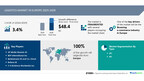
NEW YORK, Feb. 7, 2025 /PRNewswire/ — Report on how AI is driving market transformation – The Logistics market in Europe size is estimated to grow by USD 48.4 billion from 2025-2029, according to Technavio. The market is estimated to grow at a CAGR of 3.4% during the forecast period. Booming e-commerce industry in Europe is driving market growth, with a trend towards increasing customer-centric logistics. However, high cost of operation and competitive pricing poses a challenge. Key market players include AP Moller Maersk AS, BDP International Inc., Bertelsmann SE and Co. KGaA, Bollore SE, C H Robinson Worldwide Inc., CEVA Logistics SA, Deutsche Bahn AG, Deutsche Post AG, DSV AS, Expeditors International of Washington Inc., FedEx Corp., Hellmann Worldwide Logistics SE and Co KG, International Distributions Services plc, Kintetsu World Express Inc., Kuehne Nagel Management AG, Nippon Yusen Kabushiki Kaisha, Rhenus SE and Co. KG, SDK FREJA A S, SF Express Co. Ltd., and XPO Inc..
Key insights into market evolution with AI-powered analysis. Explore trends, segmentation, and growth drivers- View Free Sample PDF
Logistics Market In Europe Scope
Report Coverage
Details
Base year
2024
Historic period
2019-2023
Forecast period
2025-2029
Growth momentum & CAGR
Accelerate at a CAGR of 3.4%
Market growth 2025-2029
USD 48.4 billion
Market structure
Fragmented
YoY growth 2022-2023 (%)
3.3
Regional analysis
Europe
Performing market contribution
Europe at 100%
Key countries
Germany, UK, France, Belgium, and Rest of Europe
Key companies profiled
AP Moller Maersk AS, BDP International Inc., Bertelsmann SE and Co. KGaA, Bollore SE, C H Robinson Worldwide Inc., CEVA Logistics SA, Deutsche Bahn AG, Deutsche Post AG, DSV AS, Expeditors International of Washington Inc., FedEx Corp., Hellmann Worldwide Logistics SE and Co KG, International Distributions Services plc, Kintetsu World Express Inc., Kuehne Nagel Management AG, Nippon Yusen Kabushiki Kaisha, Rhenus SE and Co. KG, SDK FREJA A S, SF Express Co. Ltd., and XPO Inc.
Market Driver
Europe’s logistics market is experiencing significant trends in various sectors. Roadways continue to dominate, with e-commerce activities driving increased demand. Green logistics solutions are gaining popularity due to sustainability concerns. Online purchases lead in parcel delivery, requiring efficient last-mile logistics. Logistics monitoring systems, including Blockchain, AI, IoT, and AR, enhance supply chain visibility and efficiency. Transportation infrastructure development, especially in waterways, supports multi-modal systems. E-commerce companies prioritize timely delivery through logistics automation and outsourced services. Industrial & manufacturing, healthcare, pharmaceuticals, and aerospace sectors rely on logistics management and supply chain network for just-in-time delivery. Warehouse Management Systems and route optimization ensure inventory management and efficient transportation. Waterways transportation, third-party and second-party logistics, and reverse logistics operations are essential for various industries, including trade & transportation, oil & gas, food products, and defense manufacturing. Free trade agreements and digital transformation drive tech-driven logistics, while IoT-enabled devices support real-time monitoring and automation. E-commerce, retail, and heavy goods transportation require innovative solutions for last-mile deliveries and inbound/outbound logistics. The semiconductor industry and banking & financial services benefit from logistics standardization and outsourcing. Overall, Europe’s logistics market is undergoing digital transformation, focusing on timely delivery, multi-modal transportation, and inventory management.
Logistics providers in Europe are adopting innovative methods to deliver customer-focused logistics services. They engage in discussions with clients about industry trends and challenges. The consumer-driven market shift necessitates supply chain reinvention. Providers no longer solely rely on historical order data. Instead, they consider sales, weather, and customer sentiment data from various sources like point-of-sale reports and traffic analysis. Predictive analytics helps anticipate future situations, enabling informed decision-making. European logistics companies are aligning with demand fluctuations and staying ahead of the curve.
Request Sample of our comprehensive report now to stay ahead in the AI-driven market evolution!
Market Challenges
Europe’s logistics market faces several challenges in the current business landscape. The rise of online purchases increases the demand for efficient last-mile deliveries and digital logistics solutions. Roadways need improvement for seamless transportation of goods, especially heavy ones. Green logistics solutions are essential to reduce carbon footprint, with options like waterways transportation and sensor technologies. Logistics monitoring systems, including blockchain, AI, and IoT, ensure transparency and efficiency. E-commerce activities require effective supply chain networks, from warehouse management systems to inbound and outbound logistics. Third- and second-party logistics, outsourcing, and logistics standardization are crucial for industrial & manufacturing, healthcare, pharmaceutical, and retail sectors. Transportation infrastructure, including airways, railways, and multi-modal systems, needs modernization for better connectivity. Trade agreements and tech-driven logistics solutions facilitate trade-related activities. Military logistics and reverse logistics operations are vital for defense manufacturing and oil & gas industries. Food products, aerospace, telecommunications, banking & financial services, media & entertainment, and trade & transportation sectors also benefit from logistics management and supply chain management. Route optimization and timely delivery are key for e-commerce companies, ensuring customer satisfaction. Overall, digital transformation and IoT-enabled devices are shaping the future of logistics in Europe.The European logistics market involves transporting a large volume of products from Asian manufacturing locations to European distribution centers. This process includes shipping by air, ocean, or rail, followed by trucking from ports, receipt and storage at distribution centers, sales order fulfillment, and final distribution to customers. Inefficient packaging can negatively impact each stage of this supply chain, increasing overall logistics costs. Effective packaging solutions are essential to minimize dimensional, volume, and weight issues, ensuring a streamlined and cost-efficient European supply chain.
Discover how AI is revolutionizing market trends- Get your access now!
Segment Overview
This logistics market in Europe report extensively covers market segmentation by
Type3PL4PLEnd-userManufacturingAutomotiveConsumer GoodsRetail IndustryOthersGeographyEurope
1.1 3PL- Third-party logistics (3PL) is a business process where companies outsource their logistics functions to specialized service providers. In Europe, 3PL services have become increasingly popular due to their ability to introduce innovative supply chain management techniques and improve logistics effectiveness. Three main types of 3PL exist: asset-based, management-based, and integrated providers. Asset-based 3PLs use their own vehicles, warehouses, and employees, while management-based providers offer technological and managerial support. Integrated providers can offer a combination of both. 3PL services encompass transportation, warehousing, distribution, freight forwarding, inventory management, and packaging. These solutions are tailored to meet individual client needs, optimizing routes, reducing costs, and enhancing operational efficiency. In the European context, 3PLs facilitate cross-border trade and overcome logistical challenges, offering flexibility to scale operations based on demand fluctuations. Technology adoption is a significant aspect of modern 3PLs. They provide real-time tracking, data analytics, and visibility tools to improve decision-making and enhance customer experiences. With the growth of e-commerce, last-mile delivery solutions have become essential. By outsourcing logistics operations to 3PL providers, European companies can achieve greater supply chain efficiency, cost savings, and flexibility, enabling them to remain competitive in an increasingly global and complex business landscape. The increasing use of 3PL services will drive the growth of the 3PL segment in the European logistics market during the forecast period. Companies can focus on their core competencies while leaving logistics complexities to the experts. 3PLs bring economies of scale and specialized knowledge, ensuring seamless and efficient logistics operations.
Download a Sample of our comprehensive report today to discover how AI-driven innovations are reshaping competitive dynamics
Research Analysis
The European logistics market is a significant contributor to the global logistics industry, driven by the region’s economy and increasing online purchases. Roadways remain the primary mode of transportation for goods, but the logistics landscape is evolving with the integration of advanced technologies such as Artificial Intelligence (AI), Internet of Things (IoT), Blockchain, and Augmented Reality (AR). Green logistics solutions are gaining traction, with companies focusing on reducing carbon emissions and adopting sustainable practices. Logistics monitoring systems enable real-time tracking and optimization of transportation systems, while route optimization and last-mile delivery solutions improve efficiency. Fourth-Party Logistics (4PL) and Reverse Logistics operations are becoming essential components of supply chain management, with e-commerce and trade-related activities driving demand. The logistics industry is also playing a crucial role in defense manufacturing, petroleum, food products, and other sectors, with Free Trade Agreements facilitating cross-border trade. Military logistics and transportation systems are critical for national security, while digital logistics and the integration of AI and IoT are transforming the industry’s operations. Inbound logistics, outbound logistics, and reverse logistics are interconnected processes that require effective management to ensure seamless supply chain flow. Overall, the European logistics market is dynamic and complex, with various stakeholders, including transportation providers, logistics service providers, and technology companies, collaborating to meet the evolving demands of businesses and consumers.
Market Research Overview
The European logistics market is a dynamic and evolving industry that encompasses various modes of transportation, technologies, and sectors. Roadways continue to dominate the landscape due to their flexibility and efficiency, especially in the context of e-commerce activities and last-mile deliveries. Online purchases have led to an increase in demand for logistics solutions, driving innovation in areas such as green logistics, logistics monitoring systems, and digital logistics. Technological advancements, including Blockchain, Artificial Intelligence, Internet of Things, Augmented Reality, and Sensor technologies, are transforming the industry. The use of these technologies in logistics management and supply chain management is streamlining operations, enhancing transparency, and improving efficiency. Transportation infrastructure, including waterways, railways, and airways, plays a crucial role in the European logistics market. Third-party and second-party logistics, outsourcing, and logistics standardization are key trends in the industry. Industrial & manufacturing, healthcare, pharmaceutical logistics, retail logistics, heavy goods transportation, and reverse logistics are some of the major sectors that rely on logistics services. E-commerce companies, trade-related activities, and free trade agreements are driving the demand for logistics services in Europe. The use of multi-modal transportation systems and route optimization is becoming increasingly common to ensure timely delivery and minimize transportation costs. The logistics industry is also adapting to the digital transformation, with IoT-enabled devices and logistics automation becoming increasingly prevalent. Several sectors, including manufacturing, aerospace, telecommunications, banking & financial services, media & entertainment, trade & transportation, inventory management, and oil & gas, rely on logistics services for their operations. The semiconductor industry is also a significant player in the European logistics market, with a focus on digital transformation and supply chain optimization. Military logistics, reverse logistics operations, and trade agreements are other important aspects of the European logistics market. Tech-driven logistics, last-mile deliveries, and logistics monitoring systems are also gaining popularity, with a focus on improving efficiency and reducing costs. Overall, the European logistics market is a complex and diverse industry that is constantly evolving to meet the changing needs of businesses and consumers.
Table of Contents:
1 Executive Summary
2 Market Landscape
3 Market Sizing
4 Historic Market Size
5 Five Forces Analysis
6 Market Segmentation
Type3PL4PLEnd-userManufacturingAutomotiveConsumer GoodsRetail IndustryOthersGeographyEurope
7 Customer Landscape
8 Geographic Landscape
9 Drivers, Challenges, and Trends
10 Company Landscape
11 Company Analysis
12 Appendix
About Technavio
Technavio is a leading global technology research and advisory company. Their research and analysis focuses on emerging market trends and provides actionable insights to help businesses identify market opportunities and develop effective strategies to optimize their market positions.
With over 500 specialized analysts, Technavio’s report library consists of more than 17,000 reports and counting, covering 800 technologies, spanning across 50 countries. Their client base consists of enterprises of all sizes, including more than 100 Fortune 500 companies. This growing client base relies on Technavio’s comprehensive coverage, extensive research, and actionable market insights to identify opportunities in existing and potential markets and assess their competitive positions within changing market scenarios.
Contacts
Technavio Research
Jesse Maida
Media & Marketing Executive
US: +1 844 364 1100
UK: +44 203 893 3200
Email: media@technavio.com
Website: www.technavio.com/
View original content to download multimedia:https://www.prnewswire.com/news-releases/logistics-market-in-europe-to-grow-by-usd-48-4-billion-from-2025-2029–driven-by-booming-e-commerce-report-on-ais-impact-on-market-evolution—technavio-302371287.html
SOURCE Technavio









 Technology5 days ago
 Near Videos5 days ago

 Technology4 days ago
 Technology3 days ago


 Coin Market2 days ago