Connect with us

Technology

Sharing Economy Market to Grow by USD 1.12 Trillion from 2025-2029, Driven by Online Ride-Hailing Growth, AI’s Role in Market Transformation – Technavio

Published

on

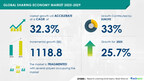
NEW YORK, Feb. 10, 2025 /PRNewswire/ — Report with market evolution powered by AI – The global sharing economy market  size is estimated to grow by USD 1.12 trillion from 2025-2029, according to Technavio. The market is estimated to grow at a CAGR of  32.3%  during the forecast period. Rising use of online ride-hailing services is driving market growth, with a trend towards growing adoption of blockchain technology in sharing economy market. However, regulatory challenges associated with sharing economy apps and platforms  poses a challenge. Key market players include Accor S.A., Airbnb Inc., Avis Budget Group Inc., Avis India, Bollore SE, cambio Mobilitatsservice GmbH and Co. KG, Comuto SA, Couchsurfing International Inc, DiDi Inc., DoorDash Inc., Eatwith, Expedia Group Inc., HomeRoom Inc, Homestay Technologies Ltd., HubbleHQ, JustPark Parking Ltd, Lyft Inc., Microsoft Corp., Neutron Holdings Inc., Practo Technologies Pvt. Ltd., SPOTAHOME S.L.U, Stashbee Ltd, Uber Technologies Inc., and WeWork Inc.

AI-Powered Market Evolution Insights. Our comprehensive market report ready with the latest trends, growth opportunities, and strategic analysis- View Free Sample Report PDF

Forecast period

2025-2029

Base Year

2024

Historic Data

2019 – 2023

Segment Covered

Type (Sharing accommodation, Sharing transport, Sharing finance, and Others), End-user (Individual and Business), and Geography (APAC, Europe, North America, South America, and Middle East and Africa)

Region Covered

APAC, Europe, North America, South America, and Middle East and Africa

Key companies profiled

Accor S.A., Airbnb Inc., Avis Budget Group Inc., Avis India, Bollore SE, cambio Mobilitatsservice GmbH and Co. KG, Comuto SA, Couchsurfing International Inc, DiDi Global Inc., DoorDash Inc., Eatwith, Expedia Group Inc., HomeRoom Inc, Homestay Technologies Ltd., HubbleHQ, JustPark Parking Ltd, Lyft Inc., Microsoft Corp., Neutron Holdings Inc., Practo Technologies Pvt. Ltd., SPOTAHOME S.L.U, Stashbee Ltd, Uber Technologies Inc., and WeWork Inc

Key Market Trends Fueling Growth

The Sharing Economy, also known as the Peer Economy, is revolutionizing the way we buy and sell goods, services, and even assets. This trend, driven by digital platforms and online markets, enables peer-to-peer transactions through ride-sharing services, home-sharing services, and peer-to-peer financing channels. It’s changing the face of capitalism, offering alternatives to conventional ownership models for commuters, travelers, and entrepreneurs. The Sharing Economy includes ride-sharing, short-term lodging services, delivery, pet care, freelancing platforms, and more. It caters to budget-conscious people, addressing their financial burdens and offering affordable services. This multidimensional strategy focuses on consumer loyalty, entrepreneurial innovation, and environmental responsibility. However, challenges such as consumer data privacy, security breaches, safety standards, and information security are crucial concerns. Regulations and data protection laws are essential to protect consumers’ expectations and ensure data security measures. The Sharing Economy is not limited to ride-sharing and lodging; it’s expanding into various sectors like finance, workspaces, and even entertainment. It’s a global phenomenon, with smartphone applications, real-time tracking, and secure payment methods making transactions seamless. The future of the Sharing Economy is promising, with trends like electric bikes, scooters, autonomous cars, and carpooling shaping the mobility scene. It’s a flexible, affordable, and sustainable way to access goods and services, making it an attractive option for Generation Z, Millennials, Generation X, and Boomers alike. 

The incorporation of blockchain technology into the sharing economy market holds immense potential for addressing fundamental challenges and fueling growth. Blockchain, a decentralized and distributed digital ledger system, offers immutable transaction records and smart contracts, bolstering security, transparency, and trust within this sector. A key advantage is the enhancement of identity verification and reputation systems. Blockchain ensures secure and transparent user identity validation, minimizing fraudulent activities. Reputation scores, essential for peer-to-peer transactions, can be securely stored on the blockchain, providing a dependable measure of trustworthiness for both service providers and consumers. 

Insights on how AI is driving innovation, efficiency, and market growth- Request Sample!

Market Challenges

The Sharing Economy Market, also known as the Peer Economy, is revolutionizing the way we consume goods, services, and assets. This business model allows individuals to rent, share, or exchange resources through digital platforms, facilitating peer-to-peer transactions. Ride-sharing services, home-sharing services, peer-to-peer financing channels, co-working facilities, and freelancing platforms are some examples. However, this market faces challenges. Environmental responsibility, affordability, and consumer expectations call for sustainable, flexible, and affordable services. Traditional ownership models are being disrupted, with budget-conscious people turning to sharing economy alternatives. Security and privacy concerns arise from digital platforms and real-time tracking, requiring data security measures and compliance with data protection laws. Safety standards and information security are essential for consumer trust. Exploitation and fairness are also issues that need addressing. Technology adoption, including smartphone applications, artificial intelligence, and contactless payment systems, is crucial for scalability and user experience. The shared mobility industry, including ride-sharing, electric bikes, scooters, and autonomous cars, is a significant part of this market. The sharing economy impacts various demographics, including Generation Z, Millennials, Generation X, and Boomers, who use mobile apps for ride-sharing, short-term rental properties, peer-to-peer lending, and collaborative work environments. Entrepreneurial innovation and community-based online platforms are driving this multidimensional strategy, which also includes entertainment and telecommunication, transportation, hospitality, and information and knowledge sharing. The challenges for ride-sharing services businesses, short-term rental properties, and peer-to-peer lending include cancellations, cleanliness, safety, and vehicle cleaning requirements. The shared economy market is a dynamic and evolving landscape that requires a comprehensive, adaptive approach.The sharing economy market faces challenges due to ambiguous regulations and fragmented legal frameworks across different regions. This lack of clear and consistent regulations may discourage innovation and investment in new technologies or services, stifling creativity and limiting the market’s potential for transformative solutions. Inconsistent regulations can also lead to market fragmentation, making it difficult for platforms to operate across borders and scale up, ultimately hindering their ability to reach new customers. These regulatory hurdles can hinder the growth and development of the global sharing economy market.

Insights into how AI is reshaping industries and driving growth- Download a Sample Report

Segment Overview 

This sharing economy market report extensively covers market segmentation by

TypeSharing AccommodationSharing TransportSharing FinanceOthersEnd-userIndividualBusinessGeographyAPACEuropeNorth AmericaSouth AmericaMiddle East And Africa

1.1 Sharing accommodation-  The sharing accommodation segment of the global market is driven by individuals and travelers seeking cost-effective, flexible alternatives to traditional lodging. Silvernest, HomeRoom, and CouchSurfing are key vendors in this sector. Silvernest focuses on older adults seeking shared living arrangements, HomeRoom caters to the academic community, and CouchSurfing promotes cultural exchange through free home-stays. These platforms foster community building and provide unique, personalized travel experiences. Technological advancements facilitate secure transactions, and the rising demand for cost-effective and authentic experiences will drive growth in the sharing economy market through the sharing accommodation segment.

Download complimentary Sample Report to gain insights into AI’s impact on market dynamics, emerging trends, and future opportunities- including forecast (2025-2029) and historic data (2019 – 2023) 

Research Analysis

The Sharing Economy, also known as the Peer Economy, is a market model that enables direct interactions between individuals to rent, share, and exchange goods, services, and assets through digital platforms. This economic system is transforming traditional capitalism by promoting community-based online platforms for peer-to-peer transactions. The Sharing Economy includes various sectors such as transportation (ride-sharing services), hospitality (home-sharing services), and even peer-to-peer financing channels. It offers flexible, affordable, and sustainable services in areas like co-working facilities, freelancing platforms, and information and knowledge exchange. These digital marketplaces facilitate the efficient use of resources, promote environment-friendly practices, and foster a culture of circularity. Mobile apps have made it easier than ever to participate in the Sharing Economy, making it an essential part of modern consumer behavior.

Market Research Overview

The Sharing Economy Market, also known as the Peer Economy, is a revolutionary capitalist model that enables the exchange and sharing of goods, services, and assets through online markets and digital platforms. This multidimensional strategy connects individuals and businesses for peer-to-peer transactions, including renting, sharing, and exchanging. Ride-sharing services, home-sharing services, peer-to-peer financing channels, co-working facilities, and freelancing platforms are just a few examples of this collaborative economy. Environmental responsibility is a key focus, with short-term lodging services, ride-sharing, and delivery services offering more affordable and eco-friendly alternatives to conventional ownership models. Consumer loyalty is fostered through budget-conscious offerings and entrepreneurial innovation. However, challenges include consumer data privacy, security breaches, safety standards, and information security. Regulations and data protection laws are essential to ensure consumer expectations are met and exploitation is prevented. The sharing economy encompasses various sectors such as transportation, hospitality, information and knowledge, and entertainment and telecommunication. It caters to different generations, including Generation Z, Millennials, Generation X, and Boomers, through mobile apps, websites, and real-time tracking. The shared mobility industry continues to evolve with the adoption of technology, including smartphone applications, electric bikes, scooters, autonomous cars, and contactless payment systems. Cleanliness, safety, and flexible services are essential to maintaining consumer trust. The future of the sharing economy includes the scalability of user-friendly platforms, the mobility scene, and the integration of artificial intelligence. This market offers opportunities for micro-entrepreneurs, gig workers, and underutilized resources, creating a circular and sustainable economy.

Table of Contents:

1 Executive Summary
2 Market Landscape
3 Market Sizing
4 Historic Market Size
5 Five Forces Analysis
6 Market Segmentation

TypeSharing AccommodationSharing TransportSharing FinanceOthersEnd-userIndividualBusinessGeographyAPACEuropeNorth AmericaSouth AmericaMiddle East And Africa

7 Customer Landscape
8 Geographic Landscape
9 Drivers, Challenges, and Trends
10 Company Landscape
11 Company Analysis
12 Appendix

About Technavio

Technavio is a leading global technology research and advisory company. Their research and analysis focuses on emerging market trends and provides actionable insights to help businesses identify market opportunities and develop effective strategies to optimize their market positions.

With over 500 specialized analysts, Technavio’s report library consists of more than 17,000 reports and counting, covering 800 technologies, spanning across 50 countries. Their client base consists of enterprises of all sizes, including more than 100 Fortune 500 companies. This growing client base relies on Technavio’s comprehensive coverage, extensive research, and actionable market insights to identify opportunities in existing and potential markets and assess their competitive positions within changing market scenarios.

Contacts

Technavio Research
Jesse Maida
Media & Marketing Executive
US: +1 844 364 1100
UK: +44 203 893 3200
Email: media@technavio.com
Website: www.technavio.com/

View original content to download multimedia:https://www.prnewswire.com/news-releases/sharing-economy-market-to-grow-by-usd-1-12-trillion-from-2025-2029–driven-by-online-ride-hailing-growth-ais-role-in-market-transformation—technavio-302372177.html

SOURCE Technavio

Continue Reading
Click to comment

Leave a Reply

Your email address will not be published. Required fields are marked *

Technology

CM Global Services Announces Project Santos, a Planned 50-Megawatt AI Data Center Campus in ERCOT South

Published

on

By

CM Global Services targets a site and engages with strategic partners to become operational in the AI data center space.

DENVER, July 23, 2026 /PRNewswire/ — CM Global Services, LLC (CMGS) today announced Project Santos, its plan to develop a 50-megawatt AI data center campus for a site in the ERCOT South grid zone. CMGS is a long-standing strategic partner of Compass Mining, Inc. and is a global provider of logistics, hardware sales, and infrastructure services, with a growing focus on AI infrastructure and building site development. The announcement was made by Shanon Squires, Chief Mining Officer of Compass Mining, during a panel on bitcoin mining companies diversifying into AI infrastructure at the Energy Investors Forum.

CMGS intends to deliver Project Santos in two phases. The first phase, a 7-megawatt, 5 MW of IT Load Tier III facility purpose-built for AI inference workloads, is targeted for completion by the end of the first quarter of 2027. A subsequent 43-megawatt expansion, bringing the site to its fully planned 50-megawatt capacity

“This is a disciplined next step for CM Global Services, drawing upon its expertise in standing up infrastructure, while Compass Mining simultaneously continues to be the gold standard in Bitcoin mining-related services,” said Shanon Squires. “Bitcoin mining remains the core of Compass Mining. CMGS’ Project Santos reflects the power infrastructure and site development discipline CMGS built over years, and we’re pursuing this initiative on our own terms.”

“This is a new step forward for CMGS, as we continue building for the future,” said Vishnu Mackenchery, Managing Director at CMGS. “Project Santos marks our entry into AI infrastructure and inference, and we’re charting our own path, moving fast to get there.”

GPU-as-a-Service for Enterprise and Neocloud Customers

Project Santos is being developed as a GPU-as-a-Service (GPUaaS) platform. Rather than requiring customers to bring their own hardware, CMGS is securing NVIDIA GB300 Blackwell GPU capacity to offer directly to off-takers as dedicated, single-tenant or multi-tenant compute. The company’s ideal customer profile is AI enterprise organizations seeking dedicated capacity, and CMGS is also in active discussions with neocloud providers.

Project Status

Site: located in the ERCOT South grid zoneCompute: CMGS is securing NVIDIA GB300 Blackwell GPU capacity to offer as GPU-as-a-Service to off-takersTotal planned capacity: 50 megawatts, 35 MW of IT to be delivered in two phasesPhase 1: 7 megawatts, 5 MW of IT load Tier III, targeted for completion by end of Q1Phase 2: adding a 43-megawatt expansion, 30 MW of IT load with utility-supported expansionCustomer profile: AI enterprise companies are the ideal customer; CMGS is also in active discussions with neocloud providers

About CMGS

CM Global Services (CMGS) is a global provider of logistics, hardware sales, and infrastructure services, with a growing focus on AI infrastructure and building site development. CMGS supports clients with end-to-end logistics solutions, hardware procurement, and site-level execution for next-generation compute infrastructure.

About CMGS and Compass Mining Partnership

Compass Mining serves as a strategic partner and advisor to CM Global Services (CMGS), supporting its growth across global logistics, hardware sales, and infrastructure services. As CMGS expands its focus into AI infrastructure and site development, Compass Mining’s guidance helps shape its strategic direction and execution. Together, the two organizations continue to collaborate on delivering end-to-end solutions for clients building next-generation compute infrastructure.

Disclaimer

This communication contains forward-looking statements relating to a potential closing of a transaction. There can be no assurance that the proposed transaction will be completed on the terms described, or at all. Forward-looking statements are subject to significant business, economic, and competitive uncertainties, many of which are beyond our control. This communication is for informational purposes only and does not constitute an offer to sell, or a solicitation of an offer to buy, any securities of the company. Furthermore, investing in or engaging with our company involves substantial risk, and past performance or previous communications are not indicative of future results. There is no guarantee, assurance, or warranty that any specific financial outcome, return on investment, or overall results will be achieved. Actual results may differ materially and adversely from those expressed, projected, or implied in any forward-looking statements. Investors and stakeholders should not rely solely on preliminary press releases regarding potential transactions or projected financial metrics when making investment decisions. We undertake no obligation to publicly update or revise any forward-looking statements, whether as a result of new information, future events, or otherwise, except as required by applicable securities laws. Prospective investors are strongly encouraged to conduct their own independent due diligence and consult with a qualified, independent financial or legal advisor prior to making any investment.

Contact
All inquiries can be made to: Santos@CMGlobalServices.io 

View original content:https://www.prnewswire.com/news-releases/cm-global-services-announces-project-santos-a-planned-50-megawatt-ai-data-center-campus-in-ercot-south-302833610.html

SOURCE CM Global Services

Continue Reading

Technology

Advantech Unveils Next-Gen AI Infrastructure Solutions Powered by AMD EPYC™ 9006 Series Processors

Published

on

By

TAIPEI, July 23, 2026 /PRNewswire/ — Advantech, a global leader in industrial edge computing and edge AI solutions, today announced its next-generation server and network platforms powered by the latest AMD EPYC™ 9006 Series processors. Designed to accelerate AI infrastructure from the data center to the intelligent edge, Advantech’s 6th Gen AMD EPYC-powered servers deliver the performance, scalability, and reliability organizations need for AI, HPC, storage, networking, and mission-critical industrial workloads.

At AMD Advancing AI 2026, Advantech will showcase its latest 2U 4-node edge server and EATX server board, demonstrating how its workload-ready server solutions enable customers to build scalable, high-performance AI and edge computing infrastructure with greater deployment confidence.

Continuing Performance Leadership with AMD EPYC 9006 Series Processors

6th Gen AMD EPYC server CPUs bring continued leadership in performance, efficiency, memory bandwidth, and next-generation I/O. Featuring up to 128 cores and 256 threads, advanced 2nm process technology, “Zen 6” and “Zen 6c” architecture, up to 20% average generational performance uplift, and up to 20% performance-per-watt improvement, AMD EPYC 9006 Series processors are designed to support more virtual machines, higher throughput, and better system efficiency. With up to 128 PCIe Gen6 lanes per CPU, CXL™ 3.1 memory expansion, and support for DDR5 8000NHz and MRDIMM 12800MHz for high memory bandwidth, Advantech edge server solutions deliver balanced compute, memory, and I/O performance for next-generation AI, telco, edge, and storage infrastructure.

Key Features Include:

Up to 128 cores / 256 threads with “Zen 6” and “Zen 6c” architectureAdvanced 2nm process technology for improved performance and efficiencyUp to 20% average generational performance uplift and 20% performance-per-watt improvementDDR5-8000 and MRDIMM 12.8G support for higher memory bandwidth and capacityPCIe® Gen6 scalability: up to 128 lanes for 1 CPU and up to 196 lanes for 2 CPUsCXL™ 3.1 support for optimized memory expansion

Comprehensive Edge Server Solutions from Edge to Cloud

Advantech’s edge server portfolio powered by AMD EPYC™ 9006 Series processors delivers a complete board-to-system lineup for AI infrastructure, data centers, cloud, HCI, HPC, edge computing, industrial applications, and high-performance networking. The first-wave portfolio includes:
(1) The SKY-642E5, 4U MGX GPU server, for large-scale AI acceleration
(2) The SKY-722E5, 2U DC-MHS server with DC-SCM support, for modular data center and edge AI deployments
(3) The SKY-712E5, 1U DC-MHS server, supporting HHHL and FH-3/4L expansion cards for high-density enterprise edge and cloud workloads
(4) The SKY-822E5, 2U short-depth DC-SCM modular server, supporting 2–3 dual-slot GPU cards for space-constrained edge data centers
(5) The SKY-924E5F, 2U 4-node front-access server, for distributed edge computing,
(6) The ASMB-982 & ASMB-832 server boards for flexible, high-expandability system designs.

These new platforms also support PCIe Gen6 scalability, GPU-optimized architecture, advanced DDR5/MRDIMM memory, and AFA-ready high-density E1.S/E3.S NVMe SSD storage to meet low-latency data access, high-throughput storage performance, and scalable infrastructure for data-intensive AI and edge-cloud workloads.

Expanding the portfolio further, Advantech also introduces the FWA-6084, the 2U network appliance and is designed for demanding network security and edge AI workloads. It features DDR5/MRDIMM memory capability, eight Gen6 network module cards, and one PCIe Gen5 x16 slot for GPU or add-on card expansion. It is well positioned to support line-speed multiple 200G network workloads without compromise.

Together with Advantech’s unique service advantages—including 3-5-10 service guarantee, strict revision control, stable component supply, worldwide local support, and custom-ready integration—the new portfolio supports customers reduce deployment risk, secure long-term product roadmaps, and accelerate workload-ready AI and edge-cloud infrastructure from concept to deployment.

Explore more product information, please contact us or visit the Advantech x AMD website.

About Advantech

Advantech is a global leader in IoT intelligent systems and embedded platforms, driven by its vision of “Enabling an Intelligent Planet.” To address the growth of edge computing and AI, Advantech focuses on five key markets: Edge Intelligence Systems, Manufacturing, Energy and Utilities, iHealthcare, and iCity Services & iRetail. By integrating edge computing hardware, WISE-IoT software, sector-specific AI solutions, and domain expertise, Advantech creates an orchestration model that connects industrial ecosystems and accelerates industrial intelligence with partners and customers.(www.advantech.com

View original content to download multimedia:https://www.prnewswire.com/news-releases/advantech-unveils-next-gen-ai-infrastructure-solutions-powered-by-amd-epyc-9006-series-processors-302833283.html

SOURCE Advantech Co., Ltd.

Continue Reading

Technology

MulticoreWare and AMD Collaborate to Advance Physical AI and Autonomous Robotics on AMD Platforms

Published

on

By

Companies Demonstrated Real-Time Multimodal AI and Vision-Language-Action Workflows on AMD Ryzen™ AI Platforms at AMD Advancing AI 2026

SAN JOSE, Calif., July 23, 2026 /PRNewswire/ — MulticoreWare, Inc., a global technology company specializing in AI software solutions, physical AI, accelerated computing, and engineering services, today announced its ongoing collaboration with AMD to advance autonomous robotics and edge intelligence on AMD platforms.

As part of this collaboration, MulticoreWare joined AMD at AMD Advancing AI 2026 to present ‘Enabling Physical AI on AMD’, demonstrating how advanced vision, language, and action (VLA) models can drive real-time robotic intelligence on AMD Ryzen™ AI Embedded platforms.

As AI increasingly moves from the cloud into robots, autonomous systems, and intelligent edge devices, organizations need efficient ways to run sophisticated AI models closer to where decisions need to be made. Together, AMD and MulticoreWare are helping developers bring advanced perception, reasoning, and action capabilities to AMD-powered systems.

At AMD Advancing AI 2026, AMD and MulticoreWare demonstrated how multimodal VLA models run on AMD Ryzen™ AI Embedded integrated GPUs using AMD ROCm™, enabling robots to perceive, reason, and act in real time. The session showcased practical guidance for AI developers, robotics engineers, and innovators building next-generation intelligent machines on AMD Embedded platforms.

“Physical AI is reshaping how machines perceive, decide and act in the real world,” said Sumit Shah, Head of Product Management and Marketing, Adaptive and Embedded Computing Group, AMD. “AMD Ryzen™ AI Embedded X100 Series processors deliver a scalable, open x86 Embedded platform that unifies AI, real-time control and industrial reliability to enable the generation of autonomous systems without locking developers into a single compute architecture or software stack.”

“A Physical AI system depends on a tightly integrated loop between perception and actuation. It must operate in real time, on real hardware, and in environments that are inherently unpredictable,” said Vish Rajalingam, VP & GM, Mobility and Transportation BU at MulticoreWare. “That makes it a hardware-software co-design challenge, not simply an AI inference problem. Building on the open-source AMD Robotics Software Suite, we work closely with OEMs to optimize the entire stack so that latency, reliability and accuracy targets are consistently achieved in production environments. That’s the integration MulticoreWare and AMD deliver together to move intelligent robotic systems from prototype to deployment.”

This session builds on more than 15 years of collaboration, with MulticoreWare delivering software optimization, AI, and engineering expertise across the AMD ecosystem, including Ryzen™ AI, Ryzen™, AMD EPYC™, AMD Instinct™, AMD Radeon™, and adaptive computing technologies.

About MulticoreWare

MulticoreWare, Inc. is a global technology company delivering AI software solutions and engineering services that accelerate innovation in Physical AI, Agentic AI, Robotics, Edge Intelligence, and Accelerated Computing. With expertise in multimodal AI, Vision-Language-Action (VLA) models, sensor perception and fusion, AI optimization, embedded systems, and high-performance software, MulticoreWare helps customers transform advanced AI technologies into production-ready solutions. Its innovations power applications across automotive, robotics, industrial automation, smart cities, healthcare, defense, and intelligent edge devices, while its video codec technologies enable next-generation video experiences worldwide.
www.multicorewareinc.com

AMD, the AMD Arrow logo, EPYC, Instinct, Radeon, Ryzen and combinations thereof are trademarks of Advanced Micro Devices, Inc.

Contact:
Suchithra Thyagarajan
VP – Corporate Marketing
marcom@multicorewareinc.com 


View original content to download multimedia:https://www.prnewswire.com/news-releases/multicoreware-and-amd-collaborate-to-advance-physical-ai-and-autonomous-robotics-on-amd-platforms-302831974.html

SOURCE MulticoreWare Inc.

Continue Reading

Trending