Technology
Data Center Market to Grow by USD 535.6 Billion (2025-2029), Driven by Multi-Cloud Adoption & Network Upgrades, with AI Impacting Market Trends – Technavio
Published
1 year agoon
By
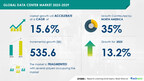
NEW YORK, Feb. 11, 2025 /PRNewswire/ — Report on how AI is redefining market landscape – The global data center market size is estimated to grow by USD 535.6 billion from 2025-2029, according to Technavio. The market is estimated to grow at a CAGR of 15.6% during the forecast period. Rise in adoption of multi-cloud and network upgrades is driving market growth, with a trend towards implementation of ai in data centers. However, cybersecurity issues poses a challenge. Key market players include 365 Data Centers, Amazon.com Inc., Apple Inc., China Telecom Corp. Ltd., Cisco Systems Inc., CyrusOne LLC, Cyxtera Technologies Inc., Digital Realty Trust Inc., Equinix Inc., Google LLC, Hewlett Packard Enterprise Co., Intel Corp., International Business Machines Corp., KDDI Corp., Microsoft Corp., Nippon Telegraph and Telephone Corp., Oracle Corp., Salesforce Inc., SAP SE, and Verizon Communications Inc..
Key insights into market evolution with AI-powered analysis. Explore trends, segmentation, and growth drivers- View Free Sample PDF
Data Center Market Scope
Report Coverage
Details
Base year
2024
Historic period
2019 – 2023
Forecast period
2025-2029
Growth momentum & CAGR
Accelerate at a CAGR of 15.6%
Market growth 2025-2029
USD 535.6 billion
Market structure
Fragmented
YoY growth 2022-2023 (%)
13.2
Regional analysis
North America, APAC, Europe, South America, and Middle East and Africa
Performing market contribution
North America at 35%
Key countries
US, China, UK, Canada, Japan, Germany, India, France, Italy, and Brazil
Key companies profiled
365 Data Centers, Amazon.com Inc., Apple Inc., China Telecom Corp. Ltd., Cisco Systems Inc., CyrusOne LLC, Cyxtera Technologies Inc., Digital Realty Trust Inc., Equinix Inc., Google LLC, Hewlett Packard Enterprise Co., Intel Corp., International Business Machines Corp., KDDI Corp., Microsoft Corp., Nippon Telegraph and Telephone Corp., Oracle Corp., Salesforce Inc., SAP SE, and Verizon Communications Inc.
Market Driver
Data Centers are at the heart of the digital economy, powering IT infrastructure for businesses, individuals, and government organizations. Trends like Artificial Intelligence, Machine Learning, IoT, and Cloud Computing are driving the need for more data processing power and real-time data analysis. Green Data Centers are becoming essential as businesses seek to reduce their carbon footprint and save costs. The Department of Energy and Enterprise Engineering Solutions are leading the charge towards energy-efficient and sustainable data center designs. Cloud computing and Edge Computing offer cost savings, scalability, and flexibility for businesses. Real-time data processing is crucial for industries like autonomous vehicles and smart cities. Decentralized Data Centers and local special circumstances are becoming more common due to data sovereignty regulations and macroeconomic factors. The digitalization of industries like online retail, e-commerce, and personalized data storage require massive data center workloads and application performance. Hardware-related expenses, data security, and backups are top concerns for customers. Internet bandwidth, managed hosting, and colocation are popular solutions for businesses seeking to optimize their IT infrastructure. Big data and data analytics are key drivers of growth, with hyper-scale platforms and colocation data centers leading the way. Business leaders must stay competitive by adapting to these trends and investing in the right data center solutions. Cloud technology, data center systems, and data security are critical areas of focus. The exponential trend of digitization, driven by the S-curve function and internet penetration, will continue to shape the data center market.
Data centers are enhancing energy efficiency through the implementation of Artificial Intelligence (AI). AI technology optimizes server, power, and cooling system performance, enabling quicker decisions and improved efficiency. Data center service providers utilize AI in automation software to reduce human intervention and promote energy-efficient operations. AI also facilitates effective cooling control, adjusting cooling processes and maximizing power usage in data centers. By implementing AI, data centers aim to boost performance, minimize downtime, and reduce human errors.
Request Sample of our comprehensive report now to stay ahead in the AI-driven market evolution!
Market Challenges
Data Centers face numerous challenges in today’s digital world. Artificial Intelligence and Machine Learning require massive computing power, driving the need for advanced IT infrastructure. The Internet of Things (IoT) and Cloud Computing increase data volumes, demanding scalability and flexibility. Green Data Centers address energy efficiency concerns, while Department of Energy grants support innovation. Enterprise Engineering Solutions and Software Testing Help ensure system reliability. Businesses and individuals generate vast amounts of data, driving the need for cost savings and real-time processing. Digitalization, IoT devices, and autonomous vehicles create latency issues. Decentralized Data Centers address local special circumstances and data sovereignty regulations. Macroeconomic factors, such as exchange rates and business leaders’ decisions, impact data center investments. Cloud technology, data center systems, and colocation offer solutions for B2B enterprises, while hardware-related expenses and data security concerns persist. National statistical offices track the level of digitization, and trends show an exponential increase. Big data and data analytics require specialized regions and hyper-scale platforms. Managed hosting, colocation, and public cloud offer options for application performance, storage requirements, and mobile data use. Data security, backups, and Internet bandwidth remain critical concerns. Online retail, e-commerce, and personalized data storing and analyzing drive cloud data storage demand. Application performance, storage requirements, and lost data are key concerns. The digital economy, internet penetration, and mobile usage continue to grow, increasing the importance of data centers. Cloud technology, data center workloads, and application performance are essential for business success. Competitors in various industries rely on data centers for their digital transformation.Enterprises heavily rely on data for generating revenue through trend analysis and informed decision-making. However, securing sensitive data, such as customer information, is a significant challenge. The increasing adoption of cloud services and IoT solutions heightens the risk of cyberattacks. Cybercriminals can exploit IT security vulnerabilities to gain unauthorized access to enterprise servers, potentially compromising valuable data and causing business disruption. This threat is particularly concerning for small enterprises, as a successful attack could lead to devastating consequences. It is crucial for businesses to prioritize data security measures to protect their digital assets and mitigate the risks associated with the evolving cyber threat landscape.
Discover how AI is revolutionizing market trends- Get your access now!
Segment Overview
This data center market report extensively covers market segmentation by
ComponentIT InfrastructurePower ManagementMechanical ConstructionGeneral ConstructionSecurity SolutionsEnd-userBFSIEnergyITOthersGeographyNorth AmericaAPACEuropeSouth AmericaMiddle East And AfricaDesignTraditionalContainerizedModular
1.1 IT infrastructure- The data center IT infrastructure market consists of server infrastructure, storage infrastructure, software-defined data centers (SDDC), network infrastructure, converged infrastructure, backup and recovery software, automation software, and data center infrastructure management (DCIM) solutions. The increasing demand for computing power and storage to support data traffic growth is driving the market. Enterprises are shifting from on-premises to cloud-based data centers, and hyperscale data centers (HDCs) are investing heavily, increasing the demand for servers, storage infrastructure, and other IT equipment. Server infrastructure processes data, runs applications, and stores data. Enterprises aim to shift investments from capital expenditure (CAPEX) to operational expenditure (OPEX) and consolidate, virtualize, and containerize computing needs. Rack servers are the most widely used due to their suitability for enterprises with fixed requirements. The server infrastructure segment is growing due to green, colocation, and HDC expansions and technology refresh cycles. Storage infrastructure includes direct-attached storage (DAS), network-attached storage (NAS), and storage area networks (SAN). The exponential growth in data drives the demand for storage infrastructure. Social media applications and IoT deployment are significant contributors to data volume growth. NVMe SSDs and high-speed networks like LTE and 5G are also driving the segment. SDDCs are virtualized data centers managed through software. They offer cost savings, efficiency, control, and flexibility. Software-defined computing, networking, and storage are SDDC components. The adoption of cloud solutions is driving the SDDC segment’s growth. Network infrastructure includes Ethernet switches, routers, application delivery controllers (ADCs), and SD-WAN appliances. Virtualization is a key factor driving the sale of data center Ethernet switches. High-capacity switches are needed to handle east-west and north-south traffic. Cloud service providers demand higher capacity switches. Converged infrastructure combines multiple IT components into a single integrated computing package. It reduces data center footprint, management complexity, and costs. Hyper-converged infrastructure (HCI) is gaining popularity due to its scalability and cost savings. Data center automation software enables centralized access to data center resources and automates routine tasks. It offers features like scheduling, monitoring, patching, updating, reporting, and compliance. Cloud-based data center automation software is driving adoption due to its low upfront cost. Data center backup and recovery software enables periodic backup and instantaneous recovery of data. Enterprises are adopting online backup solutions and cloud backup services due to the advantages associated with cloud storage. DCIM solutions facilitate data center administration with an overall integrated view for asset and capacity management, energy management, power and cooling, and network management. Enterprises, colocation providers, and hyperscalers focus on energy efficiency and green data centers, driving the DCIM solutions segment.
Download a Sample of our comprehensive report today to discover how AI-driven innovations are reshaping competitive dynamics
Research Analysis
The Data Center market is experiencing significant growth due to the increasing demand for IT infrastructure to support Artificial Intelligence (AI) and Machine Learning (ML) applications, Internet of Things (IoT) devices, and the digitalization of businesses and individual lives. Cloud computing and edge computing are driving this trend, allowing for cost savings, scalability, and flexibility. Real-time data processing is crucial for online retail and e-commerce businesses, making data centers an essential component of their operations. Data center systems enable businesses to store, analyze, and manage their data center workloads efficiently. However, the risk of lost data and the need for speed and security are major concerns. Cloud technology continues to disrupt the traditional on-premises infrastructure, offering benefits such as cost savings, scalability, and real-time data processing. AI and ML are also being integrated into data center management to optimize performance and reduce energy consumption.
Market Research Overview
The Data Center market is experiencing significant growth as businesses and individuals increasingly rely on IT infrastructure for digitalization. Artificial Intelligence and Machine Learning are driving the demand for real-time data processing and analysis in Cloud computing and Edge computing. The Internet of Things (IoT) is generating massive amounts of data, requiring Decentralized Data Centers for local processing and storage. Green Data Centers are becoming essential to reduce energy consumption and costs. Macroeconomic factors, digital economy, and internet penetration are key drivers, with B2B enterprises and national statistical offices leading the way. Hardware-related expenses, data security, and data sovereignty regulations are major concerns. The market is showing an exponential trend, with the S-curve function indicating continued growth. Cost savings, scalability, and flexibility are key benefits. Applications include autonomous vehicles, smart cities, and e-commerce. Data center workloads require application performance, storage requirements, and mobile data use considerations. Data security, backups, and internet bandwidth are critical components. Managed hosting, colocation, and public cloud solutions are available for various business needs. Hyper scale platforms and colocation data centers are popular choices for big data and data analytics. Amazon Web Services and other cloud technology providers offer intelligent buildings and specialized regions to meet diverse customer needs.
Table of Contents:
1 Executive Summary
2 Market Landscape
3 Market Sizing
4 Historic Market Size
5 Five Forces Analysis
6 Market Segmentation
ComponentIT InfrastructurePower ManagementMechanical ConstructionGeneral ConstructionSecurity SolutionsEnd-userBFSIEnergyITOthersGeographyNorth AmericaAPACEuropeSouth AmericaMiddle East And AfricaDesignTraditionalContainerizedModular
7 Customer Landscape
8 Geographic Landscape
9 Drivers, Challenges, and Trends
10 Company Landscape
11 Company Analysis
12 Appendix
About Technavio
Technavio is a leading global technology research and advisory company. Their research and analysis focuses on emerging market trends and provides actionable insights to help businesses identify market opportunities and develop effective strategies to optimize their market positions.
With over 500 specialized analysts, Technavio’s report library consists of more than 17,000 reports and counting, covering 800 technologies, spanning across 50 countries. Their client base consists of enterprises of all sizes, including more than 100 Fortune 500 companies. This growing client base relies on Technavio’s comprehensive coverage, extensive research, and actionable market insights to identify opportunities in existing and potential markets and assess their competitive positions within changing market scenarios.
Contacts
Technavio Research
Jesse Maida
Media & Marketing Executive
US: +1 844 364 1100
UK: +44 203 893 3200
Email: media@technavio.com
Website: www.technavio.com/
View original content to download multimedia:https://www.prnewswire.com/news-releases/data-center-market-to-grow-by-usd-535-6-billion-2025-2029-driven-by-multi-cloud-adoption–network-upgrades-with-ai-impacting-market-trends—technavio-302372300.html
SOURCE Technavio
You may like
Technology
Mox Breaks Even in Q1 2026 amid Strengthening Profitability Outlook, Launches Mox+ Wealth Solutions and Mox Invest Upgrades
Published
39 minutes agoon
May 6, 2026By
Bringing Wealth Within Reach of all in Hong Kong
HONG KONG, May 6, 2026 /PRNewswire/ — Mox Bank Limited (“Mox” or “the Bank”), on the back of delivering a financial breakeven quarter for Q1 2026, today announced the launch of Mox+. This wealth solution is engineered for Hong Kong’s young professionals and emerging affluent and will be a driver of sustainable profitability for the Bank. Mox+ combines wealth capabilities with curated lifestyle benefits, marking Mox’s evolution from everyday banking to a comprehensive wealth partnership.
The financial achievement was driven by robust momentum across all business lines and achieving a significant milestone demonstrates the success of the accessible business model which after 5 years is now used and valued by over 750,000 customers in Hong Kong.
Barbaros Uygun, CEO of Mox, said, “Achieving financial breakeven for the first quarter of 2026 on the back of a strong 2025 set of results, shows our direction of travel. We have the momentum to drive positive change, providing wealth opportunities to all in Hong Kong and do so in a profitable manner. Our client-centric business model is proving that it is the right one for sustainable profitability.
Our digital wealth management platform serves as a trusted partner for our over 750,000 customers at every stage of life, empowering them to manage their finances with confidence and unlock new possibilities. We are entering a new chapter of growth as we continue to expand our product portfolio and wealth management offerings, with the launch of Mox+ being one such initiative.”
He continued, “To support this evolution, we are evolving into an AI-native bank, doubling our operational capacity through a strategic human-bot partnership, equipping every staff member with a personalised AI assistant to deliver even greater service and efficiency.”
Mox+ members enjoy preferential fees and charges on Mox Invest and preferential pricing on foreign exchange, enhanced deposit rates (3.5% p.a. up to HKD5 million), as well as priority customer support and early access to experiences and new products. These benefits can be gained simply by maintaining an average daily balance of HKD 600,000 or above across all deposits and investments which will lead to automatic qualification for Mox+ for the following month. The programme integrates financial advantages with lifestyle benefits—including curated dining rebates, free hotel stays, Starbucks coffee vouchers, health benefits and exclusive member experiences—reflecting Mox’s belief that wealth building should be both strategic and rewarding.
Jayant Bhatia, Chief Business Officer of Mox, commented, “At Mox, we are dedicated to establishing the financial well-being of Hongkongers. Designed and tailored for Hong Kong’s young professionals and emerging affluent segment, which is underserved in Hong Kong, Mox+ offers solutions for daily savings and preferential wealth management service fees for long-term wealth creation as well as rewarding lifestyle benefits. This is strategically significant as one of our key initiatives to drive business growth and make Wealth Within Reach for Hongkongers.”
Throughout 2025, Mox has already strengthened its product portfolio with new solutions in Mox Invest. The Mox Invest platform saw trading volumes increasing to 2.4 times and assets under management (AUM) growing to 2.6 times that of last year. More than 10% of Mox customers have opened a Mox Invest account, reflecting strong demand for its wealth solutions driven by new products and services. In 2026, we will continue our momentum in launching new and innovative products and services and are already scaling up to serve the next generation of wealth builders in Hong Kong. Having already recently launched a crypto trading service, Mox Invest is set to introduce an IPO subscription service later this year.
The Bank has clear reasons for continuing to develop wealth management products. The “Wealth Behaviours: Insights into how individuals are saving and investing” survey conducted by Mox in collaboration with Ipsos revealed that Hongkongers continue to take a conservative approach to investing, with 63% of their liquid assets kept in cash and deposits – a trend that contributes to “cash drag” and limits potential wealth growth. More than two-thirds of respondents indicated they require an average of 5.6 months to save up to their desired investment threshold and typically delay investing their savings by a further 2.75 months on average, resulting in missed opportunities for long-term wealth accumulation[1]. This survey will continue as an ongoing research initiative to deepen our understanding of Hongkonger’s wealth management behaviours and enable the Bank to develop tailored solutions that puts wealth within reach.
After Mox was amongst the first wave of banks in Asia to offer a crypto trading service, Mox Invest now further offers One Click Investments (a simplified process for buying equities based on themes such as AI, technology, amongst others), Trading Signals, and gives customers access to professional fund strategies including Signature CIO funds developed in partnership between Standard Chartered Bank CIO office and Amundi. The Signature CIO funds offer four different type of funds based on individuals’ risk appetite which could be Conservative, Income, Balanced or Growth. Customers also have options amongst a wide range of funds offered by other world-class fund houses.
A Track Record of Rapid Scale and Adoption in the Last 5 Years
Since its launch in September 2020, Mox has brought to the market more than 15 market-first products or services and achieved significant scale with over 750,000 customers, reflecting the trust and growing preference of Hong Kong consumers for a seamless digital banking experience. To date, Mox customers have driven a cumulative spend of HKD70 billion, supported by a robust volume of 176 million card transactions and approximately 2 billion Asia Miles earned through Mox Card and other banking services. Its commitment to delivering tangible value to customers is further evidenced by the HKD2 billion distributed in cash rewards.
Beyond daily spending, Mox has become central to its customers’ financial lives, facilitating approximately 50 million outward FPS transfers and more than 5 million bill payments. As a preferred companion for travelers, the Mox Card has been used over 31 million times in overseas transactions, contributing to a total of 250 million app engagements as we continue to redefine digital banking for the Hong Kong community.
To learn more about Mox, please visit: mox.com.
About Mox Bank Limited (“Mox”)
Mox is a pioneering digital bank licensed in Hong Kong, and a registered institution (CE number: BNO808) powered by Standard Chartered in partnership with PCCW, HKT and Trip.com. Launched in September 2020, Mox is reimagining banking, unlock more of life’s possibilities, and setting global benchmarks for digital banking from Hong Kong.
Mox is well on track to be the number one digital bank for cards, lending and wealth. In 2026, it was awarded as Best Pure-Play Digital Bank for CX in Hong Kong and Outstanding Digital CX in Banking App/ Platform by The Digital Banker Digital CX Awards. It was also recognised as NeoBank of the Year, Retail Banking, Hong Kong and Best Retail Banking Experience, Hong Kong by The Asset Triple A Digital Finance Awards. In 2025, Mox is ranked as the number one digital bank in Hong Kong in Neobank Ranking 2025 by The Banker, a publication by Financial Times. It was also awarded the Best Digital Bank in Hong Kong by The Asian Banker for three consecutive years, and the Digital Bank of the Year in Hong Kong by Asian Banking & Finance for two years in a row. It was also recognised as one of Asia’s Top 5 mobile banking app and the number one Hong Kong digital banking app in Sia Partners’ 2025 International Mobile Banking Benchmark. Mox Credit Card held its position as the seventh-largest credit card portfolio among all retail banks in Hong Kong[2]. Through a scalable platform, lower cost-to-serve, top-notch customer experience and the unique promise of safe, simple, smart, and fun banking, Mox has found immense affinity among Hong Kong customers: Mox app is the top-rated Hong Kong digital banking app in Apple App Store in Hong Kong[3], scoring 4.8 out of 5. Mox’s influence extends beyond Hong Kong, as shown by the company’s technology and know-how being transferred to Trust Bank in Singapore.
Join us in shaping the future of banking.
Follow Mox on mox.com, Facebook, Instagram, Threads, LinkedIn and YouTube for our latest updates.
[1] The “Wealth Behaviours: Insights into how individuals are saving and investing” study was conducted in collaboration with Ipsos and it surveyed 2,500 working adults with a monthly household income above HKD15,000 in Hong Kong between August 2025 and April 2026.
[2] According to TransUnion’s Market Insights and Intelligence Dashboard (MIID) for the period from January to December 2025.
[3] As of the period from 28 January 2025 to 5 May 2026.
View original content to download multimedia:https://www.prnewswire.com/apac/news-releases/mox-breaks-even-in-q1-2026-amid-strengthening-profitability-outlook-launches-mox-wealth-solutions-and-mox-invest-upgrades-302763875.html
SOURCE Mox Bank Limited
Technology
UK Students Recognised in National AI Investment Challenge
Published
39 minutes agoon
May 6, 2026By
University teams apply AI to real-world investment problems, with Lancaster University team taking the top prize.
LONDON, May 6, 2026 /PRNewswire/ — CFA Institute, the global association of investment professionals, has announced the winner of its inaugural AI Investment Challenge, with the top prize awarded to a student team from Lancaster University.
Some 28 teams from 15 universities took part in the competition.
Delivered by CFA Institute and CFA Society UK, the competition brought together students from universities across the United Kingdom to tackle real investment challenges using artificial intelligence. The focus was on practical application, responsible use, and real-world relevance.
Finalists came from Durham University, Heriot-Watt University, Lancaster University, University of Exeter, and University of Manchester.
Teams presented AI-powered solutions to a range of industry challenges, from assessing how carbon pricing affects portfolio values to analysing large volumes of company disclosures and extracting insights from company earnings calls. The winning team from Lancaster University impressed judges with its design of a Disclosure Degradation Detection System – an early-alert tool for analysts that monitors upstream exposure to disclosure risk by analysing company and supplier filings for increasingly vague, complex, or weakening language.
Peter Watkins, Head of University Relations, CFA Institute, said:
“It’s encouraging to see how quickly students can apply technical skills to real investment problems. The strongest teams combined solid analysis with a clear understanding of how AI can be used responsibly in practice. This reflects where the investment industry is heading, with professionals expected to use new technologies effectively while continuing to apply sound human judgement.”
Nick Bartlett, CFA, ASIP, Chief Executive, CFA Society UK, adds:
“It’s been great to see students from across the UK take part. Opportunities like this help people build practical skills, make connections in the industry, and gain confidence in applying what they’ve learned. Bridging that gap between education and industry is increasingly important, as the skills needed for a career in the investment profession continue to evolve.”
The winning team members from Lancaster University are Connor O’Keeffe, Ebro Dossajee, and Bradley McCann.
Connor O’Keeffe, speaking on behalf of the winning team, said:
“The CFA Institute AI Investment Challenge gave us the chance to work on a real investment problem and engage directly with industry professionals. Presenting our work and receiving feedback has been invaluable, and we’re proud to bring first place back to Lancaster. It’s been a great experience for the whole team.”
Steve Young, Professor of Accounting at Lancaster University Management School, commented:
“The AI Investment Challenge is a fabulous initiative from CFA Institute that helps students formulate and execute artificial intelligence solutions to assist investment analysis professionals, and we are thrilled that Brad, Connor, and Ebro have been able to make such a positive contribution to the competition. Congratulations to all teams involved and thank you to CFA Institute and CFA Society UK for organising such an inspiring event.”
The competition was judged on practical relevance, quality of analysis, innovation in the use of AI, responsible use of technology, and clarity of presentation. The final was judged by a panel of six investment industry professionals based in the UK.
University representatives and students can opt-in to be the first to hear about future AI Investment Challenge events via Information Waitlist.
Notes to Editors
The AI Investment Challenge was held on Thursday 30 April 2026 in London.
First, second, and third-place teams received prizes of £2,000, £1,200, and £800, respectively. In addition, all finalist team members received a CFA Program Access Scholarship and the opportunity to showcase their work on CFA Institute platforms.
More information about the AI Investment Challenge is available here: CFA Institute AI Investment Challenge.
About CFA Institute
As the global association of investment professionals, CFA Institute sets the standard for professional excellence and credentials. We champion ethical behavior in investment markets and serve as the leading source of learning and research for the investment industry. We believe in fostering an environment where investors’ interests come first, markets function at their best, and economies grow. With more than 200,000 charterholders worldwide across 160 markets, CFA Institute has 8 offices and 157 local societies. Find us at www.cfainstitute.org or follow us on LinkedIn, and subscribe on YouTube.
View original content:https://www.prnewswire.co.uk/news-releases/uk-students-recognised-in-national-ai-investment-challenge-302762959.html
Technology
Huawei SPN Helps Yunnan Power Grid Build a Next-Gen High-Speed Bearer Network
Published
39 minutes agoon
May 6, 2026By
KUNMING, China, May 6, 2026 /PRNewswire/ — As a key energy hub in Southwest China, Yunnan Power Grid Co., Ltd. (Yunnan Power Grid) is tasked with large-scale clean energy transmission and smart grid development. However, the region’s complex terrain and long transmission lines have made this transformation challenging, rendering the digital and intelligent upgrade increasingly urgent. The explosion of production data and the rise of complex service scenarios further amplify this urgency, imposing ever-stricter requirements on the underlying communication bearer network.
Network Transport Challenges in the Digital and Intelligent Transformation of the Power Industry
To tackle these issues, Yunnan Power Grid has chosen SPN to drive the evolution of its next-gen bearer network, incorporating it into both the 14th and 15th Five-Year Plans. The company has progressively rolled out the technology on a large scale across 16 cities, laying a communication foundation for the next two decades. In this strategic upgrade of electric power services, Huawei has emerged as a key partner.
Dual Dividends: Ultimate Experience and Long-Term Value
Since the pilot in 2022, SPN has evolved from a technical trial to a standard architecture across Yunnan Province. With SPN now being deployed in Zhaotong and Pu’er, the full value of the next-gen bearer network is being unleashed.
First, the bandwidth bottleneck has been resolved. The next-gen SPN bearer network resolves bandwidth bottlenecks by breaking the 155 Mbit/s–10 Gbit/s capacity limit. SPN devices boost access layer (substations, power stations, customer centers) bandwidth to 1 Gbit/s, meeting China Southern Power Grid standards. Aggregation and core layers scale up to 50 Gbit/s or 100 Gbit/s based on site and service size. The solution enables 10 Mbit/s fine-granularity hard pipes for end-to-end isolation of power private lines, supporting high-bandwidth services like transmission video surveillance and ensuring smooth evolution.
Second, the bandwidth upgrade has significantly improved inspection and maintenance efficiency. Huawei’s SPN solution enables real-time SLA monitoring (latency, packet loss) and fault localization within minutes, cutting maintenance costs linked to SDH equipment failures. At Qujing Power Supply Bureau, single inspection time dropped from 30 to 3 minutes, and full-cycle maintenance from over 7 hours to 21 minutes. The O&M center now detects major defects 15 days earlier via preset monitoring points. Over six months, site visits fell from 112 to 61—a 45.54% reduction.
Third, the intelligence level of service transport has been greatly improved. Huawei’s SPN solution supports diverse electric power services—from latency-sensitive teleprotection and dispatching to high-traffic video—with reliable transmission. Using FlexE hard and soft slicing, it ensures rigid isolation between services while enhancing bandwidth reuse. IPv4/IPv6 dual stack enables flexible local forwarding and easy IoT access, such as transmission line monitoring and source-grid-load-storage integration.
Finally, SPN provides long-term investment protection. The evolution to 25 Gbit/s to 400 Gbit/s rates can be supported through low-cost upgrades, avoiding repeated construction.
For detailed solutions, please visit our official website:
https://e.huawei.com/en/case-studies/industries/grid/202604-yunnan-power-grid-spn
Photo – https://mma.prnewswire.com/media/2973652/1panbiyi.jpg
View original content:https://www.prnewswire.co.uk/news-releases/huawei-spn-helps-yunnan-power-grid-build-a-next-gen-high-speed-bearer-network-302763900.html
Mox Breaks Even in Q1 2026 amid Strengthening Profitability Outlook, Launches Mox+ Wealth Solutions and Mox Invest Upgrades
UK Students Recognised in National AI Investment Challenge
Huawei SPN Helps Yunnan Power Grid Build a Next-Gen High-Speed Bearer Network
Send Rakhi to UK swiftly with UK Gifts Portal
Whiteboard Series with NEAR | Ep: 45 Joel Thorstensson from ceramic.network
New Gooseneck Omni Antennas Offer Enhanced Signals in a Durable Package
Why You Should Build on #NEAR – Co-founder Illia Polosukhin at CV Labs
Whiteboard Series with NEAR | Ep: 45 Joel Thorstensson from ceramic.network
NEAR End of Year Town Hall 2021: The Open Web World, MetaBUILD 2 Hackathon and 2021 recap
Trending
-
Technology5 days agoRoyal Visit to Front Royal: Randolph-Macon Academy Shines at Block Party for King Charles III and Queen Camilla
-
Technology5 days agoManufacturing PMI® at 52.7%; April 2026 ISM® Manufacturing PMI® Report
-
Coin Market4 days ago
CLARITY Act stablecoin yield rules finalised: ‘Go time’ for crypto bill
-
Coin Market4 days ago
Bitcoin rally extends, yet BTC options price only 25% chance of $84K in May
-
Technology4 days agoFirst Online Conversations Are Changing in 2026, According to New Secretmeet Research
-
Coin Market5 days ago
SBI eyes Bitbank deal as Japan’s crypto exchange market consolidates
-
Coin Market4 days agoThree Bitcoin data points suggest a rally to $80K is imminent
-
Technology4 days ago2026 Brockton High School Film Festival