Connect with us

Technology

E-Commerce Market to Grow by USD 12.95 Trillion (2023-2027), Boosted by E-Commerce Platform Benefits – Report on AI Impact on Market Trends – Technavio

Published

on

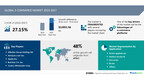
NEW YORK, Feb. 11, 2025 /PRNewswire/ — Report on how AI is redefining market landscape – The global e-commerce market size is estimated to grow by USD 12.95 trillion from 2023-2027, according to Technavio. The market is estimated to grow at a CAGR of almost 27.15% during the forecast period. Advantages of e-commerce platforms is driving market growth, with a trend towards enhancement of consumer experience through technologies. However, regulatory issues poses a challenge. Key market players include Alibaba Group Holding Ltd, Amazon.com Inc., Apple Inc., Best Buy Co. Inc., Costco Wholesale Corp., Ebates Performance Marketing Inc., eBay Inc., Flipkart Internet Pvt. Ltd., Groupon Inc., Inter IKEA Systems B.V., JD.com Inc., Lojas Americanas S.A., Otto GmbH and Co. KG, priceline.com LLC, Shopify Inc., The Home Depot Inc., Walmart Inc., Wayfair Inc., Zalando SE, and Etsy Inc..

Key insights into market evolution with AI-powered analysis. Explore trends, segmentation, and growth drivers- View Free Sample PDF

E-Commerce Market Scope

Report Coverage

Details

Base year

2022

Historic period

2017 – 2021

Forecast period

2023-2027

Growth momentum & CAGR

Accelerate at a CAGR of 27.15%

Market growth 2023-2027

USD 12951.56 billion

Market structure

Fragmented

YoY growth 2022-2023 (%)

26.6

Regional analysis

APAC, North America, Europe, South America, and Middle East and Africa

Performing market contribution

APAC at 48%

Key countries

US, China, Japan, Germany, and UK

Key companies profiled

Alibaba Group Holding Ltd, Amazon.com Inc., Apple Inc., Best Buy Co. Inc., Costco Wholesale Corp., Ebates Performance Marketing Inc., eBay Inc., Flipkart Internet Pvt. Ltd., Groupon Inc., Inter IKEA Systems B.V., JD.com Inc., Lojas Americanas S.A., Otto GmbH and Co. KG, priceline.com LLC, Shopify Inc., The Home Depot Inc., Walmart Inc., Wayfair Inc., Zalando SE, and Etsy Inc.

Market Driver

The E-Commerce Market is experiencing significant growth due to the increasing internet usage and smartphone adoption among the population. Digital content in travel and leisure, financial services, and other sectors is driving online browsing and purchasing. Established organizations and large enterprises are embracing e-tailing to expand their customer base. Technological awareness and connectivity are key factors in user experience. Online marketing tools like Google ads and Facebook ads, social media applications, and payment gateways from banks are essential for online businesses. Operational costs, inventory costs, and the adoption of vertical and specialized marketplaces are shaping the e-commerce landscape. The middle-class population’s increasing wealth and online purchasing power are boosting sales. Major e-commerce players like Bharat Craft, Alibaba, and MSMEs on GeM are leveraging the marketplace model and direct model to reach their audience. The rising internet penetration, consumer tastes, and the influence of social media are transforming online retail. Branded shopping apps, 5G Wi-Fi, social shopping, and emerging technologies like augmented reality and virtual reality are enhancing the customer experience. The future of e-commerce lies in the metaverse, where businesses can connect with their clients in virtual environments. 

E-commerce technology has advanced significantly, benefiting various sectors including home decor. Vendors integrate technologies like augmented reality (AR) and virtual reality (VR) to enhance customer experience. In May 2019, IKEA introduced a VR app, enabling users to virtually experience rooms with their products. Users input room dimensions and select items, viewing different colors and textures through their smartphones. This innovative approach allows consumers to make informed decisions before purchasing. 

Request Sample of our comprehensive report now to stay ahead in the AI-driven market evolution!

Market Challenges

The E-Commerce Market is experiencing significant growth, driven by the increasing internet population and the adoption of smartphones. Digital content in travel and leisure, financial services, and e-tailing are popular categories. Technological awareness and user experience are key challenges. Established organizations and large enterprises communicate with their internet-connected client base through online marketing tools like Google ads and Facebook ads. Infrastructure and operational costs are important considerations. The middle-class population is embracing online purchasing, using payment gateways provided by banks and retailers. Major e-commerce players like Bharat Craft and Alibaba dominate the market, with vertical and specialized marketplaces also gaining popularity. The rise of 5G Wi-Fi, social shopping, and augmented/virtual reality are future trends. MSMEs and the Government’s GeM platform are also contributing to the market’s growth.The e-commerce market faces several regulatory challenges that impact businesses worldwide. One issue is the inconsistency in laws and taxes across countries. For instance, developed nations like the US grapple with applying central and state taxes on e-commerce transactions, creating uncertainty. Similarly, less-developed countries have varying legal and tax regulations. Another challenge is domestic incorporation, where governments favor local e-commerce websites to stimulate employment and business growth. Consequently, international e-commerce companies must incorporate locally to access regional benefits. Moreover, each country has unique restrictions on sellable items, adding to the regulatory complexities.

Discover how AI is revolutionizing market trends- Get your access now!

Segment Overview

This e-commerce market report extensively covers market segmentation by

ApplicationHome AppliancesFashion ProductsGroceriesBooksOthersTypeB2BB2CGeographyAPACNorth AmericaEuropeSouth AmericaMiddle East And Africa

1.1 Home appliances- The home appliances segment in the e-commerce market, consisting of consumer electronics, houseware, and kitchen appliances, is a matured sector with a declining growth rate. The primary challenge lies in the absence of a comprehensive logistics platform for delivering home appliances purchased online. In developing countries, logistical barriers pose significant hurdles. Despite this, home appliances will remain the largest revenue generator in the global e-commerce market due to the improving standard of living and the growing trend of upgrading homes. Two major factors fueling the segment’s growth are the increasing credibility of e-commerce brands and the preference for upgraded home appliances. Additionally, recycling initiatives have led to a 9% decrease in consumer-generated electronic waste in 2020. The IoT’s adoption in consumer electronics is expected to further decrease e-waste during the forecast period. However, many consumers still prefer purchasing home appliances from physical stores for a tactile experience. Consequently, online retailers are establishing showrooms to provide multichannel shopping experiences, combining the benefits of both online and offline shopping.

Download a Sample of our comprehensive report today to discover how AI-driven innovations are reshaping competitive dynamics

Research Analysis

The e-commerce market is experiencing explosive growth, fueled by the smartphone-using population’s increasing adoption. With the proliferation of digital content, industries like travel and leisure, financial services, and e-tailing are thriving in this online space. Technological awareness and connectivity are key drivers, enabling users to browse and buy goods and services from anywhere, at any time. The user experience is paramount, with established organizations and large enterprises investing heavily in online marketing tools like Google ads and Facebook ads, as well as social media applications, to reach consumers. Buying and selling have never been easier, with operational costs and inventory costs reduced through the use of vertical and specialized marketplaces. Consumer wealth continues to grow, providing a lucrative opportunity for businesses to tap into. Infrastructure and communication are essential components, ensuring seamless transactions and timely delivery of goods and services.

Market Research Overview

The E-Commerce Market has experienced explosive growth, fueled by the smartphone-using population and their increasing digital content consumption. Travel and leisure, financial services, and other sectors have embraced e-tailing, driven by technological awareness and the adoption of smartphones. Connectivity and user experience are key factors in online shopping’s rapid adoption, with operational costs, inventory costs, and payment gateways becoming increasingly important. Established organizations and large enterprises dominate the market, utilizing online marketing tools like Google ads and Facebook ads, as well as social media applications. Vertical marketplaces and specialized marketplaces have emerged, offering niche products and services. The marketplace model and direct model coexist, catering to the middle-class population’s evolving needs. Social media, online purchasing, and communication have become integral to the e-commerce ecosystem, with banks and retailers collaborating to provide seamless payment solutions. The future of e-commerce is bright, with emerging technologies like 5G Wi-Fi, social shopping, augmented reality, virtual reality, and the metaverse set to revolutionize the industry. Bharat Craft and Alibaba are notable players, with MSMEs and the government’s GeM platform also making significant strides in the market.

Table of Contents:

1 Executive Summary
2 Market Landscape
3 Market Sizing
4 Historic Market Size
5 Five Forces Analysis
6 Market Segmentation

ApplicationHome AppliancesFashion ProductsGroceriesBooksOthersTypeB2BB2CGeographyAPACNorth AmericaEuropeSouth AmericaMiddle East And Africa

7 Customer Landscape
8 Geographic Landscape
9 Drivers, Challenges, and Trends
10 Company Landscape
11 Company Analysis
12 Appendix

About Technavio

Technavio is a leading global technology research and advisory company. Their research and analysis focuses on emerging market trends and provides actionable insights to help businesses identify market opportunities and develop effective strategies to optimize their market positions.

With over 500 specialized analysts, Technavio’s report library consists of more than 17,000 reports and counting, covering 800 technologies, spanning across 50 countries. Their client base consists of enterprises of all sizes, including more than 100 Fortune 500 companies. This growing client base relies on Technavio’s comprehensive coverage, extensive research, and actionable market insights to identify opportunities in existing and potential markets and assess their competitive positions within changing market scenarios.

Contacts

Technavio Research
Jesse Maida
Media & Marketing Executive
US: +1 844 364 1100
UK: +44 203 893 3200
Email: media@technavio.com
Website: www.technavio.com/

View original content to download multimedia:https://www.prnewswire.com/news-releases/e-commerce-market-to-grow-by-usd-12-95-trillion-2023-2027-boosted-by-e-commerce-platform-benefits–report-on-ai-impact-on-market-trends—technavio-302373705.html

SOURCE Technavio

Continue Reading
Click to comment

Leave a Reply

Your email address will not be published. Required fields are marked *

Technology

ADX welcomes Morgan Stanley as the first international investment bank Remote Trading Member, expanding global access to Abu Dhabi’s capital markets

Published

on

By

ABU DHABI, UAE, May 5, 2026 /PRNewswire/ — The Abu Dhabi Securities Exchange (ADX) Group today announced that Morgan Stanley, a leading investment bank and financial services company, has joined the ADX as its first international investment bank Remote Trading Member — enabling Morgan Stanley’s clients to access the ADX directly.

This milestone strengthens ADX’s global connectivity and supports growing international institutional demand for exposure to UAE markets. It also reinforces its position as one of the world’s fastest-growing exchanges by market capitalization, while highlighting the market’s continued progress in depth, liquidity, and inclusion in major global indices.

Remote membership enables Morgan Stanley to provide its clients with direct market access to the ADX, with trading conducted via the firm’s global trading platform. The ADX continues to play a pivotal role in advancing Abu Dhabi’s long-term economic ambitions, as a mechanism for a diversified, innovation-led, knowledge-based economy.

Morgan Stanley’s direct trading access to ADX reflects the strength of Abu Dhabi’s investment proposition and the continued institutionalization of UAE capital markets. Morgan Stanley’s membership will enhance execution quality, optimize order routing, and provide greater control across the end-to-end trade lifecycle, delivering an advanced trading experience for global investors.

The structure follows a proven international access model used by Morgan Stanley and is designed to meet growing client demand for efficient, transparent, and seamless access to ADX-listed opportunities.

Abdulla Salem Alnuaimi, Group Chief Executive Officer of Abu Dhabi Securities Exchange (ADX) Group, said: “This marks a significant step in advancing our ambition to be a leading financial marketplace that drives opportunity and sustainable economic growth. This momentum is reflected in the strong foreign investor participation, with trading value exceeding 85 billion dirhams in the first quarter of 2026 up by 22% year on year. This performance underscores the growing depth and global relevance of our market, while reinforcing our commitment to expanding international access, strengthening cross-border connectivity, and building a world-class market infrastructure that attracts global capital, supports a diverse range of issuers and contributes to Abu Dhabi’s long-term economic prosperity.”

Patrick Delivanis, Regional Co-Head of MENA at Morgan Stanley, said: “Becoming a Remote Trading Member of ADX reflects our focus on providing clients with efficient, seamless access to Abu Dhabi’s capital markets through our market–leading trading platform. We see continued momentum in the institutionalization and international participation of UAE markets, and we’re pleased to support that evolution by enabling international investors to access opportunities in MENA with direct connectivity to local markets, alongside greater transparency and control across the trading lifecycle.”

Morgan Stanley’s participation aligns with ADX’s strategy to strengthen international connectivity, with remote memberships selectively offered to global firms to attract high-quality cross-border liquidity. The announcement builds on the ADX’s expansion momentum: in 2025, foreign investment rose by nearly 14% and institutional trading increased by 10% year on year. Subject to final operational readiness, Morgan Stanley expects to begin trading as a remote member in the coming weeks.

About Abu Dhabi Securities Exchange (ADX)

The Abu Dhabi Securities Exchange (ADX) was established on 15 November 2000 pursuant to Local Law No. (3) of 2000, which granted the exchange legal rights with independent financial and administrative status, as well as the necessary supervisory and executive powers necessary to carry out its functions. On 17 March 2020, the ADX was converted from a public entity into a Public Joint Stock Company (PJSC) in accordance with Law No. (8) of 2020.

The ADX Group, a market infrastructure group comprising the exchange (ADX) and its post-trade ecosystem, including its wholly owned subsidiaries AD Depository and AD Clear, was established. Through its integrated and globally aligned business structure, the ADX Group supports efficient, transparent, and resilient capital markets across trading, clearing, settlement, and custody.

The Group provides an efficient and regulated marketplace for the trading of securities, including equities issued by public joint-stock companies, bonds issued by governments and corporations, exchange-traded funds (ETFs), and other financial instruments approved by the UAE Capital Market Authority.

The ADX is the second-largest exchange in the Arab region by market capitalization. Its strategy of delivering stable financial performance through diversified revenue streams is aligned with the UAE’s national development agenda, “Towards the Next 50”, which aims to build a sustainable, diversified, and high-value-added economy.

For more information, please contact:
Abdulrahman Saleh ALKhateeb
Manager of Corporate Communication
Abu Dhabi Securities Exchange (ADX)
Mobile: +971 (50) 668 9733
Email: ALKhateebA@adx.ae


View original content:https://www.prnewswire.com/apac/news-releases/adx-welcomes-morgan-stanley-as-the-first-international-investment-bank-remote-trading-member-expanding-global-access-to-abu-dhabis-capital-markets-302762404.html

SOURCE Abu Dhabi Securities Exchange (ADX)

Continue Reading

Technology

Geotab integrates Polestar vehicles into its OEM telematics network

Published

on

By

Fleet operators across North America, Europe, and APAC can now access Polestar vehicle data directly in MyGeotab — no aftermarket hardware required.

LONDON, UK, May 5, 2026 /PRNewswire/ — Geotab, a global leader in connected vehicle and asset management solutions, today announced the integration of Polestar vehicles into its OEM telematics network, giving commercial fleet operators seamless access to Polestar data within MyGeotab from day one — with no aftermarket hardware installation required. The integration is available globally across North America, Europe, and Asia Pacific, supporting all Polestar models.

Developed in collaboration with Geotab, among other telematics service providers, Polestar Fleet Telematics integrates directly into MyGeotab. The Geotab integration enables fleet managers to manage Polestar vehicles alongside all other makes and models on a single unified platform — without fitting additional devices.

Connected vehicle data where it matters most

Through Polestar Fleet Telematics, fleet operators gain near-real-time access to a comprehensive dataset — covering EV battery and charging status, location, tyre information, vehicle security, maintenance alerts, and climate data — flowing directly from Polestar’s connected vehicle architecture into MyGeotab, with no physical installation required.

This breadth of data enables fleet managers to move from reactive to proactive operations — scheduling maintenance before failures occur, optimising charge planning across depots, and maintaining duty-of-care oversight across the entire fleet.

Supporting Europe’s Mixed-Fleet Reality

OEM-embedded telematics removes the need for aftermarket device installation across mixed-manufacturer fleets, reducing logistical overhead and supporting compliance with works council and GDPR requirements — a critical consideration for European fleet operators.

“Polestar Fleet Telematics combines sustainability with intelligence, integrating seamlessly with Geotab to deliver these capabilities directly into the platforms fleet operators trust. Continuous data visibility enables more efficient and informed fleet operations, from day-to-day management to long-term planning. By leveraging Polestar vehicles’ embedded connectivity, fleet managers can make smarter, data-driven decisions — without adding hardware or complexity to their operations.” said Emma Knapp, Manager of Global Key Accounts at Polestar.

Polestar joins an OEM telematics network that already spans over 80% of leading global vehicle manufacturers by fleet market share, including BMW Group, Ford, Stellantis, Volkswagen Group, and Volvo Cars. For fleet operators already using MyGeotab, Polestar vehicles can be connected and deliver data without any additional hardware or installation.

“OEM-embedded telematics represents a change in how fleet data reaches the platform — and Polestar’s connected vehicle architecture makes this integration particularly well-suited for markets that are seriously considering transitioning to electric vehicles.” said Christoph Ludewig, Vice President OEM Global at Geotab. “Fleet operators managing mixed EV and internal combustion engine fleets no longer need separate tools or hardware for each vehicle type. Polestar data flows directly into MyGeotab alongside every other vehicle in the fleet — giving operators the consolidated visibility they need to drive efficiency, support duty of care, and manage their EV transition with confidence.”

Global Availability

The integration is available now across North America, Europe, and Asia Pacific, supporting all Polestar models. Fleet managers can activate the service via the Geotab Marketplace or by contacting their Geotab representative.

About Polestar

Polestar (Nasdaq: PSNY) is the Swedish electric performance car brand with a focus on uncompromised design and innovation, and the ambition to accelerate the change towards a sustainable future. Headquartered in Gothenburg, Sweden, its cars are available in 28 markets globally across North America, Europe and Asia Pacific.

Polestar has four models in its line-up: Polestar 2, Polestar 3, Polestar 4, and Polestar 5. Planned models include the Polestar 7 compact SUV (to be introduced in 2028) and the Polestar 6 roadster. With its vehicles currently manufactured on two continents, North America and Asia, Polestar plans to diversify its manufacturing footprint further, with production of Polestar 7 planned in Europe.

Polestar has an unwavering commitment to sustainability and has set an ambitious roadmap to reach its climate targets: halve greenhouse gas emissions by 2030 per-vehicle-sold and become climate-neutral across its value chain by 2040. Polestar’s comprehensive sustainability strategy covers the four areas of Climate, Transparency, Circularity, and Inclusion.

About Geotab

Geotab is a global leader in connected vehicle and asset management solutions, with headquarters in Oakville, Ontario and Atlanta, Georgia. Our mission is to make the world safer, more efficient, and sustainable. We leverage advanced data analytics and AI to transform fleet performance and operations, reducing cost and driving efficiency. Backed by top data scientists and engineers, we serve approximately 100,000 global customers, processing 100 billion data points daily from more than 5 million vehicle subscriptions. Geotab is trusted by Fortune 500 organisations, mid-sized fleets, and the largest public sector fleets in the world, including the US Federal government. Committed to data security and privacy, we hold FIPS 140-3 and FedRAMP authorisations. Our open platform, ecosystem of outstanding partners, and Geotab Marketplace deliver hundreds of fleet-ready third-party solutions. This year, we’re celebrating 25 years of innovation. Learn more at www.geotab.com/uk and follow us on LinkedIn or visit our blog.

GEOTAB and GEOTAB MARKETPLACE are registered trademarks of Geotab Inc. in Canada, the United States and/or other countries.

Media Contact: Geotab Contact, Romina Dashghachian, Strategic Communications Lead, EMEA, pr@geotab.com

Photo – https://mma.prnewswire.com/media/2972188/Geotab_Inc__Geotab_integrates_Polestar_vehicles_into_its_OEM_tel.jpg 
Logo – https://mma.prnewswire.com/media/2972187/Geotab_Inc__Geotab_integrates_Polestar_vehicles_into_its_OEM_tel.jpg 


View original content:https://www.prnewswire.co.uk/news-releases/geotab-integrates-polestar-vehicles-into-its-oem-telematics-network-302761910.html

Continue Reading

Technology

IDX Opens Geneva Office and Strengthens Global Data & Insights Capability

Published

on

By

New Swiss presence and specialist team integration support growing global demand for evidence-based, defensible communications strategies

LONDON, May 5, 2026 /PRNewswire/ — IDX today announced the opening of its new Geneva office and the integration of a specialist Data & Insights team, strengthening the company’s international footprint and expanding its ability to help clients worldwide build communications strategies grounded in evidence, market intelligence and audience insight.

The expansion gives IDX an on-the-ground presence in Switzerland while adding further depth to its Data & Insights capability. The Geneva-based team will work closely with IDX specialists across performance marketing and corporate communications, helping clients develop a clearer view of the markets they operate in and the forces shaping their growth.

The move aligns with Destination 250 – Customers First, IDX’s global strategy to grow its team by 250, focused on deepening client value, strengthening delivery and investing in the capabilities that matter most to clients.

The investment strengthens the Data pillar of IDX’s Connected Content™ model, which combines Creative, Data, Technology and Media to create what IDX calls The Multiplier Effect, helping clients multiply what matters through more connected, measurable and effective work.

“IDX is experiencing phenomenal growth, and our new Geneva office gives us boots on the ground to better serve clients across Europe and globally across performance marketing, investor relations and corporate communications,” said Crispin Beale, Worldwide CEO, IDX. “Data has been at the heart of this business for decades, and this centre of excellence reflects our continued investment in that capability. It’s an incredibly exciting time for IDX, and I look forward to the next phase of our growth as we continue to expand globally.”

“This is an exciting step in IDX’s growth story and a clear response to what clients are asking for: more evidence-based thinking, stronger market context and clearer rationale behind their communications strategies,” said Chris Corrigan, Chief Customer Growth Officer, IDX. “Our new presence in Geneva, combined with deeper Data & Insights expertise, strengthens the way we support clients globally, giving them earlier access to the insight and market context they need to make better-informed decisions and turn evidence into action.”

The Geneva office will strengthen relationships with existing clients in the region, support re-engagement with former partners and create new opportunities for IDX with organisations operating across European and global markets. It reflects IDX’s continued investment in the capabilities that matter most to clients as communications, marketing and corporate reputation work become increasingly data-led and commercially accountable.

“IDX’s integrated offer across insights, performance marketing and corporate communications, powered by the combination of human intelligence, advanced technology and AI, represents exactly where the industry is heading,” said Lonneke de Roo, Head of Data & Insights, IDX. “I am delighted to join the business and help clients navigate increasingly complex markets with clearer evidence, sharper insight and more connected strategies.”

ABOUT IDX  

IDX is a global strategic communications and marketing agency, headquartered in London with offices around the world, including New York, London, Phoenix, Helsinki, Gothenburg, Geneva, and Vadodara. Working with more than 1,600 clients across sectors, IDX combines deep industry knowledge with a data-first mindset to help ambitious brands thrive in complex, fast-moving markets. The firm specialises in performance marketing, investor relations, and stakeholder engagement, delivering integrated campaigns that drive meaningful business outcomes. Visit www.idx.inc to learn more.

Logo – https://mma.prnewswire.com/media/2668561/IDX_black_Logo.jpg

View original content:https://www.prnewswire.co.uk/news-releases/idx-opens-geneva-office-and-strengthens-global-data–insights-capability-302762181.html

Continue Reading

Trending