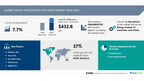
NEW YORK , Feb. 11, 2025 /PRNewswire/ — Report with market evolution powered by AI – The global music production software market size is estimated to grow by USD 432.8 million from 2025-2029, according to Technavio. The market is estimated to grow at a CAGR of almost 7.7% during the forecast period. Rising number of musicians and artists is driving market growth, with a trend towards growing use of ai for music production. However, easy availability of open-source software for music production software poses a challenge. Key market players include Ableton AG, Acon AS, Acoustica Inc., Adobe Inc., Apple Inc., Avid Technology Inc., Bitwig GmbH, Cockos Inc., GoldWave Inc., Image Line Software NV, iZotope Inc., MAGIX Software GmbH, MOTU Inc., MuTools, NCH SOFTWARE Pty Ltd., Peaksware Holdings LLC, PreSonus Audio Electronics Inc., Reason Studios AB, Serato Ltd., and Yamaha Corp..
AI-Powered Market Evolution Insights. Our comprehensive market report ready with the latest trends, growth opportunities, and strategic analysis- View Free Sample Report PDF
Forecast period
2025-2029
Base Year
2024
Historic Data
2019 – 2023
Segment Covered
End-user (Professionals and Non-professionals), Type (Editing, Mixing, and Recording), and Geography (North America, Europe, APAC, South America, and Middle East and Africa)
Region Covered
North America, Europe, APAC, South America, and Middle East and Africa
Key companies profiled
Ableton AG, Acon AS, Acoustica Inc., Adobe Inc., Apple Inc., Avid Technology Inc., Bitwig GmbH, Cockos Inc., GoldWave Inc., Image Line Software NV, iZotope Inc., MAGIX Software GmbH, MOTU Inc., MuTools, NCH SOFTWARE Pty Ltd., Peaksware Holdings LLC, PreSonus Audio Electronics Inc., Reason Studios AB, Serato Ltd., and Yamaha Corp.
Key Market Trends Fueling Growth
The music production software market is experiencing significant trends, with a focus on social media integration, artificial intelligence, and cloud-based solutions. Electronic dance music producers in home studios benefit from AI-powered music creation and digital audio workstations (DAWs) with machine learning algorithms. Technological advancements include AI-virtual instruments, automated mixing, and audio environments. Cloud technology enables access to music production services and collaboration tools, making it more democratized for younger generations. Freemium and subscription-based models offer flexible pricing, while digital tools cater to various music genres and formats. Operating systems and music production apps cater to diverse creative processes, education, and the music industry’s need for high-quality recordings and innovative productions. Background scores, jingles, and music production for entertainment are also gaining traction. Overall, these trends represent a sophisticated, centralized hub for music production and consumption.
Advanced technologies, specifically artificial intelligence (AI) and cloud technology, have significantly enhanced the music production process. Musicians and artists are utilizing AI for refining human-generated music through editing and mastering. AI-based music composing tools, like Orb Composer 1.5 by HEXACHORDS ENTERTAINMENT SL, are being adopted for music production. AI automates music production by emulating cognitive skills, discovering and learning music production patterns. Consequently, many music software production companies are focusing on AI technology integration for music creation.
Insights on how AI is driving innovation, efficiency, and market growth- Request Sample!
Market Challenges
The music production software market is experiencing significant changes due to various challenges. Social media platforms are transforming music discovery and promotion, requiring music production tools to adapt. Artificial intelligence and machine learning algorithms are revolutionizing music creation with AI-powered music production and virtual instruments. Perpetual licenses are being replaced by cloud-based solutions, making digital audio workstations more accessible. Technological advancements like automated mixing, audio environments, and collaborative tools are democratizing music production for home studios and younger generations. Electronic dance music and other genres are driving innovation in digital audio production. Freemium and subscription-based models offer entry-level access to music production apps and services. Operating systems and formats continue to evolve, while background scores, jingles, and music production for entertainment industries require high-quality recordings. Music production firms leverage cloud technology and sophisticated tools to meet client demands. Music production apps and services are becoming the central hub for music creation, mixing, editing, and collaboration in the music industry.Open-source music production software poses a challenge to proprietary providers in the music production market. The open-source software’s availability on web portals, developed by a community of engineers, offers benefits such as free usage and support, preventing vendor lock-in. Notable options include Audacity, Ardour, LMMS, and Mixxx. Audacity, a multi-track audio editor and recorder, is accessible on Windows and Mac OS devices, making it a preferred choice for music producers worldwide.
Insights into how AI is reshaping industries and driving growth- Download a Sample Report
Segment Overview
This music production software market report extensively covers market segmentation by
End-userProfessionalsNon-professionalsTypeEditingMixingRecordingGeographyNorth AmericaEuropeAPACSouth AmericaMiddle East And Africa
1.1 Professionals- The music production software market caters to end-users such as musicians, DJs, and music production companies. With the expanding film industry, the demand for high-quality audio and video content is surging. Film producers invest in advanced music production software to enhance their productions, utilizing it for composing, recording, editing, mixing, and mastering. The global film industry’s growth rate necessitates continuous software development and updates from providers. New features, security patches, and notifications encourage professionals to invest more. Additionally, the increasing number of musicians and artists, fueled by music streaming services and the popularity of remixes, drive market growth. For instance, Apple’s Logic Pro X update in November 2023, featuring tempo detection technology and professional sound-shaping tools, caters to musicians producing electronic music. These advancements will contribute to the expansion of the professionals segment in the global music production software market.
Download complimentary Sample Report to gain insights into AI’s impact on market dynamics, emerging trends, and future opportunities- including forecast (2025-2029) and historic data (2019 – 2023)
Research Analysis
The Music Production Software market is a dynamic and innovative industry, offering a wide range of tools and solutions for composers, producers, and musicians. From AI music composers that generate customized music based on specific parameters, to software for film scoring and music distribution, there’s a solution for every need. Music production workflow is streamlined with advanced techniques and tips available through tutorials and reviews. Mobile music production is on the rise, with software for iOS and free options available for Android. Electronic music production is a popular niche, with plugins for various genres such as hip hop, electronic, and pop. Music education and licensing are also important aspects of the market, with virtual and augmented reality technologies adding new dimensions to music creation. Audio mixing software, audio engineering tools, and audio mastering solutions complete the offerings, catering to the diverse needs of music creators in various industries, including podcasting, game audio, and live performance.
Market Research Overview
Music production software has seen significant advancements in recent years, with innovations like social media integration, artificial intelligence, and cloud-based solutions revolutionizing the way music is created and produced. Digital audio workstations (DAWs) and recording tools have become more sophisticated, allowing home studios to rival professional recording facilities. Electronic dance music (EDM) and other genres have benefited from AI-powered music creation, virtual instruments, and automated mixing. Technological advancements have democratized music production, making it more accessible to younger generations and music enthusiasts. Cloud technology enables cloud-based music production, music production services, and collaboration tools, allowing producers to work together in real-time. Machine learning algorithms and AI-powered music production apps have made the creative process more efficient and effective. Operating systems and music production software are available for various formats, including freemium and subscription-based models. The music industry continues to evolve, with audio environments, high-quality recordings, and innovative formats becoming the norm. Music production firms offer jingles, background scores, and other music production services to businesses and individuals. Music consumption trends have led to an increased demand for music production tools and services, making it an exciting time for music creators and producers.
Table of Contents:
1 Executive Summary
2 Market Landscape
3 Market Sizing
4 Historic Market Size
5 Five Forces Analysis
6 Market Segmentation
End-userProfessionalsNon-professionalsTypeEditingMixingRecordingGeographyNorth AmericaEuropeAPACSouth AmericaMiddle East And Africa
7 Customer Landscape
8 Geographic Landscape
9 Drivers, Challenges, and Trends
10 Company Landscape
11 Company Analysis
12 Appendix
About Technavio
Technavio is a leading global technology research and advisory company. Their research and analysis focuses on emerging market trends and provides actionable insights to help businesses identify market opportunities and develop effective strategies to optimize their market positions.
With over 500 specialized analysts, Technavio’s report library consists of more than 17,000 reports and counting, covering 800 technologies, spanning across 50 countries. Their client base consists of enterprises of all sizes, including more than 100 Fortune 500 companies. This growing client base relies on Technavio’s comprehensive coverage, extensive research, and actionable market insights to identify opportunities in existing and potential markets and assess their competitive positions within changing market scenarios.
Contacts
Technavio Research
Jesse Maida
Media & Marketing Executive
US: +1 844 364 1100
UK: +44 203 893 3200
Email: media@technavio.com
Website: www.technavio.com/
View original content to download multimedia:https://www.prnewswire.com/news-releases/music-production-software-market-to-grow-by-usd-432-8-million-2025-2029-driven-by-rising-musicians–artists-with-ai-redefining-market-landscape—technavio-302372150.html
SOURCE Technavio










 Technology4 days ago
 Technology5 days ago
 Technology4 days ago
 Technology4 days ago
 Technology4 days ago
 Coin Market4 days ago
 Technology4 days ago
 Technology4 days ago