Connect with us

Technology

Regeneron Science Talent Search 2025 Awards More Than $1.8 Million to High School Seniors for Innovative Research on Classifying Celestial Objects, Treating a Rare Muscle Disease and Solving a Long-Standing Math Problem

Published

on

$250,000 top award goes to Matteo Paz in America’s longest running and most distinguished science and math competition

TARRYTOWN, N.Y. and WASHINGTON, March 11, 2025 /PRNewswire/ — Regeneron Pharmaceuticals, Inc. and Society for Science (the Society) announced that Matteo Paz, 18, of Pasadena, California, won the top award of $250,000 in the 2025 Regeneron Science Talent Search, the U.S.’s oldest and most prestigious science and math competition for high school seniors.

Now in its 84th year, the competition celebrates and rewards young innovators who are applying their Science, Technology, Engineering and Math (STEM) talent and leadership skills to push the boundaries of discovery and address today’s pressing challenges.

Forty finalists, including Matteo, were honored this evening during an award ceremony at the National Building Museum in Washington, D.C, where they were awarded more than $1.8 million in prizes for their groundbreaking research, exceptional problem-solving skills and potential to shape the future of STEM.

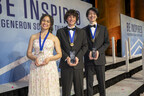
Matteo Paz, 18, of Pasadena, California, won first place and $250,000 for designing machine-learning algorithms to efficiently comb through 200 billion entries of raw NEOWISE infrared full-sky data. By analyzing tiny changes in infrared radiation, the AI sorted the objects into 10 classes. He found 1.5 million new potential objects.

Second place and $175,000 went to Ava Grace Cummings, 18, of Smithfield, North Carolina, for creating a fruit fly model of STAC3 disorder, or Native American myopathy (a rare genetic muscle disease). She found that the common nettle herb, alone or combined with the experimental drug Tirasemtiv, improved movement in both adult flies and larvae.

Third place and $150,000 went to Owen Jianwen Zhang, 18, of Bellevue, Washington, who solved a long-standing math problem about objects called 3-uniform hypergraphs. He proved a maximum value for how many 3-uniform hypergraphs can have similar structures but differing connections. Owen’s results have applications in computer science.

“Congratulations to the winners of this year’s Regeneron Science Talent Search,” said Maya Ajmera, President and CEO, Society for Science and Executive Publisher, Science News. “The remarkable creativity and dedication of these students bring renewed hope for our future. Driven by their ingenuity, these young scientists are developing groundbreaking solutions that have the potential to transform our world and propel society forward.” 

The Regeneron Science Talent Search provides a national platform for high school seniors to showcase original, innovative STEM research that proposes novel solutions to real-world issues. Finalists are evaluated for their scientific rigor, originality, critical thinking, leadership potential and commitment to drive meaningful impact across crucial STEM fields.

“The Science Talent Search changed my life. At my high school, STS winners were treated like star athletes, and I never imagined I would belong in such an amazing group of kids who were operating at a whole different level than I had ever seen,” said George D. Yancopoulos, co-Founder, Board co-Chair, President and Chief Scientific Officer of Regeneron and a 1976 Science Talent Search finalist and top winner. “The experience of competing in STS and being named a top winner gave me the confidence to devote my life to science. So, congratulations to this year’s finalists and winners, you are America’s best and brightest. I hope this moment inspires you to push boundaries, challenge assumptions and use your brilliance to change the world.”

Other top honors from the competition include:

Fourth Place: Logan Lee, 18, of Honolulu, Hawaii received a $100,000 award for helping sterile male mosquitoes survive in the wild. These males are important in mosquito control. Logan improved their survival by giving them a transplant of wild mosquito bacteria. His transplant helped the sterile mosquitoes grow faster and survive better in the wild.

Fifth Place: Rivka Lipkovitz, 18, of San Francisco, California received a $90,000 award for using statistical modeling to study U.S. voter ID laws. She found that presidential election turnout dropped by 2.4% in states that passed strict laws after 2008. Turnout for midterm elections increased. Knowing how laws affect turnout can help shape future policies.

Sixth Place: Melody Heeju Hong, 17, of Wantagh, New York received a $80,000 award for developing a powerful, flexible statistical model for mapping sites called trans-methylation quantitative trait loci (trans-mQTL) within the human genome. These sites are key to understanding the interplay between genes and environment in disease and aging.

Seventh Place: Kevin Shen, 18, of Olympia, Washington received a $70,000 award for building a custom flight computer to control a 3D-printed airplane with oblique wings. These aircraft can be more fuel-efficient but are hard to control. His oblique-wing aircraft and flight computer improved flight efficiency by 9.2%.

Eighth Place: Minghao Zou, 18, of Santa Clara, California received a $60,000 award for simulating protons to probe environments that produce subatomic particles called neutrinos. He created an algorithm mimicking extreme astrophysical conditions, such as electromagnetic and gravitational forces and interactions with nearby particles. He verified it using known cases of particle motion.

Ninth Place: Thanush Patlolla, 17, of Cary, North Carolina received a $50,000 award for approximating the density of electrons using a finite nuclear model. Using a mathematical strategy called a density function, he created a model to map electrons in a nuclear simulation. The map increased the accuracy of energy distribution predictions by 0.6%.

Tenth Place: Ray Zhang, 17, of Chantilly, Virginia received a $40,000 award for studying how to better treat drug-resistant Fusarium fungal infections. Ray studied how the fungus builds sticky communities of cells that resist drug treatment. He also found that using a combination of drugs better controlled the fungus.

Akilan Sankaran, 17, of Albuquerque, New Mexico was named the Seaborg Award winner and selected to speak on behalf of the Regeneron Science Talent Search Class of 2025. The 40 finalists chose Akilan as the student who best exemplifies their class and the legacy of nuclear chemist Glenn T. Seaborg, who won the Nobel Prize for Chemistry in 1951 and served on the Society’s Board of Trustees for 30 years.

All other finalists received $25,000. All 40 finalists join a distinguished group of Science Talent Search alumni, many of whom have gone on to achieve world-changing careers in STEM, with some earning esteemed honors, including the Nobel Prize, National Medal of Science, and MacArthur Fellowship. In total, Regeneron awarded $3.1 million in prizes, including $2,000 to each top scholar and their school.

Learn more about Regeneron Science Talent Search at https://www.societyforscience.org/regeneron-sts/ and learn about all their research projects at our Virtual Public Showcase.

For media resources, visit  https://www.societyforscience.org/2025-regeneron-science-talent-search-media-kit

About Society for Science 
Society for Science is a champion for science, dedicated to promoting the understanding and appreciation of science and the vital role it plays in human advancement. Established in 1921, Society for Science is best known for its award-winning journalism through Science News and Science News Explores, its world-class science research competitions for students, including the Regeneron Science Talent Search, the Regeneron International Science and Engineering Fair and the Thermo Fisher Scientific Junior Innovators Challenge, and its outreach and equity programming that seeks to ensure that all students have an opportunity to pursue a career in STEM. A 501(c)(3) membership organization, Society for Science is committed to inform, educate and inspire. Learn more at www.societyforscience.org and follow us on Facebook, Twitter, Instagram and Snapchat (Society4Science).

About Regeneron 
Regeneron (NASDAQ: REGN) is a leading biotechnology company that invents, develops and commercializes life-transforming medicines for people with serious diseases. Founded and led by physician-scientists, our unique ability to repeatedly and consistently translate science into medicine has led to numerous approved treatments and product candidates in development, most of which were homegrown in our laboratories. Our medicines and pipeline are designed to help patients with eye diseases, allergic and inflammatory diseases, cancer, cardiovascular and metabolic diseases, hematologic conditions, infectious diseases and rare diseases.

Regeneron believes that operating as a good corporate citizen is crucial to delivering on our mission. We approach corporate responsibility with three goals in mind: to improve the lives of people with serious disease, to foster a culture of integrity and excellence and to build sustainable communities. Regeneron is proud to be included on the Dow Jones Sustainability World Index and the Civic 50 list of the most “community-minded” companies in the U.S. Throughout the year, Regeneron empowers and supports employees to give back through our volunteering, pro-bono and matching gift programs. Our most significant philanthropic commitments are in the area of science education, including the Regeneron Science Talent Search and the Regeneron International Science and Engineering Fair (ISEF).

For more information, please visit www.Regeneron.com or follow Regeneron on LinkedIn, Instagram, Facebook or X.

Media Contacts
Joseph Brown, Regeneron
386-283-1323, joseph.brown2@regeneron.com  

Gayle Kansagor, Society for Science
703-489-1131, gkansagor@societyforscience.org 

View original content to download multimedia:https://www.prnewswire.com/news-releases/regeneron-science-talent-search-2025-awards-more-than-1-8-million-to-high-school-seniors-for-innovative-research-on-classifying-celestial-objects-treating-a-rare-muscle-disease-and-solving-a-long-standing-math-problem-302399274.html

SOURCE Society for Science

Continue Reading

Technology

Wenge AI Subsidiary D2 Intelligence Showcases Four AI Products at Hong Kong FinTech Week 2026

Published

on

By

HONG KONG, Nov. 3, 2026 /PRNewswire/ — D2 Intelligence, a subsidiary of Wenge AI (1956.HK), is showcasing at Hong Kong FinTech Week x StartmeupHK 2026. Under this year’s theme “Fintech Nexus: Bridging the World, Building the Future”, Asia’s flagship fintech event brought together more than 45,000 attendees from more than 120 economies. At its exhibition booth, D2 Intelligence showcased four AI products — Decitron, ScienceOra, DocuMind and Checkie — spanning decision intelligence, scientific research, enterprise document intelligence and consumer-grade risk checking.

Decitron — the world’s first general-purpose large decision model.

Released by Wenge AI in June 2026, Decitron was a centerpiece of the showcase. Built on three technical pillars — a World Model, multi-agent reasoning and game solving — the model understands events, deduces possible paths and compares outcomes for complex, open-ended problems. On the internationally recognized PolyBench benchmark, it achieved a Final Forecast Accuracy of 81.20%. Rather than simply answering questions, it generates deduction process reports and comprehensive analysis reports for decision-makers, and continuously tracks evolving situations through its X-Signal global signal capability.

Decitron is available at https://decitron.wenge.com/app.

ScienceOra — an intelligent research decision platform for AI for Science (AI4S).

ScienceOra is built on the ScienceOne Scientific Foundation Model. Recently launched on Tencent WorkBuddy with more than 30 specialist research agents and skills, ScienceOra supports literature analysis, hypothesis development, study design, modeling and simulation, validation and research communication across disciplines. At the booth, ScienceOra demonstrated how, in a drug R&D scenario, a researcher evaluating Fostamatinib can first build a developability evaluation framework, then analyze the compound’s ADMET characteristics together with known bioactivity and toxicity data, and finally receive a proposed follow-up validation plan with key metrics.

ScienceOra is available at https://www.scienceone.ai/portal/.

DocuMind — an enterprise document intelligence and decision platform.

Launched by D2 Intelligence in September 2026, DocuMind serves financial services, insurance and public services, where accuracy, compliance and traceability are critical. Built on Wenge AI’s DOMA architecture (Data, Ontology, Models and Agents), it brings document recognition, information extraction, cross-document verification and risk review into a single, fully traceable workflow. In the HKMA GenA.I. Sandbox, DocuMind processed a trade finance document of up to 10 pages in under 30 seconds — compared with 10 to 20 minutes manually — with extraction accuracy for core fields exceeding 95% and a review automation rate of approximately 85%. Every conclusion retains its rationale, evidence and audit trail, and the platform supports data masking, isolated environments and on-premises deployment.

Checkie — an AI-powered “second opinion” for everyday decisions.

Checkie turns contracts, freelance offers and dating profiles into easy-to-read reality checks. Users upload PDFs or screenshots, and Checkie applies OCR and image analysis to flag unusual details and points worth a second look — from clauses buried in a rental agreement to red flags in a job offer or an online conversation. During the event, Checkie was named a Global Fast Track 2026 Semi-Finalist by Invest Hong Kong. Checkie was also recently nominated as China’s sole representative in the Government and Citizen Engagement category of the World Summit Awards (WSA) 2026, a United Nations-backed global digital innovation award, and will represent China in the upcoming global selection.

Checkie is available at https://checkie-ai.com/.

About D2 Intelligence

D2 Intelligence is a data and decision intelligence company powered by AI LLMs. We provide products and solutions for digital transformation, cross‑modal analytics, AI‑assisted decision optimization, AIGC content creation, financial risk management and investment research. We serve global brands, financial institutions and media companies including Haier, BYD, Kantar, China Construction Bank, China Merchants Bank, Guotai Junan Securities and CMG Asia-Pacific. Our headquarters is in Hong Kong, with R&D teams across major cities in Mainland China. For more information, visit https://www.d2-ai.com/.

About Wenge AI

Wenge AI (1956.HK) is a provider of artificial intelligence technology and service platform products for enterprises. With self-developed large models as its core, the company helps enterprises build practical intelligent platforms and applications. Founded by a team of AI scientists from the Chinese Academy of Sciences, Wenge AI has deep technological expertise in large models, cognitive intelligence and complex-system modeling, and is committed to advancing AI from technological capabilities to enterprise-level applications.

View original content to download multimedia:https://www.prnewswire.com/news-releases/wenge-ai-subsidiary-d2-intelligence-showcases-four-ai-products-at-hong-kong-fintech-week-2026-302928667.html

SOURCE Wenge AI

Continue Reading

Technology

Trane Expands Future Climate Engineers Scholarship Program in Indonesia to Broaden Student Access

Published

on

By

BANDUNG, Indonesia, Nov. 4, 2026 /PRNewswire/ — Trane – by Trane Technologies (NYSE: TT), a global climate innovator, has announced the expansion of the Trane Future Climate Engineers Scholarship Program in Indonesia, part of its commitment to help develop the next generation of climate leaders.

Building on a successful inaugural year, Trane is building upon its collaboration with Politeknik Negeri Bandung (POLBAN) and local non-governmental organization Yayasan Generasi Cerdas Iklim (GCI) to equip more emerging professionals with the financial support, technical training and leadership development needed to drive impact in a rapidly evolving industry.

“The HVAC industry needs talent with more than technical knowledge. As the industry evolves, there is growing demand for future-ready professionals who can apply digital tools, improve energy efficiency and help advance sustainability goals,” said Steven Lim, Country Leader of Trane Indonesia. “Through this scholarship program, we are helping bridge the gap between academic learning and industry experience, equipping young people with the skills, exposure and confidence to succeed and make a meaningful impact.”

In response to the evolving skills needs of Indonesia’s climate and energy sectors, the 2026 program is expanding its scope to include additional participants and disciplines. The program will continue its focus on Refrigeration and Air Conditioning Engineering while also welcoming high-potential students from POLBAN’s Mechanical Engineering, Energy Engineering, Electrical Engineering and Business Administration disciplines.

The program’s learning experience has also been enhanced. Co-developed by Trane and GCI, the curriculum now brings together experts in climate resilience, low-carbon development and artificial intelligence to provide students with broader exposure to the issues shaping the future of the industry. Through an intensive leadership and innovation experience, mixed-discipline student teams will develop and implement community mini-projects designed to apply their learning in practical ways.

To further extend the program’s impact, selected online training sessions that were previously available only to scholarship recipients will now be offered free of charge to the public. This open-access approach will enable more young people across Indonesia to explore climate, sustainability and green career pathways.

“The scholarship program gives students the opportunity to learn and grow beyond the classroom, while exposing them to diverse professional and industry perspectives,” said Iwan Ridwan, S.T., M.T., Ph.D., Vice Director for Academic Affairs of POLBAN. “We look forward to continuing this collaboration to strengthen the connection between vocational education and industry needs, helping students better understand how their knowledge can be applied in the workplace and in broader society.”

“Over the first year, the program demonstrated strong interest among young people in climate, energy and sustainability,” said Ikrom Mustofa, S.Si., M.Sc., Founder and Advisor of GCI. “By opening selected sessions to the public, we are expanding access for students from diverse academic backgrounds while continuing to provide scholarship recipients with structured and in-depth development support.”

The Future Climate Engineers Scholarship supports the company’s 2030 Sustainability Commitments, and its efforts to expand access to STEM education and inspire the next generation of learners with the potential to transform our way of life and our world.

About Trane

Trane – by Trane Technologies (NYSE: TT), a global climate innovator – creates comfortable, energy efficient indoor environments for commercial and residential applications. For more information, please visit www.trane.com or www.tranetechnologies.com.

About Trane Technologies

Trane Technologies is a global climate innovator. Through our strategic brands Trane® and Thermo King®, and our portfolio of environmentally responsible products and services, we bring efficient and sustainable climate solutions to buildings, homes and transportation. For more on Trane Technologies, visit tranetechnologies.com.

View original content to download multimedia:https://www.prnewswire.com/apac/news-releases/trane-expands-future-climate-engineers-scholarship-program-in-indonesia-to-broaden-student-access-302926459.html

SOURCE Trane – by Trane Technologies

Continue Reading

Technology

Viettel Group and Vietnam’s Government Cipher Committee Unveil Security Chip Embedding Vietnamese Cryptography in Silicon

Published

on

By

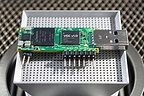
HANOI, Vietnam, Nov. 3, 2026 /PRNewswire/ — Vietnam’s Government Cipher Committee and Viettel Group have unveiled VGC v1.0, a security chip integrating a domestically developed cryptographic algorithm directly into silicon, alongside the country’s first domestically designed secure semiconductor platform.

The project addresses concerns over potential data exposure associated with reliance on imported chips. By embedding cryptographic functions directly into hardware, Vietnam’s Government Cipher Committee and Viettel Group aim to strengthen Vietnam’s control over the design and verification of technologies used to protect sensitive information.

VGC v1.0 contains 300 million transistors in a 10 × 10 mm package and is fabricated using a 28-nanometre CMOS process. In performance tests, it performed encryption and decryption approximately 15 times faster than a software-only solution carrying out the same tasks. The first batch passed technical tests and received certification for socio-economic applications in the first quarter of 2026. Technical safeguards were also applied to protect the design before fabrication, reducing risks of information leakage and reverse engineering.

The Government Cipher Committee’s M2 unit established security requirements, developed the cryptographic algorithm and defined evaluation criteria, while Viettel Semiconductor Center designed and implemented the chip. Based on the open RISC-V instruction set architecture, the underlying platform enables Vietnamese engineers to modify processor designs and reuse established verification processes for future chip generations.

VGC v1.0 has already seen initial deployment in secure USB storage devices for Party, government and defence agencies. Planned applications include supporting Vietnam’s national digital signature certification system, which has more than two million digital certificates in circulation. Other potential uses span financial data protection, connected cameras and sensors, and critical infrastructure systems in electricity, water, oil and gas, and telecommunications. Products intended to protect state secrets would require further testing and certification under applicable standards.

“Researching, designing and developing secure semiconductor chips is a formidable challenge, requiring years of accumulated expertise, technological capabilities and highly skilled talent. Yet we believe that starting later does not mean accepting dependence on others. With the right strategy, focused resources and sustained commitment, we can steadily close the gap and move towards mastering technologies of strategic importance to our country,” said Lieutenant General Tao Duc Thang, Chairman and CEO of Viettel Group.

At the launch, the Vietnam’s Government Cipher Committee and Viettel Group signed an agreement covering plans for volume production, multicore security chips, specialist workforce development and testing on real devices. Viettel is also building a semiconductor fabrication plant in Hoa Lac as part of broader efforts to develop domestic capabilities across chip design, manufacturing and packaging.

Beyond the initial chip, the initiative establishes a foundation for future generations of security hardware, supporting Vietnam’s long-term efforts to reduce technological dependence and strengthen control over critical digital technologies.

View original content to download multimedia:https://www.prnewswire.com/news-releases/viettel-group-and-vietnams-government-cipher-committee-unveil-security-chip-embedding-vietnamese-cryptography-in-silicon-302928624.html

SOURCE Viettel Group

Continue Reading

Trending