Connect with us

Technology

HOME FLIPPING DECLINES AGAIN ACROSS U.S. IN 2024 AS PROFITS REMAIN LOW

Published

on

Flipping Activity by Investors Drops for Second Straight Year, Down 32 Percent Over That Time;Investment Returns Inch Upward but Still Sit Near Low Point Over Past Decade;Almost Two-Thirds of Flipped Homes Purchased with Cash

IRVINE, Calif., March 20, 2025 /PRNewswire/ — ATTOM, a leading curator of land, property data, and real estate analytics, today released its year-end 2024 U.S. Home Flipping Report, which shows that 297,885 single-family homes and condos in the United States were flipped in 2024. That was down 7.7 percent from 322,782 in 2023 and 32.4 percent from a recent peak of nearly 441,000 reached in 2022.

The report further reveals that as the number of homes flipped by investors declined, so did flips as a portion of all home sales, from 8.1 percent in 2023 to 7.6 percent last year.

In one small potential bright spot for the home-flipping industry, profits and profit margins rose slightly in 2024 on typical buy-renovate-and-resell projects. But margins again remained at one of their low points over the past 10 years as investors continued struggling to take advantage of the nation’s housing market boom.

Gross profits on typical home flips in 2024 increased to $72,000 nationwide (the difference between the median sales price and the median amount originally paid by investors). That was up from $67,846 in 2023 and translated into a 29.6 percent return on investment compared to the original acquisition price.

The latest nationwide return on investment (before accounting for mortgage interest, property taxes, renovation expenses and other holding costs) was up from 28.6 percent in 2023 and from 29.4 percent in 2022. But it remained barely more than half of the 54.2 percent peak over the past decade in 2016.

Investors saw their profit margins tick upward as the median price of the homes they flipped increased slightly faster than the median price they had paid to purchase properties – 3 percent versus 2 percent.

“The home-flipping industry saw investors shy away even more in 2024 amid the extended period of languishing profits. But even as activity waned, there was at least a glimmer of hope that returns were starting to turn around,” said Rob Barber, CEO at ATTOM. “While home flippers still seemed to be having difficulty timing the market for big profits, their margins at least stopped going in the wrong direction.”

He added that “this year poses significant uncertainty for investors, what with a short supply of homes for sale, declining numbers of low-priced foreclosure properties, mixed economic forecasts and elevated mortgage rates. So, they will have to do some very smart buying and quick renovating to keep the profit rebound going.”

Despite the small gain in profits in 2024, home-flipping continued to stand out as a niche of the U.S. housing market that has seen its fortunes tumble even as the broader market has mostly boomed.

Home flipping rates drop in two-thirds of U.S., with biggest decreases in the South and West
Home flips as a portion of all home sales decreased from 2023 to 2024 in 145 of the 213 metropolitan statistical areas analyzed in the report (68 percent).

The largest year over year declines in flipping rates in metro areas with a population of 1 million or more were in Charlotte, NC (down 18.5 percent from last year); Jacksonville, FL (down 16.9 percent); New Orleans, LA (down 16.4 percent); Denver, CO (down 15 percent) and Miami, FL (down 13.6 percent).

Metro areas with a population of 200,000 or more and at least 100 home flips in 2024, where home flipping rates increased from 2023 to 2024, were led by Cedar Rapids, IA (up 49.6% from last year); Bellingham, WA (up 28.2%); Warner Robins, GA (up 26.8%); Merced, CA (up 24.5%); and Norwich–New London, CT (up 23.4%).

2024 Year-End Home Flipping Rate Chart

Home flips purchased with financing dip downward
Nationally, the percentage of flipped homes originally purchased by investors with financing decreased in 2024 to 36.8 percent, down from 37.8 percent in 2023 although still up from 35.6 percent in 2022.

Meanwhile, 63.2 percent of homes flipped in 2024 were originally bought with cash only, up from 62.2 percent in 2023 but down from 64.4 percent two years earlier.

Among metropolitan areas with a population of 1 million or more and sufficient data to analyze, those with the highest percentage of flipped homes in 2024 that had been purchased by investors with financing included San Diego, CA (59 percent); Seattle, WA (58.1 percent); Fresno, CA (50.6 percent); Providence, RI (49.9 percent) and San Francisco, CA (49.9 percent).

In that same group, the metro areas with the highest percentage of flips purchased with all cash included Buffalo, NY (81 percent); Cleveland, OH (77.4 percent); Detroit, MI (76.5 percent); Birmingham, AL (75.7 percent) and Pittsburgh, PA (73.8 percent).

Typical gross profits on home flips grow in nearly two-thirds of nation
Homes flipped in 2024 were sold for a median price nationwide of $315,000, generating a gross flipping profit of $72,000 above the median original purchase price paid by investors of $243,000. That national gross-profit figure was up from $67,846 in 2023 but still down slightly from $72,750 in 2022, which was the second-highest level this century.

Gross profits grew in 141, or 66 percent, of the 213 metro areas across the U.S. with sufficient data to analyze.

Among the 56 metro areas in the U.S. with a population of 1 million or more, those with the largest gross flipping profits on median-priced transactions in 2024 were San Jose, CA ($283,000 profit); San Francisco, CA ($218,000); New York, NY ($175,000); San Diego, CA ($175,000) and Washington, DC ($170,000).

The weakest gross flipping profits among metro areas with a population of at least 1 million in 2024 were in Austin, TX ($8,844 profit); San Antonio, TX ($17,832); Houston, TX ($20,846); Dallas, TX ($24,233) and Kansas City, MO ($39,709).

2024 Year End U.S. Home Flipping Gross Profits & Returns Chart

Home flipping returns up in roughly half of metro-area markets
The profit margin on the typical home flips around the U.S. last year rose to 29.6 percent but still stood at the third-lowest level since 2008. The ROI on median-priced home flips nationwide has dropped 16 percentage points since 2020 and is off by 25 points since the highwater mark over the past decade hit in 2016.

Margins increased last year as the median nationwide resale price on flipped homes went up 3.3 percent, from $305,000 in 2023 to $315,000 in 2024. That represented a slightly larger increase than the 2.5 percent rise in the price investors had originally paid for properties they flipped ($237,154 for homes flipped in 2023 versus $243,000 in 2024).

The typical home-flipping investment return improved from 2023 to 2024 in 116, or 54 percent, of the metro areas analyzed.

Among metro areas with a population of 1 million or more, the biggest percentage-point increases in profit margins on median-priced flips during 2024 were in Cleveland, OH (ROI up from 39.2 percent in 2023 to 72 percent in 2024); Buffalo, NY (up from 83.9 percent to 109.1 percent); Rochester, NY (up from 60.2 percent to 71.5 percent); St. Louis, MO (up from 34 percent to 45.1 percent) and Memphis, TN (up from a 58.2 percent profit to 66.7 percent).

In that same group of markets with populations of at least 1 million, the largest decreases in returns on investment for typical home flips came in Philadelphia, PA (ROI down from 82.4 percent in 2023 to 68.4 percent in 2024); Hartford, CT (down from 59 percent to 45.7 percent); Pittsburgh, PA (down from 123.7 percent to 110.9 percent); Richmond, VA (down from 81.7 percent to 69.7 percent) and Detroit, MI (down from 66.7 percent to 59.2 percent).

Among metro areas with a population of at least 1 million, the biggest gross profit margins in 2024 were in Pittsburgh, PA (110.9 percent profit); Buffalo, NY (109.1 percent); Baltimore, MD (76.3 percent); Cleveland, OH (72 percent) and Rochester, NY (71.5 percent).

Average time to flip nationwide decreases
Home flippers who sold homes in 2024 took an average of 162 days, or about 5 ½ months, to complete the flips. That was down from 169 days for homes flipped in 2023 and 165 days in 2022.

2024 Year End U.S. Average Flip Days Chart

Portion of flipped homes sold to FHA remains about the same
Of the 297,885 U.S. homes flipped in 2024, 10.7 percent, or one of every nine, were sold to buyers using a loan backed by the Federal Housing Administration (FHA). That was virtually the same as the 10.8 percent level in 2023 but up from 8.4 percent in 2022.

Among the 213 metro areas with a population of at least 200,000 and at least 100 home flips in 2024, those with the highest percentage of flipped homes sold in 2024 to FHA buyers — typically first-time home purchasers — were Merced, CA (38.3 percent); Lakeland, FL (27 percent); Bakersfield, CA (25.9 percent); Yuma, AZ (24.6 percent) and Visalia, CA (24.4 percent).

Home flipping rates were at least 10 percent in 160 counties during 2024
Among 870 counties with at least 50 home flips in 2024, there were 160 where flips accounted for at least 10 percent of all home sales last year. The top five were all in Georgia: Houston County (Warner Robins) (23.1 percent); Cobb County (Marietta) (22.5 percent); Clayton County (outside Atlanta) (19 percent); Douglas County (outside Atlanta) (18.6 percent) and Dawson County (outside Marietta) (18.4 percent).

High-level takeaways from fourth-quarter 2024 data:

The 69,929 home flips in the fourth quarter of 2024 were completed by 54,502 investors, a ratio of 1.28 flips per investor.The share of homes flipped in the fourth quarter of 2024 that were purchased by investors with financing represented 36.2 percent of all homes flipped in the quarter – almost the same as the 36.1 percent figure in the previous quarter but down from 37.3 percent in the fourth quarter of 2023. The share purchased with cash remained about the same – 63.8 percent, compared to 63.9 percent in the third quarter of 2024 but up from 62.7 percent in the fourth quarter of 2023.The gross-flipping profit on median-priced home flips in the fourth quarter of 2024 was $66,100. That was down from $70,000 in both the third quarter of last year and the fourth quarter of 2023. The latest figure represented a typical 26.5 percent return on investment (percentage of original purchase price). That was down from 28.6 percent in the previous quarter and from 30.4 percent in late-2023.The latest ROI marked the third-lowest quarterly result in the past 10 years.Home flips completed in the fourth quarter of 2024 took an average of 157 days, up one day from 156 in the fourth quarter of 2023.

Report methodology
ATTOM analyzed sales deed data for this report. A single-family home or condo flip was any arms-length transaction that occurred in the quarter where a previous arms-length transaction on the same property had occurred within the last 12 months. The average gross flipping profit is the difference between the purchase price and the flipped price (not including rehab costs and other expenses incurred, which flipping veterans estimate typically run between 20 percent and 33 percent of a property’s after-repair value). Gross flipping returns on investment was calculated by dividing the gross flipping profit by the first sale (purchase) price.

About ATTOM
ATTOM provides premium property data and analytics that power a myriad of solutions that improve transparency, innovation, digitization and efficiency in a data-driven economy. ATTOM multi-sources property tax, deed, mortgage, foreclosure, environmental risk, natural hazard, and neighborhood data for more than 155 million U.S. residential and commercial properties covering 99 percent of the nation’s population. A rigorous data management process involving more than 20 steps validates, standardizes, and enhances the real estate data collected by ATTOM, assigning each property record with a persistent, unique ID — the ATTOM ID. The 30TB ATTOM Data Warehouse fuels innovation in many industries including mortgage, real estate, insurance, marketing, government and more through flexible data delivery solutions that include ATTOM Cloud, bulk file licenses, property data APIs, real estate market trends, property navigator and more. Also, introducing our newest innovative solution, making property data more readily accessible and optimized for AI applications – AI-Ready Solutions.

Media Contact:
Megan Hunt
Megan.hunt@attomdata.com

Data and Report Licensing:
949.502.8313
datareports@attomdata.com

View original content to download multimedia:https://www.prnewswire.com/news-releases/home-flipping-declines-again-across-us-in-2024-as-profits-remain-low-302406754.html

SOURCE ATTOM

Continue Reading

Technology

Context Labs AI Distillery™ Lets Enterprises Run Sovereign AI on Data They Own

Published

on

By

Company launches the Context Engine for trusted sovereign AI, which packages an enterprise’s own data with verified lineage for use with the frontier or open-weight model the enterprise chooses.

ABU DHABI, United Arab Emirates, Nov. 1, 2026 /PRNewswire/ — Context Labs B.V. (“Context Labs”), the AI Data Infrastructure company, today launched the Context Labs AI Distillery™, the Context Engine for trusted sovereign AI. The AI Distillery converts an enterprise’s operational and business data into a governed Context Package that the enterprise owns, creating their own protected competitive moat. Every answer an AI model draws from the package is traced to its source records, and the package works with the frontier or open weight model the customer chooses, inside the customer’s own environment.

Analysts have quantified the obstacle to scaling enterprise AI. Gartner predicts that through 2026 organizations will abandon 60% of AI projects unsupported by AI-ready data, and that over 40% of agentic AI projects will be canceled by the end of 2027. McKinsey reports that eight in ten companies name data limitations as the barrier to scaling AI agents. Gartner has also described what enterprises now need: software that lets teams construct, govern and deliver semantically organized knowledge to AI agents, built on ontologies and knowledge graphs.

 The Context Labs AI Distillery™ is designed around six outcomes:

Own your IP. An enterprise’s knowledge, know-how and operating context stay inside a Context Package that only it controls and are not used to train third-party AI models.

Own your AI. The intelligence employees create in everyday use accrues to the enterprise, not to a model provider, and grows with every interaction.

Trusted, provable answers. Every output carries its data lineage and decision provenance, so answers can be verified, audited, and defended.

Build, protect and scale a proprietary competitive asset. The Context Package captures how the enterprise describes and runs its operations, starting with one facility and extending to others without rebuilding.

Sovereign by design. The AI Distillery runs inside the customer’s own data center or chosen cloud, so data stays where the customer decides.

Freedom of model choice, at lower cost. Customers can use any frontier or open-weight model and switch models without rebuilding the Context Package. Precise, verified context reduces the tokens each query uses.

The AI Distillery works in three steps: distill, package, and prove. It maps an enterprise’s structured and unstructured data to industry-specific ontologies, stores the result in a Context Package with cryptographic provenance, and checks answers against the company’s own records before any model goes into production. Work that has typically required teams of specialist engineers becomes a guided, governed workflow.

Context Agents and the Semantic Context Tunnel. Context Agents answer operational, commercial and compliance questions from the enterprise’s Context Package, with every figure traced to its source. The Semantic Context Tunnel brings the same context into the AI assistant employees already use. Both work within the access controls the enterprise sets.

“Models come and go. An enterprise’s context should not,” said Dan Harple, Founder, Chairman and CEO of Context Labs. “Frontier models will keep improving, but they do not supply governance, provenance or trust, and they should not absorb the knowledge that makes a company competitive. The AI Distillery gives enterprises a moat they own: their own context, proven and protected, working with whichever model they choose. That is how our customers own their IP and own their AI.”

At ADIPEC 2026, Context Labs is demonstrating the AI Distillery on energy-sector use cases, in which a Context Agent answers operational questions with every figure traced to the underlying plant records. Context Labs is located Arab Development Group stand, Stand #5240, Hall 5 and in the Dell AI Factory with NVIDIA, AI Zone, Hall 13.

Availability. The Context Labs AI Distillery™ is available now through the Microsoft Marketplace. Each enterprise license includes an industry starter kit to accelerate time to value. Companies can request a briefing or technical working session at contextlabs.com/distillery.

About Context Labs B.V.

Context Labs is an AI Data Infrastructure company delivering the Context Engine for Trusted and Secure Sovereign AI. Its platform turns complex, fragmented operational, engineering and enterprise data into continuously verified, auditable information that AI systems, people and markets can trust. Built on an extensible library of industry-specific ontologies that map to established standards published by ISO and other standards bodies, the platform is deployable across sectors, with use-case applications delivering decision-ready intelligence on a common foundation. The Context Labs AI Distillery™ lets enterprises run sovereign AI inside their own data centers, so they own their IP and own their AI. Formed out of MIT research and led by a team that helped drive the at-scale growth of the Internet, Context Labs has offices in Amsterdam, Cambridge (Mass.), Houston and Abu Dhabi. Learn more at www.contextlabs.com.

Media contact
press@contextlabs.com | 1-617-902-0932 | contextlabs.com/resources

View original content to download multimedia:https://www.prnewswire.co.uk/news-releases/context-labs-ai-distillery-lets-enterprises-run-sovereign-ai-on-data-they-own-302925657.html

Continue Reading

Technology

From IFA Berlin to CES 2027: OlloBot Continues Its Journey in Emotional Companionship

Published

on

By

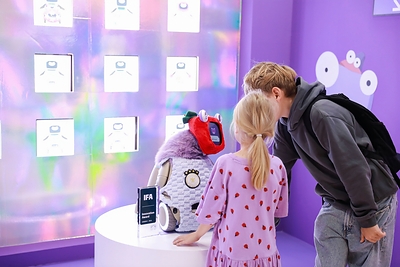
HONG KONG, Oct. 31, 2026 /PRNewswire/ — AI companion robot brand OlloBot made its European debut at IFA Berlin 2026, where its AI companion robot OlloNi SS1 was named an Honoree in the Best in Home & Entertainment category of the IFA Innovation Awards. The recognition, alongside feedback from visitors at the show, offered further encouragement for OlloBot’s belief that the future of home robotics lies not only in what robots can do, but also in the connections they can build with people.

In the Top 10 Trends in China’s Robotics and Embodied Intelligence Market for 2026, IDC identifies the evolution of educational and companion robots into all-age home intelligent terminals as a key trend. The report highlights a growing emphasis on long-term companionship, contextual understanding and ongoing content services, with value extending beyond specific functions to lasting relationships and services.

OlloBot is building its identity around this shift. Rather than developing humanoid robots or devices primarily centered on task execution, the brand is exploring a different path through what it calls “Cyber Pet,” an emerging category of home companions designed around emotional relationships. Its approach starts with a simple question: how can a robot become a familiar and meaningful presence in someone’s life?

For OlloBot, the answer lies in restraint. A companion robot should not replace human relationships or compete for a user’s constant attention. It should learn when to engage and when to step back. The goal is not about delivering a moment of novelty or amusement. It is about creating a unique relationship that can expand with each interaction and gradually become personally meaningful.

“We believe home robots need to enter the household through emotional connection,” said Lyn Fang, founder of OlloBot. “Technology can create the conditions for interaction, but meaningful companionship comes from how those interactions make people feel over time.”

At IFA, the enthusiasm from visitors offered a tangible reflection of this approach. Under the theme “Touch. Feel. Bond.,” OlloBot created an open, home-inspired setting where visitors could interact with OlloNi SS1 directly. Powered by OlloBot’s proprietary EmpathCore emotional engine and Affinilog interaction system, OlloNi SS1 engages dynamically through touch, sound and facial expressions. OlloNi SS1 also appeared in IFA’s “Robots on the Runway” showcase, where its emotional engine enabled it to react to its surroundings in real time. Visitors were not simply examining a device or comparing functions. They were exploring how it responded to them. The experience reinforced the brand’s conviction that, in the home, emotional connection can matter as much as technical capability.

Next stop: Las Vegas

The recognition and feedback at IFA mark an encouraging step as OlloBot continues to advance its product development and commercialization. Looking ahead to CES 2027, OlloBot is set to take the next step in its journey by introducing two all-new robot family members: a desktop lamp-form robot and OlloBot Gen 2. Visitors will also get a first look at a rich lineup of IP merchandise and ecosystem peripherals built around the flagship OlloVerse universe. Please stay tuned—OlloBot looks forward to welcoming everyone in Las Vegas and sharing how its expanding ecosystem continues to redefine emotional companionship in the home.

About OlloBot

OlloBot is an AI companion robot brand developed by Ollobot Robotics Limited, a Hong Kong-based company and part of BizConf Technology Co., Ltd. (SZSE: 300578).

The company focuses on embodied intelligence and family-oriented AI companion robots designed to support more natural interaction, emotional presence and connection in modern homes. Through its Cyber Pet concept, OlloBot aims to explore how AI and robotics can become a more meaningful and approachable part of everyday family life.

For more information, please visit ollobot.com.

YouTube:https://www.youtube.com/@ollo_botFacebook:https://www.facebook.com/ollobotofficialInstagram:https://www.instagram.com/ollo_botThreads:https://www.threads.com/@ollo_botTikTok:https://www.tiktok.com/@ollo_botX:https://x.com/OLLOBOT_Real


View original content to download multimedia:https://www.prnewswire.com/news-releases/from-ifa-berlin-to-ces-2027-ollobot-continues-its-journey-in-emotional-companionship-302925063.html

SOURCE OlloBot

Continue Reading

Technology

A new way to explore Japan with AI: Naviu AR Travel Companion for Japan Launches November 1 2026

Published

on

By

Patent pending geospatial technology brings 29 language guidance and city scale AR navigation to travelers

TOKYO, Oct. 31, 2026 /PRNewswire/ — Naviu, a business under TANGLE Inc., offering an AI-powered augmented-reality travel companion for Japan, launches on iOS and Android on November 1. Built on patent-pending geospatial technology, Naviu places AR content and navigation accurately in the real world across entire cities, without requiring a visual positioning system.

Travelers can ask Naviu about anything around them and receive answers in any of 29 languages, grounded in their exact location. A semi-transparent AR path provides turn-by-turn guidance, an AI companion walks with the traveler, and the app reveals side-street cafes, local landmarks, and other places that conventional maps and guidebooks may overlook.

About Naviu

Naviu combines an ask-anything AI guide, city-scale AR navigation, photo recognition, bespoke trip planning, and an optional cultural storytelling companion. Its spatial content network also allows brands, cities, and creators to place interactive 3D and AR content in the real world. AR experiences are already live at landmarks including Senso-ji, Tokyo Skytree, Tokyo Tower, Meiji Jingu, and Tokyo Station.

Naviu is available on the App Store and Google Play.

Official site: naviu.app

Key Features

Ask-anything AI guide: Conversational answers about any place in 29 languages, grounded in precise location dataCultural storytelling and guidance: An optional companion mode that guides travelers street by street and narrates local history and storiesAR navigation: A semi-transparent augmented-reality path overlaid on real streets across entire citiesPhoto recognition: Travelers can point the camera at a temple, sign, or storefront and ask what it isBespoke trip planning: Itineraries built around dietary needs, interests, accessibility, and available timeSpatial content network: Brands, cities, and creators can place interactive 3D and AR content in the real world

Statement from the Head of Naviu

“The hard part of traveling in Japan isn’t getting lost. It’s standing in front of something remarkable with no idea what it is. Naviu answers that question in your own language, right where you’re standing, so the city opens up instead of staying a backdrop.”
Jack Mead
CEO of Ashita Co. and Head of Naviu

About TANGLE Inc

TANGLE Inc. is the Tokyo-based company behind the tour operators TOMOGO! and Untold Japan. Its mission, Make the City Yours, reflects a decade of helping travelers discover Japan beyond the guidebook and now extends that experience into software through Naviu.

Company

TANGLE Inc.

Headquarters

Tokyo, Japan

Representative Director

Kengo Goto

Business

TOMOGO!, Untold Japan, and development and operation of Naviu

View original content to download multimedia:https://www.prnewswire.com/news-releases/a-new-way-to-explore-japan-with-ai-naviu-ar-travel-companion-for-japan-launches-november-1-2026-302925556.html

SOURCE TANGLE Inc.

Continue Reading

Trending