Connect with us

Technology

Fire Resistant Cable Market to Reach USD 15.2 Billion by 2031, Driven by Safety Regulations and Smart Infrastructure Growth | Valuates Reports

Published

on

BANGALORE, India, April 11, 2025 /PRNewswire/ — Fire Resistant Cable Market is Segmented by Type (XPLE, LSZH, PVC, EPR), by Application (Building & Construction, Automotive & Transportation, Manufacturing, Energy).


The Global Market for Fire Resistant Cable was valued at USD 11900 Million in the year 2024 and is projected to reach a revised size of USD 15190 Million by 2031, growing at a CAGR of 3.6% during the forecast period.

Claim Your Free Report: https://reports.valuates.com/request/sample/QYRE-Auto-32U8659/Global_Fire_Resistant_Cable_Market

Major Factors Driving the Growth of Fire Resistant Cable Market:

The Fire Resistant Cable Market is on a firm growth trajectory, underpinned by tighter regulations, urbanization, and heightened awareness of life‑safety requirements. Material innovations such as nano‑clay reinforced LSZH and cross‑linked polyolefins extend performance envelopes, enabling cables to meet rising temperature and toxicity thresholds. Multi‑industry demand—from construction and transport to data centers and renewables—diversifies revenue streams, reducing cyclicality. Consolidation among cable manufacturers and vertical integration into compound production improve economies of scale and margin resilience. With governments and insurers aligning incentives toward safer infrastructure, fire‑resistant cabling transitions from niche specification to default choice, securing long‑term market expansion.

Unlock Insights: View Full Report Now! https://reports.valuates.com/market-reports/QYRE-Auto-32U8659/global-fire-resistant-cable

TRENDS INFLUENCING THE GROWTH OF THE FIRE RESISTANT CABLE MARKET: 

Cross‑linked polyethylene has become a cornerstone material in fire‑resistant cables because its three‑dimensional molecular network enhances thermal stability, dielectric strength, and mechanical integrity. During a fire, XLPE maintains insulation properties at temperatures exceeding 250 °C, preventing short circuits and preserving circuit continuity for critical systems such as emergency lighting, sprinkler pumps, and alarm loops. XLPE’s resistance to chemical attack and moisture ingress extends cable life in demanding industrial and marine environments, reducing maintenance costs and downtime. Regulatory bodies in Europe and Asia now specify XLPE for high‑rise buildings, tunnels, and offshore platforms, driving steady procurement volumes. Consequently, material suppliers and cable manufacturers alike experience revenue growth, amplifying overall Fire Resistant Cable Market expansion.

Low Smoke Zero Halogen sheathing compounds emit minimal opaque smoke and non‑corrosive gases when exposed to flame, protecting occupants and sensitive electronics from toxic inhalation and acid damage. Stricter building codes following high‑profile fires in London, Dubai, and Shanghai mandate LSZH cabling in public infrastructure, hospitals, and transportation hubs. Telecom operators also favor LSZH for data centers to safeguard servers and optical equipment. The shift from PVC to LSZH drives new formulation development, spurring demand for specialized additive packages and extrusion lines. As retrofit projects and green‑building initiatives accelerate worldwide, LSZH adoption underpins significant incremental revenues, reinforcing upward momentum in the Fire Resistant Cable Market.

Urbanization and vertical construction trends compel architects and engineers to specify fire‑resistant cables for life‑safety circuits within skyscrapers, airports, and metro systems. National codes such as NFPA 70, BS 8519, and IEC 60331 require cables to maintain circuit integrity for designated durations under direct flame. High‑occupancy structures rely on these cables to power evacuation systems, smoke extraction fans, and emergency elevators. The construction boom across Asia‑Pacific, the Middle East, and Africa therefore creates a large, recurring demand base. Simultaneously, renovation of aging European and North American buildings to meet updated safety standards fuels replacement sales. Building & construction thus serves as the most influential end‑use segment, propelling Fire Resistant Cable Market growth.

Governments worldwide continue tightening fire‑safety standards in response to catastrophic incidents, compelling industries to adopt certified fire‑resistant cabling solutions. Updated versions of NFPA 130, EN 45545, and IEC 60332 impose stricter flame‑spread, smoke density, and toxicity thresholds. Non‑compliant installations face legal liabilities, insurance penalties, and reputational damage, motivating stakeholders to switch proactively. Certification labs expand testing capacity, while cable makers invest in upgraded formulations and process controls to secure compliance marks. The regulatory ratchet functions as a predictable, long‑term demand driver, stabilizing revenue streams and encouraging new product development within the Fire Resistant Cable Market.

Rapid transit systems require thousands of kilometers of power, control, and signaling cables that must remain operational during tunnel fires to enable safe evacuation and communication. Countries such as India, China, and Egypt are commissioning extensive metro lines, while Europe upgrades legacy networks with driverless technology. Fire‑resistant cables with low‑smoke insulation and rodent protection become mandatory under EN 45545 and local standards. Long project lead times translate into multi‑year procurement contracts, providing visibility for manufacturers and raw‑material suppliers. The sustained build‑out of mass‑transit infrastructure therefore contributes a reliable growth pillar for the Fire Resistant Cable Market.

Hyperscale and colocation data centers house dense racks of servers and lithium‑ion UPS systems that pose significant fire risks. Operators deploy fire‑resistant, LSZH‑sheathed cables to minimize smoke damage and ensure uptime, aligning with ISO 27001 and SOC 2 continuity requirements. Stringent service‑level agreements penalize downtime, incentivizing premium cabling solutions that guarantee circuit integrity under extreme heat. Edge‑computing micro‑data centers in urban locations further expand the addressable market. Capital expenditures by cloud providers thus generate a high‑margin demand stream for specialized fire‑resistant cables, reinforcing market expansion.

Solar farms, offshore wind turbines, and battery‑energy storage systems expose cables to high currents, UV radiation, and potential arc‑fault events. Fire‑resistant, halogen‑free cables mitigate catastrophic losses by maintaining connectivity between inverters, transformers, and monitoring equipment during thermal runaway. International standards such as IEC 61730 and UL 1703 incorporate fire‑performance clauses, pushing renewable developers toward certified cabling. The accelerating global transition to clean energy therefore opens new verticals for cable makers, diversifying revenue beyond traditional construction and industrial segments.

Property insurers increasingly scrutinize fire‑safety measures, offering favorable premiums for facilities that install certified fire‑resistant cables. Conversely, failure to comply with updated codes can invalidate coverage or trigger punitive deductibles. This financial lever accelerates adoption across commercial real estate, healthcare, and hospitality sectors. Legal precedents holding building owners liable for inadequate safety systems intensify risk aversion, prompting proactive retrofits. Insurance‑driven incentives therefore amplify sales of compliant cable products, enhancing overall market velocity.

Claim Yours Now! https://reports.valuates.com/api/directpaytoken?rcode=QYRE-Auto-32U8659&lic=single-user

FIRE RESISTANT CABLE MARKET SHARE:

Global Flame Retardant Cable key players include Nexans, Prysmian, Keystone Cable, Axon’Cable, Leoni AG, etc. Global top five manufacturers hold a share over 35%. Europe is the largest market, with a share over 25%, followed by North America and China, both have a share over 40% percent.

In terms of product, Low-smoke Halogen-free Flame-retardant Cable is the largest segment, with a share over 70%. And in terms of application, the largest application is Buildings, followed by Power Plant and Manufacturing Factory.

Key Companies:

Prysmian GroupNexans S AKeystone CableGeneral CableNKTLeoniLS Cable & SystemEL Sewedy ElectricUniversal Cable (M) BerhadTratosJiangnan GroupDubai Cable CompanyTele-Fonika KableTianjin Suli Cable

Purchase Chapters: https://reports.valuates.com/market-reports/QYRE-Auto-32U8659/global-fire-resistant-cable/1 

SUBSCRIPTION

We have introduced a tailor-made subscription for our customers. Please leave a note in the Comment Section to know about our subscription plans.

DISCOVER MORE INSIGHTS: EXPLORE SIMILAR REPORTS!

–          Fire Safety Cable Market was valued at USD 184 Million in the year 2024 and is projected to reach a revised size of USD 274 Million by 2031, growing at a CAGR of 6.0% during the forecast period.

–          Low Voltage Halogen-Free Environmentally Friendly Fire-Resistant Cable Market

–          Flame Retardant Armored Cables Market was valued at USD 92.1 Million in the year 2024 and is projected to reach a revised size of USD 131 Million by 2031, growing at a CAGR of 5.2% during the forecast period.

–          Fire Protection Coating for Cable Market

–          Mica Tape for Flame Resistant Cable Market

–          Wire & Cable Market was valued at USD 110130 Million in the year 2024 and is projected to reach a revised size of USD 158320 Million by 2031, growing at a CAGR of 5.4% during the forecast period.

–          Silicone Cable Market was valued at USD 3964 Million in the year 2024 and is projected to reach a revised size of USD 5371 Million by 2031, growing at a CAGR of 4.5% during the forecast period.

–          Power-limited Circuit Cable Market was valued at USD 114 Million in the year 2024 and is projected to reach a revised size of USD 155 Million by 2031, growing at a CAGR of 4.6% during the forecast period.

–          LSZH (Low Smoke Zero Halogen) Cables Market

–          Firestop Material market was valued at USD 2418 Million in 2023 and is anticipated to reach USD 3569 Million by 2030, witnessing a CAGR of 5.8% during the forecast period 2024-2030.

–          Fire Protection Materials market size is expected to reach USD 2929.3 Million by 2029, growing at a CAGR of 3.6% from 2023 to 2029.

DISCOVER OUR VISION: VISIT ABOUT US!

Valuates offers in-depth market insights into various industries. Our extensive report repository is constantly updated to meet your changing industry analysis needs.

Our team of market analysts can help you select the best report covering your industry. We understand your niche region-specific requirements and that’s why we offer customization of reports. With our customization in place, you can request for any particular information from a report that meets your market analysis needs.

To achieve a consistent view of the market, data is gathered from various primary and secondary sources, at each step, data triangulation methodologies are applied to reduce deviance and find a consistent view of the market. Each sample we share contains a detailed research methodology employed to generate the report. Please also reach our sales team to get the complete list of our data sources.

GET A FREE QUOTE

Valuates Reports

sales@valuates.com

For U.S. Toll-Free Call 1-(315)-215-3225

WhatsApp: +91-9945648335

Website: https://reports.valuates.com

Blog: https://valuatestrends.blogspot.com/

Pinterest: https://in.pinterest.com/valuatesreports/

Twitter: https://twitter.com/valuatesreports

Facebook: https://www.facebook.com/valuatesreports/

YouTube: https://www.youtube.com/@valuatesreports6753

https://www.facebook.com/valuateskorean 

https://www.facebook.com/valuatesspanish 

https://www.facebook.com/valuatesjapanese 

https://valuatesreportspanish.blogspot.com/ 

https://valuateskorean.blogspot.com/ 

https://valuatesgerman.blogspot.com/ 

https://valuatesreportjapanese.blogspot.com/ 

Logo: https://mma.prnewswire.com/media/1082232/5260032/Valuates_Reports_Logo.jpg

View original content:https://www.prnewswire.com/news-releases/fire-resistant-cable-market-to-reach-usd-15-2-billion-by-2031–driven-by-safety-regulations-and-smart-infrastructure-growth–valuates-reports-302426575.html

SOURCE Valuates Reports

Continue Reading
Click to comment

Leave a Reply

Your email address will not be published. Required fields are marked *

Technology

As ADA Anniversary Approaches, University of Phoenix Survey Highlights AI’s Potential to Advance Accessibility in Work and Learning

Published

on

By

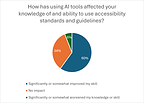
Survey conducted by The Harris Poll on behalf of University of Phoenix finds among those already using AI in the workplace, 60% say AI has improved their knowledge of and ability to use accessibility standards and guidelines.

PHOENIX, July 24, 2026 /PRNewswire/ — As artificial intelligence becomes part of how people work, learn and solve problems, a new University of Phoenix survey conducted by The Harris Poll finds that recent working learners see meaningful opportunities for AI to support accessibility. The survey was designed to understand the impact of AI in the workplace and learning environments on accessibility, defined as ensuring digital content, tools and resources, including AI tools and output, are usable by people with different abilities through inclusive design, use of assistive technology or conformance with accessibility standards, such as the Web Content Accessibility Guidelines (WCAG). The findings are being released ahead of the 36th anniversary of the Americans with Disabilities Act (ADA) on July 26.

The survey, conducted among 1,019 U.S. employed adults who completed a professionally presented training or school course in the past 12 months (“recent working learners”), found that, among workers already using AI in the workplace, 3 in 5 (60%) say AI has improved their knowledge of and ability to use accessibility standards and guidelines, including nearly 1 in 5 (19%) who report significant improvement. 

While the findings point to optimism about AI’s accessibility potential, they also reveal an opportunity for clearer organizational guidance: 45% of respondents say accessibility is absent from, unclear in, or they are uncertain whether it is covered by their workplace AI policies.

“The reality is that accessibility benefits everyone,” shares Kelly Hermann, Vice President of Accessibility and Student Affairs at University of Phoenix. “If accessibility is built in from the beginning, organizations are more likely to create AI-enabled environments that are universally usable. Clearer content, better summaries, accurate captions, and multiple formats can help workers and learners with disabilities, but they also help busy adults, multilingual learners, mobile users, and anyone trying to absorb information quickly.”

Key findings from the survey include:

Workers see AI’s accessibility potential: 89% of recent working learners identify workflows that could benefit from AI and accessibility tools, especially creating accessible documents, presentations, websites or learning materials (38%), presenting information in different formats such as plain language, audio, summaries or translations (33%), and training employees or learners on accessibility practices (30%).AI may help build accessibility awareness: Among those already using AI in the workplace, 60% say AI has improved their knowledge of and ability to use accessibility standards and guidelines.Accessibility is not always clear in workplace AI policies: 45% of recent working learners say accessibility is absent from, unclear in, or they are uncertain whether it is covered by their workplace AI policies.AI tools may not yet fully support different access needs: Among those who use workplace AI tools, only about a quarter of survey respondents (27%) say AI tools available through their workplace or professional learning environment support people with disabilities very well.Human oversight remains important: 36% of recent working learners say human review for important decisions or high-impact work should be part of responsible AI use at work or school.Workers also recognize how AI and accessibility can have an impact on their own career journey: 90% of recent working learners identify AI and accessibility skills that would be valuable in their current or desired career field, including 45% who see value in understanding when AI-generated content needs human review.

Why accessibility is essential to responsible AI adoption

As AI tools are used to draft documents, summarize information, generate captions and transcripts, create image descriptions, support learning and assist with workplace tasks, accessibility becomes central to responsible use. Poorly implemented AI can also create or amplify barriers, including inaccessible content, inaccurate summaries, biased outputs and tools that do not work effectively with assistive technologies.

“Responsible AI is not only about productivity,” Hermann said. “It is about whether the technology works for the people who need to use it. AI can help create more accessible materials and more flexible ways to engage with information, but it still requires clear policies, practical training and human judgment to make sure the outputs are accurate, applicable and usable.”

What the findings mean for employers and educators

The survey suggests that organizations have an opportunity to align AI adoption with supportive design, accessibility practices and workforce training. Employers and educators can take immediate steps by:

Naming accessibility directly in AI policies and guidance.Choosing AI tools with accessibility and assistive technology compatibility in mind.Training workers and learners to create, check and improve accessible AI-generated content.Making support pathways clear for people who experience barriers using AI tools.Keeping human review in place for important decisions, high-impact work and accessibility-sensitive outputs.

The survey also found workers want practical AI training. The most helpful resources identified by recent working learners include real-world examples from their field or industry (36%), hands-on practice using realistic workplace scenarios (34%) and step-by-step demonstrations of common tasks (33%).

Accessibility insights from University of Phoenix

Hermann shared the survey findings ahead of the ADA anniversary in recent media interviews. Hermann oversees the University’s accessibility initiative, including evaluation and remediation of curricular resources, the Center for Access, Resources, Engagement and Support Services (CARES), and the Office of Collaborative Learning and Educational Engagement. Her work focuses on fostering accessible and welcoming educational environments for students, faculty and staff.

Hermann’s office at University of Phoenix also convenes accessibility conversations through initiatives such as Access Amplified™, a free, annual virtual event focused on advancing digital accessibility in web development. The event brings together engineers, developers, designers, content authors and digital strategists for practical strategies and human-centered conversations that address the gap between coding practices and how users with assistive technology experience the web.

About the survey

The survey was conducted online within the United States by The Harris Poll on behalf of University of Phoenix from June 22–29, 2026, among 1,019 employed adults ages 18 and older who have taken a professionally presented training or a school course in the past 12 months, referred to as “recent working learners.” Data were weighted where necessary by age, gender, race/ethnicity, region, education, employment, marital status, household size, household income and smoking status to bring them in line with their actual proportions in the population.

Respondents for this survey were selected from among those who have agreed to participate in surveys. The sampling precision of Harris online polls is measured by using a Bayesian credible interval. For this study, the sample data is accurate to within +/- 3.8 percentage points using a 95% confidence level. This credible interval will be wider among subsets of the surveyed population of interest.

Review the complete survey at phoenix.edu/aiaccessibility.

About University of Phoenix

University of Phoenix is Built for Real Life. 50 Years Strong. The University innovates to help working adults enhance their careers and develop skills in a rapidly changing world through flexible online learning, relevant courses, academic AI pillars, and skills-mapped curriculum for associate, bachelor’s and master’s degree programs. Active students and alumni have access to Career Services for Life® resources including career guidance and tools. For more information, visit phoenix.edu. 

View original content to download multimedia:https://www.prnewswire.com/news-releases/as-ada-anniversary-approaches-university-of-phoenix-survey-highlights-ais-potential-to-advance-accessibility-in-work-and-learning-302834448.html

SOURCE University of Phoenix

Continue Reading

Technology

Mastech Digital to Announce Second Quarter 2026 Financial Results; Participate in Upcoming Investor Conference

Published

on

By

PITTSBURGH, July 24, 2026 /PRNewswire/ — Mastech Digital, Inc. (NYSE American: MHH) (“Mastech Digital”), a leading provider of Digital Transformation IT Services, today announced the date for the release of its financial results for the second quarter ended June 30, 2026, and its participation in an upcoming investor conference.

Second Quarter 2026 Earnings:

Mastech Digital will report its financial results for the second quarter 2026 before the market opens on Thursday, August 6, 2026. Management will host a live conference call and webcast at 9:00 a.m. Eastern Time on that day to discuss the Company’s financial performance and operating results.  The conference call will be hosted by Nirav Patel, President and CEO, and Kannan Sugantharaman, Chief Financial and Operations Officer.

Those wishing to participate via webcast should access the call through Mastech Digital’s Investor Relations website at https://investors.mastechdigital.com. Those wishing to participate via telephone may dial in at 1-800-715-9871 (USA) or 1-646-307-1963 (International) with the passcode 7506988. The replay will be available via webcast through Mastech Digital’s Investor Relations website.

Upcoming Investor Conference:

Mr. Sugantharaman will host a fireside chat at the Sidoti Micro-Cap Investor Conference on Wednesday, August 19, 2026, at 9:15 a.m. Eastern Time.

Mastech Digital management is scheduled to host virtual one-on-one and small group meetings with investors during the conference on August 19-20, 2026. Investors interested in arranging a meeting should contact their Sidoti representative or reach out to the Mastech Digital investor relations team at investors@mastechdigital.com.

About Mastech Digital, Inc.

Mastech Digital (NYSE American: MHH) is a leading provider of Digital Transformation IT Services. The Company offers Data Management, Analytics & AI Solutions, and IT Staffing Services with a digital-first approach. A minority-owned enterprise, Mastech Digital is headquartered in Pittsburgh, PA, with offices across the U.S., Canada, Europe, and India. Visit us at www.mastechdigital.com.

Investor Relations Contact:
investors@mastechdigital.com 


View original content to download multimedia:https://www.prnewswire.com/news-releases/mastech-digital-to-announce-second-quarter-2026-financial-results-participate-in-upcoming-investor-conference-302834421.html

SOURCE Mastech Digital, Inc.

Continue Reading

Technology

SOLAI Limited Announces Extraordinary General Meeting

Published

on

By

AKRON, Ohio, July 24, 2026 /PRNewswire/ — SOLAI Limited (NYSE: SLAI) (“SOLAI” or the “Company”) (previously known as “BIT Mining Limited”), a technology-driven personal AI and digital infrastructure provider, today announced that it will hold its extraordinary general meeting of shareholders at 428 South Seiberling Street, Akron, Ohio, US on August 14, 2026 at 10:00 a.m., New York time.

Holders of record of ordinary shares and preference shares of the Company at the close of business on July 20, 2026, New York time (the “Record Date”) are entitled to receive notice of, and to attend and vote at, the extraordinary general meeting or any adjournment thereof. Holders of the Company’s American Depositary Shares (“ADSs”) who wish to exercise their voting rights for the underlying ordinary shares must act through the depositary of the Company’s ADS program, Deutsche Bank Trust Company Americas.

The notice of the extraordinary general meeting, which sets forth the resolutions to be submitted to shareholder approval at the extraordinary general meeting is available on the Investor Relations section of the Company’s website at https://ir.solai.com

About SOLAI Limited

SOLAI Limited (previously known as “BIT Mining Limited”) (NYSE: SLAI) (previously traded under “BTCM”) is a technology-driven personal AI and digital infrastructure provider. Building upon its historical legacy in digital asset mining and blockchain network operations, the Company is leveraging extensive experience in large-scale hardware deployment, data center operations, and high-performance computing to build the foundational infrastructure for personal AI computing and digital asset ecosystems globally.

For more information:

SOLAI Limited
ir@solai.com
ir.solai.com
www.solai.com 

Christensen Advisory
Jason Ng
Tel: +852-2117-0861
Email: solai@christensencomms.com 


View original content:https://www.prnewswire.com/news-releases/solai-limited-announces-extraordinary-general-meeting-302834034.html

SOURCE SOLAI Limited

Continue Reading

Trending