Connect with us

Technology

Antimatter Launches as the World’s First Vertically Integrated Neocloud for AI Inference

Published

on

Combining over 1GW of power capacity secured through grid connection agreements and reserved sites across distributed micro-power sites in the US, Europe and GCC, Antimatter will deploy a global network of 1,000 distributed micro data centers to serve the growing AI inference market — 5 times faster and 50% cheaper than hyperscalers.

CANNES, France, April 21, 2026 /PRNewswire/ — Antimatter, a new category of neocloud purpose-built for the distributed AI economy, today announced its launch through the strategic combination of three companies: Datafactory (US-based energy and power infrastructure), Policloud (modular micro data center network), and Hivenet (distributed cloud provider).

The combined entity creates the industry’s first fully integrated AI infrastructure platform spanning energy sourcing, physical hardware, and cloud software — designed to serve the explosive global demand for AI inference at a fraction of hyperscale cost and dramatically faster time to market.

Antimatter is deploying capital at an unprecedented pace to build out the first global neocloud network optimized for AI inference. The company is securing €300 million to fund the deployment of its first 100 Policloud units by 2027, representing 40,000 GPUs and over 3.6 exaFLOPS of active compute capacity.

By the end of 2030, the planned network of 1,000 Policlouds will provide more than 400,000 GPUs and over 36 exaFLOPS of distributed AI inference capacity — the equivalent of five traditional hyperscale data centers, deployed across dozens of countries with 50% lower capital spending and significantly faster time to market.

Antimatter is led by David Gurlé, the serial high-tech entrepreneur who founded Microsoft’s Real-Time Communications business (today’s Microsoft Teams), led Skype’s enterprise division and its sale to Microsoft, and founded Symphony Communication Services.

“In the age of AI, intelligence is not the bottleneck — energy is,” said David Gurlé, Cofounder, Executive Chairman, and CEO of Antimatter. “The infrastructure built for the first era of cloud and AI was designed around centralized scale. But the inference era requires a different model: more distributed, faster to deploy, and sovereign by design. That is the infrastructure Antimatter is building.”

Why AI Inference is Breaking the Cloud Model

The first wave of AI was about training massive models in centralized data centers. But the next phase — inference — is about running those models billions of times per day, across applications like copilots, agents, and real-time decision systems.

That shift changes everything. Inference requires infrastructure that is closer to users, faster to deploy, more energy-efficient, and geographically distributed. Traditional hyperscalers were not built for this. Their model relies on massive, centralized campuses that can take years to build and require enormous upfront capital.

Antimatter’s answer: bring the data center to the energy, not the energy to the data center.

The global data center capacity market is projected to grow from 55GW in 2023 to 220GW by 2030 — a 22% CAGR — yet grid connection queues and infrastructure delays are emerging as the primary bottleneck. In Europe alone, more than 12 TWh of renewable electricity were curtailed in 2023, representing over €4.2 billion in lost value. At the same time, more than 1,000GW of additional renewable capacity remains stuck in permitting and grid-connection queues across Europe and the GCC.

A Full-Stack Neocloud Built for the AI Inference Era

Antimatter is uniquely positioned as the only neocloud that controls the complete value chain:

Energy-first model

More than 1GW of power capacity secured through formal grid connection agreements and site reservations, including over 160MW already operational across Texas and Oregon, USA. Antimatter deploys Policloud units directly at or near existing power assets — including wind, solar, hydro, or biogas sites — converting stranded generation into productive AI infrastructure in a matter of months, rather than waiting years for new transmission capacity.

Decentralized infrastructure layer

A fleet of modular, containerized micro data centers, each housing up to 400 GPUs and deployable in as little as five months, compared with 24+ months for traditional hyperscale builds. Antimatter currently operates 10 units across 8 sites and has a commercial pipeline of more than 500 additional units.

Distributed software layer

A proprietary distributed computing and storage platform providing the orchestration intelligence that connects distributed hardware into a single, sovereign cloud fabric with global default Tier 3 capability — supporting billions of inference requests each day, with sub-10ms latency for edge workloads and full data sovereignty for regulated industries.

Key Competitive Advantages

Metric

Antimatter

Traditional Hyperscale

Capex per fully loaded MW

~$7M

~$35M

Deployment timeline

5 months

24+ months

Customer pricing

~50% below hyperscalers

Market rate

Edge latency

Sub-10ms

Variable

Carbon reduction

~70% lower; zero water cooling

Standard

Data sovereignty

Sovereign-by-design; local jurisdiction

Bolt-on solutions

Strong Commercial Traction

Antimatter enters the market with demonstrated commercial momentum:

$20m forward looking revenue3,344 GPUs deployed with demand for 10,000+100 Policlouds being deployed in 2027, representing 40,000+ GPUs1,000 Policlouds planned by end of 2030, representing 400,000+ GPUsDiversified customer base: Energy sector (35%), Public sector (30%), Agriculture (15%), Corporates (20%)

The company is targeting $250M+ in revenue within the next 18 months and $3.0B+ by the end of 2030.

Investor Perspectives

“AI infrastructure is now a strategic asset class, and the winners will be those who can combine hard assets with software at scale. Antimatter’s vertically integrated model — from megawatts to APIs — is exactly the kind of infrastructure we believe can define the next decade of digital growth.” — Alex Manson, CEO of SC Ventures, Standard Chartered Bank

“France and Europe need sovereign, energy-efficient infrastructure to compete in AI. What convinced us about Antimatter is not just the technology, but the ability to deploy micro data centers in months, on existing power assets, while meeting the most demanding regulatory constraints.” — Stéphanie Hospital, Founder and CEO of OneRagtime

“We are witnessing first-hand how emerging markets are leapfrogging legacy infrastructure and going straight to AI-native architectures. Antimatter’s model — distributed, capital-efficient and deeply integrated with energy — is built for these environments and for an economy increasingly shaped by AI.” — Noor Sweid, Founder and Managing Partner, Global Ventures

“At Inria, we work every day at the frontier of AI and high-performance computing. Antimatter’s approach is compelling because it reconciles cutting-edge AI workloads with more frugal, sustainable infrastructure — distributed, software-defined, and close to available energy. It is a strong illustration of the deeptech industrial story we want to see emerge in Europe.” — Bruno Sportisse, Chairman and CEO of Inria

About the Founder

David Gurlé is a French entrepreneur, engineer, and Chevalier of the Légion d’Honneur. He has founded seven companies, including Symphony Communication Services ($1.4B valuation), and held senior leadership roles at Microsoft (where he founded the Real-Time Communications business), Thomson Reuters, and Skype (VP & General Manager, Enterprise). He holds an MSc in Computer Science and Telecommunications from EFREI Paris.

About Antimatter

Antimatter is the distributed neocloud for AI inference. By vertically integrating energy, modular infrastructure, and orchestration software, Antimatter deploys enterprise-grade AI compute infrastructure faster, cheaper, and more sustainably than traditional hyperscale providers. Headquartered in Cannes, France, with major operations in the United States, Antimatter serves enterprises, governments, and AI companies worldwide.

www.antimatter.com

Note on exaFLOPS calculation: RTX 5090 = ~90 TFLOPS FP32. 40,000 GPUs x 90 TFLOPS = 3,600 petaFLOPS = 3.6 exaFLOPS. For 400,000 GPUs = 36 exaFLOPS.

CONTACT: Ariane Forgues, aforgues@mantu.com 

SOURCE Antimatter

Continue Reading

Technology

Sophia Space and MIT Lincoln Laboratory Announce Research Collaboration on Space-Based Weather Modeling

Published

on

By

CRADA and related SpaceWERX Phase I research will explore space-based computing approaches for weather-modeling applications

PASADENA, Calif., Oct. 20, 2026 /PRNewswire/ — Sophia Space today announced a new Cooperative Research and Development Agreement (CRADA) with MIT Lincoln Laboratory to investigate how space-based computing approaches could support high-resolution weather-modeling research for remote operating environments.

The collaboration combines MIT Lincoln Laboratory’s weather-modeling research expertise with Sophia Space’s edge-compute concepts. The effort will explore whether distributed computing can support more timely environmental information for planning and decision-support applications.

Under the agreement, MIT Lincoln Laboratory will contribute weather-modeling research expertise, including the identification of modeling configurations, parameters, and data sources for evaluation. The team will develop representative test data and assess weather-model performace against defined research metrics using frameworks compatible with Sophia Space’s initial hardware configurations.

Sophia Space will provide the AI-inference compute environment for evaluating representative weather-model workloads, including terrestrial and potential space-based computing configurations. The organizations will explore high-level system and service architectures that may inform future research into space-based computing applications.

Sophia Space and MIT Lincoln Laboratory are also pursuing related work under Department of the Air Force STTR Topic SF25D-T1201 through the SpaceWERX Futures Series: Adaptive and Intelligent Space Challenge. The related effort examines technologies relevant to autonomous, resilient, and networked space-system operations.

“This partnership reflects our conviction that space-based computing infrastructure should be developed through rigorous collaboration between commercial innovators and world-class research institutions,” said Rob DeMillo, Co-founder and CEO of Sophia Space. “MIT Lincoln Laboratory brings unmatched weather sensing, forecasting and decision-support research expertise, and together we will explore the potential application of space-based computing to weather-modeling research.”

The collaboration aligns with Sophia Space’s research interests in edge-compute architectures, distributed processing, and sensor fusion integration for environments.

“Timely weather information is critical for operations in remote and contested environments,” said Dr. Timothy Bonin, Assistant Group Leader of the Air Traffic Control & Weather Systems Group at MIT Lincoln Laboratory. “This collaboration allows us to explore how space-based computing can help process satellite observations and other environmental data closer to the point of collection, while assessing potential impacts on communications demands and information-delivery timelines.”

About Sophia Space Inc.
Sophia Space is building the future of orbital computing and in-space data centers. Its modular TILE (Thermal-Integrated LEO Edge) technology enables passive computing alongside in-situ data processing, AI acceleration, and edge computing for satellites, defense systems, and commercial space stations—dramatically reducing latency and delivering actionable insights where and when they are needed. Learn more at www.sophia.space.

About MIT Lincoln Laboratory
MIT Lincoln Laboratory is a federally funded research and development (R&D) center chartered to apply advanced technology to problems of national security. Since 1951, the Laboratory has developed technology that has transformed the activities of the defense, scientific, and industry communities. Its mission focuses on long-term technology development as well as rapid system prototyping and demonstration. Through several mechanisms, it facilitates partnerships with companies to advance R&D and increase U.S. technical competitiveness. Learn more at www.ll.mit.edu.


View original content to download multimedia:https://www.prnewswire.com/news-releases/sophia-space-and-mit-lincoln-laboratory-announce-research-collaboration-on-space-based-weather-modeling-302913439.html

SOURCE Sophia Space

Continue Reading

Technology

Oracle and AstraZeneca Partner to Advance AI-enabled Healthcare Innovation

Published

on

By

Collaboration to connect AstraZeneca’s scientific and therapeutic expertise with Oracle’s real-world data, cloud, AI, and clinical capabilities to accelerate clinical research and bring evidence-driven insights into care workflows to help improve patient care

AUSTIN, Texas and ABU DHABI, UAE, Oct. 20, 2026 /PRNewswire/ — Oracle today announced an agreement with AstraZeneca to explore how AI and real-world data can help clinicians identify eligible patients for clinical trials, accelerate evidence generation, and bring relevant research insights into everyday care. The collaboration is expected to combine AstraZeneca’s scientific and therapeutic expertise with Oracle’s health data, cloud, AI, analytics, and clinical workflow capabilities.

Through a non-binding agreement, the companies plan to explore selected use cases that could improve clinical-trial efficiency and success by leveraging modern applications and AI to help care teams identify eligible patients earlier and easier, resulting in greater access to clinical trials for patients in need and helping to overcome one of the largest obstacles in clinical trials – patient recruitment. Initial disease areas to be explored could include oncology; cardiovascular, renal and metabolic diseases; respiratory and immunology; and rare diseases.

Pascal Soriot, Chief Executive Officer, AstraZeneca said: “This unique collaboration brings leaders in healthcare and AI together at a global scale to accelerate the journey from the discovery of medicine to patient care. Combining AstraZeneca’s world class science with Oracle’s deep data and technology expertise, we can help clinicians identify patients sooner, optimize clinical trials, and generate evidence continuously across the lifecycle of a medicine.”

“Some of the most important opportunities for AI are in healthcare, where better use of data can help turn scientific innovation into better outcomes for patients,” noted Mike Sicilia, chief executive officer, Oracle. “By bringing AstraZeneca’s scientific expertise together with Oracle’s data, cloud, AI, and healthcare capabilities, we have an opportunity to help accelerate research, connect more patients to clinical trials, and ultimately bring relevant insights into care faster.”

Connecting Research and Care

Anne-Claire Gerbaldi, Chief Digital, Data and AI Officer, AstraZeneca, added: “Too many patients are diagnosed late or face a long journey to get the care they need. To build the next decade of medicine, we aim to harness AI to connect learnings across science, clinical trials, and everyday care, generating insights that continuously strengthen research, accelerate innovation, and enhance patient outcomes. Bringing together the unique capabilities of Oracle and AstraZeneca, we believe we can support smarter clinical trials, strengthen safety monitoring, and help ensure patients are diagnosed sooner and receive the right care.”

Seema Verma, executive vice president and general manager, Oracle Health and Life Sciences, said: “Healthcare progress depends on shortening the distance between scientific insight and the decisions clinicians make every day. AstraZeneca brings deep scientific and therapeutic expertise, and Oracle will deliver the secure data, cloud, AI, and clinical workflow capabilities. This collaboration has the potential to help health systems identify eligible patients sooner, broaden access to clinical trials, and generate evidence that supports the next decision, all under the governance of the health systems delivering care.”

AstraZeneca and Oracle intend to explore a continuous learning model in which insights from clinical research and routine care help inform future study design, safety monitoring, and patient care. The companies plan to establish shared governance, reusable technical components, and agreed outcome measures to assess results and determine whether successful approaches could extend across disease areas and geographies.

About Oracle
Oracle offers integrated suites of applications plus secure, autonomous infrastructure in the Oracle Cloud. For more information about Oracle (NYSE: ORCL), please visit www.oracle.com.

Trademarks
Oracle, Java, MySQL and NetSuite are registered trademarks of Oracle Corporation. NetSuite was the first cloud company – ushering in the new era of cloud computing.

View original content to download multimedia:https://www.prnewswire.com/news-releases/oracle-and-astrazeneca-partner-to-advance-ai-enabled-healthcare-innovation-302913441.html

SOURCE Oracle

Continue Reading

Technology

Loyyal Unveils Perxi AI Business Suite to Help SMEs Run Their Business on WhatsApp

Published

on

By

Branded AI assistant brings everyday business activities into messaging channels, reducing the need for separate software and specialist teams

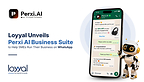
DUBAI, UAE, Oct. 20, 2026 /PRNewswire/ — Loyyal today unveiled the Perxi AI Business Suite, enabling small and medium enterprises (SMEs) to manage everyday business activities through WhatsApp. Building on its introduction as a loyalty assistant, Perxi brings commerce, customer engagement and business management into one conversational interface, with capabilities including ordering, customer service and loyalty.

The suite helps SMEs and direct-to-consumer brands manage these activities without purchasing separate ordering systems, customer relationship management software or support tools. Its conversational approach reduces the need to hire specialists or train employees to operate multiple systems.

“Small business owners should be able to focus on growth without assembling a collection of software tools,” said Ashish Kumar Singh, Founder and CEO of Loyyal.

“Perxi brings everyday business capabilities into WhatsApp under each business’s own brand. We want to make these tools affordable and accessible while helping businesses retain greater control over their customer relationships, data and decisions.”

Perxi provides the underlying technology, while each business launches its assistant under its own brand name. Customers engage directly with the business they recognise, rather than entering a separate Perxi marketplace.

Customers can place orders, ask questions, receive assistance and access rewards within a familiar conversation. There is no additional branded application to install or separate login to remember. This approach is designed to appeal to younger consumers accustomed to discovering and interacting with brands through mobile messaging.

Beyond WhatsApp, Perxi can be deployed across messaging channels suited to each business and market, including Instagram, WeChat and KakaoTalk.
Multilingual capabilities enable businesses to serve customers in their preferred languages, supporting brands operating beyond English and those engaging diverse communities.

As conversational commerce and AI assistants become more prominent, SMEs face growing expectations for convenient, responsive interactions. Bringing business services into messaging channels offers a way to meet those expectations while building direct customer relationships.

Marketplaces and aggregators offer a fast route to market, but access to customer information and engagement opportunities varies. Perxi helps businesses establish a direct channel and gain insights from their own customer conversations and transactions.

These insights can inform service improvements, personalised engagement and retention, while reducing dependence on intermediaries for customer access.

Pricing is designed to remain simple and affordable. Loyyal plans further services under the same umbrella.

Perxi will return to exhibit at Dubai AI Festival on October 26–27, 2026, at Dubai World Trade Centre.

About Loyyal

Loyyal is a US-born, UAE-based enterprise technology company helping businesses turn loyalty and customer engagement into growth and revenue. Combining patented blockchain technology with AI, its modular portfolio spans loyalty management, rewards, points exchange, offers, gift cards, gamification and conversational business assistants.

Media Contact

Marketingdepartment@loyyal.com

View original content to download multimedia:https://www.prnewswire.co.uk/news-releases/loyyal-unveils-perxi-ai-business-suite-to-help-smes-run-their-business-on-whatsapp-302913064.html

Continue Reading

Trending