
Technology
Jack Henry & Associates, Inc. Reports Third Quarter Fiscal 2026 Results

Published
6 months agoon
By
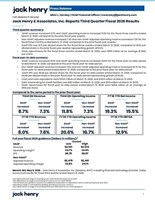
Third quarter summary:
GAAP revenue increased 8.7% and GAAP operating income increased 11.8% for the fiscal three months ended March 31, 2026, compared to the prior fiscal year quarter.Non-GAAP adjusted revenue increased 7.3% and non-GAAP adjusted operating income increased 7.3% for the fiscal three months ended March 31, 2026, compared to the prior fiscal year quarter.1GAAP EPS was $1.71 per diluted share for the fiscal three months ended March 31, 2026, compared to $1.52 per diluted share in the prior fiscal year quarter representing growth of 12.2%.Stock repurchases for the fiscal three months ended March 31, 2026, were $159 million at an average of $162 per share.
Fiscal year-to-date summary:
GAAP revenue increased 8.0% and GAAP operating income increased 20.6% for the fiscal year-to-date period ended March 31, 2026, compared to the prior fiscal year-to-date period.Non-GAAP adjusted revenue increased 7.6% and non-GAAP adjusted operating income increased 16.7% for the fiscal year-to-date period ended March 31, 2026, compared to the prior fiscal year-to-date period.1GAAP EPS was $5.41 per diluted share for the fiscal year-to-date period ended March 31, 2026, compared to $4.49 per diluted share in the prior fiscal year-to-date period representing growth of 20.4%.Cash and cash equivalents were $20.6 million at March 31, 2026, and $39.9 million at March 31, 2025.Debt outstanding for credit facilities was $90 million at March 31, 2026, and $170 million at March 31, 2025.Stock repurchases for fiscal year-to-date period ended March 31, 2026, were $284 million at an average of $160 per share.
Full year fiscal 2026 guidance (Dollars in millions):3
Current
GAAP
Low
High
Revenue
$2,521
$2,533
Operating margin4
24.7 %
24.9 %
EPS
$6.78
$6.87
Non-GAAP5
Adjusted revenue
$2,479
$2,491
Adjusted operating margin
23.9 %
24.1 %
MONETT, Mo., May 5, 2026 /PRNewswire/ — Jack Henry & Associates, Inc. (Nasdaq: JKHY), a leading financial technology provider, today announced results for fiscal third quarter ended March 31, 2026.
1 See tables below on page 4 reconciling non-GAAP financial measures to GAAP.
2See table below on page 14 reconciling net income to non-GAAP EBITDA.
3 The full fiscal year guidance assumes no additional acquisitions or dispositions will be made during fiscal year 2026.
4Operating margin is calculated by dividing operating income by revenue.
5See tables below on page 9 reconciling fiscal year 2026 GAAP to non-GAAP guidance.
According to Greg Adelson, President and CEO, “We delivered very strong third-quarter financial results, reflecting our differentiated set of modern solutions, unwavering focus on helping banks and credit unions win in the markets they serve, and disciplined execution across our business. Sales momentum remained strong, highlighted by 17 competitive core wins in the quarter, our best third quarter for new core wins in the last seven years. The sales pipeline is increasing, fueled by increased technology spending and competitive uncertainty, positioning Jack Henry well for driving long-term growth and value creation.”
Operating Results
Revenue, operating expenses, operating income, and net income for the fiscal three and nine months ended March 31, 2026, compared to the fiscal three and nine months ended March 31, 2025, were as follows:
Revenue
(Unaudited, dollars in thousands)
Three Months Ended
March 31,
%
Change
Nine Months Ended
March 31,
%
Change
2026
2025
2026
2025
Revenue
Services and Support
$ 365,149
$ 330,792
10.4 %
$ 1,087,808
$ 1,010,498
7.7 %
Percentage of Total Revenue
57.4 %
56.5 %
57.2 %
57.4 %
Processing
271,096
254,295
6.6 %
812,508
749,418
8.4 %
Percentage of Total Revenue
42.6 %
43.5 %
42.8 %
42.6 %
REVENUE
$ 636,245
$ 585,087
8.7 %
$ 1,900,316
$ 1,759,916
8.0 %
Services and support revenue increased for the fiscal three months ended March 31, 2026, primarily driven by growth in data processing and hosting revenue within private and public cloud revenue of 9.4% and higher deconversion revenue by $9,021. Processing revenue increased for the fiscal three months ended March 31, 2026, primarily driven by growth in digital and transaction revenue of 9.9%, card revenue of 3.6%, and faster payments revenue of 46.4%.Services and support revenue increased for the fiscal nine months ended March 31, 2026, primarily driven by growth in data processing and hosting revenue within private and public cloud revenue of 8.9% and higher deconversion revenue by $20,094. Processing revenue increased for the fiscal nine months ended March 31, 2026, primarily driven by growth in digital and transaction revenue of 12.8%, card revenue of 6.2%, and faster payments revenue of 50.5%.For the fiscal three months ended March 31, 2026, core segment revenue increased 9.2%, payments segment revenue increased 7.0%, complementary segment revenue increased 8.7%, and corporate services segment revenue increased 27.5%. For the fiscal three months ended March 31, 2026, core segment non-GAAP adjusted revenue increased 8.6%, payments segment non-GAAP adjusted revenue increased 4.7%, complementary segment non-GAAP adjusted revenue increased 7.2%, and corporate services non-GAAP adjusted segment revenue increased 27.1%. Total non-GAAP adjusted revenue increased 7.3% for the same period (see revenue lines of segment break-out tables on pages 5 and 6 below for a reconciliation of GAAP segment revenue to non-GAAP adjusted segment revenue).For the fiscal nine months ended March 31, 2026, core segment revenue increased 5.9%, payments segment revenue increased 8.0%, complementary segment revenue increased 9.5%, and corporate services segment revenue increased 14.5%. For the fiscal nine months ended March 31, 2026, core segment non-GAAP adjusted revenue increased 7.4%, payments segment non-GAAP adjusted revenue increased 6.5%, complementary segment non-GAAP adjusted revenue increased 8.4%, and corporate services non-GAAP adjusted segment revenue increased 14.2%. Total non-GAAP adjusted revenue increased 7.6% for the same period (see revenue lines of segment break-out tables on pages 7 and 8 below for a reconciliation of GAAP segment revenue to non-GAAP adjusted segment revenue).
Operating Expenses and Operating Income
(Unaudited, dollars in thousands)
Three Months Ended
March 31,
% Change
Nine Months Ended
March 31,
% Change
2026
2025
2026
2025
Cost of Revenue
$ 363,922
$ 340,586
6.9 %
$ 1,063,476
$ 1,016,868
4.6 %
Percentage of Total Revenue6
57.2 %
58.2 %
56.0 %
57.8 %
Research and Development
45,110
39,411
14.5 %
126,615
120,192
5.3 %
Percentage of Total Revenue6
7.1 %
6.7 %
6.7 %
6.8 %
Selling, General, and Administrative
72,166
66,350
8.8 %
211,965
209,839
1.0 %
Percentage of Total Revenue6
11.3 %
11.3 %
11.2 %
11.9 %
OPERATING EXPENSES
481,198
446,347
7.8 %
1,402,056
1,346,899
4.1 %
OPERATING INCOME
$ 155,047
$ 138,740
11.8 %
$ 498,260
$ 413,017
20.6 %
Operating Margin6
24.4 %
23.7 %
26.2 %
23.5 %
Cost of revenue increased for the fiscal three months ended March 31, 2026, compared to the fiscal three months ended March 31, 2025, primarily due to higher personnel costs, including compensation and benefit costs, partially related to a headcount increase in the trailing twelve months, higher direct costs generally consistent with increases in related lines of revenue, as well as increased amortization of intangible assets.Cost of revenue increased for the fiscal nine months ended March 31, 2026, compared to the fiscal nine months ended March 31, 2025, primarily due to higher personnel costs, including compensation and benefit costs, partially related to a headcount increase in the trailing twelve months, higher direct costs generally consistent with increases in related lines of revenue, and increased amortization of intangible assets. Personnel cost increases over the prior year period were tempered by lower than normal medical claims earlier in the fiscal year.Research and development expense increased for the fiscal three and nine months ended March 31, 2026, compared to the fiscal three and nine months ended March 31, 2025, primarily due to higher personnel costs (net of capitalization), including compensation and benefit costs, partially related to a headcount increase in the trailing twelve months.Selling, general, and administrative expense increased for the fiscal three months ended March 31, 2026, compared to the fiscal three months ended March 31, 2025, primarily due to higher personnel costs, including compensation and benefit costs, partially related to a headcount increase in the trailing twelve months.Selling, general, and administrative expense increased for the fiscal nine months ended March 31, 2026, compared to the fiscal nine months ended March 31, 2025, primarily due to higher personnel costs, including compensation and benefit costs, partially related to a headcount increase in the trailing twelve months and the higher gain on assets, net, in the current fiscal year period of $5,267 compared to the prior fiscal year period. Personnel cost increases over the prior year period were tempered by lower than normal medical claims earlier in the fiscal year.
Net Income
(Unaudited, in thousands,
except per share data)
Three Months Ended
March 31,
% Change
Nine Months Ended
March 31,
% Change
2026
2025
2026
2025
Income Before Income Taxes
$ 158,541
$ 141,908
11.7 %
$ 513,052
$ 426,087
20.4 %
Provision for Income Taxes
35,647
30,800
15.7 %
121,503
97,943
24.1 %
NET INCOME
$ 122,894
$ 111,108
10.6 %
$ 391,549
$ 328,144
19.3 %
Diluted earnings per share
$ 1.71
$ 1.52
12.2 %
$ 5.41
$ 4.49
20.4 %
Effective tax rates for the fiscal three and nine months ended March 31, 2026, and 2025, were 22.5% and 23.7% and 21.7% and 23.0%, respectively.
According to Mimi Carsley, CFO and Treasurer, “During the third quarter, we delivered strong growth in several key revenue areas, including continued expansion in cloud revenue and solid performance from our faster payments products and digital offerings. We anticipate relative weakness to the year to date in fiscal Q4 non-GAAP revenue and margins consistent with previously stated expectations. Based on our positive outlook, we have increased our full year non-GAAP revenue, non-GAAP margin expansion, and GAAP EPS guidance.”
6Operating margin is calculated by dividing operating income by revenue. Operating margin plus operating expense components as a percentage of total revenue may not equal 100% due to rounding.
Impact of Non-GAAP Adjustments
The tables below show our revenue, operating income, and net income for the fiscal three and nine months ended March 31, 2026, compared to the fiscal three and nine months ended March 31, 2025, excluding the impacts of deconversions in the fiscal quarter and fiscal year-to-date periods ended March 31, 2026, and March 31, 2025, the acquisition in the current fiscal quarter and fiscal year-to-date period, the gain on assets, net, in the current fiscal year-to-date period, and the impact of a contract change in the prior fiscal quarter and fiscal year-to-date period.
(Unaudited, dollars in thousands)
Three Months Ended
March 31,
% Change
Nine Months Ended
March 31,
% Change
2026
2025
2026
2025
GAAP Revenue*
$ 636,245
$ 585,087
8.7 %
$ 1,900,316
$ 1,759,916
8.0 %
Adjustments:
Deconversion revenue
(18,665)
(9,644)
(33,504)
(13,410)
Revenue related to a contract change
—
(1,201)
—
(14,672)
Revenue from the acquisition
(1,651)
—
(3,595)
—
NON-GAAP ADJUSTED REVENUE*
$ 615,929
$ 574,242
7.3 %
$ 1,863,217
$ 1,731,834
7.6 %
GAAP Operating Income
$ 155,047
$ 138,740
11.8 %
$ 498,260
$ 413,017
20.6 %
Adjustments:
Operating income from deconversions
(14,635)
(6,851)
(25,337)
(9,724)
Operating income related to a contract change
—
(209)
—
(2,178)
Gain on assets, net
—
—
(6,829)
—
Operating loss from the acquisition
833
—
1,817
—
NON-GAAP ADJUSTED OPERATING INCOME
$ 141,245
$ 131,680
7.3 %
$ 467,911
$ 401,115
16.7 %
Non-GAAP Adjusted Operating Margin**
22.9 %
22.9 %
25.1 %
23.2 %
GAAP Net Income
$ 122,894
$ 111,108
10.6 %
$ 391,549
$ 328,144
19.3 %
Adjustments:
Net income from deconversions
(14,635)
(6,851)
(25,337)
(9,724)
Net income related to a contract change
—
(209)
—
(2,178)
Gain on assets, net
—
—
(6,829)
—
Net loss from the acquisition
833
—
1,817
—
Tax impact of adjustments***
3,313
1,694
7,284
2,857
NON-GAAP ADJUSTED NET INCOME
$ 112,405
$ 105,742
6.3 %
$ 368,484
$ 319,099
15.5 %
*GAAP revenue is comprised of services and support and processing revenues (see page 2). Services and support revenue less deconversion revenue for the three months ended March 31, 2026, and 2025, which was $18,665 for the current fiscal year quarter and $9,644 for the prior fiscal year quarter, and reducing the three months ended March 31, 2025, amount also for revenue related to a contractual change of $1,201, results in non-GAAP adjusted services and support revenue growth of 8.3% quarter over quarter. Processing revenue less revenue from the acquisition for the three months ended March 31, 2026, of $1,651, results in non-GAAP adjusted processing revenue growth of 6.0% quarter over quarter.
Services and support revenue less deconversion revenue for the nine months ended March 31, 2026, and 2025 which was $33,504 for the current fiscal year period and $13,410 for the prior fiscal year period, and reducing the nine months ended March 31, 2025, amount also for revenue related to a contractual change of $14,672, results in non-GAAP adjusted services and support revenue growth of 7.3% period over period. Processing revenue less revenue from the acquisition for the three months ended March 31, 2026, of $3,595, results in non-GAAP adjusted processing revenue growth of 7.9% period over period.
**Non-GAAP adjusted operating margin is calculated by dividing non-GAAP adjusted operating income by non-GAAP adjusted revenue.
***The tax impact of adjustments is calculated using a tax rate of 24% for the fiscal three and nine months ended March 31, 2026, and 2025. The tax rate for non-GAAP adjustment items takes a broad look at the Company’s recurring tax adjustments and applies them to non-GAAP revenue that does not have its own specific tax impacts.
The tables below show the segment break-out of revenue and cost of revenue for each period presented, as adjusted for the items above, and include a reconciliation to non-GAAP adjusted operating income presented above.
Three Months Ended March 31, 2026
(Unaudited, dollars in thousands)
Core
Payments
Complementary
Corporate
Services
Total
GAAP REVENUE
$ 195,448
$ 232,720
$ 187,489
$ 20,588
$ 636,245
Non-GAAP adjustments*
(7,506)
(7,574)
(5,054)
(182)
(20,316)
NON-GAAP ADJUSTED REVENUE
187,942
225,146
182,435
20,406
615,929
GAAP COST OF REVENUE
81,208
119,602
72,192
90,920
363,922
Non-GAAP adjustments*
(1,971)
(1,577)
(482)
(166)
(4,196)
NON-GAAP ADJUSTED COST OF REVENUE
79,237
118,025
71,710
90,754
359,726
GAAP SEGMENT INCOME
$ 114,240
$ 113,118
$ 115,297
$ (70,332)
Segment Income Margin**
58.5 %
48.6 %
61.5 %
(341.6) %
NON-GAAP ADJUSTED SEGMENT INCOME
$ 108,705
$ 107,121
$ 110,725
$ (70,348)
Non-GAAP Adjusted Segment Income Margin**
57.8 %
47.6 %
60.7 %
(344.7) %
Research and Development
45,110
Selling, General, and Administrative
72,166
Non-GAAP adjustments unassigned to a segment***
(2,318)
NON-GAAP TOTAL ADJUSTED OPERATING EXPENSES
474,684
NON-GAAP ADJUSTED OPERATING INCOME
$ 141,245
*Revenue non-GAAP adjustments for the Payments segment were ($1,651) of acquisition revenue and ($5,923) of deconversion revenue. Revenue non-GAAP adjustments for the remainder of the segments were deconversion revenue. Cost of revenue non-GAAP adjustments for the Payments segment were ($1,453) of acquisition costs and ($124) of deconversion costs. Cost of revenue non-GAAP adjustments for the Corporate Services segment were ($160) of acquisition costs and ($6) of deconversion costs. Cost of revenue non-GAAP adjustments for the remainder of the segments were deconversion costs.
**Segment income margin is calculated by dividing segment income by revenue for each segment. Non-GAAP adjusted segment income margin is calculated by dividing non-GAAP adjusted segment income by non-GAAP adjusted revenue for each segment.
***Non-GAAP adjustments unassigned to a segment were deconversion costs of $1,446, research and development costs related to the acquisition of $841, and selling, general, and administrative costs related to the acquisition of $31.
Three Months Ended March 31, 2025
(Unaudited, dollars in thousands)
Core
Payments
Complementary
Corporate
Services
Total
GAAP REVENUE
$ 179,052
$ 217,449
$ 172,442
$ 16,144
$ 585,087
Non-GAAP adjustments*
(6,039)
(2,394)
(2,324)
(88)
(10,845)
NON-GAAP ADJUSTED REVENUE
173,013
215,055
170,118
16,056
574,242
GAAP COST OF REVENUE
74,713
116,266
69,077
80,530
340,586
Non-GAAP adjustments*
(2,232)
(109)
(519)
(5)
(2,865)
NON-GAAP ADJUSTED COST OF REVENUE
72,481
116,157
68,558
80,525
337,721
GAAP SEGMENT INCOME
$ 104,339
$ 101,183
$ 103,365
$ (64,386)
Segment Income Margin**
58.3 %
46.5 %
59.9 %
(398.8) %
NON-GAAP ADJUSTED SEGMENT INCOME
$ 100,532
$ 98,898
$ 101,560
$ (64,469)
Non-GAAP Adjusted Segment Income Margin
58.1 %
46.0 %
59.7 %
(401.5) %
Research and Development
39,411
Selling, General, and Administrative
66,350
Non-GAAP adjustments unassigned to a segment***
(920)
NON-GAAP TOTAL ADJUSTED OPERATING EXPENSES
442,562
NON-GAAP ADJUSTED OPERATING INCOME
$ 131,680
*Revenue non-GAAP adjustments for the Core segment were ($1,201) of revenue related to the contractual change and ($4,838) of deconversion revenue. Revenue non-GAAP adjustments for the remainder of the segments were deconversion revenue. Cost of revenue non-GAAP adjustments for the Core segment were cost of revenue related to a contractual change of ($992) and ($1,240) of deconversion costs. Cost of revenue non-GAAP adjustments for the remainder of the segments were deconversion costs.
**Segment income margin is calculated by dividing segment income by revenue for each segment. Non-GAAP adjusted segment income margin is calculated by dividing non-GAAP adjusted segment income by non-GAAP adjusted revenue for each segment.
***Non-GAAP adjustments unassigned to a segment were deconversion costs.
Nine Months Ended March 31, 2026
(Unaudited, dollars in thousands)
Core
Payments
Complementary
Corporate
Services
Total
GAAP REVENUE
$ 576,841
$ 695,588
$ 563,414
$ 64,473
$ 1,900,316
Non-GAAP adjustments*
(13,775)
(14,399)
(8,632)
(293)
(37,099)
NON-GAAP ADJUSTED REVENUE
563,066
681,189
554,782
64,180
1,863,217
GAAP COST OF REVENUE
229,130
358,306
213,717
262,323
1,063,476
Non-GAAP adjustments*
(3,117)
(4,276)
(1,078)
(260)
(8,731)
NON-GAAP ADJUSTED COST OF REVENUE
226,013
354,030
212,639
262,063
1,054,745
GAAP SEGMENT INCOME
$ 347,711
$ 337,282
$ 349,697
$ (197,850)
Segment Income Margin**
60.3 %
48.5 %
62.1 %
(306.9) %
NON-GAAP ADJUSTED SEGMENT INCOME
$ 337,053
$ 327,159
$ 342,143
$ (197,883)
Non-GAAP Adjusted Segment Income Margin
59.9 %
48.0 %
61.7 %
(308.3) %
Research and Development
126,615
Selling, General, and Administrative
211,965
Non-GAAP adjustments unassigned to a segment***
1,981
NON-GAAP TOTAL ADJUSTED OPERATING EXPENSES
1,395,306
NON-GAAP ADJUSTED OPERATING INCOME
$ 467,911
*Revenue non-GAAP adjustments for the Payments segment were ($3,595) of acquisition revenue and ($10,804) of deconversion revenue. Revenue non-GAAP adjustments for the remainder of the segments were deconversion revenue. Cost of revenue non-GAAP adjustments for the Payments segment were ($3,863) of acquisition costs and ($413) of deconversion costs. Cost of revenue non-GAAP adjustments for the Corporate Services segment were ($253) of acquisition costs and ($7) of deconversion costs. Cost of revenue non-GAAP adjustments for the remainder of the segments were deconversion costs.
**Segment income margin is calculated by dividing segment income by revenue for each segment. Non-GAAP adjusted segment income margin is calculated by dividing non-GAAP adjusted segment income by non-GAAP adjusted revenue for each segment.
***Non-GAAP adjustments unassigned to a segment were a gain on assets, net, of $6,829 less deconversion costs of $3,551, research and development costs related to the acquisition of $1,213, and selling, general, and administrative costs related to the acquisition of $84.
Nine Months Ended March 31, 2025
(Unaudited, dollars in thousands)
Core
Payments
Complementary
Corporate
Services
Total
GAAP REVENUE
$ 544,948
$ 644,207
$ 514,454
$ 56,307
$ 1,759,916
Non-GAAP adjustments*
(20,777)
(4,341)
(2,857)
(107)
(28,082)
NON-GAAP ADJUSTED REVENUE
524,171
639,866
511,597
56,200
1,731,834
GAAP COST OF REVENUE
225,850
344,023
200,763
246,232
1,016,868
Non-GAAP adjustments*
(13,859)
(180)
(678)
(5)
(14,722)
NON-GAAP ADJUSTED COST OF REVENUE
211,991
343,843
200,085
246,227
1,002,146
GAAP SEGMENT INCOME
$ 319,098
$ 300,184
$ 313,691
$ (189,925)
Segment Income Margin**
58.6 %
46.6 %
61.0 %
(337.3) %
NON-GAAP ADJUSTED SEGMENT INCOME
$ 312,180
$ 296,023
$ 311,512
$ (190,027)
Non-GAAP Adjusted Segment Income Margin
59.6 %
46.3 %
60.9 %
(338.1) %
Research and Development
120,192
Selling, General, and Administrative
209,839
Non-GAAP adjustments unassigned to a segment***
(1,458)
NON-GAAP TOTAL ADJUSTED OPERATING EXPENSES
1,330,719
NON-GAAP ADJUSTED OPERATING INCOME
$ 401,115
*Revenue non-GAAP adjustments for the Core segment were ($14,672) of revenue related to the contractual change and ($6,105) of deconversion revenue. Revenue non-GAAP adjustments for the remainder of the segments were deconversion revenue. Cost of revenue non-GAAP adjustments for the Core segment were cost of revenue related to a contractual change of ($12,494) and ($1,365) of deconversion costs. Cost of revenue non-GAAP adjustments for the remainder of the segments were deconversion costs.
**Segment income margin is calculated by dividing segment income by revenue for each segment. Non-GAAP adjusted segment income margin is calculated by dividing non-GAAP adjusted segment income by non-GAAP adjusted revenue for each segment.
***Non-GAAP adjustments unassigned to a segment were deconversion costs.
The table below shows our GAAP to non-GAAP guidance for the fiscal year ending June 30, 2026. Fiscal year 2026 non-GAAP guidance excludes the impacts of deconversion revenue and related operating expenses, acquisition revenues and related operating expenses, the revenues and operating expenses related to a contractual change, and the gain on assets, net, and assumes no additional acquisitions or dispositions will be made during the fiscal year.
GAAP to Non-GAAP GUIDANCE (Dollars in
millions, except per share data)
Annual FY’26
Adjusted for
FY26
Comparison
Reported
Contractual
Change
Low
High
FY25
FY25
FY25
GAAP REVENUE
$ 2,521
$ 2,533
$ 2,375
$ 2,375
$ —
Growth
6.1 %
6.6 %
Deconversions*
37
37
34
34
—
Acquisition
5
5
—
—
—
Contractual change
—
—
16
—
16
NON-GAAP ADJUSTED REVENUE**
$ 2,479
$ 2,491
$ 2,326
$ 2,341
$ (16)
Non-GAAP Adjusted Growth
6.6 %
7.1 %
GAAP OPERATING EXPENSES
$ 1,899
$ 1,903
$ 1,807
$ 1,807
$ —
Growth
5.1 %
5.3 %
Deconversion costs*
12
12
6
6
—
Acquisition costs
8
8
—
—
—
Contractual change
—
—
14
—
14
Gain on assets, net
(7)
(7)
—
—
—
NON-GAAP ADJUSTED OPERATING EXPENSES**
$ 1,886
$ 1,890
$ 1,787
$ 1,800
$ (14)
Non-GAAP Adjusted Growth
5.6 %
5.8 %
GAAP OPERATING INCOME
$ 622
$ 630
$ 569
$ 569
$ —
Growth
9.3 %
10.7 %
GAAP OPERATING MARGIN
24.7 %
24.9 %
23.9 %
23.9 %
NON-GAAP ADJUSTED OPERATING INCOME**
$ 593
$ 601
$ 539
$ 541
$ (2)
Non-GAAP Adjusted Growth
10.1 %
11.5 %
NON-GAAP ADJUSTED OPERATING MARGIN
23.9 %
24.1 %
23.2 %
23.1 %
GAAP EPS
$ 6.78
$ 6.87
$ 6.24
$ 6.24
$ —
Growth
8.7 %
10.0 %
*Deconversion revenue and related operating expenses are based on actual results for fiscal nine months ended March 31, 2026, and estimates for the remainder of the fiscal year 2026. See the Company’s Form 8-K filed with the Securities and Exchange Commission on April 28, 2026.
**GAAP to Non-GAAP revenue, operating expenses, and operating income may not foot due to rounding.
Balance Sheet and Cash Flow Review
Cash and cash equivalents were $21 million at March 31, 2026, compared to $40 million at March 31, 2025.Trade receivables were $282 million at March 31, 2026, and March 31, 2025. The Company had $90 million of borrowings at March 31, 2026, compared to $170 million of borrowings at March 31, 2025.Deferred revenue was $209 million at March 31, 2026, compared to $222 million at March 31, 2025.Stockholders’ equity increased to $2,135 million at March 31, 2026, compared to $2,036 million at March 31, 2025.
*See table below for Net Cash Provided by Operating Activities and on page 14 for Return on Average Stockholders’ Equity. Tables reconciling the non-GAAP measures Free Cash Flow and Net Operating Profit After Tax Return on Invested Capital (NOPAT ROIC) to GAAP measures are on pages 14 and 15. See the Use of Non-GAAP Financial Information section below for the definitions of Free Cash Flow and NOPAT ROIC.
The following table summarizes net cash from operating activities:
(Unaudited, in thousands)
Nine Months Ended March 31,
2026
2025
Net income
$ 391,549
$ 328,144
Depreciation
31,238
33,125
Amortization
127,462
120,136
Change in deferred income taxes
100,347
(12,765)
Other non-cash expenses
21,512
22,411
Change in receivables
37,379
50,871
Change in deferred revenue
(154,631)
(167,104)
Change in other assets and liabilities*
(95,570)
(60,426)
NET CASH FROM OPERATING ACTIVITIES
$ 459,286
$ 314,392
*For the fiscal nine months ended March 31, 2026, the change in other assets and liabilities includes the change in prepaid expenses, deferred costs and other of $(61,680), accrued expenses of $(19,137), income taxes of $(8,383), and the change in accounts payable of $(6,370). For the fiscal nine months ended March 31, 2025, the change in other assets and liabilities includes the change in prepaid expenses, deferred costs and other of $(42,989), the change in accrued expenses of $(23,436), and the change in accounts payable of $(9,541) partially offset by the change in income taxes of $15,540.
The following table summarizes net cash from investing activities:
(Unaudited, in thousands)
Nine Months Ended March 31,
2026
2025
Payment for acquisitions
$ (42,390)
$ —
Capital expenditures
(46,616)
(41,186)
Proceeds from sale of assets
24,572
—
Purchased software
(2,998)
(3,833)
Computer software developed
(140,003)
(130,298)
Purchase of investments
(13,710)
(2,000)
Proceeds from investments
1,000
1,000
NET CASH FROM INVESTING ACTIVITIES
$ (220,145)
$ (176,317)
The following table summarizes net cash from financing activities:
(Unaudited, in thousands)
Nine Months Ended March 31,
2026
2025
Borrowings on credit facilities
$ 360,000
$ 255,000
Repayments on credit facilities
(270,000)
(235,000)
Purchase of treasury stock
(284,414)
(35,052)
Dividends paid
(127,457)
(122,464)
Net cash from issuance of stock and tax related to stock-based compensation
1,350
1,027
NET CASH FROM FINANCING ACTIVITIES
$ (320,521)
$ (136,489)
Use of Non-GAAP Financial Information
Generally Accepted Accounting Principles (GAAP) is the term used to refer to the standard framework of guidelines for financial accounting in the United States. GAAP includes the standards, conventions, and rules accountants follow in recording and summarizing transactions in the preparation of financial statements. In addition to reporting financial results in accordance with GAAP, we have provided certain non-GAAP financial measures, including adjusted revenue, adjusted segment revenue, adjusted operating income, adjusted segment income, adjusted cost of revenue, adjusted segment cost of revenue, adjusted operating expenses, adjusted operating margin, adjusted segment income margin, non-GAAP earnings before interest, taxes, depreciation, and amortization (non-GAAP EBITDA), free cash flow, net operating profit after tax return on invested capital (NOPAT ROIC), and non-GAAP adjusted net income.
We believe non-GAAP financial measures help investors better understand the underlying fundamentals and true operations of our business. Adjusted revenue, adjusted segment revenue, adjusted operating income, adjusted operating margin, adjusted segment income, adjusted segment income margin, adjusted cost of revenue, adjusted segment cost of revenue, adjusted operating expenses, and adjusted net income eliminate one-time deconversion revenue and associated costs, the gain on assets, net, an acquisition, and a contractual change, which management believes are not indicative of the Company’s operating performance. Such adjustments give investors further insight into our performance. Non-GAAP EBITDA is defined as net income attributable to the Company before the effect of interest income, net, taxes, depreciation, and amortization, adjusted for net income before the effect of interest income, net, taxes, depreciation, and amortization attributable to eliminated one-time deconversions, the gain on assets, net, an acquisition, and a contractual change. Free cash flow is defined as net cash from operating activities, less capitalized expenditures, internal use software, and capitalized software, plus proceeds from the sale of assets. NOPAT ROIC is defined as operating income for the trailing four quarters multiplied by one minus the average effective tax rate (ETR) for the trailing four quarters, with the result divided by average invested capital (average of the beginning and ending period balances). Management believes that non-GAAP EBITDA is an important measure of the Company’s overall operating performance and excludes certain costs and other transactions that management deems one time or non-operational in nature; free cash flow is useful to measure the funds generated in a given period that are available for debt service requirements and strategic capital decisions; and NOPAT ROIC is a measure of the Company’s allocation efficiency and effectiveness of its invested capital. For these reasons, management also uses these non-GAAP financial measures in its assessment and management of the Company’s performance.
Non-GAAP financial measures used by the Company may not be comparable to similarly titled non-GAAP measures used by other companies. Non-GAAP financial measures have no standardized meaning prescribed by GAAP and therefore, are unlikely to be comparable with calculations of similar measures for other companies.
Any non-GAAP financial measures should be considered in context with the GAAP financial presentation and should not be considered in isolation or as a substitute for GAAP measures. Reconciliations of the non-GAAP financial measures to related GAAP measures are included.
About Jack Henry & Associates, Inc.®
Jack Henry® (Nasdaq: JKHY) is a well-rounded financial technology company that strengthens connections between financial institutions and the people and businesses they serve. We are an S&P 500 company that prioritizes openness, collaboration, and user centricity — offering banks and credit unions a vibrant ecosystem of internally developed modern capabilities as well as the ability to integrate with leading fintechs. For 50 years, Jack Henry has provided technology solutions to enable clients to innovate faster, strategically differentiate, and successfully compete while serving the evolving needs of their accountholders. We empower approximately 7,400 clients with people-inspired innovation, personal service, and insight-driven solutions that help reduce the barriers to financial health. Additional information is available at www.jackhenry.com.
Statements made in this news release that are not historical facts are “forward-looking statements” within the meaning of the Private Securities Litigation Reform Act of 1995, Section 27A of the Securities Act of 1933 and Section 21E of the Securities Exchange Act of 1934. Because forward-looking statements relate to the future, they are subject to inherent risks and uncertainties that could cause actual results to differ materially from those expressed or implied by such statements. Such risks and uncertainties include, but are not limited to, those discussed in the Company’s Securities and Exchange Commission filings, including the Company’s most recent reports on Form 10-K and Form 10-Q, particularly under the heading Risk Factors. Any forward-looking statement made in this news release speaks only as of the date of the news release, and the Company expressly disclaims any obligation to publicly update or revise any forward-looking statement, whether because of new information, future events or otherwise.
Quarterly Conference Call
The Company will hold a conference call on May 6, 2026, at 7:45 a.m. Central Time, and investors are invited to listen at www.jackhenry.com. A webcast replay will be available approximately one hour after the event at ir.jackhenry.com/corporate-events-and-presentations and will remain available for one year.
Condensed Consolidated Statements of Income (Unaudited)
(Dollars in thousands, except per share data)
Three Months Ended March 31,
% Change
Nine Months Ended March 31,
% Change
2026
2025
2026
2025
REVENUE
$ 636,245
$ 585,087
8.7 %
$ 1,900,316
$ 1,759,916
8.0 %
Cost of Revenue
363,922
340,586
6.9 %
1,063,476
1,016,868
4.6 %
Research and Development
45,110
39,411
14.5 %
126,615
120,192
5.3 %
Selling, General, and Administrative
72,166
66,350
8.8 %
211,965
209,839
1.0 %
EXPENSES
481,198
446,347
7.8 %
1,402,056
1,346,899
4.1 %
OPERATING INCOME
155,047
138,740
11.8 %
498,260
413,017
20.6 %
Interest income
4,869
5,899
(17.5) %
18,194
21,406
(15.0) %
Interest expense
(1,375)
(2,731)
(49.7) %
(3,402)
(8,336)
(59.2) %
Interest Income, net
3,494
3,168
10.3 %
14,792
13,070
13.2 %
INCOME BEFORE INCOME TAXES
158,541
141,908
11.7 %
513,052
426,087
20.4 %
Provision for Income Taxes
35,647
30,800
15.7 %
121,503
97,943
24.1 %
NET INCOME
$ 122,894
$ 111,108
10.6 %
$ 391,549
$ 328,144
19.3 %
Diluted net income per share
$ 1.71
$ 1.52
$ 5.41
$ 4.49
Diluted weighted average shares outstanding
71,978
73,013
72,433
73,058
Consolidated Balance Sheet Highlights (Unaudited)
(In thousands)
March 31,
% Change
2026
2025
Cash and cash equivalents
$ 20,573
$ 39,870
(48.4) %
Receivables
282,463
282,162
0.1 %
Total assets
3,050,557
2,932,018
4.0 %
Accounts payable and accrued expenses
$ 212,133
$ 201,389
5.3 %
Current and long-term debt
90,000
170,000
(47.1) %
Deferred revenue
208,742
221,828
(5.9) %
Stockholders’ equity
2,134,811
2,036,431
4.8 %
Calculation of Non-GAAP Earnings Before Interest Income, Net, Income Taxes, Depreciation and Amortization (Non-GAAP EBITDA)
Three Months Ended March 31,
% Change
Nine Months Ended March 31,
% Change
(Dollars in thousands)
2026
2025
2026
2025
Net income
$ 122,894
$ 111,108
$ 391,549
$ 328,144
Net interest
(3,494)
(3,168)
(14,792)
(13,070)
Taxes
35,647
30,800
121,503
97,943
Depreciation and amortization
53,653
51,013
158,700
153,261
Less: Net income before interest expense, taxes, depreciation and amortization attributable to eliminated one-time adjustments*
(14,275)
(7,060)
(31,290)
(11,901)
NON-GAAP EBITDA
$ 194,425
$ 182,693
6.4 %
$ 625,670
$ 554,377
12.9 %
*The fiscal third quarter 2026 and 2025 adjustments for net income before interest expense, taxes, depreciation and amortization were for deconversions of ($14,636) and an acquisition of $361, and were for deconversions of $6,851 and a contract change of $209, respectively. The fiscal year-to-date 2026 and 2025 adjustments were for deconversions of ($25,337), a gain on assets, net, of ($6,829), and an acquisition of $876, and were for deconversions of ($9,723) and a contractual change of ($2,178), respectively.
Calculation of Free Cash Flow (Non-GAAP)
Nine Months Ended March 31,
(In thousands)
2026
2025
Net cash from operating activities
$ 459,286
$ 314,392
Capitalized expenditures
(46,616)
(41,186)
Internal use software
(2,998)
(3,833)
Proceeds from sale of assets
24,572
—
Capitalized software
(140,003)
(130,298)
FREE CASH FLOW
$ 294,241
$ 139,075
Net income
$ 391,549
$ 328,144
Operating cash conversion*
117.3 %
95.8 %
Free cash flow conversion (excluding proceeds from sale of assets)*
68.9 %
42.4 %
*Operating cash conversion is net cash from operating activities divided by net income. Free cash flow conversion is free cash flow less proceeds from sale of assets of $24,572 for fiscal 2026 and $0 for fiscal 2025 divided by net income.
Calculation of the Return on Average Stockholders’ Equity
March 31,
(In thousands)
2026
2025
Net income (trailing four quarters)
$ 519,153
$ 429,217
Average stockholder’s equity (period beginning and ending balances)
2,085,621
1,908,181
RETURN ON AVERAGE STOCKHOLDERS’ EQUITY
24.9 %
22.5 %
Calculation of NOPAT ROIC (Non-GAAP)
March 31,
(In thousands)
2026
2025
Operating income (trailing four quarters)
$ 653,957
$ 538,644
Average Effective Tax Rate (trailing four quarters)
22.8 %
22.8 %
NOPAT operating income (trailing four quarters)*
504,855
415,833
Average invested capital (period beginning and ending balances)
2,215,621
2,118,181
NOPAT ROIC
22.8 %
19.6 %
*NOPAT operating income is calculated by multiplying the trailing four quarters operating income by one minus the average ETR. NOPAT ROIC is calculated by dividing NOPAT operating income by average invested capital (period beginning and ending balances).
FAQ for Analysts / Investors
1.) Why does fiscal 2025 non-GAAP revenue used for growth calculation not match reported fiscal 2025 non-GAAP revenue?
The restructuring of a third-party agreement has resulted in a $16 million fiscal year-over-year revenue headwind, with $12 million of that coming in the first quarter and $3 million additional in the second and third quarters.The remaining $1 million is expected to impact the fourth quarter.This restructuring has also resulted in a decrease in the related costs and the impact on margins is expected to be minimal.This has been adjusted for a consistent fiscal year-over-year comparison and is included in our fiscal year 2026 guidance (see page 9).
2.) What are some key elements of the outlook for the fourth quarter of fiscal 2026?
We expect the year-over-year revenue growth rates to slow slightly as we face overall tougher prior year comparables from the fourth quarter of fiscal 2025.We expect some contraction in margins in the fourth quarter of fiscal 2026 compared to the fiscal year-to-date period margins that positively benefited from lower than normal expense for medical claims under our self-insured employee healthcare plan, especially during the first and second quarters.
View original content to download multimedia:https://www.prnewswire.com/news-releases/jack-henry–associates-inc-reports-third-quarter-fiscal-2026-results-302763219.html
SOURCE Jack Henry & Associates, Inc.

You may like
Technology
Goodwill Houston and CompuCycle Launch Tech Recycle Workforce Training Program for Students with Disabilities
Published
26 minutes agoon
October 20, 2026By

HOUSTON, Oct. 20, 2026 /PRNewswire/ — Goodwill Houston and CompuCycle today announced Tech Recycle, a workforce training program that turns school districts’ retired electronics into paid vocational training for transition-age students with disabilities. Goodwill Houston operates the program and pays every student. CompuCycle, a Houston-based electronics recycler, provides certified data destruction and recycling for the districts’ devices.
Tech Recycle is a 12-week paid work-based learning program that helps students on the autism spectrum build skills and prepare for future employment, at no cost to them.
How Does Tech Recycle Work?
Districts send retired electronics to CompuCycle for certified data destruction and receive audit-ready documentation before sending the wiped devices to Goodwill Houston to be used in instruction.Students join a 12-week paid work-based learning program run by Goodwill Houston, gaining hands-on experience and skills that can support future employment.Goodwill Houston funds student paychecks in full, separate from the value returned to districts.CompuCycle recycles the scrap materials in-house at its 130,000 sq ft Houston facility and returns recovered material value to the districts.
From One Classroom to a Regional Workforce Program
Tech Recycle grew out of TechCycle, a program CompuCycle launched with Pearland ISD, supported by seed funding from Texas A&M and covered by ABC13. Goodwill Houston now runs it as Tech Recycle.
“Goodwill Houston saw what it could be across the region and built the training around it. Our job is to keep the recycling secure, certified, and done right here in Houston,” said Kelly Adels Hess, CEO of CompuCycle.
Building a Pathway to Success for Students with Autism
“We have run into so many students who have a passion for telling you how things work and taking them apart. But we did not have a pathway set aside for them. The greatest part about this program is we’re paying these students. They now have certified training and a resume builder,” said Vernee Sampson, Senior Manager of Vocational Rehabilitation Programs at Goodwill Houston.
“Most arrive assuming that they can’t do this or this isn’t for them, but we want them to walk away believing that they can do it,” said Alicia Franklin, Career Coach and instructor for Tech Recycle.
How Can Districts and Organizations Get Involved?
School districts that want to train their students through Tech Recycle can contact Goodwill Houston. Organizations with retired electronics can send them through CompuCycle. Learn more about the CompuCycle and Goodwill Houston partnership.
“Community impact is the point of Tech Recycle. A district retires its devices, we recycle them securely, and Goodwill Houston turns that into paid training for students. When a recycler, a nonprofit, and a school district work together, the whole community benefits,” Hess said.
Join the Conversation at E-Scrap
Kelly Adels Hess will lead a workshop, “Community Partnerships, Real Impact,” at the E-Scrap Conference in New Orleans on October 27 from 8:30 to 9:30 a.m.
About Goodwill Houston
Goodwill Houston is a nonprofit organization dedicated to changing lives through the power of work. Serving individuals and families across the Greater Houston area, Goodwill Houston provides workforce development, job training, career services and other programs designed to help people build skills, overcome barriers to employment and achieve greater independence.
About CompuCycle
CompuCycle is a Houston-based IT asset disposition and electronics recycling company. It holds R2v3, e-Stewards, and ISO 27001 certifications, the only electronics recycler in Texas with all three.
Media Contacts
CompuCycle: Kelly Adels Hess, CEO, khess@compucycle.com, 713-869-6700Goodwill Houston: Mia Brooks, Events and Public Relations Coordinator, MBrooks@goodwillhouston.org, 713-805-7031
View original content to download multimedia:https://www.prnewswire.com/news-releases/goodwill-houston-and-compucycle-launch-tech-recycle-workforce-training-program-for-students-with-disabilities-302912262.html
SOURCE CompuCycle
Technology
xTool Launches C1 Color Cutter : The Full-Color Cutting Machine Built to Scan, Print, and Cut with Precision
Published
26 minutes agoon
October 20, 2026By
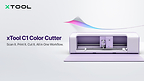
PARIS, Oct. 20, 2026 /PRNewswire/ — xTool, a global pioneer in digital fabrication and smart desktop manufacturing, announces today its expansion into the craft cutter market with the launch of the xTool C1 Color Cutter.
Engineered under the slogan “Scan It. Print It. Cut It. Always in One Workflow,” the C1 solves long-standing industry challenges by integrating high-precision CIS scanning, CMYK full-color inkjet printing, and dynamic blade cutting into a single automated desktop workstation.
Starting October 20th, 2026, xTool is launching its official global pre-order campaign, offering an exclusive £10 deposit incentive that provides early buyers with substantial machine discounts, physical material bundles, and livestream giveaway entries.
Beyond Lasers and Printers : The Natural Evolution into Craft Cutting
The launch of the xTool C1 marks a milestone in xTool’s strategy to build a fully integrated hardware and software ecosystem for creators, DIY enthusiasts, and small-business owners. Building on its global leadership in desktop laser engravers and digital printers, xTool is bringing its expertise in precision mechanics and automation to traditional blade cutting.
By combining full-color printing and precision cutting in one compact machine, the C1 eliminates the need for separate printers, manual material transfers, and error-prone registration marks, simplifying workflows for paper crafts, vinyl graphics, HTV, apparel, and stickers.
Designed for Advanced Crafters and Small Businesses
For DIY enthusiasts, its integrated print-and-cut workflow helps reduce material waste, alignment errors, and the need to cut and weed multiple layers of vinyl. Complex projects involving heat transfer vinyl (HTV) for textile customisation, sticker making, and paper crafts become easier to complete.
For entrepreneurs and small businesses producing customised apparel, labels, packaging, or promotional items, the C1 is a valuable addition to their production workflow. It helps improve productivity, reduce manufacturing costs, and deliver professional-quality results.
Seamless Print-and-Cut Workflow
Combining CMYK inkjet printing with precision blade cutting, the C1 prints directly onto materials before cutting, eliminating registration marks, maximizing printable space, and minimizing alignment errors and waste. Its proprietary Duraproof ink produces vibrant, waterproof, fade-resistant graphics that can withstand up to 30 home washes on textiles.
Built-In CIS Scanner and Live Preview
An integrated Contact Image Sensor (CIS) provides a 1:1 live preview, allowing users to position designs accurately, including leftover materials. Additional features include automatic contour extraction, material nesting, and QR-code-based parameter setup.
AI-Powered Atomm Creation Suite
xTool’s Atomm software transforms text prompts and images into ready-to-cut vectors, with tools for background removal, artistic text, line-art conversion, and 3D papercraft templates, reducing design preparation from hours to minutes.
Versatile Materials and Tools
Compatible with Fine-Point, Deep-Point, Rotary, and 3mm Cutting blades, Foil-Transfer tips, and detail pens, the C1 supports paper, cardstock, vinyl, HTV, leather, balsa wood, and fabrics. Optional accessories include an Electrostatic Mat and Roll Holder with built-in trimmer.
Pre-Order Details
Global pre-orders open on October 20th, 2026, with prices starting at £399 and reservations available for a £10 deposit. Several bundles will be offered, including the first-ever C1 bundle with Atomm Membership.
Pre-order customers will receive exclusive £10 Pre-Order Bonus Perks, including a material kit with over 10 crafting materials, a 20% Material Card valid for 180 days across the xTool store, and entry into a livestream giveaway to win a free C1.
Final payments and global shipping begin November 5, 2026. Further details are available at xtool.com.
About xTool
xTool is a brand founded in 2020 that specialises in smart digital fabrication machines. The company’s mission is to foster creativity by developing intelligent, user-friendly tools that leverage advanced technologies to significantly lower the barriers to creation.
The brand primarily serves makers, DIY enthusiasts, and the education sector by combining powerful software with safe, easy-to-use hardware. xTool provides users with new opportunities to bring their creative ideas to life efficiently and professionally.
For more information: xtool.com
View original content to download multimedia:https://www.prnewswire.co.uk/news-releases/xtool-launches-c1-color-cutter–the-full-color-cutting-machine-built-to-scan-print-and-cut-with-precision-302914186.html
Technology
Green Data Center Market worth $197.02 billion by 2031 – Report by MarketsandMarkets™
Published
26 minutes agoon
October 20, 2026By

DELRAY BEACH, Fla., Oct. 20, 2026 /PRNewswire/ — According to MarketsandMarkets™, the global Green Data Center Market is expanding rapidly, with a projected market size anticipated to rise from about USD 60.77 billion in 2026 to USD 197.02 billion by 2031, featuring a CAGR of 26.5%.
Browse 303 market data Tables and 60 Figures spread through 240 Pages and in-depth TOC on “Green Data Center Market – Global Forecast to 2031”
Green Data Center Market Size & Forecast:
Market Size Available for Years: 2021–20312025 Market Size: USD 48.26 billion2026 Market Size: USD 60.77 billion2031 Projected Market Size: USD 197.02 billionCAGR (2026–2031): 26.5%
Green Data Center Market Trends & Insights:
The global market is gaining momentum as data center operators and enterprises respond to rising energy costs, increasingly stringent sustainability regulations, and growing commitments to reduce carbon emissions.The infrastructure segment is expected to hold the largest market value of USD 39.31 billion by 2026.The building management software is projected to grow at the highest CAGR of 32.1% during the forecast period.Cloud and hyperscale data centers are expected to dominate the market during the forecast period.Retail and e-commerce enterprises are projected to grow at the highest CAGR during the forecast period.North America is estimated to dominate the market with the highest value of USD 25.12 billion by 2026.
Download PDF Brochure: https://www.marketsandmarkets.com/pdfdownloadNew.asp?id=1032
Green data centers are transforming digital infrastructure by integrating technologies such as renewable energy systems, liquid and immersion cooling, and intelligent energy management solutions to enable sustainability at scale. These innovations improve power usage efficiency, reduce carbon emissions, and support compliance with increasingly stringent global sustainability regulations, accelerating adoption across hyperscale facilities, colocation providers, and enterprise data centers. By incorporating energy-efficient and environmentally optimized technologies into core operations, green data centers enhance long-term resilience, regulatory alignment, and cost efficiency for energy-intensive workloads. This infrastructure enables organizations to support AI-driven applications, cloud services, and high-density computing environments more efficiently, while reducing reliance on fossil fuel-based power systems and minimizing overall environmental impact.
By Cooling Infrastructure, Green Air Cooling will register the largest market share during the forecast period
Green air cooling is expected to remain a key thermal management solution in data centers, driven by the growing emphasis on energy efficiency, sustainability, and reduced environmental impact. Key components include Computer Room Air Handlers (CRAH) and Computer Room Air Conditioning (CRAC) units, which use chilled water and refrigerant-based systems, respectively, to maintain optimal temperature and humidity conditions. These systems are increasingly equipped with variable-speed fans, advanced controls, and high-efficiency motors to reduce energy consumption and improve overall cooling performance. Energy-efficient air-cooled chillers further complement these systems by using low Global Warming Potential (GWP) refrigerants and incorporating free-cooling modes that leverage ambient outdoor air to reduce cooling energy requirements. Additional approaches, including hot/cold aisle containment, variable airflow management, and intelligent monitoring systems, enable cooling capacity to be dynamically adjusted according to real-time demand, improving energy efficiency. Emerging vendors and solution providers can capitalize on this trend by developing advanced thermal management technologies. Carrier’s investment in ZutaCore, announced in February 2025, highlights the industry’s increasing focus on advanced cooling solutions. The collaboration aims to deliver scalable and energy-efficient thermal management systems capable of addressing the rising cooling requirements of modern data centers. To capture these opportunities, vendors can focus on developing innovative cooling technologies that improve efficiency and support sustainability objectives. Strategic collaborations, industry partnerships, and continuous technological innovation will remain important for strengthening capabilities in the evolving green data center cooling market.
Request for Proposal: https://www.marketsandmarkets.com/requestsampleNew.asp?id=1032
Software segment is poised for the fastest growth rate during the forecast period
The software segment is expected to register the highest CAGR in the Green Data Center Market, driven by growing demand for intelligent automation, energy optimization, operational visibility, and regulatory compliance. Data Center Infrastructure Management (DCIM) software provides real-time visibility into power consumption, cooling performance, server utilization, and environmental conditions, enabling operators to identify inefficiencies, optimize resource allocation, and maintain high availability. Building Management Systems (BMS) integrate electrical, mechanical, and HVAC systems to automate energy-efficient facility operations while regulating lighting, temperature, and airflow to minimize energy waste and improve cooling efficiency. Compliance software supports adherence to environmental standards, industry regulations, and sustainability certifications such as LEED and ISO 50001 by automating reporting, documentation, and audit processes, thereby improving transparency and accountability. Specialized software solutions, including AI-driven predictive workload management and energy analytics platforms, can dynamically optimize cooling, power distribution, and IT workloads based on real-time demand, reducing energy consumption, environmental impact, and operating costs. Emerging vendors and solution providers can capitalize on this growth through strategic partnerships, technology integration, and AI-enabled capabilities. For instance, in August 2025, Vertiv acquired Waylay NV, a Belgium-based AI-powered software provider, to strengthen monitoring, optimization, and operational efficiency across data center systems. By developing advanced software solutions, collaborating with established technology providers, and leveraging AI, automation, and analytics, vendors can support sustainable, efficient, and regulatory-compliant green data center operations while addressing the growing demand for intelligent infrastructure management.
North America accounts for the largest market during the forecast period
North America is witnessing measurable growth in green data center activity, driven by corporate decarbonization targets, rising onsite power costs, and the increasing need to deploy high-density computing infrastructure with lower water and energy intensity. According to the US Energy Information Administration, solar power generation in the United States increased by 25% in 2024, while wind power generation grew by 8%, improving the availability of low-carbon electricity for hyperscale and colocation data center campuses. Additionally, Schneider Electric announced collaborative AI data center reference designs with NVIDIA in December 2024 that support liquid cooling at densities of up to 132 kilowatts per rack, highlighting supplier responses to rising rack power densities and efficiency requirements. Federal and commercial developments during 2024 and 2025 are also influencing procurement timelines and technical specifications. The White House issued an executive order in July 2025 aimed at accelerating federal permitting for large data center projects and supporting infrastructure. By streamlining approvals for facilities exceeding 100 megawatts or involving capital expenditures of at least USD 500 million, the order supports faster deployment of next-generation data centers, enabling integration of renewable power, liquid cooling systems, and energy-efficient designs. Schneider Electric also introduced and validated new electrical and liquid cooling reference designs through 2024 and 2025, creating standardized deployment pathways for integrators and data center owners. Vendors and solution providers are increasingly focusing on liquid cooling systems, modular electrical skids, facility-level heat recovery, and advanced DCIM capabilities to address evolving procurement requirements amid faster permitting processes and increasing renewable power availability.
Request Pricing: https://www.marketsandmarkets.com/Enquiry_Before_BuyingNew.asp?id=1032
Top Companies in Green Data Center Market:
The Top Companies in Green Data Center Market are Schneider Electric (France), Vertiv (US), Eaton (US), Daikin (Japan), ABB (Switzerland), Delta Electronics (Taiwan), Siemens (Germany), Carrier (US), and GE Vernova (US).
Green Data Center Market – Investment & funding +Merger & Acquisition
Investment and Funding Context
The global Green Data Center Market is attracting strong investment from hyperscalers, cloud providers, colocation operators, and enterprises seeking sustainable ways to expand capacity for AI, high-performance computing, and edge workloads. Investment is increasingly directed toward energy-efficient power and cooling systems, eco-friendly IT modules, high-density green AI pods, and sustainable manufacturing capacity.
Capital is also flowing toward companies developing technologies that address the power, cooling, and energy-efficiency requirements of sustainable AI infrastructure. For example, Eaton completed its USD 9.5 billion acquisition of Boyd Thermal in March 2026, adding liquid cooling and thermal management capabilities for high-density, energy-efficient data centers. Similarly, Vertiv agreed in September 2026 to acquire UtilityInnovation Group for approximately USD 1.45 billion to add microgrid controls, on-site generation orchestration, and behind-the-meter power architecture that shorten time to power. Schneider Electric completed the acquisition of a 75% controlling interest in Motivair for USD 850 million in February 2025 to strengthen its liquid cooling portfolio for AI data centers. These investments and strategic transactions demonstrate the increasing emphasis on energy-efficient, low-carbon, and rapidly deployable power and cooling infrastructure across the green data center ecosystem.
Revenue Shift Context
The market is shifting from conventional, energy-intensive data center infrastructure toward energy-efficient, low-carbon, and sustainability-oriented architectures as operators seek to reduce power consumption, operating costs, and carbon emissions. The rapid growth of AI and high-performance computing is accelerating this transition by increasing power density and cooling requirements, creating greater demand for efficient power distribution, advanced thermal management, renewable energy integration, and intelligent energy management. Technologies such as liquid cooling, high-efficiency UPS systems, renewable-powered generation, energy storage, and intelligent monitoring platforms are increasingly being integrated into data center infrastructure to improve energy utilization and support sustainability targets. Operators are also adopting modular and prefabricated solutions that improve deployment efficiency while incorporating energy-efficient power and cooling systems.
Revenue opportunities are consequently expanding beyond conventional energy-efficiency equipment toward integrated green infrastructure solutions, including renewable energy systems, liquid and immersion cooling, energy storage, high-efficiency power systems, AI-enabled energy management, DCIM platforms, carbon monitoring, and heat recovery technologies. The growing deployment of high-density AI infrastructure is particularly increasing demand for liquid cooling, optimized power architectures, and real-time energy monitoring capable of maintaining performance while controlling energy consumption.
Mergers and Acquisitions
Mergers, acquisitions, and strategic investments are increasingly shaping the Green Data Center Market as infrastructure providers seek to strengthen capabilities across energy-efficient power systems, advanced cooling, renewable energy integration, and intelligent energy management. Recent activity is focused on expanding sustainable technology portfolios, enhancing vertical integration across critical infrastructure components, and accelerating the development and deployment of energy-efficient solutions for AI-ready and high-density data center environments.
GREEN DATA CENTER MARKET: MERGERS AND ACQUISITIONS, AUGUST 2025–SEPTEMBER 2026
Month and Year
Deal Type
Company 1
Company 2
Description
September 2026
Acquisition
Eaton (Ireland)
COL Group (Italy) (from Oaktree)
Eaton signed a deal to buy COL Group at an enterprise value of about EUR 810 million. COL makes medium-voltage distribution equipment, including SF6-free switchgear, grid automation, and modular power systems. The deal expands Eaton’s European manufacturing for data center and utility customers.
September 2026
Acquisition
Vertiv (US)
King Environmental Services (KES) (Ireland)
Vertiv agreed to buy this Europe-based provider of fluid management, commissioning, and load-testing services for liquid-cooled data centers. It extends Vertiv’s thermal services into EMEA, building on PurgeRite in North America.
April 2026
Acquisition
Vertiv (US)
BMarko Structures (US)
Vertiv acquired BMarko to bring structural fabrication in-house and expand capacity for manufactured, prefabricated, and converged infrastructure solutions.
November 2025
Acquisition
Eaton (Ireland)
Boyd Thermal (US)
Eaton announced the USD 9.5 billion purchase of Boyd’s thermal business, which closed on March 12, 2026. It adds liquid cooling and thermal components for data centers, and about 80% of Boyd’s business serves that market.
Company Revenue Share Details
The global Green Data Center Market is led by established power, cooling, and electrical infrastructure providers competing across energy-efficient power distribution, power backup and energy storage, green air and liquid cooling, and DCIM and energy management software. Major participants include Schneider Electric, Vertiv, Eaton, ABB, and Hitachi Energy, alongside other global and regional players such as Daikin, Delta Electronics, Siemens, Carrier, and STULZ. Competition is increasingly shaped by the ability to offer integrated power and cooling portfolios that lower PUE, support renewable and low-carbon power integration, and handle the higher rack densities of AI workloads.
Competition is also shifting toward vertical integration and end-to-end offerings that span grid interconnect to chip. Recent transactions demonstrate this focus on liquid cooling, thermal management, and sustainable power distribution. For example, Eaton’s USD 9.5 billion acquisition of Boyd Thermal added liquid cooling capabilities. Its agreement to acquire COL Group (EUR 810 million enterprise value) adds SF6-free medium-voltage switchgear.
Browse Adjacent Markets Data Center and Networking Market Research Reports & Consulting
Related Market Reports:
Data Center Rack Market by Rack Type (Open Frame, Enclosed), Type (Server Racks, Network Racks), Rack Height (42U & Below, 43U up to 52U), Rack Width (19 Inch, 23 Inch), Data Center Type (Enterprise, Colocation, Hyperscale) – Global Forecast to 2030
Data Center Solutions Market by Infrastructure [Power (Critical Power, Backup, Distribution), Mechanical & Cooling (Air Cooled, Liquid Cooling, Heat Pumps), IT (Server, Storage, Networking), Physical (Racks, Cables)], Software – Forecast to 2031
About MarketsandMarkets™
MarketsandMarkets™ has been recognized as one of America’s Best Management Consulting Firms by Forbes, as per their recent report.
MarketsandMarkets™ is a blue ocean alternative in growth consulting and program management, leveraging a man-machine offering to drive supernormal growth for progressive organizations in the B2B space. With the widest lens on emerging technologies, we are proficient in co-creating supernormal growth for clients across the globe.
Today, 80% of Fortune 2000 companies rely on MarketsandMarkets, and 90 of the top 100 companies in each sector trust us to accelerate their revenue growth. With a global clientele of over 13,000 organizations, we help businesses thrive in a disruptive ecosystem.
The B2B economy is witnessing the emergence of $25 trillion in new revenue streams that are replacing existing ones within this decade. We work with clients on growth programs, helping them monetize this $25 trillion opportunity through our service lines – TAM Expansion, Go-to-Market (GTM) Strategy to Execution, Market Share Gain, Account Enablement, and Thought Leadership Marketing.
Built on the ‘GIVE Growth’ principle, we collaborate with several Forbes Global 2000 B2B companies to keep them future-ready. Our insights and strategies are powered by industry experts, cutting-edge AI, and our Market Intelligence Cloud, KnowledgeStore™, which integrates research and provides ecosystem-wide visibility into revenue shifts.
MarketsandMarkets™ SalesPlay is an AI-driven Revenue Intelligence Co-Pilot designed to help revenue teams prioritize the right accounts, identify critical changes early, and surface opportunities ahead of demand, so pipeline builds naturally and deals close with greater consistency.
To find out more, visit www.MarketsandMarkets™.com or follow us on Twitter, LinkedIn and Facebook.
Contact:
Mr. Rohan Salgarkar
MarketsandMarkets™ INC.
1615 South Congress Ave.
Suite 103, Delray Beach, FL 33445
USA: +1-888-600-6441
Email: sales@marketsandmarkets.com
Visit Our Website: https://www.marketsandmarkets.com/
Content Source: https://www.marketsandmarkets.com/PressReleases/green-data-center-gdc.asp
View original content to download multimedia:https://www.prnewswire.co.uk/news-releases/green-data-center-market-worth-197-02-billion-by-2031–report-by-marketsandmarkets-302912615.html


Goodwill Houston and CompuCycle Launch Tech Recycle Workforce Training Program for Students with Disabilities

xTool Launches C1 Color Cutter : The Full-Color Cutting Machine Built to Scan, Print, and Cut with Precision

Green Data Center Market worth $197.02 billion by 2031 – Report by MarketsandMarkets™

Send Rakhi to UK swiftly with UK Gifts Portal

Whiteboard Series with NEAR | Ep: 45 Joel Thorstensson from ceramic.network

Nullmax and Renesas Forge Strategic Partnership to Deliver Competitive ADAS Solutions for the Global Market

Why You Should Build on #NEAR – Co-founder Illia Polosukhin at CV Labs
Whiteboard Series with NEAR | Ep: 45 Joel Thorstensson from ceramic.network

NEAR End of Year Town Hall 2021: The Open Web World, MetaBUILD 2 Hackathon and 2021 recap
Trending
-

 Technology5 days ago
Born to Be Open: RoboParty Launches RP1, a Full-Stack Open-Source Humanoid
-

 Coin Market4 days ago
OpenAI model helped itself to testnet crypto, then kept quiet about it
-

 Coin Market5 days ago
MSCI adopts index exclusion rules that could oust Strategy
-

 Technology5 days ago
Tucuvi joins the Microsoft Pegasus Program to scale clinically governed AI Care Management across health systems
-

 Technology4 days ago
FF EAI Robotics (FFR) and FF Jointly Launch FF Nova, First Embodied AI Humanoid Robot Priced Below $2,500 in U.S., FF Nova Mini, Physical AI Spark Program Curriculum, Nova Reinforcement Learning Developer Program and Developer Community Recruitment
-

 Technology5 days ago
Bloomberg Law Brings Dockets and Litigation Intelligence to Microsoft Copilot
-

 Coin Market5 days ago
Ex-Trump crypto adviser profited after helping pass stablecoin bill: WSJ
-

 Technology5 days ago
Announcing Mindbeam’s Collaboration with NVIDIA: Bringing Greater Speed and Efficiency to Open Source AI