Connect with us

Technology

TeamViewer study: 75% of employees use AI daily, but 61% want human oversight, indicating a confidence gap limiting progress

Published

on

Global research from TeamViewer finds IT leaders expect nearly 40% of digital workplace services to run autonomously by 2030

GÖPPINGEN, Germany, July 22, 2026 /PRNewswire/ — AI is already part of everyday work, but organizations must close a confidence gap before they can unlock the next wave of AI productivity, according to new global research from TeamViewer, a leading provider of digital workplace solutions. While three quarters of respondents use AI daily, 61% still prefer human oversight before AI takes action — even as IT leaders expect nearly 40% of digital workplace services to run autonomously by 2030.

The global study ‘Path to the Autonomous Digital Workplace’ examines the shift from AI assistance, where people prompt tools and review outputs, toward autonomous systems capable of detecting needs and acting on them with progressively less human intervention.

Among the study’s key findings:

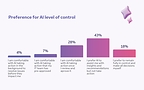
AI is used daily. 75% of respondents use AI at least once a day, only 3% report no noticeable workplace benefits from using AI, and 64% describe their experience with AI as positive.The autonomous workplace is accelerating, especially in IT. 26% of IT leaders describe their departments as at least partially autonomous. 99% of IT leaders say they would be comfortable delegating at least one task to AI.Confidence drops as AI gains authority. 61% of total respondents prefer AI to take no independent action. While 35% are ready to allow AI to act more autonomously on their behalf, a majority of that group (71%) are only comfortable with AI handling defined tasks. Only 1 in 20 (5%) have no concerns about AI operating without a human in the loop.People do not reject autonomy; they reject invisible autonomy. 40% want AI to detect and fix issues early while keeping them informed, and 70% are comfortable with AI acting autonomously as long as they can step in when needed.Guardrails are central to trust. Respondents say autonomous action would be more acceptable with strong security and privacy protections (39%), notifications before major changes (36%) limits on what AI can access (36%), visible activity logs (33%) and rollback options (31%).People expect AI to reshape work, not eliminate it. By 2030, 33% expect AI to assist while they continue doing most tasks, 28% expect to delegate more tasks and focus on higher-value work, and only 2% expect their role to be eliminated.

The findings reveal what TeamViewer calls the AI Confidence Gap: people are increasingly comfortable using AI for assistance, but less ready to give autonomous systems greater access, authority and responsibility. That gap is already creating a verification burden. More than half of respondents (56%) often or always verify AI outputs before relying on them, spending an average of two hours per week checking AI-generated work, while 51% say they do not always know when to trust AI and when to verify it.

“AI is already changing how people work, but the next phase will be defined by trust,” said Oliver Steil, CEO at TeamViewer. “Organizations will not succeed by giving AI unlimited authority. They will succeed by building systems that operate safely, transparently and accountably within clearly defined guardrails. The real opportunity is to use AI and automation to prevent disruption, improve digital experiences, and free people to focus on higher-value work. Trusted autonomy, not unchecked automation, is what will unlock the next generation of productivity.”

IT is likely to be one of the first areas where autonomous systems take hold. Technology issues are often repetitive and measurable, which makes them easier to detect early, remediate automatically and, over time, resolve within defined guardrails. The survey supports this, as nearly all IT decision-makers surveyed (99%) would delegate at least one IT task to AI, most commonly system updates (61%), common device fixes (53%) and device performance adjustments (49%). This readiness reflects how far IT operations have progressed in a short time, and points to the continued move toward greater workplace autonomy.

“For years, software has largely been designed around what people tell it to do,” said Mei Dent, Chief Product and Technology Officer at TeamViewer. “Autonomous systems change that model. The next step is designing systems that know when to act, when to wait, and when to bring people into the decision. That requires clear guardrails, pre-approved actions, risk-based oversight, and transparency into what the system did and why. Autonomy will scale when organizations can prove it works in specific, trusted use cases, then expand it with confidence.”

About the Report

The study was conducted by Sapio Research on behalf of TeamViewer in April and May 2026, among 4,200 respondents across 9 markets: the U.S., the U.K., Australia, Brazil, France, Germany, Italy, Japan and Singapore. Respondents included an even split of managers and employees across industries and company sizes. The full report is available here. 

About TeamViewer

TeamViewer (XETRA: TMV) resolves digital friction before it disrupts productivity. As AI compounds the sprawl of machines, applications, and agents beyond human reach, TeamViewer restores control: observing endpoint health in real time, acting autonomously to keep technology in its desired state, and guiding operators when human judgment is needed. Its TeamViewer ONE platform unifies endpoint management, digital employee experience, and agentic remote support to lead the shift to autonomous endpoint management (AEM). Built on a structural data advantage from millions of AI-captured expert resolutions, the platform powers self-healing technology and grows more capable with every issue it fixes. More than 600,000 customers, from small businesses to the world’s largest enterprises, rely on TeamViewer to keep their digital and physical operations running. Learn more at www.teamviewer.com.


View original content to download multimedia:https://www.prnewswire.com/news-releases/teamviewer-study-75-of-employees-use-ai-daily-but-61-want-human-oversight-indicating-a-confidence-gap-limiting-progress-302831545.html

SOURCE TeamViewer Germany GmbH

Continue Reading
Click to comment

Leave a Reply

Your email address will not be published. Required fields are marked *

Technology

85% of Indian Finance Leaders Face Pressure to Prove AI ROI While Accountability Lags Global Peers, Avalara Survey Finds

Published

on

By

27% of Indian respondents say accountability for significant AI agent errors is unclear or sits with no one, higher than all other markets surveyed

PUNE, India, July 22, 2026 /PRNewswire/ — Avalara, Inc., the agentic AI leader in global tax and compliance, today released new research showing that Indian finance teams face mounting pressure to deploy AI agents quickly. This rush to demonstrate measurable ROI is causing governance and internal controls to struggle to keep pace. As a result, more than one in four Indian finance leaders said accountability for significant AI errors was unclear or sits with no one, higher than other markets surveyed. 

The report, “Agents of Change: How the Race to Deploy AI Agents is Outrunning Financial Governance,” surveyed CFOs and senior finance leaders across the US, UK, India, and Australia.

85%1 of Indian respondents feel moderate or significant career pressure to demonstrate that AI agent investments are delivering ROI. 71%2 say the pressure to deploy agents is focused primarily on deployment speed, and consequently, while only 8%3 say their organization prioritizes governance over speed.

This speed-first approach is creating a widening governance and compliance gap. 10%4 of Indian finance leaders say they are not confident they could give a regulator or auditor a clear and complete explanation of an AI agent’s actions, much higher than the share reported in the US, UK, and Australia. Furthermore, 24%5 of Indian finance leaders have not updated their internal controls within the last year to reflect AI agents taking or recommending actions. Only 28% say AI agent controls have been reviewed or tested by IT or cybersecurity teams, while just 34% report review by risk or compliance teams.

“While Indian enterprises are moving fast to automate, their internal rulebooks are being left behind,” said Dulles Krishnan, VP & General Manager, India Operations at Avalara. “Running new AI tools on outdated compliance policies is a massive blind spot. CFOs in this market need to ensure their risk frameworks are actually updated to monitor automated decisions before an auditor comes knocking.”

This is compounded by a lack of available knowledge, as 76% lack dedicated in-house expertise to understand how their AI agents work.

When asked what would most increase their confidence in expanding AI agents, Indian finance leaders consistently prioritized capabilities that reinforce trust and accountability, including outputs grounded in verified tax and financial data (27%), human review controls for higher risk actions (26%), audit trails documenting every AI action (22%), and stronger vendor commitments around accuracy and accountability (20%).

As Indian finance teams embed AI agents more extensively into tax, compliance, and regulatory processes, the survey suggests that confidence in explaining those actions to a regulator will need to catch up with the pace of deployment. Closing that gap will depend less on how quickly AI agents are deployed and more on embedding trusted data, audit trails, governance controls, and documentation from the outset so automated decisions remain transparent, explainable, and audit-ready.

The full report is available at: newsroom.avalara.com/image/Agents_of_Change.pdf.

Methodology:

The research was conducted by Censuswide, among a sample of 250 CFO or Senior Finance leaders (aged 30+) in Indian companies with a revenue of approximately US$10 million+. Respondents must have deployed, piloted, or actively evaluated AI agents in their organisation in the last 12 months and work in the following industries: Financial Services and Insurance / Healthcare /Manufacturing & Distribution / Professional Services (i.e., accounting firms legal, consulting) / Retail & E-commerce / Tech and SaaS. The data was collected between 15.06.2026 and 22.06.2026. Censuswide is a member of the Market Research Society (MRS) and the British Polling Council (BPC), and a signatory of the Global Data Quality Pledge. Censuswide adheres to the MRS Code of Conduct and ESOMAR principles.

About Avalara

Avalara is the agentic AI platform for global tax and compliance. For more than two decades, Avalara has built one of the most expansive libraries of tax content and integrations in the industry, processing more than 54 billion transactions annually and supporting millions of businesses worldwide. The company’s purpose-built AI agents automate end-to-end compliance with greater precision, from tax calculations and return filings to exemption certificate management and beyond. For more information, visit Avalara.com.

Combining answers “significant pressure” (48%) and “moderate pressure” (37%) Combining answers “entirely on speed” (32%) and “mostly on speed” (39%) Combining answers “mostly on governance” (12%) and “entirely on governance” (0%)Combining answers “not very confident (8%) and “not at all confident (2%)Combining answers “within the last 13-23 months” (14%, “within the last two years” (10%, and “over two years ago” (1%)

View original content to download multimedia:https://www.prnewswire.com/in/news-releases/85-of-indian-finance-leaders-face-pressure-to-prove-ai-roi-while-accountability-lags-global-peers-avalara-survey-finds-302831471.html

Continue Reading

Technology

Vision Marine Technologies Files U.S. Patent Application Covering Marine Low-Voltage Power Management

Published

on

By

Intellectual Property / Electric Propulsion Technology

New filing extends the E-Motion™ 180E system architecture to the management and prioritization of auxiliary vessel power.

BOISBRIAND, QC, July 22, 2026 /PRNewswire/ — Vision Marine Technologies Inc. (NASDAQ: VMAR; TSXV: VMAR) (“Vision Marine” or the “Company”), a marine technology and recreational boating company combining proprietary high-voltage electric propulsion technology with direct consumer market access through its Nautical Ventures retail, service and marina platform, today announced the filing of a new U.S. patent application relating to low-voltage power distribution and selective load management aboard marine vessels. The application is directed to managing auxiliary electrical power across different vessel operating states while preserving power for selected higher-priority functions.

In practical terms, even a high-voltage electric vessel depends on a conventional low-voltage electrical system to support controls and other onboard functions. When a vessel is shut down, stored, serviced or not actively charging, unnecessary electrical loads can gradually deplete its house battery. The proposed technology is designed to prioritize which functions remain available and disconnect other loads when appropriate, helping preserve battery reserves and support more controlled onboard power management.

The filing expands Vision Marine’s system-level approach to the E-Motion™ 180E high-voltage electric marine powertrain. The E-Motion™ platform integrates the electric motor, high-voltage battery architecture, power electronics, cooling systems, propulsion controls, safety systems and digital helm interface required for high-performance electric boating. The proposed low-voltage power-management technology is intended to complement this architecture by addressing how supporting vessel systems receive and conserve power during operation, charging, shutdown, storage and service.

“A complete electric marine powertrain must manage both the high-voltage energy that propels the boat and the low-voltage systems that support practical and safe operation,” said Daniel Rathe, Chief Technology Officer of Vision Marine. “This application addresses a straightforward but important question: when the vessel is not operating, how does the system preserve energy for safety critical functions? That system-level approach is central to how Vision Marine is engineering the E-Motion™ 180E as a complete marine-specific powertrain.”

The filing adds to Vision Marine’s intellectual-property portfolio surrounding propulsion controls, outboard integration, power management, cooling systems, safety functions, fault detection, component authentication and secure vessel communications. Vision Marine has industrialized its 180 HP high-voltage E-Motion™ propulsion system, has previously disclosed integrations across more than 25 boats from 13 recreational boat brands, and established a 116 mph electric boat speed record in 2023. Together, these developments reflect the Company’s strategy of engineering and seeking intellectual-property protection across the complete marine propulsion architecture, from high-voltage performance to the supporting systems required for integration, operation and servicing. The patent application is pending and remains subject to examination by the United States Patent and Trademark Office. No assurance can be given regarding the scope, timing or outcome of the application.

About Vision Marine Technologies Inc.

Vision Marine Technologies Inc. (NASDAQ: VMAR; TSXV: VMAR) is a marine technology and recreational boating company combining proprietary high-voltage electric propulsion technology with direct consumer market access through its Nautical Ventures retail, service and marina platform.

Vision Marine’s E-Motion™ propulsion platform was designed specifically for marine applications and integrates electric motor technology, high-voltage battery architecture, power electronics, cooling systems, controls, safety systems and digital helm interfaces required for high-performance electric boating. Through Nautical Ventures, the Company also operates a multi-brand retail, service and marina network serving consumers across Florida in both electric and internal combustion engine segments.

Forward-Looking Statements

Certain statements in this press release constitute forward-looking statements within the meaning of applicable Canadian securities laws and the safe harbor provisions of the U.S. Private Securities Litigation Reform Act of 1995. Forward-looking statements generally can be identified by words such as “may,” “will,” “expect,” “intend,” “believe,” “estimate,” “anticipate,” “plan,” “potential,” “continue,” “could,” “should,” “would” and similar expressions.

Forward-looking statements in this press release include, without limitation, statements regarding the Company’s intellectual-property strategy and portfolio; the potential scope, functionality, benefits and commercial relevance of the patent application described in this release; the potential for patent protection and the scope, timing or outcome of pending patent applications; the development, validation, integration and commercialization of the E-Motion™ platform and related technologies; the potential utility of the proposed low-voltage power-management technology; and the adoption and integration of electric marine propulsion systems.

Forward-looking statements are based on management’s current expectations, estimates, assumptions and beliefs and are subject to known and unknown risks, uncertainties and other factors that may cause actual results, performance or achievements to differ materially from those expressed or implied by such statements. These risks and uncertainties include, without limitation, risks associated with technology development, testing, integration, commercialization and market acceptance; uncertainty regarding the examination, scope, enforceability and outcome of patent applications; the Company’s ability to protect its intellectual property; liquidity, financing and operating-performance risks; supply-chain and manufacturing risks; competitive, regulatory, market and economic conditions; and the other risks described in the Company’s filings with the U.S. Securities and Exchange Commission and Canadian securities regulatory authorities.

Readers should not place undue reliance on forward-looking statements, which speak only as of the date made. Vision Marine undertakes no obligation to update or revise forward-looking statements, except as required by applicable law.

Neither the TSX Venture Exchange nor its Regulation Services Provider, as that term is defined in the policies of the TSX Venture Exchange, accepts responsibility for the adequacy or accuracy of this press release.

View original content to download multimedia:https://www.prnewswire.com/news-releases/vision-marine-technologies-files-us-patent-application-covering-marine-low-voltage-power-management-302831483.html

SOURCE Vision Marine Technologies, Inc

Continue Reading

Technology

Delta Becomes First Taiwanese Company to Organize a Dedicated Session at World’s Leading ICRS Advancing Coral Restoration Through AI Innovation

Published

on

By

TAIPEI, July 22, 2026 /PRNewswire/ — The 16th International Coral Reef Symposium (ICRS), the world’s leading scientific conference on coral reef research, is being held in New Zealand from July 19 to 24. Held every four years, ICRS brings together more than 2,000 experts from 93 countries. Delta is the first Taiwanese company to organize a dedicated session at ICRS. Bringing together experts from more than ten countries, the session explores how AI and cross-sector collaboration can strengthen coral reef restoration and ecosystem resilience. Delta’s role as session organizer reflects global recognition of its long-term efforts in coral conservation while fostering global partnerships in marine sustainability.

Professor Chang-Feng Dai, Taiwan’s leading coral reef scientist and Chief Consultant of Delta Coral Restoration Project, who chaired the session, said, “As climate change continues to threaten coral reef ecosystems, no single technology or discipline can address these challenges alone. Cross-sector collaboration is essential. Following a three-month international review process, 21 leading researchers from various sectors were selected to present their work and discuss solutions to the fourth global coral bleaching event.”

Wim Chang, CEO of the Delta Electronics Foundation, said, “As coral researchers worldwide work together to respond to the coming super El Niño, we are honored to contribute by serving as symposium organizers, reviewers and session chairs. By bringing together leading research, we hope to advance technology innovation for coral resilience and restoration. We are also working with partners to accelerate the development of a coral conservation center, research on heat-tolerant coral probiotics, and AI-powered digital twins to help identify the best sites for coral restoration, leveraging technology to support healthier coral ecosystems.”

The session, titled Driving Technology Innovation through Cross-sectoral Partnerships for Coral Reef Resilience and Restoration, brought together experts from academia, government, NGOs, industry, and foundations to explore how AI and emerging technologies can support coral reef restoration and ecosystem resilience. In addition to Professor Dai, the session was co-chaired by Dr. Chao-Yang Kuo of the National Museum of Marine Biology and Aquarium, Dr. Mei-Fang Lin of National Sun Yat-sen University, and Dr. Yang-Wen Chen, Deputy Executive Director of the Delta Electronics Foundation. Presentations highlighted innovations including AI image recognition, digital twins, and regenerative medicine. Examples included using smartphones to rapidly create 3D digital models of coral reefs for large-scale ecological monitoring, as well as applying biocompatible titanium materials inspired by regenerative medicine to reduce damage during coral sampling.

Delta has long invested in coral restoration and collaborates with research institutions in the United States, Australia, Singapore, and other countries. Together, they are advancing applications including Large Area Imaging (LAI), AI-based coral identification, digital twins, and the Coral Master Data Model, building international, cross-disciplinary partnerships that contribute to the long-term sustainability of marine ecosystems.

About Delta

Delta, founded in 1971 and listed on the Taiwan Stock Exchange (code: 2308), is a global leader in power and thermal management with a thriving portfolio of IoT-based smart energy-saving solutions in the fields of data center infrastructure, microgrids, smart manufacturing, intelligent buildings, and E-mobility to nurture mankind’s sustainable development. As a world-class corporate citizen guided by its corporate mission, “To provide innovative, clean and energy-efficient solutions for a better tomorrow,” Delta leverages its core competence in high-efficiency power electronics and its ESG-embedded business model to address key environmental issues related to climate change. Delta serves customers through its sales offices, R&D centers and manufacturing facilities spread over close to 200 locations across 5 continents.

Throughout its history, Delta has received numerous awards and worldwide recognition for its business achievements, innovative technologies, and dedication to ESG. Since 2011, Delta has been listed on the Dow Jones Best-in-Class World Index (formerly the DJSI World Index of Dow Jones Sustainability™ Indices) for 15 consecutive years. Delta has also won double A List ratings from CDP 5 times for its substantial contribution to climate change and water security issues, and has been named Supplier Engagement Leader over 9 consecutive years for its continuous development of a sustainable value chain.

For detailed information about Delta, please visit: www.deltaww.com

View original content:https://www.prnewswire.com/news-releases/delta-becomes-first-taiwanese-company-to-organize-a-dedicated-session-at-worlds-leading-icrs-advancing-coral-restoration-through-ai-innovation-302831963.html

SOURCE Delta Electronics, Inc.

Continue Reading

Trending