Connect with us

Technology

Collaborative Classroom Expands Collaborative Literacy Program with Designated English Language Development

Published

on

ALAMEDA, Calif., Aug. 13, 2026 /PRNewswire/ — Collaborative Classroom, a leading nonprofit publisher of early childhood and K–12 curricula, announced the expansion of its comprehensive K–5 core literacy program, Collaborative Literacy, to include powerful Designated English Language Development (D-ELD) that provides English Learner (EL) identified students with rigorous, strategic instruction tightly connected to Tier 1 literacy content, ensuring they fully engage in grade-level learning. 

Collaborative Classroom President and CEO Dr. Kelly Stuart said, “Our Designated English Language Development component ensures that EL-identified students build language, literacy, and academic knowledge through rich, asset-based instruction aligned with grade-level outcomes. 

We’re grateful to three California-based experts for their guidance during development of our D-ELD instruction: Dr. Pamela Spycher, one of the primary authors of the California ELA/ELD Framework and ELD Standards and a former senior research staffer at WestEd; Dr. Marianne Justus, Novellus Group Executive Director and former senior research associate at West Ed; and George Ellis, director of the California Reading & Literature Project at UC Berkeley.

“For the past 25 years, Collaborative Classroom has been a trusted literacy partner in California, thanks to the wide impact of our SIPPS® curriculum in accelerating mastery of foundational reading skills for K–12 students,” Dr. Stuart added. “We’re now thrilled to introduce California educators to our comprehensive core ELA program, Collaborative Literacy, which is instructionally aligned with SIPPS and which has been recognized with a notable review by The Reading League.” 

Collaborative Literacy’s Designated English Language Development: Amplifying and Accelerating Instruction

“The focus of Collaborative Literacy’s D-ELD component is amplification and acceleration, not simplification and remediation,” said Dr. Spycher, who served as the lead Collaborative Classroom adviser in the development of the D-ELD component. “The approach draws from evidence-based instruction, research on second language development, and culturally sustaining and inclusive practices to engage children in a variety of powerful and interactive language learning experiences.”

Unlike isolated language programs, Collaborative Literacy’s D-ELD component is designed to build into and from the program’s core lessons. By using the same high-quality, authentic texts encountered in Collaborative Literacy’s core reading instruction, the D-ELD component allows students to closely examine academic language and immediately apply new skills in meaningful contexts. Collaborative Literacy’s D-ELD instruction also prioritizes student talk and collaborative conversations, ensuring that language development is active, purposeful, and joyful.

“Collaborative Classroom has seamlessly integrated Designated ELD instruction into the daily lessons of an already rigorous and comprehensive literacy program, Collaborative Literacy,” added Dr. Justus. “By building on the core principles of Collaborative Literacy—an assets-based philosophy and a whole-child approach—this Designated ELD component supports students’ understanding of literacy content while also explicitly and methodically teaching them how language works.”

Key Features of Collaborative Literacy’s D-ELD Component:

Daily 30-Minute Lessons: Dedicated, protected instructional time focused on accelerating English language proficiency.Research-Based Instruction: Rooted in decades of research on effective educational experiences for multilingual children, emphasizing a whole-child approach and a culturally and linguistically affirming environment.Metalinguistic Awareness: Lessons explicitly teach students how English works at the sentence and discourse levels, helping them understand and control language for various purposes.Robust Implementation Resources: These include digital access to the D-ELD Teacher’s Manuals, assessments, and family support and print Language Notebooks for every student.

George Ellis, Director of the California Reading & Literature Project at UC Berkeley, said: “In my opinion, this is one of the few ELD programs that truly reflects the vision of the California ELA/ELD Framework by maintaining intellectual richness while positioning students’ language, culture, and experiences as assets to build on rather than deficits to remediate.”

Designed for Alignment with California’s English Language Development Standards

Accelerating English proficiency through a structured focus on the language skills and strategies that EL-identified students need to engage with academic content, Collaborative Literacy D-ELD instruction centers on five priority areas that align with California’s English Language Development standards:

Meaning Making: EL-identified students build knowledge about texts and strengthen comprehension through collaborative and interactive reading and writing activities. These experiences are designed to support both deep understanding of the material and active participation in the classroom.Language Development: To develop academic language and the ability to use English with precision, EL-identified students engage in interactive vocabulary routines, word play, and language analysis activities. These include specific routines like sentence unpacking and collaborative text reconstruction.Effective Expression: Students expand their oral and written communication skills through authentic contexts. Lessons include structured discussions, formal presentations, performances, and creative activities like dramatic play.Content Knowledge: By working with the same grade-level informational and literary texts used in core reading lessons, EL-identified students can examine academic language closely. This allows them to deepen their understanding of the content while making meaningful connections across their instructional day.Foundational Skills: Students reinforce critical literacy skills through choral, paired, and scaffolded reading, as well as oral retelling. These activities specifically strengthen phonics, print awareness, morphology, reading fluency, and automaticity.

About Collaborative Literacy, A Comprehensive and Coherent ELA Curriculum

Collaborative Literacy is Collaborative Classroom’s comprehensive and coherent K–5 ELA curriculum. Reviewed by The Reading League, Collaborative Literacy teaches all essential components of literacy science and reflects the latest research in both learning science and instructional science. 

The program provides teachers with the tools to build strong and knowledgeable readers and writers and to create vibrant and caring classroom communities, while simultaneously helping them deepen their teaching expertise and knowledge of evidence-based practices. 

By weaving together the latest in literacy learning research with social-skills development and embedded professional learning, Collaborative Literacy gives educators the tools they need to support students through their literacy journey.

Learn more about Collaborative Literacy.

Aligned Reading Intervention and Early Childhood Programs Complement Collaborative Literacy

Collaborative Literacy’s power as a comprehensive core ELA program is further strengthened by its instructionally aligned reading intervention curriculum, SIPPS, and a choice of aligned early childhood and Transitional Kindergarten curricula, Pinecone Path™ and Every Child Ready

Learn how these curricula can be implemented together to form a highly coherent and effective instructional pathway for California students, from early childhood through K–5: Literacy Solutions for California Classrooms

ABOUT COLLABORATIVE CLASSROOM

Founded and headquartered in California, Collaborative Classroom is a mission-driven, nonprofit organization committed to ensuring that all students become readers, writers, and thinkers who learn from, care for, and respect one another. As one of the few nonprofit organizations in the country that develop, disseminate, and implement curriculum at scale, Collaborative Classroom is dedicated to putting students, educators, and research at the center of every decision and providing personalized, cutting-edge implementation supports for the schools and students it serves.

The organization’s evidence-based programs and innovative professional learning are used by educators in all 50 states in more than a thousand school districts. Collaborative Classroom’s portfolio of solutions spans preschool and PreK through grade 8, with some curricula extending through grades 9–12. 

Since the organization’s founding, Collaborative Classroom’s work has reached more than 10 million students and 440,000 educators across the country, developing fluent readers and skilled writers, supporting instructional equity, transforming discipline practices, and bolstering student and teacher engagement. Learn more about Collaborative Classroom at collaborativeclassroom.org.

View original content to download multimedia:https://www.prnewswire.com/news-releases/collaborative-classroom-expands-collaborative-literacy-program-with-designated-english-language-development-302850664.html

SOURCE Collaborative Classroom

Continue Reading
Click to comment

Leave a Reply

Your email address will not be published. Required fields are marked *

Technology

REcarbonize Canada says Friends of Science Society in Response to Sustainable Finance Taxonomy Report

Published

on

By

CALGARY, AB, Aug. 13, 2026 /PRNewswire/ — In response to Canada’s Sustainable Finance Taxonomy report, Friends of Science Society have issued a comprehensive response that can be summarized as “REcarbonize Canada.” 

Friends of Science Society’s report argues that the Sustainable Finance Taxonomy group erred in relying on the 2018 Intergovernmental Panel on Climate Change (IPCC) report known as IPCC SR 1.5 for ‘the science’, saying that is outdated and significant changes in climate science pillars obviate the drive for Net Zero. As well, recent geopolitical energy deficit realities, due to the conflict in the Strait of Hormuz, invalidate the taxonomy report’s conclusions.

Three significant pillars of the presumed, impending climate catastrophe that led to Net Zero targets, have fallen in the past year.

As explained in the Friends of Science Society’s report, “Sustainable Finance Taxonomy –Out-of-Date Science and Greenwashing Unsustainability,” the climate catastrophe scenario known as RCP 8.5 (SSP5-8.5) has been deemed to be implausible, by the official climate modelling community that works with the IPCC. The climate risk economic damage function that the Network for Greening the Financial Institutions had employed for assessing climate risk, drawn from Kotz et al. (2024) has been officially retracted. Finally, a paper commonly known as “Wedges” from 2004, that claimed we could decarbonize using existing technology, has been exposed as false and partly ghost written by Big Oil.

These changes confirm the findings of renowned Canadian physicist, Prof. William van Wijngaarden, whose presentations show, like this America Out Loud podcast, that there is no human-made climate emergency. Wijngaarden explains that trying to decarbonize to meet net zero targets will severely damage society.

Contrary to decarbonizing Alberta and Canada, Friends of Science Society say the time is right to rescind the directive on climate risk reporting set by the Office of the Superintendent of Financial Institutions (OSFI), known as B-15. Financers should be encouraged to reinvest and insurers to step up to advance the oil and gas sector and thus “REcarbonize Canada” as an energy and economic Superpower. This will revitalize Canada’s sagging economy and provide national energy security says Friends of Science Society.

Under B-15 only energy projects with Carbon Capture and Storage (CCS) or similar technology would qualify for financing and insurance; the Sustainable Finance Taxonomy report attempts to put this into the category of “abatement.” Friends of Science Society argues in this video that ‘decarbonized oil’ is a carbon traders’ shell game.

The Sustainable Finance Taxonomy report promotes a “Do No Significant Harm” approach, but Friends of Science Society argues the harm is inherent in the climate risk reporting, the imposed compliance and the unrealistic, unattainable net zero targets.

Decarbonize Alberta – Really?” is a new report by retired energy economist Robert Lyman, published by Friends of Science. Lyman focusses on the implications of complete decarbonization of oil and gas. It is the largest single contributor to the Alberta economy, accounting for roughly $88 billion of GDP in 2024, equivalent to 25% of the province’s total GDP. It directly accounted for 200,000 jobs, equating to 8% of total employment. Total revenue from oil and gas production to Alberta was $153 billion in 2024, with oil sands ($105 billion) accounting for the lion’s share.

The current Pathways/Oil Sands Alliance CCS project will be 75% funded by taxpayers and will cost between $20 to 30 billion, according to media reports.

Friends of Science Society says the Sustainable Finance Taxonomy report is unrealistic, referencing their “Getting to Net Zero” analysis, which shows that the Canada Energy Regulator “over-relied on CCUS (33 to 38-fold increase), and a thousand-fold increase in direct air capture.”

CBC reported on Aug. 07, 2026, that climate change concerns rebounded in Canada due to the extreme wildfire situations, citing an Angus Reid poll. A Western Standard article “Pollsters and climate activists love the flames of wildfires to fan their apocalyptic fantasies” challenges the polling methods. In a related CBC interview, former Environment and Climate Change Minister, Catherine McKenna, who was responsible for proclaiming a climate emergency in Canada, falsely conflates wildfires and climate change. 

Friends of Science Society denounces the misallocation of some $476 billion on climate change in Canada, versus paltry millions to address the real risk and devastation of wildfires.

About
Friends of Science Society is an independent group of earth, atmospheric and solar scientists, engineers, and citizens that is celebrating its 24th year of offering climate science insights. After a thorough review of a broad spectrum of literature on climate change, Friends of Science Society has concluded that the sun is the main driver of climate change, not carbon dioxide (CO2).

Friends of Science Society
PO Box 61172 RPO Kensington
Calgary AB T2N 4S6
Canada
Toll-free Telephone: 1-888-789-9597
Web: friendsofscience.org
E-mail: contact@friendsofscience.org
Web: climatechange101.ca

View original content to download multimedia:https://www.prnewswire.com/news-releases/recarbonize-canada-says-friends-of-science-society-in-response-to-sustainable-finance-taxonomy-report-302851052.html

SOURCE Friends of Science Society

Continue Reading

Technology

Debt.com Announces 2026 FinTalk Award Nominees as U.S. Credit Card Balances Hover Near Historic Highs

Published

on

By

Fourth-Annual Awards Honor 12 Leading Financial Voices Dismantling Money Stigma Across Digital Media

FORT LAUDERDALE, Fla., Aug. 13, 2026 /PRNewswire-HISPANIC PR WIRE/ — With household budgets stretched and American credit card debt remaining near historic peaks, Debt.com officially announces the nominees for its Annual FinTalk Awards. The award recognizes financial creators who are reshaping how the nation deals with personal finance issues.

As traditional financial advice often fails to resonate with younger, digitally native audiences, this year’s nominees represent a crucial shift toward relatable, judgment-free education. From aggressive debt payoff roadmaps and student loan strategies to practical household budgeting, these nominees translate complex financial concepts into actionable daily habits across short-form video, long-form series, and community outreach.

“Financial education only works when it’s accessible, authentic, and immediately actionable,” says Don Silvestri, President of Debt.com. “These creators and credit union advocates are cutting through the noise and meeting Americans where they already are, on their phones and in their communities, making intimidating money topics easier to understand and, more importantly, easier to act on.”

Public voting opens on Monday, August 17, 2026, allowing people nationwide to vote for their favorite creators across four flagship categories: Financial Creator of the Year, Best Short-Form Content, Best Long-Form Content, and Best Credit Union Education.

Financial Creator of the Year Nominees 

Debt Free Millennials — Justine Nelson paid off $35K in student loans on a $37K income and now teaches millennials to budget and live debt-free.Personal Finance with Leila — Leila Kartforosh-Nuñez, a microbiologist who tackled $82K in debt, documents the road to financial freedom.Hey Friend, It’s Em — Emily Egashira went from food stamps to a seven-figure net worth, sharing every money move along the way.The Quiet Wealth Club — Lucy Hinds quietly built wealth to millionaire status by 37 and shares the long-game habits that got her there.

Best Short-Form Content Nominees

Alison Talks Money —Alison romanticizes life on a budget with quick, practical tips on saving and investing.Wallet Hacks — Jim Wang shares 10+ years of hard-won hacks for banking, credit, and growing wealth.Hey Friend, It’s Em — Emily Egashira shares actionable short-form money strategies.The Quiet Wealth Club — Lucy Hinds sharing quick daily habits for long-term wealth building.

Best Long-Form Content

Aja Dang — Aja paid off $200K in two years and now breaks down budgeting, saving, and investing for a 450K+ audience.Bigger Pockets Money — Mindy Jensen and Scott Trench host twice-weekly deep dives into real money stories and the path to financial independence.Debt Free Millennials — Justine Nelson talks about paying off student loans, controlling spending, conquering financial goals, and more.Personal Finance with Leila — Leila Kartforosh-Nuñez documents her journey to financial freedom while also creating educational and entertaining content around money.

Best Credit Union Community Education

BrightStar Credit Union — Features local South Florida community events, financial tips, and family-friendly initiatives tailored to local members and educators.Space Coast Credit Union — Blends practical money management advice and member spotlight stories highlighting their East Coast Florida community roots.Suncoast Credit Union — Emphasizes community impact, youth education, foundation grant highlights, and accessible financial literacy content for Florida families.Tropical Financial Credit Union — Focuses on everyday lifestyle budgeting tips, disaster relief/charity work, and member-centric account solutions for South Floridians.

To view all nominee profiles and cast your vote, visit Debt.com FinTalk Awards 2026.

About Debt.com

Debt.com is a trusted source for consumers seeking help with credit card debt, student loans, tax debt, credit repair, and more. By connecting people with vetted financial professionals and educational tools, Debt.com empowers Americans to make smart debt relief and money decisions to regain control of their finances. For more information, visit www.debt.com.

SOURCE Debt.com

Continue Reading

Technology

Huawei Unveils Upgraded Xinghe Intelligent Network Under the “Secure and Intelligent Connectivity” Philosophy to Advance Industrial All Intelligence in Asia-Pacific

Published

on

By

BALI, Indonesia, Aug. 13, 2026 /PRNewswire/ — The Huawei Network Summit 2026 Asia-Pacific today concluded in Bali, attracting over 500 industry leaders, technical experts, and ecosystem partners to explore network transformation trends amid the large-scale deployment of AI agents. During the summit, Huawei unveiled its upgraded Xinghe Intelligent Network Solution for the Asia-Pacific region under the new philosophy of “Secure and Intelligent Connectivity.” This move reaffirms Huawei’s efforts to advance all intelligence across industries together with customers and partners.

Currently, AI agents gain momentum across countries such as Malaysia, Vietnam, and Thailand, powering use cases like smart healthcare, financial risk control, and urban governance to drive cost efficiency. Meanwhile, large-scale AI adoption brings new network challenges: First, as AI agents penetrate core business processes, network instability is magnified exponentially; second, AI-driven cyberattacks have surged by 327%, straining traditional defenses.

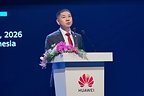
Leon Wang, President of Huawei Data Communication Product Line, noted, “The global AI wave is reshaping every industry. This is driving networks toward an AI-centric paradigm built on four pillars: lossless compute to maximize token efficiency; integrated sensing and communications to quickly empower the physical world with AI; full-scope security to effectively address AI-driven novel threats; and high-level network autonomy to ensure always-on services.”

Zac Chow, Vice President of Huawei Asia Pacific Enterprise Sales Dept, said, “As models compete, tokens surge, and agents act autonomously, applications will become increasingly intelligent and run on unified platforms. Networks will also become AI-native, serving as the backbone of intelligent agents. Huawei is building an AI-centric converged network, working with partners to provide government, finance, Internet, and other industry customers with a network foundation that delivers high-efficiency, lossless transmission, and ultra-fast application experiences. This accelerates industry intelligence and shapes a more connected, intelligent future for Asia-Pacific.”

The boom in AI agents brings challenges to network stability and security. To address this, John Cai, Vice President of Huawei Data Communication Product Line, noted, “Huawei has upgraded its Xinghe Intelligent Network Solution under a new paradigm of ‘Secure and Intelligent Connectivity.’ First is an intelligence upgrade, expanding AI beyond O&M throughout the entire network. Second is a security upgrade, advancing from single-point defense to end-to-end protection that deeply converges network and security. Through these architectural upgrades, we are determined to build the solid connectivity foundation for every enterprise in the Agentic AI era and help every industry move forward steadily amid the AI wave.”

Huawei’s upgraded Xinghe Intelligent Network Solution covers Xinghe AI Fabric 2.0, Xinghe Intelligent WAN, Xinghe AI Campus, and Xinghe AI Network Security.

Xinghe AI Fabric 2.0

To address service stability challenges in multi-vendor network environments, Huawei has upgraded its StarryWing Digital Map and Rock-Solid Architecture with many AI technologies. Specifically, xFlow technology enables intelligent full-flow analysis, which facilitates fault demarcation within one minute, eliminating customer concerns. Meanwhile, the AI Eagle-Eye Engine delivers real-time visibility into the quality of 200,000 service flows, and completes fault root-cause analysis in minutes, greatly enhancing data center network resilience.

Tailored for AI computing scenarios, Huawei’s Hyper-Converged Fabric (HCF) achieves a network-wide throughput of over 98% while boosting inference Tokens Per Second (TPS) by 20%. Equipped with iFlashboot 2.0, Huawei’s Xinghe AI computing switches enable device reboots in just 5 seconds, ensuring uninterrupted services. Furthermore, StarryLink optical modules can detect fiber contamination and looseness issues within one minute, slashing inference interruption events by 90% and accelerating inclusive AI through ultra-efficient networks. 

Xinghe Intelligent WAN

Today’s WANs face threats from novel cyberattacks. To address this, Huawei has built a multi-dimensional security defense system that seamlessly extends protection from devices to private lines. Specifically, Huawei’s intelligent security board can identify multi-dimensional anomalies across files, memory, and systems in real time, achieving precise defense against Advanced Persistent Threats (APTs). Unlike traditional solutions that require external Quantum Key Distribution (QKD) devices, Huawei’s QKD quantum security board, the first of its kind in the industry, can be directly installed on a router, cutting overall capital expenditure by over 60% and helping build highly resilient, quantum-resistant WANs.
For home broadband, the proliferation of encrypted traffic causes uncontrollable user experience and rising customer complaints and churn. Huawei addresses this with the Xingluo Identification Engine, which can identify encrypted traffic at over 95% accuracy. Plus, user tags and intelligent customer profiling algorithms ensure 90% accuracy in customer acquisition, helping sharpen the competitive edge in home broadband.

Xinghe AI Campus

Huawei’s Xinghe AI Campus Solution powers enterprise digital transformation with many innovations. On the wireless front, Wi-Fi 7 Advanced multi-AP coordination doubles performance, while full-series multi-GE switches and flexible right-to-use (RTU) licensing slash TCO by over 30%. With regard to security, AI clustering–based endpoint identification achieves 95% accuracy in identifying dumb terminals, and smart anomaly detection (SmartAD) blocks anomalies in seconds. Wi-Fi Shield and Post-Quantum Cryptography (PQC) secure connections, Wi-Fi Channel State Information (CSI) sensing technology enables iGuard APs to safeguard privacy 24/7. As for network O&M, AI digital humans offer 24/7 assurance for campus networks, and AI sensing-capable APs enable real-time monitoring. Powered by multi-objective reinforcement learning algorithms, 80% of faults are autonomously resolved within 30 seconds, creating the industry’s first network autonomy solution.

Xinghe AI Network Security

According to research, 71% of enterprises in Asia-Pacific view AI as their top data security concern, and 81% have experienced API security incidents. To counter this, Huawei proposes ‘fighting AI with AI’ and has upgraded its AI firewall with a three-layer protection architecture. Specifically, a built-in AI Core can detect unknown threats at 95% accuracy, twice the industry average performance. HiSec AI-Guard, powered by a large language model semantic analysis engine, accurately identifies attacks such as prompt injection with a detection rate exceeding 95%. Together, these capabilities establish a robust security baseline for the intelligent era.

Huawei also unveiled over 20 new eKit SME Network products tailored for SMEs. Highlights include AR580 (a secure converged gateway for offices), S630 (a 10GE all-optical switch), and AP637H & DF10 (a spycam-detecting product portfolio)—all delivering major upgrades in both security and performance. These new offerings are ideal for scenarios like intelligent offices, retail stores, education, and hotels, providing SMEs with a brand-new experience in secure, intelligent connectivity.

At the event, Huawei, together with industry customers and partners across Asia-Pacific, jointly released the Huawei AI Firewall (AIFW) Technology White Paper and the High-Quality 10 Gbps AI Campus Technical and Standard White Paper. These publications outline the technology evolution and industry development path for AI firewalls while providing systematic guidance for building intelligent, secure AI campuses.

Looking ahead, Huawei will remain committed to its “AI for All, All on Secure IP” vision, continuously upgrading its Xinghe Intelligent Network Solution under the philosophy of “Secure and Intelligent Connectivity” to stride into the intelligent era together with customers and partners.

View original content to download multimedia:https://www.prnewswire.com/apac/news-releases/huawei-unveils-upgraded-xinghe-intelligent-network-under-the-secure-and-intelligent-connectivity-philosophy-to-advance-industrial-all-intelligence-in-asia-pacific-302851146.html

SOURCE Huawei

Continue Reading

Trending