Connect with us

Technology

AI Project Setbacks Are Often Mistaken for Failure, Finds Info-Tech Research Group

Published

on

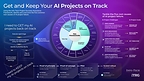
As organizations accelerate AI adoption under pressure to deliver measurable results, many struggle to determine whether AI initiatives are truly failing or simply encountering predictable obstacles. New insights from Info-Tech Research Group identify five root causes of AI project failure and provide a structured framework to help leaders identify challenges, determine whether recovery is possible, and keep future AI projects on track. The firm’s blueprint, Get and Keep Your AI Projects on Track, equips IT leaders with practical tools and readiness assessments to improve AI project outcomes.

ARLINGTON, Va., Aug. 17, 2026 /PRNewswire/ — Rising reports of AI project failure have intensified scrutiny around AI investments, making it increasingly difficult for IT leaders to determine whether struggling initiatives should continue, change course, or stop altogether. To help organizations navigate these decisions, Info-Tech Research Group has recently published its Get and Keep Your AI Projects on Track blueprint, which helps evaluate struggling initiatives and establish practices that support future AI project success.

According to Info-Tech’s research, AI projects face a more intense set of challenges than traditional IT initiatives. While organizations often interpret project setbacks as signs of failure, many AI initiatives face predictable challenges tied to rapidly evolving technology, changing expectations, governance requirements, and adoption barriers.

“Many of the obstacles organizations are encountering today are temporary growing pains rather than permanent barriers to AI success,” says Jenn Aswald, research analyst at Info-Tech Research Group. “IT leaders need to understand which issues require intervention and which will diminish as AI capabilities, governance practices, and organizational experience mature.”

Key Challenges IT Leaders Face in AI Project Delivery
Info-Tech’s blueprint organizes the most common causes of AI project failure into the following five root cause categories:

Rapid obsolescence erodes project relevance. AI capabilities evolve quickly, creating the risk that solutions become outdated before implementation is complete.Value gaps limit business outcomes. Organizations often struggle to translate AI capabilities into measurable business value and sustained operational impact.Completion challenges delay progress. Without structured start, scale, and closure criteria, AI projects can remain in prolonged states of uncertainty.Fierce opinions complicate decision-making. Conflicting stakeholder perspectives can slow sponsorship alignment and hinder effective governance.Adoption resistance reduces value realization. Previous low-value AI experiences can undermine trust, limit engagement, and reduce successful adoption.

Info-Tech’s Three-Phase Approach to Getting and Keeping AI Projects on Track
To address these challenges, the Get and Keep Your AI Projects on Track blueprint outlines a structured three-phase approach that helps organizations assess struggling initiatives, determine the best path forward, and keep future AI projects on track.

Phase 1: Assess Current State. Evaluate project health, conduct rapid triage, and conduct a root cause analysis to identify the obstacles preventing project success.

Phase 2: Diagnose, Decide, and Act. Prioritize obstacles, determine whether recovery is realistic, and build a roadmap that aligns resources to the most critical remediation efforts.

Phase 3: Keep Future AI Projects on Track. Apply lessons learned, establish readiness checks, and implement practices that reduce the likelihood of future project failure while improving long-term outcomes.

The firm’s Get and Keep Your AI Projects on Track blueprint includes practical resources that help organizations assess struggling AI initiatives, capture lessons learned, and apply those insights to future projects. By using Info-Tech’s approach, IT leaders can improve project relevance, strengthen business value realization, reduce unnecessary costs, and keep AI projects on track from initial concept through scaled rollout.

For exclusive and timely commentary from Info-Tech’s experts, including Jenn Aswald, and for access to the complete Get and Keep Your AI Projects on Track blueprint, please contact pr@infotech.com.

About Info-Tech Research Group
Info-Tech Research Group is the “get things done” partner for over 30,000 IT, HR, and marketing leaders worldwide. The fastest growing research and advisory firm, Info-Tech enables leaders to make well-informed decisions and transform their organizations through AI, strategic foresight, step-by-step methodologies, practical tools, industry-leading advisory, and training programs. For nearly 30 years, tens of thousands of private and public organizations have trusted Info-Tech to lead their most important initiatives through periods of change and deliver outcomes that truly matter. 

To learn more about Info-Tech’s HR research and advisory services, visit McLean & Company, and for data-driven software buying insights and vendor evaluations, visit the firm’s SoftwareReviews platform. 

Media professionals can register for unrestricted access to research across IT, HR, and software, and hundreds of industry analysts through the firm’s Media Insiders program. To gain access, contact pr@infotech.com.

For information about Info-Tech Research Group or to access the latest research, visit infotech.com and connect via LinkedIn and X. 

View original content to download multimedia:https://www.prnewswire.com/news-releases/ai-project-setbacks-are-often-mistaken-for-failure-finds-info-tech-research-group-302853034.html

SOURCE Info-Tech Research Group

Continue Reading
Click to comment

Leave a Reply

Your email address will not be published. Required fields are marked *

Technology

The Apex Institute Launches The 1% Move: $300K Tech Careers

Published

on

By

The 1% Move is a weekly podcast from The Apex Institute, launching Tuesday, August 18, 2026. Host Tayo Lusi interviews cloud engineers who moved from roughly $120,000 to $300,000 and above, and breaks down the skill, proof and positioning changes that moved their pay. New episodes post weekly.

BOWIE, Md., Aug. 17, 2026 /PRNewswire/ — Two things are true in tech right now. Workers keep reading about layoffs, and raises at many companies have settled near three percent. At the same time companies are spending heavily on cloud systems and on the infrastructure that artificial intelligence runs on. Those systems need people to build them, secure them and keep them online, and employers say those roles are hard to fill.

So skilled workers feel replaceable while employers cannot find the skills they need. The 1% Move exists to talk about that gap, and what a working professional can do about it.

Why does The 1% Move exist now?

Because the pay gap in tech is no longer about talent. Two engineers with the same skills can sit $150,000 apart, and the difference is usually what they can prove and how they present it. The show exists to make that difference visible, episode by episode, with people who already did it.

“Most people in tech are not underpaid because they lack skill,” Lusi said. “They are underpaid because nobody taught them how to position it.”

What does each episode cover?

Each episode is one guest and one real story. Recurring topics include:

Cloud engineering as the highest income leverage skill in techPositioning, meaning how to present the work you already doWhat to actually learn, and what to skipInterview strategy for senior and staff level rolesOffer negotiation, including what to say when a number comes in low

Episodes post weekly and mix guest interviews with solo breakdowns. The show is listed under Business and Careers and is recorded in English.

Who hosts the show?

Tayo Lusi, founder of The Apex Institute, an IT career training company in Lanham, Maryland. Lusi started in a help desk role at $55,000 a year, moved into cloud engineering, and now trains others on the same path. The company works with established tech professionals already earning $100,000 to $200,000. This is not a beginner coding class. The listener the show has in mind already works in tech and has already been passed over for the raise.

What results have students reported?

Guests are students from the program. Across 41 students, reported job offers now total more than $11 million. Individual results vary and are not typical. Reported results include:

Isaac: laid off from Amazon, then about $1.5 million in total offersChristopher: $155,000 to roughly $1.1 million across six offers in four to five monthsGreg: $635,000 in offers in 49 daysCleo: $65,000 to $601,000 while working two cloud rolesMalcolm: hospital worker at $40,000 to cloud engineer at $100,000

Each guest walks through what they changed, in order, and how long it took. They are also asked what did not work. Lusi says the failed attempts teach more than the wins.

“I do not treat $500K as the ceiling. I treat it as the baseline for someone with the right skill and the right positioning,” Lusi said. “The show is me proving that out loud, with real people and real offer letters.”

Where does AI fit into this?

The show takes a clear position on artificial intelligence. Lusi says the popular fear has the story backward. AI runs on infrastructure, and infrastructure needs people who understand cloud platforms, cost, security and reliability. In his view the technology is creating demand for that work, not erasing it. Federal projections agree on direction: the U.S. Bureau of Labor Statistics expects computer and information technology employment to grow faster than the average for all occupations.

For more on where that money is going, read Where AI Spending Is Actually Going in 2026 and Why the Traditional Tech Job Is Disappearing.

How do you listen to The 1% Move?

The first episode is available Tuesday, August 18, 2026, on Apple Podcasts, Spotify and other major platforms. Related video breakdowns are posted on YouTube at techwithtayo. Free career resources and episode notes are available at apexedu.io. If you want the pay side first, start with why the 3% raise is dead and what skilled engineers get wrong in technical interviews.

Take the next step

Listen to episode one on Tuesday, then find out what your own skills are worth. Book your free career strategy call at pages.apexedu.io/opt-in/

About The Apex Institute

The Apex Institute is an IT career training company based in Lanham, Maryland. The company trains working tech professionals in cloud engineering, DevOps and AI infrastructure, with a focus on positioning, proof of skill, and interview and offer strategy. Students have reported more than $11 million in job offers to date. Individual results vary and are not typical.

Media Contact
Tayo Lusi
The Apex Institute
contact@apexedu.io
apexedu.io

View original content:https://www.prnewswire.com/news-releases/the-apex-institute-launches-the-1-move-300k-tech-careers-302852511.html

SOURCE The Apex Institute

Continue Reading

Technology

Novi AMS Launches Amplify: AI That Already Knows Your Association

Published

on

By

Amplify is the AI intelligence layer built into Novi AMS and designed specifically for associations, giving teams predictive insights, answers from their own data, and trusted context inside the AI tools they already use

ORLANDO, Fla., Aug. 17, 2026 /PRNewswire/ — Novi AMS today announced Amplify by Novi AMS™, the AI layer built into Novi AMS and designed specifically for associations. Amplify combines an association’s live Novi data with association-specific context and AI capabilities to help staff get better answers, identify what needs attention and move work forward.

Novi AMS Launches Amplify: AI That Already Knows Your Association

Rather than asking staff to teach a general-purpose AI tool how their organization works every time they use it, Amplify starts with something those tools don’t have on their own: association context.

That means understanding member types and renewal cycles. Knowing that committee participation matters. Understanding how events, transactions and member history fit together. And, importantly, working with the live data an association already has in Novi.

Amplify brings that context to a growing set of capabilities that includes machine learning, conversational AI, MCP integrations, AI agents, automation, and fraud protection, all applied to the everyday work of associations.

AI Is Smart. It Just Doesn’t Know Your Association.

Association professionals don’t need another reason to experiment with AI. Most have already seen what tools like ChatGPT and Claude can do.

The problem is that those tools don’t know an association’s specifics.

They don’t know its member types, when its renewal season starts or how its dues are structured. They don’t know whether someone is a longtime member, a first-year member, a committee volunteer, or someone who quietly stopped participating two years ago.

That’s not a knock on general AI. Those tools are built to know a lot about almost everything. Amplify is AI with built-in context for that association.

“AI is moving incredibly fast, but associations shouldn’t have to become AI experts just to benefit from it,” said Pete Zimek, CEO of Novi AMS. “We built Amplify to meet association professionals where they are. Give them better answers. Help them spot things sooner. Take some of the tedious work off their plate. And do it in a way that understands their members and their organization.”

What Makes Amplify Different From General AI?

Association context is the difference.

Amplify was shaped by more than 20 Certified Association Executives (CAEs) and other association experts. Their experience helped Novi’s product and engineering teams account for the things that make association data different: renewal cycles, member types, committees, events, governance, and the many relationships between them.

Amplify combines association expertise with the organization’s own live Novi data.

Together, those two layers of context give AI a much better starting point. Staff don’t have to continually explain how their organization works or rely on static exports and disconnected spreadsheets to provide the background.

“Claude and ChatGPT are remarkable tools. We’re not trying to recreate or replace them,” said Pete Bernardo, VP of Product at Novi AMS. “Amplify adds the missing layer: association expertise, live member data, and the intelligence to know which data matters for the question you’re asking. That combination is what makes the difference.”

What Can Amplify Actually Do?

Amplify is an AI layer that runs throughout Novi AMS, not a standalone chatbot or feature. It brings together predictive machine learning, conversational AI, MCP integrations, automation, AI agents, and fraud protection, all grounded in an association’s Novi data and workflows.

Amplify is organized around five areas: Predict, Ask, Connect, Act, and Secure.

Predict: See Which Members Need Attention Before They ChurnMember Health™ is a predictive retention tool that uses machine learning to flag which members need attention before renewal season, and it takes the bias out of traditional engagement scoring. Evaluating nearly 100 statistically validated signals, it sorts members into On Track, At Risk, or New Members, giving staff a prioritized place to start outreach while there’s still time to strengthen the relationship

Ask: Allow Staff to Talk to Their Association Data

Novi Navigator™ is a conversational AI assistant built into Novi AMS that lets association staff ask questions and get answers from their live Novi data.

Staff can ask questions such as:

Which board members aren’t registered for our upcoming event?Who are our most engaged members?I’m walking into a meeting with this member. What should I know?

Navigator explains what it finds and flags when the data needed to answer a question isn’t available rather than guessing.

Connect: Your Data. Your AI. Fully Connected

Novi Connect™ takes live Novi data and Amplify’s association context and connects them to compatible AI tools such as Claude,ChatGPT, and others.

Novi Connect uses Model Context Protocol (MCP), a standard way for AI tools to securely connect with outside systems. Instead of repeatedly exporting and uploading static files, teams can use trusted Novi data and association context within the AI tools they prefer.

That makes it possible to use association data for board reports, executive summaries, and more complex workflows that combine Novi data with other tools and information.

Act: Turn Insights into Prepared Workflow and Actions

Novi Actions™ is an AI-assisted workflow capability in active development that will prepare work such as member outreach, follow-up recommendations, activity summaries, and meeting briefs for association staff to review and approve.

Amplify’s Act capabilities also include SiteMaid™, a Novi-built AI tool that helps clean, structure, and prepare legacy website content during onboarding.

As Amplify’s agentic capabilities expand, the goal is to move from identifying an opportunity or answering a question to preparing the next step.

The human stays in charge.

Secure: Association-Aware Protection Against Fraud and Bots

Secure is the protection pillar of Amplify, bringing AI-powered, association-aware fraud and bot protection to Novi.

Because Novi understands normal association activity, including event registration, membership renewal, payments, and profile updates, these protections can account for how associations and their members interact with the platform.

Secure helps protect associations from fraudulent registrations, payment abuse, automated form submissions, bot traffic, and other suspicious activity.

AI Built Around Association Data and Workflows

For many associations, adopting new technology isn’t as simple as turning on a new tool. Staff are already stretched thin, institutional knowledge can live in multiple places, and introducing another disconnected system can create as much work as it saves.

Amplify is designed around a different idea: put AI where the data and work already live. Staff don’t need to become data scientists or prompt engineers to use it.

They just need to know their association.

Availability

Amplify is available to Novi customers as part of their standard subscription. Customers receive a monthly balance of included Amplify credits and can purchase additional credits as needed.

Member Health and Novi Navigator are available now. Novi Connect is currently in beta, and Novi Actions is in active development. Additional Amplify capabilities will continue to roll out over time.

Learn more about Amplify at www.noviams.com/amplify

About Novi AMS

Novi AMS is association management software built for associations, by associations. Its founding mission is simple: associations create change, and Novi exists to amplify it. Naming the company’s AI layer Amplify gives that mission a name with intentional AI built on association expertise, in service of the work associations were already doing

Designed for trade associations and professional societies using QuickBooks, Novi combines association management software, websites, and integrated financial tools in one platform. Since 2015, Novi has continued to develop its software in close collaboration with the association professionals who use it, bringing that same partnership-driven approach to customer support.

Learn more at https://www.noviams.com/.

Media Contact

Novi AMS
Jennifer Norman, CAE
jennifer@noviams.com

View original content to download multimedia:https://www.prnewswire.com/news-releases/novi-ams-launches-amplify-ai-that-already-knows-your-association-302853060.html

SOURCE Novi AMS

Continue Reading

Technology

Real Estate Expert Lizzy Conroy of McLean, VA Shares Expert Strategies for Marketing Luxury Homes Locally and Internationally for HelloNation

Published

on

By

MCLEAN, Va., Aug. 17, 2026 /PRNewswire/ — How can sellers in the competitive D.C. real estate market attract both local and international buyers to their high-end properties? According to a HelloNation article, Lizzy Conroy of HBC Group at SERHANT. explains how successful luxury home marketing relies on storytelling, technology, and strategic visibility. Her insights detail how agents can combine local expertise with global reach to position luxury listings for maximum appeal and long-term value.

Conroy begins by describing that luxury home marketing is equal parts art and precision. In the D.C. area, where architectural variety meets international interest, each property must be presented as more than a home, it must represent a lifestyle. Buyers at this level look for distinction, comfort, and privacy, and marketing must reflect those values through both imagery and narrative. According to the HelloNation article, defining a clear identity for each listing is the first step in creating a strong luxury property strategy.

That identity is built around what makes the home unique. Whether a residence offers skyline views, award-winning architecture, or a serene garden setting, Conroy emphasizes that every element contributes to a cohesive story. Skilled agents distill those details into a consistent message that conveys how the property lives, not just how it looks. This storytelling approach extends across every touchpoint, written descriptions, photographs, and cinematic video ensuring that buyers experience a unified sense of quality and character.

Digital presentation forms the foundation of modern luxury home marketing. Conroy highlights the growing importance of SEO microsite development, allowing agents to showcase properties on independent platforms tailored for depth and detail. Unlike standard listing pages, these microsites feature full image galleries, floor plans, and lifestyle narratives that reflect the property’s individuality. When combined with cinematic video production and drone imagery, sellers gain the advantage of motion, perspective, and emotion/visual elements that bring a home’s story to life.

The article further explains that digital reach is amplified through targeted campaigns on social media and curated listing syndication. These strategies are designed to attract qualified international buyers while maintaining exclusivity. Platforms optimized for high-net-worth audiences ensure that properties reach decision-makers relocating for diplomatic, corporate, or investment reasons. Conroy notes that global reach in luxury home marketing depends on combining digital visibility with trust, allowing clients abroad to explore a property confidently.

Virtual engagement plays an increasingly vital role in this process. The HelloNation article details how virtual tours and private live walk-throughs help international buyers experience properties in real time, without geographic limitations. This hybrid approach, blending accessibility with discretion, has become a cornerstone of modern luxury property strategy. It provides convenience while preserving the sense of privacy and selectivity that high-end clients expect.

Locally, Conroy explains that presentation and perception are just as influential as technology. Within D.C. real estate and its surrounding markets, the reputation of the listing agent shapes how peers and buyers respond to a property. Exclusive showings, invitation-only events, and personalized open houses can elevate interest and reinforce a home’s elite positioning. These experiences mirror the sophistication conveyed in digital materials, creating a seamless transition from online interest to in-person connection.

Professional staging also plays a decisive role in luxury home marketing. The HelloNation article emphasizes that carefully curated interiors, using refined lighting, neutral palettes, and intentional design, help potential buyers visualize their lives within the space. Each visual and emotional cue reinforces the property’s story, ensuring consistency across digital and physical impressions. This attention to detail strengthens both perceived and actual value, contributing to faster and more confident sales outcomes.

Behind every successful campaign, Conroy underscores, is a collaborative team. Multi-agent coordination expands exposure, improves response time, and ensures that every inquiry receives immediate, professional attention. The best results, she explains, arise from blending data analytics with personal insight. Understanding what motivates high-end buyers, beyond their search criteria, allows agents to transform visibility into action. In luxury property strategy, every touchpoint counts.

The HelloNation article concludes that effective marketing is not about reaching the most people but about connecting with the right ones. Luxury home marketing thrives on authenticity, consistency, and expertise. When a property’s story is told with both clarity and reach, it resonates beyond borders, appealing to local and international buyers alike. For sellers in D.C. real estate, this alignment of narrative, technology, and global reach creates opportunities that extend far beyond traditional boundaries.

Expert Strategies for Marketing Luxury Homes Locally and Internationally features insights from Lizzy Conroy, Real Estate Expert of McLean, Virginia, in HelloNation.

About HelloNation
HelloNation is a premier media platform that connects readers with trusted professionals and businesses across various industries. Through its innovative “edvertising” approach that blends educational content and storytelling, HelloNation delivers expert-driven articles that inform, inspire, and empower. Covering topics from home improvement and health to business strategy and lifestyle, HelloNation highlights leaders making a meaningful impact in their communities.

View original content to download multimedia:https://www.prnewswire.com/news-releases/real-estate-expert-lizzy-conroy-of-mclean-va-shares-expert-strategies-for-marketing-luxury-homes-locally-and-internationally-for-hellonation-302852999.html

SOURCE HelloNation

Continue Reading

Trending