Technology
MyyShop Advances Creator Co-Creation and Learning Initiatives to Help Shape a More Inclusive Creator Economy
Published
6 days agoon
By
Through creator collaboration, responsible AI exploration, education and community development, MyyShop is building toward an ecosystem where creators can grow their capabilities and help shape their future.
LOS ANGELES, Nov. 11, 2026 /PRNewswire/ — MyyShop, an AI-powered global creator marketing platform under DHgate Group, is advancing creator co-creation and learning initiatives as part of its evolution toward a creator-centered growth ecosystem. Building on online and in-person discussions, the company is expanding how creators can contribute to future products, learning resources, community experiences and collaboration models.
The initiatives reflect a broader ambition: to give creators a meaningful role in shaping the systems that influence their livelihoods and long-term development. Alongside connecting creators with commercial opportunities, MyyShop is exploring how their experience can inform the technologies they use, the ways they work together and the support available throughout their careers.
Across creator collaboration, responsible AI, community development and education, MyyShop is working toward a shared principle: creators’ perspectives should help guide how the creator economy develops. By connecting those perspectives with product exploration and practical support, the company aims to create value for its own community while contributing insights relevant to the wider industry.
Building Long-Term Value With Creators
A creator’s commercial potential extends beyond a follower count or the performance of an individual campaign. It also rests on creative judgment, audience understanding, professional reliability and the ability to adapt as platforms and technologies change.
Developing those capabilities takes time. Creators need opportunities to learn, exchange experience and make informed decisions about their work. They also bring knowledge that platforms, brands and technology developers can use to build more relevant services: how content is produced, where collaboration breaks down and what makes an opportunity workable.
MyyShop’s approach brings these needs together. Through learning and commercial opportunities, creators can strengthen their capabilities. Through co-creation, they can contribute their experience to the design of future support.
This represents a broader role for MyyShop as it develops beyond connecting individual opportunities toward supporting a more continuous creator journey. Commercial participation, education and community can reinforce one another, helping creators build the confidence and professional relationships needed for sustained development.
For brands, this approach can support a better understanding of the people behind the content. Creators who understand campaign expectations and can communicate their strengths are better positioned to assess relevant opportunities and establish productive working relationships.
Making Co-Creation a Continuing Process
MyyShop is working to develop co-creation into a continuing process spanning needs identification, concept development, testing and feedback.
Discussions have explored creator collaboration, AI applications and communities that support growth. These conversations provide space for creators to describe challenges in their own terms, question proposed approaches and suggest alternatives before future solutions are finalized.
Early participation gives creators an opportunity to help define which problems deserve attention and what useful outcomes would look like. Their role can extend from responding to an existing brief to influencing the thinking behind a product or project.
The discussions have already produced specific ideas and design considerations. In a session on creator collaboration, participants proposed formats including joint product reviews, podcasts and collaborative fashion experiences. An AI-focused session surfaced questions about content control and authenticity, while community discussions explored how creators could contribute as peer supporters and potential community hosts.
MyyShop intends to build continuity between these exchanges and subsequent development. Depending on project readiness, further participation may include reviewing concepts, testing selected ideas or providing feedback on learning and community experiences.
This process can also reveal differences between how organizations imagine creators work and how they actually work. Understanding those differences offers a more grounded basis for designing services, setting expectations and building trust across the creator economy.
Helping Creator Connections Become Meaningful Collaboration
A creator collaboration may begin with a shared interest, complementary expertise or a content idea. Turning it into a workable project requires further decisions: what participants want to achieve, how responsibilities will be shared and how the collaboration can move forward.
MyyShop’s early discussions generated a range of possible formats, demonstrating creators’ willingness to contribute ideas shaped by their interests and experience. The subsequent review also identified the need for clearer next steps to help those ideas progress.
That insight is informing the company’s exploration of collaboration support beyond initial introductions. Potential approaches include helping creators clarify shared objectives, exchange ideas and organize participation around manageable projects.
The value extends beyond audience growth. Collaboration can expose creators to different creative methods, strengthen their professional networks and provide opportunities to learn through practice. Creators at different stages can contribute different strengths, from fresh perspectives to experience navigating commercial requirements.
For the wider industry, these explorations can offer insight into the conditions that make creator-to-creator collaboration useful and sustainable. MyyShop’s focus is on understanding what helps people work together effectively and what support is needed to carry an idea into action.
Bringing Creator Perspectives Into Responsible AI Exploration
AI is another area where creator participation can help shape more relevant development.
In a MyyShop co-creation session focused on AI-generated digital avatars, participants discussed potential efficiency benefits alongside concerns about emotional connection, individual style and control over their content and representation.
Some saw possible uses when time or production capacity was limited. Others questioned whether digital avatars could convey the personal qualities and product experiences that audiences expect from a creator.
These differences highlighted an important distinction between making content production faster and making an AI tool acceptable to the person using it. Technical capabilities alone do not determine whether a tool fits a creator’s work, audience or expectations.
The resulting review identified creator review and editing options, alongside preservation of individual voice and style, as considerations for further product exploration. It also highlighted the value of examining different use cases and levels of creator experience in subsequent testing.
These findings provide a practical basis for understanding attitudes toward AI. They help MyyShop examine where creators see opportunities, where they remain cautious and what choices they expect to retain.
The implications also reach beyond the company’s own exploration. Feedback from participating creators can contribute perspectives to the broader discussion around responsible AI in the creator economy, particularly on authenticity, transparency and control over how a creator’s identity or work is represented.
For MyyShop, responsible exploration begins with listening. Creators’ confidence in a technology deserves consideration alongside its efficiency, and their experience can help frame the questions that further development needs to address.
Connecting Platform Knowledge With Broader Creator Skills
Education forms another part of MyyShop’s long-term creator support, addressing both practical platform participation and broader content capabilities.
Through the MyyShop Creator Academy, the platform offers instructional videos to help creators navigate MyyShop and prepare for relevant brand opportunities. Topics include completing profile information, using platform features, understanding collaboration processes and presenting relevant experience to potential brand partners.
These resources address an important part of participation: knowing what to do next. A creator may have strong content but need clearer guidance on how to communicate their capabilities, complete required information or understand the steps involved in a collaboration.
By making those processes easier to understand, MyyShop aims to help creators participate with greater clarity and readiness, supporting stronger preparation for opportunities that match their capabilities.
Complementing this platform guidance, MyyShop offers creator education developed with MediaLabs, covering topics such as product research, video hooks and conversion-focused content.
Together, these resources address different learning needs. MyyShop’s own tutorials help creators navigate platform processes and collaboration preparation, while partner-led courses introduce additional methods they can examine and apply in their content work.
Creator feedback can help identify which explanations need more detail and what examples would make a lesson easier to use. This creates an opportunity for learning content to develop alongside the people it serves.
Developing Community Around Participation and Growth
Learning and collaboration also depend on having places where questions can be raised and experience can be shared over time.
Across two community co-creation sessions involving eight creators, participants discussed practical ways to support growth, including skill exchanges, content feedback, peer support and connections with brands. Several also contributed ideas on member recruitment, community activities and the responsibilities of creator hosts.
The discussions emphasized the importance of ongoing interaction and mutual contribution. Participants envisioned communities where members could share knowledge, offer feedback and help one another navigate the challenges of creative work.
The resulting proposal outlined a small Discord pilot jointly hosted by creators, with MyyShop providing project coordination and relevant resources. Further conversations were proposed to assess participants’ availability, responsibilities and support needs before moving into a pilot.
Alongside this exploration, MyyShop is developing its Discord community as a channel for creator connection, learning discussions and continued dialogue. Opportunities for learning, feedback and collaboration will be introduced in stages.
The ambition is to create continuity between different parts of the creator experience. A question raised while learning may identify a need for clearer guidance. A conversation with peers may generate a collaboration idea. Feedback on an early concept may help determine what deserves further testing.
Community can also support development beyond immediate content performance. Through exchange with others, creators can reflect on their direction and build relationships that support professional growth. As initiatives develop, MyyShop will explore ways for members to contribute according to their interests, experience and availability.
Shaping the Next Stage Together
“Creators should have a voice in the systems that shape their working lives,” said Jade, Head of Marketing at MyyShop. “Their experience can help us understand what meaningful support looks like, from clearer learning resources to more useful collaboration tools and responsible applications of AI. We want to build relationships in which creators can develop their capabilities and contribute to what comes next. That is central to our vision of a creator-centered growth ecosystem.”
MyyShop’s next steps include refining ideas informed by creator discussions, assessing suitable pilot opportunities and developing participation pathways across co-creation, learning and community initiatives.
Depending on each project’s scope and readiness, creators may have opportunities to contribute to feedback sessions, concept reviews, early testing or educational content evaluation. Selected initiatives may also create scope for ongoing community contributions and potential commercial collaboration where there is a suitable fit.
Through this work, MyyShop aims to broaden the ways creators can participate in its ecosystem: as people accessing opportunities, as learners and collaborators, and as contributors whose experience helps inform future development.
The company also hopes that lessons from these explorations can contribute to a wider understanding of creator needs. Listening throughout development can help the industry build products and relationships that are more responsive to the people at its center.
Creators interested in sharing their perspectives or learning about future co-creation projects, pilots and community opportunities can contact MyyShop at [support@myyshop.com].
For more information about MyyShop, visit www.myyshop.com.
About MyyShop
MyyShop is an AI-powered global creator marketing platform under DHgate Group, connecting creators, brands and commercial opportunities. Drawing on the Group’s cross-border commerce experience, MyyShop supports creator monetization through brand collaborations, affiliate promotion and CPM-based opportunities, with zero platform commission on creator earnings. Through education, co-creation and community development, MyyShop is expanding its support for creators’ capabilities, participation and long-term growth.
Media Contact
Name: Quinn Brown
Title: PR Manager
Email: pr@myyshop.com
Website: www.myyshop.com
View original content to download multimedia:https://www.prnewswire.com/news-releases/myyshop-advances-creator-co-creation-and-learning-initiatives-to-help-shape-a-more-inclusive-creator-economy-302936286.html
SOURCE MyyShop
You may like
Technology
Asia Pacific accounts for a third of the world’s fraud networks as identity fraud grows more complex: Sumsub
Published
3 minutes agoon
November 18, 2026By
The Sumsub Identity Fraud Report finds that one in three fraud network connections in the region emerge only after users pass identity checks, pointing to verified accounts being sold or handed over to fraudsters after onboarding.
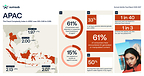
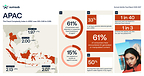
SINGAPORE, Nov. 18, 2026 /PRNewswire/ — Sumsub, the first AI-powered trust infrastructure, has released its Identity Fraud Report 2026-2027*. Now in its sixth edition, the report finds that Asia Pacific (APAC) accounted for a third (33%) of all fraud networks detected globally, more than any other region, and recorded close to a million confirmed fraud attempts, the highest of the six regions.
Fraud networks are coordinated groups of linked identities, accounts and devices run by organized fraudsters. Across APAC, around 1 in 40 approved people (2.4%) are linked to a detected fraud network, and around one-third of these links appear only after they have successfully passed identity verification. This suggests many legitimately verified accounts are later sold or handed over to fraudsters, often for use as money mules: accounts that receive and move stolen funds on a fraudster’s behalf.
Increasingly sophisticated tactics have led Sumsub to the creation of Sumsub’s new Fraud Complexity Index (FCI), which scores each confirmed case on the tooling, coordination and number of techniques behind it. This year, the report finds that the FCI rose from 2.1 to 2.2 globally.
Key APAC findings from the report include:
APAC hotspots for fraud networks: The Philippines recorded the largest number of networks in the region (17% of APAC networks), closely followed by India, while the largest single network was detected in Thailand, with 3,018 linked users.Fraud is becoming more complex: APAC’s FCI rose 14% to 2.09. Hong Kong’s FCI rose 7% to 1.97. APAC businesses also reported fraudster-operated AI agents (11%) more often than any other region.AI agents are adding new exposure: 61% of APAC businesses have detected or suspected fraud involving an AI agent, among the highest levels of any region. APAC businesses lead on limiting agent permissions and on suspending or revoking access, but these controls remain limited: only 15% can suspend or revoke an agent’s access, and 40% verify the human that authorizes one.Deepfake activity is spreading even where overall fraud is declining: Deepfakes rose sharply in Pakistan (+217%), the Philippines (+125%), India (+103%) and Hong Kong (+72%). In Indonesia, the overall fraud rate fell 64% while deepfakes increased 69%.APAC consumers are the most exposed to AI-generated content: 61% of APAC consumers have encountered AI-generated or manipulated content, the highest share of any region. Among those who experienced a fraud attempt, 44% said AI-generated content played a part.Singapore sees fewer, but more complex, attacks: Singapore’s fraud rate fell 36% year-on-year to 1.0%, while its FCI rose 9% to 2.13, above the APAC average. Deepfakes in Singapore fell 37%.Japan has the region’s highest and fastest-growing fraud rate: Japan’s fraud rate rose 219% year-on-year to 5.1%, the highest in APAC.Legitimate AI agents are being turned against businesses: Globally, among businesses that detected or suspected AI-agent fraud, 49% saw a legitimate agent manipulated by malicious instructions, and 30% saw an agent initiate a purchase, payment or transfer.
Verified accounts become building blocks for fraud networks
A single fraudulent account rarely tells the whole story. Fraud networks become visible through shared devices, contact details, payment instruments and document templates that an account-by-account review cannot show. Some of these links appear only after onboarding, as legitimately verified accounts are sold, compromised or otherwise repurposed. Passing KYC confirms an identity at a single point in time, but does not guarantee how an account will be used afterwards.
Businesses recognize the challenge, but few are equipped for it. 29% of APAC businesses say larger linked networks are making fraud harder to detect, the highest share of any region, yet only 25% use fraud network analysis.
In Southeast Asia, organized scam compounds have become highly mobile, relocating sites and reusing the same infrastructure when authorities intervene. Their human cost is significant: by April, Nepal reported that 612 of its citizens had been rescued from online scam centers across Southeast Asia and repatriated.
The impact is felt on both sides of the transaction. Among APAC businesses that experienced fraud, impersonation of a business, employee or supplier was the most commonly reported form of external fraud (42%), the highest of any region, followed by scam-induced payments (40%). Among APAC consumers, 79% experienced fraud in the past 12 months. Half of victims lost money, and 51% of those recovered none of it.
“A scam network is designed to look like a thousand ordinary people doing ordinary things. Every account is verified, and every document is real, because the person holding it was recruited, paid, or coerced into opening it, so nothing trips a wire on its own,” said Erin West, anti-scam advocate, former Deputy District Attorney and founder of Operation Shamrock, who has investigated scam compounds in Cambodia and Thailand. “Look past the person in front of you to the people behind them. The networks already cooperate beautifully with one another, and it’s time we caught up.”
Fraud grows more complex as it shifts across the region
While fraud rates fell in four of six regions globally, the FCI rose in all six. In APAC, it rose 14%, from 1.83 to 2.09.
Rather than rising everywhere at once, fraud is shifting between APAC markets and techniques. Japan’s fraud rate rose 219%, while Singapore’s fraud rate fell 36%, but its FCI rose 9%, above the regional average. In Hong Kong, fraud rate edged up 5% as deepfakes there rose 72%. APAC also leads all regions in the share of businesses saying deepfakes (31%) and synthetic identities (26%) are making fraud harder to detect while QR-code redirection (18%) and device or location manipulation (14%) were also reported more often than anywhere else.
The region also has strong foundations to respond. APAC leads every other region in digital identity wallet adoption: 50% of consumers have used a government digital identity wallet, and 65% say they would be comfortable using one. Banks and financial services remain the most trusted online category, with 74% of APAC consumers reporting high or full trust.
“Fraud in APAC isn’t rising everywhere at once. It is shifting between markets, techniques and stages of the customer lifecycle,” said Penny Chai, Vice President, APAC at Sumsub. “The region is home to some of the world’s most mature digital economies, alongside markets where digital services and organized scam operations are expanding quickly. Those markets are deeply connected, and fraud networks move easily between them. But APAC also has the tools to respond, from progressive regulation to world-leading digital identity adoption and high consumer trust in financial services. The task now is to use them together, so that trust doesn’t end at onboarding.”
Regulators and industry move towards collective action
Regulators across the region are shifting responsibility for scam payments and mule accounts towards the institutions that send, receive or facilitate them, and building new ways to share fraud intelligence. In Singapore, the Protection from Scams Act and the Scams (Countermeasures) and Other Matters Act 2026 give authorities new powers to protect people at risk of being scammed and to disrupt accounts and services linked to scams, while the National Scams List supports the exchange of information on suspicious scam accounts. Hong Kong has created a legally protected mechanism for banks to share information, and Thailand has embedded mule-account controls across banks, payment businesses and crypto operators.
The same collective approach is needed as AI agents take on more tasks. Launched in September, the Sumsub Agentic AI Council brings together cross-sector experts across APAC to develop practical guardrails for AI agents, including agent identity, delegated authority and accountability.
To explore the Sumsub Identity Fraud Report 2026-2027 in full, please download it here: http://sumsub.com/identity-fraud-report-2026/
About Sumsub
Sumsub is the first AI-powered trust infrastructure for compliance operations at scale. It connects identity and business verification, fraud prevention, transaction monitoring, and risk workflows, helping teams reduce manual work and enter new markets.
Trusted by over 4,000 clients across financial services, crypto, mobility, trading, marketplaces, education, and iGaming, including Bybit, Bitpanda, Wirex, Avis, Vodafone, Duolingo, and Kaizen Gaming.
*Methodology
The Sumsub Identity Fraud Report 2026-2027 analyzes more than 5.8 million fraud samples from Sumsub’s internal identity verification and user activity data, comparing 2025 and 2026 across multiple regions and industries. To ensure statistical reliability, only jurisdictions with more than 15,000 verification attempts during the reporting period were included. A network connection refers to a link between an applicant and a detected fraud network at any point in the applicant lifecycle, and is a risk signal rather than proof that the applicant is fraudulent.
The report also draws on Sumsub’s Fraud Exposure Survey 2026, conducted in August 2026 among more than 1,400 fraud and risk professionals and more than 1,500 end users across 21 markets, including Hong Kong, Indonesia, the Philippines, Singapore and Thailand in APAC.
View original content to download multimedia:https://www.prnewswire.com/apac/news-releases/asia-pacific-accounts-for-a-third-of-the-worlds-fraud-networks-as-identity-fraud-grows-more-complex-sumsub-302942447.html
SOURCE Sumsub
Technology
Archbridge Capital Partners Appoints Mark Jones as Chief Executive Officer
Published
4 minutes agoon
November 18, 2026By
Former Wells Fargo Global Head of FX and Co-Head of Macro to lead the firm’s next phase of growth and international expansion
HONG KONG, Nov. 18, 2026 /PRNewswire/ — Archbridge Capital Partners (“Archbridge”), a Hong Kong-based alternative fixed income investment manager focused on private credit, today announced the appointment of Mark Jones as Chief Executive Officer and Managing Partner, effective immediately. The newly created role reflects the firm’s ambition to institutionalise its platform and expand internationally. Jones joins Anthony Leung, Chief Investment Officer, and Jenny Wong, Chief Operating Officer, in the firm’s senior leadership.
Established in 2020, Archbridge has focused on private credit since 2023, expanding its investment offerings during that period. The firm now invests predominantly in secured, short-dated private credit across Asia Pacific, with a focus on disciplined underwriting and regular income distributions, an approach that has resonated with family offices in the region.
Jones brings 28 years of global financial markets experience across London, Hong Kong and New York. He previously served as Global Head of Foreign Exchange and Global Co-Head of Macro at Wells Fargo, where he was a member of the bank’s Management Committee. Earlier, he was Head of Wells Fargo Securities Asia and a Managing Director at UBS, leading FICC Distribution across EMEA and Asia Pacific. Before joining Archbridge, he advised private credit funds and alternative asset managers through Kingswood Capital Solutions and was a Venture Partner at Volution, a UK venture capital firm investing in high-growth fintech and AI companies.
As CEO, Jones will lead Archbridge’s global strategy and international expansion, with a focus on building out the firm, strategic partnerships and technology-led innovation across the investment platform. He will work closely with the firm’s investment and operating leadership.
“Mark has led fixed income businesses at the highest level across three continents,” said Anthony Leung, Chief Investment Officer. “His appointment is consistent with our ambition to significantly broaden both our investor and borrower client base.”
“Archbridge is built on strong relationships and disciplined execution,” said Jenny Wong, Chief Operating Officer. “Mark will help us scale internationally while strengthening our institutional capabilities.”
“Over 25 years in global banking, I have seen the evolving financing needs of businesses across Asia Pacific and the growing opportunity for specialist credit managers,” said Mark Jones, Chief Executive Officer. “Archbridge is well positioned to meet that demand by combining rigorous credit underwriting with enduring investor relationships through an institutional-grade platform.”
ABOUT ARCHBRIDGE CAPITAL PARTNERS
Established in 2020, Archbridge Capital Partners is a Hong Kong-based alternative fixed income investment manager focused on private credit. The firm seeks attractive risk-adjusted returns through disciplined credit underwriting, active portfolio management and capital preservation. Archbridge Capital Partners Limited is licensed by the Hong Kong Securities and Futures Commission for Type 4 (Advising on Securities) and Type 9 (Asset Management) regulated activities. archbridgecap.com
View original content to download multimedia:https://www.prnewswire.com/apac/news-releases/archbridge-capital-partners-appoints-mark-jones-as-chief-executive-officer-302943079.html
SOURCE Archbridge Capital Partners
Asia Pacific accounts for a third of the world’s fraud networks as identity fraud grows more complex: Sumsub
Archbridge Capital Partners Appoints Mark Jones as Chief Executive Officer
Send Rakhi to UK swiftly with UK Gifts Portal
Whiteboard Series with NEAR | Ep: 45 Joel Thorstensson from ceramic.network
Nullmax and Renesas Forge Strategic Partnership to Deliver Competitive ADAS Solutions for the Global Market
Why You Should Build on #NEAR – Co-founder Illia Polosukhin at CV Labs
Whiteboard Series with NEAR | Ep: 45 Joel Thorstensson from ceramic.network
NEAR End of Year Town Hall 2021: The Open Web World, MetaBUILD 2 Hackathon and 2021 recap
Trending
-
Technology5 days agoDomoAI Launches InkoAI Agent – One Sentence to Ready-to-Post Video
-
Coin Market5 days agoDOJ moves to seize $1.2B from Binance hack, disrupts FaceStealer scam
-
Near Videos4 days agoIllia Polosukhin on NEAR as encrypted Ethereum
-
Technology4 days agoInnovative Immunology Biotech Windward Bio Lists on Nasdaq
-
Technology3 days agoThe First Cartridge-Free Smart Waterless Diffuser Is Here. What Would You Fill It With?
-
Near Videos3 days agoBuilders of NEAR: Illia Polosukhin on knowing what your AI agent is running
-
Coin Market4 days agoMicrosoft confirms global outage resolved, rules out cyberattack
-
Coin Market4 days agoMegaETH parent cuts 20% of staff amid restructuring, AI push