
Technology
Dell Technologies Delivers Fourth Quarter and Full Year Fiscal 2024 Financial Results

Published
2 years agoon
By

News summary
Fourth quarter revenue of $22.3 billion and full-year revenue of $88.4 billionFull-year operating income of $5.2 billion and non-GAAP operating income of $7.7 billionFull-year cash flow from operations of $8.7 billionFull-year diluted earnings per share of $4.36 and non-GAAP diluted earnings per share of $7.13Announcing a 20% increase in annual cash dividend to $1.78 per common share
ROUND ROCK, Texas, Feb. 29, 2024 /PRNewswire/ —
Full story
Dell Technologies (NYSE: DELL) announces financial results for its fiscal 2024 fourth quarter and full year. Fourth quarter revenue was $22.3 billion, down 11% year over year. Operating income was $1.5 billion and non-GAAP operating income was $2.1 billion, up 25% and down 1% year over year, respectively. Cash flow from operations was $1.5 billion. Diluted earnings per share was $1.59, and non-GAAP diluted earnings per share was $2.20, up 89% and 22% year over year, respectively.
Revenue for the year was $88.4 billion, down 14% from fiscal year 2023. Operating income was $5.2 billion and non-GAAP operating income was $7.7 billion, down 10% and 11% year over year, respectively. Cash flow from operations for the full year was $8.7 billion. Full-year diluted earnings per share was $4.36, and non-GAAP diluted earnings per share was $7.13, up 35% and down 6% year over year, respectively.
Cash and investments were $9.0 billion, and Dell reached its core leverage target of 1.5x exiting the fiscal year. Dell is increasing its annual cash dividend by 20% to $1.78 per common share, with $0.445 per common share for the first quarterly distribution payable on May 3 to shareholders of record as of April 23.
“We generated $8.7 billion in cash flow from operations this fiscal year, returning $7 billion to shareholders since Q1 FY23,” said Yvonne McGill, chief financial officer, Dell Technologies. “We’re optimistic about FY25 and are increasing our annual dividend by 20% – a testament to our confidence in the business and ability to generate strong cash flow.”
Fourth Quarter Fiscal 2024 Financial Results
Three Months Ended
Fiscal Year Ended
February 2,
2024
February 3,
2023
Change
February 2,
2024
February 3,
2023
Change
(in millions, except per share amounts and percentages; unaudited)
Net revenue
$ 22,318
$ 25,039
(11) %
$ 88,425
$ 102,301
(14) %
Operating income
$ 1,491
$ 1,189
25 %
$ 5,211
$ 5,771
(10) %
Net income
$ 1,158
$ 606
91 %
$ 3,195
$ 2,422
32 %
Earnings per share – diluted
$ 1.59
$ 0.84
89 %
$ 4.36
$ 3.24
35 %
Non-GAAP operating income
$ 2,139
$ 2,170
(1) %
$ 7,678
$ 8,637
(11) %
Non-GAAP net income
$ 1,610
$ 1,322
22 %
$ 5,245
$ 5,727
(8) %
Adjusted free cash flow
$ 1,010
$ 2,267
(55) %
$ 5,607
$ 1,533
266 %
Non-GAAP earnings per share – diluted
$ 2.20
$ 1.80
22 %
$ 7.13
$ 7.61
(6) %
Information about Dell Technologies’ use of non-GAAP financial information is provided under “Non-GAAP Financial Measures” below. All comparisons in this press release are year-over-year unless otherwise noted.
Infrastructure Solutions Group (ISG) delivered fourth quarter revenue of $9.3 billion, up 10% sequentially and down 6% year over year. Servers and networking revenue was $4.9 billion, with sequential growth driven primarily by AI-optimized servers. Storage revenue was $4.5 billion, up 16% sequentially with demand strength across the portfolio. Operating income was $1.4 billion. Full-year ISG revenue was $33.9 billion, down 12% year over year, and full-year operating income was $4.3 billion, down 15% year over year.
Client Solutions Group (CSG) delivered fourth quarter revenue of $11.7 billion, down 5% sequentially and 12% year over year. Commercial client revenue was $9.6 billion, and Consumer revenue was $2.2 billion. Operating income was $726 million. Full-year CSG revenue was $48.9 billion, down 16% year over year, and full-year operating income was $3.5 billion, down 8% year over year.
“Our strong AI-optimized server momentum continues, with orders increasing nearly 40% sequentially and backlog nearly doubling, exiting our fiscal year at $2.9 billion,” said Jeff Clarke, vice chairman and chief operating officer, Dell Technologies. “We’ve just started to touch the AI opportunities ahead of us, and we believe Dell is uniquely positioned with our broad portfolio to help customers build GenAI solutions that meet performance, cost and security requirements.”
Dell continues to expand its portfolio to help customers meet their performance, cost and security requirements across clouds, on premises and at the edge:
Expanded the Dell Generative AI Solutions portfolio with support for the AMD Instinct™ MI300X accelerator in Dell PowerEdge XE9680 servers and the new Dell Validated Design for Generative AI with AMD ROCm™ powered AI frameworks.Introduced new enterprise data storage advancements and planned validation with the NVIDIA DGX SuperPOD AI infrastructure, helping customers quickly access data for AI workloads with Dell PowerScale systems.Announced Dell will have the broadest portfolio of commercial AI laptops and mobile workstations, which feature built-in AI acceleration with the addition of the neural processing unit (NPU). New XPS systems also feature the NPU, helping to improve performance, productivity and collaboration.Forged partnership with Nokia to serve as its preferred infrastructure partner for Nokia AirFrame customers, transitioning them to Dell PowerEdge servers with Dell global services and support. Dell will also offer Nokia’s Digital Automation Cloud solution with Dell NativeEdge to provide a comprehensive, scalable solution for enterprises.
Operating Segments Results
Three Months Ended
Fiscal Year Ended
February 2,
2024
February 3,
2023
Change
February 2,
2024
February 3,
2023
Change
(in millions, except percentages; unaudited)
Infrastructure Solutions Group (ISG):
Net revenue:
Servers and networking
$ 4,857
$ 4,940
(2) %
$ 17,624
$ 20,398
(14) %
Storage
4,475
4,965
(10) %
16,261
17,958
(9) %
Total ISG net revenue
$ 9,332
$ 9,905
(6) %
$ 33,885
$ 38,356
(12) %
Operating Income:
ISG operating income
$ 1,428
$ 1,543
(7) %
$ 4,286
$ 5,045
(15) %
% of ISG net revenue
15.3 %
15.6 %
12.6 %
13.2 %
% of total reportable segment operating income
66 %
70 %
55 %
57 %
Client Solutions Group (CSG):
Net revenue:
Commercial
$ 9,563
$ 10,697
(11) %
$ 39,814
$ 45,556
(13) %
Consumer
2,152
2,664
(19) %
9,102
12,657
(28) %
Total CSG net revenue
$ 11,715
$ 13,361
(12) %
$ 48,916
$ 58,213
(16) %
Operating Income:
CSG operating income
$ 726
$ 671
8 %
$ 3,512
$ 3,824
(8) %
% of CSG net revenue
6.2 %
5.0 %
7.2 %
6.6 %
% of total reportable segment operating income
34 %
30 %
45 %
43 %
Conference call information
As previously announced, the company will hold a conference call to discuss its performance and financial guidance on Feb. 29 at 3:30 p.m. CST. Prior to the start of the conference call, prepared remarks and a presentation containing additional financial and operating information prior to financial guidance may be downloaded from investors.delltechnologies.com. The conference call will be broadcast live over the internet and can be accessed at https://investors.delltechnologies.com/news-events/upcoming-events
For those unable to listen to the live broadcast, the final remarks and presentation with financial guidance will be available following the broadcast, and an archived version will be available at the same location for one year.
Environmental, Social and Governance (ESG)
Our Environmental, Social and Governance (ESG) efforts focus on driving positive impact for people and our planet while delivering long-term value for our stakeholders. ESG resources can be accessed at https://www.dell.com/en-us/dt/corporate/social-impact/reporting/esg-governance.htm
About Dell Technologies
Dell Technologies (NYSE:DELL) helps organizations and individuals build their digital future and transform how they work, live and play. The company provides customers with the industry’s broadest and most innovative technology and services portfolio for the data era.
Copyright © 2024 Dell Inc. or its subsidiaries. All Rights Reserved. Dell Technologies, Dell, EMC and Dell EMC are trademarks of Dell Inc. or its subsidiaries. Other trademarks may be trademarks of their respective owners.
Non-GAAP Financial Measures:
This press release presents information about non-GAAP gross margin, non-GAAP operating expenses, non-GAAP operating income, non-GAAP net income, non-GAAP net income attributable to Dell Technologies Inc., non-GAAP earnings per share attributable to Dell Technologies Inc. – diluted, free cash flow, and adjusted free cash flow which are non-GAAP financial measures provided as a supplement to the results provided in accordance with generally accepted accounting principles in the United States of America (“GAAP”). A reconciliation of each non-GAAP financial measure to the most directly comparable GAAP financial measure is provided in the attached tables for each of the fiscal periods indicated.
Special Note on Forward-Looking Statements:
Statements in this press release that relate to future results and events are forward-looking statements within the meaning of Section 21E of the Securities Exchange Act of 1934 and Section 27A of the Securities Act of 1933 and are based on Dell Technologies’ current expectations. In some cases, you can identify these statements by such forward-looking words as “anticipate,” “believe,” “confidence,” “could,” “estimate,” “expect,” “guidance,” “intend,” “may,” “objective,” “outlook,” “plan,” “project,” “possible,” “potential,” “should,” “will” and “would,” or similar words or expressions that refer to future events or outcomes.
Dell Technologies’ results or events in future periods could differ materially from those expressed or implied by these forward-looking statements because of risks, uncertainties, and other factors that include, but are not limited to, the following: adverse global economic conditions and instability in financial markets; competitive pressures; Dell Technologies’ reliance on third-party suppliers for products and components, including reliance on single-source or limited-source suppliers; Dell Technologies’ ability to achieve favorable pricing from its vendors; Dell Technologies’ execution of its strategy; Dell Technologies’ ability to manage solutions and products and services transitions in an effective manner; Dell Technologies’ ability to deliver high-quality products, software, and services; cyber attacks or other data security incidents; Dell Technologies’ ability to successfully execute on strategic initiatives including acquisitions, divestitures or cost savings measures; Dell Technologies’ foreign operations and ability to generate substantial non-U.S. net revenue; Dell Technologies’ product, services, customer, and geographic sales mix, and seasonal sales trends; the performance of Dell Technologies’ sales channel partners; access to the capital markets by Dell Technologies or its customers; material impairment of the value of goodwill or intangible assets; adverse economic conditions and the effect of additional regulation on Dell Technologies’ financial services activities; counterparty default risks; the loss by Dell Technologies of any contracts for ISG services and solutions and its ability to perform such contracts at their estimated costs; loss by Dell Technologies of government contracts; Dell Technologies’ ability to develop and protect its proprietary intellectual property or obtain licenses to intellectual property developed by others on commercially reasonable and competitive terms; disruptions in Dell Technologies’ infrastructure; Dell Technologies’ ability to hedge effectively its exposure to fluctuations in foreign currency exchange rates and interest rates; expiration of tax holidays or favorable tax rate structures, or unfavorable outcomes in tax audits and other tax compliance matters; impairment of portfolio investments; unfavorable results of legal proceedings; expectations relating to environmental, social and governance (ESG) considerations; compliance requirements of changing environmental and safety laws, human rights laws, or other laws; the effect of armed hostilities, terrorism, natural disasters, or public health issues; the effect of global climate change and legal, regulatory, or market measures to address climate change; Dell Technologies’ dependence on the services of Michael Dell and key employees; Dell Technologies’ level of indebtedness; and business and financial factors and legal restrictions affecting continuation of Dell Technologies’ quarterly cash dividend policy and dividend rate.
This list of risks, uncertainties, and other factors is not complete. Dell Technologies discusses some of these matters more fully, as well as certain risk factors that could affect Dell Technologies’ business, financial condition, results of operations, and prospects, in its reports filed with the SEC, including Dell Technologies’ annual report on Form 10-K for the fiscal year ended February 3, 2023, quarterly reports on Form 10-Q, and current reports on Form 8-K. These filings are available for review through the SEC’s website at www.sec.gov. Any or all forward-looking statements Dell Technologies makes may turn out to be wrong and can be affected by inaccurate assumptions Dell Technologies might make or by known or unknown risks, uncertainties, and other factors, including those identified in this press release. Accordingly, you should not place undue reliance on the forward-looking statements made in this press release, which speak only as of its date. Dell Technologies does not undertake to update, and expressly disclaims any duty to update, its forward-looking statements, whether as a result of circumstances or events that arise after the date they are made, new information, or otherwise.
DELL TECHNOLOGIES INC.
Consolidated Statements of Income and Related Financial Highlights
(in millions, except percentages; unaudited)
Three Months Ended
Fiscal Year Ended
February 2,
2024
February 3,
2023
Change
February 2,
2024
February 3,
2023
Change
Net revenue:
Products
$ 16,149
$ 19,038
(15) %
$ 64,353
$ 79,250
(19) %
Services
6,169
6,001
3 %
24,072
23,051
4 %
Total net revenue
22,318
25,039
(11) %
88,425
102,301
(14) %
Cost of net revenue:
Products
13,393
15,748
(15) %
53,316
66,029
(19) %
Services
3,609
3,535
2 %
14,240
13,586
5 %
Total cost of net revenue
17,002
19,283
(12) %
67,556
79,615
(15) %
Gross margin
5,316
5,756
(8) %
20,869
22,686
(8) %
Operating expenses:
Selling, general, and administrative
3,109
3,772
(18) %
12,857
14,136
(9) %
Research and development
716
795
(10) %
2,801
2,779
1 %
Total operating expenses
3,825
4,567
(16) %
15,658
16,915
(7) %
Operating income
1,491
1,189
25 %
5,211
5,771
(10) %
Interest and other, net
(203)
(266)
24 %
(1,324)
(2,546)
48 %
Income before income taxes
1,288
923
40 %
3,887
3,225
21 %
Income tax expense
130
317
(59) %
692
803
(14) %
Net income
1,158
606
91 %
3,195
2,422
32 %
Less: Net loss attributable to non-controlling interests
(2)
(8)
75 %
(16)
(20)
20 %
Net income attributable to Dell Technologies Inc.
$ 1,160
$ 614
89 %
$ 3,211
$ 2,442
31 %
Percentage of Total Net Revenue:
Gross margin
23.8 %
23.0 %
23.6 %
22.2 %
Selling, general, and administrative
13.9 %
15.1 %
14.5 %
13.9 %
Research and development
3.2 %
3.2 %
3.2 %
2.7 %
Operating expenses
17.1 %
18.3 %
17.7 %
16.6 %
Operating income
6.7 %
4.7 %
5.9 %
5.6 %
Income before income taxes
5.8 %
3.7 %
4.4 %
3.2 %
Net income
5.2 %
2.4 %
3.6 %
2.4 %
Income tax rate
10.1 %
34.3 %
17.8 %
24.9 %
Amounts are based on underlying data and may not visually foot due to rounding.
DELL TECHNOLOGIES INC.
Consolidated Statements of Financial Position
(in millions; unaudited)
February 2, 2024
February 3, 2023
ASSETS
Current assets:
Cash and cash equivalents
$ 7,366
$ 8,607
Accounts receivable, net of allowance of $71 and $78
9,343
12,482
Due from related party, net
—
378
Short-term financing receivables, net of allowance of $79 and $142
4,643
5,281
Inventories
3,622
4,776
Other current assets
10,957
10,827
Current assets held for sale
16
—
Total current assets
35,947
42,351
Property, plant, and equipment, net
6,432
6,209
Long-term investments
1,316
1,518
Long-term financing receivables, net of allowance of $91 and $59
5,877
5,638
Goodwill
19,700
19,676
Intangible assets, net
5,701
6,468
Due from related party, net
—
440
Other non-current assets
7,116
7,311
Total assets
$ 82,089
$ 89,611
LIABILITIES AND STOCKHOLDERS’ EQUITY
Current liabilities:
Short-term debt
$ 6,982
$ 6,573
Accounts payable
19,389
18,598
Due to related party
—
2,067
Accrued and other
6,805
8,874
Short-term deferred revenue
15,318
15,542
Total current liabilities
48,494
51,654
Long-term debt
19,012
23,015
Long-term deferred revenue
13,827
14,744
Other non-current liabilities
3,065
3,223
Total liabilities
84,398
92,636
Stockholders’ equity (deficit):
Total Dell Technologies Inc. stockholders’ equity (deficit)
(2,404)
(3,122)
Non-controlling interests
95
97
Total stockholders’ equity (deficit)
(2,309)
(3,025)
Total liabilities and stockholders’ equity
$ 82,089
$ 89,611
DELL TECHNOLOGIES INC.
Consolidated Statements of Cash Flows
(in millions; unaudited)
Three Months Ended
Fiscal Year Ended
February 2,
2024
February 3,
2023
February 2,
2024
February 3,
2023
Cash flows from operating activities:
Net income
$ 1,158
$ 606
$ 3,195
$ 2,422
Adjustments to reconcile net income to net cash provided by
operating activities:
375
2,108
5,481
1,143
Change in cash from operating activities
1,533
2,714
8,676
3,565
Cash flows from investing activities:
Purchases of investments
(29)
(7)
(172)
(108)
Maturities and sales of investments
76
17
226
116
Capital expenditures and capitalized software development
costs
(727)
(759)
(2,756)
(3,003)
Acquisition of businesses and assets, net
1
(70)
(126)
(70)
Other
10
23
45
41
Change in cash from investing activities
(669)
(796)
(2,783)
(3,024)
Cash flows from financing activities:
Proceeds from the issuance of common stock
2
—
10
5
Repurchases of common stock
(878)
(165)
(2,080)
(2,883)
Repurchases of common stock for employee tax withholdings
(18)
(18)
(372)
(398)
Payments of dividends and dividend equivalents
(261)
(236)
(1,072)
(964)
Proceeds from debt
871
3,700
7,775
12,479
Repayments of debt
(1,480)
(1,746)
(11,246)
(9,825)
Debt-related costs and other, net
(55)
(22)
(109)
(39)
Change in cash from financing activities
(1,819)
1,513
(7,094)
(1,625)
Effect of exchange rate changes on cash, cash
equivalents, and restricted cash
14
239
(186)
(104)
Change in cash, cash equivalents, and restricted cash
(941)
3,670
(1,387)
(1,188)
Cash, cash equivalents, and restricted cash at beginning of the
period
8,448
5,224
8,894
10,082
Cash, cash equivalents, and restricted cash at end of the
period
$ 7,507
$ 8,894
$ 7,507
$ 8,894
DELL TECHNOLOGIES INC.
Segment Information
(in millions, except percentages; unaudited; continued on next page)
Three Months Ended
Fiscal Year Ended
February 2,
2024
February 3,
2023
Change
February 2,
2024
February 3,
2023
Change
Infrastructure Solutions Group (ISG):
Net revenue:
Servers and networking
$ 4,857
$ 4,940
(2) %
$ 17,624
$ 20,398
(14) %
Storage
4,475
4,965
(10) %
16,261
17,958
(9) %
Total ISG net revenue
$ 9,332
$ 9,905
(6) %
$ 33,885
$ 38,356
(12) %
Operating Income:
ISG operating income
$ 1,428
$ 1,543
(7) %
$ 4,286
$ 5,045
(15) %
% of ISG net revenue
15.3 %
15.6 %
12.6 %
13.2 %
% of total reportable segment operating income
66 %
70 %
55 %
57 %
Client Solutions Group (CSG):
Net revenue:
Commercial
$ 9,563
$ 10,697
(11) %
$ 39,814
$ 45,556
(13) %
Consumer
2,152
2,664
(19) %
9,102
12,657
(28) %
Total CSG net revenue
$ 11,715
$ 13,361
(12) %
$ 48,916
$ 58,213
(16) %
Operating Income:
CSG operating income
$ 726
$ 671
8 %
$ 3,512
$ 3,824
(8) %
% of CSG net revenue
6.2 %
5.0 %
7.2 %
6.6 %
% of total reportable segment operating income
34 %
30 %
45 %
43 %
Amounts are based on underlying data and may not visually foot due to rounding.
DELL TECHNOLOGIES INC.
Segment Information
(in millions, except percentages; unaudited; continued)
Three Months Ended
Fiscal Year Ended
February 2,
2024
February 3,
2023
February 2,
2024
February 3,
2023
Reconciliation to consolidated net revenue:
Reportable segment net revenue
$ 21,047
$ 23,266
$ 82,801
$ 96,569
Other businesses (a)
1,269
1,770
5,614
5,721
Unallocated transactions (b)
2
3
10
11
Total consolidated net revenue
$ 22,318
$ 25,039
$ 88,425
$ 102,301
Reconciliation to consolidated operating income:
Reportable segment operating income
$ 2,154
$ 2,214
$ 7,798
$ 8,869
Other businesses (a)
(17)
(48)
(129)
(240)
Unallocated transactions (b)
2
4
9
8
Impact of purchase accounting (c)
(4)
(11)
(14)
(44)
Amortization of intangibles
(206)
(238)
(819)
(970)
Transaction-related expenses (d)
(3)
(6)
(12)
(22)
Stock-based compensation expense (e)
(203)
(228)
(878)
(931)
Other corporate expenses (f)
(232)
(498)
(744)
(899)
Total consolidated operating income
$ 1,491
$ 1,189
$ 5,211
$ 5,771
_________________
(a)
Other businesses consists of: 1) Dell’s resale of standalone VMware, Inc. products and services, “VMware Resale,” 2) Secureworks, and 3) Virtustream, and do not meet the requirements for a reportable segment, either individually or collectively.
(b)
Unallocated transactions includes other corporate items that are not allocated to Dell Technologies’ reportable segments.
(c)
Impact of purchase accounting includes non-cash purchase accounting adjustments that are primarily related to the EMC merger transaction.
(d)
Transaction-related expenses includes acquisition, integration, and divestiture related costs. From time to time, this category also may include transaction-related income related to divestitures of businesses or asset sales.
(e)
Stock-based compensation expense consists of equity awards granted based on the estimated fair value of those awards at grant date.
(f)
Other corporate expenses includes severance, impairment charges, incentive charges related to equity investments, payroll taxes associated with stock-based compensation, facilities action, and other costs.
SUPPLEMENTAL SELECTED NON-GAAP FINANCIAL MEASURES
These tables present information about the Company’s non-GAAP gross margin, non-GAAP operating expenses, non-GAAP operating income, non-GAAP net income, non-GAAP net income attributable to Dell Technologies Inc., non-GAAP earnings per share attributable to Dell Technologies Inc. – diluted, free cash flow and adjusted free cash flow, which are non-GAAP financial measures provided as a supplement to the results provided in accordance with generally accepted accounting principles in the United States of America (“GAAP”). A detailed discussion of Dell Technologies’ reasons for including these non-GAAP financial measures, the limitations associated with these measures, the items excluded from these measures, and our reason for excluding those items are presented in “Management’s Discussion and Analysis of Financial Condition and Results of Operations — Non-GAAP Financial Measures” in our periodic reports filed with the SEC. Dell Technologies encourages investors to review the non-GAAP discussion in these reports in conjunction with the presentation of non-GAAP financial measures.
DELL TECHNOLOGIES INC.
Selected Financial Measures
(in millions, except per share amounts and percentages; unaudited)
Three Months Ended
Fiscal Year Ended
February 2,
2024
February 3,
2023
%
Change
February 2,
2024
February 3,
2023
Change
Net revenue (a)
$ 22,318
$ 25,039
(11) %
$ 88,425
$ 102,301
(14) %
Non-GAAP gross margin
$ 5,468
$ 5,971
(8) %
$ 21,444
$ 23,427
(8) %
% of non-GAAP net revenue
24.5 %
23.8 %
24.3 %
22.9 %
Non-GAAP operating expenses
$ 3,329
$ 3,801
(12) %
$ 13,766
$ 14,790
(7) %
% of non-GAAP net revenue
14.9 %
15.1 %
15.6 %
14.5 %
Non-GAAP operating income
$ 2,139
$ 2,170
(1) %
$ 7,678
$ 8,637
(11) %
% of non-GAAP net revenue
9.6 %
8.7 %
8.7 %
8.4 %
Non-GAAP net income
$ 1,610
$ 1,322
22 %
$ 5,245
$ 5,727
(8) %
% of non-GAAP net revenue
7.2 %
5.3 %
5.9 %
5.6 %
Non-GAAP earnings per share – diluted
$ 2.20
$ 1.80
22 %
$ 7.13
$ 7.61
(6) %
____________________
(a)
Effective in the first quarter of Fiscal 2023, non-GAAP net revenue no longer differs from net revenue, the most comparable GAAP financial measure.
Amounts are based on underlying data and may not visually foot due to rounding.
DELL TECHNOLOGIES INC.
Reconciliation of Selected Non-GAAP Financial Measures
(in millions, except percentages; unaudited; continued on next page)
Three Months Ended
Fiscal Year Ended
February 2,
2024
February 3,
2023
%
Change
February 2,
2024
February 3,
2023
%
Change
Gross margin
$ 5,316
$ 5,756
(8) %
$ 20,869
$ 22,686
(8) %
Non-GAAP adjustments:
Amortization of intangibles
84
99
331
414
Impact of purchase accounting
—
—
—
2
Stock-based compensation expense
37
40
149
152
Other corporate expenses
31
76
95
173
Non-GAAP gross margin
$ 5,468
$ 5,971
(8) %
$ 21,444
$ 23,427
(8) %
Operating expenses
$ 3,825
$ 4,567
(16) %
$ 15,658
$ 16,915
(7) %
Non-GAAP adjustments:
Amortization of intangibles
(122)
(139)
(488)
(556)
Impact of purchase accounting
(4)
(11)
(14)
(42)
Transaction-related expenses
(3)
(6)
(12)
(22)
Stock-based compensation expense
(166)
(188)
(729)
(779)
Other corporate expenses
(201)
(422)
(649)
(726)
Non-GAAP operating expenses
$ 3,329
$ 3,801
(12) %
$ 13,766
$ 14,790
(7) %
Operating income
$ 1,491
$ 1,189
25 %
$ 5,211
$ 5,771
(10) %
Non-GAAP adjustments:
Amortization of intangibles
206
238
819
970
Impact of purchase accounting
4
11
14
44
Transaction-related expenses
3
6
12
22
Stock-based compensation expense
203
228
878
931
Other corporate expenses
232
498
744
899
Non-GAAP operating income
$ 2,139
$ 2,170
(1) %
$ 7,678
$ 8,637
(11) %
Net income
$ 1,158
$ 606
91 %
$ 3,195
$ 2,422
32 %
Non-GAAP adjustments:
Amortization of intangibles
206
238
819
970
Impact of purchase accounting
4
11
14
44
Transaction-related (income) expenses
(5)
(14)
49
(16)
Stock-based compensation expense
203
228
878
931
Other corporate expenses
232
392
744
1,812
Fair value adjustments on equity investments
(83)
9
(47)
206
Aggregate adjustment for income taxes
(105)
(148)
(407)
(642)
Non-GAAP net income
$ 1,610
$ 1,322
22 %
$ 5,245
$ 5,727
(8) %
DELL TECHNOLOGIES INC.
Reconciliation of Selected Non-GAAP Financial Measures
(unaudited; continued)
Three Months Ended
Fiscal Year Ended
February 2,
2024
February 3,
2023
%
Change
February 2,
2024
February 3,
2023
%
Change
Earnings per share attributable to Dell
Technologies, Inc. – diluted
$ 1.59
$ 0.84
89 %
$ 4.36
$ 3.24
35 %
Non-GAAP adjustments:
Amortization of intangibles
0.28
0.32
1.11
1.29
Impact of purchase accounting
0.01
0.01
0.02
0.06
Transaction-related (income) expenses
(0.01)
(0.02)
0.07
(0.02)
Stock-based compensation expense
0.28
0.31
1.19
1.24
Other corporate expenses
0.32
0.53
1.01
2.41
Fair value adjustments on equity
investments
(0.11)
0.01
(0.06)
0.27
Aggregate adjustment for income taxes
(0.15)
(0.19)
(0.55)
(0.86)
Total non-GAAP adjustments attributable
to non-controlling interests
(0.01)
(0.01)
(0.02)
(0.02)
Non-GAAP earnings per share
attributable to Dell Technologies, Inc. –
diluted
$ 2.20
$ 1.80
22 %
$ 7.13
$ 7.61
(6) %
DELL TECHNOLOGIES INC.
Reconciliation of Selected Non-GAAP Financial Measures
(in millions, except percentages; unaudited; continued)
Three Months Ended
Fiscal Year Ended
February 2,
2024
February 3,
2023
%
Change
February 2,
2024
February 3,
2023
%
Change
Cash flow from operations
$ 1,533
$ 2,714
(44) %
$ 8,676
$ 3,565
143 %
Non-GAAP adjustments:
Capital expenditures and capitalized
software development costs, net (a)
(727)
(749)
(2,753)
(2,993)
Free cash flow
$ 806
$ 1,965
(59) %
$ 5,923
$ 572
935 %
Free cash flow
$ 806
$ 1,965
(59) %
$ 5,923
$ 572
935 %
Non-GAAP adjustments:
DFS financing receivables (b)
136
175
(309)
461
DFS operating leases (c)
68
127
(7)
500
Adjusted free cash flow
$ 1,010
$ 2,267
(55) %
$ 5,607
$ 1,533
266 %
____________________
(a)
Capital expenditures and capitalized software development costs is net of proceeds from sales of facilities, land, and other assets.
(b)
DFS financing receivables represents the operating cash flow impact from the change in financing receivables.
(c)
DFS operating leases represents the change in net carrying value of equipment for DFS operating leases.
View original content to download multimedia:https://www.prnewswire.com/news-releases/dell-technologies-delivers-fourth-quarter-and-full-year-fiscal-2024-financial-results-302076436.html
SOURCE Dell Technologies

You may like
Technology
Samsung Selects Chandigarh University Student as ‘Punjab AI State Topper’
Published
42 minutes agoon
July 18, 2026By
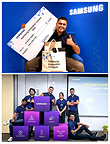
CU Student Devesh Panwar Wins Rs 1 Lakh Award for Developing AI-Based Document Search System
CHANDIGARH, India, July 18, 2026 /PRNewswire/ — A Bachelor of Computer Applications (BCA) student of Chandigarh University, Devesh Panwar, has been named the “Punjab State Topper” in the Artificial Intelligence (AI) under the Samsung Innovation Campus (SIC) AI Program organised by Samsung in collaboration with Telecom Sector Skill Council (TSSC) and training partner Focal Skill Development (Focalyt) to equip Indian youth with industry-relevant in-demand skills in AI, loT, Big Data, and Coding & Programming, preparing them for future careers.
A final-year student of Bachelor of Computer Applications (BCA) at University Institute of Computing (UIC) of Chandigarh University, Devesh Panwar also won a cash award of Rs 1 lakh along with a laptop, and exclusive Samsung rewards for achieving this remarkable milestone under the Samsung Innovation Campus AI Program.
“Being named ‘AI State Topper’ was a moment of profound pride and validation for me. Hard work, intense technical training and a passion for AI culminated in the immense honor of the Punjab State Topper title. Besides getting access to state-of-the-art tools to fuel my future research and development endeavor, I gained world-class knowledge during the Samsung Innovation Campus (SIC) AI Program. It helped me in gaining hands-on experience and applied AI to solve real-world challenges, especially in aeronautical and technical domains,”
During Samsung Innovation Campus (SIC) AI Program, Devesh and his team worked on innovative AI capstone project which was presented before the jury panel as part of the final assessment.
“Our team developed the advanced AI-powered system AI Research Agent, a Retrieval-Augmented Generation (RAG) platform designed for intelligent querying of private document collections. Organizations, researchers, legal professionals, and HR teams often work with large collections of documents. Traditional search methods rely heavily on keyword matching and require significant manual effort to locate relevant information. The project was developed to address the limitations of traditional document search systems, which often struggle with contextual understanding, retrieval accuracy, learning adaptability, and response speed,” said Devesh.
“The developed system demonstrated significant improvements over traditional document retrieval approaches with faster response generation with integration of modern AI techniques, full-stack development, database systems, and intelligent automation into a single practical solution. By combining modern RAG architecture with innovative retrieval and reasoning mechanisms, this system provides a fast, intelligent, and user-friendly solution for knowledge discovery and resume evaluation. This project not only enhanced our technical expertise in Artificial Intelligence and Full-Stack Development but also strengthened our problem-solving, teamwork, and professional communication skills. It stands as a significant achievement of our Samsung Innovation Campus 2025 journey and reflects our commitment to building impactful AI solutions for real-world challenges,” he added.
Congratulating Devesh Panwar for being named “Punjab State Topper” AI under the Samsung Innovation Campus Samsung Innovation Program, Deepinder Singh Sandhu, Senior Managing Director, Chandigarh University, said, “Devesh’s achievement reflects Chandigarh University’s focus on experiential learning and industry-academia collaboration. Through the Samsung Innovation Campus AI Program, CU students gain practical exposure to AI and building solutions for real-world challenges. This accomplishment reflects not only Devesh’s commitment to excellence but also the growing culture of innovation and industry-oriented learning at Chandigarh University,”.
“Since its inception, Chandigarh University has set benchmarks for world-class education with its dynamic hands-on experiential learning model, industry-aligned programs, dynamic fraternity, state-of-the-art infrastructure facilities and impeccable placements. Samsung Innovation Program is also part of our initiatives to develop a future-ready talent pool equipped with advanced capabilities in AI, loT, Big Data, and Coding and Programming. By bridging the gap between theoretical learning and real-world application, this collaboration helps in providing CU’s computer science and computing students exposure to cutting-edge and emerging technologies. CU’s this partnership with Samsung is focused on building future-ready talent equipped with industry-relevant skills in AI and emerging technologies,” Sandhu said.
He said Chandigarh University’s Institute of Computing (UIC) prepares students for a successful career in computing, to create and disseminate computing knowledge and technology. “Chandigarh University carries a vision of crafting next-gen IT professionals who can take up industry challenges effectively and our Institute of Computing (UIC) prepares students for a successful career in computing, to create and disseminate computing knowledge and technology. UIC’s hands-on approach paves the way for a smooth transition to the workforce after graduation. Our students are equipped with the best knowledge, skills and passion to succeed in any number of computing careers. CU’s Institute of Computing renders cutting-edge education ranging from the expertise in traditional software development -to- modern computing technologies. Fully-equipped industry-sponsored labs, industry-aligned curriculum, and accreditations and validations by top companies such as Intel, Microsoft, Google Android, Red Hat etc. give our students an exclusive edge over others,” the Chandigarh University CMD said.
Sandhu said the latest edition of QS World University Rankings has yet again reaffirmed Chandigarh University global standing as a top educational institution. “Continuing its remarkable rise among the world’s leading higher education institutions, Chandigarh University (CU) has made impressive strides in the latest edition of prestigious QS World University Rankings 2027 by securing an overall world rank of 526, an increase of 49 ranks as compared to 575th rank in QS’ 2026 Rankings. This is for the fifth consecutive year that Chandigarh University’s global rankings have witnessed an impressive surge with CU’s world rank going up by an impressive 274 ranks — from the 800th rank in 2023 to 526th in 2027’s Rankings,”.
“As per the latest QS World University Rankings, with All India Rank of 13 among all universities in the country as compared to 16th rank in 2026’s rankings, Chandigarh University now ranks among the top 1% of universities in India and the top 2% of universities in the World, underscoring its growing reputation as a leading institution of higher learning, both in India and globally,” he added.
About Chandigarh University
Chandigarh University is a NAAC A+ Grade University and QS World Ranked University. This autonomous educational institution is approved by UGC and is located near Chandigarh in the state of Punjab. It is the youngest university in India and the only private university in Punjab to be honoured with A+ Grade by NAAC (National Assessment and Accreditation Council). CU offers more than 109 UG and PG programs in the field of engineering, management, pharmacy, law, architecture, journalism, animation, hotel management, commerce, and others. It has been awarded as The University with Best Placements by WCRC.
Website address: https://www.cuchd.in/
View original content to download multimedia:https://www.prnewswire.com/in/news-releases/samsung-selects-chandigarh-university-student-as-punjab-ai-state-topper-302828991.html
Technology
Samsung Selects Chandigarh University Student as ‘Punjab AI State Topper’
Published
42 minutes agoon
July 18, 2026By
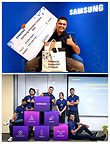
CU Student Devesh Panwar Wins Rs 1 Lakh Award for Developing AI-Based Document Search System
CHANDIGARH, India, July 18, 2026 /PRNewswire/ — A Bachelor of Computer Applications (BCA) student of Chandigarh University, Devesh Panwar, has been named the “Punjab State Topper” in the Artificial Intelligence (AI) under the Samsung Innovation Campus (SIC) AI Program organised by Samsung in collaboration with Telecom Sector Skill Council (TSSC) and training partner Focal Skill Development (Focalyt) to equip Indian youth with industry-relevant in-demand skills in AI, loT, Big Data, and Coding & Programming, preparing them for future careers.
A final-year student of Bachelor of Computer Applications (BCA) at University Institute of Computing (UIC) of Chandigarh University, Devesh Panwar also won a cash award of Rs 1 lakh along with a laptop, and exclusive Samsung rewards for achieving this remarkable milestone under the Samsung Innovation Campus AI Program.
“Being named ‘AI State Topper’ was a moment of profound pride and validation for me. Hard work, intense technical training and a passion for AI culminated in the immense honor of the Punjab State Topper title. Besides getting access to state-of-the-art tools to fuel my future research and development endeavor, I gained world-class knowledge during the Samsung Innovation Campus (SIC) AI Program. It helped me in gaining hands-on experience and applied AI to solve real-world challenges, especially in aeronautical and technical domains,”
During Samsung Innovation Campus (SIC) AI Program, Devesh and his team worked on innovative AI capstone project which was presented before the jury panel as part of the final assessment.
“Our team developed the advanced AI-powered system AI Research Agent, a Retrieval-Augmented Generation (RAG) platform designed for intelligent querying of private document collections. Organizations, researchers, legal professionals, and HR teams often work with large collections of documents. Traditional search methods rely heavily on keyword matching and require significant manual effort to locate relevant information. The project was developed to address the limitations of traditional document search systems, which often struggle with contextual understanding, retrieval accuracy, learning adaptability, and response speed,” said Devesh.
“The developed system demonstrated significant improvements over traditional document retrieval approaches with faster response generation with integration of modern AI techniques, full-stack development, database systems, and intelligent automation into a single practical solution. By combining modern RAG architecture with innovative retrieval and reasoning mechanisms, this system provides a fast, intelligent, and user-friendly solution for knowledge discovery and resume evaluation. This project not only enhanced our technical expertise in Artificial Intelligence and Full-Stack Development but also strengthened our problem-solving, teamwork, and professional communication skills. It stands as a significant achievement of our Samsung Innovation Campus 2025 journey and reflects our commitment to building impactful AI solutions for real-world challenges,” he added.
Congratulating Devesh Panwar for being named “Punjab State Topper” AI under the Samsung Innovation Campus Samsung Innovation Program, Deepinder Singh Sandhu, Senior Managing Director, Chandigarh University, said, “Devesh’s achievement reflects Chandigarh University’s focus on experiential learning and industry-academia collaboration. Through the Samsung Innovation Campus AI Program, CU students gain practical exposure to AI and building solutions for real-world challenges. This accomplishment reflects not only Devesh’s commitment to excellence but also the growing culture of innovation and industry-oriented learning at Chandigarh University,”.
“Since its inception, Chandigarh University has set benchmarks for world-class education with its dynamic hands-on experiential learning model, industry-aligned programs, dynamic fraternity, state-of-the-art infrastructure facilities and impeccable placements. Samsung Innovation Program is also part of our initiatives to develop a future-ready talent pool equipped with advanced capabilities in AI, loT, Big Data, and Coding and Programming. By bridging the gap between theoretical learning and real-world application, this collaboration helps in providing CU’s computer science and computing students exposure to cutting-edge and emerging technologies. CU’s this partnership with Samsung is focused on building future-ready talent equipped with industry-relevant skills in AI and emerging technologies,” Sandhu said.
He said Chandigarh University’s Institute of Computing (UIC) prepares students for a successful career in computing, to create and disseminate computing knowledge and technology. “Chandigarh University carries a vision of crafting next-gen IT professionals who can take up industry challenges effectively and our Institute of Computing (UIC) prepares students for a successful career in computing, to create and disseminate computing knowledge and technology. UIC’s hands-on approach paves the way for a smooth transition to the workforce after graduation. Our students are equipped with the best knowledge, skills and passion to succeed in any number of computing careers. CU’s Institute of Computing renders cutting-edge education ranging from the expertise in traditional software development -to- modern computing technologies. Fully-equipped industry-sponsored labs, industry-aligned curriculum, and accreditations and validations by top companies such as Intel, Microsoft, Google Android, Red Hat etc. give our students an exclusive edge over others,” the Chandigarh University CMD said.
Sandhu said the latest edition of QS World University Rankings has yet again reaffirmed Chandigarh University global standing as a top educational institution. “Continuing its remarkable rise among the world’s leading higher education institutions, Chandigarh University (CU) has made impressive strides in the latest edition of prestigious QS World University Rankings 2027 by securing an overall world rank of 526, an increase of 49 ranks as compared to 575th rank in QS’ 2026 Rankings. This is for the fifth consecutive year that Chandigarh University’s global rankings have witnessed an impressive surge with CU’s world rank going up by an impressive 274 ranks — from the 800th rank in 2023 to 526th in 2027’s Rankings,”.
“As per the latest QS World University Rankings, with All India Rank of 13 among all universities in the country as compared to 16th rank in 2026’s rankings, Chandigarh University now ranks among the top 1% of universities in India and the top 2% of universities in the World, underscoring its growing reputation as a leading institution of higher learning, both in India and globally,” he added.
About Chandigarh University
Chandigarh University is a NAAC A+ Grade University and QS World Ranked University. This autonomous educational institution is approved by UGC and is located near Chandigarh in the state of Punjab. It is the youngest university in India and the only private university in Punjab to be honoured with A+ Grade by NAAC (National Assessment and Accreditation Council). CU offers more than 109 UG and PG programs in the field of engineering, management, pharmacy, law, architecture, journalism, animation, hotel management, commerce, and others. It has been awarded as The University with Best Placements by WCRC.
Website address: https://www.cuchd.in/
View original content to download multimedia:https://www.prnewswire.com/in/news-releases/samsung-selects-chandigarh-university-student-as-punjab-ai-state-topper-302828991.html
Technology
Black Lake Technologies Shortlisted as SAIL Award TOP30 Finalist and Selected as Global Industrial AI Flagship Case, Showcasing Latest Industrial Agent at WAIC 2026
Published
2 hours agoon
July 18, 2026By

SHANGHAI, July 18, 2026 /PRNewswire/ — The 2026 World Artificial Intelligence Conference (WAIC) opened in Shanghai on July 17. Shanghai Blacklake Technologies Co., Ltd. (“Black Lake”), an industrial AI company, is showcasing a portfolio of industrial AI agents at the conference. The company has also been named to the Top 30 shortlist for the 2026 WAIC Super AI Leader (SAIL) Award and selected as a Trusted Partner under the Global Call for Trusted Partners for Industrial AI in the Global South.
The accreditations highlight Black Lake’s latest progress in bringing AI into critical manufacturing decision-making workflows and deploying industrial AI capabilities on the shop floor around the world.
This year’s conference attracted over 1,100 exhibiting companies and showcased more than 3,000 exhibits, setting a new record for exhibition scale. The conference delivered a clear signal: as artificial intelligence becomes a common priority across global industries, attention is moving beyond model capabilities toward practical applications in real-world operating environments.
Manufacturing provides a particularly demanding test for this transition. Factory operations are governed by multiple constraints, including process specifications, equipment capabilities, material availability, production capacity, delivery schedules and quality requirements. Therefore, AI has to do so much more than simply comprehend information input. It must make reliable judgments within clearly defined business rules and operational constraints.
Black Lake has focused on industrial digitalization and industrial AI for years, developing and deploying AI applications in a range of factory environments.
At WAIC 2026, the company is presenting industrial AI agents covering order splitting and process planning, quotation and pricing, procurement, production scheduling, quality inspection, and order tracking. These applications are designed to move AI beyond an auxiliary role and into critical manufacturing decision-making workflows.
Traditional industrial software is primarily responsible for data recording, digital workflows, and worker coordination. However, critical decisions such as how to split an order, determine pricing, schedule production, and assess quality risks still depend heavily on the experience of engineers and frontline workers.
Industrial AI agents are intended to convert fragmented industrial knowledge and production experience into decision-making capabilities that can be invoked, reused and continuously refined by software systems.
Order decomposition and process planning are representative examples. After receiving an engineering drawing, a factory typically relies on experienced engineers to identify components, materials and dimensions, define the required manufacturing processes and technical specifications, and establish a basis for subsequent quotation and quality inspection.
The process is highly dependent on individual expertise and represents one of the first critical decision points after an order is received.
Black Lake Technologies’ CAD-to-Process Agent can understand product drawings and, taking into account the factory’s equipment capabilities, process requirements, and production practices, rapidly generate process steps along with the corresponding technical requirements. Drawing analysis that once took hours can now be completed in approximately one minute, achieving an accuracy rate of over 95% in real deployment and providing engineers with stable, efficient decision support. Currently, the industrial agents developed by the company cover core processes including design, scheduling, production, and quality inspection, and have entered the stage of large-scale deployment.
Founded in 2016, Black Lake serves nearly 40,000 factories worldwide. Its customers span more than 30 industries, including food and beverage, automotive components and equipment manufacturing.
By working across factory order management, production and fulfillment workflows, Black Lake has accumulated the technical capabilities and industry knowledge required to support decision-making in complex industrial environments.
In April 2026, Black Lake completed a Series D funding round of nearly RMB 1 billion. The company said the proceeds would primarily be used to accelerate the deployment of its industrial AI products and support its international expansion.
AI-related products are becoming a new source of growth for the company. In a recent interview, Black Lake founder and CEO Zhou Yuxiang said that the company had recorded significant growth in AI-related revenue since the beginning of 2026. He also said that manufacturing customers were taking less time to make purchasing decisions for industrial AI agents.
Zhou expects AI adoption among Chinese factories to increase substantially over the next three to four years.
Unlike consumer-facing AI, which is primarily associated with content generation and personal productivity, industrial AI agents can directly affect production costs, capacity utilization, delivery performance, and product quality. Their commercial value therefore depends largely on whether they can perform specific tasks reliably in complex production environments.
During WAIC 2026, Black Lake was named to the Top 30 shortlist for the 2026 Super AI Leader (SAIL) Award. The SAIL Award is one of WAIC’s major awards and recognizes achievements in technological breakthroughs, application innovation, and industrial value.
Black Lake was also selected as a Trusted Partner under UNIDO’s Global Call for Trusted Partners for Industrial AI in the Global South.
The Global Call was launched under the guidance of the United Nations Industrial Development Organization (UNIDO), in partnership with the Shanghai Artificial Intelligence Research Institute, and in connection with the work of UNIDO AIM Global and its Shanghai-based Centre of Excellence.
The initiative aims to build a curated pool of leading partners to co-develop scalable industrial AI solutions and public goods for the Global South.
For Black Lake, the two accreditations underscore the growing importance of reliability, explainability, and scalability in the evaluation of industrial AI, in addition to the capabilities of AI models.
Global expansion will be a major priority in the company’s next phase of development. Black Lake is currently focusing on Southeast Asia, Latin America and Eastern Europe, adapting its industrial AI agents to the industrial structures, production processes and management requirements of different markets.
Although manufacturing operations vary across countries and regions, manufacturers share similar concerns about efficiency, quality, delivery reliability and production flexibility.
Black Lake is transforming industrial AI capabilities that have been validated in complex factory environments into configurable and deployable products. Through these products, the company aims to work with manufacturers worldwide to explore more efficient, flexible and intelligent approaches to production.
SOURCE Black Lake


Samsung Selects Chandigarh University Student as ‘Punjab AI State Topper’

Samsung Selects Chandigarh University Student as ‘Punjab AI State Topper’
Black Lake Technologies Shortlisted as SAIL Award TOP30 Finalist and Selected as Global Industrial AI Flagship Case, Showcasing Latest Industrial Agent at WAIC 2026

Send Rakhi to UK swiftly with UK Gifts Portal

Whiteboard Series with NEAR | Ep: 45 Joel Thorstensson from ceramic.network

New Gooseneck Omni Antennas Offer Enhanced Signals in a Durable Package

Why You Should Build on #NEAR – Co-founder Illia Polosukhin at CV Labs
Whiteboard Series with NEAR | Ep: 45 Joel Thorstensson from ceramic.network

NEAR End of Year Town Hall 2021: The Open Web World, MetaBUILD 2 Hackathon and 2021 recap
Trending
-

 Technology5 days ago
China’s Hit Variety Show “Wonderland Season Ⅵ” Is Currently Airing – How Does This Long-Running Franchise Win the Battle for Critical Acclaim?
-

 Technology2 days ago
GPU.ai Named Official Title Sponsor of AGI Summit SF 2026
-

 Coin Market3 days ago
Revolut receives in-principle approval from UAE authorities for crypto services
-

 Near Videos4 days ago
Confidential Intents is now generally available
-

 Technology3 days ago
InventHelp Inventor Develops Improved Food Delivery Bag (LBT-9719)
-

 Coin Market3 days ago
Ostium pauses trading as security firms report multimillion-dollar oracle exploit
-

 Coin Market3 days ago
Crypto firms face AML risks during post-MiCA migration, says AMLA chair
-
 Technology3 days ago
JumpCloud Launches Workflows To Empower IT Teams With Secure And Simple Automation