
Technology
TTEC Announces Fourth Quarter and Full Year 2023 Financial Results

Published
3 years agoon
By

Full Year 2023
Revenue was $2.463 Billion, up 0.8 Percent
Operating Income was $118.0 Million or 4.8 Percent of Revenue
($200.4 Million or 8.1 Percent of Revenue Non-GAAP)
Net Income was $18.3 Million or 0.7 Percent of Revenue
($103.2 Million or 4.2 Percent of Revenue Non-GAAP)
Adjusted EBITDA was $271.5 Million or 11.0 Percent of Revenue
Fully Diluted EPS was $0.39, $2.18 Non-GAAP
Fourth Quarter 2023
Revenue was $626.2 Million, down 4.9 Percent
Operating Income was 16.9 Million or 2.7 Percent of Revenue
($41.8 Million or 6.7 Percent of Revenue Non-GAAP)
Net Income was ($8.2) Million or (1.3) Percent of Revenue
($17.5 Million or 2.8 Percent of Revenue Non-GAAP)
Adjusted EBITDA was $57.5 Million or 9.2 Percent of Revenue
Fully Diluted EPS was ($0.17), $0.37 Non-GAAP
Provides Outlook for Full Year 2024
DENVER, Feb. 29, 2024 /PRNewswire/ — TTEC Holdings, Inc. (NASDAQ:TTEC), a leading global CX (customer experience) technology and services innovator for AI-enabled CX with solutions from TTEC Engage and TTEC Digital, announced today financial results for the fourth quarter and full year ended December 31, 2023.
“As we have previously communicated, 2023 was a dynamic year for TTEC. The macroeconomic factors created a conservative and uncertain business environment that delayed client contracting decisions and lowered forecasts for certain clients in the second half of the year. While these factors moderated our results, we continued to make progress diversifying our business by growing our client base, completing a strategic phase of our geographic expansion, and expanding our AI-enabled solutions,” commented Ken Tuchman, chairman and chief executive officer of TTEC.
“Our 2024 outlook reflects three very specific challenges in our TTEC Engage segment. First, client budget constraints and a conservative mindset in the second half of 2023 is carrying forward into our 2024 outlook. Second, a long-tenured client eliminated one of several lines of business that we supported. While our relationship remains strong with this client and we continue to service their customers across multiple other lines of business, the discontinuation of this one line of business contributes to the impact on our top and bottom line in 2024. Third, while we are pleased by the growing demand for our new offshore locations, the timing lag between our recent wins and normalized revenue run rate and margins is weighing on our outlook,” Tuchman continued.
“In TTEC Digital, we delivered record bookings in the fourth quarter and the team is off to a strong start this year. Demand for our differentiated CX technology expertise continues to grow as cloud migrations and AI solutions drive our clients’ CX digital transformation agendas.”
Tuchman further stated, “As we move into 2024, we are laser focused on execution. We will continue to capitalize on our greatly expanded offshore footprint, deepen our relationships with new and existing clients, apply our AI-enabled solutions and accelerate our margin optimization initiatives.”
“TTEC’s board of directors’ decision to reduce the dividend reflects a prudent shift to prioritize our capital deployment towards continued investments in sustainable growth initiatives and debt reduction associated with strategic acquisitions. As revised, the dividend is in line with our stock price and the dividend yield typical for our industry and the broader market. I am confident we are well positioned to emerge stronger as we exit 2024.”
FULL YEAR 2023 FINANCIAL HIGHLIGHTS
Revenue
Full year 2023 GAAP revenue increased 0.8 percent to $2.463 billion compared to $2.444 billion in the prior year. Foreign exchange had a $4.4 million positive impact on revenue for the full year 2023.
Income from Operations
Full year 2023 GAAP income from operations was $118.0 million, or 4.8 percent of revenue, compared to $168.5 million, or 6.9 percent of revenue in the prior year.Non-GAAP income from operations, excluding restructuring and impairment charges, equity-based compensation expenses, amortization of purchased intangibles, and other items, was $200.4 million, or 8.1 percent of revenue, compared to $248.5 million, or 10.2 percent in the prior year.Foreign exchange had a $2.2 million negative impact on Non-GAAP income from operations for the full year 2023.
Adjusted EBITDA
Full year 2023 Non-GAAP Adjusted EBITDA was $271.5 million, or 11.0 percent of revenue, compared to $320.1 million, or 13.1 percent of revenue in the prior year.
Earnings Per Share
Full year 2023 GAAP fully diluted earnings per share was $0.39 compared to $2.48 in the prior year.Non-GAAP fully diluted earnings per share was $2.18 compared to $3.59 in the prior year.
FOURTH QUARTER 2023 FINANCIAL HIGHLIGHTS
Revenue
Fourth quarter 2023 GAAP revenue decreased 4.9 percent to $626.2 million compared to $658.3 million in the prior year. Foreign exchange had a $5.5 million positive impact on revenue in the fourth quarter of 2023.
Income from Operations
Fourth quarter 2023 GAAP income from operations was $16.9 million, or 2.7 percent of revenue, compared to $48.7 million, or 7.4 percent of revenue in the prior year.Non-GAAP income from operations, excluding restructuring and impairment charges, equity-based compensation expenses, amortization of purchased intangibles, and other items, was $41.8 million, or 6.7 percent of revenue, compared to $69.9 million, or 10.6 percent for the prior year.Foreign exchange had a $2.4 million negative impact on Non-GAAP income from operations in the fourth quarter 2023.
Adjusted EBITDA
Fourth quarter 2023 Non-GAAP Adjusted EBITDA was $57.5 million, or 9.2 percent of revenue, compared to $86.5 million, or 13.1 percent of revenue in the prior year.
Earnings Per Share
Fourth quarter 2023 GAAP fully diluted earnings per share was ($0.17) compared to $0.54 in the prior year.Non-GAAP fully diluted earnings per share was $0.37 compared to $0.91 in the prior year.
STRONG CASH FLOW AND BALANCE SHEET FUND INVESTMENTS AND DIVIDENDS
Cash flow from operations in the fourth quarter 2023 was $31.5 million compared to $18.2 million for the fourth quarter 2022. For the full year 2023, cash flow from operations was $144.8 million compared to $137.0 million for the same period 2022.Capital expenditures in the fourth quarter 2023 were $13.1 million compared to $19.4 million for the fourth quarter 2022. For the full year 2023, capital expenditures were $67.8 million compared to $84.0 million for the same period 2022.As of December 31, 2023, TTEC had cash and cash equivalents of $172.7 million and debt of $999.3 million, resulting in a net debt position of $826.5 million. This compares to a net debt position of $810.2 million for the same period 2022.As of December 31, 2023, TTEC’s remaining borrowing capacity under its revolving credit facility was approximately $90 million compared to $335 million for the same period 2022.On February 27, 2024, the Board declared the next semi-annual dividend of $0.06 per share, or $2.9 million, payable on April 30, 2024 to shareholders of record as of April 3, 2024. TTEC’s board of directors’ decision to reduce the dividend reflects a prudent shift to prioritize our capital deployment towards continued investments in sustainable growth initiatives and debt reduction associated with strategic acquisitions.TTEC paid a $0.52 per share, or $24.7 million, semi-annual dividend on October 31, 2023.
SEGMENT REPORTING & COMMENTARY
TTEC reports financial results for the following two business segments: TTEC Digital (Digital) and TTEC Engage (Engage). Financial highlights for the two segments are provided below.
TTEC Digital – Design, build and operate tech-enabled, insight-driven CX solutions
Fourth quarter 2023 GAAP revenue for TTEC Digital decreased 2.1 percent to $119.1 million from $121.7 million for the year ago period. Income from operations was $10.0 million or 8.4 percent of revenue compared to an operating income of $9.9 million or 8.2 percent of revenue in the prior year. Non-GAAP income from operations was $17.7 million, or 14.8 percent of revenue compared to operating income of $18.0 million or 14.8 percent of revenue in the prior year.
TTEC Engage – Digitally-enabled customer care, acquisition, and fraud mitigation services
Fourth quarter 2023 GAAP revenue for TTEC Engage decreased 5.5 percent to $507.1 million from $536.6 million for the year ago period. Income from operations was $6.9 million or 1.4 percent of revenue compared to operating income of $38.8 million, or 7.2 percent of revenue in the prior year.Non-GAAP income from operations was $24.1 million, or 4.8 percent of revenue, compared to operating income of $52.0 million, or 9.7 percent of revenue in the prior year.Foreign exchange had a $5.3 million positive impact on revenue and $1.9 million negative impact on income from operations.
BUSINESS OUTLOOK
“We ended 2023 in line with expectations but the recent dynamics in the Engage segment are causing a reduction in our 2024 revenue and margin outlook compared to 2023. We are confident in the initiatives currently in motion that focus on growth and margin improvement,” commented Francois Bourret, interim chief financial officer of TTEC. “As digital transformation continues to be a top priority for our clients, we are encouraged by the growing momentum with TTEC Digital. As we move forward, we will navigate this environment to position the company to exit 2024 with a view towards longer-term profitable growth.”
TTEC First Quarter and Full Year 2024 Outlook
First Quarter 2024
Guidance
First Quarter 2024
Mid-Point
Full Year 2024
Guidance
Full Year 2024
Mid-Point
Revenue
$559M — $569M
$564M
$2,275M — $2,365M
$2,320M
Non-GAAP adjusted EBITDA
$52M — $58M
$55M
$215M — $259M
$237M
Non-GAAP adjusted EBITDA margins
9.3% — 10.2%
9.8 %
9.5% — 11.0%
10.2 %
Non-GAAP operating income
$36M — $42M
$39M
$150M — $194M
$172M
Non-GAAP operating income margins
6.4% — 7.4%
6.9 %
6.6% — 8.2%
7.4 %
Interest expense, net
($20M) — ($22M)
($21M)
($77M) — ($79M)
($78M)
Non-GAAP adjusted tax rate
23% — 25%
24 %
23% — 25%
24 %
Diluted share count
47.4M — 47.6M
47.5M
47.4M — 47.6M
47.5M
Non-GAAP earnings per a share
$0.25 — $0.34
$0.30
$1.15 — $1.86
$1.51
Engage First Quarter and Full Year 2024 Outlook
First Quarter 2024
Guidance
First Quarter 2024
Mid-Point
Full Year 2024
Guidance
Full Year 2024
Mid-Point
Revenue
$453M — $457M
$455M
$1,790M — $1,850M
$1,820M
Non-GAAP adjusted EBITDA
$41M — $45M
$43M
$149M — $179M
$164M
Non-GAAP adjusted EBITDA margins
9.2% — 9.9%
9.5 %
8.4% — 9.7%
9.0 %
Non-GAAP operating income
$28M — $32M
$30M
$95M — $125M
$110M
Non-GAAP operating income margins
6.2% — 7.0%
6.6 %
5.3% — 6.8%
6.1 %
Digital First Quarter and Full Year 2024 Outlook
First Quarter 2024
Guidance
First Quarter 2024
Mid-Point
Full Year 2024
Guidance
Full Year 2024
Mid-Point
Revenue
$106M — $112M
$109M
$485M — $515M
$500M
Non-GAAP adjusted EBITDA
$11M — $13M
$12M
$66M — $80M
$73M
Non-GAAP adjusted EBITDA margins
10.1% — 11.3%
10.7 %
13.5% — 15.5%
14.5 %
Non-GAAP operating income
$8M — $10M
$9M
$55M — $69M
$62M
Non-GAAP operating income margins
7.6% — 8.9%
8.3 %
11.2% — 13.3%
12.3 %
The Company has not quantitatively reconciled its guidance for Non-GAAP operating income, Non-GAAP operating income margins, Non-GAAP adjusted EBITDA, Non-GAAP adjusted EBITDA margins, or Non-GAAP earnings per share to their respective most comparable GAAP measures because certain of the reconciling items that impact these metrics, including restructuring and impairment charges, equity-based compensation expense, changes in acquisition contingent consideration, depreciation and amortization expense, and provision for income taxes are dependent on the timing of future events outside of the Company’s control or cannot be reliably predicted. Accordingly, the Company is unable to provide reconciliations to GAAP operating income, operating income margins, EBITDA margins, and diluted earnings per share without unreasonable effort. Please note that the unavailable reconciling items could significantly impact the Company’s 2024 financial results as reported under GAAP.
NON-GAAP FINANCIAL MEASURES
This press release contains a discussion of certain Non-GAAP financial measures that the Company includes to allow investors and analysts to measure, analyze and compare its financial condition and results of operations in a meaningful and consistent manner. A reconciliation of these Non-GAAP financial measures can be found in the tables accompanying this press release.
GAAP metrics are presented in accordance with Generally Accepted Accounting Principles.Non-GAAP – As reflected in the attached reconciliation table, the definition of Non-GAAP may exclude from operating income, EBITDA, net income and earnings per share restructuring and impairment charges, equity-based compensation expenses, amortization of purchased intangibles, among other items.
ABOUT TTEC
TTEC (pronounced T-TEC) Holdings, Inc. (NASDAQ:TTEC) is a leading global CX (customer experience) technology and services innovator for AI-enabled digital CX solutions. Serving iconic and disruptive brands, TTEC’s outcome-based solutions span the entire enterprise, touch every virtual interaction channel, and improve each step of the customer journey. Leveraging next-gen digital technology, the Company’s TTEC Digital business designs, builds, and operates omnichannel contact center technology, CRM, AI and analytics solutions. The Company’s TTEC Engage business delivers AI-enabled customer engagement, customer acquisition and growth, tech support, back office, and fraud prevention services. Founded in 1982, the company’s singular obsession with CX excellence has earned it leading client, customer, and employee satisfaction scores across the globe. The Company’s over 60,000 employees operate on six continents and bring technology and humanity together to deliver happy customers and differentiated business results. To learn more visit us at https://www.ttec.com.
FORWARD-LOOKING STATEMENTS
This Earnings Press Release contains “forward-looking statements” within the meaning of Section 27A of the Securities Act of 1933, Section 21E of the Securities Exchange Act of 1934, and the Private Securities Litigation Reform Act of 1995., Forward-looking statements include, but are not limited to, statements relating to our operations, expected financial position, results of operation, effective tax rate, cash flow, leverage, liquidity, business strategy, competitive position, demand for our services in international operations, acquisition opportunities and impact of acquisitions, capital allocation and dividends, growth opportunities, spending, capital expenditures and investments, competition and market forecasts, industry trends, our human capital resources, and other business matters that are based on our current expectations, assumptions, and projections with respect to the future, and are not a guarantee of performance.
In this Release when we use words such as “may,” “believe,” “plan,” “will,” “anticipate,” “estimate,” “expect,” “intend,” “project,” “would,” “could,” “target,” or similar expressions, or when we discuss our strategy, plans, goals, initiatives, or objectives, we are making forward-looking statements. Unless otherwise indicated or except where the context otherwise requires, the terms “TTEC,” “the Company,” “we,” “us” and “our”and other similar terms in this report refer to TTEC Holdings, Inc. and its subsidiaries. We caution you not to rely unduly on any forward-looking statements. Actual results may differ materially from those expressed in the forward-looking statements, and you should review and consider carefully the risks, uncertainties, and other factors that affect our business and may cause such differences as outlined in Item 1A. Risk Factors in our Annual Report on Form 10-K for the year ended December 31, 2023 and any subsequent filings with the U.S. Securities and Exchange Commission (the “SEC”) which are available on TTEC’s website www.ttec.com, and on the SEC’s public website at www.sec.gov
Our forward-looking statements speak only as of the date that this release is issued. We undertake no obligation to update them, except as may be required by applicable law. Although we believe that our forward-looking statements are reasonable, they depend on many factors outside of our control and we can provide no assurance that they will prove to be correct.
Corporate Comms
Investor Relations
Marji Chimes
Paul Miller
marji.chimes@ttec.com
paul.miller@ttec.com
TTEC HOLDINGS, INC. AND SUBSIDIARIES
CONSOLIDATED STATEMENTS OF OPERATIONS
(In thousands, except per share data)
Three months ended
Twelve months ended
December 31,
December 31,
2023
2022
2023
2022
Revenue
$ 626,181
$ 658,278
$2,462,817
$2,443,707
Operating Expenses:
Cost of services
505,814
495,339
1,932,877
1,856,518
Selling, general and administrative
74,744
80,602
290,873
287,433
Depreciation and amortization
24,904
31,730
101,272
111,791
Restructuring charges, net
3,145
1,412
8,041
5,673
Impairment losses
650
450
11,733
13,749
Total operating expenses
609,257
609,533
2,344,796
2,275,164
Income From Operations
16,924
48,745
118,021
168,543
Other income (expense), net
(21,988)
(15,877)
(77,297)
(24,095)
(Loss) / Income Before Income Taxes
(5,064)
32,868
40,724
144,448
Provision for income taxes
(3,142)
(7,318)
(22,460)
(27,115)
Net (Loss) / Income
(8,206)
25,550
18,264
117,333
Net income attributable to noncontrolling interest
(1,694)
(3,197)
(9,836)
(14,093)
Net (Loss) / Income Attributable to TTEC Stockholders
$ (9,900)
$ 22,353
$ 8,428
$ 103,240
Net (Loss) / Income Per Share
Basic
$ (0.17)
$ 0.54
$ 0.39
$ 2.49
Diluted
$ (0.17)
$ 0.54
$ 0.39
$ 2.48
Net (Loss) / Income Per Share Attributable to TTEC Stockholders
Basic
$ (0.21)
$ 0.47
$ 0.18
$ 2.19
Diluted
$ (0.21)
$ 0.47
$ 0.18
$ 2.18
Income From Operations Margin
2.7 %
7.4 %
4.8 %
6.9 %
Net (Loss) / Income Margin
(1.3) %
3.9 %
0.7 %
4.8 %
Net (Loss) / Income Attributable to TTEC Stockholders Margin
(1.6) %
3.4 %
0.3 %
4.2 %
Effective Tax Rate
(62.0) %
22.3 %
55.2 %
18.8 %
Weighted Average Shares Outstanding
Basic
47,425
47,220
47,335
47,121
Diluted
47,503
47,299
47,419
47,335
TTEC HOLDINGS, INC. AND SUBSIDIARIES
SEGMENT INFORMATION
(In thousands)
Three months ended
Twelve months ended
December 31,
December 31,
2023
2022
2023
2022
Revenue:
TTEC Digital
$ 119,118
$ 121,650
$ 486,882
$ 463,670
TTEC Engage
507,063
536,628
1,975,935
1,980,037
Total
$ 626,181
$ 658,278
$ 2,462,817
$ 2,443,707
Income From Operations:
TTEC Digital
$ 9,982
$ 9,924
$ 29,846
$ 34,895
TTEC Engage
6,942
38,821
88,175
133,648
Total
$ 16,924
$ 48,745
$ 118,021
$ 168,543
TTEC HOLDINGS, INC. AND SUBSIDIARIES
CONSOLIDATED BALANCE SHEETS
(In thousands)
December 31,
December 31,
2023
2022
ASSETS
Current assets:
Cash and cash equivalents
$ 172,747
$ 153,435
Accounts receivable, net
394,868
417,637
Prepaids and other current assets
95,064
133,365
Income and other tax receivables
18,524
45,533
Total current assets
681,203
749,970
Property and equipment, net
191,003
183,360
Operating lease assets
121,574
92,431
Goodwill
808,988
807,845
Other intangibles assets, net
198,433
233,909
Income and other tax receivables, long-term
44,673
–
Other assets
139,724
86,447
Total assets
$ 2,185,598
$ 2,153,962
LIABILITIES AND EQUITY
Current liabilities:
Accounts payable
$ 96,577
$ 93,937
Accrued employee compensation and benefits
146,184
145,096
Deferred revenue
81,171
87,846
Current operating lease liabilities
38,271
35,271
Other current liabilities
40,824
49,214
Total current liabilities
403,027
411,364
Long-term liabilities:
Line of credit
995,000
960,000
Non-current operating lease liabilities
96,809
69,575
Other long-term liabilities
75,220
79,273
Total long-term liabilities
1,167,029
1,108,848
Redeemable noncontrolling interest
–
55,645
Equity:
Common stock
474
472
Additional paid in capital
407,415
367,673
Treasury stock
(589,807)
(593,164)
Accumulated other comprehensive income (loss)
(89,876)
(126,301)
Retained earnings
870,429
911,233
Noncontrolling interest
16,907
18,192
Total equity
615,542
578,105
Total liabilities and equity
$ 2,185,598
$ 2,153,962
TTEC HOLDINGS, INC. AND SUBSIDIARIES
CONSOLIDATED STATEMENTS OF CASH FLOWS
(In thousands)
Twelve months ended
Twelve months ended
December 31,
December 31,
2023
2022
Cash flows from operating activities:
Net income
$ 18,264
$ 117,333
Adjustments to reconcile net income to net cash provided by operating activities :
Depreciation and amortization
101,272
111,791
Amortization of contract acquisition costs
2,288
2,065
Amortization of debt issuance costs
1,067
1,018
Imputed interest expense and fair value adjustments to contingent consideration
7,579
1,746
Provision for credit losses
2,009
9,391
Loss on disposal of assets
2,219
1,916
Loss on dissolution of subsidiary
301
–
Impairment losses
11,733
13,749
Deferred income taxes
(7,528)
(11,001)
Excess tax benefit from equity-based awards
1,705
(1,122)
Equity-based compensation expense
22,071
17,571
Gain on foreign currency derivatives
(3)
(7)
Changes in assets and liabilities, net of acquisitions:
Accounts receivable
22,359
(74,564)
Prepaids and other assets
8,570
43,699
Accounts payable and accrued expenses
9,518
(12,695)
Deferred revenue and other liabilities
(58,659)
(83,842)
Net cash provided by operating activities
144,765
137,048
Cash flows from investing activities:
Proceeds from sale of property and equipment
261
229
Purchases of property, plant and equipment
(67,839)
(84,012)
Acquisitions
–
(142,420)
Net cash used in investing activities
(67,578)
(226,203)
Cash flows from financing activities:
Net proceeds from / (repayments of) line of credit
35,000
169,000
Payments on other debt
(2,317)
(3,245)
Payments of contingent consideration and hold back payments to acquisitions
(37,676)
(9,600)
Dividends paid to shareholders
(49,232)
(48,072)
Payments to noncontrolling interest
(10,972)
(11,883)
Tax payments related to the issuance of restricted stock units
(3,037)
(7,164)
Net cash (used in) / provided by financing activities
(68,234)
89,036
Effect of exchange rate changes on cash, cash equivalents and restricted cash
(2,112)
(13,499)
Increase / (decrease) in cash, cash equivalents and restricted cash
6,841
(13,618)
Cash, cash equivalents and restricted cash, beginning of period
167,064
180,682
Cash, cash equivalents and restricted cash, end of period
$ 173,905
$ 167,064
TTEC HOLDINGS, INC. AND SUBSIDIARIES
RECONCILIATION OF NON-GAAP FINANCIAL INFORMATION
(In thousands, except per share data)
Three months ended
Twelve months ended
December 31,
December 31,
2023
2022
2023
2022
Revenue
$ 626,181
$ 658,278
$ 2,462,817
$ 2,443,707
Reconciliation of Non-GAAP Income from Operations and EBITDA:
Income from Operations
$ 16,924
$ 48,745
$ 118,021
$ 168,543
Restructuring charges, net
3,145
1,412
8,041
5,673
Impairment losses
650
450
11,733
13,749
Cybersecurity incident related impact, net of insurance recovery
–
(446)
(3,210)
(3,610)
Software accelerated amortization
–
6,382
–
8,509
Write-off of acquisition related receivable
–
–
–
900
Property costs not related to operations
757
–
1,501
–
Liability related to notifications triggered by labor scheme (1)
6,000
–
6,000
–
Grant income for pandemic relief
–
–
40
–
Change in acquisition related obligation
–
–
483
–
Equity-based compensation expenses
5,661
4,331
22,071
17,571
Amortization of purchased intangibles
8,676
9,038
35,759
37,169
Non-GAAP Income from Operations
$ 41,813
$ 69,912
$ 200,439
$ 248,504
Non-GAAP Income from Operations Margin
6.7 %
10.6 %
8.1 %
10.2 %
Depreciation and amortization
15,894
16,310
64,840
66,113
Changes in acquisition contingent consideration
616
(272)
7,480
1,798
Change in escrow balance related to acquisition
–
–
625
–
Loss on dissolution of subsidiary
–
–
301
–
Foreign exchange loss / (gain), net
1,112
1,710
1,950
(6,514)
Other income (expense), net
(1,894)
(1,156)
(4,126)
10,161
Adjusted EBITDA
$ 57,541
$ 86,504
$ 271,509
$ 320,062
Adjusted EBITDA Margin
9.2 %
13.1 %
11.0 %
13.1 %
Reconciliation of Non-GAAP EPS:
Net (Loss) / Income
$ (8,206)
$ 25,550
$ 18,264
$ 117,333
Add: Asset impairment and restructuring charges
3,795
1,862
19,774
19,422
Add: Equity-based compensation expenses
5,661
4,331
22,071
17,571
Add: Amortization of purchased intangibles
8,676
9,038
35,759
37,169
Add: Cybersecurity incident related impact, net of insurance recovery
–
(446)
(3,210)
(3,610)
Add: Software accelerated amortization
–
6,382
–
8,509
Add: Write-off of acquisition related receivable
–
–
–
900
Add: Property costs not related to operations
757
–
1,501
–
Add: Liability related to notifications triggered by labor scheme
6,000
–
6,000
–
Add: Grant income for pandemic relief
–
–
40
–
Add: Change in acquisition related obligation
–
–
483
–
Add: Changes in acquisition contingent consideration
616
(272)
7,480
1,798
Add: Changes in escrow balance related to acquisition
–
–
625
–
Add: Loss on dissolution of subsidiary
–
–
301
–
Add: Foreign exchange loss / (gain), net
1,112
1,710
1,950
(6,514)
Less: Changes in valuation allowance, return to provision adjustments and
other, and tax effects of items separately disclosed above
(885)
(4,909)
(7,859)
(22,872)
Non-GAAP Net Income
$ 17,526
$ 43,246
$ 103,179
$ 169,706
Diluted shares outstanding
47,503
47,299
47,419
47,335
Non-GAAP EPS
$0.37
$0.91
$2.18
$3.59
Reconciliation of Free Cash Flow:
Cash Flow From Operating Activities:
Net (Loss) / Income
$ (8,206)
$ 25,550
$ 18,264
$ 117,333
Adjustments to reconcile net income to net cash provided by operating activities:
Depreciation and amortization
24,904
31,730
101,272
111,791
Other
14,836
(39,045)
25,229
(92,076)
Net cash provided by operating activities
31,534
18,235
144,765
137,048
Less – Total Cash Capital Expenditures
13,117
19,448
67,839
84,012
Free Cash Flow
$ 18,417
$ (1,213)
$ 76,926
$ 53,036
(1) – For further information, please see discussion in the Risk Factors section of the 2023 Form 10-K filed on February 29, 2024.
Reconciliation of Non-GAAP Income from Operations and Adjusted EBITDA by Segment :
TTEC Engage
TTEC Digital
TTEC Engage
TTEC Digital
Q4 23
Q4 22
Q4 23
Q4 22
YTD 23
YTD 22
YTD 23
YTD 22
Income from Operations
$ 6,942
$ 38,821
$ 9,982
$ 9,924
$ 88,175
$ 133,648
$ 29,846
$ 34,895
Restructuring charges, net
1,823
1,130
1,322
282
4,250
5,251
3,791
422
Impairment losses
700
24
(50)
426
8,929
13,112
2,804
637
Cybersecurity incident related impact, net of insurance recovery
–
(446)
–
–
(3,210)
(3,610)
–
–
Software accelerated amortization
–
5,106
–
1,276
–
6,808
–
1,701
Write-off of acquisition related receivable
–
–
–
–
–
–
–
900
Property costs not related to operations
757
–
–
–
1,501
–
–
–
Grant income for pandemic relief
–
–
–
–
40
–
–
–
Change in acquisition related obligation
–
–
–
–
–
–
483
–
Liability related to notifications triggered by labor scheme
6,000
–
–
–
6,000
–
–
–
Equity-based compensation expenses
3,658
2,659
2,003
1,672
14,257
11,476
7,814
6,095
Amortization of purchased intangibles
4,264
4,658
4,412
4,380
18,215
17,272
17,544
19,897
Non-GAAP Income from Operations
$ 24,144
$ 51,952
$ 17,669
$ 17,960
$ 138,157
$ 183,957
$ 62,282
$ 64,547
Depreciation and amortization
13,458
13,667
2,436
2,643
55,153
54,561
9,687
11,552
Changes in acquisition contingent consideration
616
(272)
–
–
7,480
1,798
–
–
Change in escrow balance related to acquisition
–
–
–
–
625
–
–
–
Loss on dissolution of subsidiary
–
–
–
–
301
–
–
–
Foreign exchange loss / (gain), net
1,271
1,606
(159)
104
2,085
(5,540)
(135)
(974)
Other income (expense), net
(1,728)
(1,063)
(166)
(93)
(4,060)
9,352
(66)
809
Adjusted EBITDA
$ 37,761
$ 65,890
$ 19,780
$ 20,614
$ 199,741
$ 244,128
$ 71,768
$ 75,934
View original content to download multimedia:https://www.prnewswire.com/news-releases/ttec-announces-fourth-quarter-and-full-year-2023-financial-results-302076311.html
SOURCE TTEC Holdings, Inc.

You may like
Technology
Advanced Manufacturing in Focus: Smart Life and Robotics Take the Spotlight at 140th Canton Fair
Published
16 minutes agoon
October 18, 2026By

GUANGZHOU, China, Oct. 18, 2026 /CNW/ — Phase 1 of the 140th Canton Fair, themed “Advanced Manufacturing,” opened on October 15 and will run through October 19. As one of the event’s most closely watched sections, the Consumer Electronics and Information Products zone once again serves as a showcase for the latest achievements in China’s manufacturing and technology industries.
Smart Life Solutions Address an Aging and Globalized Market
A highlight of this section is the focus on smart living, which brings together smart solutions designed to support healthier, safer, and more independent lifestyles.
For example, wearable devices and continuous glucose monitoring systems enable convenient tracking of key health indicators such as heart rate and blood glucose levels. Meanwhile, wearable exoskeletons and other AI-powered devices support mobility training and functional recovery. For home and elderly care, companion robots, electric nursing beds and home-use hyperbaric oxygen chambers, offer a combination of daily care, wellness support and lifestyle assistance. All these solutions highlight a growing shift toward technology-enabled living, where health management, personal care, and independent living are becoming more accessible and connected.
Service Robots Demonstrate Expanding Real-World Applications
The Service Robot Zone remains one of the fair’s most popular attractions in this edition.
Among the crowd favorites is a humanoid robot standing roughly 70–80 centimeters tall. With its expressive movements and playful appearance, the robot draws constant attention as it dances, approaches visitors and occasionally performs flips to the delight of onlookers. Behind the product is a company that has overcome key challenges in compact joint modules and modular humanoid robot development. Its independently developed high-power-density joints deliver remarkable agility and explosive movement, while modular architecture provides flexibility for a wide range of future applications.
More broadly, the Service Robot Zone features exhibits spanning a wide range of application areas, including embodied intelligence, specialized operations, urban services, and smart living. Full-size humanoid robots, dexterous hands with multimodal sensing capabilities and wheeled robots highlight the latest advances in artificial intelligence, perception technologies and motion control. For demanding industrial and emergency environments, exhibitors are presenting robotic inspection systems, live-line maintenance robots and underwater propulsion robots designed to improve safety and operational efficiency.
The commercial services sector is also well represented through reception robots, façade-cleaning robots and fully automated coffee kiosks, while everyday life applications include wearable exoskeletons, robotic lawn mowers and educational robots for home use. Together, these exhibits demonstrate how China’s robotics industry is accelerating its transition from technological innovation to large-scale commercialization.
As the 140th Canton Fair gets underway, the showcased innovations highlight China’s growing strength in advanced manufacturing, turning cutting-edge technologies into practical, market-ready solutions for global customers.
For more convenient attendance, please click here for pre-registration:
https://buyer.cantonfair.org.cn/register/buyer/email?source_type=16
View original content to download multimedia:https://www.prnewswire.com/news-releases/advanced-manufacturing-in-focus-smart-life-and-robotics-take-the-spotlight-at-140th-canton-fair-302911955.html
SOURCE Canton Fair
Technology
October 2026 Global Sources Hong Kong Shows Phase II Opens Today
Published
16 minutes agoon
October 18, 2026By
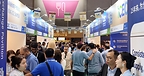
Asia’s first dedicated B2B Pre-Owned Mobile Devices focus pavilion
Tencent Brings AI Ecosystem Products to the Show
HONG KONG, Oct. 18, 2026 /PRNewswire/ — Phase II of the October 2026 Global Sources Hong Kong Shows opened today at AsiaWorld-Expo, running from October 18 to 21. The four-day event focuses on four core tracks — mobile electronics, smart home security and appliances, lifestyle electronics, and sports and outdoor — bringing together more than 2,100 quality Asian suppliers across more than 4,000 booths, showcasing approximately 160,000 new products including mobile devices, smart wearables, AR/VR, smart home, energy storage and charging, personal health care, pet products, and sports and outdoor equipment.
John Kao, Vice President of Hong Kong Shows & Overseas Shows at Global Sources, said: “Hong Kong possesses a regulatory framework aligned with international standards, efficient intellectual property protection, and proximity to the Greater Bay Area’s manufacturing heartland — enabling it to meet buyers’ dual demands for compliance and efficiency. Buyers no longer need to travel to multiple locations: right here in Hong Kong, they can assess Asian manufacturing supply, complete compliance reviews, and place orders — all in a single visit. The trust established between buyers and sellers on site is often difficult to achieve through months of email exchanges. We aim to continuously strengthen Hong Kong’s role as an international trade hub, enabling genuinely capable suppliers and serious buyers to connect efficiently on this platform.”
Asia’s First B2B Phone Trade Focus Pavilion Officially Debuts
Hong Kong has long been an important transit hub for the global second-hand phone trade. According to IDC data, global used smartphone shipments reached 225.7 million units in 2024 and are projected to maintain a compound annual growth rate of 4.9% through 2029. While the market continues to expand, compliant distribution capability remains the key threshold for entering this space.
For the first time, the show has partnered with the Hong Kong International Communications Electronic Chamber (HKICEC) to unveil the “HKICEC Global Mobile Exchange Pavilion,” Asia’s first dedicated B2B pavilion for Pre-Owned Mobile Devices. The pavilion brings together nearly 60 leading companies from Chinese Mainland, Hong Kong SAR, India, Japan, the United Arab Emirates, the United States, the United Kingdom, and beyond — including Zhuan Zhuan, ATRenew, US Mobile Phones Inc., Belong Inc., and ecoATM LLC — exhibits and services span new mobile devices, professionally tested and data-sanitized refurbished smart devices compliant with EU WEEE standards, intelligent testing technologies, recycling solutions, and compliant export services. The pavilion offers buyers from Europe, North America, and Southeast Asia a trusted and comprehensive sourcing platform, creating a green trade corridor that connects Chinese Mainland’s manufacturing strengths, Hong Kong SAR’s international platform, and global markets.
Tencent AI Makes Show Debut; AI Mass Production Enters the Delivery Phase
The product selection logic for AI products has undergone a marked shift in the second half of the year. The focus has moved entirely from “What new AI products are available?” to deployment capability and delivery efficiency — no longer chasing feature gimmicks alone, buyers place greater emphasis on whether products can effectively address real needs and ship reliably on schedule. Suppliers’ overall fulfillment capability has surpassed mere product highlights to become the primary assessment criterion in sourcing decisions. The Phase II “AI+ Theme Zone” features over 1,200 booths spanning seven segments: AI terminal devices, AI wearables, AI glasses, AI toys, AI pet products, AI personal health devices, and AI-integrated products, showcasing suppliers’ proven ability to move from concept to mass production. The zone also extends to lifestyle electronics including wearable electronics, smart pet products, personal care and beauty tech, sports, outdoor and fitness tech, gifts, and smart living, covering a wide range of real-world application scenarios.
Tencent joins forces with its ecosystem partners to exhibit under the theme “AI-Empowered Business Growth,” showcasing Tencent’s AI office assistant WorkBuddy alongside enterprise-grade AI solutions from ecosystem partners, including the AI-powered business growth tool Buda.im and Busabase. Running concurrently with the fair, the “AI Agent Summit” brings together over 100 industry, investment and technology leaders to explore how AI Agents are moving beyond demos into real-world deployment and revenue generation, with in-depth discussions on commercialisation pathways, industry standardisation and emerging opportunities across the AI Agent ecosystem. In addition, the show has partnered with the Taiwan Electrical and Electronic Manufacturers’ Association (TEEMA) to launch a Taiwan AI Supply Chain Theme Pavilion, showcasing the region’s established industrial cluster strengths in AI modules, components, and contract manufacturing.
Vietnamese Manufacturing and Mobile Accessories Take Center Stage; Diverse Sourcing Zones Debut
Phase II features a dedicated “Vietnam Sourcing Fair” zone, bringing together approximately 50 Vietnamese manufacturers with mature export capabilities, covering three product categories: fashion products and apparel, home and kitchenware, and gifts and packaging. For buyers seeking to diversify sourcing risks, the zone enables them to simultaneously access China’s main supply chain and Vietnam’s emerging production capacity at the same show, and negotiate directly face-to-face with Vietnamese factories.
With new-generation flagship smartphones from major brands hitting the market, demand for compatible mobile accessories is ramping up. The show floor features over 2,000 mobile-accessory booths showcasing new offerings including phone cases, charging gear, stands, and data cables, providing global buyers with an extensive range of options. The event also hosts the “Global Buyer’s Top Picks” creative phone-case contest to identify case designs with strong market potential.
The concurrent Hong Kong Security Tech Show, supported by the China Chamber of Commerce for Import and Export of Machinery and Electronic Products (CCCME), showcases products and solutions spanning security surveillance, smart access control, and cybersecurity.
Best of Innovation Awards Recognize Outstanding Products; Global New Product Launches Converge in Hong Kong
The Phase II Best of Innovation Awards focus on products across mobile electronics, smart home, security and appliances, lifestyle electronics, and sports and outdoor categories, with judging criteria emphasizing practicality, cost-effectiveness, technological maturity, and market relevance — identifying innovative products with genuine commercial deployment potential. Phase II also introduces a dedicated “AI Innovation Award” to recognize exhibits with outstanding applications of AI technology. The awards program continues its partnership with the internationally renowned European Product Design Award (EPDA)™ to present the “Best Product Design Award,” honoring products that combine innovative thinking with exceptional design. The show also serves as the preferred launch platform for multiple exhibitors’ annual new products, featuring heavyweight global and Asia premieres that further consolidate Hong Kong’s position as the world’s premier stage for consumer electronics product debuts.
About Global Sources
Global Sources is an internationally recognized multi-channel trade platform, connecting Asia with the world for 55 years. The company has been dedicated to facilitating global trade by connecting verified suppliers with qualified buyers worldwide. To date, it has successfully served more than 14 million registered buyers and users globally, providing efficient and convenient trade solutions.
View original content to download multimedia:https://www.prnewswire.com/apac/news-releases/october-2026-global-sources-hong-kong-shows-phase-ii-opens-today-302911972.html
SOURCE Global Sources
Technology
Global Times: Why does this mega-project on Yarlung Zangbo River make way for fish?
Published
1 hour agoon
October 18, 2026By

BEIJING, Oct. 18, 2026 /PRNewswire/ — “Building an ecological civilization concerns the well-being of the people and the future of the nation.”
Chinese President Xi Jinping, also general secretary of the Communist Party of China (CPC) Central Committee and chairman of the Central Military Commission, pointed out: “Respecting, adapting to, and protecting nature is essential for building China into a modern socialist country in all respects.”
As outlined in the 15th Five-Year Plan (2026-2030) for national economic and social development, securing major breakthroughs in strategic tasks of overall importance to Chinese modernization and making major new progress in the Beautiful China Initiative are set as key objectives.
The Global Times is launching a series of articles titled “BeautifulChinaING.” From the perspectives of the beauty of nature, the beauty of system and the beauty of lifestyle, the series uses both Chinese and international cases as entry points. Through field reporting and video storytelling, it explores how green development has become a defining feature of Chinese modernization while showcasing China’s role as a responsible major country providing global public goods.
In this installment, we turn our focus to the Qinghai-Xizang Plateau, where engineers, scientists and conservationists are working together to explore a new balance between hydropower development and ecological protection, ensuring the free migration of rare fish species in the Yarlung Zangbo River.
In the deep canyon in the middle reaches of the Yarlung Zangbo River, a hydropower station about 400 meters long and more than 100 meters high has released the tremendous force of the upstream river water. As the dam opened to discharge floodwaters, the surging water dropped by more than 60 meters, providing a solution to nearly 26 percent of electricity demand in Southwest China’s Xizang Autonomous Region. This mega hydropower station, known as the Huaneng Zangmu Hydropower Station, ended the history of Xizang region relying on diesel for large-scale power supply.
Standing in front of the dam, design engineer Zhang Lianming was filled with pride. For him, this hydropower station not only benefits people’s livelihoods, but also carries a special mission: in order to help the fish move freely between the upstream and downstream sections of the dam, a fishway was designed beside this mega-project. Since the hydropower station began operation in 2015, the fishway has helped about 570,000 fish “swim upstream.”
“The environment means well-being, the green mountains mean beauty and blue sky also represents happiness.” Zhang said in an interview with the Global Times, adding that when he saw that this water conservancy project not only delivers “green electricity” to thousands of households, but also makes the surrounding mountains greener, waters clearer, and fish and birds gather in the area, he has increasingly felt the meaning of this saying.
Swim back happily
Sun Chao, who is in charge of the Zangmu Hydropower Station, often goes to the fishway monitoring room to check the records of fish “crossing” the dam. When he sees fish successfully migrating back upstream through the glass curtain wall, a smile spreads across his face. “We feel about fish the same way fishing enthusiasts do,” Sun said. “The difference is that their happiness comes from catching fish, while ours comes from seeing fish swim back.”
Xizang region is an important ecological security barrier for the country and is also known as a “gene bank of species.” Its natural environment is unique, highly sensitive and fragile – a fact clearly reflected in the fish populations of the Yarlung Zangbo River. The seven fish species that pass through the fishway at the station are unique. Two of these species, the black-spotted catfish and the Lhasa schizothoracin, are protected as nationally second-class protected animals.
“Preventing hydropower stations from becoming barriers to the free movement of rare fish has special ecological significance,” Zhang said. When a dam blocks a river, the channels through which fish communicate are also cut off. Their living environment becomes more fragmented, which is detrimental to the integrity of aquatic ecosystems and to genetic exchange among fish populations.
However, fish native to the Yarlung Zangbo River are not typical migratory species; some are only semi-migratory. Once a hydropower station is built, they may simply adapt to their new surroundings and no longer return to their birthplace, Zhang pointed out.
The characteristics of fish in Yarlung Zangbo River made the design engineer realize that ensuring unobstructed fish migration had to be a key objective of the station. Only in this way could the fish mate freely, preserving the genetic strength of the river’s rare fish populations.
Moreover, to help ensure that the Yarlung Zangbo River is filled with more high-quality fish species, a stock enhancement and release project for breeding rare fish seedlings from the river has also been implemented at the Zangmu Hydropower Station.
“The project has continued for 12 years, and so far, 1.97 million fish have been released,” Sun calculated. “The construction of this large-scale fast-flowing fish stock enhancement and release station cost 48 million yuan ($7.10 million), the construction of the fishway cost about 360 million yuan ($53.27 million), and annual fry-breeding costs are nearly 7 million yuan ($1.04 million).”
“This hydropower station not only provides energy security, but also continues to invest heavily in taking on the vital responsibility of protecting the ecology of the plateau,” he stressed.
‘Leap over the dragon gate’
At the station, which stands more than 100 meters high, it is already difficult for an ordinary person to climb from the foot of the dam to the top. For fish in the Yarlung Zangbo River, swimming upstream across it is an even greater challenge. Relying on ingenious design, the builders have helped the fish successfully “leap over the dragon gate.”
From the outside, the station’s fishway looks no different from an ordinary diversion canal. The zigzagging artificial channel resembles a “hanging river,” connecting the upstream and downstream sides of the dam. But a closer look reveals many hidden features inside: cement walls are arranged in alternating patterns to create a winding waterway effect.
According to Zhang, the fishway consists of an inlet, an open-channel section crossing the dam, an outlet, and an observation and research room. Inside the open channel are fishway pools with a gradient of 2 percent. Every time the fishway rises 10 meters, a rest pool is provided for the fish, with the water speed in the pool controlled between 0.9 and 1.2 meters per second. A water-supply branch pipe is installed at the inlet, along with a flow-regulating valve, to create the optimal flow speed for attracting fish.
“Fish enjoy the sensory stimulation brought by flowing water, and suitable water flow can attract them into the fishway,” said Zhang. In his view, the key to the fishway’s success lies in respecting the fish’s natural instincts.
To this end, the design team built a scale-model fishway and captured fish from the river to conduct multiple flow-velocity tests. After six years of repeated experiments, the team finally determined that an inlet flow velocity of 0.92 to 1.2 meters per second was the “comfort zone” for the upstream migration of fish.
During the research and development process, members of the design team traveled to the US and Canada to learn from mature fishway projects.
During their research, they found that most fish in overseas rivers are carnivorous migratory fish, which are stronger and can migrate in rivers with steeper gradients. As a result, fishways overseas generally have a larger lifting angle, which means they can be built over a shorter distance.
In the Yarlung Zangbo River, however, the fish are mostly cold-water species with slow growth cycles and weaker swimming ability. Therefore, fishways built in the river need a smaller lifting angle.
This entire cross-disciplinary study of the ecology and behavior of fish in the Yarlung Zangbo River was compiled by the dam design team into a monograph. The project also won first prize in the 2023 Science and Technology Award in Xizang.
“When the fishway at Zangmu Hydropower Station was completed, it was the highest-altitude and largest fish-passage ecological and environmental protection project in China, breaking the long-standing convention that fish passes would no longer be considered for dams over 40 meters high,” Zhang said.
He believes the successful application of the fishway in Zangmu station has very important guiding significance for the future construction of fishways at high-altitude hydropower stations and for the protection of rare aquatic organisms, and it also plays a positive role in protecting fragile ecological environment in Xizang.
‘Fish face recognition’
Now, the fishway at Zangmu station has not only become a “distribution hub” for fish in the Yarlung Zangbo River, but also a “research station” for monitoring the river’s ecological condition.
In the fishway observation room, a smart monitoring system works like an “electronic toll station” on a highway, constantly and accurately collecting information on migrating fish as they pass through.
“The fact that 570,000 fish have passed upstream through the fishway is backed by data,” said Yang Xiaocheng, director of the safety and environmental protection department at the station. He specially showed Global Times reporters video footage recorded by the station on a day in May, in which large numbers of fish were seen racing upstream along the fishway toward the dam.
The scene was truly spectacular. “Every year from March to June is the spawning season for fish in the Yarlung Zangbo River, and it is also the peak period for migration.”
Since the station began operation, visualizing and quantifying changes in ecosystem in the Yarlung Zangbo River has been an important task for the station.
“At first, we assigned staff on fixed duty,” Yang said. Later, an AI system developed based on years of footage from the fishway was put into operation. According to the introduction, this system uses optical and sonar technologies to identify key features of migrating fish, such as fin characteristics and swimming posture, thereby recognizing and recording the fish’s “identity information,” with an accuracy rate of 95 percent, according to Yang.
In addition, this “fish face recognition” system also records information such as migration time and fishway water temperature. By combining and analyzing these data, it evaluates the effectiveness of the fishway under different conditions. These data are also shared with domestic research institutions for studies on fish behavior, and are eventually fed back to other hydropower stations in China.
In recent years, tagged fish released in previous years have been found in the section where the Nyang River and the Yarlung Zangbo River meet, about 200 kilometers downstream of the Zangmu Hydropower Station. This fully proves that the fry artificially released by the station have successfully adapted to the wild environment.
“From the monitoring results, the fish population in the middle reaches of the Yarlung Zangbo is very stable, and has not decreased, because of the construction of the hydropower station. On the contrary, the aquatic ecology and animal-plant life in the entire middle gorge section of the Yarlung Zangbo River have shown positive changes,” Yang said.
At the same time, monitoring has shown that animals that live alongside water, such as otters and mergansers, are appearing more and more around the Zangmu Hydropower Station.
Harmony between humans and water, and coexistence among all things, is not impossible. Such a beautiful picture of ecological civilization is taking shape on the Yarlung Zangbo River, Zhang added.
View original content:https://www.prnewswire.com/news-releases/global-times-why-does-this-mega-project-on-yarlung-zangbo-river-make-way-for-fish-302911962.html
SOURCE Global Times


Advanced Manufacturing in Focus: Smart Life and Robotics Take the Spotlight at 140th Canton Fair

October 2026 Global Sources Hong Kong Shows Phase II Opens Today

Cysic crypto bridge halted after unauthorized mint of 10M CYS

Send Rakhi to UK swiftly with UK Gifts Portal

Whiteboard Series with NEAR | Ep: 45 Joel Thorstensson from ceramic.network

Nullmax and Renesas Forge Strategic Partnership to Deliver Competitive ADAS Solutions for the Global Market

Why You Should Build on #NEAR – Co-founder Illia Polosukhin at CV Labs
Whiteboard Series with NEAR | Ep: 45 Joel Thorstensson from ceramic.network

NEAR End of Year Town Hall 2021: The Open Web World, MetaBUILD 2 Hackathon and 2021 recap
Trending
-

 Technology5 days ago
Cresta Launches Deputy Agent: an AI Agent That Keeps Working Long After the Customer Hangs Up
-

 Technology5 days ago
Collective X Health Launches With a $3.2 Million Pre-Seed Round to Close the Women’s Health Data Gap
-
 Technology5 days ago
SUBSCRIBE Launches 1031 DST Exchange Transaction Platform
-

 Technology5 days ago
MassPay Adds Paymode Virtual Card and Premium ACH to Its Platform
-

 Coin Market5 days ago
Russia clears Sberbank for crypto trading ahead of December launch
-

 Coin Market5 days ago
Digital cash offers ‘cash-like privacy,’ but bank data breaches threaten users: BIS
-
Technology5 days ago
Voxel Advances System of Reality Capabilities and Fuels Global Expansion with Addition of Ventral AI
-

 Technology5 days ago
Celebree School Rises on the 2026 Franchise Times Top 400 for a Third Straight Year