Connect with us

Technology

Signal Jammer Market size is set to grow by USD 1.08 billion from 2024-2028, Regular investments in military expenses boost the market, Technavio

Published

on

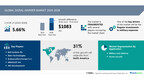
NEW YORK, June 26, 2024 /PRNewswire/ — The global signal jammer market size is estimated to grow by USD 1.08 billion from 2024-2028, according to Technavio. The market is estimated to grow at a CAGR of over 5.66%  during the forecast period. Regular investments in military expenses is driving market growth, with a trend towards ease of building software reprogrammable radios and related systems. However, legal issues with cellular phone jammers  poses a challenge. Key market players include BAE Systems Plc, Elpro Technologies, Endoacustica Europe S.r.l., HENSOLDT AG, HSS Development, Israel Aerospace Industries Ltd., KIRINTEC Ltd., L3Harris Technologies Inc., Lockheed Martin Corp., MCTECH RF TECHNOLOGIES Ltd., Northrop Grumman Corp., Phantom Technologies Ltd., PKI Electronic Intelligence GmbH, RTX Corp., Rohde and Schwarz GmbH and Co. KG, SESP Group, SPX Technologies Inc., Stratign, Thales Group, and unival group GmbH.

Get a detailed analysis on regions, market segments, customer landscape, and companies- View the snapshot of this report

Signal Jammer Market Scope

Report Coverage

Details

Base year

2023

Historic period

2018 – 2022

Forecast period

2024-2028

Growth momentum & CAGR

Accelerate at a CAGR of 5.66%

Market growth 2024-2028

USD 1083 million

Market structure

Fragmented

YoY growth 2022-2023 (%)

5.27

Regional analysis

North America, Europe, APAC, Middle East and Africa, and South America

Performing market contribution

North America at 31%

Key countries

US, China, Germany, UK, and Japan

Key companies profiled

BAE Systems Plc, Elpro Technologies, Endoacustica Europe S.r.l., HENSOLDT AG, HSS Development, Israel Aerospace Industries Ltd., KIRINTEC Ltd., L3Harris Technologies Inc., Lockheed Martin Corp., MCTECH RF TECHNOLOGIES Ltd., Northrop Grumman Corp., Phantom Technologies Ltd., PKI Electronic Intelligence GmbH, RTX Corp., Rohde and Schwarz GmbH and Co. KG, SESP Group, SPX Technologies Inc., Stratign, Thales Group, and unival group GmbH

Market Driver

The signal jammer market has experienced significant advancements, transitioning from analog to digital and wideband radios. These technological upgrades are attributed to semiconductor device advancements, such as CMOS and transistors, enabling low-power and multi-range functionalities. Notable developments include the AN/ALQ-99 Tactical Jamming System, now transitioning to the EA-18G, which intercepts, processes, and jams diverse radar threats with upgraded transmitters. Wyle leads in UEU software development for the ALQ-99, while firms like Raytheon and BAE Systems continue to innovate, ensuring technologically advanced and robust signal jammers. 

The Signal Jammer market has seen significant growth in recent years due to the increasing demand for signal blocking technology. Companies produce various types of signal jammers, such as mobile phone jammers, Wi-Fi jammers, and GPS jammers. These devices are used to prevent unwanted signals from interfering with sensitive communications or electronic devices. The market is driven by the need for privacy and security in various industries, including military, law enforcement, and businesses. Additionally, the trend towards remote work and online learning has increased the demand for signal jamming technology to ensure secure and uninterrupted connections. Despite the benefits, it is important to note that the use of signal jammers is regulated by law in many countries. 

Research report provides comprehensive data on impact of trend. For more details- Download a Sample Report

Market Challenges

The signal jammer market is subject to legal restrictions due to the prohibition of cellular phone signal jamming in many countries. These devices interfere with licensed services and pose safety hazards by blocking emergency calls. In Australia, possession, operation, or supply of signal jammers is an offense punishable by imprisonment or a hefty fine. The potential impact on public health, safety, and mobile network revenues further justifies the legal elimination of signal jammers. Countries like the UK, Ireland, the US, and Europe have also banned their use. Only educational institutions and government agencies should be authorized to use signal jammers for specific purposes.The Signal Jammer market faces several challenges in its operation and growth. Regarding regulations, authorities continue to detect and penalize unauthorized use of signal jammers. Compliance with local laws and international treaties is crucial for businesses in this sector. Technologically, keeping up with new frequencies and signals can be a challenge. Signals are constantly evolving, and jamming devices must be updated accordingly. Additionally, the increasing use of encrypted communication and advanced security measures poses a significant hurdle for signal jammers. Militaries and governments remain major buyers, but their procurement processes are lengthy and complex. Prices are also a challenge, as consumers seek affordable options while manufacturers strive to maintain profitability. Overall, the Signal Jammer market requires continuous innovation and adaptation to overcome these challenges.

For more insights on driver and challenges – Request a sample report!

Segment Overview 

This signal jammer market report extensively covers market segmentation by  

Application 1.1 Military and defense1.2 Home securityProduct Type2.1 Stationary signal jammer2.2 Portable signal jammerGeography 3.1 North America3.2 Europe3.3 APAC3.4 Middle East and Africa3.5 South America

1.1 Military and defense-  The global signal jammer market caters to the military and defense sector, supplying devices that obstruct enemy radar and communication systems. These jammers prevent enemy missiles and counterstrikes by blocking specific frequencies. Fitted in helicopters and military planes, they generate multiple frequency ranges for jamming threats. Vendors focus on next-generation technologies, partnering with OEM experts and distributors. In 2023, the US Air Force contracted Southwest Research Institute for USD4.8 million to protect aircraft from enemy radar. Major users include the US, Germany, UK, France, China, and India, utilizing jammers to safeguard air defense systems. Defense procurements and new aircraft/ship purchases are expected to boost demand.

For more information on market segmentation with geographical analysis including forecast (2024-2028) and historic data (2017-2021) – Download a Sample Report

Research Analysis

The Signal Jammer Market encompasses various types of devices designed to disrupt or block wireless communications. These include GPS jammers, which interfere with Global Positioning System signals, and defense and military-grade signal jammers used for securing restricted areas. Wireless home alarms and bug detectors also utilize signal jamming technology to ensure privacy and security. Remote control jammers can disrupt transmissions to prevent unwanted interference. The market for signal jammers extends to industries such as hospitals, prisons, entertainment venues, and libraries, where security is paramount. Unmanned aerial vehicles (UAVs) are also potential targets for signal jamming in military and defense applications. The market for signal jammers operates within a range of frequencies, with receivers and transmitters playing crucial roles in their functionality.

Learn and explore more about Technavio’s in-depth research reports

The Global Navigation Satellite System (GNSS) devices market is experiencing rapid growth driven by advancements in technology and increasing demand for precise positioning solutions. Key sectors such as automotive, defense, and agriculture are significantly adopting GNSS devices for enhanced navigation, tracking, and timing capabilities. Emerging applications in unmanned vehicles and smart city infrastructure further propel market expansion. Innovations in multi-constellation support and miniaturization are also key trends, providing improved accuracy and reliability. With continuous investment in R&D, the GNSS devices market is poised for substantial development, catering to the evolving needs of various industries worldwide.

Market Research Overview

The Signal Jammer Market refers to the industry dedicated to producing and supplying devices that interfere with or block wireless communications. These devices are used for various purposes, including military applications, personal privacy, and even pranking. The market for signal jammers is driven by the increasing reliance on wireless technology in various sectors, such as transportation, telecommunications, and defense. The market is also fueled by advancements in technology, which have led to the development of more sophisticated and effective signal jamming devices. Some of the key features of the signal jammer market include its global reach, its growing demand, and its regulatory challenges. The market is expected to continue growing in the coming years, driven by the increasing use of wireless technology and the need for security and privacy.

Table of Contents:

1 Executive Summary
2 Market Landscape
3 Market Sizing
4 Historic Market Size
5 Five Forces Analysis
6 Market Segmentation

ApplicationMilitary And DefenseHome SecurityProduct TypeStationary Signal JammerPortable Signal JammerGeographyNorth AmericaEuropeAPACMiddle East And AfricaSouth America

7 Customer Landscape
8 Geographic Landscape
9 Drivers, Challenges, and Trends
10 Company Landscape
11 Company Analysis
12 Appendix

About Technavio

Technavio is a leading global technology research and advisory company. Their research and analysis focuses on emerging market trends and provides actionable insights to help businesses identify market opportunities and develop effective strategies to optimize their market positions.

With over 500 specialized analysts, Technavio’s report library consists of more than 17,000 reports and counting, covering 800 technologies, spanning across 50 countries. Their client base consists of enterprises of all sizes, including more than 100 Fortune 500 companies. This growing client base relies on Technavio’s comprehensive coverage, extensive research, and actionable market insights to identify opportunities in existing and potential markets and assess their competitive positions within changing market scenarios.

Contacts

Technavio Research
Jesse Maida
Media & Marketing Executive
US: +1 844 364 1100
UK: +44 203 893 3200
Email: media@technavio.com
Website: www.technavio.com/

View original content to download multimedia:https://www.prnewswire.com/news-releases/signal-jammer-market-size-is-set-to-grow-by-usd-1-08-billion-from-2024-2028–regular-investments-in-military-expenses-boost-the-market-technavio-302182783.html

SOURCE Technavio

Continue Reading
Click to comment

Leave a Reply

Your email address will not be published. Required fields are marked *

Technology

Keeper Security Launches Integration With Wiz to Remediate Critical Cloud Vulnerabilities

Published

on

By

With new integration, Keeper’s identity security platform remediates vulnerabilities discovered by Wiz, enabling closed-loop protection across cloud environments.

CHICAGO, June 16, 2026 /PRNewswire/ — Keeper Security, the leading zero-trust and zero-knowledge identity security and Privileged Access Management (PAM) platform, today announces a new integration with Wiz, a leading cloud and AI security platform that is now part of Google Cloud. Joining the Wiz Integration Network establishes Keeper as a remediation engine for identity security vulnerabilities discovered by Wiz, closing the loop between cloud security detection and active risk resolution. When Wiz identifies an identity-related vulnerability, spanning human users, machine identities, AI agents and database accounts, it automatically surfaces the finding in Keeper’s Cloud Security dashboard, where security teams can review and remediate each issue directly within KeeperPAM®.

As cloud environments grow more complex, organizations face an expanding attack surface driven by the rapid proliferation of Non-Human Identities (NHIs), autonomous AI agents and over-privileged service accounts. Wiz surfaces these risks with unmatched cloud visibility and Keeper provides joint customers with an automated, trusted path from discovery to remediation.

“Finding a vulnerability is the first half of the battle,” said Craig Lurey, CTO and Co-founder of Keeper Security. “By integrating with Wiz, Keeper helps customers rotate compromised credentials, enforce privileged access management and reduce over-permissioned identities, turning Wiz’s detection power into faster, more decisive risk reduction. This is the future of cloud security – detection and remediation working as one, giving security teams a clear path from vulnerability discovery to resolution across the identities and workloads that matter most.”

“We’re happy to welcome Keeper to the Wiz Integration Network,” said Oron Noah, VP of Product, Extensibility & Partnerships at Wiz. “Together, we’re helping customers connect cloud risk findings with privileged access controls, making it easier to move from discovery to remediation. By bringing cloud visibility and access management into a unified workflow, teams can better secure both human and machine identities at scale.”

At the heart of the integration is a real-time workflow that transforms Wiz’s Issues into Keeper-driven remediation actions. When a Wiz customer enables the Keeper integration, Wiz scans the cloud environment for identity security vulnerabilities within Keeper’s remediation scope. Security teams can then select a finding and execute the appropriate remediation action through KeeperPAM:

Rotate compromised credentials and vault updated secretsBring unmanaged accounts under PAM governanceReduce excessive privileges for users, service accounts and IAM rolesMap Wiz Issues to existing PAM records or onboard new resourcesSubmit resolutions back to Wiz to close the loop on each finding

This tight integration bridges the gap between cloud security detection and identity security remediation, giving security teams a single, closed-loop workflow. Rather than manually triaging Wiz Issues and separately executing remediation steps in Keeper, KeeperPAM works alongside Wiz by automatically receiving identity-related Issues and streamlining the remediation steps. For teams, this results in accelerated Mean Time To Remediation (MTTR) and a dramatically reduced window of exposure before a vulnerability can be exploited.

The integration is especially powerful in AI-native environments, where autonomous agents and service accounts can rapidly accumulate excessive permissions across cloud infrastructure. Wiz’s AI Application Protection Platform (AI-APP) detects over-privileged AI agents, insecure service configurations and other AI-native risks. Keeper serves as a designated remediation engine, enforcing least privilege policies and enabling just-in-time access controls for AI agents in response. Together, they secure the full AI lifecycle from code to runtime, without requiring manual intervention from security teams.

Key benefits include:

Streamlined Identity Remediation: When Wiz discovers an identity security vulnerability, Keeper takes action – rotating compromised credentials, enforcing PAM controls and reducing excess privileges – streamlining the steps between detection and resolution.Closed-Loop Security Workflow: Connect Wiz’s industry-leading cloud and AI vulnerability detection directly to Keeper’s privileged access management platform for a complete detect-to-remediate pipeline that operates at cloud scale.Accelerated Mean Time to Remediation: By accelerating response to identity vulnerabilities at the moment of discovery, organizations dramatically shrink the window of exposure and reduce the risk of breach escalation.Comprehensive Identity Coverage: Remediation scope covers the full range of identity types, including human users, machine identities, AI agents and database accounts, ensuring no privileged entity goes unmanaged across cloud environments.

KeeperPAM, Keeper’s cloud-native privileged access management platform, unifies password, secrets and connections management with zero-trust network access, endpoint privilege management and remote browser isolation in a single solution. Built on a zero-trust and zero-knowledge architecture, KeeperPAM provides real-time visibility, automated credential security and AI-powered session monitoring to help organizations prevent breaches and maintain compliance across hybrid and multi-cloud environments.

By connecting detection directly to remediation, Keeper and Wiz give security teams the confidence that cloud risks are not just visible, but actively resolved. KeeperPAM’s zero-trust architecture ensures every remediation action maintains a verifiable chain of custody – from Wiz’s initial finding through to Keeper’s corrective action – supporting both continuous compliance and audit readiness.

Keeper’s integration with Wiz is available now. Review the full release notes in the Keeper documentation.

About Keeper Security
Keeper Security is the leading zero-trust and zero-knowledge identity security solution, trusted by millions of people and thousands of organizations globally. KeeperPAM® is Keeper’s privileged access management platform that unifies password and passkey management, secrets management, privileged session management and endpoint privilege management in a single cloud-native platform, protected with quantum-resistant encryption. KeeperAI delivers real-time, AI-native threat detection across every privileged session. As AI agents proliferate and identity becomes the defining attack surface, Keeper governs access for humans, machines, non-human identities and AI agents, serving as the unified control plane for access, compliance and visibility across the enterprise. For more information, visit KeeperSecurity.com.

Learn more: KeeperSecurity.com

Follow Keeper: Facebook Instagram LinkedIn X YouTube TikTok

Media Contact
Katherine Benfield
ICR for Keeper Security
keepersecurity@icrinc.com


View original content to download multimedia:https://www.prnewswire.com/news-releases/keeper-security-launches-integration-with-wiz-to-remediate-critical-cloud-vulnerabilities-302801062.html

SOURCE Keeper Security

Continue Reading

Technology

Benzinga Launches Institutional Portfolio Intelligence API for Faster Institutional Ownership Intelligence

Published

on

By

DETROIT, June 16, 2026 /PRNewswire/ — Benzinga, a leading provider of market intelligence and financial data APIs, today announced the launch of its Institutional Portfolio Intelligence API. The new dataset is designed to help brokerages, fintech platforms, quantitative researchers, and investor applications uncover signals hidden within hedge fund and institutional portfolios.

The dataset provides institutional holdings, capital flow trends, portfolio analytics, and ownership intelligence across more than 11,000 U.S. equities and ETFs. It delivers portfolio intelligence covering more than 8,000 hedge funds and institutional managers representing over $50 trillion in assets under management.

Unlike many institutional ownership datasets that refresh on quarterly reporting cycles, Benzinga’s Institutional Portfolio Intelligence API instantly incorporates newly filed 13F disclosures as they become available. Firms can use this data to identify emerging trends, monitor shifts in institutional conviction, and uncover actionable insights from large-scale portfolio activity sooner.

As investors seek deeper insights beyond traditional market data, understanding how professional money managers allocate capital has become an increasingly valuable source of intelligence.

“While institutional holdings are reported quarterly, the market doesn’t wait for quarterly data refreshes,” said Clint Rhea, Manager of Institutional and Channel Partnerships at Benzinga. “Our Institutional Portfolio Intelligence API captures new 13F disclosures as they are filed, allowing clients to identify position initiations, exits, and conviction changes from some of the world’s largest investors as quickly as possible. Whether you’re monitoring a crowded short, tracking institutional accumulation, validating an investment thesis, or understanding how professional money managers are allocating capital, speed and breadth of coverage matter. This dataset delivers on all of them.”

Key capabilities of the Institutional Portfolio Intelligence API include:

Institutional holdings and portfolio dataOwnership trends and capital flow analysisConsensus fund positioning insightsPortfolio concentration and allocation analyticsOutlier trade and conviction signal identificationHistorical coverage dating back to 2013Coverage across 11,000+ U.S. equities and ETFs (and 20,000+ delisted tickers)Fund sentiment by ticker, theme, industry or sectorFund performance and copy-traded returnsFund P/L and other fund manager metricsReal-time raw filings and insights

The dataset is designed for integration into brokerage platforms, portfolio research tools, screening applications, quantitative models, and investor-facing experiences. Available via API, WebSockets, and flat file delivery, the solution enables firms to incorporate institutional intelligence directly into their products and workflows.

The launch further expands Benzinga’s growing suite of institutional-grade market data solutions, helping clients build more informed investing experiences powered by actionable intelligence, alternative datasets, and more timely visibility into institutional portfolio activity.

About Benzinga

Benzinga is a leading financial media and data technology company that empowers investors with high-quality, real-time market intelligence. Through its news platform, APIs, and data products, Benzinga provides traders, financial institutions, and fintech platforms with the insights they need to make smarter investment decisions. From breaking news and analyst ratings to corporate events and alternative datasets, Benzinga’s tools help market participants stay ahead of the information that drives price movement.

To learn more, visit www.benzinga.com/apis/.

View original content to download multimedia:https://www.prnewswire.com/news-releases/benzinga-launches-institutional-portfolio-intelligence-api-for-faster-institutional-ownership-intelligence-302801012.html

SOURCE Benzinga

Continue Reading

Technology

Made Card and Multiply Mortgage Partner to Extend Homeowner Benefits Beyond Closing Day

Published

on

By

NEW YORK, June 16, 2026 /PRNewswire/ — Made Card, the first credit card purpose-designed for the homeowner, today announced a partnership with Multiply Mortgage, the leading provider of homeownership benefits, helping employees across 1,200+ employers finance homes with lower rates and concierge-level support through their workplace.

Made is designed for what comes after closing day. Multiply connects employees to expert loan advisors and competitive rates through a workplace benefit. Made picks up where the mortgage leaves off, turning unavoidable home costs into a measurable financial return. Through the partnership, homebuyers who finance with Multiply will receive access to a suite of exclusive benefits built for new homeowners including a sign-on bonus redeemable toward closing costs and elevated cashback on mortgage payments, utilities, maintenance, and repairs.

“This partnership is a personal one for me,” said Alex Song, Co-Founder of Made Card. “Two years ago, Multiply helped me buy my own home, and I believed in what they were building so much that I became one of their earliest investors. Today we get to build together as operators. Multiply reaches homebuyers at the exact moment they are making the largest financial decision of their lives, and they do it with a level of care I experienced firsthand. Connecting that moment to Made is exactly what this card was built for.”

“Multiply exists to make homeownership more accessible and less stressful, and Made Card extends that mission past closing day,” said Michael White, Co-Founder and CEO of Multiply Mortgage. “Our clients are navigating the biggest purchase of their lives. Pairing that with a card built around what owning actually costs is exactly the benefit our customers deserve.”

About Made Card
Made is building the first credit card purpose-designed for the homeowner’s expenses: the predictable bills, the unexpected ones, and the administrative and emotional weight that no existing financial product was built to address. Turning that unavoidable cost into a measurable financial return, Made addresses a spend category every other card ignores and is building the next-gen home ecosystem.

About Multiply Mortgage
Multiply Mortgage helps employees navigate the largest purchase of their lives: buying a home. Multiply’s financial wellness benefit offers mortgage interest rate discounts and personalized guidance throughout the home financing process, all with zero cost or administrative overhead for the company.

Media Contact
media@madecard.com
madecard.com

View original content to download multimedia:https://www.prnewswire.com/news-releases/made-card-and-multiply-mortgage-partner-to-extend-homeowner-benefits-beyond-closing-day-302800954.html

SOURCE Made Card

Continue Reading

Trending