Connect with us

Technology

Crop Harvesting Robots Market size is set to grow by USD 5.04 billion from 2024-2028, Increasing focus on farm mechanization to boost the market growth, Technavio

Published

on

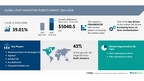
NEW YORK, Aug. 13, 2024 /PRNewswire/ — The global crop harvesting robots market  size is estimated to grow by USD 5.04 billion from 2024-2028, according to Technavio. The market is estimated to grow at a CAGR of over 39.01%  during the forecast period. Increasing focus on farm mechanization is driving market growth, with a trend towards expansion of greenhouse farms. However, high maintenance cost  poses a challenge. Key market players include Advanced Farms Technologies Inc., Agrobot, Antobot Ltd., AvL Motion BV, Clearpath Robotics Inc., Deere and Co., Dogtooth Technologies Ltd., FFRobotics, Harvest Automation, Harvest CROO Robotics LLC, MetoMotion, Muddy Machines Ltd., Ondas Holdings Inc., Rowbot Systems LLC, Small Robot Co., SwarmFarm Robotics, Teradyne Inc., Tevel Aerobotics Technologies, Torguga Agricultural Technologies Inc., and Vision Robotics Corp..

Get a detailed analysis on regions, market segments, customer landscape, and companies – Click for the snapshot of this report

Forecast period

2024-2028

Base Year

2023

Historic Data

2018 – 2022

Segment Covered

Type (Semi-autonomous robots and Fully-autonomous robots), Product (Fruit and vegetable harvesting robots and Grain harvesting robots), and Geography (North America, Europe, APAC, South America, and Middle East and Africa)

Region Covered

North America, Europe, APAC, South America, and Middle East and Africa

Key companies profiled

Advanced Farms Technologies Inc., Agrobot, Antobot Ltd., AvL Motion BV, Clearpath Robotics Inc., Deere and Co., Dogtooth Technologies Ltd., FFRobotics, Harvest Automation, Harvest CROO Robotics LLC, MetoMotion, Muddy Machines Ltd., Ondas Holdings Inc., Rowbot Systems LLC, Small Robot Co., SwarmFarm Robotics, Teradyne Inc., Tevel Aerobotics Technologies, Torguga Agricultural Technologies Inc., and Vision Robotics Corp.

Key Market Trends Fueling Growth

The global crop harvesting robots market is experiencing growth due to the increasing number of greenhouse farms. Greenhouses protect crops from harsh climatic conditions, making them essential for agriculture in countries with extreme climates like Russia and France. The lack of skilled laborers for greenhouse tasks and government subsidies, such as India’s National Horticulture Mission, encourage the expansion of these farms. For instance, Revolution Farms and BrightFarms have announced plans to expand their greenhouse facilities, which may increase the demand for crop harvesting robots and fuel market growth. 

The Crop Harvesting Robots market is witnessing significant growth due to increasing trends in automation and labor shortages in agriculture. Companies like Deveron and Veritas Farm Management are leading the way with their innovative solutions for fruit and grain harvesting. Yamaha’s crop-specific harvesting robots are making waves in field crops, while PrecisionHawk focuses on orchards and vineyards. Fully automated harvesting using robotic arms and computer vision technology is becoming the norm. AgriTech firms, such as Elbow Beach, are raising funds through Seedrs rounds to develop new robots with artificial intelligence and large language models. EPFL is at the forefront of robot design, while hardware and service providers support the industry’s efficiency, productivity, and consistency. Unmanned Ground Vehicles are also playing a crucial role in crop monitoring and environment agriculture. Overall, these advancements aim to improve quality and reduce the cost of labor. 

Discover 360° analysis of this market. For complete information, schedule your consultation- Book Here!

Market Challenges

The crop harvesting process with robots includes detection, removal, placement, and vehicle motion to the next plant. Long harvesting hours for fruits and vegetables necessitate multiple machines, increasing user expenses. Advanced technology integration in robots leads to high equipment costs. Continuous use requires maintenance, repairs, and battery recharges, adding to operational costs. In developing countries, these costs hinder market growth due to affordability concerns. (Exact word count: 50)The Crop Harvesting Robots market is experiencing significant growth due to the increasing demand for automation and labor cost savings in the Agricultural sector. Companies like AgJunction, Agrobot, Harvest CROO, Tertill, Harvest Automation, and Bowery Farming are leading the way with Unmanned Ground Vehicles (UGVs) and Unmanned Aerial Vehicles (UAVs) for Fruit, Vegetable, and Grain Harvesting. Challenges include GPS guidance, steering systems, and machine learning for precision agriculture. Harvesting robots from companies like Harvest Automation, Traptic, and HV100 are addressing these challenges. Financial assistance through subsidies and incentives, farm infrastructure, and technological innovation are crucial for the adoption of these robots. Precision agriculture, sustainable agriculture, and addressing food demand due to population growth are key drivers. Companies like John Deere, Blue River Technology, and CNH Industrial are also investing in Agricultural Robots to improve crop yields, especially for Organic and Specialty crops. However, concerns regarding soil quality, environment, pesticides, and herbicides need to be addressed. Technology advancements in this field will continue to shape the future of farming.

For more insights on driver and challenges – Download a Sample Report

Segment Overview 

This crop harvesting robots market report extensively covers market segmentation by

Type 1.1 Semi-autonomous robots1.2 Fully-autonomous robotsProduct 2.1 Fruit and vegetable harvesting robots2.2 Grain harvesting robotsGeography 3.1 North America3.2 Europe3.3 APAC3.4 South America3.5 Middle East and Africa

1.1 Semi-autonomous robots-  Semi-autonomous robots have revolutionized agriculture, particularly in crop harvesting. These robots offer numerous benefits, including increased efficiency and reduced labor requirements. In the field of harvesting, robots work continuously without breaks and can operate in challenging conditions, such as slopes or extreme temperatures. They utilize precision technology to identify ripe produce and pick it with care, minimizing damage. In planting, robots ensure optimal growing conditions by accurately placing seeds at specific depths and spacings. Semi-autonomous tractors perform tasks like tilling, plowing, and fertilizing using GPS navigation and programmable functions. The global market for crop harvesting robots is poised for growth due to these advantages.

For more information on market segmentation with geographical analysis including forecast (2024-2028) and historic data (2018 – 2022)  – Download a Sample Report

Learn and explore more about Technavio’s in-depth research reports

The Global Autonomous Mobile Robots Market is witnessing rapid growth, driven by advancements in AI and robotics technology. These robots are increasingly used in industries like manufacturing, logistics, and healthcare for tasks such as material handling and transportation. Meanwhile, the Global Agriculture Market is also evolving, with autonomous mobile robots playing a key role in precision farming, crop monitoring, and automated harvesting. These innovations are enhancing efficiency, reducing labor costs, and driving the overall growth of both markets globally.

Research Analysis

The Crop Harvesting Robots market is experiencing significant growth due to labor shortages and increasing cost of labor in the Agricultural sector. AgriTech innovations, such as agriculture robots, are revolutionizing farming with the use of artificial intelligence, computer vision, and robotics. These advanced technologies enable robots to identify ripe fruits and vegetables, navigate through fields, and use robotic arms for harvesting. Research institutions like EPFL are leading the way in robot design and hardware development. Financial assistance through Seedrs rounds, subsidies, and incentives are also driving the adoption of these robots in large-scale farming, as well as in niche markets for organic crops and specialty crops. Machine learning and automation are further enhancing crop yields and reducing reliance on human labor. Overall, the future of crop harvesting is looking automated and efficient.

Market Research Overview

The Crop Harvesting Robots market is experiencing significant growth due to labor shortages and increasing cost of labor in the agricultural sector. AgTech innovations, such as agriculture robots, artificial intelligence, computer vision, and robotic arms, are revolutionizing harvesting processes. Elaborate robot designs, including Unmanned Ground Vehicles (UGVs) and Unmanned Aerial Vehicles (UAVs), are being developed for Fruit, Vegetable Harvesting, Grain Harvesting Robots, and more. Companies are turning to financial assistance, such as Seedrs rounds, subsidies, and incentives, to invest in farm infrastructure and technological innovation. Precision agriculture and sustainable agriculture are key drivers, with a focus on improving crop yields, especially for organic and specialty crops in niche markets.

Machine learning and GPS guidance systems are essential components of these advanced robotic systems. John Deere, Blue River Technology, CNH Industrial, AgJunction, Agrobot, Harvest CROO, Tertill, Harvest Automation, HV100 robots, Bowery Farming, Traptic, and many others are leading the charge in this sector. The agricultural sector faces challenges like pesticides, herbicides, soil quality, and environmental concerns.

Robotics and automation offer solutions to these issues while increasing efficiency, productivity, quality, consistency, and crop monitoring. Food demand and population growth necessitate technological advancements in the agricultural sector, with UGVs and UAVs playing a crucial role in meeting these demands while minimizing labor costs.

Field crops, orchards, vineyards, and greenhouses are all benefiting from these advancements, with fully automated harvesting systems being developed for various cropspecific applications. Manual harvesting is being phased out in favor of these advanced, labor-saving technologies. The future of agriculture lies in the integration of robotics, artificial intelligence, and precision farming techniques to create a more efficient, productive, and sustainable agricultural sector.

Table of Contents:

1 Executive Summary
2 Market Landscape
3 Market Sizing
4 Historic Market Size
5 Five Forces Analysis
6 Market Segmentation

TypeSemi-autonomous RobotsFully-autonomous RobotsProductFruit And Vegetable Harvesting RobotsGrain Harvesting RobotsGeographyNorth AmericaEuropeAPACSouth AmericaMiddle East And Africa

7 Customer Landscape
8 Geographic Landscape
9 Drivers, Challenges, and Trends
10 Company Landscape
11 Company Analysis
12 Appendix

About Technavio

Technavio is a leading global technology research and advisory company. Their research and analysis focuses on emerging market trends and provides actionable insights to help businesses identify market opportunities and develop effective strategies to optimize their market positions.

With over 500 specialized analysts, Technavio’s report library consists of more than 17,000 reports and counting, covering 800 technologies, spanning across 50 countries. Their client base consists of enterprises of all sizes, including more than 100 Fortune 500 companies. This growing client base relies on Technavio’s comprehensive coverage, extensive research, and actionable market insights to identify opportunities in existing and potential markets and assess their competitive positions within changing market scenarios.

Contacts

Technavio Research
Jesse Maida
Media & Marketing Executive
US: +1 844 364 1100
UK: +44 203 893 3200
Email: media@technavio.com
Website: www.technavio.com/

View original content to download multimedia:https://www.prnewswire.com/news-releases/crop-harvesting-robots-market-size-is-set-to-grow-by-usd-5-04-billion-from-2024-2028–increasing-focus-on-farm-mechanization-to-boost-the-market-growth-technavio-302219792.html

SOURCE Technavio

Continue Reading
Click to comment

Leave a Reply

Your email address will not be published. Required fields are marked *

Technology

Northern Hemisphere Heat Drives Demand for Cooling and Sun-Protection Products on Yiwugo

Published

on

By

YIWU, China, July 24, 2026 /PRNewswire/ — Yiwugo.com, the official website of the Yiwu Commodity Market, is the largest commodity wholesale market in the world. The final whistle may have blown on the World Cup, but the intense heat gripping the Northern Hemisphere shows no sign of letting up. Europe has experienced unusually hot weather this year, sparking not only a surge in demand for air conditioners but also a boom in portable handheld fans. Merchants on Yiwugo say that in previous years, European customers would begin placing orders in March or April and take their time completing their annual procurement. This year, however, the purchasing season has stretched well into summer, with a flood of new buyers coming in, most of them looking for small handheld fans. With customers eager to capitalize on the peak summer season, delivery timelines have also become significantly tighter. Whereas orders in previous years could generally be fulfilled within a month, merchants are now frequently being asked to deliver within about a week, leaving manufacturers scrambling to keep pace with demand.

Lingpan Official Flagship Store has specialized in the production and sales of small fans, insulated cups, and related products for 15 years. This summer, demand from European customers for high-speed small fans has risen sharply, accompanied by urgent delivery requirements. Many customers began requesting shipment just one week after placing their orders, hoping the products would arrive in time for the World Cup and the ongoing heatwave across Europe. One long-standing European customer purchased only five models of small fans from Lingpan last year. Anticipating stronger demand ahead of this summer, the customer expanded the order to 10 models. The first shipment sold out soon after arriving at port, prompting several subsequent repeat orders. European buyers have shown particular interest in high-speed cooling fans and placed great requirements on product quality. So far this year, Lingpan’s fan sales have more than doubled compared with the same period last year, with total purchases reaching approximately RMB 1 million.

Beyond Europe, the owner of Lingpan, Ling Pan pointed out that the Indian market has also undergone significant changes over the past two years. Indian customers are showing great interest in panda-shaped fans, drinking cups, and related products. Procurement volumes among many Indian buyers have increased substantially, with average annual purchases now reaching several hundred thousand yuan.

Unlike European countries grappling with sudden heat waves, Asian markets such as Japan and South Korea, where summers are consistently hot and air conditioners and fans are already everyday essentials, have shown much stronger demand for sun-protection products. From April 1, 2026 to date, sales of sun-protection masks on Yiwugo have increased by 31.6% YoY, while sales of sun-protection face shields surged by 72.42% and sun hats rose by 8.1%.

Chen Jia, a Yiwugo merchant, has engaged in the production and sales of sun-protection masks and sun-protection face shields for eight years. Chen operates the Xiao Zhen and Xiao Mian Sun-Protection Products Workshop in District 4 of the Yiwu International Trade Market. In recent years, the company has customized cooling nylon fabrics for customers in Japan and South Korea. Sun-protection masks and sun-protection face shields made from this material not only offer UPF 50+ protection, but also maintain a more structured shape and are less susceptible to snagging or deformation. Their protective performance remains effective after routine washing, and the products can last for more than five years under normal use.

In 2024, a TV shopping operator from South Korea contacted Xiao Zheng and Xiao Mian through Yiwugo and began placing orders after inspecting the products in person. Over the following two years, the company continued to improve the fitness and design of its sun-protection products. It introduced sun-protection face shields with breathable mesh panels and incorporated soft supports around the nose area to prevent the masks from rubbing against lipstick. These product upgrades have steadily driven up customer ratings on the client’s store. Annual procurement, initially valued at around RMB 300,000, has risen year by year, and the company has since developed into a recognized brand in the local market.

Persistent heat across the Northern Hemisphere has been creating new forms of cross-border consumer demand while enabling Yiwugo merchants to keenly capture shifts in overseas markets. From the strong sales of small portable fans in Europe to the rising demand for functional sun-protection products in Japan and South Korea, the diversity of orders reflects both consumers’ need for relief from extreme heat and the ability of Yiwu manufacturers to strengthen their presence in global markets through product innovation and rapid fulfillment. Faced with a rapidly changing international market, many merchants are continuing to refine product designs, upgrade fabric techniques, and enhance supply efficiency. By leveraging Yiwugo to broaden their export channels, they are keeping pace with overseas consumption trends and capitalizing on the expanding market for cooling and sun-protection products, turning the summer heat into new momentum for cross-border trade.

View original content to download multimedia:https://www.prnewswire.com/news-releases/northern-hemisphere-heat-drives-demand-for-cooling-and-sun-protection-products-on-yiwugo-302833166.html

SOURCE Yiwugo.com

Continue Reading

Technology

Snorkel AI Highlights First Wave of Open Benchmarks Grants Projects

Published

on

By

SAN FRANCISCO, July 24, 2026 /PRNewswire/ — Snorkel AI today highlighted the first group of projects supported through Open Benchmarks Grants, a $3 million commitment to support open-source datasets, benchmarks, and evaluation research.

Launched in February 2026, Open Benchmarks Grants has received hundreds of applications from researchers, labs, and engineers working to address a growing challenge: AI systems are advancing faster than the field’s ability to rigorously measure their performance on realistic, consequential work.

“From complex environments and huge autonomy horizons to rich, sophisticated outputs, these projects tackle some of the field’s hardest evaluation challenges,” said Fred Sala, a member of the Open Benchmarks Grants steering committee and assistant professor at the University of Wisconsin–Madison. “I’m excited to see the broader research community use, validate, and build on them.”

Open Benchmarks Grants provides selected teams with funding, expert data development support, research and engineering collaboration, and platform resources. Supported projects include:

Frontier-Bench (formerly Terminal-Bench 3.0), developed with Laude Institute and the Harbor community, is a harder, more domain-diverse successor to Terminal-Bench 2.1 — built in the open, task by task, under continuous adversarial review.Agents’ Last Exam, developed with UC Berkeley RDI and the RDI Foundation, evaluates agents on long-horizon, economically valuable professional workflows. It spans 55 sub-industries and includes more than 1,500 tasks toward a 5,000-task target, sourced and validated by more than 300 industry experts.OSWorld 2.0, developed with XLANG Lab, evaluates computer-use agents on 108 long-horizon workflows across 31 self-hosted web environments and professional desktop applications.Continual Learning Bench, developed with UC Berkeley SkyLab and the University of Wisconsin–Madison, measures whether agents genuinely improve across sequential, stateful tasks.SlopCode Bench, developed with the University of Wisconsin–Madison, measures how code quality degrades as coding agents repeatedly modify and extend their own solutions.Terminal-Bench 2.1, developed with Stanford University, Laude Institute and the Harbor community, evaluates agents on challenging work in terminal environments. The release corrected 28 tasks and introduced continuous validation.

With support from Open Benchmarks Grants, Terminal-Bench Science is also now in development, extending the Terminal-Bench framework to computational research workflows across the life, physical, earth, and mathematical sciences.

Beyond the grants program, Snorkel led the development of Senior SWE-Bench with the research teams at Princeton University and the University of Wisconsin–Madison. The benchmark evaluates coding agents on senior-level engineering work, including implementing features from realistic instructions, investigating bugs that require runtime analysis, and producing code that follows existing codebase conventions.

Open Benchmarks Grants was established with support from Hugging Face, Prime Intellect, Together AI, Factory, Harbor, and PyTorch. Applications remain open and are reviewed on a rolling basis.

Learn more and apply for a grant at benchmarks.snorkel.ai.

About Snorkel AI
Snorkel AI is the frontier AI data lab, helping teams build the data and environments behind high-performing frontier and agentic AI. We combine technology with research-driven AI data development to create datasets, benchmarks, evals, and custom solutions for real-world AI systems. Founded out of the Stanford AI Lab in 2019, Snorkel works with leading AI labs and enterprises to move from better data to better outcomes. 

media@snorkel.ai

View original content to download multimedia:https://www.prnewswire.com/news-releases/snorkel-ai-highlights-first-wave-of-open-benchmarks-grants-projects-302833805.html

SOURCE Snorkel AI

Continue Reading

Technology

Payzli Vaults to No. 3 on Tampa Bay’s Fast 50, Up From No. 22 in One Year

Published

on

By

Payments technology company, Payzli earns a second consecutive Fast 50 ranking, crediting the climb to accelerating partner and merchant growth on its proprietary technology stack.

TAMPA, Fla., July 24, 2026 /PRNewswire/ — Payzli, the partner-first payments technology company, has been named the No. 3 fastest-growing company in the region on the Tampa Bay Business Journal’s 2026 Fast 50 – a 19-spot climb from its No. 22 debut last year, and the company’s second consecutive year on the list.

The ranking was announced July 23 at the Tampa Bay Business Journal’s Fast 50 event in Tampa, where Co-Founder and Chief Revenue Officer Naim Hamdar accepted the award alongside members of the Payzli team.

Payzli attributed its growth to a compounding effect: a national network of ISOs, agents and ISVs bringing merchants onto a technology platform Payzli built and operated in-house. 

That platform rests on three proprietary pillars:

Payzli Connect: the company’s payment CRM and merchant-and-partner dashboard, giving agents and ISOs daily residuals visibility and giving merchants a single place to run their account.Payzli POS: AI-powered point-of-sale and business software purpose-built for service businesses, including salons, med spas, wellness studios, and independent operators.Payzli Transact: an online payment gateway built on Visa Platform Connect through Payzli’s partnership with Visa Acceptance Solutions.

The Visa Acceptance Solutions partnership is central to how Payzli frames its credibility: rather than assembling a growth story on top of borrowed infrastructure, the company processes on rails backed by one of the most established networks in the industry alongside Fiserv and TSYS – a point that matters to the partners and merchants deciding where to place their volume.

“A second year on this list, and a jump to No. 3, isn’t about one good quarter. It’s about a network deciding to build with us and stay,” said Naim Hamdar, Co-Founder and Chief Revenue Officer of Payzli. “Every rank on this list represents partners we’ve earned and merchants who trust us to run their payments. We built the technology in-house so we could keep the promises the industry usually breaks: nothing hidden, a real person in reach, and daily residual visibility our agents can actually count on. That’s what this ranking measures and it’s why we’re doing it all, for the joy of business.”

“They say nothing in Tampa moves fast except the afternoon thunderstorms, so making the Fast 50 two years running feels pretty good,” said Kapil Pershad, Co-Founder and Chief Technology Officer of Payzli. “In all seriousness, this is a credit to our team and the businesses that trust us to power their growth.”

The Fast 50, produced by the Tampa Bay Business Journal, recognizes the fastest-growing private companies in the Tampa Bay region. Payzli’s return to the list and its move into the top three reflects a merchant-first product suite and a rapidly expanding national partner network across the payments and embedded-finance landscape.

About Payzli

Payzli is an end-to-end payments technology partner that makes accepting payments simpler and affordable for businesses of all sizes and risk levels. Founded in 2020 and headquartered in Tampa, Florida, Payzli brings together in-person processing, an advanced online gateway, AI-powered point of sale, and mobile and contactless payments – backed by its own technology, honest pricing, and dedicated human support. Built partner-first, Payzli equips ISOs, agents, developers, and independent software vendors to grow, with direct integrations to major processing platforms, in-house underwriting, a flexible credit policy, a Visa Acceptance Solutions foundation partnership, and sponsor-bank backing from Esquire Bank, a NASDAQ-listed strategic investor in Payzli. For more information, email partners@payzli.com or visit payzli.com.

Payzli is a registered trademark of United Payment Systems LLC. United Payment Systems LLC is a registered ISO of Esquire Bank (Jericho, NY), Commercial Bank of California (Irvine, CA), and KeyBank, National Association (Cleveland, OH).

View original content to download multimedia:https://www.prnewswire.com/news-releases/payzli-vaults-to-no-3-on-tampa-bays-fast-50-up-from-no-22-in-one-year-302834198.html

SOURCE Payzli

Continue Reading

Trending