Connect with us

Technology

Greenhouse Horticulture Market to Grow by USD 11.46 Billion from 2024-2028, Driven by Urban Demand and AI Advancements in Horticultural Production – Technavio

Published

on

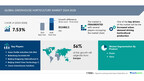
NEW YORK, Sept. 9, 2024 /PRNewswire/ — Report with the AI impact on market trends- The global greenhouse horticulture market size is estimated to grow by USD 11.46 billion from 2024-2028, according to Technavio. The market is estimated to grow at a CAGR of almost 7.53%  during the forecast period. Increased urban demand driving horticultural production is driving market growth, with a trend towards increasing relevance of led growth lights in greenhouse horticulture. However, high costs associated with greenhouses  poses a challenge.Key market players include Asian Perlite Industries Sdn Bhd, Batenburg Techniek NV, Beijing Kingpeng International Hi-tech Corp., Beijing Orient View Technology Co. Ltd., Ceres Greenhouse Solutions, Certhon Build B.V., CMF Groupe, Dalsem Greenhouse Projects BV, Europrogress Srl, Industries Harnois Inc., Novavert GmbH and Co. KG., Orbia Advance Corp. SAB de CV, Priva Holding BV, Prospiant Inc, Richel Group SAS, Ridder Drive Systems BV, Tapex Group Pty Ltd., Top Greenhouses Ltd., Trinog xs Xiamen Greenhouse Tech Co. Ltd., and Van der Hoeven Horticultural Projects BV.

Key insights into market evolution with AI-powered analysis. Explore trends, segmentation, and growth drivers- View the snapshot of this report

Greenhouse Horticulture Market Scope

Report Coverage

Details

Base year

2023

Historic period

2018 – 2022

Forecast period

2024-2028

Growth momentum & CAGR

Accelerate at a CAGR of 7.53%

Market growth 2024-2028

USD 11462.1 million

Market structure

Fragmented

YoY growth 2022-2023 (%)

6.86

Regional analysis

Europe, North America, APAC, Middle East and Africa, and South America

Performing market contribution

Europe at 56%

Key countries

US, China, India, Germany, and Spain

Key companies profiled

Asian Perlite Industries Sdn Bhd, Batenburg Techniek NV, Beijing Kingpeng International Hi-tech Corp., Beijing Orient View Technology Co. Ltd., Ceres Greenhouse Solutions, Certhon Build B.V., CMF Groupe, Dalsem Greenhouse Projects BV, Europrogress Srl, Industries Harnois Inc., Novavert GmbH and Co. KG., Orbia Advance Corp. SAB de CV, Priva Holding BV, Prospiant Inc, Richel Group SAS, Ridder Drive Systems BV, Tapex Group Pty Ltd., Top Greenhouses Ltd., Trinog xs Xiamen Greenhouse Tech Co. Ltd., and Van der Hoeven Horticultural Projects BV

Market Driver

In the realm of greenhouse horticulture, natural sunlight is insufficient for plant growth during certain seasons, particularly rainy, autumn, and winter, due to cloud coverage. Photosynthesis, the process by which plants convert light energy into food, occurs only within a specific wavelength range called Photosynthetically Active Radiation (PAR), which falls between 400 and 700 nanometers. Horticultural lighting solutions, including photoperiodic and supplemental lighting, address these conditions by inducing photosynthesis. Photoperiodic lighting extends daytime with low-intensity light, while supplemental lighting compensates for insufficient sunlight with high-intensity sources. LEDs have emerged as a preferred choice for horticultural lighting due to their adjustable wavelengths, energy efficiency, longer lifespan, and cooler operation compared to traditional sodium lamps. However, the high initial cost of LEDs remains a significant barrier to their widespread adoption. Nevertheless, the integration of LED growth lighting systems with control systems and IoT technologies enables advanced data collection and analysis, optimizing factors for maximum output and reducing production uncertainty. This market trend is expected to fuel growth in the greenhouse horticulture industry during the forecast period. 

The Greenhouse Horticulture Market is experiencing significant growth due to trends like Vertical Farming, Hydroponic, and Aeroponic systems. These methods offer spatial efficiency and high crop yields in compact areas, making them ideal for regions with water scarcity and irrigated farming challenges. Traditional open-field methods face hurdles like harsh weather, pests, and illnesses, leading to the adoption of advanced systems. Vertical farming and hydroponic/aeroponic systems provide targeted delivery of nutrients and water to plant roots, ensuring superior quality and greater aesthetic appeal. However, these systems come with high initial investment and ongoing operational expenses, including energy-intensive HVAC systems, control systems, LED grow lights, and sensors. Smaller-scale farmers and emerging regions are embracing these technologies, driven by the rise in demand for floriculture and aesthetically pleasing plants. Despite the learning curve, benefits like precision and control over ideal growing conditions, shielding from climate outside, and off-season production make the investment worthwhile. Water pumps, nutrient storage, and automation systems are essential components of these advanced systems. While they may be expensive, the potential for superior yields, energy savings, and reduced water usage make them a worthwhile investment for the long term. 

Request Sample of our comprehensive report now to stay ahead in the AI-driven market evolution!

 Market Challenges

Greenhouses are essential structures for optimizing plant growth, but they come with significant capital and operating expenses. Building a high-quality greenhouse can cost between USD5,000 and USD25,000, depending on its complexity. This investment is comparable to the gross cash farm income before expenses, estimated at USD600.0 billion in the US in 2022. Greenhouses can have passive or active climate control systems. Passive systems use materials like bricks, water, compost, or phase change materials to accumulate solar heat. Active climate control systems, which require electricity for heating, can increase capital expenditures due to solar energy-producing equipment and storage systems or high operating costs from electricity suppliers. Maintenance expenses, including cleaning, repairing equipment, and system upkeep, are ongoing and may slow market growth.The Greenhouse Horticulture Market faces several challenges in producing nursery crops, including climate variability, unfavorable weather, and environmental factors such as carbon dioxide levels. Farmers use both plastic and glass greenhouses, as well as grow bags and greenhouse films, to optimize growing conditions. Heating and cooling systems are essential for maintaining ideal temperatures, but energy efficiency is a concern. Urbanization and land scarcity increase the demand for greenhouse services, especially during growing seasons. Unreliable crop harvests due to unpredictable weather and consumer awareness of provenance and quality drive the need for higher yields in limited space. Water management and population expansion also impact efficient land utilization in the greenhouse horticulture industry.

Discover how AI is revolutionizing market trends- Get your access now!

Segment Overview 

This greenhouse horticulture market report extensively covers market segmentation by  

Product 1.1 Plastic1.2 GlassCrop Type2.1 Fruits and vegetables2.2 Nursery crops2.3 Flowers and ornamentals2.4 OthersGeography 3.1 Europe3.2 North America3.3 APAC3.4 Middle East and Africa3.5 South America


1.1 Plastic-  Plastic greenhouses are increasingly popular in horticulture due to their cost-effective nature, made from materials such as polycarbonate, acrylic, polyethylene, and fiberglass. Polycarbonates and acrylics offer high impact strength, protecting crops from extreme weather conditions. However, their high combustibility results in increased insurance costs. Polyethylene, on the other hand, transmits less light than glass but is hail-resistant and cost-effective. Greenhouse nets are also commonly made of polyethylene, but their susceptibility to punctures leads to frequent repairs. Plastic greenhouses come in various sizes, lacking standardization, and require manual effort for washing. Despite these challenges, their lower initial investment costs make them attractive to farmers in developing countries. Additionally, the adaptability of plastic coverings, such as adjustable light transmission and impact strength, fuels market growth.

Download a Sample of our comprehensive report today to discover how AI-driven innovations are reshaping competitive dynamics

Research Analysis

The greenhouse horticulture market is driven by the increasing demand for reliable crop harvests, especially during unfavorable weather conditions. Consumers are becoming more aware of the provenance and quality of their produce, leading to a growing preference for greenhouse-grown products. Extreme weather events and water scarcity concerns are also driving the adoption of greenhouse solutions for year-round crop production. Advanced greenhouse systems, including plastic and glass greenhouses, grow bags, greenhouse films, horticulture twines, and heating systems, are essential for addressing environmental factors such as carbon dioxide levels and crop types. Rapid urbanization and land constraints are also fueling the growth of the greenhouse horticulture market in emerging markets. Overall, the market is expected to continue expanding due to the need for high-quality, sustainable, and efficient agricultural solutions.

Market Research Overview

The Greenhouse Horticulture Market is experiencing demand due to the need for reliable crop harvests during unfavorable weather conditions and the consumer’s increasing awareness of provenance and quality. Greenhouse services offer ideal growing conditions for various crops, including floriculture, vegetables, and fruits, ensuring higher yields in limited space. However, the initial investment and ongoing operational expenses, including energy-intensive climate control systems, HVAC, and advanced irrigation systems, can be expensive. Greenhouse-grown products offer superior quality and greater aesthetic appeal, especially for sensitive plants during off-seasons and harsh weather conditions. Traditional open-field methods face challenges such as water scarcity, irrigation, and pests, making greenhouse solutions increasingly popular. Advanced greenhouse systems, including vertical farming, hydroponic, and aeroponic systems, offer spatial efficiency and crop yields, making them ideal for emerging regions and smaller-scale farmers. However, there are additional costs associated with greenhouse production, including water, power, and backup systems, as well as the cost of production and profit margins. The learning curve for implementing these systems can be steep, but the benefits of year-round crop production, high-quality produce, and food security make the investment worthwhile. The rise in population expansion and urbanization, as well as concerns over extreme weather events and water scarcity, further highlight the importance of efficient land utilization and greenhouse solutions.

Table of Contents:

1 Executive Summary
2 Market Landscape
3 Market Sizing
4 Historic Market Size
5 Five Forces Analysis
6 Market Segmentation

ProductPlasticGlassCrop TypeFruits And VegetablesNursery CropsFlowers And OrnamentalsOthersGeographyEuropeNorth AmericaAPACMiddle East And AfricaSouth America

7 Customer Landscape
8 Geographic Landscape
9 Drivers, Challenges, and Trends
10 Company Landscape
11 Company Analysis
12 Appendix

About Technavio

Technavio is a leading global technology research and advisory company. Their research and analysis focuses on emerging market trends and provides actionable insights to help businesses identify market opportunities and develop effective strategies to optimize their market positions.

With over 500 specialized analysts, Technavio’s report library consists of more than 17,000 reports and counting, covering 800 technologies, spanning across 50 countries. Their client base consists of enterprises of all sizes, including more than 100 Fortune 500 companies. This growing client base relies on Technavio’s comprehensive coverage, extensive research, and actionable market insights to identify opportunities in existing and potential markets and assess their competitive positions within changing market scenarios.

Contacts

Technavio Research
Jesse Maida
Media & Marketing Executive
US: +1 844 364 1100
UK: +44 203 893 3200
Email: media@technavio.com
Website: www.technavio.com/

View original content to download multimedia:https://www.prnewswire.com/news-releases/greenhouse-horticulture-market-to-grow-by-usd-11-46-billion-from-2024-2028–driven-by-urban-demand-and-ai-advancements-in-horticultural-production–technavio-302241850.html

SOURCE Technavio

Continue Reading
Click to comment

Leave a Reply

Your email address will not be published. Required fields are marked *

Technology

Safetyfirst Systems, LLC Provides Notice of Data Security Event

Published

on

By

PARSIPPANY, N.J., July 23, 2026 /PRNewswire/ — Safetyfirst Systems, LLC (“SFS”) is providing notice of a data security event that may involve information relating to certain individuals. While SFS is not aware of any misuse of information associated with this event, it is providing notice to potentially affected individuals out of an abundance of caution.

On January 19, 2026, SFS identified suspicious activity involving a limited portion of its server environment. Upon discovering the activity, SFS quickly took steps to secure its systems, notified federal law enforcement, engaged leading third-party forensic specialists, and performed a detailed investigation into the nature, scope, and impact of the activity. The investigation determined that an unauthorized actor accessed and/or acquired certain files from limited SFS systems between January 16, 2026, and January 19, 2026. SFS then conducted a comprehensive review of the affected files to determine what information may have been involved and identify the individuals to whom the information relates. The review has recently concluded, and SFS is providing this notification to potentially impacted individuals out of an abundance of caution. Although the types of information vary by individual, the affected information may include names, Social Security numbers, and driver’s license numbers.

Protecting the privacy and security of the information entrusted to SFS is a responsibility the company takes very seriously. In response to this event, SFS promptly strengthened security measures, continues to enhance its technical safeguards and monitoring capabilities, and is reviewing existing policies and procedures to further protect against similar incidents in the future. SFS is also providing notice to potentially affected individuals and, where required, appropriate regulatory authorities.

Although SFS is unaware of any misuse of personal information impacted by this event, individuals are encouraged to remain vigilant against events of identity theft by reviewing account statements, explanation of benefits, and monitoring free credit reports for suspicious activity and to detect errors. Any suspicious activity should be reported to the appropriate insurance company, health care provider, or financial institution.

Individuals seeking additional information regarding this event can contact SFS’s dedicated assistance line at 1-833-289-5523 between the hours of 7:00 a.m. to 7:00 p.m. Eastern time, Monday through Friday, excluding holidays. Individuals may also write to SFS at PO Box 101, 3299 US Highway 46, Parsippany, NJ 07054-9998.


View original content:https://www.prnewswire.com/news-releases/safetyfirst-systems-llc-provides-notice-of-data-security-event-302831894.html

SOURCE Safetyfirst Systems, LLC

Continue Reading

Technology

Sunrate and Mastercard Release White Paper on Agentic AI and the Future of B2B Global Payments

Published

on

By

SHANGHAI, July 24, 2026 /PRNewswire/ — Sunrate, the global payment and treasury management platform, and Mastercard, a global technology company in the payments industry, unveiled a joint white paper, Beyond Automation: Defining Agentic Global Payments, at the 2026 World Artificial Intelligence Conference (WAIC).

Among the first reports in the payments industry to examine the impact of Agentic AI on B2B cross-border payments, the white paper provides a comprehensive framework for understanding how AI agents are reshaping enterprise payment operations. It proposes that cross-border payments are evolving beyond digitisation and automation into a new stage: Autonomy—where AI agents with reasoning, planning, and execution capabilities can independently orchestrate and optimise end-to-end payment and treasury workflows within defined governance frameworks.

As businesses expand across borders, B2B cross-border payments continue to be constrained by fragmented workflows, disconnected systems, foreign exchange inefficiencies, rising compliance requirements, and complex reconciliation processes. While traditional automation improves individual tasks, the white paper demonstrates that Agentic AI represents a fundamental shift by enabling intelligent agents to coordinate entire payment journeys across systems, counterparties, and approval workflows.

Drawing on Sunrate’s global payment infrastructure and AI-native product capabilities, together with Mastercard’s expertise in secure payment networks and data intelligence, the white paper defines Agentic Global Payments — a new category of AI-native global payment infrastructure built to automate and manage complex enterprise workflows.

The report identifies 16 major pain points across the B2B payment lifecycle and outlines 13 high-value AI use cases spanning supplier onboarding, accounts payable and receivable, virtual commercial cards, payment routing, foreign exchange management, compliance screening, fraud detection, reconciliation, and conversational operational support. It also demonstrates how AI agents can automate complex workflows—from extracting information across multiple document formats and conducting compliance checks to initiating payments, optimising FX execution, and completing reconciliation—while operating within enterprise governance and control frameworks.

The white paper further highlights that trusted adoption of agentic payments depends on more than technological capability. It identifies governance, transparency, security, and ecosystem collaboration as essential foundations for enterprise deployment, supported by frameworks such as Know Your Agent (KYA), payment tokenisation, auditability, and cross-industry interoperability.

Sunrate.AI portfolio currently includes the Payment Agent, FX Agent, Compliance Agent, Onboarding Agent, and Chat Agent, designed to help enterprises automate and optimise critical payment and treasury processes while maintaining compliance and operational control.

Mastercard has also been actively building the foundations for trusted agentic commerce – combining AI capabilities with verifiable authorisation, clear accountability and proven payments security. Its work in this area, including Agent Pay (alongside Agent Pay for Machines) and Verifiable Intent, are proof points in how Mastercard is enabling AI to participate in commerce safely and transparently. 

“Our mission is to make global payments seamless, compliant, and intelligent,” said Paul Meng, Co-founder and CEO of Sunrate. “As businesses continue expanding internationally, AI agents will fundamentally reshape how enterprises manage global payments—enabling smoother capital flows, reducing operational friction, and embedding real-time intelligence into every payment decision. This white paper represents an important step in helping the industry understand how Agentic AI can be deployed responsibly at enterprise scale.”

“Agentic commerce is changing how businesses make and execute payment decisions, but speed without accountability creates new categories of risk,” said Anouska Ladds, Executive Vice President, Commercial & New Payment Flows, Asia Pacific, Mastercard. “As AI starts to act on behalf of businesses, autonomous payment decisions need a clear, auditable chain of identity, intent and action. That’s what allows organisations to delegate with genuine confidence — and what will determine whether agentic commerce scales past pilots.”

Released under WAIC 2026’s theme, “Intelligent Partners, Co-creating the Future,” the white paper provides business leaders with practical guidance on adopting AI-driven payment capabilities, covering implementation approaches, governance considerations, and real-world enterprise applications.

By combining Sunrate’s expertise in global payments and treasury management with Mastercard’s trusted payment infrastructure and network capabilities, the collaboration reflects a shared commitment to accelerating the next generation of intelligent, secure, and autonomous B2B global payments.

Click here to check the white paper.

About Sunrate

Sunrate is a leading global payment and treasury management platform for businesses worldwide. Founded in 2016, Sunrate has enabled companies to operate and scale both locally and globally in 190+ countries and regions with its cutting-edge infrastructure, global network, and unified solutions.

Sunrate operates through offices across key markets, including Singapore, Kuala Lumpur, Jakarta, Hong Kong, Shanghai, and London. The company partners with the top global financial institutions, such as Citibank, Standard Chartered, Barclays, J.P. Morgan. Sunrate is also the principal member of Mastercard and Visa. To learn more about Sunrate, visit https://www.sunrate.com/.

About Mastercard

Mastercard powers economies and empowers people in 200+ countries and territories worldwide. Together with our customers, we’re building a resilient economy where everyone can prosper. We support a wide range of digital payments choices, making transactions secure, simple, smart and accessible. Our technology and innovation, partnerships and networks combine to deliver a unique set of products and services that help people, businesses and governments realize their greatest potential. 

www.mastercard.com

SOURCE Sunrate

Continue Reading

Technology

JAMS Launches AI for Enterprise Job Scheduling: JAX and JAMS MCP

Published

on

By

A new AI agent and an open-standard connector let IT teams query, diagnose, and manage automation in plain language, on the model they choose, with operational data able to stay onshore inside their own network

SYDNEY, July 24, 2026 /PRNewswire/ — JAMS Software, an orchestration solution for scheduled and event-driven automation, today announced the general availability of two AI capabilities for enterprise job scheduling: JAX, an AI agent built into the JAMS Web Client, and JAMS MCP, a connector built on the open Model Context Protocol standard that brings JAMS into external AI coding tools. Both capabilities ship at no additional cost as part of JAMS Web.

Automation environments grow faster than the teams that run them. Jobs multiply across SQL Server, Azure Data Factory, Airflow, SAP, JDE, and Banner, and when one fails, finding the root cause often means searching several consoles at once, frequently outside business hours. At the same time, IT leaders carry pressure to adopt AI while staying accountable for where operational data goes. JAX and JAMS MCP close both gaps together.

Full details on how JAX and JAMS MCP work, including the control model behind every action, are available at jamsscheduler.com/product/ai.

JAX is an AI agent that runs inside the JAMS Web Client. It finds jobs, troubleshoots failures, and answers how-to questions in plain language, with each response grounded in the JAMS user guide and checked against a built-in glossary. JAX acts only when a user asks it to. Reads flow freely, and every write action pauses for the user’s explicit approval before it runs. JAX does not learn between sessions, and conversations are not retained on the server.

JAMS MCP is a connector, built on the open Model Context Protocol standard, that brings JAMS into the AI tools engineering teams already use, including Cursor, VS Code with Copilot, Claude Code, Claude Desktop, and Codex. Users query jobs, investigate failures, and manage runs in plain language without leaving their tool.

Both capabilities run inside the customer’s own network and act as the signed-in user, with that user’s exact JAMS permissions. There is no elevated AI account: whatever a user cannot do in the JAMS interface, JAX and JAMS MCP cannot do on that user’s behalf. Every JAX and MCP operation is recorded in its own dedicated log, and changes made through the JAMS API land in the JAMS audit trail like any other change. Customers choose their own AI model, whether a commercial provider such as OpenAI or Anthropic or a model running entirely on their own hardware, and JAMS never trains on customer data. In the current release, neither feature edits or deletes a job, folder, schedule, or agent definition. For teams that need operational data to stay onshore, JAX runs on a local model entirely inside the customer’s own network, so nothing leaves at all.

“Adopting AI usually means giving something up, most often visibility into where your data goes,” said Pete Hegland, Chief Executive Officer of JAMS Software. “We built JAX and JAMS MCP so that trade does not have to happen. Every action runs as the signed-in user, every change waits for approval, and the model can run on the customer’s own hardware, keeping operational data onshore.”

“For teams across Australia, New Zealand, and Singapore, two things matter: keeping data onshore, and getting answers when a job fails after hours,” said Shayne Cooper, Account Executive for APAC at JAMS Software. “JAX and JAMS MCP address both. The model can run on the customer’s own hardware, and the answer arrives in plain language at the moment it is needed.”

JAX and JAMS MCP are available now to all JAMS Web customers across Australia, New Zealand, and Singapore, with no separate licence, SKU, or additional cost. AI-assisted creation of new jobs and workflows from a plain-language description is on the roadmap for a future release, gated by the same approvals and permissions as every other action.

Learn how JAX and JAMS MCP work at https://jamsscheduler.com/product/ai.

Fast facts

JAX is an AI agent built into the JAMS Web Client for job scheduling and workflow automation.JAMS MCP is a connector built on the open Model Context Protocol standard, for Cursor, VS Code with Copilot, Claude Code, Claude Desktop, and Codex.Both act as the signed-in user, with that user’s exact JAMS permissions, and there is no elevated AI account.Customers choose the AI model, including a local model that runs entirely inside their own network.JAMS never trains on customer data.Both are available now at no additional cost as part of JAMS Web.

About JAMS Software
Founded in 1987, JAMS Software is an orchestration solution that helps IT teams centralize, automate, and manage scheduled and event-driven jobs across complex, hybrid environments. Over 850 customers rely on JAMS to run their automated workloads. JAMS Software, LLC is headquartered at 108 Patriot Drive, Suite A, Middletown, DE 19709.

Media Contact
Bobby Schmidt, Vice President of Marketing
press@jamssoftware.com
800.261.4267


Logo – https://mma.prnewswire.com/media/3007573/JAMS_Software.jpg
Photo – https://mma.prnewswire.com/media/3007574/JAX_the_AI_agent_built_into_the_JAMS_Web_Client.jpg
Photo – https://mma.prnewswire.com/media/3007575/AI_in_Jams_JAX_and_JAMS_MCP.jpg
Photo – https://mma.prnewswire.com/media/3007576/jams_mcp_ai_connector_claude_cursor.jpg

View original content:https://www.prnewswire.com/apac/news-releases/jams-launches-ai-for-enterprise-job-scheduling-jax-and-jams-mcp-302833800.html

SOURCE JAMS Software

Continue Reading

Trending